
Inactive· since Jul 21, 2026
- 41
- days it ran
- 2
- relaunches
- 14,027
- EU reach
Ad copy
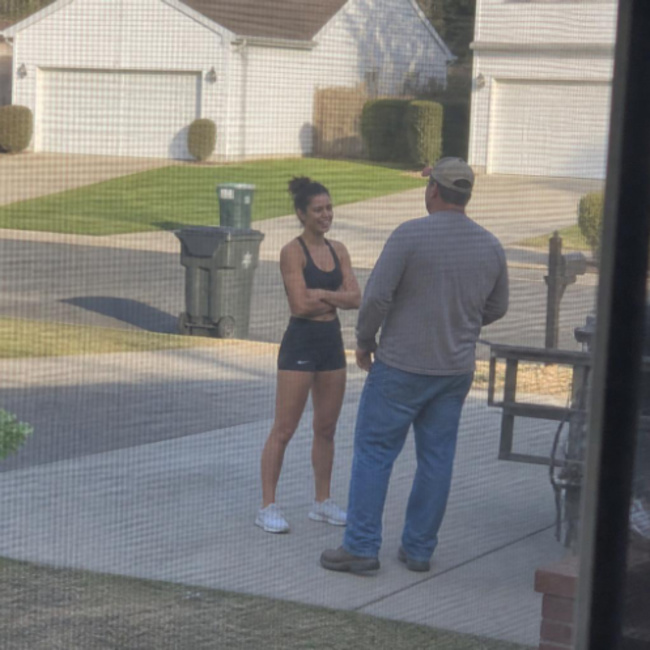
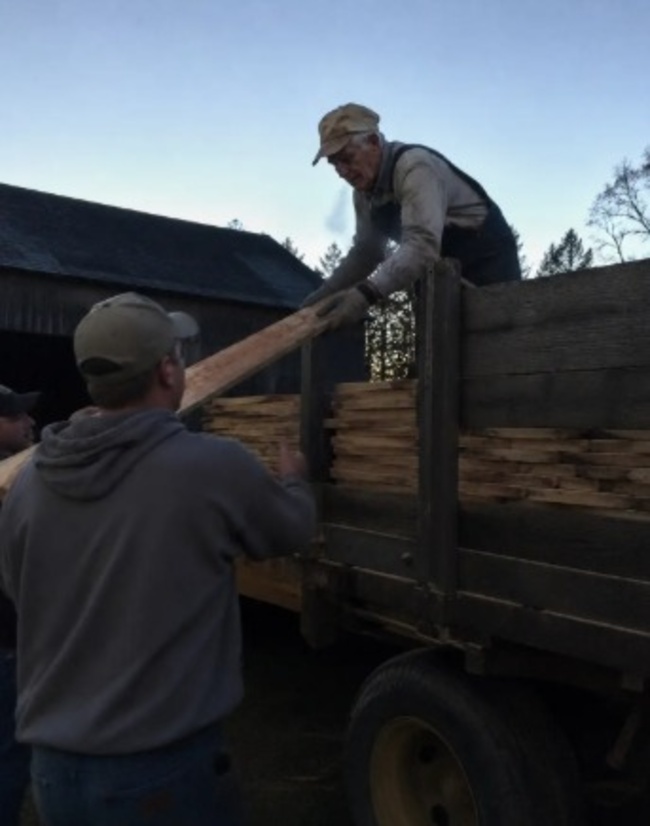
My husband is 62 and last October he sat down at a picnic table and could not get back up until dinner. My daughter Hannah married a man named Isaac Miller three years ago. He grew up in a Plain community in northern Indiana. His family is Mennonite, not Amish, though the distinction matters more to them than it does to most of us. They use tractors. They have electricity in the barn. But they live close to the land, and they live close to each other, and the rhythm of their days is not the rhythm of ours. Hannah met Isaac during her second year as a large-animal veterinarian. She had been assigned a rotation covering rural dairy farms in a three-county area of northern Indiana, and Isaac's family runs one of them. She spent a lot of time in their barn her first summer up there. By the second summer she was staying at their farmhouse instead of driving back to town. By the third summer she and Isaac were engaged. My husband Doug and I drove up to meet the Miller family in the spring before the wedding. Doug is sixty-two. He is a certified public accountant, thirty-seven years at the same firm, three years from retirement. He is not an outdoorsman. He has never framed a wall or shoed a horse. He walks the dog every evening and mows his own lawn on Saturdays and that has always been the extent of his physical life. That was fine when he was forty. By fifty-five he needed Sunday afternoon to recover from a Saturday of yardwork. By fifty-nine he needed the whole Sunday. By last year he needed until Tuesday morning. I want to tell you about the barn-raising, because it is where I finally understood something I had been not-quite-understanding for four years. The Miller family had scheduled a workday for the first Saturday in October. They were adding a new milking parlor to the dairy barn and had asked the extended family — brothers, cousins, uncles, in-laws — to come help frame the addition. Hannah and Isaac would be there. Doug and I were invited. Doug was nervous about it. He is not a man who works with his hands. He told me on the drive up that he would be useful for whatever they needed a man with a clipboard to do. We arrived at the Miller farm at 6:15 in the morning. The sun was not quite up. There were already fifteen men in the barnyard. I want to tell you who they were, because it matters. Isaac's father Ezra was there — 63, the same age as Doug. Ezra runs the dairy. He was directing the day. Isaac's uncle Amos was there — 58. He owns a machine shop in the next town. Isaac and his brother Jonas — 34 and 29. Both working the farm with Ezra. Isaac's cousins from his mother's side — four men in their 30s and 40s, all farmers. And Isaac's grandfather. His name is Elmer. He is 78 years old. He is the smallest man in the barnyard. Bird-boned in the shoulders, thin in the wrists. He was wearing a work shirt and a hat and a pair of work boots that looked older than my daughter. He shook Doug's hand. His grip was firm. Not the firm-grip-a-78-year-old-still-manages. The actual grip of a man whose hands are still tools. He said, "Welcome. Isaac said you were coming. Glad to have another set of hands." Doug laughed nervously. He said, "My hands haven't done this kind of work in a long time. You'll have to point me at something that's hard to break." Elmer smiled. Said, "There's always something. Come on." The day started with hauling lumber from the trailer to the framing site. Elmer worked the trailer. He was 78 and he was up in the bed of the trailer handing 2x8s down to the men below, and he did it for forty minutes without pausing. Doug was on the ground receiving them. He was carrying two at a time, walking them fifteen feet, and stacking them. By 7:30, Doug was breathing hard. By 8:00, he was carrying one at a time. By 8:30, he asked Elmer if it would be alright if he took a short break. Elmer said of course. Waved him over to the picnic table by the farmhouse where Miriam — Isaac's grandmother, 76 — was setting out coffee. Doug sat down for ten minutes. Drank a cup of coffee. Went back to work. By 10:00, Doug was sweating through his shirt and his hands were shaking a little bit. He came over to me where I was helping Miriam and Hannah and Isaac's mother Rebecca set up the noon meal. He said, "Karen. I'm going to have to sit for a bit. My legs are shot." I said, "Sit as long as you need. Nobody is timing you." He sat at the picnic table for an hour. He watched. I watched with him. Elmer was up on a ladder now, hammering rafters into place. He was 78 years old. He was going up and down that ladder without holding the rails. His son Ezra — Doug's age — was working the far end of the frame, driving nails. Amos was on the ground, cutting boards to length with a circular saw. Isaac and Jonas were up on the wall plates. The cousins were spread across the whole thing. The men worked. They talked. They joked with each other. They stopped every once in a while for a drink of water and then went back to work. Doug sat at the picnic table. At 11:00, Doug tried to go back and help. He lifted a 2x8 with Isaac to walk it over to the saw, and about halfway there he had to set it down. He said to Isaac, quietly, "I'm sorry, son. I don't think I have another one in me this morning." Isaac said, "You're fine, Dad. Go sit." Doug walked back to the picnic table. He sat there until lunch. The meal was served at the picnic tables at 12:15. Fifteen men. Fried chicken. Mashed potatoes. Corn from the garden. Bread from the oven. A pitcher of iced tea per table. Pie. I sat next to Doug. Hannah sat across from us. Elmer sat at the head of our table because Miriam had put him there. Doug ate quietly. Elmer noticed. Of course he did. He had noticed everything since we arrived. He had been noticing Doug all morning. He didn't say anything about it. He talked about the barn addition. He asked me about our drive up. He asked Hannah about a calf she had checked on last week. When the meal was almost over, Elmer said to Doug, gently: "You worked hard this morning. Not everyone gets a workday like this. It's alright to be tired." Doug said, "Thank you, Elmer. I appreciate that. I'm afraid I'm going to have to sit out the afternoon." Elmer said, "That's fine. Miriam will be glad of the company on the porch." Doug nodded. Ate another bite of chicken. Then he set his fork down and he said, in a quieter voice: "Elmer. Can I ask you something." Elmer said, "Of course." Doug said, "How are you doing this." Elmer looked at him. Doug said, "You're 78. I'm 62. I have been sitting at this table for two hours. You were on a ladder half an hour ago and I watched you come down without touching the rails. What am I doing wrong." Elmer didn't answer right away. He thought about it. He was not a man who spoke without thinking. Then he said, "I don't know that you're doing anything wrong. I think we've lived different lives. My body has been used to this since I was seven years old. Yours has been used to something else." He said, "That's not a criticism. Your work has fed your family. My work has fed mine. But bodies are shaped by what they do." Doug nodded slowly. Elmer said, "There is one thing I would say. If you'll let me." Doug said, "Please." Elmer said, "It looks to me like your body has been letting you down for a few years now, and you have been quiet about it because you are a proud man. My advice is: don't be quiet about it. Not with your wife. Not with your daughter. Not with your doctor. The body will tell you what it needs if you listen. But you have to be willing to listen to it in front of other people. That's the hard part." Doug did not say anything. I did not say anything. Hannah reached across the table and put her hand on her father's hand. She said, "Dad." He looked at her. She said, "Would you let me help?" He nodded, once. She said, "Then let's talk on the porch after lunch." The porch conversation is the reason I am writing this. Hannah and Doug and I sat on the Millers' front porch for an hour after lunch while the men went back to the barn. Miriam brought us coffee and left us alone. Elmer nodded at Doug as he walked past us on his way back to the framing site, and I saw Doug nod back. Hannah had been thinking about this for a while. She said, "Dad. I have been a veterinarian for four years now. I spend my days looking at how bodies age. Different species, different breeds, different environments. I have seen dairy cows that live twelve years healthy and I have seen the same breed live seven years fragile, and most of the difference is the environment. What their body has been asked to do. What it has been supported with. Whether it has been running its whole life at the edge of what it can handle or well within what it can handle." Doug said, "That's a veterinary observation, honey. I'm not sure how it applies to me." Hannah said, "It applies because Elmer is 78 and his body has been running well within what it can handle his whole life, and yours has been running at the edge of what it can handle since you took an accounting job at 25. That is not your fault. That is the world we live in." She said, "The Miller elders don't have a secret. They don't take a supplement. They don't drink a special tea. They eat well, they sleep well, they work outside every day, and they've been doing that since they could walk. Their cellular machinery is running the way cellular machinery runs when it isn't chronically stressed. There is no supplement for that." She paused. "But there is something that has been studied for supporting the cellular layer of what a body is trying to do, in people whose lifestyles are less like Elmer's and more like yours. It isn't a supplement that will make you 78 and steady on a ladder. It won't. But there is a growing body of research on molecular hydrogen and cellular wellness. It supports the body's natural recovery processes and the body's natural antioxidant balance at the cellular level. It isn't a treatment for anything. It isn't a medicine. It's a supplement. I would not have brought it up if you had not asked Elmer that question at the picnic table." Doug said, "Tell me more." Hannah said, "Molecular hydrogen is the smallest molecule that exists. Two hydrogen atoms bonded together. The reason researchers care about it is that the smallness means it can reach cellular layers that bigger molecules can't. There have been about twenty years of studies on it. Not a fad." "It supports the body's natural recovery processes. Which is the part I thought about when I saw you at the picnic table this morning. Recovery is what the cellular layer does. When it works, you feel it. When it doesn't work as well as it used to, you feel that too." "The brand I've read about is called PrimeCell H2. It is a rapid-dissolve tablet. You drop it into a tall glass of cool water. It fizzes. You drink it fresh, right away. Hydrogen escapes the moment it meets heat or is left sitting, so the protocol matters. Tablet, cool water, drunk fresh, right away." "Third-party tested. One tablet, once a day." "Added to whatever else you're already doing. Not replacing any of it." She said, "Dad. I want to be careful about how I say the next part. This will not make you 78 and steady on a ladder. It will not undo forty years of sitting at an accounting desk. Bodies are different. Some people notice something in the first week or two. Others take much longer. Some don't notice much at all. I am not making you a promise." "But if you talk to your doctor first — and I mean before you buy a bottle, not after — and your doctor thinks it's a sensible thing to add to what you're already doing, I would like you to try it. Because I want to see you at Elmer's age and I want you to be more than sitting at a picnic table." Doug did not say anything for a long minute. Then he said, "Alright." Hannah said, "Alright means yes?" Doug said, "Alright means I will call my doctor Monday morning." Hannah put her arms around her father's neck. She has not done that since she was seventeen. Doug held her for a long time. I looked away and cried into my coffee where nobody could see me. We drove home Sunday morning. Doug did not talk much on the drive. He was thinking. Monday morning he called his doctor's office. Told the nurse he wanted to add a hydrogen supplement to his morning. Gave her the brand name Hannah had given him. Asked if there was any reason he shouldn't. The nurse called back Tuesday afternoon. The doctor said it was a sensible thing to add. No interactions to worry about with the multivitamin and the vitamin D he was on. Mention it at the next physical. We ordered a bottle Tuesday night. It came Friday. Saturday morning Doug sat at the kitchen table with his coffee. I set a tall glass of cool water in front of him with a tablet next to the glass. He dropped it in. It fizzed. He drank it fresh, right away. He said, "Karen. This tastes like water with a little mineral edge." I said, "That's what Hannah said Isaac's grandmother said." He laughed. He drank one every morning after that. I want to be careful about what I tell you next, because I do not want to overstate what happened. Doug is one man. His body is his body. What happened for him might not happen for the man you love. It might happen slower. It might happen differently. It might not happen at all. Bodies are different. What I can tell you is what I watched. The first two weeks I noticed nothing. Doug noticed nothing. He almost stopped because he said he felt silly drinking fizzy water every morning and nothing was different. I asked him to stick with it a month, because Hannah had asked him to. Around the end of the third week — a Sunday morning after a Saturday of yardwork — Doug came into the kitchen and said, "Karen. I don't feel wrecked this morning." I said, "What do you mean." He said, "I did the whole yard yesterday. Mowed, edged, hauled the branches from the storm to the curb, cleaned the gutters. Usually today I would be dead. I am not dead. I am tired. But I am not dead." He said it like an observation, not an announcement. Doug is an accountant. He notices small things and does not embellish. I said, "That's good, honey." He said, "It is." He drank his glass of cool water and went out to the garage to finish something he had started the day before. I noticed some other things over the following months. He seemed to bounce back from the workday differently. He is three years from retirement and his workdays had been getting longer at the office. He would come home at 6:30 and sit on the couch and not get up for two hours. Around the second month, he started coming home at 6:30 and making dinner with me. Small thing. He had not made dinner with me in three years. He caught a cold in December that came and went in the rhythm he remembered from his fifties. He shoveled the driveway after a big snow in January and was fine the next day. None of this made him 78 and steady on a ladder. He is still an accountant who has not framed a barn. His body is still shaped by forty years of an office desk. Hannah's caveat was true. But the drift stopped. That is the word Doug used. The drift stopped. He said it at the kitchen table one Saturday morning in February. He had come in from shoveling and taken his boots off and sat down for his coffee, and he said, "Karen. I have been drifting for four years and I did not know I was drifting until it stopped." I said, "I know." He said, "I have been carrying it and not saying anything and it stopped and I could not describe it to you until this morning." I said, "I know, honey." Doug went to his annual physical this past April. His doctor did the workup. Everything came back where it had come back before. Bloodwork fine. Blood pressure fine. Weight the same. Cholesterol the same. His doctor asked how he was feeling. Doug told him. About the barn-raising in October. About the picnic table. About Elmer on the ladder. About Hannah on the porch. About the water. About the drift. His doctor listened all the way through. He said, "Doug. I'm glad you called the office before you started. That is the right way to do it. Whatever you're doing is part of a sensible routine. Keep doing it. Talk to me before you add anything else on top of it. I'll see you next year." Doug came home from the appointment and said, "He didn't credit the tablet." I said, "I know." Doug said, "I don't care." I said, "I know." Elmer turned 79 in June. Doug and I drove up to northern Indiana for the birthday. There was a big family dinner at Ezra and Rebecca's house. Elmer sat at the head of the table. He had been out in the milking parlor that morning and he had helped Isaac and Jonas with a fence repair in the afternoon. Before dinner, Doug and Elmer stood on the porch together for a few minutes. I watched them through the window. Elmer said something. Doug said something back. Elmer nodded. Put his hand on Doug's shoulder. Kept it there for a moment. Then they came in to eat. I asked Doug in the car on the way home what Elmer had said to him. Doug said, "He said I looked better than I did in October. He said the ladder is still his and always will be, but the porch is mine, and he was glad to see me standing on it." He said, "That was probably the kindest thing an old man has ever said to me." I did not say anything. I drove. Doug looked out the window. Here's what the product is for, plainly. It supports the body's natural recovery processes. It does that by supporting the body's natural antioxidant balance at the cellular level, along with supporting healthy circulation. That's the whole of what it's for. It isn't a promise about your husband's Saturday, or his ladder, or his porch, or anything at all. It isn't a promise about anything. Some people notice something in the first week or two. Others take much longer. Some, I'd imagine, not much at all. Bodies are different. Doug's is one, with one story. It's a slow thing, taken steadily — the cellular processes it supports build up gradually, not overnight. It isn't a pill you reach for on a Sunday morning after a hard Saturday. It's a glass of water you drink every morning whether Saturday was hard or Saturday was easy or Saturday was the same as the Saturday before. If your husband is where mine was last October — if his weekends have been costing him more than they used to, if his recovery has been getting slower for years, if he has been quietly adjusting his life around a body that has stopped bouncing back: Talk to his doctor or his pharmacist. Both, if you can. Especially if there's already something in the cabinet for the heart, blood sugar, or anything else. Ask the plain question: is this sensible to add to what he's already doing? If they say yes — and there's a fair chance they will — it's a tablet in a tall glass of cool water in the morning. On top of everything else. Not in place of any of it. If they say no, then no. Either way, you've had a conversation you weren't going to have. And if there is a Hannah in your life — a daughter or a niece or a friend who loves the man in your family enough to sit on a porch with him and say the hard thing — let her say it. I had been swallowing my worry for four years. It took my own daughter and a 78-year-old man on a ladder to let it out. That is the whole of it. That is what a fall Saturday in a northern Indiana barnyard, and a picnic table conversation, and an hour on a porch, and a phone call to a doctor's office, between them did for us. And I would be a poor sort of wife not to pass it on. P.S. Hannah and Isaac had their first baby in April. A little boy. They named him Elmer. My father-in-law drove up with us for the visit last month and held the baby on the front porch of Isaac and Hannah's farmhouse for an hour and told him stories about his own grandfather that Doug had never heard before. I stood in the kitchen with Miriam and I watched them through the window. Miriam said, "That is a good man." I said, "I know he is." I did not tell her that a year ago that man had been sitting at a picnic table by 11 in the morning wondering what he was doing wrong. She would not have believed me anyway. She only sees the man who is here now. P.P.S. I keep a spare bottle in the cupboard now. PrimeCell is a small company and they've sold out before, and a woman married to a man who spent four years drifting is not about to run low on the thing he adds to a morning that has stopped feeling like drifting. It sits next to Doug's coffee, every day. P.P.P.S. The steps, in order: Call your doctor or pharmacist first. Ask if it's sensible to add to what he's already on. If yes, drop one tablet in a tall glass of cool water each morning and drink it fresh, right away. Change nothing else — just add it. Then give it a few weeks. Some notice something in the first week or two, others longer, some not much at all. Be patient with him. P.P.P.P.S. PrimeCell H2 has a 90-day money-back guarantee — not satisfied for any reason, every penny back, no questions. For a supplement, that's the only sensible policy. Enough time to actually tell, instead of deciding in a week. I'd take the full ninety days. P.P.P.P.P.S. Doug retired last month. Two years earlier than he had planned. Isaac and Hannah are expecting their second baby in the spring and Doug and I are moving up to a small house on the far edge of the Miller property so he can help with the farm work when they need him. He will not be Elmer. He knows that. But he will be an old man on a porch who can still pick up a grandchild and carry him out to see the calves, and I will be the woman who watches him do it from the kitchen window, and that is more than enough for both of us. https://track.getamalahealth.com/5548c06d-d9c3-4785-b466-fec64a6fdb28 The people and events depicted in this ad are illustrative and not based on any specific individual. Individual experiences vary. These statements have not been evaluated by the FDA. This product is not intended to diagnose, treat, cure, or prevent any disease.
Fix Yourself at the Cellular Level
PrimeCell H2 is a next-generation molecular hydrogen tablet formulated to support your body's natural antioxidant defenses — helping you feel sharper, more energized, and more like yourself.
LEARN MORELike this ad? Make it yours.
Crush rebuilds this exact creative around your product — your brand, your colors, your offer — in about a minute.