Arthritis Support Community
 Facebook ad: “Feel Like Yourself Again”
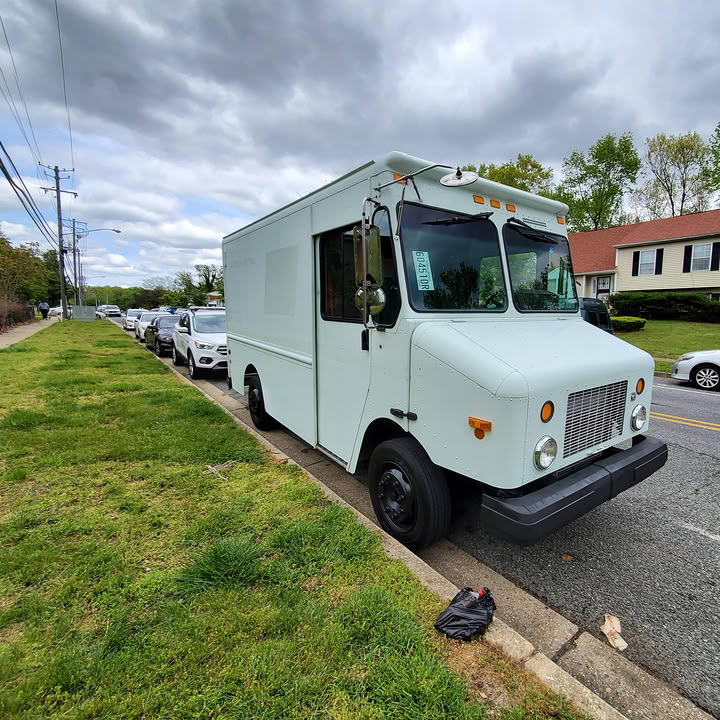
Ran for 24 days, from October 9 to November 2, 2026, the last day Crush saw it.
Run by Arthritis Support Community on Facebook. Crush is not the advertiser and does not verify its claims. See this ad in Meta's Ad Library(opens in a new tab)
Make your own version of this ad
Crush makes it, launches it in your own Meta ad account, scales the winners and pauses the losers.
About this ad
- Meta Ad Library ID
- 1774982364638308
- Platforms
- Facebook, Instagram, Audience Network, WhatsApp and Threads
- Relaunches
- 0
Ad text
I couldn't get the bathroom door open because my husband's body was on the other side of it. That's the sentence I've been carrying around for eight months. It sits in my chest like a stone. I can be folding laundry, driving to work, washing dishes, and that sentence will just come up out of nowhere and I'll have to sit down. My name is Wanda. I'm 57. I live in Roanoke, Virginia, in the same split-level house we bought in 1994 when our daughter was a baby. I've worked at Little Lambs Daycare on Williamson Road for 22 years. I'm the lady who wipes the noses and zips the coats and holds the babies who cry when their mamas drop them off in the morning. My husband Carl is 61. He loaded trucks for UPS for 31 years. The hub off Hollins Road. He retired three years ago with a bad back, two bad knees, and hands that had been frozen in a grip shape for so long they couldn't really open all the way anymore. This is the part where I'm supposed to tell you he was a hero or whatever. He wasn't. He was just a man. He drank Miller High Life in the garage on Saturdays. He watched Virginia Tech football. He yelled at the dog. He kissed me on the back of the neck while I was cooking. He was just my person. The morning it happened was a Thursday in October. I remember because I had a parent-teacher meeting at the daycare and I was already running late. I heard the thump from downstairs. You know that thump. Every woman over 50 knows that thump. It's the one where your body knows before your brain does. I went up the stairs two at a time and I called his name and he didn't answer and the bathroom door was locked. I jiggled it. I knocked. I yelled. Nothing. I could hear him breathing on the other side. That's the only thing that kept me from completely losing it. The breathing. It was wet and slow and scared, but it was there. His knees had given out. Both of them. At the same time. He'd come down sideways trying to catch himself on the sink and ended up wedged between the toilet and the door, with his legs folded under him in a way that was blocking the door from opening even a crack. I'm 5'4". I weigh 148 pounds. He's 6'1" and 230. There was no version of this where I was getting that door open. I called 911 from the hallway. I sat on the floor with my forehead against the door and I talked to him through it for the eleven minutes it took for the fire department to get there. "Carl. Honey. Just breathe. They're coming. Just breathe." The fire department had to take the door off the hinges. They had to lift him onto a stretcher with three men because his knees wouldn't take any weight. They took him to Carilion Roanoke Memorial. The X-rays didn't show a fracture. The MRI showed what the orthopedist called "advanced bilateral degeneration" which is the polite medical way of saying his knees were cooked. The orthopedist was a young guy. Maybe 35. He came into the room and he looked at the scans and he looked at Carl sitting on the table in a paper gown and he shrugged. I'm not exaggerating. He physically shrugged. He said something like "this is just what happens to bodies that did heavy labor for that many years. Both knees probably need replacement eventually. In the meantime we can talk about anti-inflammatories, maybe a cortisone shot. Lose some weight if you can. Use a cane." Carl didn't say anything. He just nodded. I wanted to slap that doctor. Not because he was wrong. Maybe he was right. But because he was talking about my husband like he was a worn out tire. Like the only thing left to do was figure out how to keep him rolling for a few more miles before junking him. We drove home that night and Carl didn't say a word for the whole 22 minutes. I made him grilled cheese and tomato soup because that's what my mama used to make when somebody was sad and it was the only thing I could think of. He went to bed at 7:30 PM. That was October. By Christmas, Carl was using a cane to get from the couch to the kitchen. He'd stopped going down to the garage. He'd stopped walking the dog. He'd stopped going to Lowe's on Saturday mornings to wander around looking at tools he didn't need. Our daughter Melanie came up from Charlotte for the holidays with her two little ones, and I watched Carl try to get down on the floor to play trains with our grandson Bennett, and I watched him fail. He couldn't get down. He stood there holding the back of the recliner and he just couldn't lower himself. Bennett looked up at him. Bennett is 4. He said "Pop, are you broken?" Carl said "Yeah, buddy. Pop's a little broken." I went into the kitchen and ran the faucet so nobody would hear me cry. I started doing what every woman my age does. I started googling. Late at night. With my reading glasses on. Sitting up in bed with my laptop on a pillow on my stomach while Carl snored beside me from the painkillers. I read about knee replacements. The recovery time. The percentage that don't work right. The percentage that have to be redone in 10 years. The infections. I read about glucosamine and chondroitin. He'd been taking those for years. Hadn't done a thing. I read about turmeric. Bought him a bottle from the GNC at Valley View Mall. He took it for two months. No change. I read about collagen powder. Mixed it into his coffee for a month. Nothing. I read about CBD cream. Rubbed it on his knees myself, every night, for three weeks. Nothing. I read about hyaluronic acid injections, stem cell therapy, PRP treatments, regenerative medicine clinics in Mexico. I read about a guy in Florida who was charging $11,000 for something called "exosome therapy." I went down every rabbit hole the internet has. I came up empty every time. And every morning I'd wake up and watch my husband swing his legs over the side of the bed and just sit there. Just sit. For ten minutes sometimes. Working up the courage to stand. Working up the bargaining with his own body to make the first step happen. The man who used to load a 53-foot trailer in under 40 minutes. Sitting on the edge of the bed bargaining with his knees. This is the part where Diane comes in. Diane is Carl's older sister. She's 64. She lives in Lynchburg, about an hour east of us. She's a retired surgical nurse, spent 38 years at Lynchburg General, the last 12 in orthopedic surgery. So when I say she'd seen a thing or two about knees, I mean she'd been in the room while they were being sawed open and replaced. Diane came up the second weekend in February. She'd been planning to come for Carl's birthday and she came anyway even though Carl didn't want a party. She sat at our kitchen table on Saturday morning while Carl was still upstairs. She had her coffee in both hands. She looked at me over the rim of the mug. She said "How is he really, Wanda." And I just lost it. Right there at the kitchen table. I told her everything. The bathroom door. The orthopedist. The cane. Bennett asking if Pop was broken. The supplements. The internet rabbit holes. All of it. She let me cry. She didn't try to fix it. Then she said something I didn't expect. She said "You know my Harold." Harold is Diane's husband. He's 66. He spent 30 years as a lineman for Appalachian Power, climbing poles, hauling cable. The last time I'd seen Harold was at a Fourth of July cookout maybe two years ago, and I remembered he was using a walker. Diane said "Harold couldn't get up the steps to our lake place last summer. We have this cabin on Smith Mountain Lake, you remember, the one off Route 626. Three steps up to the porch. He couldn't do them. He sat in the car for 20 minutes trying to work himself up to it." I didn't say anything. I just listened. "He's walking up those steps without holding the rail now," Diane said. "He's been mowing the half-acre at the cabin. He took our grandson out on the pontoon last weekend and he stood up the whole time he was driving the boat. He hasn't done that in four years." I said "Diane. What did you do." She set her coffee down. She said "I'm going to tell you what I told myself when I started looking into this, because I know you. You're going to want to dismiss it. So just listen all the way through." And then she told me about amla. She said her sister-in-law, a woman who'd been a pharmacist at a hospital outside Richmond for 25 years, had been the one to put her onto it. She said it wasn't a painkiller. It wasn't an anti-inflammatory in the way Aleve is. It was something different. She said "Wanda. The orthopedist who shrugged at Carl. He's not wrong that the joint is worn down. But he's looking at the wrong floor of the building." That phrase stuck with me. The wrong floor of the building. Diane explained it the way she used to explain things to scared families in pre-op. Slow. With her hands. Like she was walking you through a blueprint. She said the cells in your joints, the ones that maintain the cartilage and keep things lubricated and manage the inflammation, those cells run on energy. Cellular energy. The kind your body makes inside little engines in every cell called mitochondria. She said when you're 25, those engines are humming. They're cranking out energy. The cells in your joints are getting everything they need. They're repairing cartilage as fast as it wears down. They're keeping the inflammation in check before it becomes a problem. But as you age, and especially if you've spent 31 years loading trucks or 30 years climbing power poles, those mitochondria start to wear down. They don't produce energy the way they used to. And the cells in your joints don't get what they need anymore. So the cartilage breakdown starts to outpace the repair. The inflammation starts to win. She said "All those supplements you gave Carl. The glucosamine, the turmeric, the collagen. They were trying to deliver building materials to the joint. But the joint cells didn't have the energy to use them." She said "It's like delivering lumber to a job site that has no power. You can drop off a million board feet of pine and nothing's getting built, because the saws don't have electricity to run." I sat there with my mouth a little open. Because that's exactly what it felt like we'd been doing. Diane said amla, which is this fruit they call Indian gooseberry, has been used in India for thousands of years, and in their traditional medicine system they call it "the nurse" because of how it helps the body take care of itself. She said modern research has been looking at it and what they've found is that it helps activate something called AMPK, which is basically a switch your body uses to support those mitochondria. She said "When AMPK gets activated, your mitochondria can start producing cellular energy more efficiently, the way they did when you were younger. Cellular energy can flow back to the cells in your joints. And when those cells are better supported, they can actually use what's coming in. They can work on maintaining cartilage. They can work on managing inflammation. They can work on supporting mobility." She said amla also has one of the highest antioxidant profiles ever measured in a food. Which matters because the oxidative stress is what wore the mitochondria down in the first place. So it's helping protect them from the same thing that broke them. She said "I'm not telling you this is a miracle. I'm telling you it's the only thing I've ever come across that's working on the actual floor of the building where the problem is." She pulled a bottle out of her purse and set it on my kitchen table. The brand was Auniva. Dark amber bottle. Simple label. She said "I brought you one. I want you to try it. If it doesn't do anything in 30 days, send it back. They have a 90-day money-back guarantee. You're literally risking nothing but the time it takes to swallow two capsules a day." I sat with that bottle on my kitchen table for the rest of the weekend after Diane left. I'll be honest with you. I almost didn't give it to Carl. You know why? Because I was tired. Because every time I'd gotten my hopes up about something, it had failed. Because watching him take another bottle of "miracle pills" that did nothing was almost more painful than just accepting where we were. But I kept thinking about Diane on the porch at the lake. About Harold standing up driving the pontoon. About my brother in law who two years ago was using a walker. So that Monday morning I put two capsules next to Carl's coffee and I said "Honey. Just try this. For me." He looked at the capsules. He looked at me. He said "Wanda, what is this." I said "It's something Diane brought. Just take them. Two a day. We'll see." He didn't ask any more questions. He just took them. He has been taking them every morning since. Week one, nothing changed. I'm not going to lie and tell you he woke up dancing. He didn't. Week two, I noticed something small. He was sleeping through the night. Carl had been getting up two or three times a night because of the pain in his knees waking him up. He started sleeping straight through. Six, seven hours. Week three, he stopped using the cane to get from the couch to the kitchen. Just stopped. Didn't announce it. Didn't say anything. I just noticed one morning that the cane was leaning against the wall and he was walking past it. Week four, he went down to the garage. I cannot explain to you what that meant. The garage had been his place. He hadn't been down there in five months. He went down to the garage on a Saturday morning and I heard the radio come on, that classic country station out of Lynchburg he always listened to, and I stood at the top of the basement stairs with a dish towel in my hand and I just cried. Week six, he got down on the floor with Bennett. We'd driven down to Charlotte for Melanie's birthday and Bennett was setting up his train track in the den and Carl just got down. Both knees. On the floor. Cross-legged. He stayed down there for 45 minutes building track and crashing trains into each other and making Bennett laugh that little kid belly laugh. When Carl stood back up, he used the side of the coffee table to help himself. But he stood up under his own power. Bennett looked up at him and said "Pop. You're not broken anymore." Carl said "No buddy. Pop's getting better." I had to walk out of the room. Week eight, Carl walked the dog around the whole block. Our block is a long loop, maybe three quarters of a mile. He came back sweating and out of breath and he said "Wanda, I just walked the whole block." Like he couldn't believe it himself. Week twelve, this is the part I want to tell you about. This is the part I think about every day. It was a Saturday morning in May. I was making coffee. I heard Carl in the upstairs bathroom. Then I heard the bathroom door open and his footsteps coming down the stairs. Normal footsteps. Not the shuffle he'd been doing for months. He came into the kitchen and he put his arms around me from behind while I was at the stove. He kissed the back of my neck the way he used to before October. Before the bathroom door. Before the orthopedist who shrugged. He said "Good morning, Wan." I had to set the coffee pot down. Because the man who'd been buried inside the body that gave out on the bathroom floor was standing in my kitchen kissing the back of my neck. He hadn't kissed the back of my neck in eight months. I'm not telling you Carl is 25 again. He's not. He still has bad days. He still has mornings where the first steps are slow. He's a 61-year-old man who loaded UPS trucks for 31 years and that doesn't disappear. But he's back in his garage. He's walking the dog. He's getting on the floor with our grandson. He's making it down the steps at his sister's lake house. He's kissing the back of my neck. The orthopedist who shrugged at us in October would not recognize my husband today. And the difference between then and now isn't a knee replacement. It isn't a cortisone shot. It isn't a cane. It's two capsules in the morning with his coffee. If you're reading this and you've watched your husband or your father or yourself slow down, if you've sat on the edge of the bed waiting for your own body to agree to stand up, if you've had a doctor shrug at you, please just hear me out. It's called Auniva Amla. It's just amla extract, the Indian gooseberry, in a capsule. Two a day. They ship from the USA. Free shipping. 30-day bottles. They have a 90-day money-back guarantee. Which means if you take it for 90 days and you feel exactly the same, you send the bottle back and they refund every penny. No questions. No fight. No "we have to talk to a manager." You just send it back. I'm telling you this because Diane put a bottle on my kitchen table and I almost didn't open it. And I think about who Carl would be right now if I hadn't. He'd still be sitting on the edge of the bed. He'd still be looking at the cane in the corner. He'd still be telling Bennett that Pop was broken. 👉 auniva.co/amla/33 P.S. — You'll feel it first in the small things. Not a dramatic thing. A small thing. The cane you didn't pick up. The stairs you walked up without holding the rail. The fact that you slept through the night. Those small things are your cells getting energy again. Your mitochondria starting to fire. You won't recognize it as anything important the first time it happens because you've been adjusting to less for so long. But it's the first sign that something inside is finally getting what it needed. P.P.S. — About that 90-day guarantee. Think about every other supplement you've bought in the last 10 years. The glucosamine. The turmeric. The collagen. The CBD. The fish oil. Did any of them offer you your money back when they didn't work? They didn't. They took your money and shrugged just like the orthopedist did. Auniva gives you 90 days. Three full months. If your knees are not better, your back is not better, your hands are not better, you send it back. The risk is on them. Not you. P.P.P.S. — Auniva is a small operation. They ship out of the USA and they manufacture here too, and they're not Amazon. They sell out. I've seen them go out of stock twice already this year. I keep two bottles in the cabinet now, one open and one waiting. Because the worst thing would be Carl running out and waiting two weeks for the next shipment. If you're going to try this, get enough for 90 days. Give it the full window to work. Don't try it for two weeks and quit. Cellular things take a little time to turn around. You did not break down in 30 days and you will not rebuild in 30 days. But somewhere between week 2 and week 8, you're going to notice something. And once you notice it, you're going to keep noticing it. P.P.P.P.S. — Do not forget about the 90-day money-back guarantee. You are risking nothing. 👉 auniva.co/amla/33
Where the ad sends people
auniva.co
Feel Like Yourself Again
"This actually worked, thank you so much." - Emily T.
Learn more: auniva.co(opens in a new tab)