Amazing Dog Transformations
Amazing Dog Transformations Facebook ad: “Stop Buying the Ingredient That Failed Your Dog”
Ran for 11 days, from August 22 to September 2, 2026, the last day Crush saw it.
Run by Amazing Dog Transformations on Facebook. Crush is not the advertiser and does not verify its claims. See this ad in Meta's Ad Library(opens in a new tab)
Want an ad like this for your product?
Crush makes new ad images for your product from this ad: your logo, your product photo, your offer.
Trials from $19.95 USD, then $79.95 USD a month. Cancel anytime.
About this ad
- Meta Ad Library ID
- 1790339105747447
- Platforms
- Relaunches
- 5
Ad text
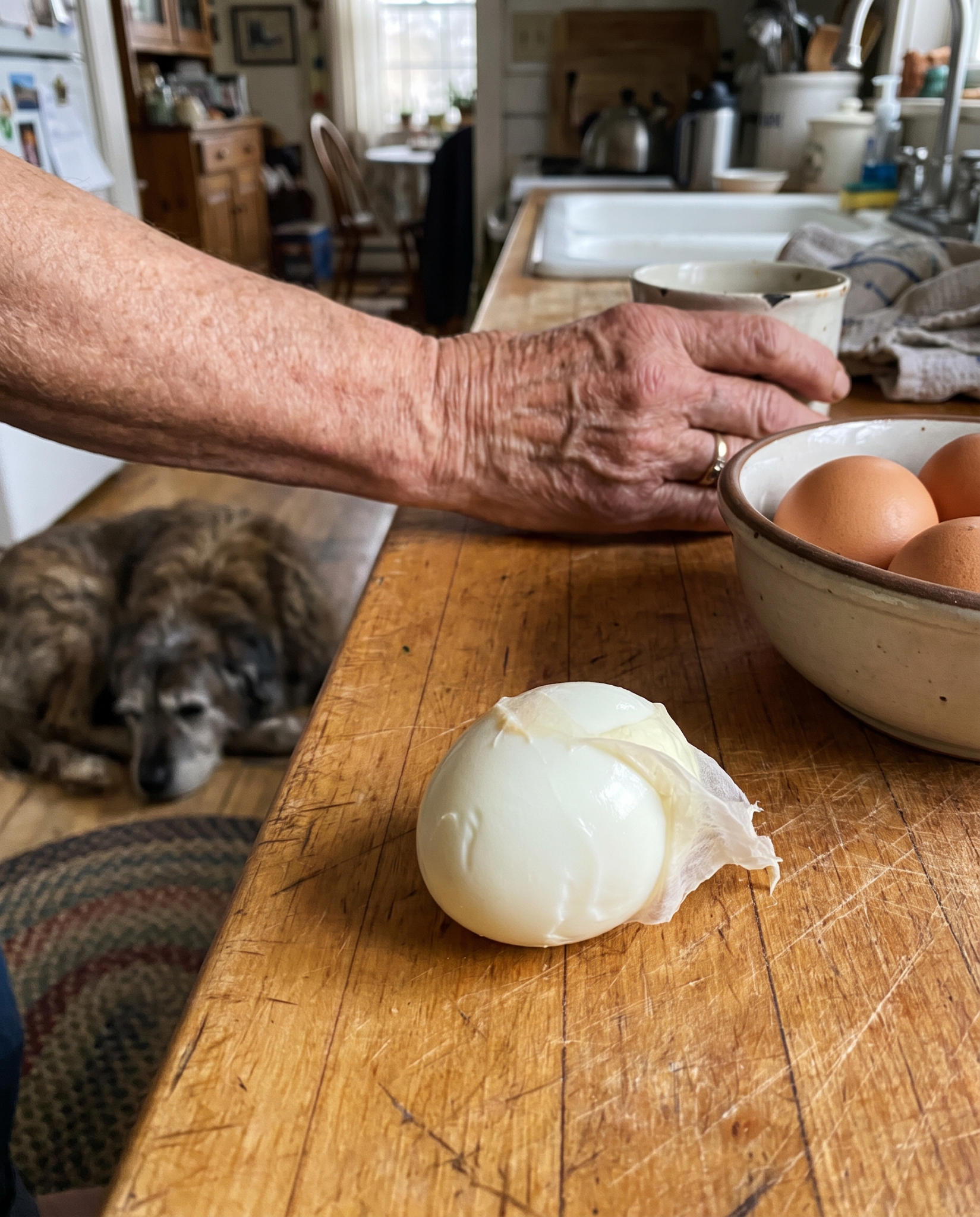
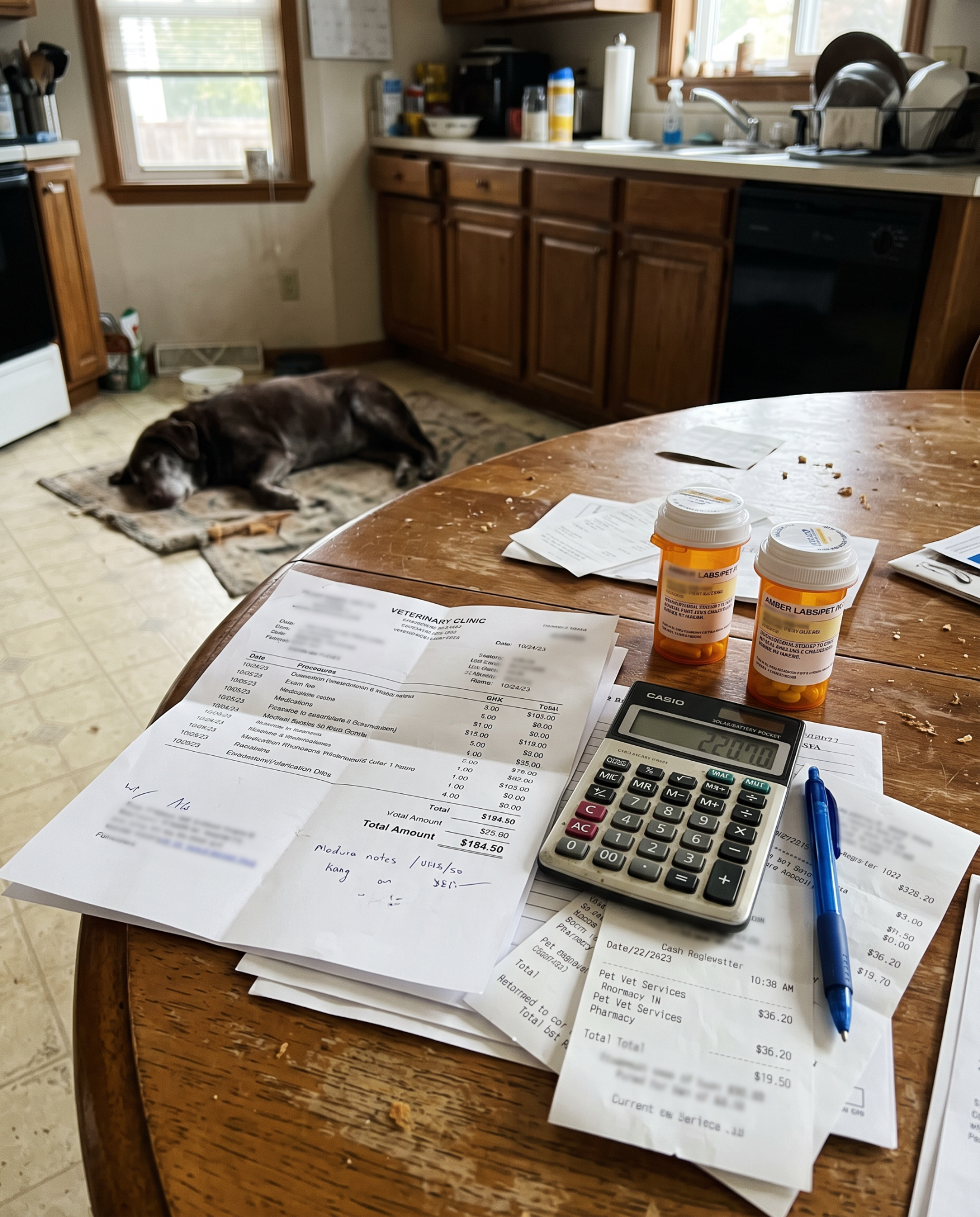
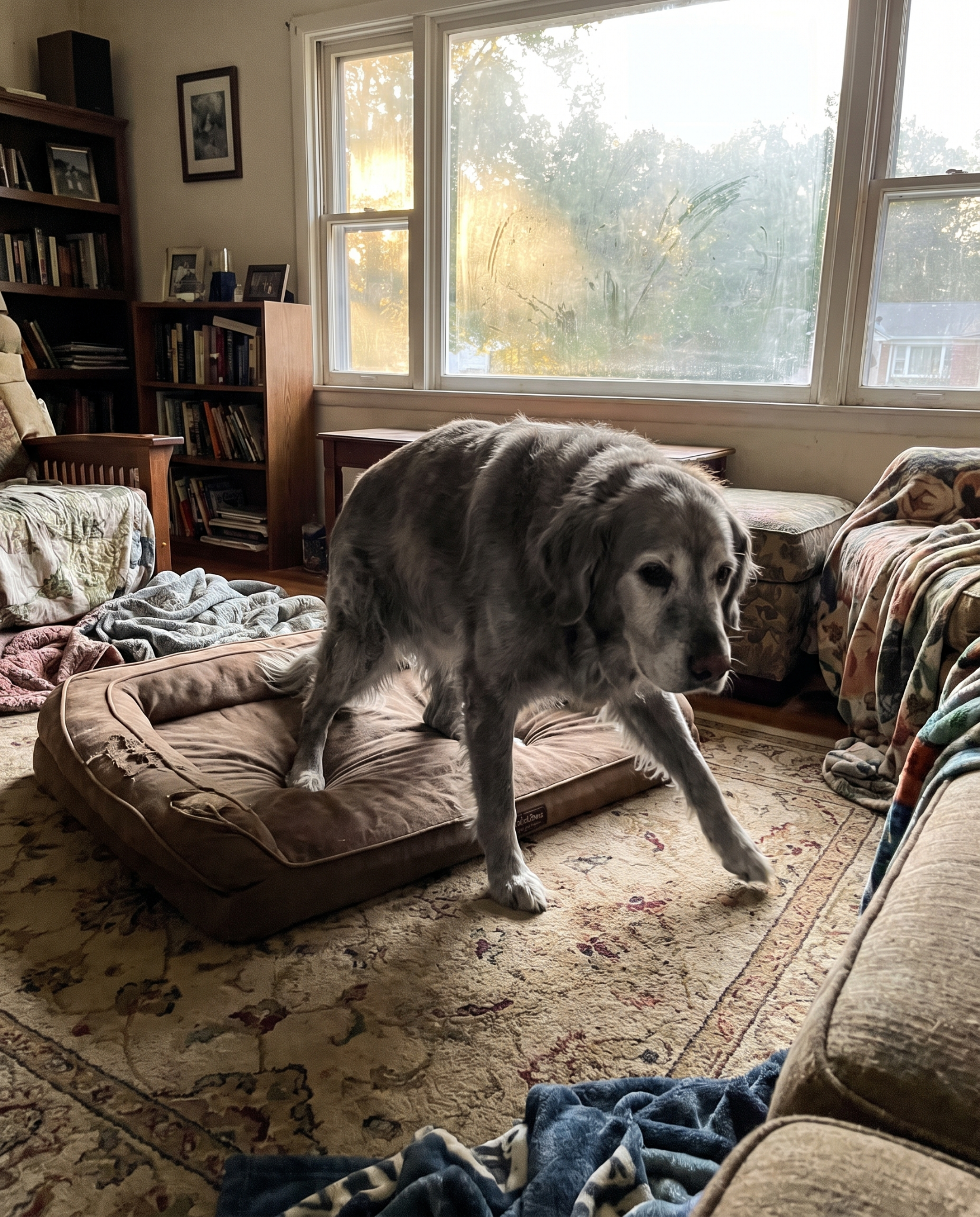
Please STOP giving your dog glucosamine for his joints. Every month you keep buying it is another month the thing that's actually stiffening him up gets a free pass. I know how that sounds. Your vet probably told you the opposite. "Get him on a joint supplement," she said. Maybe she even wrote a brand name on the back of a card. Glucosamine and chondroitin. Everybody knows it. It's on every shelf in every pet store in America. And you did it. God knows you did it. But here's what nobody told you: in 2022, a team of researchers pulled together every controlled trial they could find on joint supplements in dogs and horses — 57 articles, 72 separate trials — and ran the numbers on glucosamine and chondroitin. What they found has a name in the paper. They called it a "very marked non-effect." That's the ingredient. That's the one in the bag on your counter. And every day it sits there doing nothing is a day your dog is still walking on a joint nobody is actually helping. --- Maybe your story sounds like mine. It started with a pause. Just a half-second hesitation before he jumped up on the couch — the couch he'd cleared in one motion since he was eleven months old. You didn't think anything of it. "He's just being lazy," you said. Then came the stairs. He got to the third one and stopped. Looked back at you. Waited. Your husband asked if he was okay and you said, "He's fine, he's just being dramatic," and you both laughed. But something small and cold sat down in your stomach and didn't get up. Fast forward six months and you're standing in aisle four at PetSmart staring at a wall of orange and green bottles. You've already got the big tub in the cart — the $34 one, because you're going through it fast now. Your hand is hovering over a second thing, some kind of topical. You've seen the ads. You buy both. That night you're on the couch with him at your feet, and you watch your husband clip the leash on and take him out for the evening walk. The walk the three of you used to do together. The one that was the best twenty minutes of your day, when the neighborhood got quiet and he'd stop to smell every single mailbox post and you'd let him, because what else is time for. Now you watch from the window. Two weeks later you're in the exam room. You've finally admitted this isn't going away. The X-rays come back. Two views. $172. "Some changes in the hips," the vet says, like those words don't mean the floor just moved. "Osteoarthritis. Pretty common at his age." Common at his age. He's seven. Seven is not old. Seven is supposed to be the middle. "Let's get him on an anti-inflammatory," the vet continues, already typing. "And keep up the joint supplement." You want to believe it'll work. You need to believe it'll work. --- So you add it to the list of things that didn't work. **The glucosamine tub** — $34, and you bought it four times. Eight months. Every single morning, crushed into his food. Nothing. Not a better day. Not one. **The prescription NSAID** — $36 a month. It helped, at first. Then his appetite got strange. Then you read the FDA's own warning page, the one that tells owners to watch for vomiting, diarrhea, bloody or black stool, decreased appetite, decreased activity, and yellowing of the whites of the eyes or gums. And you started watching your dog eat the way you'd watch a stove you weren't sure you turned off. **The orthopedic bed from Amazon** — $89.99, four thousand reviews, "vet recommended!" He slept on it exactly twice and went back to the hallway tile, because the hallway tile is cold and cold is the only thing that ever helped. **The ramp for the car** — $119. He wouldn't use it. Eleven weeks of treats on every step and he would not use it. It is in your garage right now leaning against the water heater. **The "advanced" chews from the vet's office** — $52 a bag. You read the label in the parking lot. Glucosamine. Chondroitin. The same two things. In a nicer bag. **The second opinion** — $129 for the exam. You've spent over $1,400 in a year. Supplements. Pills. Beds. Ramps. Exams. Films. And he's worse than when you started. At night you lie there and ask yourself the same three questions on a loop: Why isn't anything working? Am I doing something wrong? Is this just his life now? --- The bottom fell out on a Saturday in October. We were going to the lake. We'd gone to that lake every October for six years. It's forty minutes away and there's a shallow inlet where the bottom is sand instead of rock, and he would stand in it up to his chest and bite at the surface of the water for as long as you let him. I opened the tailgate and said the word. He came to the bumper. And then he just stood there. He looked at the tailgate. He looked at me. He shifted his weight to the back and got about three inches off the ground and put it back down. Then he sat. He wasn't refusing. He was asking me for help and he didn't have a way to say it. I got my arms under him and lifted him in — sixty-eight pounds, and I felt every one of them — and I closed the tailgate and I got in the driver's seat and I did not start the car. I sat in my own driveway with my hands on the wheel and I cried like something had died, because something had. Not him. The version of us where he could get in the car by himself. And underneath the crying was something hotter. I was furious. I had done everything. Every instruction. Every pill. Every supplement. Fourteen hundred dollars of everything the professionals told me to buy. If I was doing it all right, why was he getting worse? That was the night I understood something: I wasn't looking for another product. I was looking for an answer. --- That night I did something different. Instead of searching "best joint supplement for dogs" for the two hundredth time, I searched: *does glucosamine actually work in dogs* I needed to know why I was failing. Because at that point I was convinced it was me. That I'd waited too long, or picked wrong, or missed the window. I scrolled past the brand blogs. Past the listicles. Past the "top 10 chews of 2026" pages that are all the same page. I kept going, further into the results than I'd ever bothered to go. And I found something I almost scrolled past. Not a wellness blog. Not a supplement company. A paper in the *International Journal of Molecular Sciences*, published in 2022. A systematic review and meta-analysis — which, I had to look up, means researchers gather every study that already exists on a question and analyze them together, so no single study's flukes can carry the answer. Fifty-seven articles. Seventy-two trials. I almost didn't open it. Research papers are dense and I am a person who sells insurance. But I opened it. And here is what it says about glucosamine and chondroitin — the two ingredients in almost every joint product sold for dogs in this country: **88.9% of the trials showed no effect.** **0% demonstrated an effect.** Zero. The authors called it a "very marked non-effect." And then they wrote the sentence that I read four times in a row: that these ingredients **"should no longer be recommended."** I sat there on my couch at 11:40 at night with my dog asleep on the tile in the hallway and I felt two things at once. Relief, because it finally made sense. This was why eight months of that tub did nothing. This was why the nicer bag from the vet's office did nothing. It was never me. And fury, because how many months had he spent on the wrong thing while I paid for it every single time? I went looking for someone to tell me the paper was wrong. Instead I found the *Merck Veterinary Manual* — the reference book, the one that sits on the shelf in the back of the clinic — saying independently that the evidence "did not support the use of" them. Not a competitor. Not a marketer. The manual. --- So then the question changed. It stopped being *what should I buy* and became *what is actually in these bags, and why is the same thing in all of them?* Here's what I learned, and it's not a conspiracy, which somehow made it worse. It's just inertia. Glucosamine got popular decades ago. It became the default. Once an ingredient becomes the default, it becomes the cheap default, because everybody makes it and the price collapses. Now it costs a manufacturer almost nothing per serving. It's recognizable to shoppers. Nobody has to explain it on the front of the bag. So it's in everything. Not because it's the best answer. Because it's the *cheapest recognizable* answer. And the rest of the bag is built the same way. Read the ingredient panel on a $34 tub of chews sometime — actually read it, all the way down past the part in bold. You will find things like sunflower oil and soybean oil in there as binders. You will find flavorings and fillers whose whole job is to make a chew hold its shape and taste like something. Cheap inputs, doing structural work, taking up room. That's what you're carrying home. A default ingredient with a documented failure record, suspended in filler. Meanwhile: That hitch when he stands up? That's still happening. That third stair he won't take? Still there. That inch and a half he can't clear at the tailgate? Nobody in that bag is working on it. --- Once I understood that, I could finally see why every single thing I'd tried had failed. Not because the things were evil. Because they were aimed at the wrong target. **The glucosamine chews.** Aimed at an ingredient with the best-documented failure record in the category. Eight months of religiously feeding him the thing 72 trials could not find an effect for. **The prescription anti-inflammatory.** This one actually did something — that's the honest part. But the FDA publishes its own warnings about this drug class for a reason: GI ulcers and perforations; reduced blood flow to the kidneys, which they say can cause "kidney damage and… sudden-onset kidney failure"; and liver damage that happens unpredictably, most of it within three weeks of starting. It is a real tool for real pain and I am not telling you to throw it away. I am telling you it manages a signal. It does not change what's underneath. **The bed and the ramp.** $209 combined, to make the house easier to survive. Neither one touched the joint. They were a wheelchair, and I bought them because I thought the joint was finished. **"He's just getting old, let him take it easy."** This is the advice I got most and it is the one that cost me the most. Yes — stop the six-mile hikes, stop letting him launch off the deck. But total rest is not rehabilitation. Muscle around a joint is what holds it steady, and muscle you don't use goes away. Rest him into a corner and he gets less stable, not more. **Surgery.** Real, sometimes necessary, and enormous. A TPLO — the standard knee procedure — runs about $3,525 per knee in national average pricing. Per knee. Every one of them failed for the same reason: none of them changed what was in the bag. --- I stopped shopping for a brand and started shopping for a formula. I wrote down what I actually wanted, on the back of an envelope, at my kitchen table: No glucosamine. No chondroitin. If 72 trials couldn't find it, I'm not paying for it. Short ingredient list. If there are eighteen things in it, most of them are there to fill space. No seed oils. No artificial fillers. I'd read enough labels by then to know what I was looking at. Made and sourced in the United States, so I could actually find out where it came from. And a real guarantee — long enough to actually run the experiment, not thirty days. Then I went looking for something that met all five. Most things met one. A lot met none. Then I found something different. It's called Zoomies Extra Strength Joint Chews. --- What got my attention wasn't the marketing. It was the ingredient panel, because there was so little of it. Three active ingredients. That's the whole formula. **Natural Eggshell Membrane.** Not the shell — the thin translucent film on the inside of it, the part you've peeled off a hard-boiled egg your whole life without thinking about it. It's a connective tissue, and it's the reason I bought this and not something else, because it's the one with an actual randomized, placebo-controlled trial behind it in dogs. I read that trial. Ruff and colleagues, 2016, published in *Veterinary Medicine: Research and Reports*. Fifty-one dogs. Randomized, double-blind, placebo-controlled — meaning neither the owners nor the researchers knew which dogs were getting it. At **one week**, owner-assessed pain improved **19.4%** over placebo (P=0.010) and owner-assessed function improved **20.5%** (P=0.028). At six weeks, the veterinarians' own assessments showed pain improved 23.6% (P=0.012) and quality of life 26.8% (P=0.033). I want to be precise with you, because I got lied to enough on this journey. Those are the numbers that reached statistical significance. Not every measure in that study did. I am telling you the ones that did, and I am not going to inflate them, because the inflated version is how I ended up with $1,400 of garbage in my garage. But the one-week finding is the part that stopped me. One week. Not "give it six months and see." **Boswellia Serrata.** A tree resin — frankincense, the actual one — used in traditional practice for a very long time, included here to support a normal inflammatory response. Zoomies puts this at the front of the timeline: days three to seven, the stiffness. **Hyaluronic Acid.** A substance the body already makes on its own, and one that is naturally present in the fluid inside a healthy joint. That's it. That's the formula. Three things. The company frames it as a three-stage system — Boswellia first for stiffness in days three to seven, the eggshell membrane over weeks two to four, hyaluronic acid from weeks four to six and on. That's their framing of how the pieces are meant to layer, and I'm repeating it as theirs, not as something a journal told me. What convinced me wasn't the staging. It was the absence. No glucosamine. No chondroitin. No seed oils, artificial fillers, or cheap ingredients. 100% made and sourced in the United States. Somebody looked at the 2022 meta-analysis and built the bag around what was left. --- I was still skeptical. I had been disappointed before. I had wasted money before. I had gotten my hopes up before and had them taken apart. But it's a 90-day money back guarantee. Not thirty. Ninety — long enough to actually see whether the thing works, which is the only length of guarantee that means anything. And the line on their site, which I'll admit is the reason I finally clicked: *worst case you get your money back, best case your dog gets better.* That's the whole risk. I'd already lit $1,400 on fire without a guarantee on any of it. I ordered it. --- The bag came on a Wednesday. I didn't feel excited. I felt tired. I'd been here before. New thing, high hopes, the slow deflation. It's a soft chew. Not a pill you have to bury in peanut butter and not a dropper you have to fight him for. He took it out of my hand like it was a treat, because to him it was one, and that was the end of the administration problem forever. I wrote the date on the kitchen calendar. October 14th. Then I did what the study made me want to do: I kept notes. Because I'd learned that "he seems a little better" is a sentence you can talk yourself into on any given Tuesday, and I wanted something that couldn't be talked into. --- **Week One:** Day four, he stood up from the tile without the pause. I want to be careful here because I've read a hundred of these and they all claim day one. It was day four, and it was not dramatic, and I only caught it because I was writing things down. He'd been doing this thing where he'd get his front end up, hold, and then bring the back end after — a two-part operation. On day four it was one motion. I didn't tell my husband. I didn't want to jinx it. I made a note. Day six he took the third stair. --- **Week Two:** The evening walk got longer without me deciding to make it longer. We'd been doing four houses down and back. That Thursday we got to the corner. Friday we went around the corner. I wasn't pushing. He was just the one out in front of the leash again instead of behind it. My husband noticed before I said anything. He came in Saturday morning and said, "Is he walking different?" I said, "Say more." He said, "His back end. It's not doing that thing." --- **Week Three:** He got on the couch. Not carefully. Not in the two-stage way he'd been doing it for a year, front paws up first, hesitate, gather, then haul. He came across the living room and went up in one motion, the way he did when he was two, and turned around three times and lay down and sighed and went to sleep, and I stood in my own living room with a dish towel in my hand and cried. Three weeks. And I want to be honest about what that means and what it doesn't. His hips still have arthritis. The X-rays didn't change. Nothing in this is a cure and I'd be lying to you if I dressed it up as one. But he got on the couch by himself. --- **Week Four:** I took the ramp out of the garage and put it in the back of the car. Then I opened the tailgate at the trailhead and he was already in. I stood there holding a $119 ramp I had never once gotten him to walk up, and I laughed out loud in a parking lot by myself like a crazy person. --- **Six Weeks:** Back at the vet for an unrelated thing — an ear he wouldn't leave alone. She had him walk the length of the hallway and back the way they do, and she watched, and then she had him do it again. "He's moving better," she said. She checked her notes from October. "Noticeably better. What are we doing differently?" I told her. I told her about the meta-analysis too, and the "should no longer be recommended" line, and I watched her go quiet for a second in a way I've thought about since. She said, "Send me the citation." I did. --- Now. Why am I telling you all this? Because there are thousands of people right now standing at a tailgate with their arms under a dog who used to jump. Watching the walk from the window. Spending real money every single month on a tub of something 72 trials could not find an effect for, and blaming themselves when it doesn't work. And I want you to know: it isn't you. I'm not telling you Zoomies is a miracle. It isn't. His arthritis is still there. He's still seven-going-on-eight and he is not going to be two again, and any ad that tells you otherwise is selling you the same thing that already failed you, in a nicer bag. I'm not telling you to stop what your vet has him on. Don't do that on the strength of a Facebook post — call her, tell her what you're adding, let her be in the room for it. If your dog has a sudden change, a limp that came on overnight, a leg that isn't taking weight, or a slow painless weakness in the hind end that's creeping forward, that is a vet visit, today, and no chew on earth is the answer to it. What I'm telling you is narrower than a miracle and more useful: The default ingredient has a documented failure record. It is in almost everything on the shelf. And there is now a formula built specifically without it. --- The math is simple. You can keep doing what you're doing. The tub, $34, four times a year. The prescription, $36 a month. The exams at $56 to $129 when it flares. The films at $172. The bed and the ramp in the garage. And if it gets to the knee, $3,525. Per knee. Or you can try the thing built out of what was left after somebody read the research. Three ingredients. No glucosamine, no chondroitin, no seed oils, no artificial fillers. Made and sourced in the United States. Relief in as little as 7 days — which is not my number, it's the week the trial measured at. Up to 40% off when you get the bulk supply, which is what I do now, because I'm not going back. 90 day money back guarantee. Worst case you get your money back. Best case, your dog gets better. :) Stop buying the ingredient that failed. Start with the one they actually studied.
Where the ad sends people
nancygriffithblog.com
Stop Buying the Ingredient That Failed Your Dog
“I trusted my vet for 4 years. We did Carprofen, then Adequan injections twice a week, then prednisone for the bad days. His pain was 'managed' the whole time. Then one morning he couldn't get up. The drugs never fixed anything — they just hid it while everything else fell apart.” — Robert T...
See details: usa.zoomiespethealth.com(opens in a new tab)