Amazing Dog Transformations
Amazing Dog Transformations Facebook ad: “He Stopped Doing the One Thing That Was Always His”
Ran for 11 days, from August 22 to September 2, 2026, the last day Crush saw it.
Run by Amazing Dog Transformations on Facebook. Crush is not the advertiser and does not verify its claims. See this ad in Meta's Ad Library(opens in a new tab)
Want an ad like this for your product?
Crush makes new ad images for your product from this ad: your logo, your product photo, your offer.
Trials from $19.95 USD, then $79.95 USD a month. Cancel anytime.
About this ad
- Meta Ad Library ID
- 1946791962633637
- Platforms
- Relaunches
- 2
Ad text
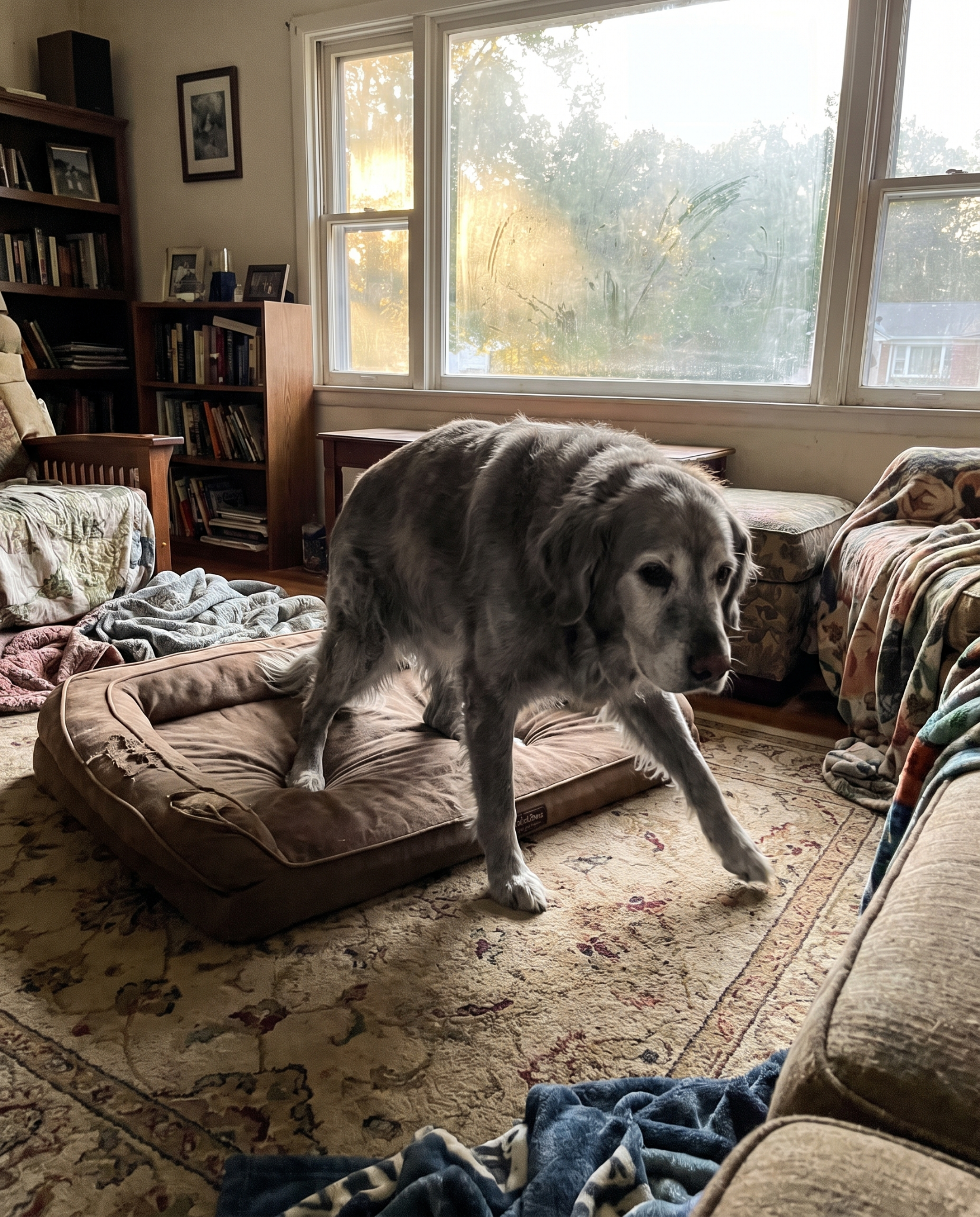
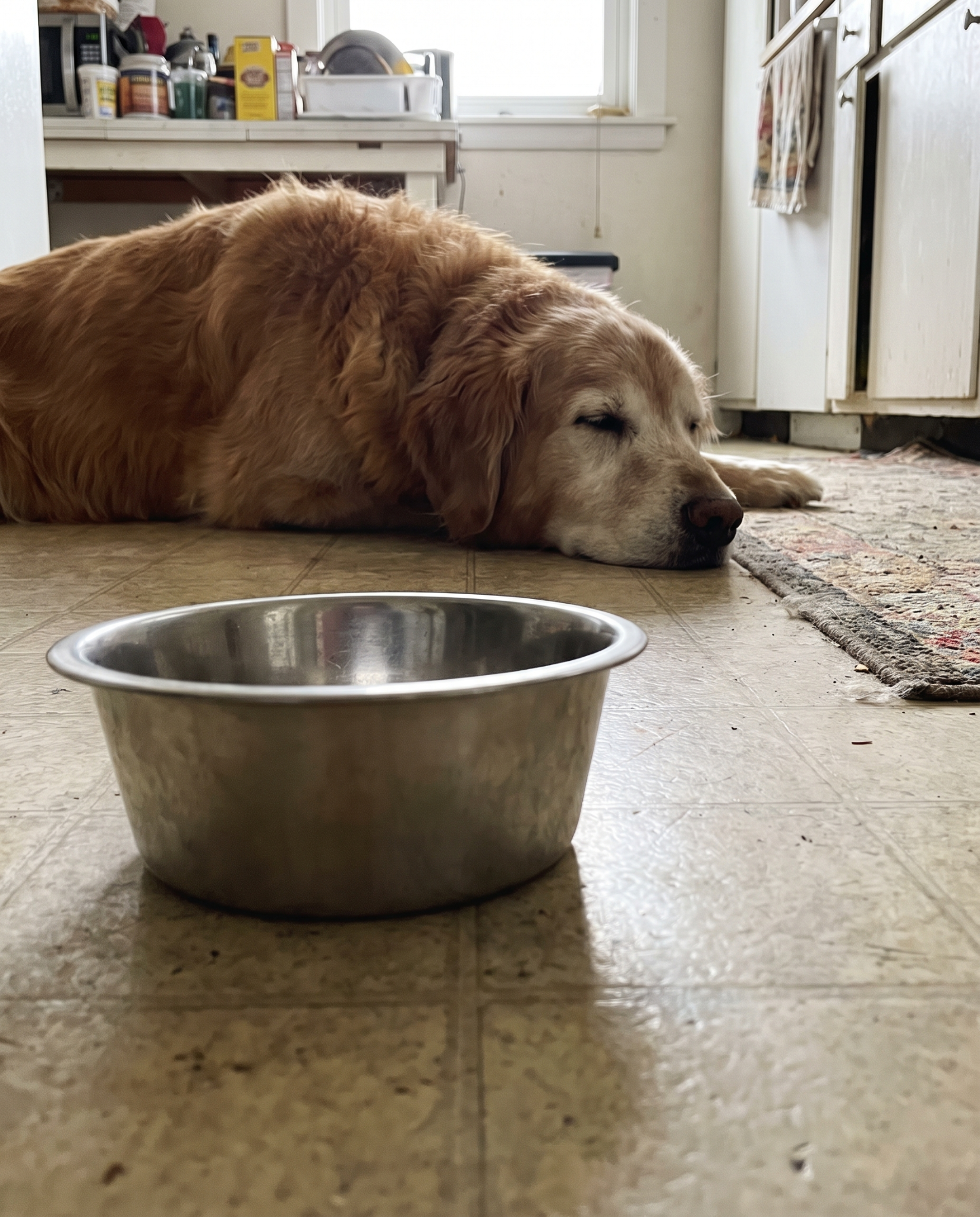
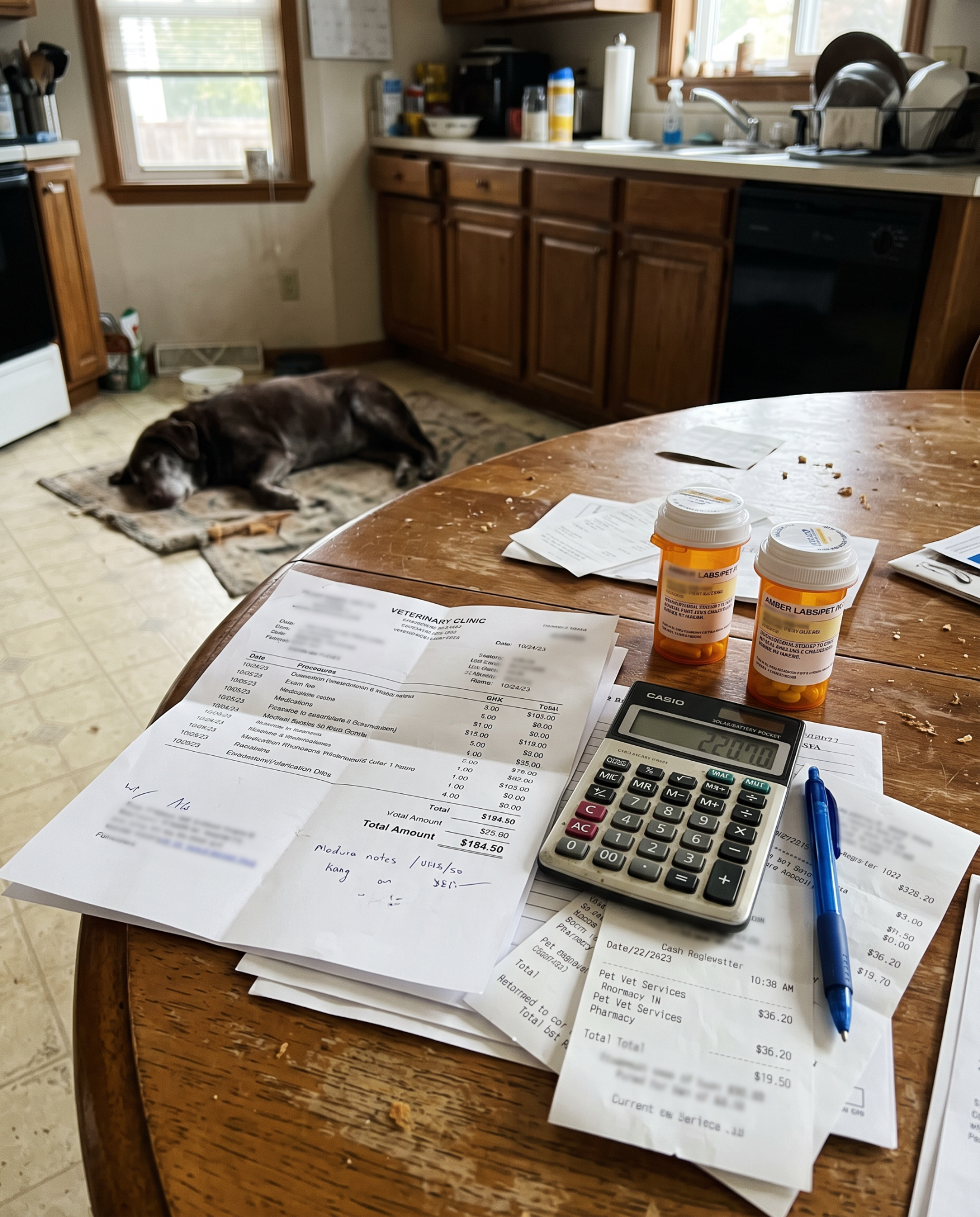
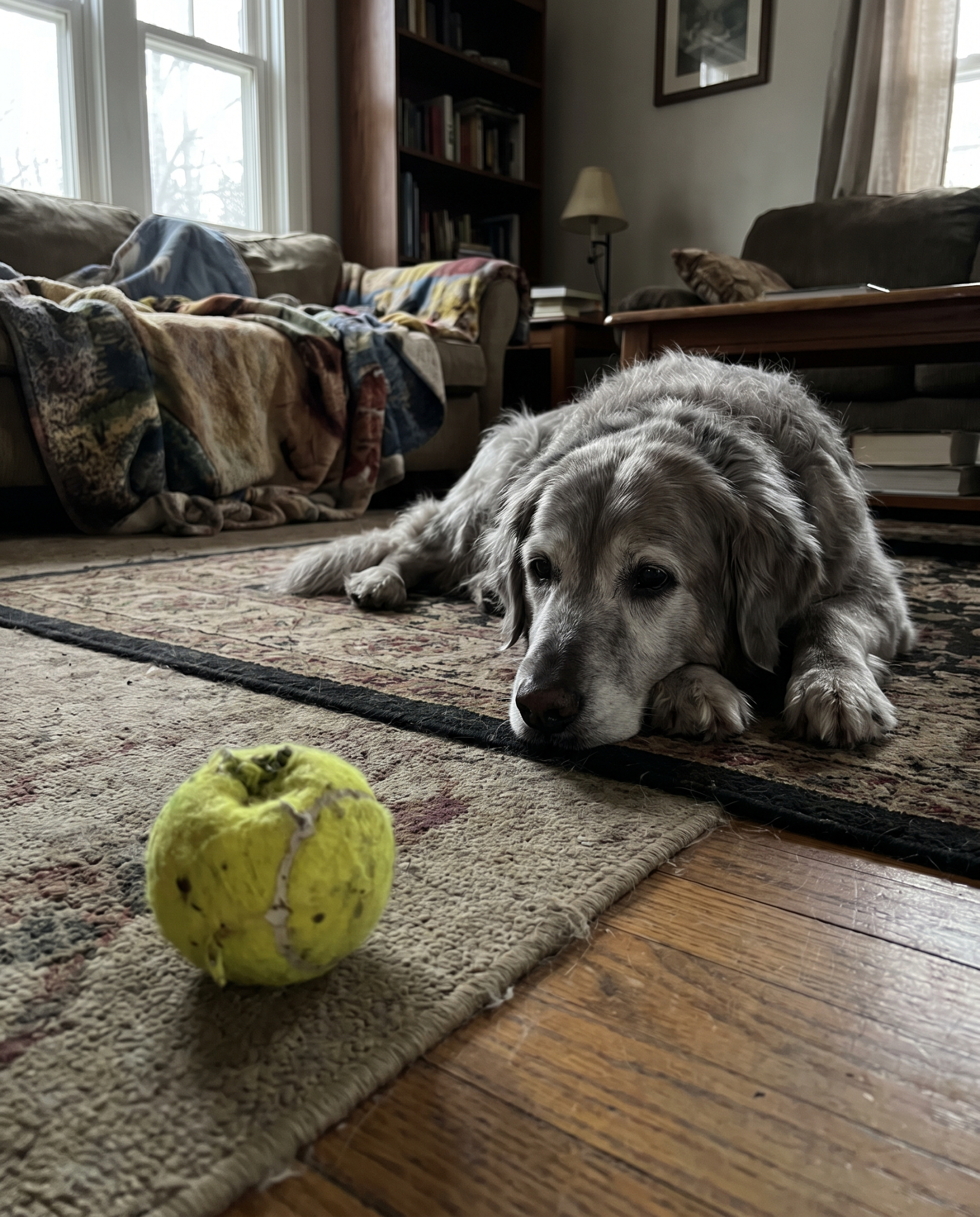
Last October I stood in my backyard at 6:40 in the evening and dropped my dog's tennis ball into the garbage can. It was the green one. The fuzz was worn off two sides and there was a soft spot where his teeth always landed, and it hadn't bounced straight in about four years. That never mattered. It was his. I stood there with the lid in one hand and the ball in the other for probably a full minute. Moose was lying on the patio about fifteen feet behind me, in the last warm rectangle of light coming through the kitchen window, chin flat on the concrete. When he heard the lid move he thumped his tail twice against the ground. Twice. That was it. He didn't get up. He had no idea what I was about to do. If you have a dog who has stopped doing the one thing that used to be his entire personality — the ball, the frisbee, the stairs, the jump onto the bed, the flat-out sprint down the hallway when your car pulls in — I need to tell you what happened next. Because I had already made the decision. I was going to stop throwing it. I had convinced myself that was the kind thing to do. And my neighbor Ellen, who was dragging her own can out to the curb at that exact moment, is the reason that ball is sitting on my kitchen counter right now instead of in a landfill in Ohio. --- I got Moose in the spring of 2016. Golden retriever, ten weeks old, seventy-five pounds by the time he was done growing. My wife picked him out of the litter because he was the only one who didn't come running when we walked in — he was in the corner of the pen working on a knotted sock like it owed him money. That should have told us everything. Because from the day we brought him home, that dog had exactly one interest in this world, and it was anything round. --- I don't know how to explain the ball thing to someone who hasn't lived with a dog like this. He didn't play fetch. Fetch was a thing other dogs did. Moose *worked* the ball. He would carry it from room to room and set it down at your feet and then back up two steps and stare at it, and then stare at you, and then back at the ball, doing this little front-paw shuffle, and if you ignored him he would pick it up and drop it again about four inches closer to your foot. Then closer. Then on your foot. Then, eventually, in your lap, wet. He knew the word. He knew the sound of the cabinet where we kept them. He knew the difference between me standing up to get a glass of water and me standing up to go outside, and I have never figured out how. Every single day for years, six o'clock, back door, forty minutes in the yard. Rain, snow, whatever. My wife used to say she could set the oven timer by him. And when I threw it, he ran like something was chasing him. That full-body, back-legs-overtaking-front-legs, ears flat, absolutely stupid sprint that golden retrievers do. He'd catch it on the second bounce nine times out of ten and come tearing back and skid past me on the grass because he could never get the brakes figured out. That was our thing. Fifteen minutes a day at the end of the workday where I didn't think about anything. --- I want to be honest about how it ended, because it didn't end the way I would have expected. It didn't end with a bad day. There was no injury, no yelp, no limp, no moment I could point to. It ended so slowly that I missed it. The first thing I noticed — and I only noticed it later, looking back — was that he stopped catching them on the bounce. He'd let the ball land and roll and then trot out and pick it up. I remember thinking he was getting lazy about it. He was seven. I laughed about it. Then the trot got shorter. He'd bring it back most of the way and drop it a few feet short of me instead of in my hand, and I'd take a step forward and get it myself. Then some nights he'd only go two or three times and then lie down in the grass with the ball between his paws, still happy, still out there, just done. Somewhere in there, forty minutes became twenty. Twenty became ten. Ten became "let him out, he'll come back in when he's ready." I did not sit down one day and decide to stop playing with my dog. It got taken from us one small piece at a time and I didn't see any of the pieces go. --- The house started telling me things before I was willing to listen. The first one was the sound. Our bedroom is upstairs and Moose slept at the foot of the bed his entire life, on the right side, against the footboard. Around the middle of that year I started hearing him get up in the night. Not walking — getting up. There's a sound a big dog makes when he pushes himself off the floor with his front end and then has to gather up the back end separately, a kind of scrape and a grunt, and then he'd stand there for a few seconds before he moved anywhere. I'd hear it at one in the morning. Then again around four. He'd reposition, circle twice, drop back down with a thud that shook the bed frame, and I'd lie there in the dark listening to him breathe and telling myself he's fine, he's just old, this is what happens. He was eight. --- Then the stairs. We have thirteen steps from the front hall to the second floor, hardwood, no runner. Moose had gone up and down those stairs four hundred times a day his whole life. One night in the summer I came upstairs to go to bed and he wasn't behind me. He was at the bottom, in the hall, looking up at me. I said his name and he took the first step and then stopped. And then he did this thing where he sort of hopped the next two with his back legs together, and then stopped again on the landing. I stood at the top of my own staircase at 11:20 at night watching my dog decide whether the trip was worth it. He made it up. He made it up almost every night that summer. But there was a pause at the bottom every time, this little half-second of arithmetic, and once you have seen your dog do math about whether he can reach you, you cannot unsee it. By the fall he stopped trying. He'd lie down on the rug in the front hall and I'd come down at midnight and find him there and go get a blanket and sleep on the couch so he wasn't alone downstairs. I slept on that couch a lot of nights. --- Then the bed. Not our bed — his spot at the foot of ours. He couldn't make the jump anymore. I got him a set of foam pet stairs from a pet store, forty-five dollars, and he looked at them once, sniffed the top one, and never touched them again for the rest of his life. So he slept on the floor beside the bed instead of on it. And I know how that sounds. It's a dog on a floor. But I'd wake up at 3 AM and reach my hand down over the side of the mattress in the dark and find him down there, and there was something about the gap — like eighteen inches of air — that got me every time. I used to complain about him taking up half the bed. I would give a lot to have that complaint back. --- Then the greeting stopped. That was the one that broke something in me. For nine years, the sound of my truck in the driveway set off an event in that house. You could hear him from outside — nails scrambling on the hardwood, the thud of him hitting the door, the whining, and then the second I opened it he'd be spinning in the entryway with a ball in his mouth that he'd gone and found in the eleven seconds between hearing the truck and me getting to the door. Every day. For nine years. And then one Tuesday in September I came home and opened the door and the house was quiet. He was in the living room. He lifted his head off the dog bed and his tail went, and he was glad, he was absolutely glad to see me — but he stayed down. He wagged from the floor. I stood in my own entryway with my keys in my hand and I didn't take my coat off for a while. --- The last time I threw the ball for him was that October. I want to tell you exactly how it went because it's the reason I'm writing any of this. It was a Wednesday. Clear, cold, the good kind of fall evening. I let him out and he did his walk around the perimeter of the yard, which was his whole routine now, and I had the green ball in my jacket pocket because I still carried it out of habit. So I took it out and I said the thing I've said ten thousand times. "Moose. Ready?" And his ears came up. They did. He looked right at me. I threw it — not far, maybe twenty-five feet, an easy one — and it bounced twice and rolled into the mulch by the fence. And he watched it go. He didn't move. He stood there in the middle of the yard and tracked it all the way with his eyes until it stopped, and then he looked back at me, and I swear to you the look on his face was an apology. Like he was sorry. Like he wanted to and there was a wall between wanting to and doing it, and he knew it, and he was embarrassed. That is the look I could not live with. I walked out to the fence and picked it up myself and we went inside, and two nights later I stood by the garbage can with the lid in my hand and decided I was never putting him in that position again. --- That was the moment Ellen said, across two driveways, "Don't you dare throw that out." Ellen is somewhere in her sixties, lives directly across from us, and ran a boarding and daycare kennel out on Route 9 for twenty-two years before she sold it. She has an eleven-year-old chocolate lab named Birdie who, at that point, I had recently noticed was somehow keeping up with a lab half her age at the corner. She came over and stood at the end of my driveway with her hands in her coat pockets. "How long has he been off the ball?" I said I didn't really know. Months. Maybe a year if I was honest about it. "Is it the stairs too?" I said yes. "Getting up off the floor. Little groan. Takes him a second before the back end comes along." I said yes to that too, and something in my throat got tight, because I hadn't told anybody any of this out loud. She nodded, the way somebody nods when you've just confirmed the fourth thing on a list they already had in their head. "What have you got him on?" --- I told her, and it's the same list you probably have. Glucosamine and chondroitin chews from the big-box store. Then a different brand of glucosamine and chondroitin chews, because the first one clearly wasn't doing anything and I figured it was a quality problem. Then a third, the expensive one, the one with the dog in a track suit on the bag. Fish oil pumps on his food. An orthopedic memory foam bed, one hundred and ninety dollars, which he loved and which changed nothing. A ramp for the truck. Rugs down the entire upstairs hallway so he'd stop slipping. The foam stairs he never used. Heated blanket. A different feeding schedule because I read that weight matters, and I did take eight pounds off him, and it helped some, and it was not the answer. Two vet visits. Exam, then X-rays the second time. A national average exam runs somewhere between fifty-six and a hundred and twenty-nine dollars and two or three X-ray views run about a hundred and seventy-two, and that math was about right for us. The vet was good. She was kind. She said what vets say, which was that this is common in big dogs his age, and that we could talk about a daily anti-inflammatory. And I want to be careful here, because plenty of dogs do fine on those and this is a decision between you and your vet and nobody else. But I went home and read the FDA's own page on pain relievers for pets, and the warning signs they tell owners to watch for are vomiting, diarrhea, bloody or black stool, decreased appetite, decreased activity, and yellowing of the whites of the eyes or gums. They describe GI ulcers, they describe reduced blood flow to the kidneys, and they note that most liver injury shows up within the first three weeks. I sat with that a long time and I wasn't ready. I told myself I'd try one more thing first. The problem was I'd run out of "one more things." I'd spent somewhere north of six hundred dollars on chews alone at that point. Two years of thirty-three-dollar bags. And the dog in my yard was watching tennis balls roll into the mulch. --- Ellen listened to all of it standing in my driveway in the cold. Then she said: "Everything on that list has glucosamine in it." I said yeah, that's what joint supplements are. And she said, "That's what they've been for thirty years. It's not the same thing as saying they work." Then she told me to look it up myself, and gave me the thing to search, and I went inside and did it that night on my phone in the kitchen while Moose slept on the floor by the fridge. --- Here's what I found, and I'm going to keep this short because I'm not a scientist and this ad isn't a lecture. In 2022 a team published a systematic review and meta-analysis in the International Journal of Molecular Sciences — 57 articles, 72 separate trials, looking at nutraceuticals for joint pain in dogs. For glucosamine and chondroitin, the result was what the authors themselves called a "very marked non-effect." Of the trials examined, 88.9% showed no effect. Zero percent demonstrated an effect. The authors wrote that these products "should no longer be recommended." And this isn't a fringe opinion. The Merck Veterinary Manual — the reference book, the one on the shelf in the exam room — says the evidence "did not support the use of" glucosamine and chondroitin. I sat at my kitchen table and did the arithmetic on two years of bags and three brands and all of that hope, and it landed on me pretty hard. I hadn't been failing my dog because I wasn't trying. I'd been failing him because I was buying the wrong thing, over and over, and switching brands inside the same wrong thing. --- The next morning I walked over and Ellen showed me the bag she'd had Birdie on for a year and a half. It's called Zoomies. Extra Strength Joint Chews. Soft chews, made and sourced in the United States, and the reason she'd landed on them is that the ingredient list is short and glucosamine is not on it. Three things. Boswellia serrata. Natural eggshell membrane. Hyaluronic acid. She explained it to me the way she must have explained it to a few hundred boarding customers over twenty-two years, which is to say plainly, and it's the first time any of this made structural sense to me. It works in three stages, and they don't all arrive at once. Stage one, roughly days three to seven, is the boswellia. That's the part that goes after the stiffness — the reason a dog stands at the bottom of the stairs doing math. Stage two, weeks two through four, is the eggshell membrane, which supports the cartilage itself. That's the slower, underneath part. Stage three, weeks four to six and beyond, is the hyaluronic acid, which supports joint fluid. "So don't judge it on day two," she said. "And don't judge it on day thirty either, because that's when the third thing is just getting started. Give it six weeks and then tell me what your dog looks like." I asked her the only question I actually cared about. "Is he going to want the ball again?" She said, "Birdie's eleven. She stole a frisbee off a kid at the park in June." --- I ordered that afternoon. --- Day one through four, nothing. I'm telling you that because I don't want to sell you a fairy tale. He ate the chew like it was a treat, which it basically is, and that was the entirety of the news. Day six was the first thing. I was at the sink and I heard him get up off the kitchen floor behind me, and I turned around because something was different, and it took me a second to work out what. There was no grunt. He just stood up. Like a dog stands up. I want to be careful not to make that sound bigger than it was. It's a dog standing up. But I had been listening to that particular sound at one in the morning for over a year and it had become the soundtrack of the whole thing, and it wasn't there. --- Day nine, I woke up at some point in the night and reached my hand down over the side of the bed and there was nothing there. I sat up. I actually got scared for a second. He was at the foot of the bed. On the bed. On his spot, against the footboard, taking up his half, exactly the way he had for nine years. I don't know what time he came up. I don't know how many times he'd tried and turned around at the bottom in the previous months. I sat there in the dark for a while with my hand on his back and I didn't wake my wife up because I didn't trust my voice. --- Week three, my wife noticed the thing I hadn't. She said, "He's doing the shuffle again." The front-paw shuffle. The one he did over a ball. He was doing it at her feet in the living room over a rope toy because there wasn't a ball in the house anymore — I'd thrown the last one out and hadn't replaced it. I bought a three-pack of tennis balls at the grocery store that night like a man buying flowers to apologize. --- Week four, he beat me to the door. I pulled in, and through the front window I saw him come around the corner from the kitchen at a trot, and by the time I got my key in he was there. No ball in his mouth. But he was standing up, and he was spinning, sort of — a small, creaky, seventy-pound spin — and I stood in my entryway and got a face full of golden retriever for the first time in over a year. --- Week six was the yard. Cold Sunday, early December. I had a new ball in my jacket pocket, and I hadn't thrown one since October, and I want to be honest that I stood out there for a minute deciding whether I could handle watching it roll into the mulch again. I said, "Moose. Ready?" Ears up. I threw it maybe thirty feet. He went. Not the old sprint. I'm not going to tell you a nine-year-old dog turned back into a two-year-old dog, because that's not what happened and you'd be right not to believe me. It was slower, and it was less graceful, and he took it on the roll instead of the bounce. But he went, and he got it, and he brought it back, and he dropped it on my boot and backed up two steps and stared at it and then at me and then at it. I threw it four more times. Then I went in the house and sat on the edge of the tub with the water running so nobody would hear me. --- Here's the honest evidence part, and then I'll get out of your way. I already told you what the 2022 meta-analysis found about glucosamine and chondroitin, and what the Merck Veterinary Manual says about it. That's the part that explains why the last two years of my life didn't work. The part that explains why this did: eggshell membrane has been studied in a randomized, double-blind, placebo-controlled trial in 51 dogs. Owner-assessed joint pain improved 19.4% and joint function improved 20.5% versus placebo — at one week. One week. That is the whole reason I got day six instead of day sixty. I'm not going to tell you it's a cure, or that it fixes anything permanently, or that any supplement rebuilds a joint. It doesn't and it can't and anyone telling you otherwise is lying to you. What I can tell you is what a specific 9-year-old golden retriever in Ohio looked like in October and what he looks like now. --- On price, because this is the part where I got cynical and I assume you will too. I'd been paying about thirty-three dollars a month for the glucosamine chews with the athletic dog on the bag — the ones the research says did nothing. A daily prescription anti-inflammatory runs around thirty-six dollars a month plus the visits to monitor it. If this had gone all the way and turned into a knee surgery, national average on a TPLO is about $3,525. Per knee. Zoomies runs less than what I was already spending on the wrong thing, and if you buy the multi-month bundle it comes down as much as 40% off, which is what I do now because you don't want to run out mid-stage-two and start over. And every order has a 90-day money-back guarantee. Ninety days is long enough to see all three stages and then some. If nothing happens, you send it back and you're out nothing. Worst case you get your money back. Best case, your dog gets his thing back. --- It's been nine months. The green ball — the original one, the one with the fuzz worn off and the soft spot — is on my kitchen counter next to the mail. I fished it out of the can that night while Ellen was still standing in my driveway, and I never washed it, and it's disgusting, and it's staying there. We're back to about twenty minutes in the yard instead of forty, and there are still days he taps out early, and he still takes the stairs one at a time instead of three. He's nine and a half. I'm not asking for miracles. But he sleeps on the bed. He meets me at the door. He does the shuffle at my feet at six o'clock with a ball at my toes and his eyebrows going, and last week he skidded past me on the wet grass because he still hasn't figured out the brakes. I almost took that away from him. Not on purpose. I was going to do it gently, out of love, one small mercy at a time, because I thought the alternative was making him feel bad about a body he couldn't do anything about. I was two feet from a garbage can lid when somebody across the street said one sentence to me. Not everybody gets an Ellen. But everybody can look at the back of the bag they're currently buying, and see whether it says glucosamine on it, and decide whether two more years of that is a thing they're willing to spend. The link is right below. If your dog has stopped doing the one thing that was always his — the ball, the stairs, the bed, the door — give it six weeks before you decide that's just who he is now. Six weeks. That's all I'm asking.
Where the ad sends people
nancygriffithblog.com
He Stopped Doing the One Thing That Was Always His
“I trusted my vet for 4 years. We did Carprofen, then Adequan injections twice a week, then prednisone for the bad days. His pain was 'managed' the whole time. Then one morning he couldn't get up. The drugs never fixed anything — they just hid it while everything else fell apart.” — Robert T...
See details: usa.zoomiespethealth.com(opens in a new tab)