
Active· since Jul 20, 2026
- 61
- days running
- 0
- relaunches
Ad copy
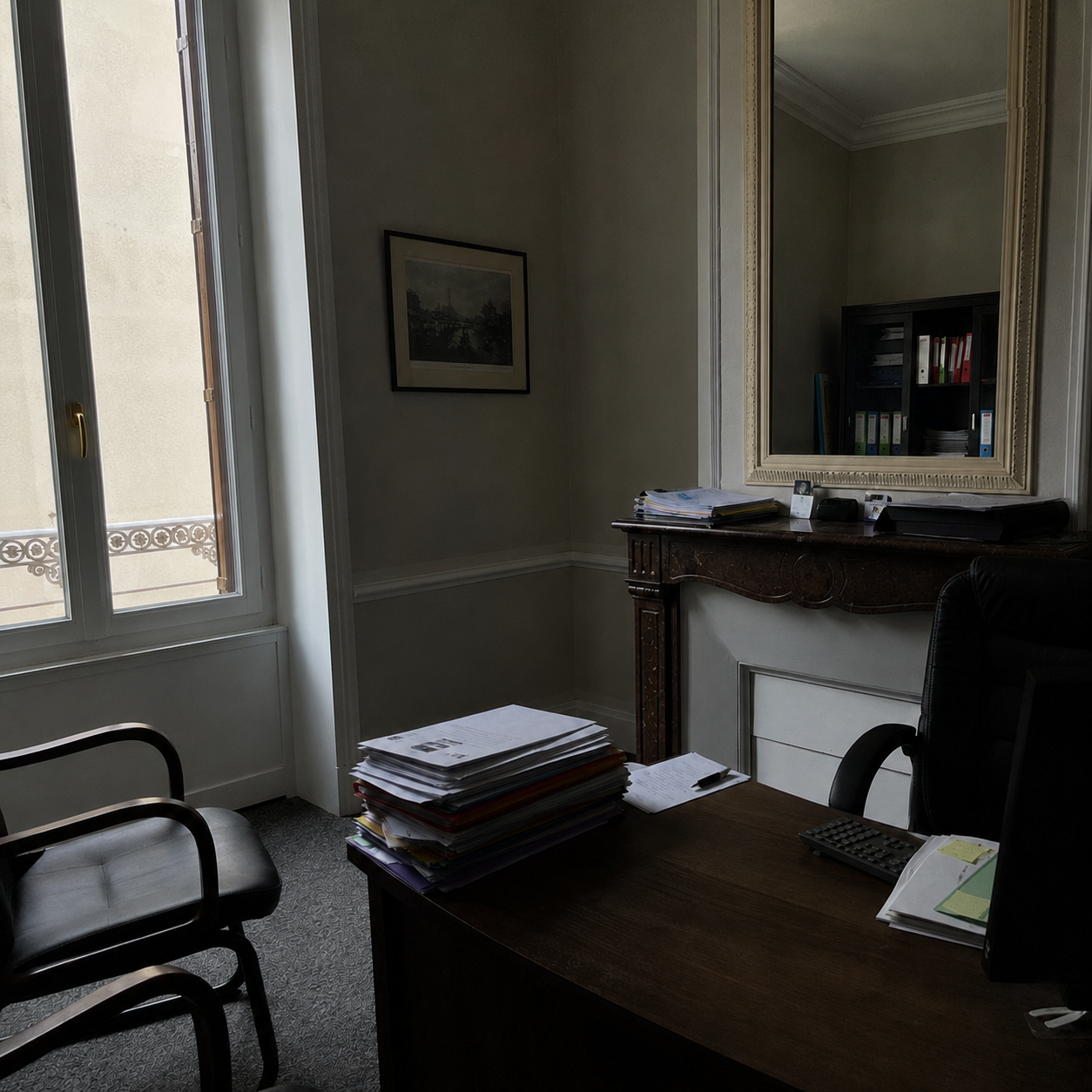
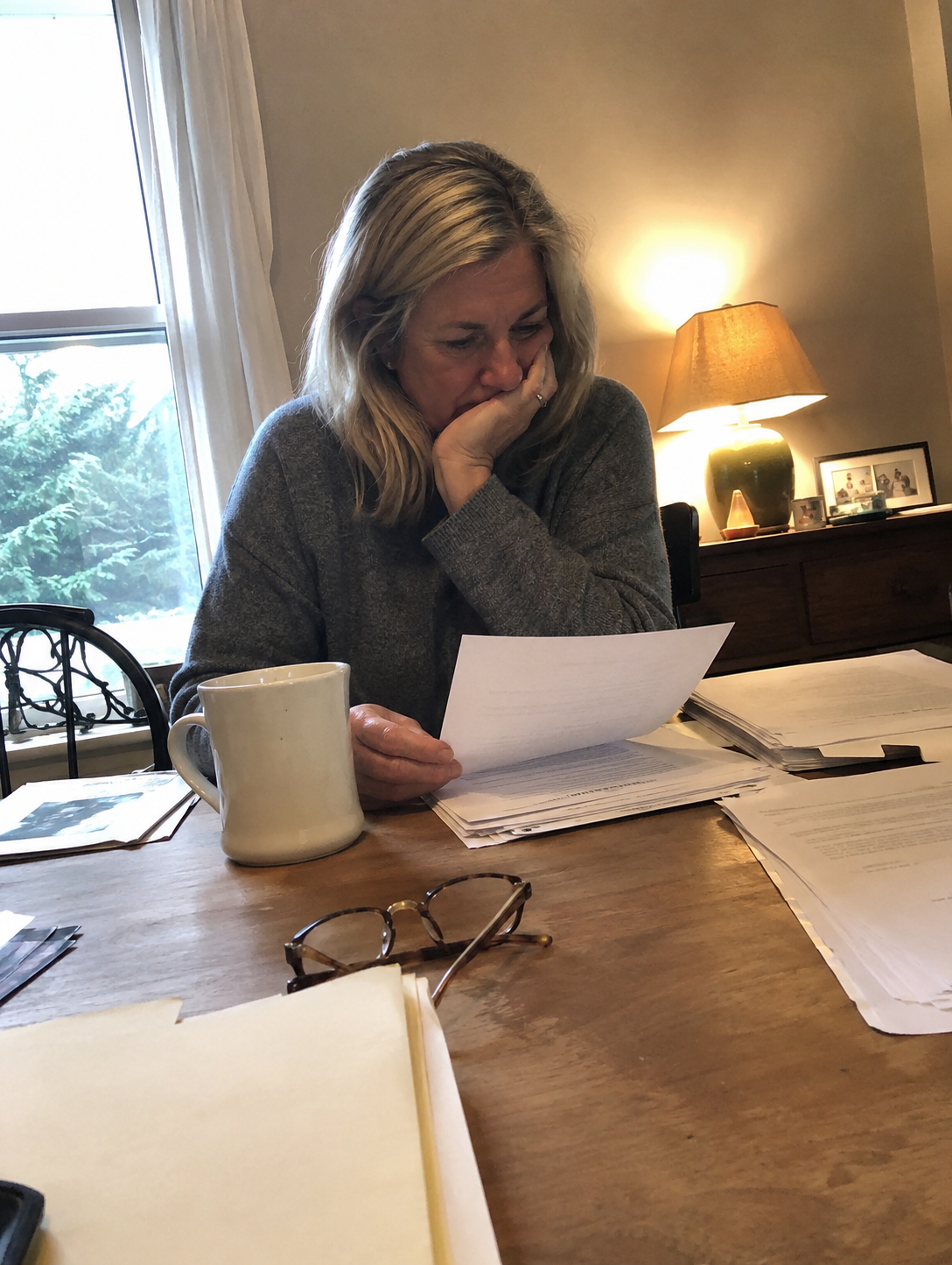
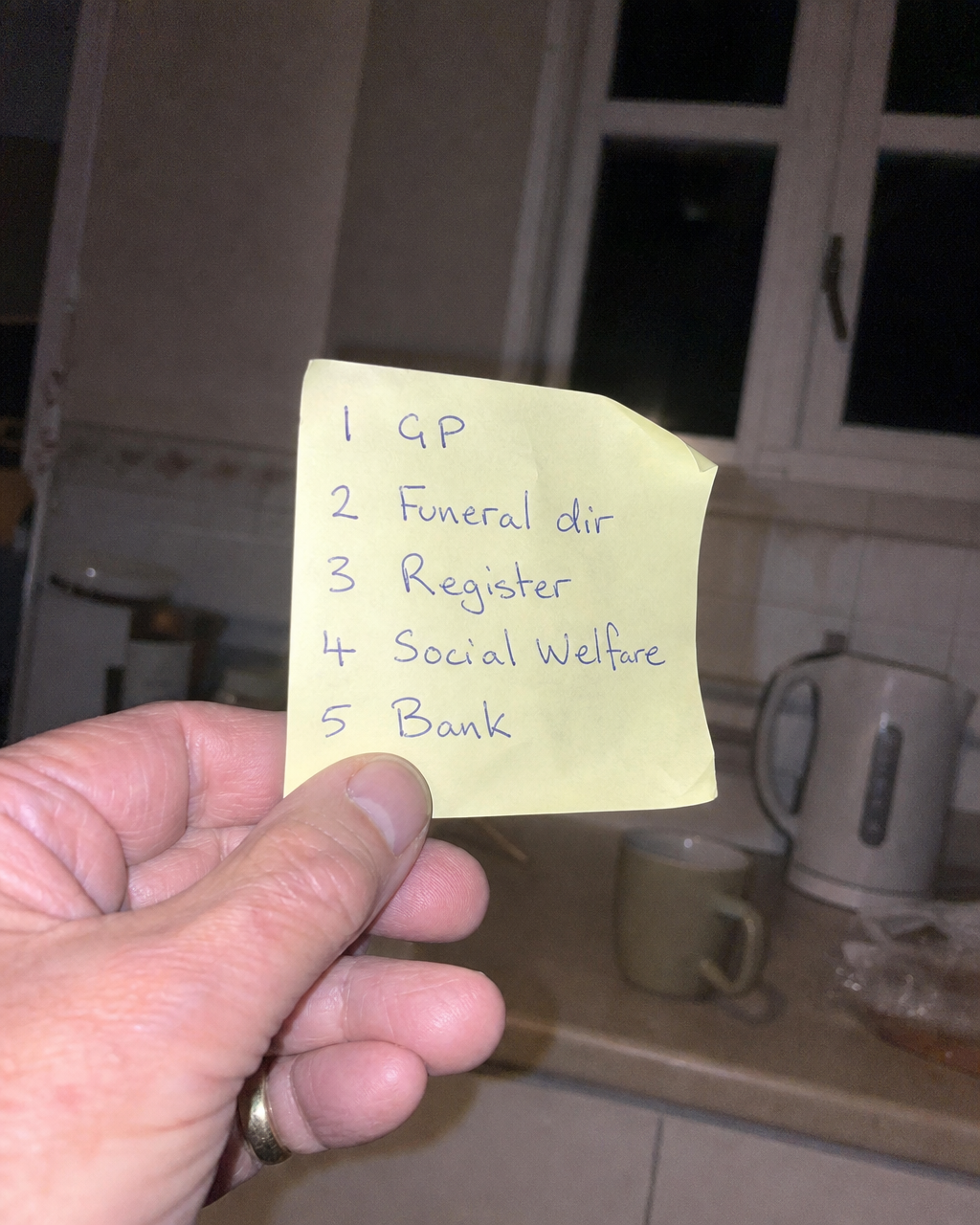
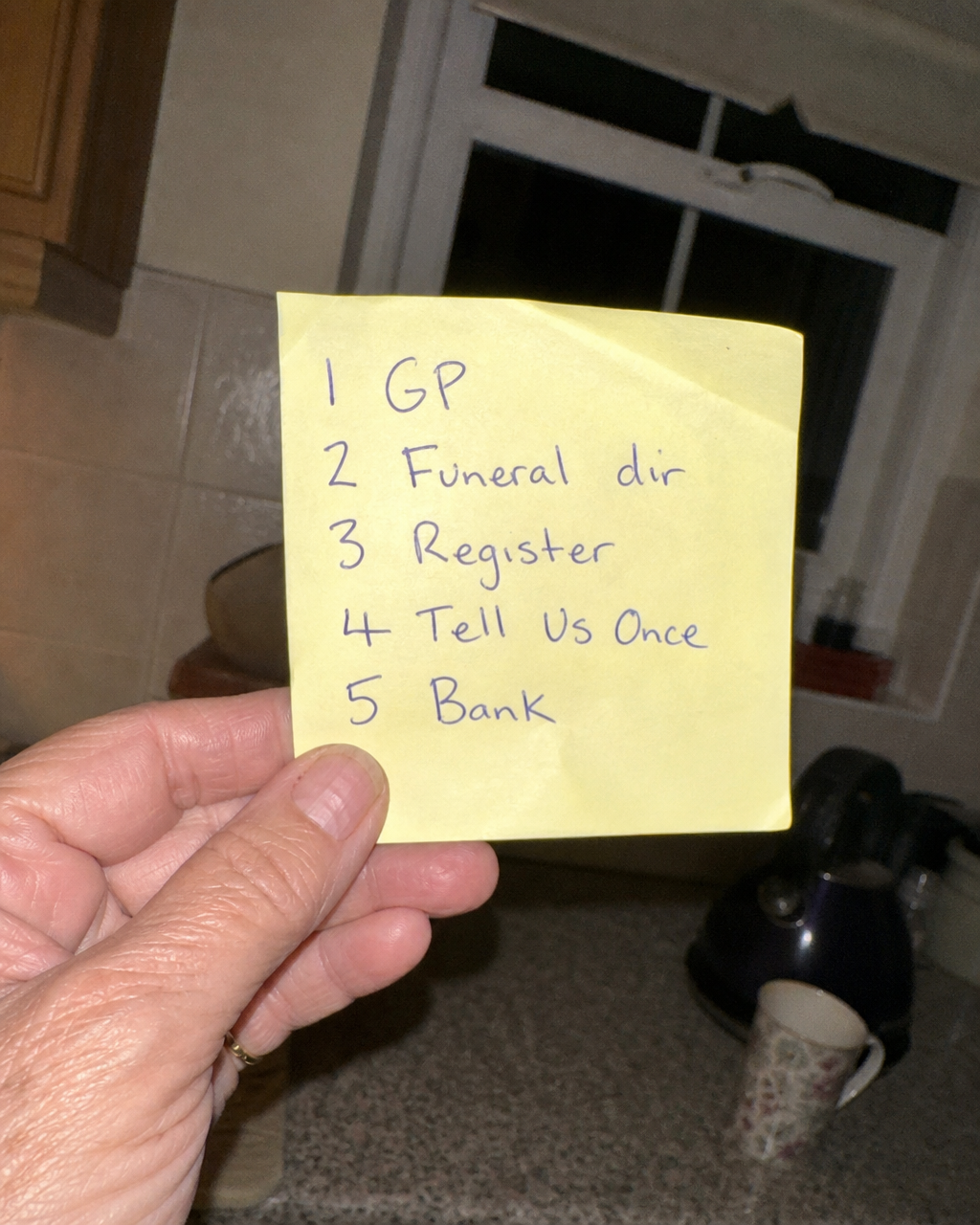
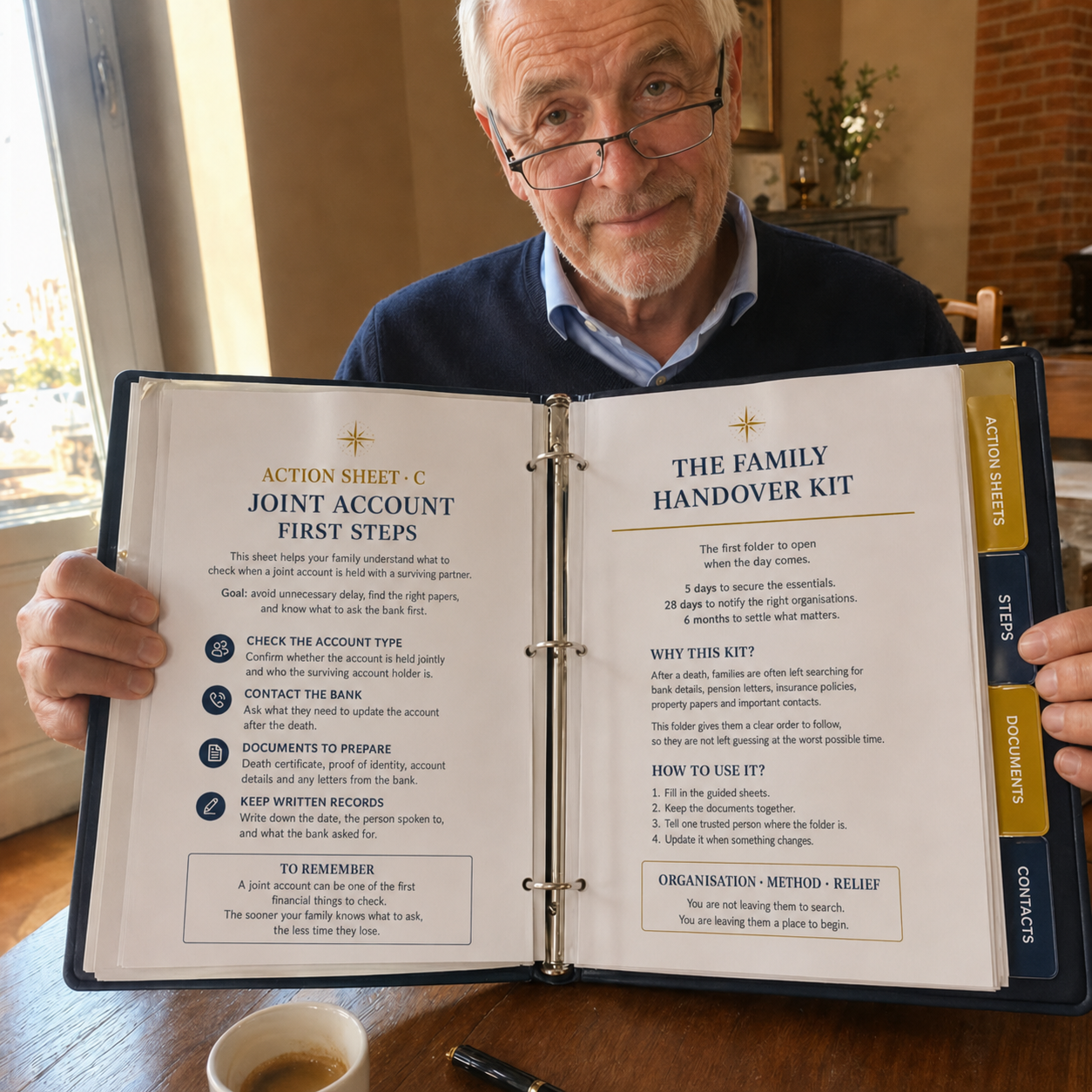
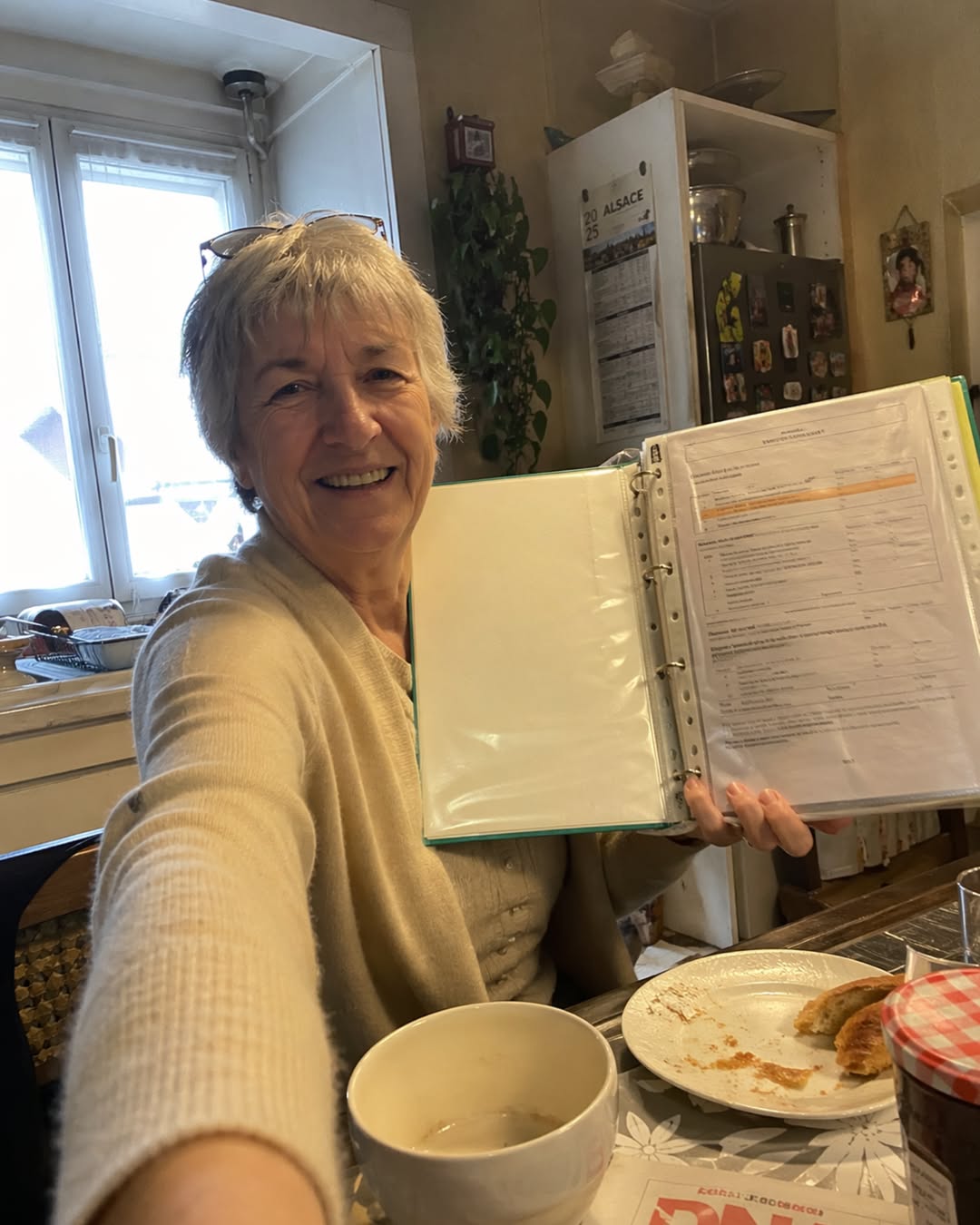
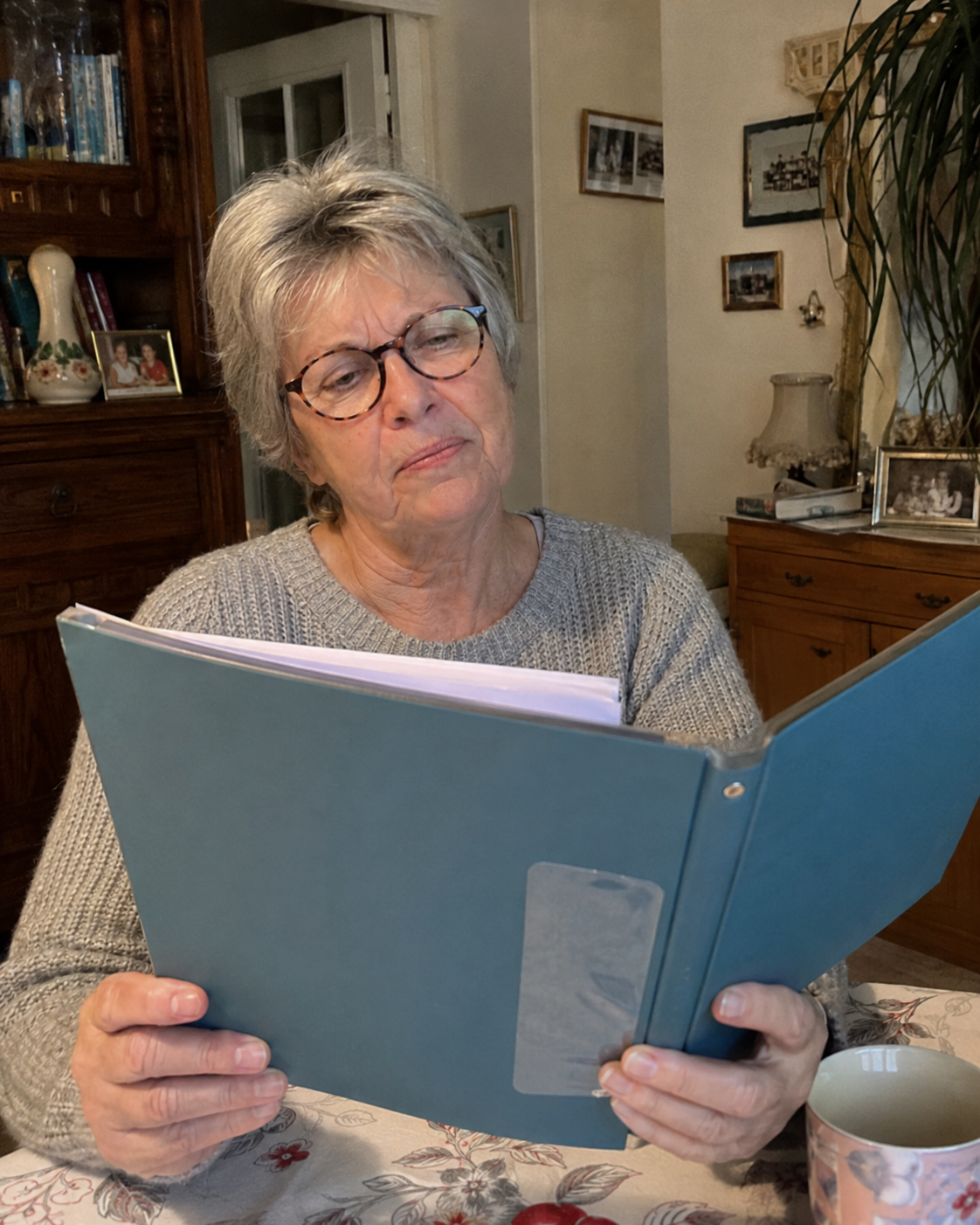
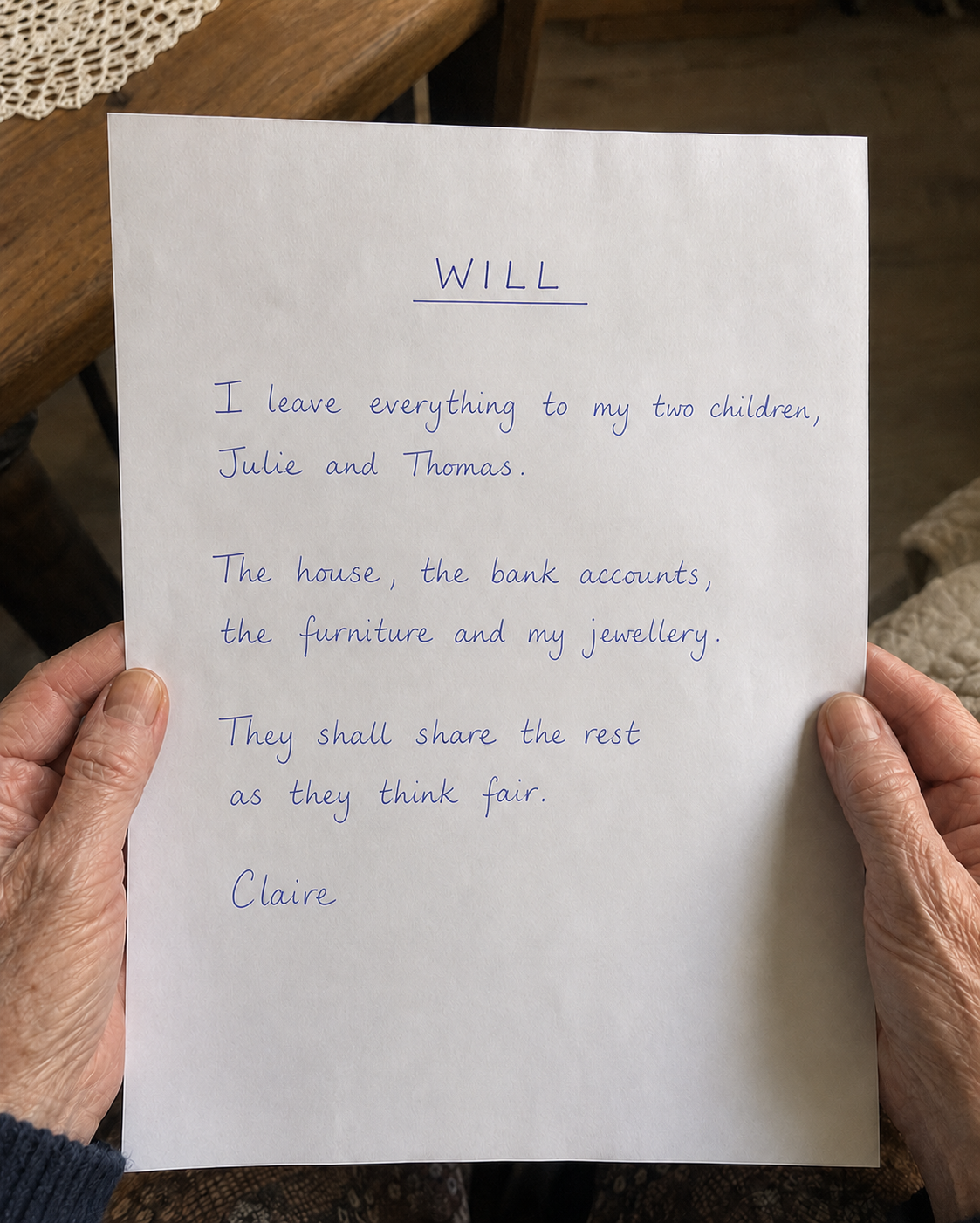
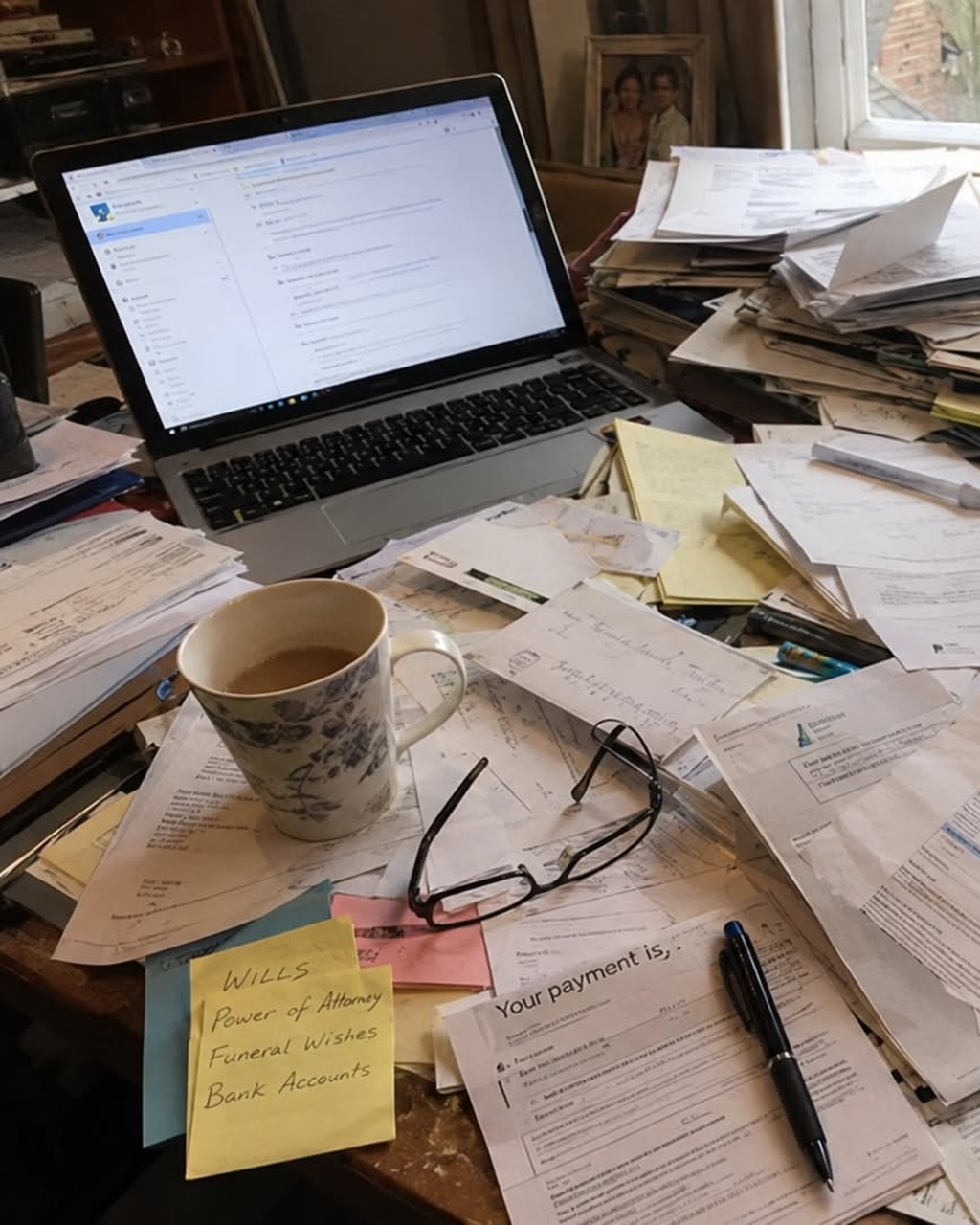
Even with a will in place, it takes the average Northern Irish family the best part of a year to settle a loved one's affairs. This is what I watched those months do to my sister, and what my husband and I did about it in two Sunday afternoons. Nearly every widow I know spent the first year of her grief on the telephone. Not because their husbands were careless men. Because the paperwork of a life turns out to be scattered across thirty years of filing cabinets, attic boxes, online accounts and old email addresses, and the person left behind is expected to reassemble all of it, from memory, while grieving, for institutions that want reference numbers nobody alive has ever seen. That is not me exaggerating. Ask anyone who has been the one holding the folder. Settling an estate here typically takes months, often close to a year, even when there is a will. Between the Probate Office queue in Belfast and the paperwork that has to be assembled before you can even join it, families routinely spend dozens of hours on calls and forms before anything moves at all. It is one of the quietest ordeals in family life, and almost nobody has the conversation about it until they are already in it. I was 60 when I watched my sister go into it. What my husband and I did in the weeks after, at our own kitchen table, is the reason I am writing this page. My name is Anne. I am 61. I live just outside Newtownards. I spent twenty-nine years as a primary school teacher. I have one husband who still cannot load a dishwasher to save his life. Two grown sons. One granddaughter who thinks I am a soft touch, and she is right. I am writing this because I want to tell you about my older sister Eileen first. Because if I do not tell you about Eileen, none of the rest of this will make sense. Eileen is five years older than me. She is the capable one. She ran the office at a big secondary school for two decades. She is the woman other people ring when a form will not behave. Her husband Brendan passed away two years ago, in the night, with no warning at all. He was 68. Brendan was not a careless man. They had wills. Mirror wills, done properly at a solicitor's in town, nine years earlier. Everyone, Eileen included, believed they were organised. Here is what "organised" turned out to mean. The funeral director needed paying, and the account Brendan used for the household bills was in his name alone, so it was frozen the day the bank was told. The bank did, in the end, pay the undertaker directly. It took two branch visits and a form Eileen had to be told existed. She ordered five certified copies of the death certificate, at eight pounds apiece, because someone at the registrar's office suggested it. She ran out within three weeks; replacements cost fifteen pounds. Nearly every organisation wanted its own copy, posted, with a covering letter. She sat down one evening in the second month and counted. Nineteen organisations. Banks, two pension schemes, the insurer, Power NI, the council, Land & Property Services, the DVA, the mobile phone crowd, and a handful of BT shares left from the privatisation days that she only discovered because a dividend cheque arrived addressed to him. Each one with its own bereavement team, its own forms, its own queue. Registering the death, plus one call to the Bereavement Service on 0800 085 2463, sorted the Department for Communities. Nothing else. There is no service in this country that tells everyone for you. Every other organisation had to be told separately, one phone call and one certified copy at a time. The life policy took her six weeks to find. It was in the attic, in a carrier bag, underneath the Christmas decorations. There was a second, older policy she never did track down. To this day she does not know whether it existed. Then the pension. Brendan's workplace scheme asked for his nomination form, the one that says who his death benefits should go to. The one on file was from 1987. It did not name Eileen. It was resolved, eventually, in her favour, because the scheme's trustees used their discretion. But she spent eleven weeks not knowing, and I will not print here what those eleven weeks were like, because she reads this sort of thing and she would be cross with me. Probate could not be applied for until everything had been found and valued, because HMRC must be given the full inheritance tax account before the Probate Office will even look at an application. The valuing took four months, because the finding took four months. Then came the queue. Fourteen months, start to finish, for an estate the solicitor had called straightforward. The will was fine, by the way. The will was never the problem. The will sat at the solicitor's, perfectly valid, while my sister spent a year proving to strangers on the telephone who her husband had been. She stopped hosting Sunday dinner that year. She let her garden go. The last time I sat in her kitchen during it, she said, "Anne, I haven't had time to miss him properly. I've been too busy being his administrator." She was 65. She sounded 80. Six weeks after Brendan's funeral, my husband Michael and I did what most couples our age do after a shock like that. We booked the solicitor. We updated our wills. Mirror wills, £395, a nice man, a firm handshake. We drove home feeling responsible. Fine feeling. Boring feeling. The kind you forget by the weekend. Then one evening in front of the television, I asked Michael three questions, just to see. Where are the deeds to this house. Which account does the house insurance come out of. What would I need to get into your pension online. He got half of one of them. And to be fair to him, I then asked myself the same three questions about my own affairs, and I did no better. It landed on me, sitting there with the sound turned down, that we had just paid £395 to put the ending of the story in order, while every single one of Eileen's fourteen months lived in the middle of it. Our new wills would not have shortened her year by a day. I assumed there was nothing to be done about that middle part. That it was simply what happens. I was wrong, and I found out where I least expected to. A man named Niall Brennan gave a talk at our U3A group in February. My friend Maura dragged me along. He is a retired probate practitioner, thirty years settling estates in Northern Ireland. The talk was billed as "putting your affairs in order." I expected an hour on wills. He opened by saying he was not going to talk about wills at all, because in thirty years of settling estates, the will was almost never what went wrong. He put a slide up. On one side, what a will does: it decides who inherits, at the end. On the other side, everything a will does not do. It does not tell your family where anything is. It does not unfreeze an account. In most estates it releases nothing until the grant of probate comes through, and in this country an application cannot even be made until every asset has been found, valued and declared to HMRC by someone who usually has no list to work from. Then he said the line I wrote down on the back of Maura's raffle ticket. "The will decides who inherits. The handover decides what your family goes through first. Almost everyone has a will, or means to get one. Almost nobody has a handover." He talked about the things that sit outside the will entirely. Workplace pensions and death-in-service benefits, which typically follow an old nomination form rather than the will. Online accounts nobody else can open. And the simple, brutal question of the first five days: what does the person left behind actually need in her hands that week, and in what order. I sat in that folding chair and felt something tighten in my chest. Not panic. Anger. Because I had been in and out of a solicitor's office three times in nine years, and nobody had ever said one word of this to me. On the drive home I worked out why, and I do not think it is a scandal so much as a lesson in economics. There is a fee attached to writing a will. There is a fee attached to untangling a chaotic estate, often charged by the hour. There is no fee attached to your family being able to find things. Nobody in the chain earns a penny from your affairs being handed over cleanly, so it sits in nobody's job description to mention it. I will be honest about what I did next, because I suspect most women would do the same. I tried to build it myself. I downloaded two free "end of life planner" printables. I bought a handsome-looking organiser off Amazon that turned out to be American and wanted to know about my 401(k) and my living trust, neither of which I have, because I live in County Down. I opened a spreadsheet. I bought plastic wallets. Three weekends later I had a pile, not a system. I did not know what actually mattered against what merely felt thorough. I did not know what Eileen had been asked for in week one versus what could have waited six months. I did not know what was specific to Northern Irish law and what was internet noise. I stalled, the wallets went into a drawer, and the drawer closed. If you have tried this and given up, hear this properly: you were not being lazy. You were trying to be your own estate practitioner with a biro and a free PDF. I found the answer in a thread on a money forum, of all places, full of women comparing notes on exactly Eileen's year. Someone mentioned the Family Handover Kit from My Estate Kit, built specifically for Northern Ireland. What sold me was the structure, because structure was precisely what I did not have. It is built around what they call the 5-28-6 System. The five days the law gives you to register a death, and what must be in your hands. The twenty-eight days in which the preventable damage is done: the frozen account, the missing policy, the stale nomination. And the six months in which an estate is actually settled, in the order institutions come knocking, not the order things fall out of your attic. A guide, and ten sheets you fill in. You fill it in once, guided, in plain English, and you end up with one place that answers the telephone year before it can start. It is £29, it is digital so you can print it or keep it on the computer, and you can update it in ten minutes when something changes, which is roughly the opposite of a will. I read the page twice, looked at the drawer with the plastic wallets in it, and ordered it. 👉 This is the page I found, if you want to look while you read: https://myestatekit.co.uk/estate-handover-kit-ni-average Michael and I did it over two Sunday afternoons at the kitchen table, with tea, and, on the second Sunday, a small argument about whether his vinyl collection counts as an asset. It does not. It is a burden. I have now put that in writing. Here is what surfaced while we worked through the sections. I want you to notice that every one of these existed before the kit. The kit simply made them visible while we are both alive to fix them. Michael's death-in-service nomination from his old firm was thirty years out of date. It named someone who passed away in 2009. One form, reprinted, signed, sorted within the week. A pension from a job he left in 1988 that neither of us had thought about this century. There is a Dormant Assets Scheme in this country precisely because so much money gets forgotten, and it turns out some of it was in our own attic. Our life policy turned out to be two policies. One had lapsed in 2011. We had been quietly relying on it for fourteen years. Neither of us had an Enduring Power of Attorney, and I learned that a will does nothing at all if one of us is alive but no longer able to manage. That one we have since put right. Two Sunday afternoons. Ten sheets. One red folder on the shelf in the study, and a copy of the key pages with our eldest. When we went back to the solicitor in the spring to add a small codicil, I took the folder with me, mostly out of pride. He went through it page by page without saying anything, which unnerved me, and then he said, "I wish every client walked in with one of these. It would save the families I act for months." He asked me where it was from. I watched him write the name down. 👉 This is what he was leafing through: https://myestatekit.co.uk/estate-handover-kit-ni-average I showed Eileen last. I was nervous about it, honestly, because there is a way of showing this to a woman who has lived the alternative that amounts to cruelty. She went through it slowly at my kitchen table. She was quiet for a long time. Then she said, "Why does nobody put this in your hands on the day the will is signed?" I did not have a good answer. She has completed her own now, for her children's sake. She said filling it in felt like the one useful thing she could take from the whole ordeal. And two Sundays ago she hosted the dinner again, twelve of us, gravy from scratch, ordering everyone about like the school office never closed. That is the bit I want you to take from this, if you take anything. If you decide to sort this, do not do what I did first. A free checklist tells you what to gather and then abandons you there. An imported organiser will have your family cross-referencing American law in the worst week of their lives. And a will alone, and I say this with our own wills sitting safely at the solicitor's, does nothing for the year in the middle. What you want is a system built for Northern Irish law, sequenced for the first days, that covers what sits outside the will: the pensions, the nominations, the policies, the passwords, the practical who-to-ring-first. The Family Handover Kit is the only one I found built for Northern Ireland that does all of it, in order, for £29. 👉 https://myestatekit.co.uk/estate-handover-kit-ni-average There is a money-back guarantee on it, which I think is fair, because you will know by the end of your first Sunday afternoon whether it is doing for your kitchen table what it did for ours. I am not telling you this replaces a will. It does not, and it does not claim to. We have both, and you should too. The will decides who inherits. This decides what the people you love go through first. But if you are where I was, wills done, drawer shut, quietly assuming the middle part is unavoidable, your sister or your mother already the version of Eileen I sat with that year, then two Sunday afternoons and £29 is worth it. I wish I had known at 55 what I know at 61. I would have started earlier. And Eileen would have had her fourteen months back. This is the one we did, £29: 👉 https://myestatekit.co.uk/estate-handover-kit-ni-average
it takes the average Northern Irish family the best part of a year to settle a loved one's affairs
Get your estate and paperwork in order so your family is never left with a mess.
LEARN MORELike this ad? Make it yours.
Crush rebuilds this exact creative around your product — your brand, your colors, your offer — in about a minute.