Canine Stress Research Institute
 Facebook ad: “We searched our own appointment records for ten minutes…”
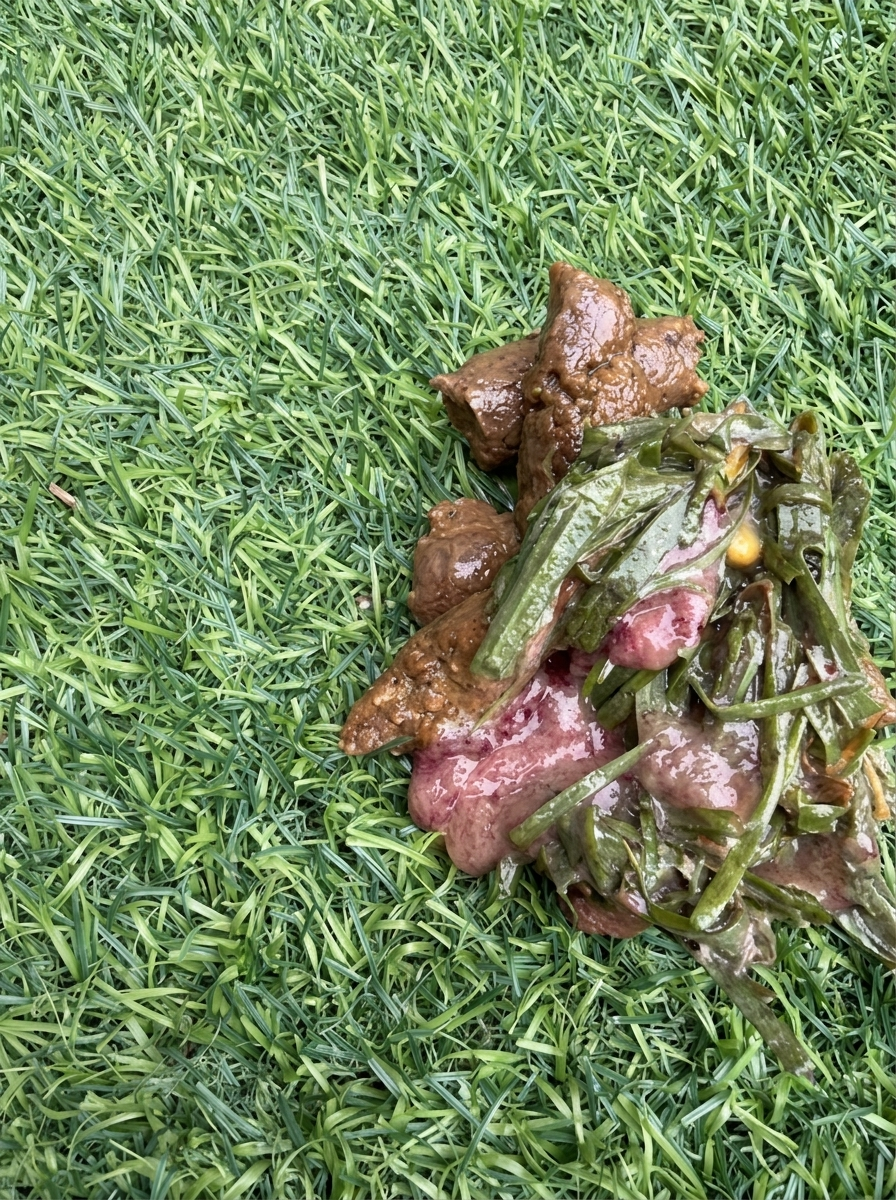
Running for 39 days since September 12, 2026. Crush last saw it on October 21, 2026.
Run by Canine Stress Research Institute on Facebook. Crush is not the advertiser and does not verify its claims. See this ad in Meta's Ad Library(opens in a new tab)
Make your own version of this ad
Crush makes it, launches it in your own Meta ad account, scales the winners and pauses the losers.
About this ad
- Meta Ad Library ID
- 1909482890330287
- Platforms
- Facebook, Instagram, Audience Network and Threads
- Relaunches
- 0
- EU reach
- 79
Ad text
We ran one search on our own appointment records last spring. It took about ten minutes. Of the dogs we had seen for reactivity or leash aggression over three years, 71% had also been booked in at least twice for loose stool, vomiting or a diet change. The same dogs. The same practice. The same files. And not one of us had ever noticed, because those are two different appointment types and they never appear on the same screen. My name is Dr. Helena Byrne, DVM. Along with Dr. Ruth Delgado and Dr. Tom Oyelaran, I have spent the last eleven years at Ridgeway Veterinary Group treating dogs for fear based aggression, leash reactivity and anxiety. Between the three of us we have seen more than 19,000 dogs. We had been treating one animal as two patients for a decade. Here is the case that made us run that search. Ziggy was a six year old shepherd cross. His owner Marianne had him from nine weeks. Not a rescue. No history. Fed well, exercised daily, socialised properly as a puppy by every standard we teach. By the time he reached my table she had spent $5,900. Three trainers. A board and train, three weeks away from home. A head halter, then a front clip harness, then a basket muzzle. Eleven months on Fluoxetine with Trazodone for anything she could not avoid. It worked. Then it worked less. Then we talked about raising the dose. His bloodwork was normal. Twice. Then he started air snapping at people who came within ten feet. No contact yet. Not yet. Marianne sat in my consult room and asked me whether some dogs are just born like this. I did not have an answer for her. I had a referral form. That night I pulled his file and read it from the front, properly, for the first time. There were two kinds of entry in that record and I had only ever been reading one. The behaviour entries: lunging, hypervigilance, cannot settle, pacing between two and three in the morning. And the ones I never look at during a behaviour consult. Loose stool since he was two. Grass eating. A prescription diet, tried and abandoned. Three notes about soft stool inside a single month. Every single one of those sat within days of a bad walk. I had spent a year treating the first list. So the three of us ran the search. And then we started testing. Here is what none of us were taught in vet school. When a dog's gut microbiome is disrupted, the gut brain axis breaks down. Because 95% of serotonin, the calm neurotransmitter, is produced in the gut, not the brain. Without a healthy gut, serotonin production drops. The brain gets stuck in fight or flight mode. And that is chronic reactivity, lunging, snapping, biting. It is not their breed. It is not poor socialization. It is not a training issue. It is a gut dysfunction causing a brain dysfunction. And the loose stool is not a second condition the dog happens to also have. It is the one visible sign of the first one. It is the only part of this that an owner can actually see, and it is sitting on their lawn every morning while they pay somebody to fix the dog's head. Here is the part that should make you angry, because it made me angry. Standard exams do not test gut health. There is no line for it on a blood panel. We run thyroid, blood chemistry, hormone panels, pain assessment, neurological screening, and every one of them comes back clean while the actual problem sits unmeasured. So we tell the owner the dog is healthy. And the owner goes home and blames themselves. By the time the behaviour is bad enough to bring in, the gut has been compromised for months or years and nobody has looked once. Which is also why nothing these owners paid for ever held. Training only addresses the behaviour. It does nothing for the broken stress response in the gut. Counter conditioning, desensitisation, threshold work. They manage symptoms. They do not restore the communication that is actually broken. Medication only sedates the brain. Fluoxetine, Trazodone, Gabapentin. They suppress the reactive symptoms. They heal nothing underneath. Probiotics are not enough, and I say that having recommended them for years. Probiotics are live bacteria. If the gut lining is already damaged by chronic stress, they cannot colonise. They pass straight through. And then the part that makes this different from every other problem I treat. Chronic stress destroys gut health. And a reactive dog lives in chronic stress constantly. Every walk. Every trigger. Every failed training session. So the reactivity damages the gut, and the damaged gut drives the reactivity. This does not level off on its own. It compounds. Every owner who tells me it has got worse over two years is describing exactly what the biology predicts. Over the following six months we tested the gut of every dog that presented with reactivity, leash aggression or fear based behaviour. We tested 138 dogs. 104 came back with a significantly disrupted microbiome. And here is the number that changed how I take a history: more than half of those owners had never reported a digestive symptom to us at all. It was mild enough to be normal to them. Softer some weeks. Nothing you would book an appointment for. These were not neglected dogs. Premium food. Certified trainers. Daily walks. CBD, calming collars, supplements. It made no difference. Then we had to work out what to actually do about it, and that took longer than the diagnosis. Dr. Delgado ordered twelve of the most widely recommended gut and calming supplements on the market. Products with veterinarian recommended on the label. Products I had personally suggested to clients. She sent all twelve to an independent laboratory. One bestseller claimed five billion live cultures. Independent testing found 1.2 billion. Seventy six per cent below label. Another was forty per cent undisclosed rice flour by weight, sold at supplement prices. A third came back with inactive strains. The bacteria were dead before the jar was sealed. A fourth was L-theanine and melatonin at doses that would do nothing for a dog of any size, with no gut mechanism at all. Products I had recommended. Products I believed were helping. I have had to think carefully about how many owners I sent away with something that was never going to work. Dr. Oyelaran then spent two months calling manufacturers directly, asking for Certificates of Analysis and batch specific third party testing. Most did not call back. Two sent certificates that did not match the batch. We were close to giving up on the supplement route entirely. Then he called CalmAxis. They answered immediately. The Certificate of Analysis arrived inside the hour, from an accredited independent laboratory, batch specific, covering every active compound. He asked about the formulation. Postbiotics, not probiotics. Not live bacteria at all, but the finished compounds a healthy gut produces itself, butyrate, acetate and propionate, delivered directly. No colonising a lining that cannot hold a colony. The gut receives what it needs from the first chew. He asked about batch testing frequency. Every production run. We sent a jar to the same laboratory that had failed the other eleven. Postbiotic content over delivered against label. No heavy metals. No fillers, no binders. Pharmaceutical grade purity. It was the only one that passed. We added it to our protocol alongside existing behavioural management, not instead of it. Nobody came off their medication to try this. And this is the part I now explain to every owner before they start, because it is the difference between somebody who sticks with it and somebody who quits. The first thing that changes is not the behaviour. It is the stool. Firmer, more consistent, usually somewhere between day eight and day twelve. That is the lining holding. It has to hold before the gut can produce, and it has to produce before the brain has anything to work with. So the owner sees it in the garden two to three weeks before they see anything on the pavement. That matters more than it sounds. Most owners who abandon a supplement abandon it in week one, because week one gives them nothing. If you know to watch for the stool, week one is not silence. It is the wait before the first marker. Marianne started Ziggy the same week. Day nine, firm stool. She sent me a photograph, which I did not need but appreciated. Week three, a terrier came around a parked car at about six metres. Ziggy reacted, came down inside a minute, and took a treat from her hand afterwards, which he had not done outside in two years. The air snapping stopped in week five. She could not tell me the day. She could tell me the month. At four months his repeat panel came back inside normal range. Marlow, a five year old Doberman with two previous bite incidents and a euthanasia recommendation from another practice, was reclassified at month three from dangerous to manageable with appropriate environment. His trainer called me to ask what we had changed, because the dog had become available to work with in a way he had not been in eight months. Sadie, a three year old rescue, went from needing twenty metres of distance to walking a normal pavement by month two. Of the first 240 dogs we put on this protocol, 214 showed measurable improvement within four weeks. These are not miracles. This is what happens when you stop treating one animal as two patients. So here is what I would ask you to do, and none of it requires buying anything from me. Next time you are at your vet, ask this exact question. Can you test my dog's gut microbiome? If the answer is that it is not necessary, or that reactivity is behavioural, ask when they last tested one. Most will not have an answer. Not because they do not care. Because the system does not ask them to. And before that appointment, do the thing I should have done a year before I did it. Take your dog's bad days and put them next to the days his stomach was off. If you have been through food trials you already have both lists somewhere. If those two lists look like each other, you are not managing a temperament problem and a sensitive stomach. You are watching one problem, and you have been paying for it twice. CalmAxis is the only formulation that passed every test we ran, and it is what the three of us now recommend. It works alongside whatever you are feeding. Prescription diet, grain free, raw, kibble. You do not need to change the food, because the food was never the issue. They are currently running 50% off, which is the reason I am writing this now rather than in six months. Read this first, then decide. → trycanislabs.com/pages/7-things-reactive-anxious-dog-calmaxis-2-0 P.S. If your dog has started snapping, even air snaps with no contact, please do not wait to see whether it settles. It does not settle. The stress keeps damaging the gut, the damaged gut keeps driving the reaction, and the interval between incidents shortens. Animal control does not weigh how much you spent on training. One bite with an injury is a dangerous classification, and in most states that means euthanasia regardless of history. Ziggy went from lunging to air snaps in under a year. Marianne got lucky on timing and she knows it. P.P.S. None of us receive anything from CalmAxis. We recommend it because after sending twelve products to an independent laboratory it is the only one that came back the way the label said it would. After eleven years and 19,000 dogs, the thing I regret is not the cases I could not fix. It is the years I spent reading half of the file.
Where the ad sends people
trycanislabs.com
We searched our own appointment records for ten minutes and found we had been treating one dog as two patients for a decade.
Eleven years of files, and I had only ever been reading half of each one.
Learn more: trycanislabs.com(opens in a new tab)