
Inactive· since May 8, 2026
- 31
- days it ran
- 0
- relaunches
Ad copy
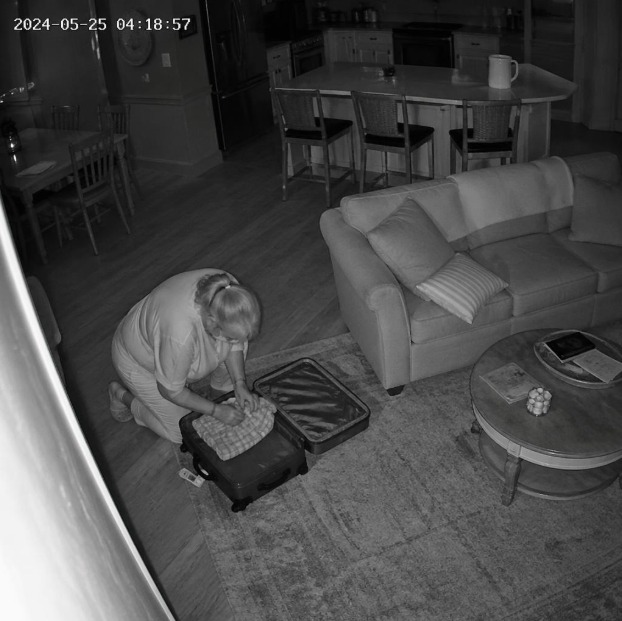
I manage an Airbnb. Last week, I received a message from a guest that brought me to tears. Not a complaint. Not a question about check-in. Not a request for extra towels. A photo. And five words I can't stop thinking about. Let me start from the beginning because this story is going to take a turn you won't expect. My husband Craig and I have been running a five-star vacation rental for the past 4 years. Lake house, sleeps six, wraparound deck, the works. We've hosted hundreds of guests. We've dealt with red wine on white couches, a guy who somehow broke the hammock on the first night, teenagers who thought the fire pit was a trash incinerator. Normal stuff. But about 6 months ago, something started happening that we'd never experienced in four years of hosting. Guests started asking about the kitchen counter. Not the granite. Not the backsplash. Not the coffee maker. The little glass jar next to the water pitcher. See, I keep a small wellness tray on the counter for guests — a filtered water pitcher, a few herbal tea bags, and a glass jar filled with effervescent tablets. There's a handwritten card next to it that says: "Effervescent magnesium — drop one in a glass of water. Great after travel." Most guests try one the way they'd try a complimentary coffee pod or a mint on a pillow. It's hospitality. Nobody thinks twice about it. But the checkout reviews started shifting. "Slept through the night for the first time in months. Don't know what you put in those tablets but I'm taking the card home." "My morning stiffness was completely gone by day two. That has NEVER happened on vacation." "Felt more energy in 3 days at your place than I've felt in the past year. What are those fizzy tablets on the counter?" Now — I knew what was in those tablets. I'll explain why later. But what I didn't expect was guests feeling anything from a three-night stay. It took my husband weeks to see real changes. I figured a few days of magnesium and hydrogen wasn't enough time to move the needle for anyone. I was wrong. The comments kept clustering around the same thing. And they were too specific. Morning stiffness gone. Brain fog lifted. Energy they hadn't felt in years. Sleeping through the night without waking up twice to use the bathroom. That wasn't vacation. That wasn't the lake air. That was the 20-minute effect I'd seen happen once before — in my own kitchen — happening to strangers who had no idea what they were drinking. One couple — both in their late 60s — rebooked for the following month specifically because the husband told his wife he hadn't felt that clear-headed in five years and he wanted to come back "to whatever was in that water." A retired teacher extended her stay by two nights because she said her hands had stopped aching for the first time since she went on blood pressure medication. She kept flexing her fingers at the kitchen counter looking at them like they belonged to somebody else. Something was happening. Something real. Then last month, something happened that still keeps me up at night. A woman named Diane checked in on a Thursday with her husband. Nice couple. Mid-60s. She was warm, chatty, organized — had the kind of energy where you could tell she was the one who held everything together. Her husband was quieter. Moved slowly. Smiled politely but there was something behind it. Something dimmed. They stayed three nights. On checkout morning, Diane left the place spotless. Towels folded. Dishes done. A thank-you note on the counter. But when I went to flip the house for the next guest, something was wrong. The jar was gone. Not the tea bags. Not the water pitcher. The glass jar of tablets that sits on the kitchen counter. Gone. It wasn't in the recycling. Wasn't in the cabinets. Wasn't behind the coffee maker. I checked every drawer, every shelf, every bag in every trash can. The jar was simply missing. I pulled up the camera footage from the common area — we have a disclosed camera in the living room that guests know about. Standard Airbnb security. Nothing hidden. And there it was. 5:22 AM on checkout day. The kitchen was dark. Diane walked out of the bedroom, crossed the living room, went straight to the counter. She picked up the jar. Looked over her shoulder. Wrapped it in a dish towel. Put it in her suitcase. Zipped it shut. She took the whole jar. My first reaction was frustration. Not because the tablets were expensive — they weren't, really. But because the next guest was arriving in four hours and I'd have to drive 40 minutes to my house to grab more from our pantry. But that frustration lasted about ten seconds. Because I thought about the retired teacher flexing her hands. The couple who rebooked. Every review from every guest who'd dropped a tablet in water expecting a mineral supplement and walked out three days later feeling like a different person. This woman used those tablets for three nights. And whatever happened to her — or to her husband — was enough that she couldn't leave without them. That's not theft. Not really. That's someone who found something and was terrified of losing it. I texted her: "Hi Diane — hope you and your husband had a wonderful stay. I noticed the jar of tablets is missing from the kitchen counter. Everything okay?" Forty-five minutes later, my phone rang. She was crying. Not the polite kind. The ugly kind. The kind where someone has been holding something in for a long time and it finally comes out. "I'm so sorry," she said. "I know it was wrong. I'll pay for it. I'll pay you whatever you want. I just —" She stopped. Took a breath. Started again. "My husband Don has been on Crestor for almost five years. Rosuvastatin. 20 milligrams. His cholesterol numbers are perfect. His doctor is thrilled. Every six months they run the bloodwork and every six months the doctor says 'looking great, Don, keep doing what you're doing.'" Her voice got harder. "But he's NOT great. He hasn't been great in years." "His hands started first. About a year into the medication. Stiff in the morning. Then aching. Then he couldn't grip a jar lid without wincing. He used to refinish furniture in our garage — built our daughter's bookshelf, our grandson's toy chest. Now the tools sit in a drawer and he pretends he doesn't notice." "Then the fog. That's what I call it. The fog. He'd be mid-sentence and lose the word. Not a big word. Simple ones. 'Hand me the...' and then nothing. He'd just stand there with his hand out. Waiting for his own brain to catch up." "Last Thanksgiving he looked at our grandson — the one whose toy chest he built — and asked me, 'When did Katie have a son?' He's SEVEN. Don was in the delivery room." I sat down on the bed. My legs went weak. "His doctor says the muscle pain is normal. Says it happens sometimes with statins. Prescribed him CoQ10 and told him to stretch more. The brain fog? 'That's just aging, Don. You're 64. It happens.'" Her voice broke. "It's not aging. I've been married to this man for 38 years. I know what aging looks like. This isn't aging. This is something else. Something is being taken from him. I've been watching it happen for four years and nobody will listen to me." I was gripping the phone so hard my knuckles were white. "Those tablets on your counter," she said. "I didn't know what they were. I thought they were electrolytes. Don dropped one in a glass of water Thursday evening because his legs were sore from the drive. He drank it while we sat on the deck." "Seventeen minutes later he looked at me and said, 'Diane, my head feels different.'" "I said, 'Different how?'" "He said, 'Clear. Like someone cleaned a window I didn't know was dirty.'" She was sobbing now. "That night he slept through until morning. He hasn't slept through the night in two years. He gets up twice, sometimes three times. That night — nothing. He slept seven hours straight." "Friday morning he came downstairs and his hands weren't stiff. He picked up a coffee mug with his left hand — his bad hand — and didn't wince. He didn't even notice. But I noticed. I've been watching those hands for four years. I noticed." "By Saturday his sentences were finishing themselves again. He told a whole story about our daughter's wedding without stopping. Without searching. Without the fog swallowing the middle of it." "And Sunday morning — checkout morning — I was packing the suitcase and I looked at that jar on the counter and I thought: I cannot go home. I cannot take him back to what he was before we got here." "I panicked. I knew it was wrong. I took it anyway. Because I'd watched my husband come back to life over three days and I could not — I could NOT — let that end." She was crying so hard I could barely hear her. "I haven't seen him like that in years. I forgot what he sounded like when his brain was working. I forgot what his hands looked like when they weren't hurting. I got him back for three days and then checkout was going to take him away again." I was crying too. Sitting on the edge of the bed in my own rental property, tears running down my face, listening to this woman describe my own life back to me. She could have been telling my story. Word for word. Because two years ago, I was Diane. Craig went on Lipitor — atorvastatin — at 57. Different name on the bottle. Same slow disappearance. His doctor called it non-negotiable. Six months in, the numbers were perfect. The doctor was thrilled. And every night I sat across from a man who was fading behind his own eyes. The details were different but the shape was the same. Don lost his grip on a jar lid. Craig lost his grip on a screwdriver. Don forgot his grandson. Craig forgot where he put things — his keys, his wallet, the name of the restaurant we'd been going to for fifteen years. Don's doctor said "that's aging." Craig's doctor said the same thing. Same script. Same dismissal. Same woman sitting across from a doctor knowing in her bones that something else was happening. What I need to tell you is what I found when I went looking for answers. Because that's the part nobody told me. And it's the reason those tablets are on my kitchen counter. One night — 1 AM, couldn't sleep — I was sitting at the kitchen table with my laptop. Craig was asleep in his recliner again. Not because he wanted to be. Because his body gave out at 7:30 PM and he couldn't make the walk to our bedroom. The TV was still on. His reading glasses were still on his face. His mouth was open. The man I married used to stay up with me on the deck until midnight. We'd talk about nothing. Share a bottle of wine. Listen to the lake. Now he couldn't stay conscious past sundown and the doctor called it aging. I started researching. Not "supplements for cholesterol." I'd already wasted months on that — fish oil, red yeast rice, bergamot, plant sterols. None of it touched the fog or the pain or the exhaustion. I researched WHY. Why was the statin doing this to him? And I found something that changed everything. It was a long post on a health forum. Written by a retired cardiologist. Thirty-one years of practice. He'd left cardiology because he said he couldn't keep prescribing medications that he now understood were causing a problem he'd spent his career trying to treat. I almost scrolled past it. The internet is full of cranks and conspiracy theorists. But his credentials checked out. His writing was precise. Clinical. Not angry — just tired. Like a man who'd spent three decades doing something he'd finally realized was wrong. He started by explaining what statins actually do inside your body. "Statins block an enzyme called HMG-CoA reductase," he wrote. "That's how they reduce cholesterol production. But that same enzyme is responsible for producing CoQ10 — the molecule your mitochondria use to generate energy in every cell. Your heart. Your muscles. Your brain. All of it." I thought about Craig's hands. The ones that used to build bookshelves. "When you suppress that enzyme, you don't just lower cholesterol. You cut off your body's ability to produce cellular energy. The muscle pain, the cognitive decline, the crushing fatigue — these aren't side effects. They're the primary effect of depleting CoQ10 at the cellular level." I thought about Craig asleep in his recliner at 7:30 with his glasses still on. "The standard medical response is to prescribe CoQ10 supplements. But most oral CoQ10 cannot cross cell membranes effectively. The molecules are too large to reach the mitochondria where the damage is occurring. They circulate in the bloodstream and accomplish very little at the cellular level." That's exactly what Craig's doctor had done. Prescribed CoQ10. Told him to stretch more. Checked the box. Then this cardiologist wrote something that made me physically sick. "But the CoQ10 depletion — as devastating as it is to quality of life — is not the most dangerous thing statins fail to address." "The most dangerous thing is what's happening to the cholesterol that remains." LDL cholesterol isn't poison, he wrote. Your body makes it on purpose — it builds cell membranes, transports nutrients, repairs tissue. The problem isn't that LDL exists. The problem is what happens to it when it's attacked by something called hydroxyl radicals — the most destructive free radicals your body produces. "When hydroxyl radicals oxidize LDL," he wrote, "it changes structure. Becomes adhesive. Penetrates arterial walls. Triggers an inflammatory cascade. Forms plaque. And that plaque can rupture at any moment — causing the heart attack or stroke that the statin was prescribed to prevent." Not cholesterol. OXIDIZED cholesterol. "Statins reduce the amount of LDL in your blood. They do nothing to prevent the LDL that remains from being oxidized. Your total number looks managed. The chart looks excellent. But the cholesterol you still have is quietly being converted into the very substance that causes cardiac events." My hands were shaking. "This is why 83% of patients who experience cardiac events while on statin therapy have elevated levels of oxidized LDL — despite having 'controlled' total cholesterol. They were monitoring the wrong measurement. The entire time." Then he wrote something I will never forget. "I had a patient. Sixty-one years old. On Crestor for nine years. LDL of 88. Perfect by every guideline. His wife brought him to every appointment. She told me once that he'd stopped playing with their grandchildren because he was too tired. I told her the fatigue was 'common but manageable.' He died of a massive myocardial infarction on a Wednesday morning in his driveway. His oxidized LDL — which I had never once tested in nine years of treatment — was 74. The danger threshold is 60. I had watched the wrong number for almost a decade. And his wife had watched me watch it." I looked across the room at Craig. Asleep. Glasses on. Mouth open. His doctor had never tested his oxidized LDL. Not once. In three years. Never even mentioned it. Every six months they drew blood, checked the total number, said "looks great," and sent him home with a refill. Craig was 60. The cardiologist's patient was 61. They were watching the wrong number. While the real damage built up where nobody was looking. I kept reading. The anger was keeping me awake now. "The question becomes: if oxidation is the actual driver of arterial plaque, what stops it?" "Over the past two decades, researchers — primarily in Japan and Korea — have published over 2,000 peer-reviewed studies on molecular hydrogen. H2 is the smallest molecule in existence. It crosses cell membranes, the blood-brain barrier, and penetrates into mitochondria — places no other antioxidant can reach." "Unlike standard antioxidants — Vitamin C, Vitamin E — which neutralize all free radicals indiscriminately, including beneficial ones your immune system requires, molecular hydrogen is selective. It targets only hydroxyl radicals. The specific radicals responsible for oxidizing LDL cholesterol. The specific radicals destroying mitochondrial function. It neutralizes them and converts them to water. Harmless water." I read that paragraph three times. The fish oil I'd bought Craig? Too large to cross cell membranes. The CoQ10 his doctor prescribed? Same problem. The bergamot and red yeast rice and plant sterols? They were trying to lower the number — the same strategy as the statin. Nobody was addressing the oxidation. Nobody was protecting the cholesterol Craig still had from turning into the thing that actually kills. This cardiologist had walked away from a 31-year practice because he'd watched his patients deteriorate on medications that suppressed a number while the real damage continued underneath. He couldn't do it anymore. I closed my laptop at 3 AM. Opened it again at 5. I found the product he'd referenced in a follow-up post. Magnesium-based effervescent tablets that generate molecular hydrogen directly in your stomach. You drop a tablet in water, drink it while it's fizzing, and the hydrogen is produced inside your body — absorbed immediately through the stomach lining before it can escape. Most hydrogen products lose their concentration before you even drink them. Hydrogen is the smallest molecule in existence — it passes through plastic, glass, metal. By the time you drink hydrogen water from a machine or a bottle, you're getting almost nothing. These tablets deliver 12 parts per million at the moment of absorption. Four to six times what most products on the market claim. The concentration used in the clinical studies that showed results. Third-party tested. Published lab results. I ordered a bottle that morning. PrimeCell H2. Craig thought it was a magnesium supplement. I didn't correct him. I just set a glass of water on the table next to his recliner that evening, dropped the tablet in, and said "drink this." He looked at it fizzing. Looked at me. Shrugged. Drank it. Nineteen minutes. He was doing his crossword puzzle — the one his doctor told him to do to "keep his brain sharp." Most nights he'd get through half of it and give up. Set it on the armrest. Drift off. Nineteen minutes after that first glass, he looked up. "Jenna. Something feels different." "Different how?" "My head. It's... quiet. Like the static turned off." He went back to the puzzle. Finished the whole thing. Didn't hesitate on a single clue. I went into the bathroom and cried. By week two, his hands had stopped aching in the morning. I heard him in the kitchen one afternoon — a sound I hadn't heard in over a year. Metal on metal. I walked in and he was tightening a cabinet hinge with a screwdriver. Didn't even look up. Just working. Like it was nothing. It wasn't nothing. I stood in the doorway and watched him and my throat closed up. By week three, the recliner stopped swallowing him at 7:30. We watched an entire movie together for the first time in over a year. He stayed awake for the whole thing. Talked about it after. Had opinions. Remembered the characters' names. By week six, he got his bloodwork done. I went with him. Sat in the room while his doctor pulled up the results on her laptop. She scrolled. Stopped. Scrolled back up. Read something again. Then she took off her glasses and looked at Craig. Really looked at him — not at the screen. "You look different," she said. "Before I even opened this. You walked in here differently." Craig shrugged. "I feel different." She put her glasses back on. Read the numbers to us. LDL: 174 to 142. Down 32 points. Without the statin. She was quiet for a while. Then she said: "Craig, I don't know what you changed. But whatever it is, these numbers are moving in the right direction and you clearly feel better. Keep doing what you're doing." She didn't ask what it was. Didn't endorse anything. But she didn't argue either. And she didn't write a new prescription. That was eight months ago. Craig's been off Lipitor for seven months. His cholesterol stays consistent. His hands work. His brain works. He refinished two chairs last month. He remembers our grandson's birthday — every time. He sleeps through the night. He carries the groceries in from the car without stopping halfway up the driveway. He's not the man on the statin. He's the man I married. A few weeks after Craig's bloodwork came back, we were at the rental doing a maintenance weekend between guests. Craig dropped a tablet in water at the kitchen counter out of habit — it's just part of his morning now. I watched him drink it. And I thought about all the guests who come through this house. The ones who move slowly. The ones whose wives hover near them with that look I know too well. The ones who grip the deck railing a little too hard when they stand up. I went home that afternoon and filled a glass jar with tablets. Wrote a card: "Effervescent magnesium — drop one in a glass of water. Great after travel." Set it on the counter next to the water pitcher. Didn't overthink it. Just did it. That was six months ago. And those guest reviews I told you about at the beginning? Now you know why they don't sound like electrolyte reviews. Because they're not electrolytes. They're what gave me my husband back. So here's what I told Diane on the phone that day: "Keep the jar. Keep every tablet. But let me send you the link so you can order your own supply. Because that jar will run out. And when it does, I don't want Don to go back to the way he's been." She laughed through her tears. "Deal." I sent her the link that afternoon. She ordered three bottles. Last week — exactly three weeks after their stay — she texted me a photo. Don at his workbench. Holding a sanding block. Both hands gripping it. No wince. No hesitation. Five words underneath the photo: "I have my husband back." That's the message from the beginning of this story. That's what made me cry. Not the theft. Not the confession. A photo of a man holding a sanding block with hands that work, sent by a wife who thought she'd lost him. I printed it. It's on my fridge next to the thank-you note she left on the counter. If you're reading this, I know exactly where you are. You've been watching someone you love disappear. The hands that used to build things. The mind that used to be sharp. The energy that used to carry him through a full day. The man who used to be present — really present — at dinner, at family gatherings, in conversations that mattered. And the doctor keeps saying the numbers look great. The chart looks great. Keep taking the medication. But the chart isn't married to him. You are. You've been watching the wrong number. The whole time. One path: keep filling the prescription. Keep watching the slow fade. Keep hearing "that's just aging" while you know in your bones it isn't. Keep hoping the medication that's draining his CoQ10 and leaving his LDL exposed to oxidation will somehow protect him — even though the mechanism says it can't. Another path: give his body what it's actually missing. Address the oxidation that the statin doesn't touch. Restore the cellular energy the statin is depleting. Track the numbers. Watch them improve. Watch HIM improve. Verify the results yourself. I chose the second path. Diane chose the second path. Craig is living proof. Don is becoming proof. shop.getamalahealth.com/pch/sp — Jenna P.S. — Diane left us a five-star review last week. It didn't mention the lake or the deck or the coffee maker. It said: "This place gave me my husband back. I don't know how to rate that. Five stars isn't enough." Craig read it over my shoulder and squeezed my hand — with the hand that couldn't grip a jar lid two years ago. If your husband is on a statin and you've been watching him dim — the fog, the fatigue, the hands, the half-finished sentences — the tablets on my counter are PrimeCell H2 by Amala Health. That's what Diane took. That's what Craig takes every morning. That's what I leave for every guest who walks through our door. I'm dropping the link again below because I want you to have it. P.P.S. — Here's my challenge for you: drop one tablet in water. Wait 90 seconds for it to dissolve. Drink it. Set a timer for 20 minutes. If you don't feel something shift — a clarity, a quiet, like someone turned off static you didn't know was playing — then maybe this isn't for you. But if you feel it — and almost everyone who's tried one from my counter has felt it — that's not placebo. That's the smallest molecule in existence crossing your blood-brain barrier for the first time. Something his statin has never done and never will. Something the CoQ10 his doctor prescribed can't do because the molecules are too large to reach where the damage is happening. The cholesterol improvement takes weeks to show up on bloodwork. But that first-day clarity? That's his body telling you: finally — something that actually gets where it needs to go. P.P.P.S. — PrimeCell has a 90-day money-back guarantee. If his numbers don't improve, every penny back. No questions asked. Compare that to the statin on his nightstand — which comes with a lifetime commitment, CoQ10 depletion, potential muscle destruction, and a doctor who watches the chart instead of the man. Craig was on Lipitor for 3 years. Nobody offered a refund when it took his hands and his clarity and his evenings. The system doesn't do refunds. PrimeCell does. P.P.P.P.S. — PrimeCell is a small company. They sell out. I know because I tried to reorder for the Airbnb after Diane took the jar and had to wait 9 days for a restock. I keep three bottles in the house now — one for Craig, one for me (the oxidation doesn't care about gender — it works the same way), and one backup for the rental. If his next blood draw is in 30 to 60 days and you want him to walk into that appointment with real numbers instead of the same managed decline — check if they have stock today. Not next week. Now. Every day on the statin is another day of CoQ10 depletion. Every day without addressing the oxidation is another day the vicious cycle keeps spinning. Don't let checkout day be the thing that takes him back. P.P.P.P.P.S. — Do not forget about their 90-day money-back guarantee. 👉 shop.getamalahealth.com/pch/sp
Fix Yourself at the Cellular Level
PrimeCell H2 is a next-generation molecular hydrogen tablet designed to selectively neutralize the most damaging free radicals in your body - at the cellular level, right where aging actually happens.
SEE DETAILSLike this ad? Make it yours.
Crush rebuilds this exact creative around your product — your brand, your colors, your offer — in about a minute.