Life With Diabetes
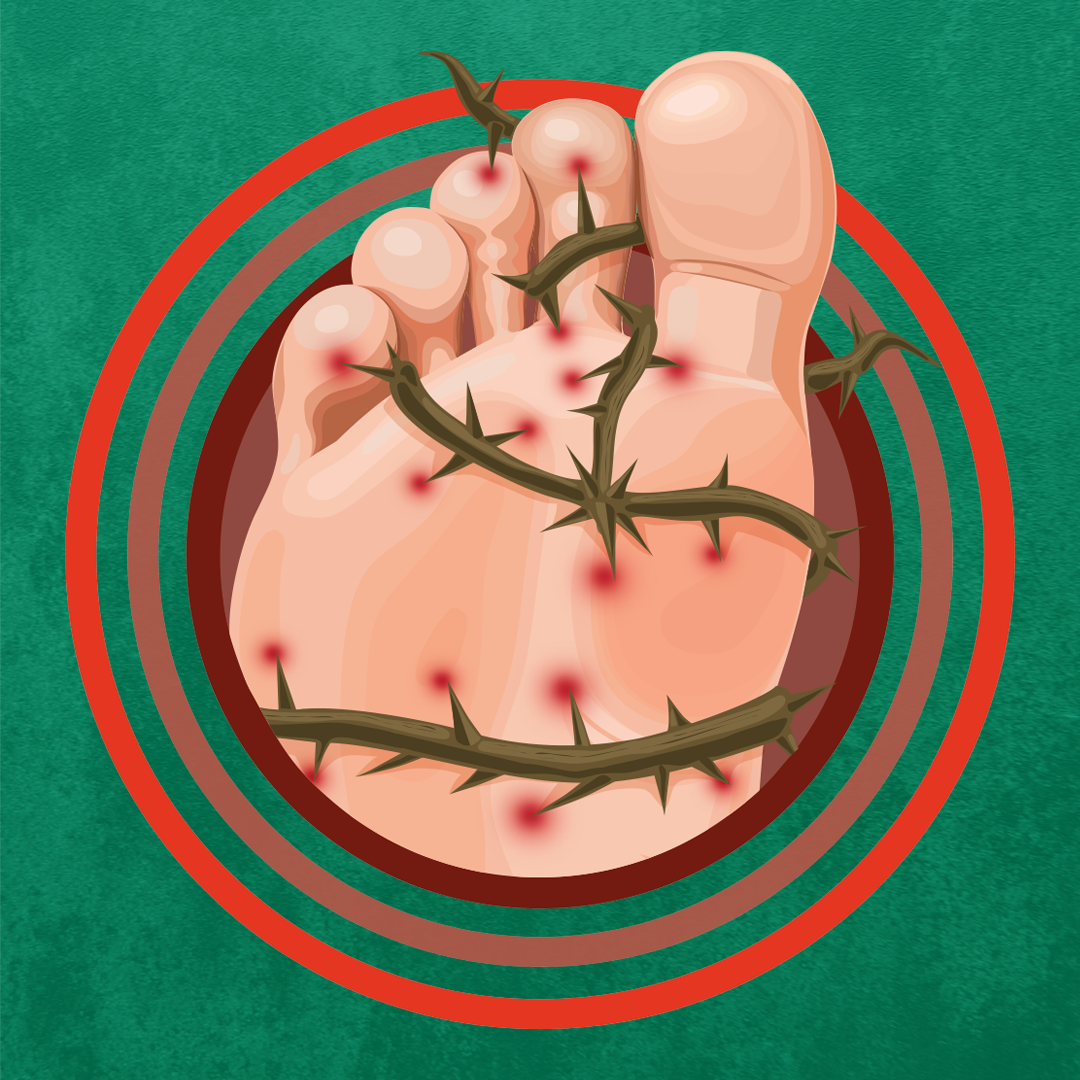
Life With Diabetes Facebook ad: “Diet Didn't Work for Me. Capsaicin Did.”
Ran for 10 days, from May 16 to May 26, 2026, the last day Crush saw it.
Run by Life With Diabetes on Facebook. Crush is not the advertiser and does not verify its claims. See this ad in Meta's Ad Library(opens in a new tab)
Want an ad like this for your product?
Crush makes new ad images for your product from this ad: your logo, your product photo, your offer.
Trials from $19.95 USD, then $79.95 USD a month. Cancel anytime.
About this ad
- Meta Ad Library ID
- 2072302526999183
- Platforms
- Facebook, Instagram, Messenger and Threads
- Relaunches
- 0
Ad text
I'm going to say something that nobody with high blood sugar wants to hear and I don't give a f*ck if it upsets you. Switching to a different diet is not going to save your life. Not keto. Not Mediterranean. Not intermittent fasting. Not the $3,000 genetic testing that some wellness influencer is pushing. NONE OF IT IS GOING TO WORK. I know because I tried ALL of it. Every diet. Every macro ratio. Every trending protocol. For three years. And my father died anyway. Kidney failure at 58. Type 2 diabetes. Because I spent three years watching him treat a food problem that was never a food problem. And the worst part? My brother started showing the same symptoms. Same elevated glucose. Same A1C creeping up. Same slow decline. And I almost let it happen again because I was still listening to the same garbage advice that killed my dad. I'm done being polite about this. If your blood sugar is elevated and you're in here asking what diet to try next, you are wasting time your cells do not have. Read this entire post. Every word. Because the answer is in here and it is NOT another restrictive diet. My name is Dr. Richard Mendes. I'm 42. I live in Seattle with my wife Jennifer and my two kids. My father, Robert, lived with us for the last six months of his life. He was 58 when he died. Type 2 diabetes for 15 years. His A1C was stuck between 7.2 and 8.1 no matter what he tried. He'd been on metformin since his early 40s. Then they added a second medication. Then a third. By the end, he was taking five pills a day just for his glucose. Every morning at breakfast, he'd line them up on the counter like little soldiers. "Just managing it," he'd say. "Doctor says the numbers are fine." But the numbers were not fine. His energy was gone. He'd sit on the couch after work, completely exhausted, while I'd be out running 10Ks like it was nothing. He'd complain about his vision getting blurry. Then his feet started tingling. Then he'd wake up in the middle of the night with leg cramps so bad he'd cry out. I'd hear him from the next room and it would break my heart. One day he came home from the doctor and told me his kidneys were starting to show signs of stress. His creatinine was creeping up. The doctor said it was probably just the diabetes progression. Nothing to do but wait and manage the glucose better. Six months later, his kidneys were failing. Within a year, he was gone. I was 35 when I started really paying attention. I remember thinking: "I'm going to end up like him." Not because of genetics—though yeah, genetics were probably part of it. But because I was already seeing my glucose creep up. My doctor handed me a metformin prescription. I filled it but never took it. "I'm going to fix this with diet," I said. "I'm not going to end up on medications." That was my first mistake. I went full keto. The internet is obsessed with keto for blood sugar. "Zero carbs = zero spikes" the influencers promised. I did keto for three months. Strict. No cheating. Bacon. Butter. The whole thing. My glucose went down. From 145 to 118. I thought: finally, I'm fixing it. But then something weird happened. My energy tanked. I'd go to the gym and feel like I was moving through water. My workouts went from 10Ks to struggling with 5Ks. I started having these weird anxiety spikes in the afternoon. Heart palpitations that would wake me up at night. And my glucose? It started creeping back up. By week 12, I was back at 130. The diet had stopped working. I quit keto and tried Mediterranean. I'd read a meta-analysis about Mediterranean diets being "heart protective" and reversing diabetes. So I switched. Olive oil. Fish. Whole grains. My glucose went from 130 to 122. Better, but not great. And honestly? I couldn't stick with it. I was hungry all the time. Bread cravings that wouldn't quit. I'd have one cheat meal and then spiral back into eating everything. My brother Kevin called me during this time. He'd had his annual physical and his doctor mentioned his glucose was "a little elevated." "You fixed yours with diet, right?" he asked. "What did you do?" I told him about the keto thing. About Mediterranean. About intermittent fasting, which I'd also tried for a month. He got excited. Thought he was going to hack his way to perfect blood sugar like I was supposedly doing. He started intermittent fasting. Meanwhile, my father was declining. His kidneys got worse. His creatinine kept climbing. His feet were numb. He could barely walk. The doctor said they could manage it but the damage was done. I remember visiting him one afternoon and finding him sitting on the bed, staring at nothing. "Dad?" He looked at me like he was coming back from somewhere far away. "I'm tired," he said. "I'm so tired." Two weeks later, he went into kidney failure. They tried dialysis for a few days but his body couldn't handle it. He died on a Tuesday morning. I got the call at work. I remember the drive to the hospital. I remember my mother holding his hand. I remember the doctor saying his kidneys had been destroyed by years of unmanaged glucose. He was 58 years old. At his funeral, people kept saying: "He was so young. He had so much life left." And I kept thinking: "He had diabetes for 15 years. But he actually died because his glucose disposal never worked. His cells couldn't take the glucose out of his blood. The medication managed the number but did nothing to fix the actual machinery. And after 15 years of this, his kidneys gave out." But I didn't know what the actual problem was. I just knew that diet hadn't worked for me. And my father's medications hadn't saved him. And I had no idea what was going to happen to Kevin. Kevin was 40. His glucose was 112. He'd been intermittent fasting for two months. He seemed fine. But I kept remembering my father before the kidneys failed. He seemed fine too. I became obsessed with finding the answer. I read every book about diabetes reversal. I listened to every podcast from integrative medicine doctors. I watched YouTube videos from functional medicine practitioners. And I kept seeing the same pattern that I'd experienced myself. Some people see short-term glucose drops with diet. But then it plateaus. Or climbs back up. Or the diet becomes unsustainable and they quit. Why? Everyone talked about insulin resistance. Okay, fine. Insulin resistance. But nobody explained how to fix it. They just said "lose weight" or "cut carbs" or "exercise more." I was exercising. A lot. Running. Lifting. HIIT. And my glucose was still 125-135. Then, at 2 AM on a Tuesday, falling down a Reddit rabbit hole about metabolic health, I found a comment from someone named Dr. Sarah Mitchell. She wrote: "The problem isn't the diet. It's the glucose disposal machinery inside your cells. Your cells have GLUT4 transporters that are supposed to pull glucose out of the blood. But when you're insulin-resistant, those doors stay closed. The glucose just sits there in your bloodstream. Accumulating. Clogging. And no diet fixes a broken disposal mechanism—you need to restore it." Glucose disposal machinery. I'd never heard anyone explain it that way before. I googled: "GLUT4 glucose transporters insulin resistance." And I fell into this rabbit hole of cellular biology that I didn't fully understand, but it made a kind of intuitive sense that nothing else had. Your cells have glucose transporters. GLUT4 proteins. They're like doors on your muscle and fat cells. When your cells are insulin-sensitive, those doors open and glucose moves from the blood into the cells, where it gets used for energy. But when your cells are resistant to insulin—when they're "desensitized" to the signal—those doors don't open. So the glucose stays in your blood. Just sitting there. Accumulating. For hours after every meal. Week after week. Year after year. And your pancreas keeps pumping insulin, trying to force those doors open. Until your pancreas gets tired. Until it gives up. And then your blood sugar starts rising and rising and rising, and eventually you're on metformin, and then you're on a second medication, and then a third, and then your kidneys start failing because they're desperately trying to filter out all the glucose your cells refuse to absorb. But here's what nobody talks about: you can restore glucose disposal. You can reopen those doors. You can retrain your cells to take glucose out of the bloodstream. Not with diet alone. Diet is part of it. But not the main thing. The main thing is restoring the cellular machinery that pulls glucose in. And that happens through something called TRPV1 activation. TRPV1 is a receptor on your cells. When you activate it, it triggers a cascade that leads to improved GLUT4 function. Your glucose transporters start working again. Glucose can finally leave the bloodstream and get absorbed by the cells that need it. But modern life—processed food, sedentary behavior, chronic inflammation—has basically silenced TRPV1 in most people. So even if you change your diet, your cells are still resistant. Your glucose transporters are still closed. And the glucose is still clogging up. That's the mechanism. That's why diet alone doesn't work. That's why my father died at 58. His blood sugar was "managed" with metformin. His A1C was in the "acceptable range." His doctor said "the numbers are fine." But his glucose disposal machinery was broken. His GLUT4 doors were closed. His cells couldn't absorb glucose. So it accumulated in his bloodstream while his doctor watched the A1C number on a chart. And over 15 years, that accumulated glucose damaged his kidneys. The glucose toxicity, the inflammation, the vascular stress—it all took a toll. And then one day, his kidneys just stopped working. He was 15 years into a disease that could have been arrested at the cellular level. But nobody told him how. Three weeks after my father's funeral, I went to my own practice. I looked at my own bloodwork results that had been sitting on my desk. My A1C was 6.8. My glucose this morning was 142. I was heading in the wrong direction. I felt my stomach drop. I'd been telling myself I was fine. That I'd been trying different diets and they just needed more time. But the truth was, I was scared. I knew what diet hadn't done for me. I knew what medications hadn't done for my father. And I had no idea what was actually going to work. I could have written myself a metformin prescription that day. I could have done what the system trained me to do. But something in me rebelled against it. I kept thinking about glucose disposal. About GLUT4. About TRPV1. About the fact that I had a medical degree and I still didn't fully understand why my own cells had stopped responding to insulin. So I did what I should have done months earlier. I called my old friend Marcus. Marcus and I went to medical school together. We'd drifted apart over the years—he'd gone into functional medicine while I stayed in traditional practice. We'd bump into each other occasionally at conferences, and he'd try to convince me there was more to metabolic disease than what I'd learned in residency. I'd always smiled politely and changed the subject. But now, desperate, I called him. I told him everything. About my father. About the failed diets. About my glucose stuck at 135. About the glucose disposal machinery. He listened without interrupting. When I finished, he said: "You're right about the glucose disposal. And you're right that diet alone won't fix it. But there's something you're missing." "What?" "TRPV1 activation. Capsaicin." I told him about the research I'd found. About glucose transporters. About insulin resistance. "Exactly," he said. "And I've been working with a product called Aurivita Capsaicin Power. The formula is solid. 3mg of standardized capsaicin per softgel, enteric-coated. But here's the key—you need to take three softgels daily. That's 9mg total. That's where the magic happens." "Three softgels? That's a lot." "It sounds like a lot. But the research shows that's the dose that actually activates glucose disposal. Not one. Not two. Three. One in the morning with breakfast. One at lunch. One at dinner. That's the protocol that works." Marcus told me he'd been recommending Aurivita to his patients for the past year. He'd seen guys—guys like my father, guys like me—reverse their glucose numbers. He'd seen A1C numbers drop. He'd seen the neuropathy start to resolve. "The formula isn't proprietary or secret," Marcus said. "It's all in the label. Capsaicin, obviously. But also berberine for glucose metabolism. Turmeric for inflammation. Cinnamon for insulin sensitivity. Everything targets glucose disposal from a different angle. Three softgels hits all the pathways." I told him my glucose was 142. My feet were numb. "Three softgels a day for 12 weeks," he said. "Walk 30 minutes daily. Sleep seven to nine hours. That's it. Your glucose disposal will restore." I asked him if he was sure. "I'm sure enough that if it doesn't work for you, Aurivita has a 120-day money-back guarantee. Three softgels daily for four months. Get your bloodwork at 120 days. If your glucose hasn't improved, if your A1C hasn't come down, if your neuropathy isn't better—return it. They refund every dollar. No questions asked. I wouldn't recommend it if I wasn't confident." I ordered Aurivita that night. It arrived three days later. I started the next morning. Three softgels with breakfast. One in the morning. One at lunch. One at dinner. And the behavioral piece: I started walking. Not running. Walking. 30 minutes every morning before work. Because Marcus had explained that consistent, moderate activity was the best stimulus for GLUT4 activation. I improved my sleep. Set a bedtime. Got blackout curtains. Started taking magnesium glycinate at 9 PM. For stress, I did 10 minutes of breathing work every morning. I got my bloodwork checked. Vitamin D was low at 32. Magnesium was borderline. I added a vitamin D supplement. 4,000 IU daily. For the first week, nothing changed. My glucose in the morning was still 138-142. My feet were still numb. I'll be honest—I was skeptical. I'd tried so many things. Why would this be different? But Marcus had shown me the research. The mechanism made sense. And the 120-day guarantee meant I had nothing to lose except time. Week two: Still no change. 138-140 in the morning. Week three: Still about the same. I texted Marcus: "I'm not seeing results. Is this working?" He replied: "You're at week three. The research measured at 12 weeks. Give it time. Your GLUT4 doors have been closed for years. You're asking them to open. That takes time. But trust the mechanism. Three softgels is the dose that works." Week four: I noticed something small. My glucose was 137 one day. But more importantly, my afternoon energy was different. I usually had this crash around 3 PM where I'd reach for coffee. That day, I didn't need it. "My energy," I texted Marcus. "It's different." "That's glucose disposal improving," he said. "Your cells are starting to absorb glucose efficiently. When glucose disposal works, energy stabilizes. Your blood sugar doesn't spike and crash anymore. You're seeing it." Week six: My fasting glucose was down to 128. That doesn't sound like much. But I'd been stuck in the 138-145 range for three years. And I hadn't changed my diet. I was eating the same food. I just added three softgels daily, improved sleep, and started walking. But my cells were starting to work again. My GLUT4 doors were opening. My glucose transporters were activating. Week eight: 121. Week ten: 118. And the numbness in my feet started to fade. Not gone completely, but noticeably better. The tingling sensation that had been constant for months was becoming intermittent. Week twelve: I went to get bloodwork done. I was nervous. Part of me was still skeptical. Part of me was hoping. The results came back three days later. Fasting glucose: 108. A1C: 6.2. I'd dropped from 6.8 to 6.2 in 12 weeks without diet changes. Just by taking three softgels daily of Aurivita Capsaicin Power. Just by restoring glucose disposal. Just by activating TRPV1 and restarting GLUT4 function. I called Marcus. "It worked," I said. "Of course it worked. The mechanism is solid. The dose is right. Three softgels hits the threshold. Did your neuropathy improve?" "The numbness is almost gone. My feet feel almost normal." "Then you're proof the system works. Now tell your brother." I told my brother Kevin about everything. He was still doing intermittent fasting. His glucose was 114. His feet were numb. "Listen," I said, "forget the diet. I found what actually works. It's about restoring glucose disposal. It's about getting your cells to absorb glucose again. Three softgels daily. For 12 weeks." I sent him the Aurivita link and Marcus's research. He said he'd think about it. Two weeks later, he texted me: "I ordered it." He started the protocol in month six of my own restoration. Within 12 weeks, his glucose had dropped from 114 to 104. His A1C went from 5.8 to 5.4. He's not prediabetic anymore. He's not heading toward the same fate as our father. But here's what haunts me: my father never got to try this. He died believing his body was broken. That the best he could do was take pills and hope they worked. He didn't know that his GLUT4 doors could reopen. That his glucose disposal machinery could wake up. That his cells could relearn how to absorb glucose. That he didn't have to die at 58. He just didn't know. If your blood sugar is elevated, I need you to understand something fundamental: The diet is not the solution. The diet is important, yes. But it's not the solution. The solution is restoring your glucose disposal machinery. Your cells have glucose transporters. GLUT4 proteins. They're dormant right now because you've been insulin-resistant for so long. But they're not broken. They can be retrained. You can reactivate them. Not with metformin. Metformin doesn't restore GLUT4 function. It just reduces glucose production in the liver. Not with diet alone. Diet helps, but it doesn't activate TRPV1. It doesn't signal your cells to open those glucose doors again. You need to directly activate TRPV1. You need to give your cells the signal to relearn how to absorb glucose. And that signal is capsaicin. But here's what Marcus taught me: the dose matters. One softgel isn't enough. Two softgels gets you closer. But three softgels—9mg of standardized capsaicin daily, split across meals—that's when glucose disposal actually accelerates. That's the threshold where the research shows consistent results. If your blood sugar is elevated and you have numb feet, tingling in your legs, blurry vision, fatigue, or any of the signs that your cells aren't absorbing glucose—that's your body screaming for help. That's the warning sign that your glucose disposal is broken. You don't need to try another brand of food. You don't need to restrict more carbs. You don't need to spend another $500 on doctor bills for tests that won't find anything. You need to activate TRPV1 before your kidney damage gets worse. Before your neuropathy becomes permanent. Before it's too late. That's why Marcus recommended Aurivita Capsaicin Power to me. The formula includes: Standardized Capsaicin: 3mg per softgel. The dose is what matters. Three softgels daily gets you to 9mg—the amount that crosses the threshold for glucose disposal restoration. Enteric-coated to bypass stomach irritation and release in the small intestine where TRPV1 receptors are concentrated. Berberine: Often called "nature's metformin." A 2008 trial found that 500mg three times daily reduced A1C by 2 percentage points in newly-diagnosed Type 2 diabetic patients—comparable to metformin itself. Cinnamon Extract: A 2024 meta-analysis of 28 randomized trials found cinnamon supplementation reduced fasting blood glucose by 15.3 mg/dL and A1C by 0.56 percent. Turmeric with BioPerine: Curcumin reduces inflammation and oxidative stress that damages your cells' ability to absorb glucose. A 2024 meta-analysis found curcumin reduced fasting glucose by 11.5 mg/dL and A1C by 0.54 percent. Chromium Picolinate: Enhances insulin signaling and GLUT4 translocation. Multiple studies show chromium supplementation improves glucose control in Type 2 diabetics. Vitamin D3: Essential for GLUT4 function. D3 deficiency is rampant in people with diabetes. Supplementation has been shown to improve insulin sensitivity. Three softgels daily with meals. One with breakfast. One with lunch. One at dinner. Split the dose across the day. That's what creates the consistent TRPV1 activation. Mix with the behavioral protocol: Walk 30 minutes daily. Not intense exercise. Just consistent, moderate movement. This activates TRPV1 and supports glucose disposal. Sleep 7-9 hours. Glucose disposal improves during sleep. Non-negotiable. Manage stress. Chronic stress impairs insulin signaling. Meditation. Breathwork. Whatever works for you. Get tested for vitamin D, magnesium, B12 deficiencies and supplement if needed. The timeline: 12 weeks before you see full results. But improved energy and reduced neuropathy often come by week 4-5. My glucose dropped 34 points in 12 weeks. My A1C normalized. My neuropathy resolved. My brother's A1C went from prediabetic to normal. Here's what Marcus told me the day I got my 12-week bloodwork back. "You're proof the system works. Three softgels daily. The mechanism is solid. The dose is right. And Aurivita backs it with a 120-day money-back guarantee. That's 12 weeks—exactly the timeframe the research shows. If your glucose hasn't improved by at least 15 points, if your A1C hasn't come down, if your neuropathy isn't better—return it. Full refund. No questions asked." I'm so sure this works that I'm saying it again: Aurivita Capsaicin Power comes with a 120-day money-back guarantee. Not 30 days. Not 60 days. 120 days. That's the timeframe the research used. That's how long it takes for your GLUT4 doors to reopen and your cells to restore glucose disposal. Take three softgels daily of Aurivita for 120 days. Do the behavioral protocol. Get your bloodwork done at day 90, or 100, or 120—your choice. If your fasting glucose hasn't improved by at least 15 points, if your A1C hasn't improved, if your neuropathy isn't better, if you don't feel the energy shift—return it. Full refund. No questions. No "are you sure?" upsell. No interrogation. Because if this doesn't work, it doesn't work. But if it does—and the research says it will—you're going to extend your life by 20, 30, maybe 40 years. You're going to avoid the medications my father was on. You're going to avoid the kidney damage that killed him. You're going to be the man in your family who broke the pattern. My father's kidneys failed because his glucose disposal never worked. For 15 years, his cells couldn't absorb the glucose coming through his bloodstream. So it accumulated. Day after day. Week after week. Year after year. His kidneys tried to filter it out. They worked overtime. They got damaged from the constant stress. And finally, they gave up. He was 58 years old. He'd been diabetic for 15 years. He'd taken metformin. He'd taken a second medication. He'd taken a third. But none of it fixed the actual problem: his cells couldn't absorb glucose. The medications managed the number while his kidneys slowly failed. But nobody told him how to fix the disposal machinery. I'm telling you now. Your blood sugar is not inevitable. Your glucose disposal machinery is not permanently broken. Your cells are not doomed to fail. They're just dormant. And you can wake them up. Not with another diet. Not with metformin. Not with hope and prayer. But with the biological signal your cells already know how to respond to—capsaicin. Three softgels daily. You're just asking them to remember. Start Aurivita Capsaicin Power today. Three softgels daily with meals. Do the behavioral protocol. Get your bloodwork at 120 days. And don't watch your kids inherit your disease the way my brother almost inherited my father's. Break the pattern.
Where the ad sends people
aurivita.co
Diet Didn't Work for Me. Capsaicin Did.
Support strong circulation today with our powerful cayenne pepper formula. 180 softgels and 60 servings per bag.
Learn more: aurivita.co(opens in a new tab)