
Inactive· since Aug 13, 2026
- 27
- days it ran
- 0
- relaunches
Ad copy
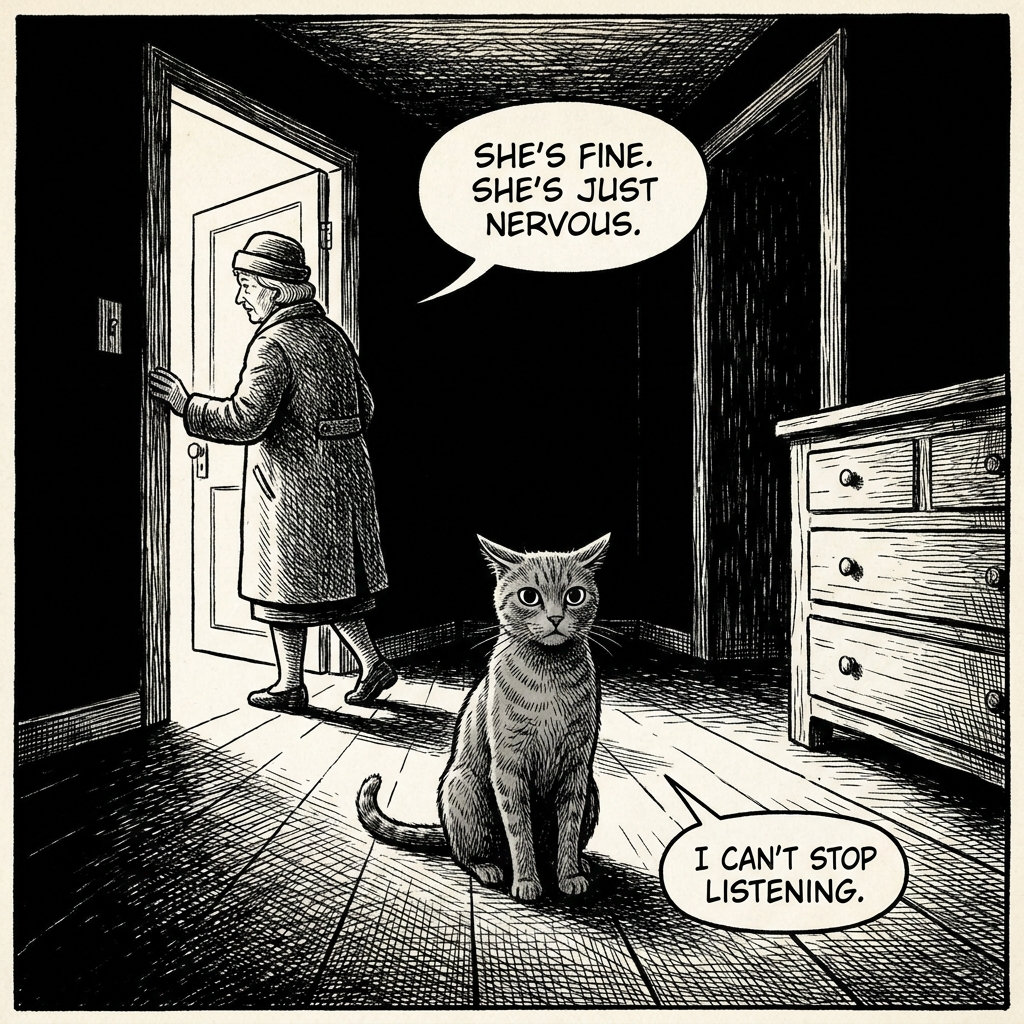
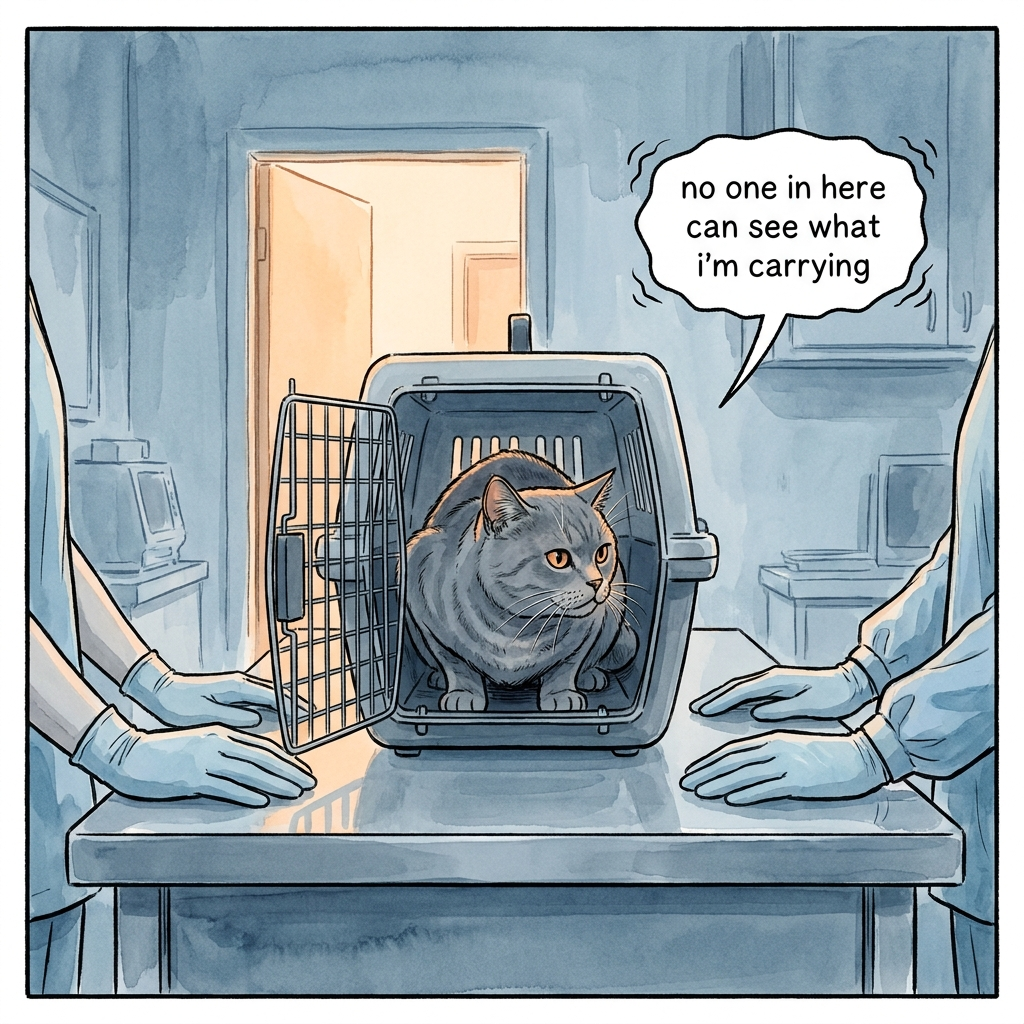
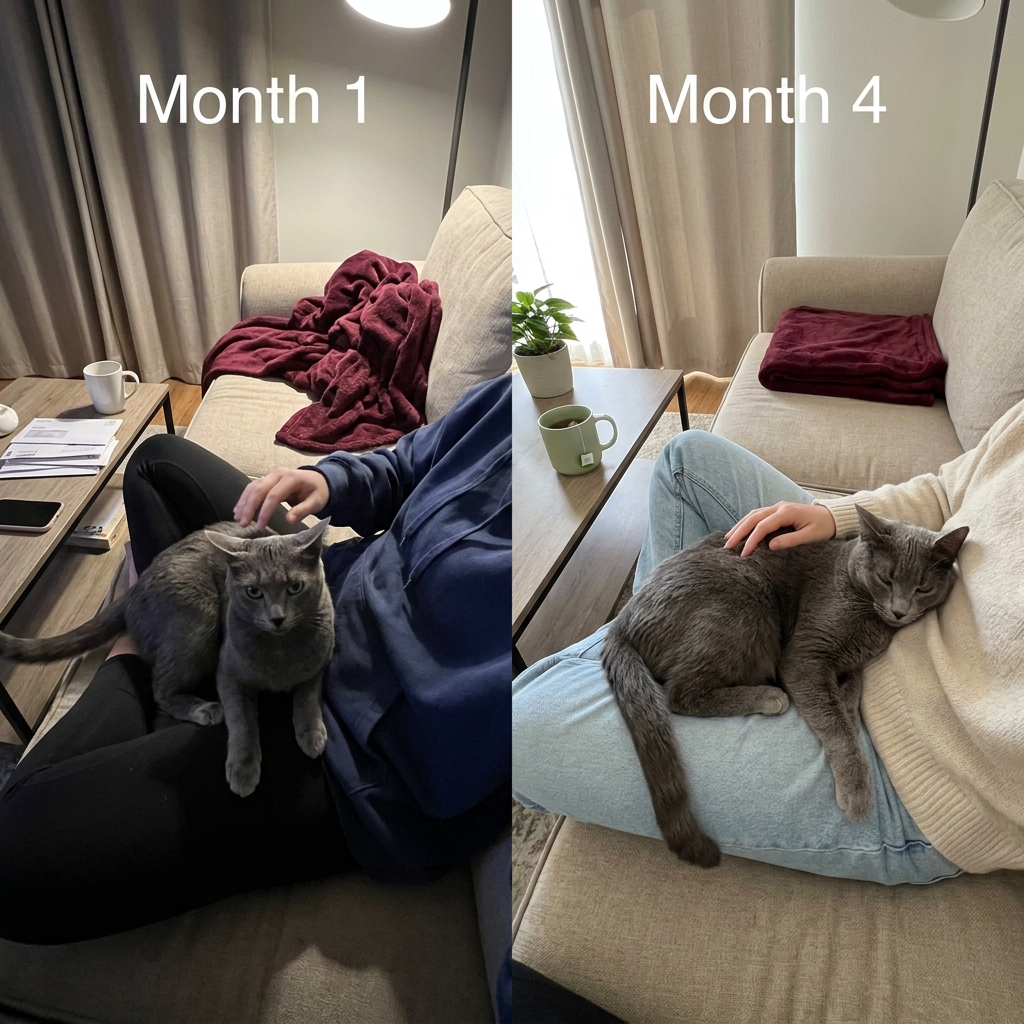
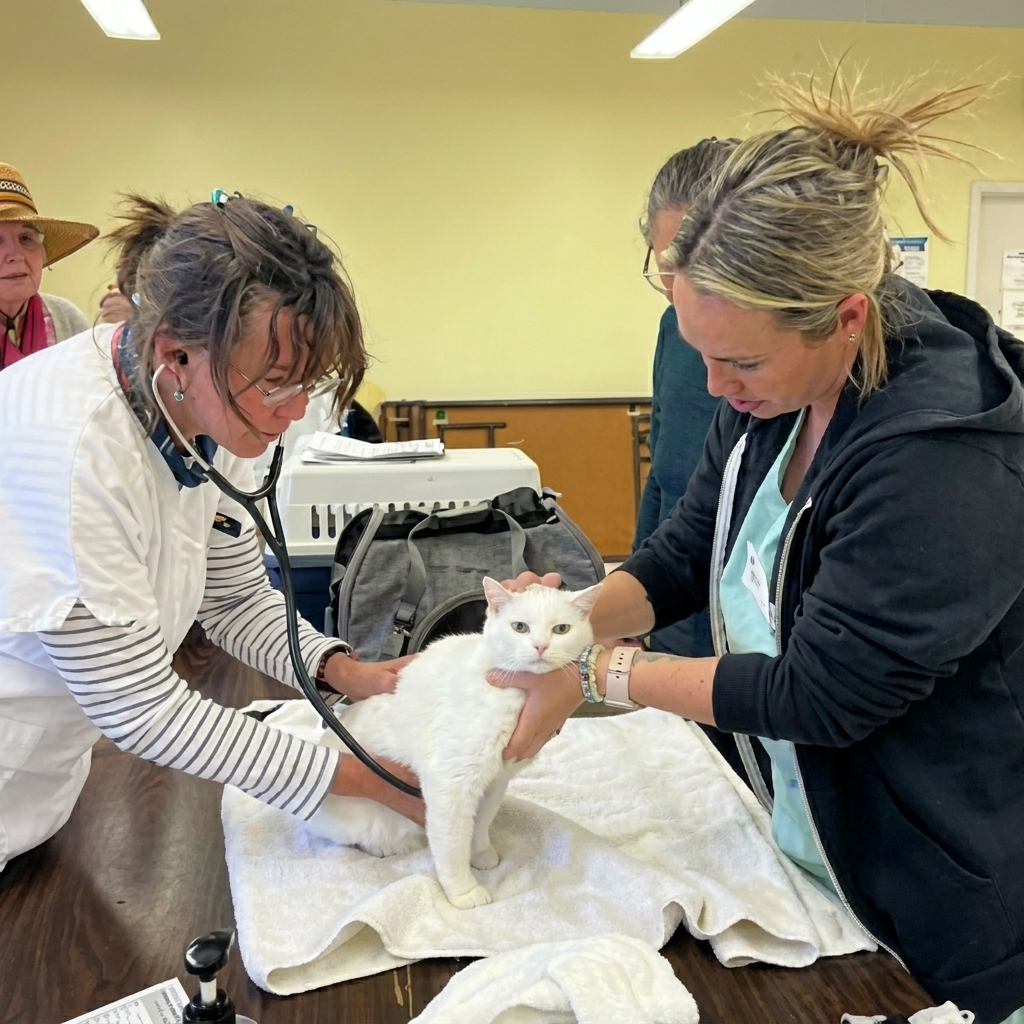
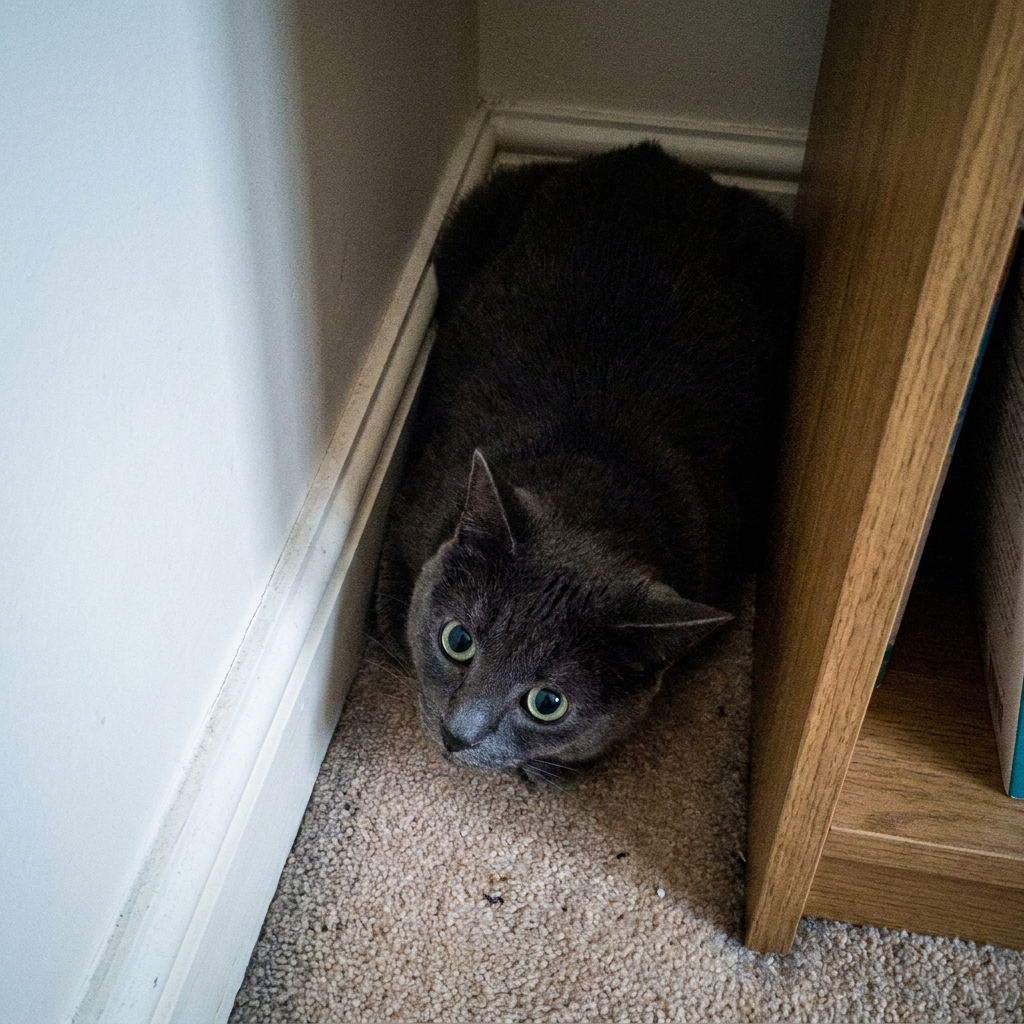
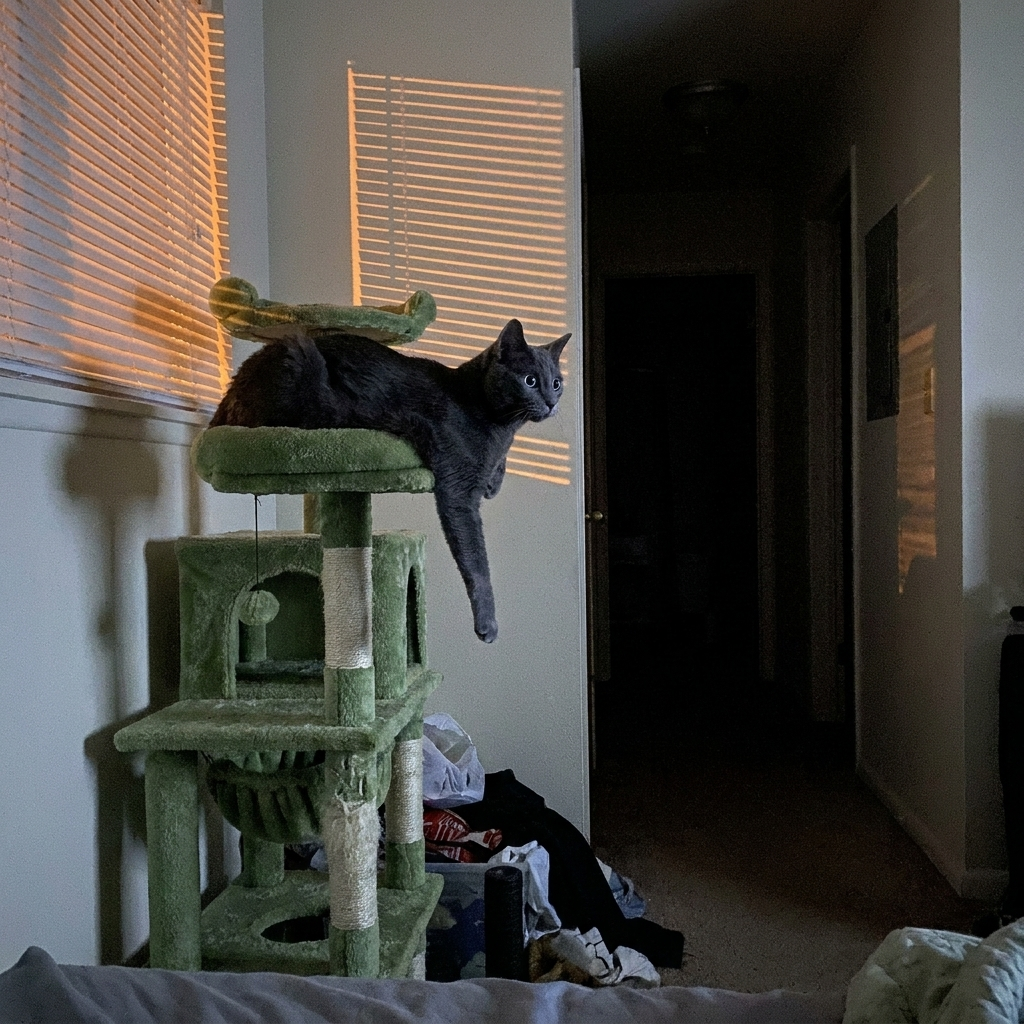
I am going to say something that every cat owner lying awake at 3am needs to hear. Your cat is not being playful. She is not bored, and she is not doing it for attention. She is awake because her body does not know it is night. And there’s a strange cause of this. But no amount of play, food, or door-closing will fix a clock that has stopped receiving the signal. I know this because I spent twenty-two years telling exhausted people their cat was just vocal at night and the’s basically the main root cause of their insomnia. Then it happened in my own house, to my own cat, and I could not fix it either. What I finally saw at half three one morning has changed how I practise. Read every word of this. Before you decide you've stopped loving her. My name is Dr. Demitro. I have been a small-animal veterinarian for twenty-two years. Northern Colorado. I have three cats of my own. The oldest is fifteen. I have said "cats are nocturnal, it's just what they do" more times than I could count. I said it kindly, to shattered people, and I believed it. It is also wrong. Cats are not nocturnal. They are crepuscular — dawn and dusk animals. In between, and especially in the dead middle of the night, they should be flat out and unconscious. I have known that since school. I said the other thing anyway, because it was the sentence that fit in an eight-minute appointment. I want to tell you about Juniper. Juniper is my grey shorthair. She was nine when it started. From the day I brought her home she had slept on my chest — not near me, on me, waiting for me to stop moving before she stepped up. Four years ago, she started waking me. The first night I didn't think anything of it. Cats make noise. By the second week I noticed it had a shape. Always between two and four. Always the hallway. Always that flat, long, awful sound at a closed door, twenty minutes at a stretch, then quiet, then twenty more. By month three I was awake before it started. That's what does the real damage, incidentally. Not the waking. The bracing. I ran every test I would run on any patient. Full bloodwork. Thyroid panel. Kidney values. Urinalysis. Blood pressure — twice, because a hyperthyroid cat or a cat with rising blood pressure will vocalise at night and I wanted to have been thorough. Everything came back normal. "She's just vocal at night," I told myself. And here is the part that kept me up, on top of the part already keeping me up. She was not in pain. Not hungry. Not shut out of anything, not asking for anything. I got up. Every single time, for months, in the dark. There was never anything there. She was awake. Wide awake. Wired awake, in a dark house, at an hour when a cat should be unconscious. And she was not tired the next day either. That's what I could not square. She wasn't catching up. She was running on something. I fed her later. Then a puzzle feeder at eleven so she'd have a job. Then a proper play session before bed — the wand, fifteen minutes, hunt-catch-kill sequence, exactly the way I'd have told a client to do it. I did that for six weeks. Nothing. I tried a diffuser. Then a second in the hallway. Nothing. I tried the calming chews. Three brands over about eight months — all of them the sort you give before a trigger. She wouldn't eat one. Not reluctantly. Wouldn't approach the bowl. I tried the capsules. She ate around them with a precision I would have admired in any other year. I put a night light in the hall. Then took it out. Then put it back, because by then I was guessing. And I did the thing everyone eventually does. I shut the door. Because the advice — from behaviourists, from colleagues, from every article I read — was the same, and it was reasonable. Don't respond to nighttime vocalising. You'll reinforce it. Ignore it and it extinguishes. So I lay in the dark listening to my cat call at a closed door for twenty minutes, and did nothing, on purpose, for weeks. It did not extinguish. What it did was make me start to hate the sound. And then, on some level I did not like at all, the animal making it. I remember the specific night. She started at about ten past three and I lay there and thought, very clearly: I cannot do this for another ten years. Then I lay awake until morning feeling sick. Because she was nine. And she had slept on my chest every night of her life until she couldn't. And I had just quietly done the arithmetic on her remaining lifespan as an inconvenience. I called a colleague. A feline behaviour specialist I'd known for twenty years. She examined Juniper. Went through my notes, which was humiliating. "Workup's clean. Some cats are just night-active. You could look at medication." I did not fill it. Not on principle — I've prescribed it and I'd do it again for the right cat. I looked at the paper and thought: she's nine, and I want her back, not off. It took me two more years to understand why the paper felt wrong. And then something happened that I did not expect. Something nobody had ever mentioned to me in twenty-two years of practice. Something that changed what I say in an exam room. I got up at about half three to get a glass of water. I didn't turn a light on. And the house was not dark. The router. The standby light on the television. The clock on the oven. The charger on the counter. The strip under the bathroom door. Streetlight through a gap in the blind, laid across the hallway floor. I counted nine separate light sources standing in my own hallway at 3:30 in the morning. And Juniper was standing in the middle of them, pupils blown wide open, ears rotating, looking at nothing at all. I stood there and could not move. Because I understood, in that moment, exactly what had been happening. The 3am. The pacing. The twenty minutes at a closed door. Those were not signs of a difficult cat. She had no idea what time it was. Not metaphorically. Her body genuinely did not have the information. And here is the part that got me. Juniper has a defence against this. Every cat does. A cat works out that it is night the same way we do. Falling light drives melatonin. Melatonin says stand down. The arousal systems quieten and she sleeps. It is not a preference. It is a signal. And the signal comes from light. An indoor cat gets almost none of it. There is no real dusk in a house. Outdoors, dusk takes forty minutes — a long, gradual fall, and it is that falling slope that carries the instruction. Your house has no slope. It has switches. Overhead light until eleven. Then a jolt to black. Then eight hours of standby LEDs and streetlight. Then a jolt back on at seven. Do that for a few years and the rhythm flattens. Not absent. Flat. No clear peak, so no clear night, so no clear instruction to stand down. That is half of it. The other half is what should catch her when the signal fails. Even without a strong night cue, a settled cat has a braking system that carries her from alert across into asleep. In a cat who has been running hot for a long time, that braking is working against far more than it should be. So she gets to the edge of sleep and cannot cross it. Put the two together and you have a loop. The dark doesn't tell her it's night. So she stays available. A pipe ticks, or something moves outside, or nothing happens at all — and she flips into hunt mode instead of sleeping through it. And she can't come back down. So she paces. And calls. And wakes you. And then she is under-slept the next day too, which raises her arousal further, which makes the following night worse. Every night makes the next one more likely. That is why it never levels off on its own. It is not a habit. It is a circuit that reinforces itself. Now I need to address something directly, because I know what you are thinking. You are thinking: my vet ran everything and said it's stress. Or that she's just nocturnal. I thought the same thing. Every test came back clean. And on the first count, mine was right. But here is the truth I learned the hard way. There is no test for this. Nothing on a standard panel measures a flattened melatonin rhythm or tells you an arousal system has lost its brakes. There is no line item. There is no number to hand you. So the panel comes back clean — which is genuinely good news that does not feel like good news — and you are handed environmental advice you have already exhausted, or a prescription. And on the second count: she is not nocturnal. A properly wired cat sleeps through the middle of the night. The fact that yours doesn't is information, not a species trait. Now, the two things I recommended for years that I would take back. The play session before bed. Reasonable idea. Tire her out, she sleeps. And for a genuinely under-stimulated young cat it works. It does nothing for a cat whose body doesn't know what time it is. You are not fixing the clock. You are adding activity to a system that already can't come down — and I did it for six weeks, properly, with a wand toy, at eleven at night, while getting steadily more tired myself. And ignoring the vocalising. That advice is correct for a learned behaviour. A cat who has discovered that yowling produces breakfast will stop when yowling stops producing breakfast, and it works fast. For a cat whose body has lost track of time, there is nothing to extinguish. She isn't asking you for anything. You are lying in the dark not helping while she stands in a hallway unable to sleep, and the only thing that changes is how you feel about each other in the morning. I did that for weeks. It is the thing I would take back first. And the third one is mine, and it's the one I would most want you to hear. I kept the house bright until eleven, because I was up. I left the hall light on when we travelled, because I thought a dark house would frighten her. I put a night light in, out of kindness. I flattened her light day, by degrees, for years, because I wanted her to be comfortable. That is not carelessness. That is just what living indoors with a person looks like. You did not fail her. You did the late feed and the puzzle feeder and the play session. You did the diffusers, the chews she wouldn't eat, the extra litter box. You got up. Every time, for months, in the dark, to find nothing wrong. You did more than most people would have — and you did it while sleep-deprived, which is the hardest possible condition in which to do anything. And the resentment. I want to say this properly, because nobody said it to me. Feeling that does not mean you love her less. Chronic sleep deprivation degrades emotional regulation. That is not a character flaw, it is neurology, and it happens to anyone woken at three every night for a year regardless of how much they love the thing doing the waking. You didn't stop loving your cat. You stopped sleeping. Those produce identical symptoms and only one of them is true. After that night in the hallway, I spent two years on the formulation problem. Not because I wanted a product — because answering the question eventually required making one. The night half is two ingredients. Melatonin. Dosed low, given daily, and not as a sedative. The point is not to knock her out. It is to give her the falling-light signal her house stopped providing, so her brain gets a clear night again. Valerian root. The same root humans have used for sleep for a thousand years. That's the brake — it helps her cross from alert into asleep rather than sitting on the edge of it all night. Melatonin tells her it's night. Valerian lets her act on it. Neither is much use without the other, which is exactly why single-ingredient products in this category give you a partial result and a lot of disappointment. And there are two more, which matter for a reason specific to this problem. L-theanine and ashwagandha work during the day. Theanine brings down the daytime scanning; ashwagandha works on the underlying stress load, slowly, over weeks. That isn't padding. A cat who spends all day at high alert arrives at bedtime with an arousal level the night pair has to fight. Fix the night without lowering the day and you're bailing water. The night pair resets the signal. The day pair lowers what the signal has to overcome. Four ingredients. Two jobs. And here is the part about timing, because it matters more than people expect. The drops go in with her evening meal. Not at bedtime. Not as something you give her because she's already yowling. You are trying to hand her a dusk. The signal has to arrive while the house is still lit and settling — before the lights go off, not after — because you are rebuilding a slope, not administering a sedative. That's the whole ritual. Two drops in her dinner, then the evening happens normally. I'll be straight about the evidence, because you should expect that from anyone selling you something for your animal. Most of the mechanistic work on melatonin and these compounds comes from human and rodent research. It is solid science, but the feline-specific literature is thinner than I'd like, and thinnest of all for ashwagandha. That's why the doses sit well below any threshold associated with reported adverse effects in companion animals, and why the full dosing rationale ships in the booklet. Email us and we'll send the formulation document to your vet's office directly. And it is drops, not a chew. That is not a packaging decision. Juniper would not eat a chew — would not approach one — and a great many cats won't. A formula she refuses is a formula at zero dose no matter what's in it. The drops go into the food she already eats, wet or dry, suspended in MCT oil from coconut that's nearly odourless to a cat. She tastes her dinner. Not the drops. Here is what to watch for, and in what order. The night goes first. It is almost always the earliest thing, and it usually shows inside the first week. It also arrives as an absence, which is why people miss it — you wake at seven and spend a moment working out what's different, and it's that nothing woke you at three. With Juniper it was the fourth night. Then the pacing thins before it stops. Ten minutes instead of twenty. Two nights instead of five. Don't wait for a clean zero to decide it's working. Then your own sleep catches up, and this one takes longer than hers, because you have been bracing. It took me the better part of a fortnight to stop waking at three on my own. Then everything else — the daytime version of her comes back last, because that's the ashwagandha half and it's slow by design. Full effect on the underlying load lands around week four. That's how long it takes to move something that spent years climbing. Anyone promising faster does not understand what is being moved. In a survey of 1,283 verified customers after 30 days of daily use: 82% reported their cat sleeping through the night by week three. 89% showed less stress behaviour by week four. 94% stopped considering a prescription. I read the posts every week. "3am. Every single night. Panel came back clean. Vet says some cats are just vocal." "I've tried the late feed, the puzzle toy, the play session, two diffusers. Nothing." "I've started shutting her out of the bedroom and I feel like a monster." "I got up four times last night and there was nothing wrong. There's never anything wrong." "I love her but I don't think I've slept properly since spring and I'm scared of what I'm turning into." That last one is the one I would answer first. You are not turning into anything. You are exhausted. I was too, and I am the one who was supposed to know what was happening. Two drops. Into her evening meal. Before the lights go off. That is it. That is the entire addition to your routine. Nothing else moves. You do not have to rearrange the house again. Give it ninety days. Watch the night first — that changes before anything else does. I am not promising you a different cat. I am promising you a real chance at the one you had, and at your own nights back. $34.95. Less than one panel. Less than the two things currently in the cupboard above your fridge. Not Amazon. Not Chewy. We don't license third-party sellers, so anything on those platforms claiming to be Kitly wasn't formulated by me and wasn't tested in our facility, and I can't tell you what's inside it. EDIT: Several people have asked whether this is safe alongside something their cat is already on. I want to answer that directly. Talk to your vet first. That is not a brush-off. It is the correct answer and I would give it to your face in an exam room. Melatonin and valerian can interact with sedative and psychiatric medications. That is a real consideration, not a legal disclaimer. If she is on a prescription you are hoping to taper, your vet can sequence that safely, and plenty of our customers have done exactly that under supervision. Nobody should be doing it alone in their kitchen. Same answer for diagnosed liver or kidney conditions. Same for pregnancy. Not for kittens under twelve weeks — that is not the problem they have. And keep doing the panel. The clean result is what tells you it is this and not hyperthyroidism, hypertension, pain, or cognitive decline — all of which cause night vocalising and none of which this addresses. If anyone tells you to skip the workup, including me, stop listening to them. P.S. I want to come back to the night light. I put one in the hallway for her. Because I thought a dark house would frighten her. I want you to really sit with that. I was a veterinarian. I had known since school that light drives circadian rhythm. I have said the word photoperiod out loud in a professional context more than once. And I put a small permanent light source into the one part of her day that was supposed to be dark. Because I loved her. And I left it there for two years. Not because I was careless. Because it looked like kindness and I had no reason to question it. That is how this works. Every single thing flattening her day is something a reasonable person does. Lights on in the evening. Television on standby. A router that never sleeps. A phone charging on the counter. Blinds that don't quite meet. None of it is a mistake. All of it together is a day with no dusk in it. Go and stand in your hallway tonight with the lights off. Count what you can see. I counted nine. P.P.S. Juniper did four years of 3am. I want you to sit with that. Four years. I kept a notebook. I logged the nights. I watched the column go one direction and I could not stop it. I tried the late feed. The puzzle feeder. The play session. The diffusers. The chews. The specialist. And I kept telling myself what I had told exhausted owners for twenty-two years. She's just vocal at night. I was a veterinarian. Twenty-two years of practice, more access to this information than almost anyone reading this will ever have, and a notebook forty pages deep. And I did not know. Not because I was negligent. Not because I didn't love her. Not because I didn't try. I did not know because it does not appear on any panel, at any price, in any lab — and because the thing keeping her awake was the house she lived in, and I had been trained to look for a disease. Four years is not four years of nothing happening. Every one of those nights the loop was tightening, and I was awake for it, and I had a name for it that was incorrect. She sleeps on the bed now. Not on my chest — she's older, she gets warm. The end of the bed. All night. Most nights. Your cat is still here. You have not run out of anything. P.P.P.S. One thing I should say plainly. I formulated this. I am not a neutral third party who came across it and I won't arrange the story so it sounds that way. I have an interest in you buying it. If that makes you take everything above with a grain of salt, that is fair, and I would rather you knew. What I'd point at instead is the guarantee. Ninety days. No returning the bottle, no form, nothing to prove. If I am wrong about your cat, it costs you one email. I built this because I spent four years awake at three in the morning resenting an animal who had done nothing except lose track of what time it was — and because I told other people's cat parents the same wrong sentence for twenty-two years before that. Kindly. In an exam room. While they nodded and carried her back out to the car. I think about that more than the four years. Two drops. Her evening meal. Before the lights go off. Your cat is still here. And so is your sleep. https://kitlypet.com/pages/why-do-cats-fight? — Dr. Demitro, DVM
Like this ad? Make it yours.
Crush rebuilds this exact creative around your product — your brand, your colors, your offer — in about a minute.