Cristina Smith
 Facebook ad: “Read this if you blank on words”
Ran for 91 days, from August 9 to November 8, 2026, the last day Crush saw it.
Run by Cristina Smith on Facebook. Crush is not the advertiser and does not verify its claims. See this ad in Meta's Ad Library(opens in a new tab)
Make your own version of this ad
Crush makes it, launches it in your own Meta ad account, scales the winners and pauses the losers.
About this ad
- Meta Ad Library ID
- 2499727577119599
- Platforms
- Facebook, Instagram, Audience Network, Messenger and Threads
- Relaunches
- 0
Ad text
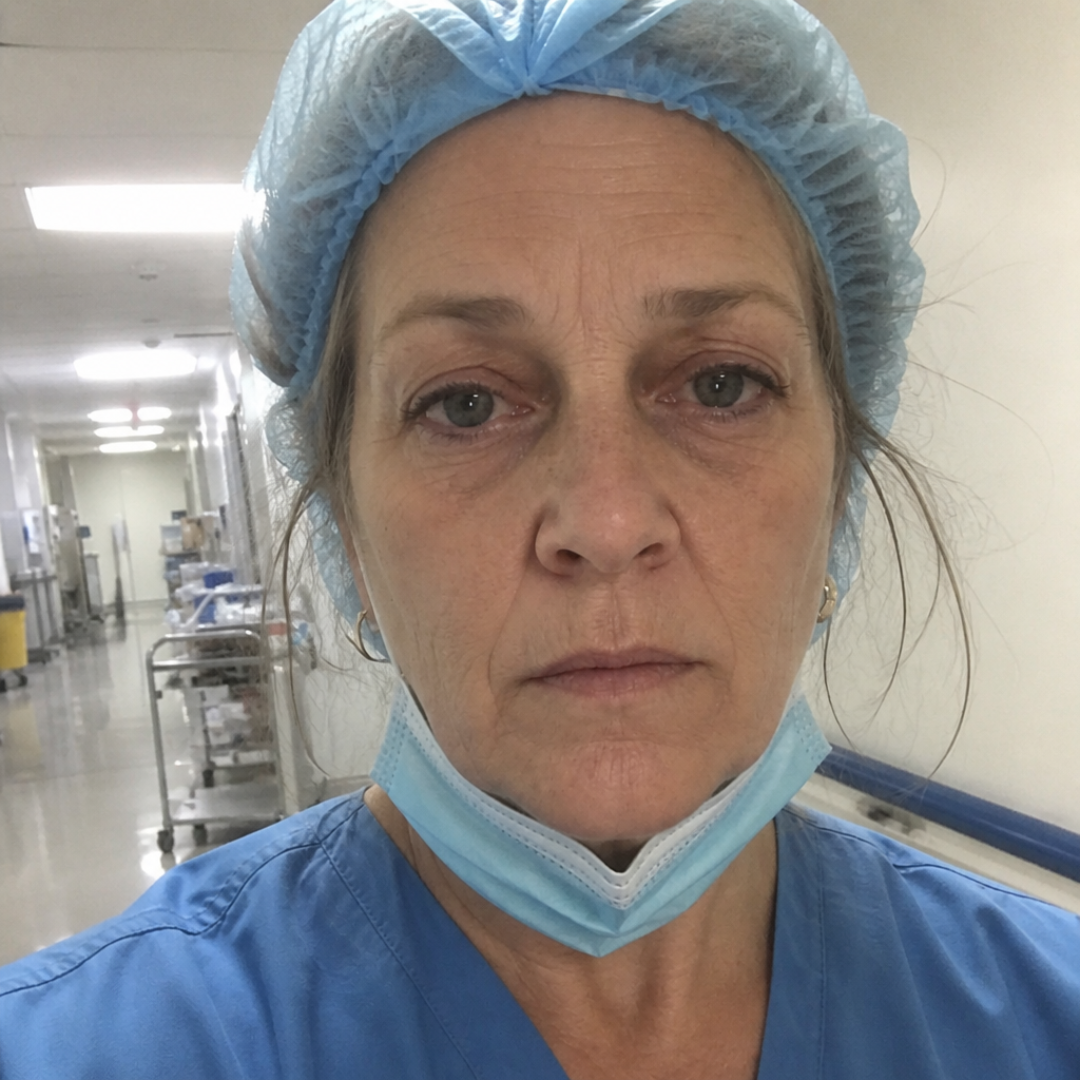
I sat in my doctor's office, fighting back tears, telling her brain fog was destroying my career. That I was terrified I was losing my mind. The nurse laughed. She actually laughed. Not a cruel laugh, the kind that's worse. The dismissive kind. The "oh honey, every woman your age says that" kind. I didn't take the Lexapro. I sat there, looked at the prescription she was holding out, and told her I'd done my own research. That this wasn't depression. It was hormonal. Every woman in every forum I'd found was describing exactly what I was going through. And I wanted to talk about HRT. She set the prescription down. Pulled up my chart. Scrolled through my labs from the month before. "Your hormone levels aren't severe enough to warrant hormone therapy at this time." I asked what I was supposed to do while my brain kept deteriorating. Exercise more. Prioritize sleep. Manage my stress. Maybe revisit the antidepressant if things didn't improve. I walked out of that office with nothing. No treatment. No plan. No answers. Just a referral to a therapist I didn't ask for, a prescription for a problem I didn't have, and the look on her face when I'd started crying, like I was proving her point about the Lexapro. Four doctors in fifteen months. Same script every time. And I walked out of the last one knowing that nobody was coming to fix this for me. For twenty-two years, I was the person they called when something was hard. Not because I was the loudest in the room, because I was the sharpest. I built my entire career on my brain. My identity. Everything I had started with the fact that my mind showed up, every single time. Until it didn't. It started with a word vanishing mid-sentence in a team meeting. Not an obscure word, "compliance." A word I'd used for fifteen years. Just gone. My mouth was open and nothing came out. Then it wasn't small anymore. I started keeping a notes document on my phone. Names of clients I'd known for years. My own talking points for meetings I was leading. I'd review it in the bathroom two minutes before walking in, like a student cramming for a test in her own career. My boss said something after a Monday standup. Not a formal conversation. A passing comment. "You seem a little off lately. Everything okay?" Said gently. Almost carefully. Which made it worse, because gentle means they've been thinking about it for a while before they decide to say it. Then the parking lot. I pulled into work on a Tuesday morning, turned off the engine, and sat there. Couldn't remember if I was arriving or if I'd already been inside and come back out for something. Five minutes. Hands on the wheel. Trying to piece together the last hour of my own life. I'm 47 years old. Sitting in a parking lot trying to remember if I'd been inside my own office. That night at 2 AM, I typed "early onset dementia symptoms age 47" into my phone. Read every result. Compared them to mine. They matched. Six months ago I was leading a department. Now I was diagnosing myself from a WebMD article at 2 AM like a scared kid Googling symptoms after a headache. And what replaced the fear wasn't sadness. It was rage. At the nurse who laughed. At the system that offered me Lexapro instead of answers. At the one door every woman said would help, the one they wouldn't let me through. Fine. If nobody was going to help me, I'd figure it out myself. I started with what the doctors told me. Strength training three mornings a week. Cardio on the off days. Cut the alcohol, the sugar, the processed food. Lost fourteen pounds in three months. My body changed. The fog didn't move. So I turned to what the women in the forums were doing instead. Estroven off Amazon, designed for hot flashes, not cognition. Did nothing. Five grams of creatine monohydrate every morning, two weeks of maybe-energy, then bloating and the same wall behind my eyes. Magnesium and ashwagandha, calmer, sleeping deeper. Still couldn't find the word. B-vitamins. Fish oil. At that point I would have tried anything a stranger on the internet swore by. Six bottles on my kitchen counter. A powder tub. A pill organizer I filled every Sunday night. Months of effort. Hundreds of dollars. The fog was exactly where it was the day I walked out of that office with nothing. And underneath all the anger, something quieter had settled in. Something worse than fury. The slow, specific grief of mourning a version of yourself that might not be coming back. Maybe this is just who I am now. I almost stopped looking entirely. Then one night, scrolling r/Menopause at midnight because sleep wasn't coming anyway, I stopped on a post I almost scrolled past. "On HRT 14 months. Estrogen stable. Still can't think." Hundreds of upvotes. Over two hundred comments. The woman who wrote it wasn't asking for advice. She was describing my life. Estrogen stable. Hot flashes gone. Still fogging. Still blanking. Still keeping notes on her phone just to get through her own workday. If this woman had the thing I'd been told was the answer, the thing I begged for, the thing they wouldn't give me, and she was still losing ground… Then maybe HRT was never the full answer. Something cracked. Not hope. I'd been burned too many times for hope. But just enough to make me look one more time. I started pulling clinical papers. Actual studies. The dense kind, written for researchers, full of vocabulary I had to look up three times per paragraph. And for the first two weeks, I hit the same wall everywhere. Every mainstream source, every major medical review said the same thing: manage your stress, exercise, consider HRT, give it time. The answers I'd already lived through and failed on. I started thinking maybe there wasn't anything else. But I kept looking. Night after night at my kitchen table after work, reading until my eyes burned, because the alternative was accepting that this was permanent. Then I found research from Dr. Kothari, a menopause and cognition specialist, on neurotransmitter depletion during hormonal transition. It approached the problem from a direction nothing else I'd read had, not estrogen levels, but what happens downstream when estrogen becomes unstable. And the picture started forming. Estrogen isn't just a hormone. It's a delivery system. For your entire adult life, it delivered three specific chemicals to your brain, the ones you need to retrieve words, stay calm under pressure, and think clearly on demand. When estrogen started swinging during perimenopause, those deliveries stopped. The first chemical was acetylcholine. It carries words from your memory to your mouth. The retrieval signal. When it runs out, the word is still stored, you can feel it, but the signal that delivers it goes dead. I stopped reading. Because I was back in that meeting. "Compliance." Fifteen years of using that word. Gone. Not forgotten. The signal just never arrived. That wasn't me failing. That was acetylcholine running out. The second was GABA. It keeps your nervous system calm under pressure. When it's depleted, your brain floods with stress chemicals instead. You freeze. Lock up. Can't think at the exact moment you need to think the most. The fog doesn't hit randomly. It targets pressure. Fine on a Sunday at home. Blank on a Tuesday in front of your team. The third was dopamine. It gives you mental energy and drive. When it runs low, everything feels harder than it should. The emails you re-read three times before sending. The exhaustion that sleep never fixes. Your brain trying to run without fuel. Three chemicals. Every symptom I'd been hiding for two years traced back to one of them. But that wasn't the whole picture. While those chemicals were depleting, the pathways carrying them, the physical connections between brain cells, had been breaking down. And every time I blanked in public, the shame triggered a stress loop that damaged the exact brain region responsible for memory. Making the next blank more likely. Three problems. Compounding on each other. For years. And suddenly every failed solution on my kitchen counter made sense. Exercise changed my body. It doesn't restock three specific neurotransmitters. Estroven targeted hot flashes. Built for a different problem entirely. Creatine gave my brain general cellular energy, like putting gas in a car with a dead battery. The engine still doesn't start. Magnesium and ashwagandha calmed my nervous system. But calm doesn't refill what's been drained. None of it was wrong. But none of it touched the three chemicals, repaired the pathways, or broke the loop. I closed my laptop. Sat in the quiet. And the tears came. Not the frustrated kind from the doctor's office. Not the angry kind. The kind that come when you've been carrying something for two years and someone finally tells you what it weighs. I was never broken. My brain was starving. For three chemicals that nobody, not my doctor, not the supplements, not anyone in the system that was supposed to help me, had ever named. And then the rest clicked. HRT addresses estrogen. But acetylcholine, GABA, and dopamine are all downstream. HRT doesn't restock them. Doesn't repair the pathways. Doesn't break the cortisol loop. That's why women who have it are still fogging. And the thing my brain actually needs, the chemicals restocked, the pathways repaired, the loop broken, none of it requires the prescription my doctor won't write. I was never locked out of recovery. I was told the wrong door was the only one. If those three chemicals were what my brain had run out of, there had to be compounds that could supply them directly. I spent more nights in the research. And I found them. Citicoline for acetylcholine. L-Theanine for GABA. N-Acetyl L-Tyrosine for dopamine. Three compounds. Each one mapped directly to one of the three chemicals my brain was starving for. Backed by clinical research, not wellness trends. Targeted, specific compounds that address the actual deficiency. But the studies were specific. These compounds only worked at exact clinical doses. Below those thresholds, they didn't move the needle. There was still more, the pathway damage, the cortisol loop still running. But the fuel had to come back first. Without the chemicals, nothing else could work. So I started looking for a formula that had all three. Together. At the doses the research actually used. Citicoline by itself. L-Theanine bundled with melatonin in a sleep formula. Tyrosine in a pre-workout designed for twenty-something men at the gym. "Brain health" blends with one or two of the three, buried at sub-clinical doses, padded with filler ingredients that had nothing to do with what I'd spent weeks learning. Nobody had put them together. Not at clinical doses. Not for women. Not for this. Two weeks passed. I went back to work. Back to managing around the fog, except now I understood exactly what was happening. Three chemicals. A formula nobody had assembled. Knowing made it worse. It was a Tuesday morning when I saw a message in a Slack group I'm part of, a private channel for professional women navigating perimenopause. A woman named Rachel. Director of clinical operations at a healthcare company. Mid-fifties. She'd been through the same wall I was hitting. Couldn't take HRT, family history of clotting put it off the table permanently. Same supplement failures. Same fury at a system that offered her nothing useful. She asked “honest question, has anyone tried Brain Bloom? I've been on it maybe six weeks. I forgot my notes for a client call yesterday and it didn't matter. I just talked. I haven't been able to do that in over a year. Could be placebo but I don't think so." I went to their website expecting to be disappointed. Pulled up the supplement facts panel and read it the way I read everything now, like a forensic auditor. Citicoline at 250mg. The clinical dose for word retrieval. L-Theanine at 100mg. The clinical dose for calm under pressure. N-Acetyl L-Tyrosine at 175mg. The clinical dose for mental energy and focus. All three. Together. At the exact doses from the research. Lion's Mane at 500mg, the clinical dose for rebuilding neural connections that had been degrading for years. Phosphatidylserine for breaking the cortisol loop. Maritime Pine Bark for the brain inflammation that slows every signal down. Rhodiola for the stress system running on overdrive since perimenopause started. B-vitamins, the enzymatic tools that assemble raw materials into functional brain chemicals. Without them, the ingredients are there but the brain can't build anything. This wasn't another brain blend with ashwagandha and a pink label. This was the three chemicals my brain ran out of, plus the compounds that repair the damage, plus the ingredients that break the loop. Complete. Clinical doses. One formula. No prescription required. They had a 90-day guarantee. After everything I'd already spent on supplements that didn't work, ninety days of zero risk wasn't even a decision. I ordered it that night. Two capsules with my coffee the next morning. The first few days, something shifted. Quiet. Like the static behind my eyes had turned down. I'd felt this before with creatine. Waited for it to fade. It didn't fade. Week one. I got through a full team meeting without losing my thread. Halfway through the afternoon, I realized I hadn't opened the notes document on my phone. Not once. Week three. I caught myself sending an email, just wrote it, checked it once, hit send. No triple-read. No second-guessing whether the sentences made sense. Week six. My boss stopped me in the hallway. Same boss who'd said "you seem off lately" two months earlier. "Whatever you've been doing, keep it up. Your work has been excellent." Week eight. I deleted the notes document from my phone. Names, dates, project details, they were just there. Like they used to be. Three months in, I saw a menopause specialist I'd been waitlisted for. She ran a cognitive assessment. Word recall. Processing speed. When she finished scoring, she looked up. "Your results are strong. Better than I'd expect for someone not on HRT." She paused. "Whatever you're doing, keep doing it." I told her about the research. The three chemicals. The formula. She wrote down the name. "I want to look into this. Especially for my patients who can't take HRT." The next morning, driving to work, I noticed something I hadn't felt in two years. I wasn't rehearsing. Wasn't bracing for the first meeting. No knot in my stomach. No low hum of dread. I was just driving. If you're reading this, you probably know exactly what I'm describing. You went to your doctor. You fought to be heard. And they laughed. Or shrugged. Or told you your levels "aren't severe enough." Or handed you an antidepressant and sent you home. You tried it on your own. Exercise. Diet. Creatine. Estroven. Magnesium, ashwagandha, everything Amazon and Reddit told you to try. Your kitchen counter looked like a pharmacy and the fog didn't move. And somewhere in all of it, you started to believe that maybe this is just who you are now. You're wrong. HRT was never the complete answer. Even the women who have it are still fogging. And the thing your brain actually needs, the chemicals restocked, the pathways repaired, the loop broken, none of it requires the prescription your doctor won't write. Brain Bloom addresses what HRT doesn't touch. Clinical doses. One formula. Two capsules in the morning. No prescription. No gatekeeper. They have a 90-day guarantee. After everything you've already spent on supplements that never touched the actual problem, ninety days of zero risk isn't even a decision. One thing I wish I'd understood sooner: the cascade doesn't pause while you decide. Every blank triggers the stress loop that damages the exact brain region responsible for preventing the next one. The pathway damage deepens every month it goes unaddressed. I waited two years. I wish I hadn't. Nobody helped me. The doctor laughed. The system said I didn't qualify. Every supplement I tried missed the real problem. So I found the research myself. Found the formula myself. And fixed what was actually breaking down. Not because someone finally listened. Because I stopped waiting for them to. She laughed. She's not laughing anymore. I put the link below.
Where the ad sends people
getavellon.com
Read this if you blank on words ☝️
You didn't lose your drive. You didn't lose your edge. You just lost your brain — and you know it. The words that used to come easily. The focus that kept you sharp in every room. The version of you that fired on all cylinders. She's still in there. Brain Bloom is a daily cognitive support supplem...
See details: getavellon.com(opens in a new tab)