Cristina Smith
 Facebook ad: “Read this if you have menopause brain”
Ran for 33 days, from October 6 to November 8, 2026, the last day Crush saw it.
Run by Cristina Smith on Facebook. Crush is not the advertiser and does not verify its claims. See this ad in Meta's Ad Library(opens in a new tab)
Make your own version of this ad
Crush makes it, launches it in your own Meta ad account, scales the winners and pauses the losers.
About this ad
- Meta Ad Library ID
- 2604904893263647
- Platforms
- Facebook, Instagram, Audience Network, WhatsApp and Threads
- Relaunches
- 0
Ad text
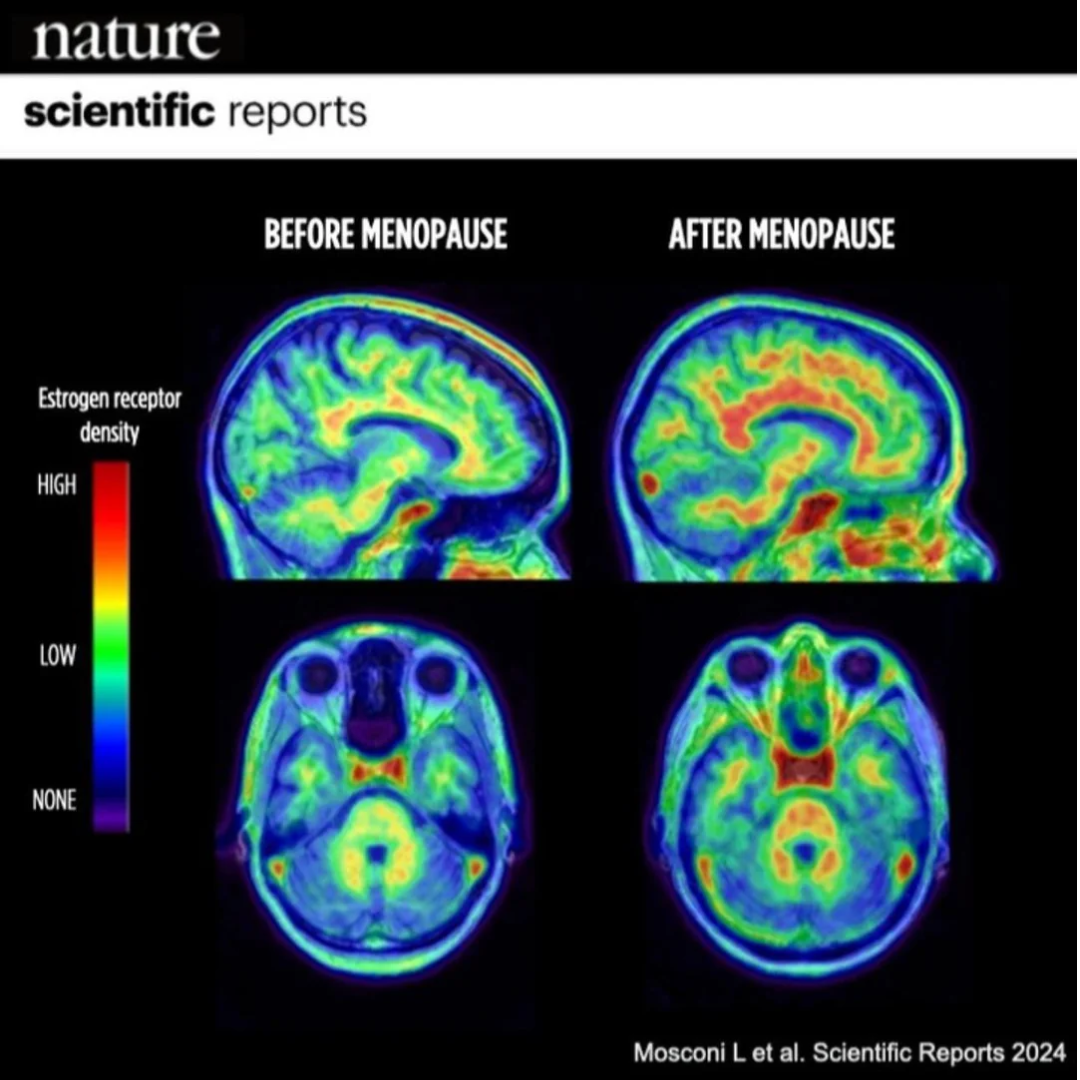
After 23 years as an OB-GYN, the hardest thing I've had to admit is this: the HRT we prescribe is never meant to fix the brain fog that's quietly ending patients' careers. Let me explain. But first, I need to describe something, and I want you to tell me if any of it sounds familiar. You're mid-sentence, a word you've said a hundred times, and it just isn't there. You can feel it. It's right there. But your mouth has nothing, and the room is waiting. You're keeping a secret notes document on your phone. Sticky notes everywhere. Names you should know. Details you confirmed yesterday. Things you used to carry without thinking. You re-read every email three times before sending. Not for typos. Because you don't trust your own sentences to make sense anymore. You're using ChatGPT to draft messages you used to write in two minutes. Then editing the output so nobody knows it wasn't yours. You're working twice as hard to produce half of what you used to. Burning your evenings to compensate for gaps that keep widening during the day. You're turning down projects you would have jumped at two years ago. Not because you lost ambition. Because you no longer trust your brain to deliver when it matters. You're lying awake at 2am, phone in hand, Googling "early onset dementia symptoms." Because what if this isn't perimenopause. What if this is permanent. What if this is just who you are now. You've been told it's stress. You've been told it's just getting older. One doctor, bless him, handed you an antidepressant and sent you home. Another one said it sounded like ADHD. You've tried the supplements. The creatine. The lion's mane. The ashwagandha. The magnesium. The fish oil. The nootropics. The vitamins. You've overhauled your diet, started exercising at 5am, fixed your sleep. None of it touched the fog. And there's a sentence you've said to yourself that you haven't said out loud to anyone. Not your husband. Not your sister. Not your doctor. "I don't feel like the person I used to be." If you just recognized yourself in what I described, what I'm about to share is the answer I couldn't give my patients for the first twenty years of my career. My name is Dr. Blackwell. I'm an OB-GYN with 23 years in practice, most of them focused on menopause and hormonal health. For the better part of two decades, I prescribed HRT with total confidence. Estrogen patches. Progesterone capsules. Bioidenticals. Testosterone. My patients came back within months, smiling. Hot flashes softened. Night sweats stopped. Sleep returned. I thought I was solving the problem. Then, roughly 8 to 14 months later, the same women started coming back. Hot flashes gone. Night sweats handled. Sleep restored. Everything I tracked looked right. But the fog was still there. The blanks. The word retrieval failures. The thing they came to me for in the first place, the thing that was scaring them most, HRT hadn't touched it. I adjusted doses. Ran more bloodwork. Told them to give it time. The fog didn't move. Last spring, a patient I'd treated for nearly a decade came in for a follow-up. Rachel. Late forties. Led a team of twenty people. She'd been on HRT for 14 months, every marker I tracked looked exactly right. She'd just gotten her first performance flag. 18 years, not one flag in 18 years. Then she asked me a question I wasn't prepared for. "I need you to tell me the truth. Is this early-onset dementia? Because if my brain is going to keep getting worse, I need to tell my family." I told her it wasn't dementia. I heard how hollow my own words sounded. Because I couldn't tell her what it actually was. She thanked me. Smiled the way patients smile when they know you didn't have the answer. And she left. I went home that night and realized what I'd been doing for years. Celebrating the wins, hot flashes resolved, sleep restored, mood stabilized, while my patients were quietly losing the thing that mattered most. Their sharpness. Their professional identity. The thing that made them, them. I'd been treating the body and missing the brain. That night I started asking a question nobody trained me to ask. HRT stabilized the hormones. So why was the brain fog still there? That question followed me home. I pulled up research I hadn't touched since residency. Not the HRT protocols I'd been trained on, but the neuroscience underneath them. What I found reframed everything I thought I understood about why my patients were still struggling, even with HRT. So, your brain runs on specific chemicals. Estrogen isn't just a hormone. It's the delivery system for those chemicals, the ones you need to retrieve words, stay calm under pressure, and think clearly on demand. During perimenopause, estrogen doesn't just drop. It swings. Wildly. Up and down, sometimes multiple times a day, for years. And when it swings, those deliveries stop. Your brain runs out of the chemicals it depends on to function. There are three that matter most. The first is acetylcholine. Acetylcholine is what carries words from your memory to your mouth. When the supply crashes, the word doesn't disappear. The signal that retrieves it goes dead. The word is still in your head. You just can't get to it. That's why you're mid-sentence and the word vanishes. That's why you're keeping a notes document on your phone just to hold onto things you used to know without thinking. The second is GABA. GABA is your calm under pressure. When it drops, stress that used to bounce off you now flattens you. You can't hold it together the way you used to. That's why the composure you built over decades of your career disappears in the moments that matter most. The third is dopamine. Dopamine is what makes thinking feel possible. When it runs low, everything you do takes twice the effort it should. You're not lazy. You're not burned out. Your brain is trying to run without fuel. That's why a two-minute email takes twenty. That's why you're burning your evenings just to produce what used to take half a day. And where’s HRT in all of this? HRT got your estrogen stable. That mattered. But by the time most women start it, those three chemicals have been depleted for months, sometimes years. The delivery system is back online, but the chemicals it was supposed to deliver are already gone. Your brain has been running on an empty tank this entire time. So no, you’re not crazy. You're not losing your mind. Your brain has been running without the chemicals it needs to function. And HRT, as important as it was, didn't restore them. Once I understood what was actually depleted, I went back to what my patients had been trying on their own. The supplements, the stacks, the lifestyle overhauls. And I started to see why none of it had worked. They weren't making bad choices. They were trying to solve the right problem with the wrong tools. Creatine was the most common. But creatine supplies general cellular energy. It doesn't supply the three specific chemicals your brain is missing. It's fuel for the wrong engine. Lion's Mane was next. Good science behind it. It repairs the connections between brain cells. But if nothing is traveling on those connections, repaired wiring doesn't help. You rebuilt the roads. Nothing was driving on them. Nootropic blends. Stimulants designed for young men who want to code faster. They flood the brain with adrenaline. The last thing you need when cortisol is already damaging your memory center. Ashwagandha and magnesium. They helped you feel calmer. Maybe sleep a little better. But calmer didn't restock what ran out. You were calmer. Your brain was still starving. The exercise. The diet overhaul. The sleep hygiene. All good for you. None of it manufactures the specific chemicals your brain ran out of. And the patients who stacked them? They were trying the right things one at a time against a system that needs all of them at once. And even stacking them, none of them were supplying the three chemicals that were actually depleted. Every bottle on my patients' counters had solved one piece. None of them had solved the architecture. So if individual supplements couldn't do it, stacking them couldn't do it, and HRT wasn't built to do it, what would? I went deeper into the research. And the same three compounds kept appearing. Two decades of clinical trials. Real cognitive outcomes. Real doses. Not new science. Just science nobody had been applying to menopause. Citicoline. It restores acetylcholine. The chemical that carries your words. When the supply crashed, citicoline rebuilds it. L-Theanine. It restores GABA. Your calm under pressure. It brings back what used to let you handle anything without breaking. N-Acetyl L-Tyrosine. It restores dopamine. The fuel your brain has been trying to run without. Three chemicals depleted. Three compounds to restore them. The research was there. Now I needed to find a formula that actually matched. I started looking. Opened every supplement facts panel I could find that listed even one of the three compounds. Citicoline on its own. Tyrosine in a pre-workout stack designed for twenty-something men at the gym. L-Theanine buried in a sleep blend with melatonin and valerian root. "Brain health" blends on Amazon with one or two of the three at doses too low to matter, full of caffeine, hidden inside proprietary blends that wouldn't tell me the actual amounts. Nothing matched. Not one formula had all three at the doses the research supports. So I went back into the literature. And I found two things I'd missed. The first was the downstream damage. I'd been focused on restoring the three chemicals. But my patients hadn't been depleted for weeks. They'd been running on empty for months, years in some cases. And during that time, the depletion caused its own damage. The connections between brain cells started thinning without the chemicals that maintain them. A stress loop set in, every public blank spiking cortisol, cortisol damaging the memory center, making the next blank worse. And blood flow to the brain dropped, less oxygen reaching a brain already running on fumes. Restoring the chemicals alone wouldn't reverse what broke while they were gone. The formula would need to address both. The second was B-vitamins. Specific forms, specific doses. They're the enzymatic cofactors your brain needs to actually assemble the raw materials into functional chemicals. Without them, the compounds can be sitting right there and your brain can't build anything with them. I went back to searching with the fuller picture. All three compounds. At clinical doses. Plus the cofactors. And something for the downstream damage, the wiring that thinned, the stress loop that set in while the brain ran on empty. In one formula. Doses on the label, not hidden behind proprietary blends. No caffeine. No fillers. Even fewer survived. I was starting to think the formula I was looking for didn't exist yet. Then I pulled up one I'd almost passed over. I opened the supplement facts panel the way I open a research paper, expecting the same disappointment I'd found in every other formula. Citicoline at 250mg. The clinical dose. The compound that restocks acetylcholine, the word retrieval signal that went dead. L-Theanine at 100mg. GABA. The calm under pressure that disappeared. N-Acetyl L-Tyrosine at 175mg. Dopamine. The chemical that makes thinking feel possible again. Not in a pre-workout. Not paired with stimulants. The dose the research supports. Then the second layer. Bacopa Monnieri at 150mg. Preserves the acetylcholine that citicoline rebuilds. Repairs the pathways that thinned while the brain was running on empty. Lion's Mane at 500mg. The clinical dose, not the 200mg in the tinctures that did nothing. For rebuilding the connections that wore down during the depletion. Phosphatidylserine and Rhodiola Rosea. The cortisol loop. Broken. Maritime Pine Bark. Blood flow restored. B-vitamins. The enzymatic cofactors, the ones I almost missed in the research. The tools your brain needs to actually assemble the raw materials into functional chemicals. The three chemicals. The downstream damage. The cofactors. In one formula. At clinical doses. The label said Brain Bloom. I'd never heard of it. I didn't care what it was called. I cared that someone had finally put it all together. I started recommending it to patients. Cautiously. I told them what it addressed, what to watch for, and to track what they noticed. A few patients mentioned something subtle the first week. The static in their heads had turned down a notch. The thick heaviness behind the eyes, lighter. But almost every one of them said the same thing next: "I've felt this before with something else. It didn't last." Two weeks in, the ones tracking their symptoms told me the quiet had held. But they didn't trust it. One patient told me she wouldn't let herself believe it. She'd been here before, felt the lift, and watched it disappear. She was waiting for it to stop working. By week four, the doubt started cracking. Words coming back faster. Not perfect. But faster. One patient told me she'd gotten through an entire morning without reaching for her notes. The lag between thinking and speaking had shortened. They were still cautious. But something was different this time. It wasn't fading. Week eight. Patients were leading conversations they would have avoided two months earlier. Volunteering for things they'd been turning down. Confidence showing up before they realized it was back. The women who told me at week two they were waiting for it to stop working had stopped waiting. At three months, I run patients through the same cognitive assessment I do on their first visit. Word recall. Processing speed. Executive function. The improvement wasn't subtle anymore. It was measurable. Across the board. Then Rachel came back. I noticed it before she said anything. She wasn't bracing herself. The performance concerns had been lifted. She'd volunteered for a project she would have turned down three months ago. She wasn't keeping the notes document anymore. And then she said it. "I feel like myself again." From the woman who sat in that same chair and asked me if she had dementia. Those five words carried a weight I don't have a clinical term for. You might be right where my patients were. On HRT. Estrogen stable. Hot flashes handled. Night sweats gone. And still blanking in conversations you used to lead. Still keeping a notes document just to hold onto things you used to carry without thinking. Still wondering, quietly, if this is just who you are now. Here's what I tell every woman who walks into my office now: Your brain has been running without three specific chemicals that HRT was never built to restore. Acetylcholine, your word retrieval. GABA, your calm under pressure. Dopamine, your drive. The tank has been empty for months, and every month it stays empty, the cortisol loop keeps cycling. The wiring keeps thinning. This isn't static. It's progressive. Restore the three chemicals. Repair the downstream damage. Give your brain what it needs to recover. Now, I want to be honest with you about something. I've recommended this to dozens of patients. For some women it doesn't click. For the majority of the ones I've pointed toward it, it has quietly become the most important thing in their medicine cabinet. They offer you 90 days or you get your money back. That's enough time to track what you notice. Whether the words come back faster. Whether the fog lifts. Whether the blanks slow down. Brain Bloom doesn't replace HRT. It completes it. You're not looking for a new version of yourself. You're looking for the woman who was there before the fog took over. The one who didn't need notes to survive a conversation. Who didn't re-read every email three times. Who didn't hesitate before speaking up. She's not gone. Your brain just ran out of what it needed to keep up with who you've always been. I put the link below.
Where the ad sends people
getavellon.com
Read this if you have menopause brain☝️
You didn't lose your drive. You didn't lose your edge. You just lost your brain — and you know it. The words that used to come easily. The focus that kept you sharp in every room. The version of you that fired on all cylinders. She's still in there. Brain Bloom is a daily cognitive support supplem...
See details: getavellon.com(opens in a new tab)