
Inactive· since Jun 4, 2026
- 62
- days it ran
- 2
- relaunches
- 13,659
- EU reach
Ad copy
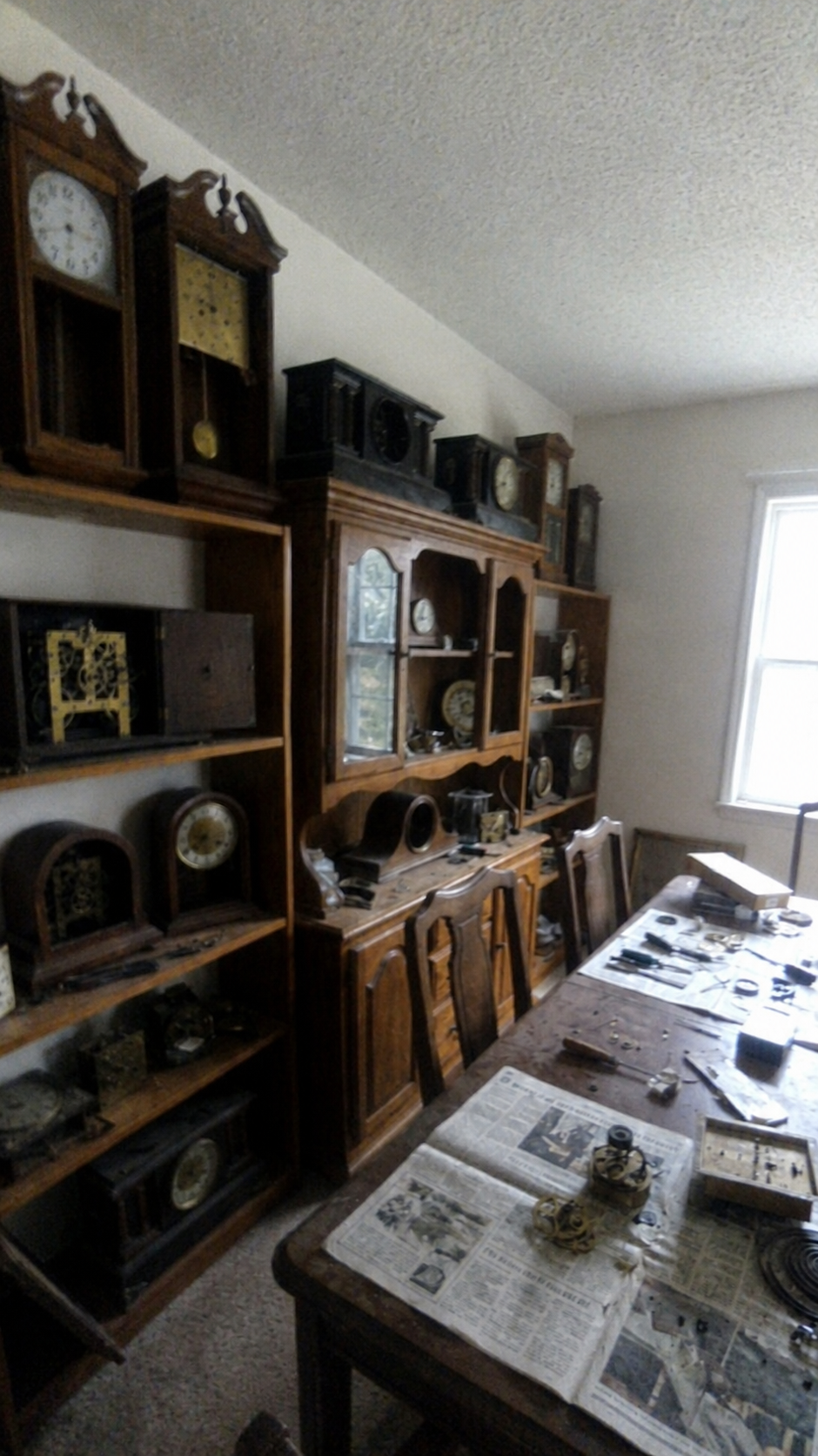
My husband fixed the town's clocks for forty years. Then I watched him forget the order of the gears. My husband Ed has the most patient hands I've ever known. For forty years he was the man this town brought its clocks to. Mantel clocks, grandfather clocks, pocket watches handed down through families, the cuckoo from somebody's grandmother in the old country. He had a little bench in a converted corner of our dining room. A green-shaded lamp, rows of tiny drawers, jeweler's loupes, tweezers finer than eyelashes. And the thing about Ed — the thing that made him Ed — was that he could hold a whole clock in his head. He'd take apart a movement with a hundred pieces, lay them out on a felt cloth, and weeks later put every one back in its exact place from memory. Gears, springs, the order of assembly, which screw went where. All of it, filed away in that quiet, careful mind. People used to ask how he kept it all straight. He'd just tap his temple and smile. That was my Ed. So I need you to understand what it did to me to watch that mind start to fog over. It came on so slowly I argued myself out of it for the better part of two years. At first it was little words that wouldn't come. He'd be talking and just stop, hunting for a word that used to be right there. "Hand me the — you know," he'd say. "The thing. The little thing." And I'd hand him the tweezers, and we'd carry on, and neither of us would say what we were both thinking. Then it crept onto the bench. The place his mind had always been safest. I'd watch him sit down to a movement he'd taken apart, and just... stall. Loupe up, tweezers in hand, staring at a tray of parts like they were a language he used to speak and had started to lose. He'd get up and say his eyes were tired. But it wasn't his eyes. His eyes were fine. It was the order. The sequence that used to live in him without effort wasn't coming when he reached for it. The clocks started piling up. That was the thing that broke my heart to look at. A row of other people's clocks on the shelf, half-finished, their insides laid open on trays, waiting for a man who couldn't quite find his way back into them. He stopped taking new ones. He told folks he was retired now, winding down. It was true enough that nobody questioned it. But the truth under the truth was that he didn't trust his own mind to carry him through a repair and bring him back out the other side. And it wasn't only the bench. He got quieter at the dinner table. He'd start one of his long, winding stories — the kind with a dozen turns that he used to never lose — and three turns in he'd trail off and look at his plate and say, "Ah, it's gone." His books sat on the nightstand with the bookmark barely moving. He'd read the same page three times and set it down. He was still right there beside me. And I missed him. We did the sensible thing. I want that on the record, because I know how these stories can sound. Ed went to his doctor — a good man, seen him for years. He went through the whole careful workup. And it all came back looking fine. Good, even, for a man his age. Ed asked him, straight out, why his own mind felt like a window somebody had breathed on and never wiped clear. And the doctor was honest with him. He said some of this comes with the years. The mind gets a half-step slower. Words take a beat longer to surface. Keep active, keep your hands busy, stay social, come back if anything changes. He wasn't dismissive. He just didn't have a next thing to hand us. And he was decent enough not to invent one. So we'd come home with a good report. And I'd watch my husband sit at a bench he was afraid of now. There was a whole layer of what was happening to Ed that no checkup was measuring. Nobody had a tool for it. That was the thing I'd lie awake turning over. Here's how the door cracked open. And like most real things, it came in sideways, on an ordinary errand. Ed had been wanting a particular part — a mainspring for an old French clock he kept saying he'd get back to "once his head cleared." There's a little clock-and-watch supply shop two towns over. Ed used to drive out there himself, but he'd gotten uneasy about the longer drives, so I offered to go. I am not a clock person. I stood at that parts counter holding a slip of paper in Ed's shaky handwriting, completely out of my depth. An older man at the counter beside me — flannel shirt, reading glasses, the easy way of a man who's spent a lot of hours at a workbench — saw me struggling and leaned over. "That's a mainspring you're after," he said. "What's the movement?" I admitted I had no idea, that it was for my husband, "who used to be able to find these in his sleep." And the man went still for a second. Then he said, "Used to. How come used to?" I don't know what came over me. I'm a private woman. But I stood at that counter and I told a stranger the truth. The words that wouldn't come. The stalling at the bench. The clocks piling up. The stories dying mid-air. He listened to all of it. Then he said, "There's a coffee place next door. Can I buy you a cup? Ten minutes. I want to tell you about my brother Gene." Marvin was his name. His brother's name was Gene. And as Marvin talked, the hair went up on my arms. Because it was Ed. Gene had been a watchmaker too — that was how Marvin knew his way around the parts counter. A man of fine, exact work and a mind to match. And then the same slow fog had rolled in on him. The words slowing. The sequence slipping. The bench going quiet. Gene's checkups came back fine, year after year. His doctor said the same kind of thing Ed's did — a good man, no next tool. "I watched my brother stop trusting his own hands," Marvin said. "Because he couldn't trust his own head to guide them. For a man who built his whole life on precision, that's a cruel thing to lose. That about broke me." Then his phone buzzed on the table, and he glanced at it and almost laughed. "That's Gene. He's texting me about a regulator clock he's restoring — wants to know if I've got a spare pallet fork. So let me tell you what changed." A brother, restoring clocks again, texting about pallet forks. I held onto that. "After Gene got foggy," Marvin said, "I got stubborn. I started reading at night. Not the junk — I've got no patience for the junk, never have. The actual research." What he kept coming back to, he said, was a growing body of research on molecular hydrogen and cellular wellness. Quiet research. Not flashy. Just a steady interest in something very small. "Molecular hydrogen is the smallest molecule there is," he told me. "I won't pretend I followed all the science. I'm a hobbyist, not a doctor. What I took from it was that it's about supporting the body's natural antioxidant balance and supporting healthy cellular energy. And the way I figure it, the mind's part of the body. It runs off the same engine as everything else." That landed on me. Cellular energy. The breathed-on window. The order that wouldn't come when Ed reached for it. That was the layer nobody had a tool for. "I'm not going to sit here and tell you it's a miracle," Marvin said. "I won't do that to you. I'll just tell you what we did and what I saw, and you do whatever you think is right." What they did was the sensible thing. And it's the part I'd most want you to copy. Before Gene put a single thing in his body, Marvin called Gene's doctor. He told him exactly what he was looking at. And he asked the only question that mattered. Is this a sensible thing to add to everything Gene's already doing — not in place of any of it? The doctor looked into it. He told Marvin there was nothing about it that concerned him as an addition to Gene's existing care. And that added on top of what Gene was already doing, not replacing any of it, it was a reasonable thing to try. So that's what they did. They added it. They didn't take away a single thing the doctor already had him on. The one Marvin's brother used is called PrimeCell H2. It's a rapid-dissolve tablet. You drop it into a tall glass of cool water. It dissolves and releases the hydrogen. And you drink it fresh, right away. Marvin was firm about that part. Cool water, fresh, drunk in the moment. Hydrogen is the smallest molecule there is, he said. It escapes the second it's exposed to heat or left sitting out. So you don't mix it and walk away. You drink it right then. One tablet. One glass. Once a day. Gene drank his next to his morning coffee and got on with things. And Marvin's brother didn't change anything else he was doing. Same doctor, same appointments, same everything. He just added the glass of water. I drove home with the mainspring and Marvin's number on a scrap of paper, and I did not jump. I'm a careful woman. Forty years married to the most careful man alive will do that to you. So I did exactly what Marvin did. I called our pharmacist first — same fellow for twenty years, who doesn't sugarcoat anything. I told him exactly what I was looking at. And I asked whether there was any reason it'd be a problem alongside what Ed was already doing. He looked into it and told me there was nothing he'd be concerned about as an addition to Ed's routine. Then I had Ed bring it to his own doctor at his next visit. Ed said it plainly — and got every word out, which I noticed: "I'm thinking of adding this. Not instead of anything you've got me doing. On top of all of it. That sensible?" The doctor said it sounded reasonable. And that adding it to whatever else he was already doing — not replacing any of it — was a fine thing to try. Two careful people, both saying the same thing, before we spent a dime. That was the green light I'd been waiting for. Now I have to be honest with you, because honesty is the only thing worth anything in a story like this. Nothing happened the first morning. Or the third. Ed grumbled that he was "drinking fizzy water to find his own tweezers" and I nearly let him quit twice. I can't tell you which week it turned. I truly can't. But somewhere in there, I came through the dining room one evening and the green-shaded lamp was on. Ed was at the bench. Loupe down, tweezers moving, a movement laid open in front of him. Working. Not stalled, not staring — working, the slow, sure, lost-in-it way he used to, where he forgets supper and you have to go remind him he's a man who eats. I stood in the doorway and didn't say a word. I didn't want him to look up. The second thing happened a few weeks on. A neighbor's grandfather clock had stopped — a family piece, three generations old — and they asked, a little hesitantly, whether Ed might still take a look. I braced myself to make the gentle excuse for him. But Ed said, "Bring it by." And he fixed it. The whole thing. Strip-down, clean, reassemble, regulate. I watched him hand it back running true, and I watched the neighbor's face, and I watched Ed's face — that quiet pride I hadn't seen in two years. He'd carried a hundred-part repair all the way through and come out the other side. The third thing is the smallest, and it's the one that undid me. It was a story at supper. One of the long, winding ones, a dozen turns, the kind he used to never lose. I caught myself bracing — the way I'd learned to brace — for the place where he'd trail off into his plate. He didn't. He took every turn. He landed the ending, the one with the joke, and our son laughed out loud, and Ed sat back pleased with himself the way he used to. I had to get up and pretend I needed something from the kitchen. I didn't want him to see my face. I can't prove to you any of it was the tablet. I won't pretend I can. We were doing a lot of things right, the things his doctor told us. Maybe a hundred of them finally added up. Maybe it was the one we added. But we'd been doing all those other right things for two years while the fog only rolled in thicker. And somewhere after the glass of water, quietly, it started to lift. That's the honest version. It's the only one I'll give you. At Ed's next visit, the doctor went through everything. He said Ed looked to be in good shape and to keep doing exactly whatever he was doing. I didn't say a word. I just took Ed's hand in the parking lot. I've thought a lot about why the window cleared for my husband. And the most honest answer I have is that I don't fully know. So I'll just tell you what the product is for, plainly. PrimeCell supports healthy cellular energy. It supports the body's natural antioxidant balance. It supports cellular wellness. That's not a promise about your husband's mind. It's not a promise about anything. It's just what it's for. Some people notice something in the first week or two. Others take a lot longer. Some, I'd imagine, don't notice much at all. Bodies are different. Ed's is just one body, with one story. And this is something you do consistently, over time. The cellular processes it supports build up gradually, not overnight. It isn't a pill you reach for on a foggy morning. It's a glass of water you drink every morning whether you feel anything that day or not. So here's what I'd tell you, if you were sitting at my kitchen table. If the man you love — or you yourself — used to have a sharp, careful, well-ordered mind, and a fog has been quietly rolling in, and the words slip and the sequences scatter and the thing he was best at has gone quiet, and the checkups keep coming back fine, and the doctor has run out of next things to hand you: First, talk to your doctor or your pharmacist. Both, if you can. Especially if you're already taking something for your blood pressure, your blood sugar, or your heart. Ask them the same plain question I asked. Is this a sensible thing to add to what we're already doing? And they may well say yes — then it really is just a tablet and a glass of cool water in the morning. Added to everything else you're already doing, not replacing any of it. Then give it a few weeks. Don't watch it like a pot. Just set the glass next to the coffee and let his mind keep its own time. Be patient with him. He's been patient with you for a long while. That's the whole of it. That's what a stranger named Marvin did for me over a cup of coffee next to a clock-parts shop. And I'd be a poor sort of person not to pass it on. P.S. Marvin and I stayed in touch, and it turned out he and Ed speak the same strange language of escapements and mainsprings. The two of them have spent hours on the phone now, and Gene's gotten on the line a few times too — three old craftsmen arguing happily about clocks that have been keeping time longer than any of them have been alive. I don't have the words for what that's worth to me, and I'm married to a man who can name every part of a movement. P.P.S. I keep a spare box of it in the cupboard now. PrimeCell is a small company and they've sold out before, and I don't care to get down to the last few tablets and have to think about it. I'd rather it just be there in the morning, next to Ed's coffee. P.P.P.S. Here's exactly what I'd do, in order. Call your doctor or pharmacist first and ask if it's a sensible thing to add to what you're already on. If they say yes, drop one tablet into a tall glass of cool water in the morning and drink it right away while it's fresh. Don't change anything else you're doing — just add this on top of it. Then give it a few weeks. Some people notice something in the first week or two. Others take longer. Some bodies take their own sweet time. Be patient. P.P.P.P.S. PrimeCell H2 has a 90-day money-back guarantee. If you're not satisfied for any reason at all, every penny back, no questions asked. I think that's a sensible policy for a supplement. It gives you enough time to actually see whether it does anything, instead of deciding in a week. I'd take the full ninety days before making up my mind. P.P.P.P.P.S. The clocks that piled up are nearly all gone back to their owners now, running true. Ed took the French clock — the one I bought the mainspring for, the one that started all this — and finished it last week. It sits on our mantel now, and every hour it chimes, and every time it does I think the same foolish, grateful thought. That's not a headline. It's just a small quiet thing. But the small quiet things, the ones that chime on the hour in a house that went quiet for two years, those are the ones worth telling someone about. https://track.getamalahealth.com/5548c06d-d9c3-4785-b466-fec64a6fdb28 The people and events depicted in this ad are illustrative and not based on any specific individual. Individual experiences vary. These statements have not been evaluated by the FDA. This product is not intended to diagnose, treat, cure, or prevent any disease.
Fix Yourself at the Cellular Level
PrimeCell H2 is a next-generation molecular hydrogen tablet formulated to support your body's natural antioxidant defenses — helping you feel sharper, more energized, and more like yourself.
LEARN MORELike this ad? Make it yours.
Crush rebuilds this exact creative around your product — your brand, your colors, your offer — in about a minute.