
Inactive· since Apr 29, 2026
- 76
- days it ran
- 0
- relaunches
Ad copy
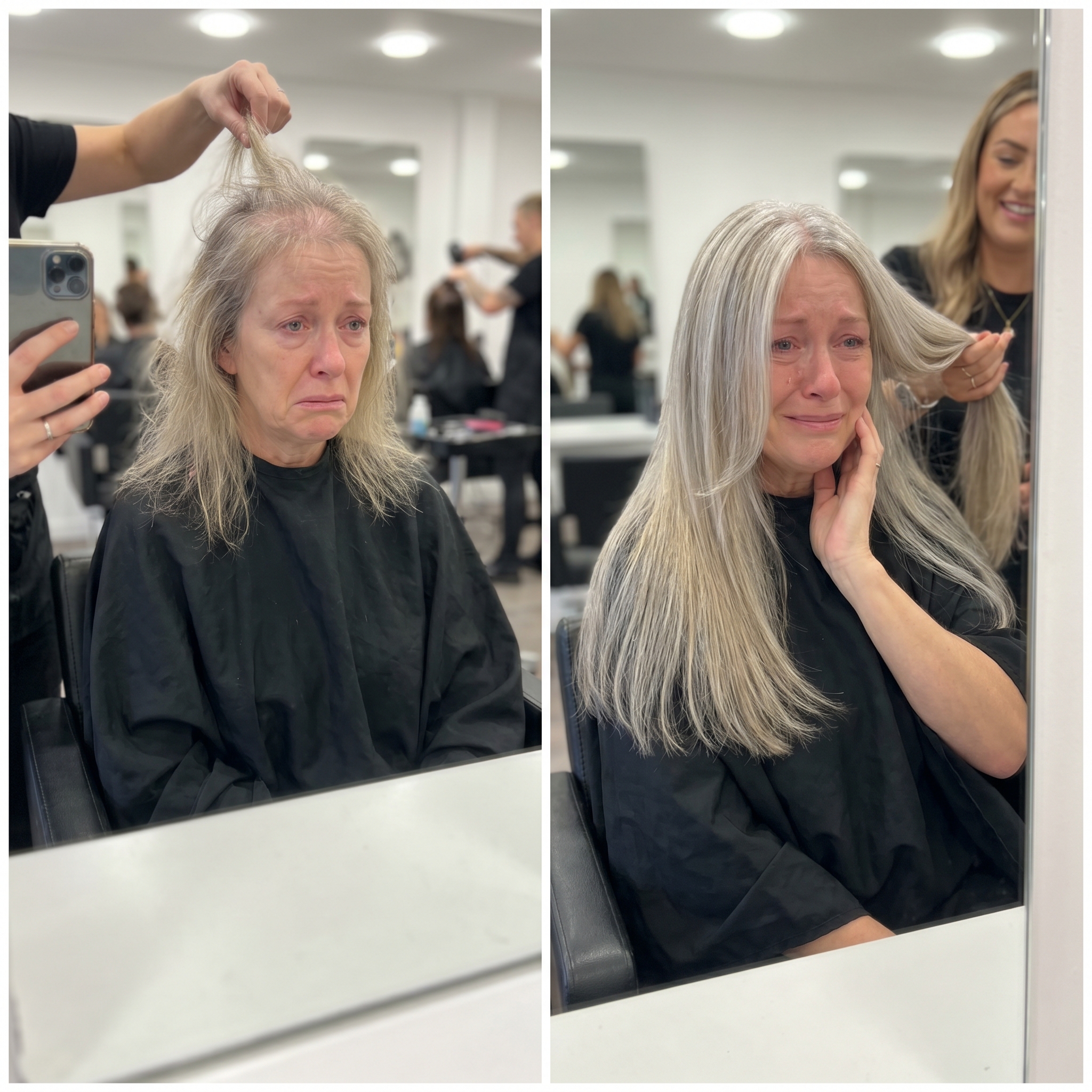
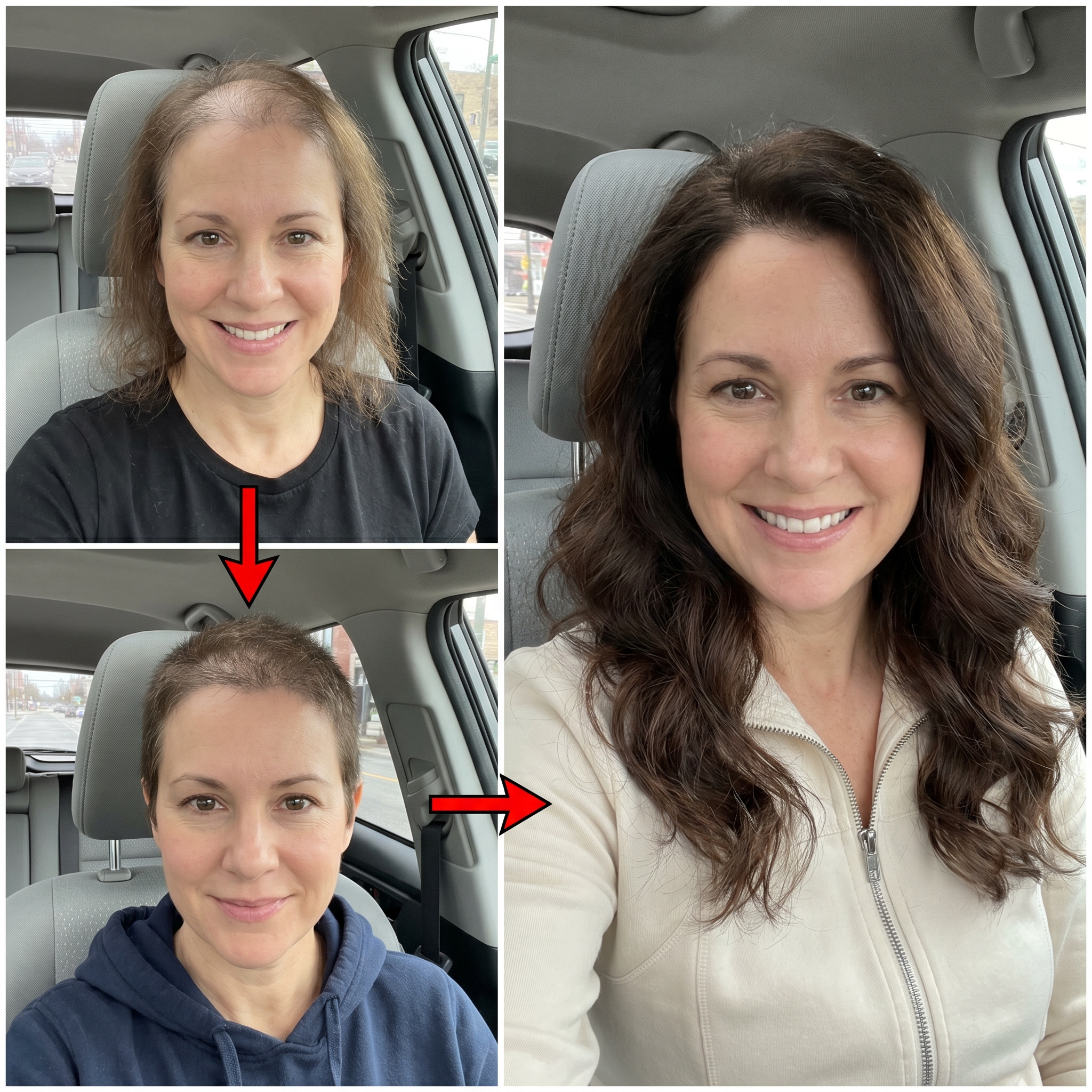
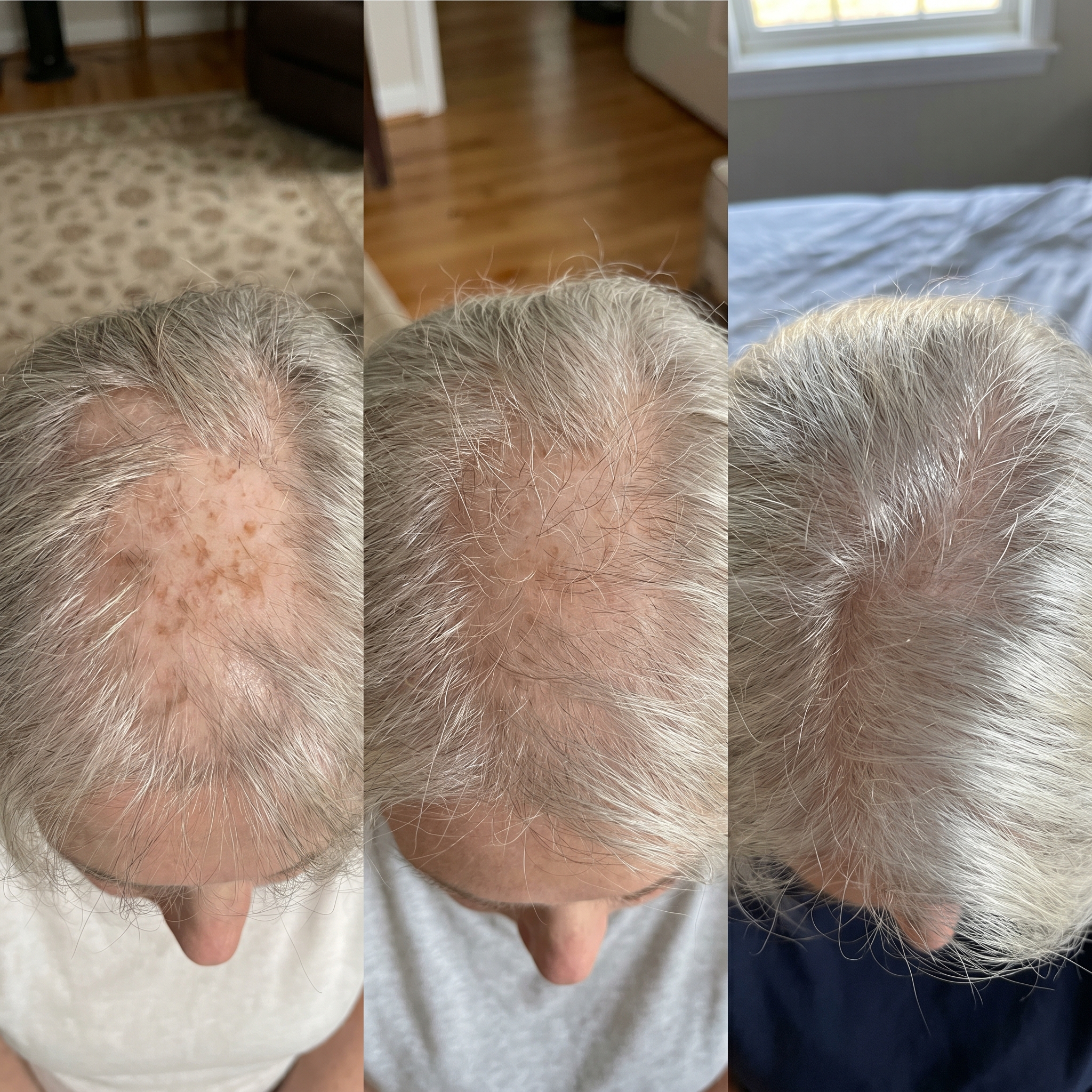
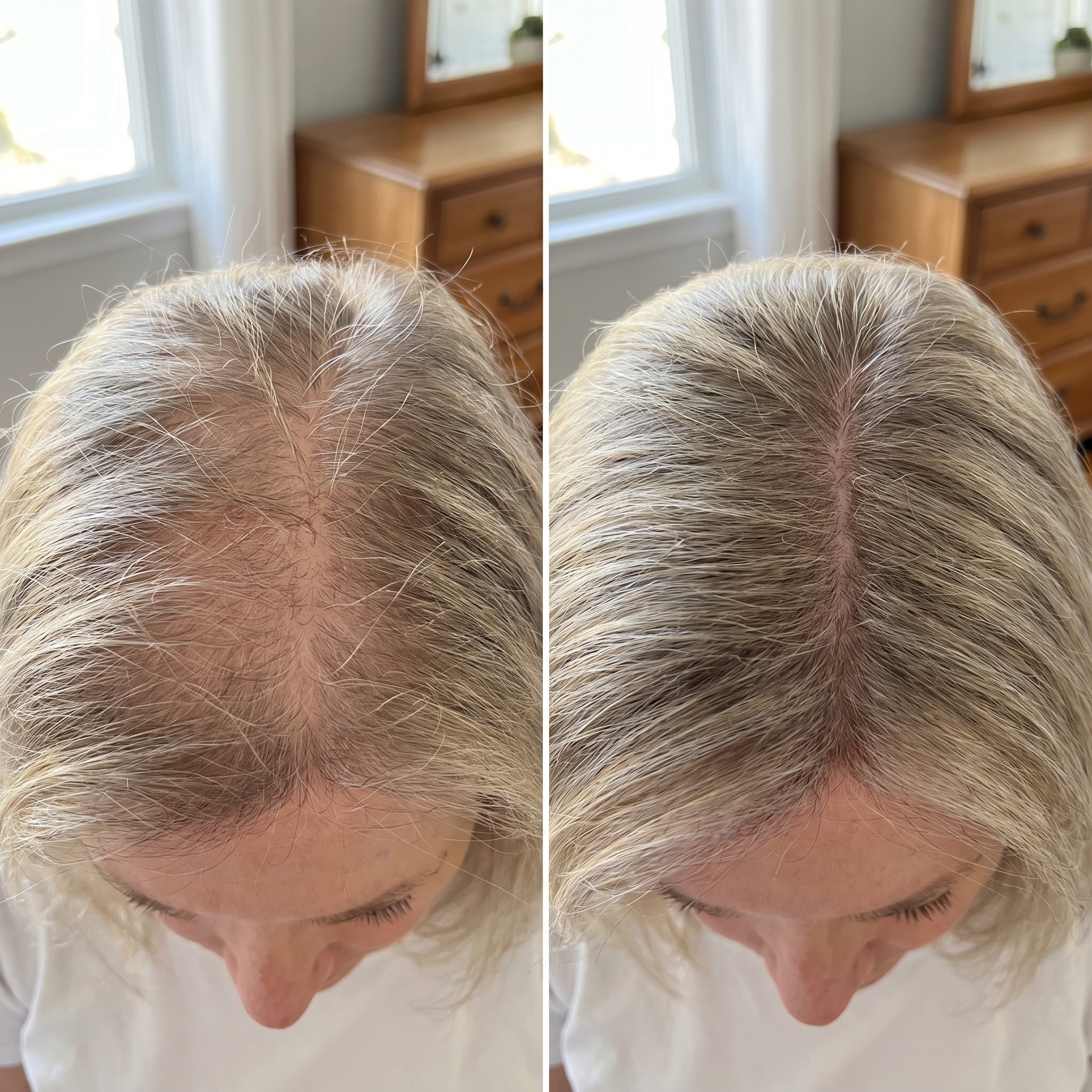
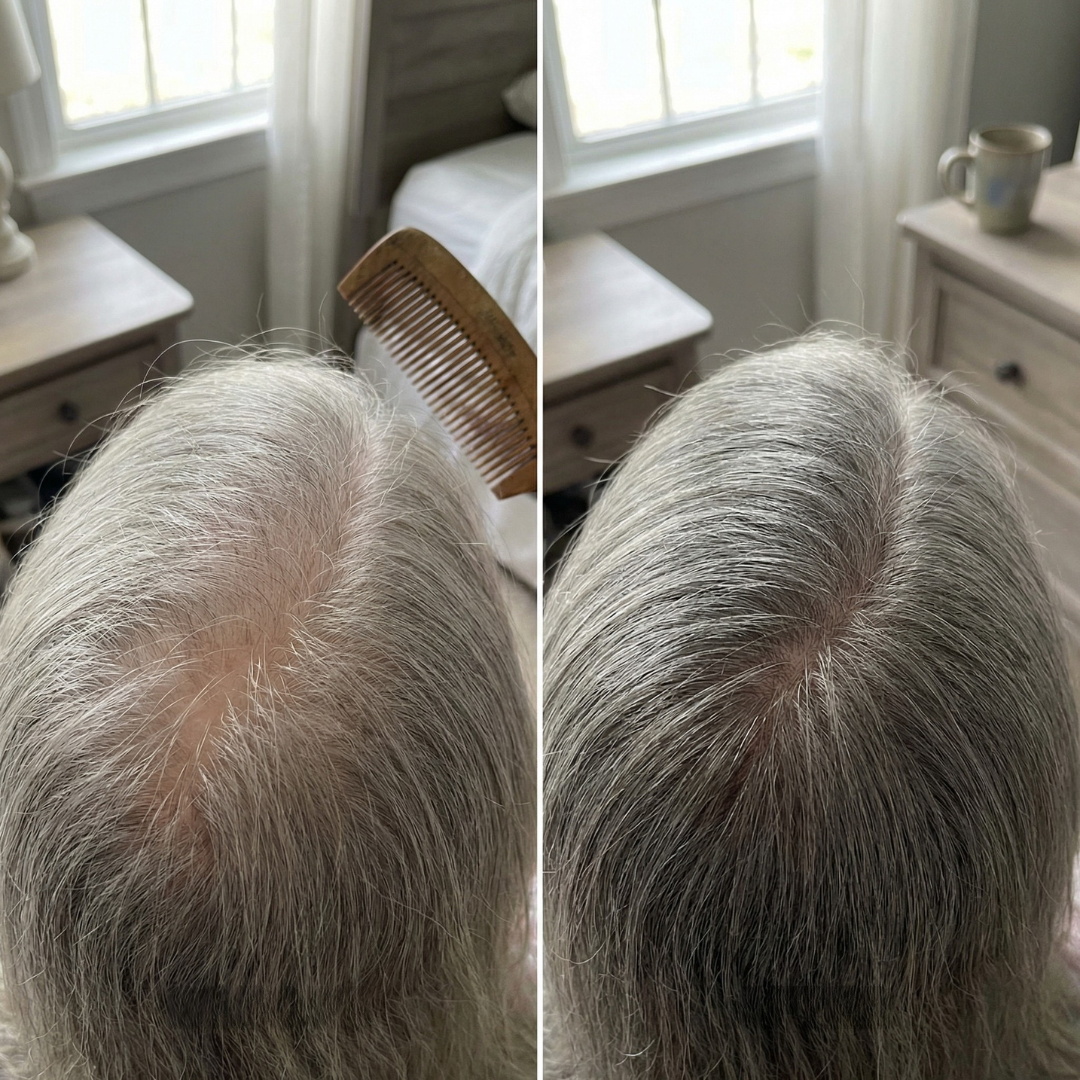
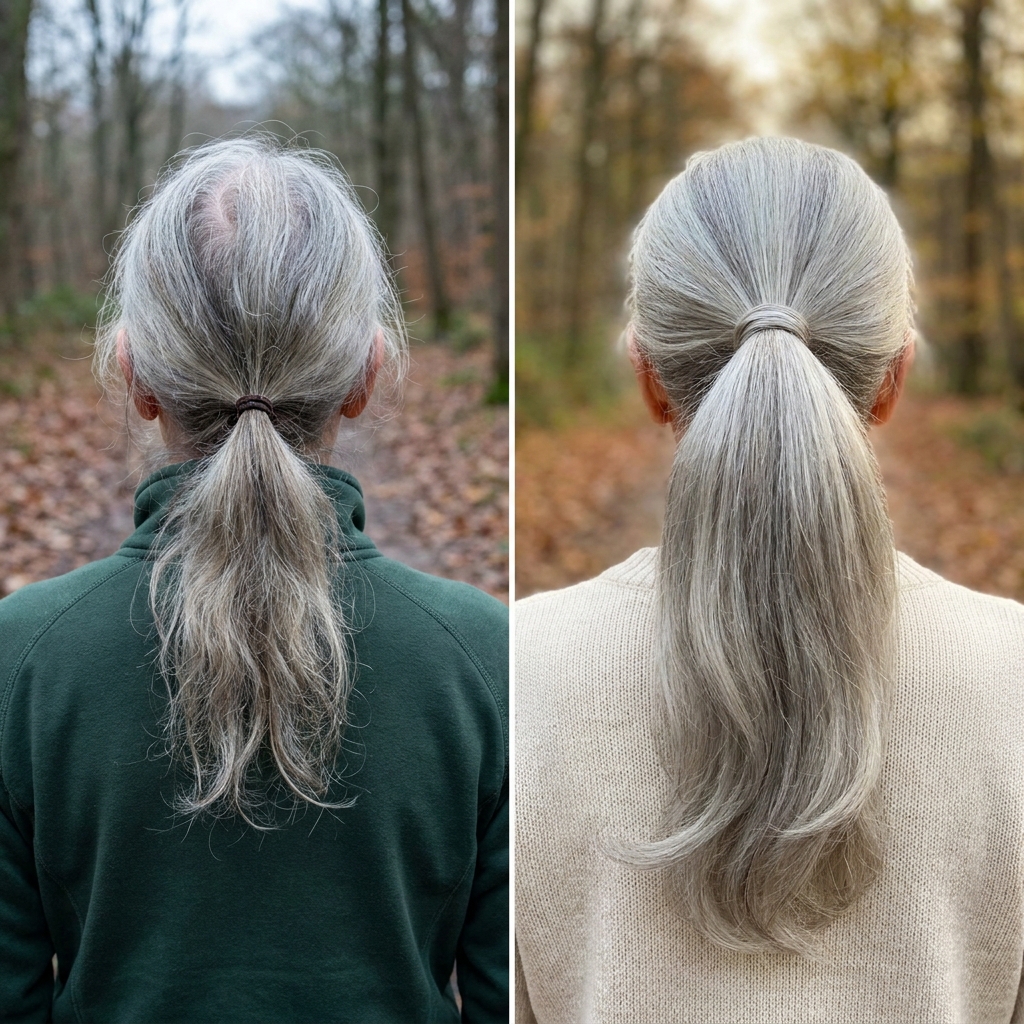
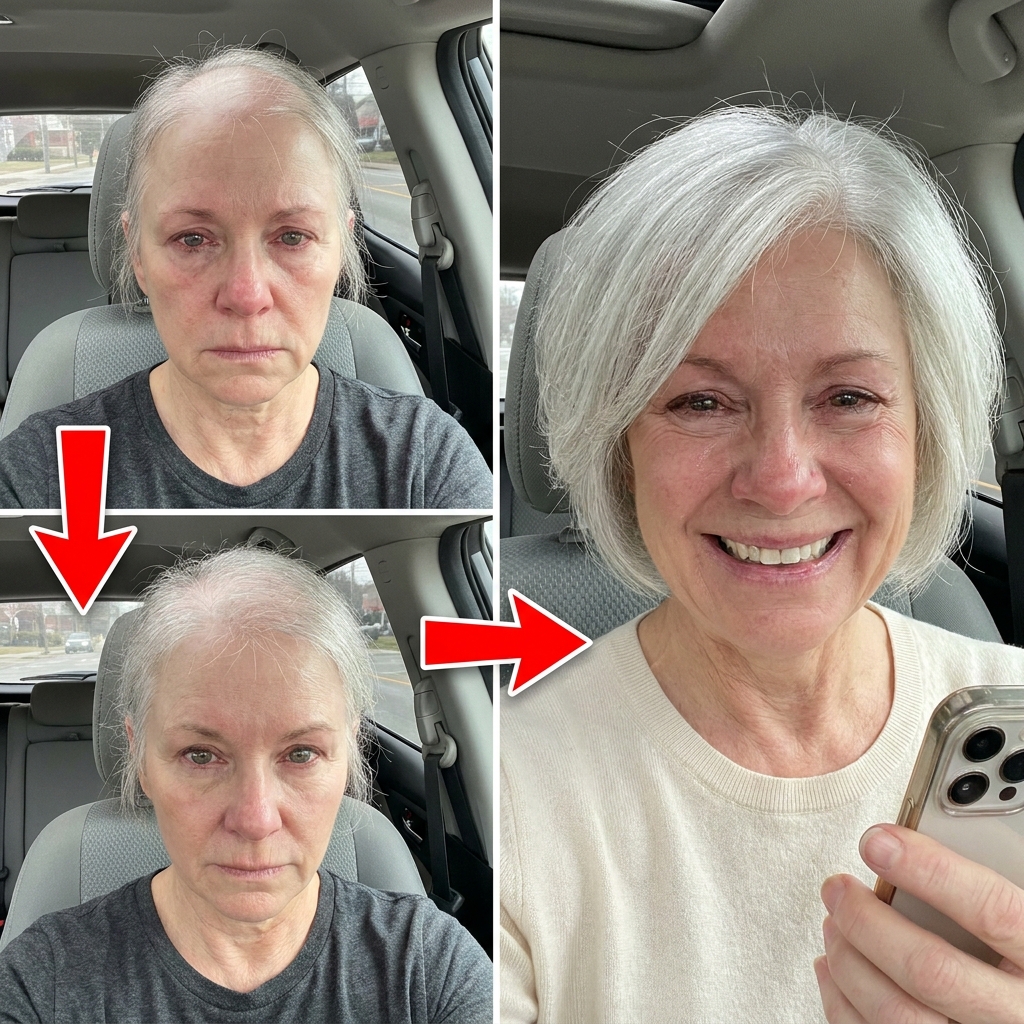
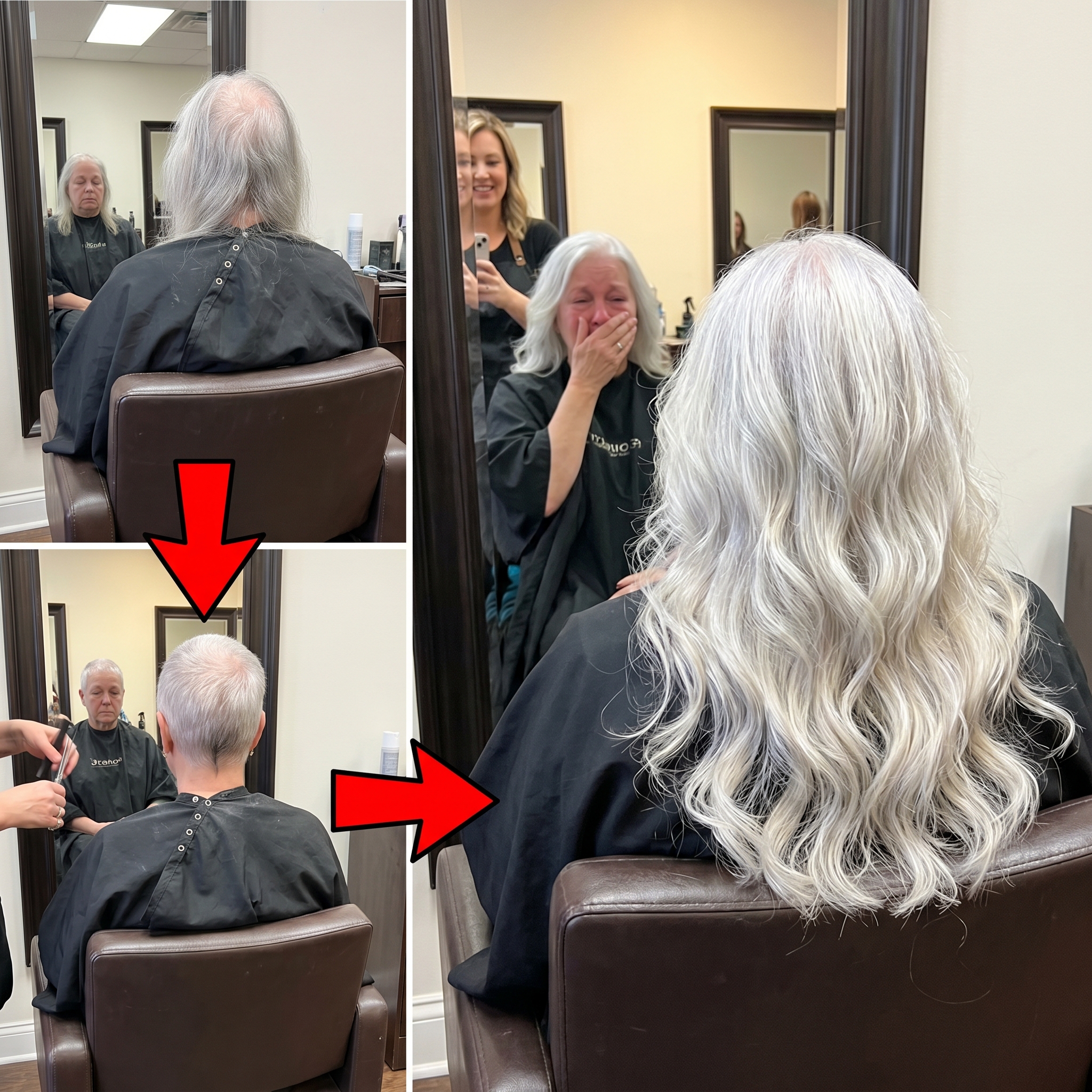
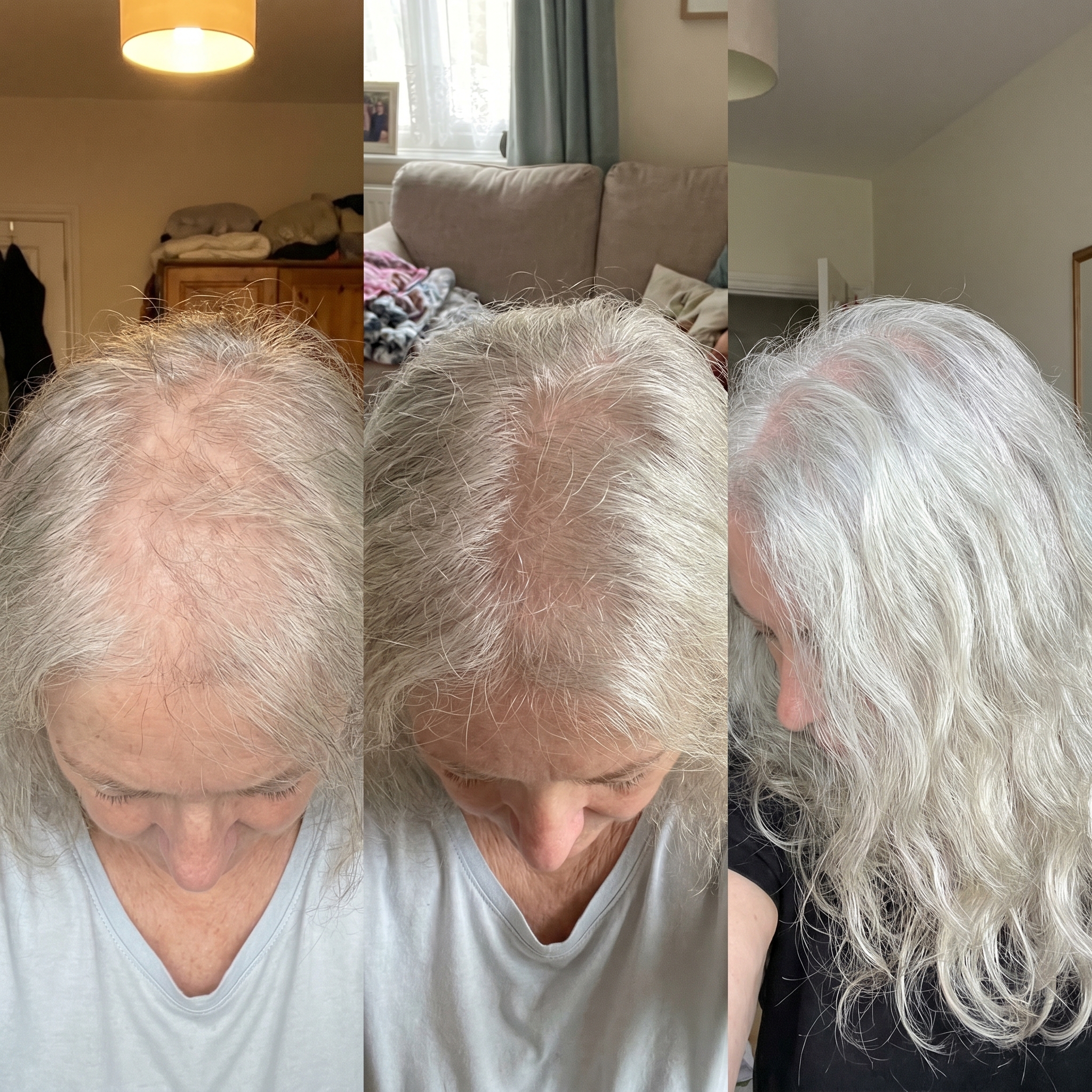
In 2011, a European dermatology research team published findings that should have changed how every woman is counselled about menopausal hair loss — and, in the fifteen years since, have largely not. For decades, the language used in consultation rooms about menopausal thinning has been, quietly, a language of permanence. Androgenetic alopecia. Progressive miniaturisation. The implication, often unspoken: the follicles are dying and there is nothing to be done except slow the loss. What the 2011 research and the follow-up work extending through the last decade demonstrated is that this framing is fundamentally wrong. In androgenetic alopecia — including menopausal androgenetic alopecia — the follicle does not die. It is chemically silenced. The growth phase of the hair cycle, the anagen phase, is shortened by DHT binding at the follicle. The follicle spends progressively less time producing hair and progressively more time in a dormant state. Over months and years, the hair becomes finer and shorter, until the follicle appears to have stopped producing at all. But the follicle is still alive. The stem cells are still there. The blood supply is still intact. Researchers knew this in 2011. Fifteen years later, women with menopausal thinning are still being told, directly or indirectly, that their hair is gone and they need to adapt to it. I know because I was one of them. I am 53, an accountant, and I live in Bristol with my husband. For two and a half years I treated myself as a woman whose follicles had died. For two and a half years I was wrong. My hair started thinning at 50. It accelerated at 51. By 52 the part was wide enough that I had begun parting it on the other side, and by the autumn of last year I had begun parting it in a zig-zag because the straight part was no longer something I could disguise. I had stopped wearing the lights up at the top of the salon mirror because I did not want to know the answer. I had started standing slightly behind whoever was nearest in family photographs. I had taken a photograph from above once, in a hotel bathroom in the Lake District during a weekend break for our wedding anniversary, and I had not taken one again. I did not delete it. I left it in the camera roll the way you leave a thing you cannot quite face but cannot quite throw away. I went to the GP. Thyroid fine. Iron "within range." B12 normal. A referral to a private dermatologist who spent twelve minutes with me, diagnosed androgenetic alopecia, recommended minoxidil, and suggested a conversation with my GP about HRT. £190. What she did not say — what I have since learned is decades-old dermatology knowledge — was that my follicles were not dead. She did not say: "The pattern you're seeing is not follicle death. It is cycle disruption. Your follicles are cycling faster than they should. They're spending most of their time dormant. If we interrupt the DHT that's driving the dormancy, they can resume producing normal hair. There is a meaningful window during which this is reversible, and you are within it." Instead I got minoxidil and a referral letter. Over the following year I tried everything that seemed credible. Topical minoxidil. Partial. Required permanent use. The dread shed in months one and two, in which the loss visibly accelerated before it slowed. HRT. Transformed everything except my hair. The night sweats stopped within three weeks. The joint pain in my left knee that had quietly cost me every long walk for two years was gone within two months. The brain fog that had been making me reread the same paragraph of work emails three times before I understood it cleared by month four. I am a genuine advocate and will not come off it. But the crown kept thinning. Biotin. Six months. No measurable change in the part. Eventually flagged by my GP because it interfered with the thyroid bloods she wanted to draw to monitor the HRT. Nutrafol Women's Balance. Six months at £79 a month. The crown kept thinning. Wellbel for three months when Nutrafol got too expensive. £45 a month. The same. A salon scalp treatment in Clifton, four sessions across two months, that came to £315. The trichologist was kind. She gave me a small bag of recommended brushes. The crown kept thinning. A laser cap I had bought on a sale and used three nights a week for ten months, an hour at a time, sat at the kitchen table reading a novel under what looked, from outside, like a piece of dental equipment. Collagen powder in my coffee. I began to believe, by the eighteen-month mark, that my follicles were genuinely dead. That the hair above my crown was not coming back. That I should start looking, quietly, at toppers. I had bookmarked a website. I had not yet ordered. Then I came across the 2011 research. Here is the mechanism, explained the way it should have been explained to me. Hair grows in a cycle. The anagen phase is the growth phase, during which the follicle actively produces a strand of hair. In a healthy scalp, anagen lasts anywhere from two to six years. The catagen phase is a brief transition. The telogen phase is a resting phase, during which the follicle holds a completed hair before shedding it and beginning a new cycle. DHT shortens anagen. In a follicle under sustained DHT attack, the anagen phase shrinks. Where it might have lasted four years, it now lasts eighteen months, then twelve, then six. The hair produced becomes progressively finer and shorter. Eventually the anagen phase becomes so brief that what is produced is barely a hair at all. The follicle looks, externally, like it has stopped functioning. But it has not. The follicle is still there, still alive, still connected to its blood supply, still containing the stem cells that can produce a normal hair cycle. It has been chemically pushed into extended dormancy by local DHT. If you interrupt the local DHT, anagen extends. The follicle wakes up. Over months, the hair it produces becomes longer, thicker, more normal. This was published in 2011. It has been extended by research every year since. It is the reason topical caffeine — which extends anagen directly at the follicle when applied to the scalp — is valuable. Not because it grows hair out of thin air, but because it interrupts the chemical silencing that has been happening, and allows the follicles that were dormant to resume producing. Mellenza was the first product I found whose formulation reflected this. A topical scalp serum. Caffeine to block 5-alpha-reductase at the follicle and extend anagen directly. Polygonum multiflorum root extract, which has been studied in Korean research for its effects on follicle proliferation. Arginine to support microcirculation around the follicle. Biotin to support the integrity of the new growth. Ginger extract for anagen support. Applied nightly to the crown, the part, and the thinning areas at my temples. Not a shampoo. Not a volumiser. Not a supplement. A topical wake-up call for follicles that had been in dormancy for too long. I committed to twelve weeks before forming a judgement. The anagen cycle is slow. Anything faster than that would have been hype. Week 4. Noticeably less hair in the drain. I had been counting. The number had been roughly the same for eighteen months, and by the end of week 4 it had begun to drop. Week 6. Something in the texture of my hair began to change. The fragility softened into something more like weight. Week 9. I took the photo again. Same bedroom, same light, same angle. The first comparison photo I had allowed myself in fourteen months. I held it next to the one I had saved at the start of the twelve weeks. The part was narrower. The crown was less visible. There was short, fine regrowth visible along the edges of the part — the kind of new growth I had assumed I would not see on myself again. I sat on the edge of my bed for about fifteen minutes. Quietly. Not dramatically. The direction had changed, and with it the thing I had believed about my own follicles. Month 4. My hairdresser, who had not commented on my thinning for a year and a half, said unprompted that she could see real regrowth at the crown. She turned the chair and pointed to it in the mirror. Month 5. I went to a leaving party at my husband's office and stood under the overhead lighting in the function room for forty-five minutes without rearranging my hair once. My hair is not what it was at 45. I do not know if it will be. What I know is that my follicles were not dead. They were being silenced. The silencing has been interrupted, and the hair is growing again. The research on this has been published for fifteen years. The implication — that topical interruption of local DHT can wake follicles that appear to have stopped — has been in the dermatology literature since 2011. You deserve to know it now. The link is below.
Your follicles aren't dead. They're chemically silenced.
Women's Health · Updated April 2026 Menopause · Hair Routine 7 Mistakes That Make Menopausal Hair Loss Worse, And the 30 Second Ritual 10,000 Women Used to See Regrowth in 8 Weeks Dr. Sarah Mitchell — Women's Health Writer. If you're standing in front of the mirror doing the 3-elastic ponytail t...
LEARN MORELike this ad? Make it yours.
Crush rebuilds this exact creative around your product — your brand, your colors, your offer — in about a minute.