
Inactive· since Jun 16, 2026
- 60
- days it ran
- 1
- relaunches
- 46,088
- EU reach
Ad copy
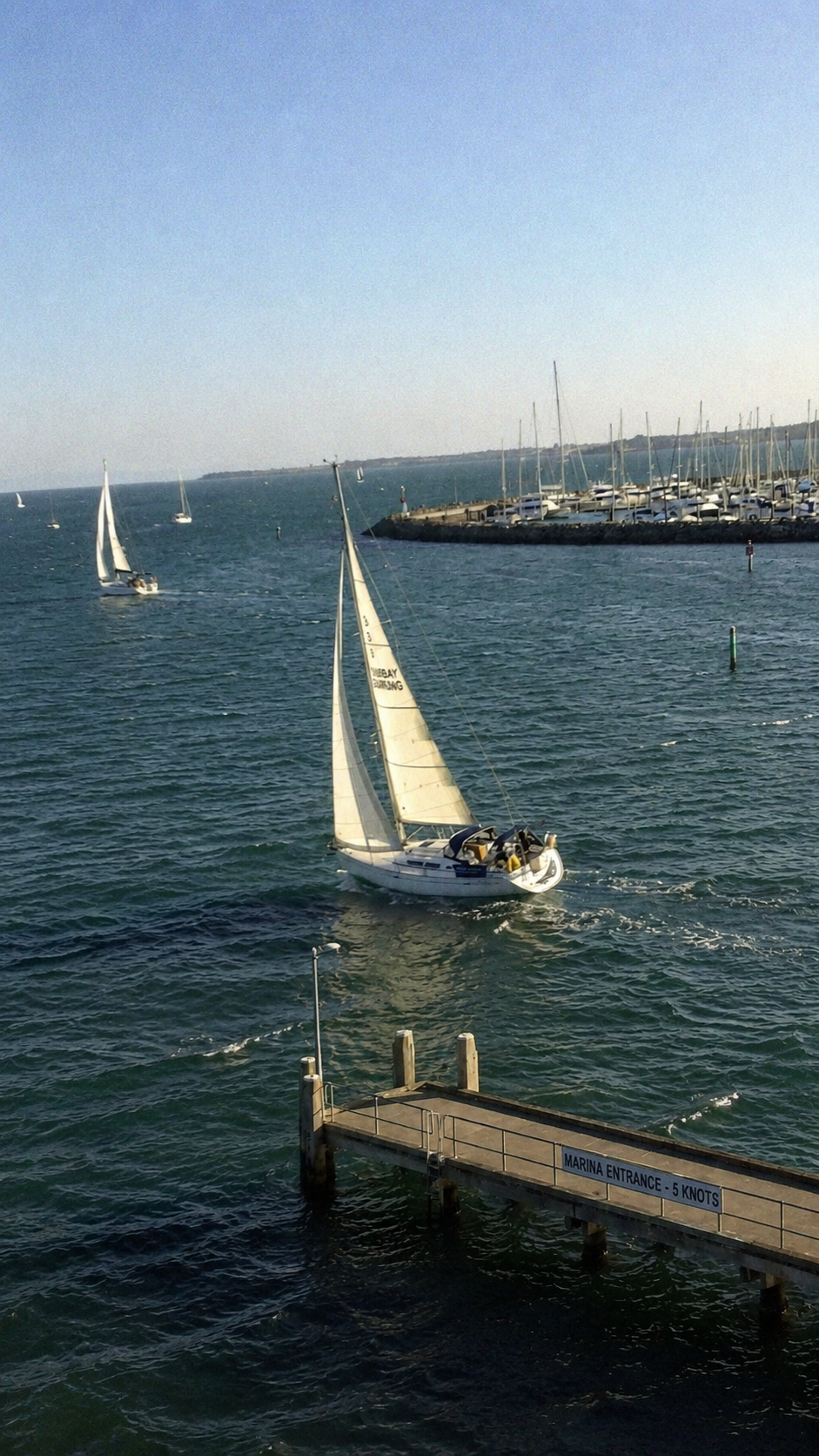
I sailed the same bay for thirty years. Then I noticed I was the one asking to turn back early. I've kept a small sailboat on the same bay for thirty years. Nothing fancy. A little day-sailer, the kind you rig yourself and single-hand if you have to. For three decades it was the truest part of my week. Out before the wind came up, back when the light went gold, the whole bay to myself and the gulls. I'm sixty-two. And until a few years ago, I'd have told you that boat and I would go out together until they had to carry me off the dock. This is the story of the stretch when I started, quietly, to wonder if that was still true. It didn't announce itself. Sailing is physical work — more than people think. Hauling lines, hiking out, hopping the dock, muscling the boat onto the trailer. For thirty years my body just did all of it, and I never gave it a thought. Then I started giving it thoughts. The hauling got harder. I'd trim a line and feel winded in a way I never had. The little hop from the dock to the deck — a thing I'd done ten thousand times without looking — started making me catch my breath. I told myself it was a windy day. A heavy chop. The years, a little. Then it was the turning back. I used to stay out till the last of the light, every time. I started finding reasons to come in early. "Wind's dying," I'd say, to no one, and motor back to the dock while there was still plenty of afternoon left. The truth under the truth was that I was tired. Tired in a way that a good sailor learns to respect, because the bay doesn't forgive you for overestimating yourself. I was the one asking to turn back early. Me. And it came off the water, too. I run a little marine-supply shop near the marina, and I started dreading the afternoons. By three the wind went out of my own sails, so to speak. I'd sit in the back room and have to talk myself back out to the counter. The stairs up to the loft where I keep the spare rigging started feeling like a climb. I'd get to the top a little winded and stand there a second longer than a man should have to. And I started saying no to things. Friends with bigger boats would invite me out for a real day's sail — a long one, out past the point. And I'd find the reasonable excuse. I told myself I was busy with the shop. The truth was I didn't trust my wind to last the day. A man who'd spent thirty years going out further than anyone, suddenly hugging the shoreline of his own life. I did the sensible thing. I'm not a man who ignores the weather, on the water or in himself. I went to my doctor — a good one, known him for years. I told him everything. The winded feeling hauling lines. The stairs. The turning back early. The three-o'clock wall. He took it seriously. He ran the full workup — the send-away panels, the whole set — and paid particular attention to the heart, given what I was describing. And it all came back in range. Across the board. My heart, he said, was in good shape. Better than a lot of men my age. I asked him, plainly, what would leave me winded hauling a line I'd hauled all my life if everything checked out. And he was honest with me. He said some of this comes with the years. The wind doesn't last quite as long. The recovery between efforts gets slower. Keep moving, keep your weight steady, stay active, come back if anything changes. He wasn't dismissive. He just didn't have a next thing to hand me. And he was decent enough not to invent one. So I drove home with good bloodwork and a sound heart. And the same short wind that had me motoring in early. There was a whole layer of how I felt that no panel was measuring. Nobody had a tool for it. That was the thing I'd lie awake turning over. I'd love to tell you a friend handed me the answer, wrapped up neat. That's not how it came. It came in sideways, across the counter of my own shop. A longtime customer — a serious sailor, a man about my age who races boats that would humble mine — came in for some hardware, and he looked, frankly, ten years younger than the last time I'd seen him. Springy. Easy. Lit up. I said something about it — "what's gotten into you, you're making the rest of us look bad." And he laughed and said he'd started drinking something in the mornings. A tablet he dropped in water. Hydrogen, he said. Something with hydrogen. I rang him up and nodded the way you nod at a customer's enthusiasm. But the word stuck. It rattled around in my head for days. So one night, when sleep was being stingy anyway, I sat up with my reading glasses and looked it up myself. I am a skeptic by nature and by trade. You don't sell marine gear for thirty years without learning to spot a product that's all label and no substance. I fully expected to find nonsense. What I found instead was a growing body of research on molecular hydrogen and cellular wellness. Quieter than I expected. Not splashy. Not a cure for everything under the sun. Just a steady, patient amount of interest in something very small. Molecular hydrogen, I learned, is the smallest molecule there is. The idea, as best a sailor can put it, was that it might support the body's natural antioxidant balance, support healthy circulation, and support healthy cellular energy. That stopped me. Healthy circulation. Cellular energy. The short wind. The winded feeling on the stairs. That was the layer nobody had a tool for. I didn't get excited. Getting excited is how you get fooled. But I read for the better part of two weeks before I did a single thing about it. Here's the part I'd most want you to copy. Not the tablet. This part. Before I bought anything, before I put one new thing in my body, I called my pharmacist. Same fellow I've used for years, who doesn't sugarcoat anything. I told him exactly what I was looking at. And I asked whether there was any reason it'd be a problem alongside everything else I was doing. He looked into it and told me there was nothing he'd be concerned about as an addition to my routine. Then I brought it to my own doctor at my next visit. I said it plainly: "I'm thinking of adding this. Not instead of anything you've got me doing. On top of all of it. Is that sensible?" He said it sounded reasonable. And that adding it to whatever else I was already doing — not replacing any of it — was a perfectly fine thing to try. Two careful people, both saying the same thing, before I spent a dime. That was the green light I'd been waiting for. The one I landed on is called PrimeCell H2. It's a rapid-dissolve tablet. You drop it into a tall glass of cool water. It dissolves and releases the hydrogen. And you drink it fresh, right away. That last part matters more than it sounds. Cool water, fresh, drunk in the moment. Hydrogen is the smallest molecule in existence, and it escapes the second it's exposed to heat or left sitting out. So you don't mix it and walk away. You drink it right then. One tablet. One glass. Once a day. And I want to be clear about what I did and didn't change. I didn't change a single other thing. Same doctor. Same appointments. Same walks, same meals, same everything he'd told me to do. I just added the glass of water to the morning, next to my coffee, and got on with my life. Now I have to be honest with you, because honesty is the only thing worth anything in a story like this. Nothing happened the first morning. Or the third. I stood at my own counter feeling faintly ridiculous — a grown man who'd crossed open water alone, drinking fizzy water and waiting to feel like himself. I nearly quit twice. I can't tell you which week it turned. I truly can't. But somewhere in there, I took the boat out on a whim after closing the shop. And I stayed out till the last of the light. I didn't motor in early. I worked the lines and hiked out and came about a dozen times, and the wind that used to go out of me by mid-afternoon was just... there. I sailed back in the gold light with the bay to myself, the way I used to, and tied up at the dock not winded but pleasantly, properly tired. I sat on the dock for a while in the dark. I didn't want the evening to end. The second thing happened a few weeks later. That customer — the racer — asked if I wanted to crew for him on a long run out past the point. The old me, the short-wind me, had the excuse half-ready. And I heard myself say yes. We were out the whole day. Hauling, grinding, the real physical work of a racing boat in a stiff breeze. And I kept up. I had to rest when I needed to, and I'm no kid, and I won't pretend otherwise. But I crewed a full day's hard sail and drove home tired in the good way — the way you're tired after a life, not after a Tuesday. The third thing is the smallest, and it's the one that undid me. It was the stairs to the rigging loft. I went up them one afternoon with an armload of line and got to the top and just... kept going. No pause. No standing there a second longer than a man should. I didn't even notice I hadn't stopped until I was already across the loft. I can't prove to you any of it was the tablet. I won't pretend I can. I was doing a lot of things right, the things my doctor told me. Maybe a hundred of them finally added up. Maybe it was the one I added. But I'd been doing all those other right things for years while my wind only got shorter. And somewhere after the glass of water, quietly, it came back. That's the honest version. It's the only one I'll give you. At my next visit, my doctor went through everything. He said my heart was in good shape and to keep doing exactly whatever I was doing. I didn't say a word. I just shook his hand a little longer than usual on the way out. I've thought a lot about why my wind came back. And the most honest answer I have is that I don't fully know. So I'll just tell you what the product is for, plainly. PrimeCell supports healthy circulation. It supports healthy cellular energy. It supports the body's natural antioxidant balance. That's not a promise about your heart. It's not a promise about anything. It's just what it's for. Some people notice something in the first week or two. Others take a lot longer. Some, I'd imagine, don't notice much at all. Bodies are different. Mine is just one body, with one story. And this is something you do consistently, over time. The cellular processes it supports build up gradually, not overnight. It isn't a pill you reach for on a short-wind afternoon. It's a glass of water you drink every morning whether you feel anything that day or not. So here's what I'd tell you, if we were sitting on the dock at the end of a day. If you used to go out further than anyone — on the water or in your life — and you've started hugging the shoreline, turning back early, catching your breath on the stairs you used to take two at a time, and your bloodwork keeps coming back fine and your heart checks out, and your doctor has run out of next things to hand you: First, talk to your doctor or your pharmacist. Both, if you can. Especially if you're already taking something for your blood pressure, your cholesterol, or your heart. Ask them the same plain question I asked. Is this a sensible thing to add to what I'm already doing? And they may well say yes — then it really is just a tablet and a glass of cool water in the morning. Added to everything else you're already doing, not replacing any of it. Then give it a few weeks. Don't watch it like a pot. Just set the glass next to the coffee and let your body keep its own time. Be patient with yourself. You've spent a lot of years going the distance for other people. You're allowed to keep enough wind for your own afternoons. That's the whole of it. That's what an offhand comment from a customer, and two weeks of midnight reading, between them did for me. And I'd be a poor sort of person not to pass it on. P.S. That customer still comes in, and I finally told him his offhand remark had set the whole thing in motion. He got a real kick out of it. He's signed me on as regular crew now, which means I get hollered at properly on race days, and I wouldn't trade it for anything. P.P.S. I keep a spare box of it in the cupboard now. PrimeCell is a small company and they've sold out before, and I don't care to get down to the last few tablets and have to think about it. I'd rather it just be there in the morning, next to the coffee. P.P.P.S. Here's exactly what I'd do, in order. Call your doctor or pharmacist first and ask if it's a sensible thing to add to what you're already on. If they say yes, drop one tablet into a tall glass of cool water in the morning and drink it right away while it's fresh. Don't change anything else you're doing — just add this on top of it. Then give it a few weeks. Some people notice something in the first week or two. Others take longer. Some bodies take their own sweet time. Be patient. P.P.P.P.S. PrimeCell H2 has a 90-day money-back guarantee. If you're not satisfied for any reason at all, every penny back, no questions asked. I think that's a sensible policy for a supplement. It gives you enough time to actually see whether it does anything for you, instead of deciding in a week. I'd take the full ninety days before making up my mind. P.P.P.P.P.S. I've entered the little day-sailer in the club's old-timers' race this fall — a thing I'd quietly told myself I was past. My wife says I've been checking the wind forecasts like a kid checking for snow. The boat's named Second Wind, which she finds far funnier now than she used to. That's not a headline. It's just a small quiet thing. But the small quiet things — a forecast checked with a kid's hope, a boat well named — those are the ones worth telling someone about. https://track.getamalahealth.com/5548c06d-d9c3-4785-b466-fec64a6fdb28 The people and events depicted in this ad are illustrative and not based on any specific individual. Individual experiences vary. These statements have not been evaluated by the FDA. This product is not intended to diagnose, treat, cure, or prevent any disease.
Fix Yourself at the Cellular Level
PrimeCell H2 is a next-generation molecular hydrogen tablet formulated to support your body's natural antioxidant defenses — helping you feel sharper, more energized, and more like yourself.
LEARN MORELike this ad? Make it yours.
Crush rebuilds this exact creative around your product — your brand, your colors, your offer — in about a minute.