The Mind & Body Journal
The Mind & Body Journal Facebook ad: “Told sleep gets worse after 50? Read this”
Ran for 14 days, from July 2 to July 16, 2026, the last day Crush saw it.
Run by The Mind & Body Journal on Facebook. Crush is not the advertiser and does not verify its claims. See this ad in Meta's Ad Library(opens in a new tab)
Want an ad like this for your product?
Crush makes new ad images for your product from this ad: your logo, your product photo, your offer.
Trials from $19.95 USD, then $79.95 USD a month. Cancel anytime.
About this ad
- Meta Ad Library ID
- 3228558287352172
- Platforms
- Facebook, Instagram, Audience Network, Messenger and Threads
- Relaunches
- 0
Ad text
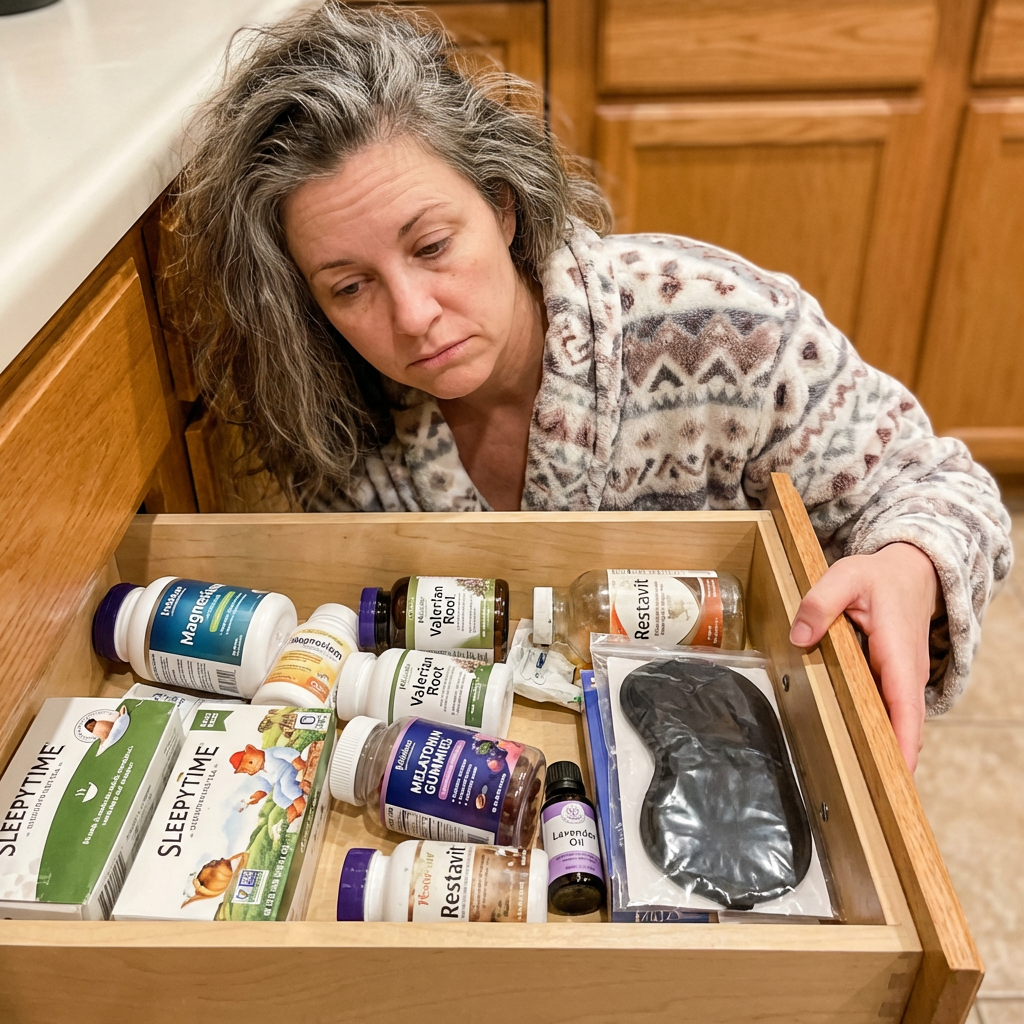
I'm 53. For the last four years, I've woken up at 3.12am every single morning. Sometimes 2.47am. Sometimes 4am. But always between two and four, always wide awake, always staring at the ceiling for the next two hours until it's time to get up. I've seen three different GPs about it. The first one told me it was menopause and to "ride it out." The second prescribed me Stilnox. I took it for six weeks. It worked, then it stopped working, then I felt like a zombie for the rest of the day. The third looked at me kindly and said, "Sleep just gets worse as we age, love. Most women your age go through this." I went home and cried in the car for half an hour. Because I'd just been told — by a doctor — that this was my new normal. Forever. I'm a grandmother now. My daughter had her second baby in March. I'd been so excited about doing the long weekends in Newcastle helping out. Instead I was so exhausted by lunchtime that I'd be napping in the spare room while she did the school run with her toddler. I missed my husband's 60th in Bali because I couldn't face the flight. I cancelled the bushwalking weekend with my best friend in the Blue Mountains because the thought of getting up at 6am after another sleepless night made me want to weep. My kitchen drawer became a graveyard. Magnesium glycinate. Magnesium citrate. Valerian. Passionflower tea. Lavender oil. Melatonin gummies. A weighted blanket. A $400 sleep tracker that just confirmed each morning that yes, I had once again barely slept. Nothing worked. I'd genuinely accepted that this was the rest of my life. Until our neighbours had us over for dinner back in August. Their daughter was visiting from Melbourne — she's a clinical neurologist. Mid-thirties, bright, easy to talk to. Over wine she asked me how I was sleeping, the way you politely ask any woman past 50. I told her the truth. All of it. She put her wine down. "Can I tell you something that might frustrate you to hear?" She said the "sleep gets worse with age" line is one of the most damaging pieces of medical folklore still being repeated by GPs every day in this country. Yes, sleep architecture changes after 50. But the reason older brains struggle to stay asleep isn't age — it's that aging brains become depleted in seven specific neurochemicals that hold sleep together. And those depletions are reversible. She walked me through it slowly while my husband and the host pretended not to listen. GABA — your brain's actual "off switch." Drops by up to 30 per cent in chronic insomnia. Glycine — keeps you in deep sleep and lowers core body temperature so your body knows it's nighttime. Taurine, L-theanine, magnesium, tryptophan, and the adaptogens that bring cortisol back down at 2am instead of letting it spike. "When all seven are running low, melatonin is useless. Sleeping pills knock you out but stop you reaching deep sleep. Magnesium on its own can't carry the load. You need the whole stack restored at once." She told me there was an Australian formula she'd quietly been recommending to her own patients with chronic insomnia. Thirteen ingredients at clinical doses. No melatonin. Designed to rebuild all seven systems at the same time. I ordered it that night, sitting up in bed at 1am while my husband slept beside me. Night one I slept from 10.30pm to 5.30am. Woke up once at 3am, fell back asleep within ten minutes — which hadn't happened in years. Night four I slept seven hours straight. By week two it was eight hours every night. By week four I stopped reaching for the melatonin gummies entirely. Then the magnesium. Then the rest of the drawer. I cleaned it out one Saturday morning and threw three bin bags worth of bottles, teas, masks and sprays into the recycling. My daughter rang me on a Tuesday in September. "Mum, you sound different. You sound — awake?" I burst into tears in the kitchen. Last month I flew to Bali for our delayed anniversary trip. I slept eight hours on the plane. Spent six days swimming, walking, laughing. My husband said it was the first holiday in five years where I didn't disappear for an afternoon nap. I'm writing this because I know there are women in their fifties and sixties all over Australia who've been told the same lie I was told. That this is just what aging looks like. That you should accept it. You shouldn't. It's not age. It's seven neurochemicals quietly running on empty. And when you put them back, everything you thought you'd lost comes back with them. 👉 Read about the 7 deficiencies destroying your sleep (and what actually fixes them) at the link below.
Where the ad sends people
theapexhuman.com
Told sleep gets worse after 50? Read this
Three GPs told me to accept it. A neurologist told me the truth.
Learn more: theapexhuman.com(opens in a new tab)