
Inactive· since Mar 24, 2026
- 169
- days it ran
- 0
- relaunches
Ad copy
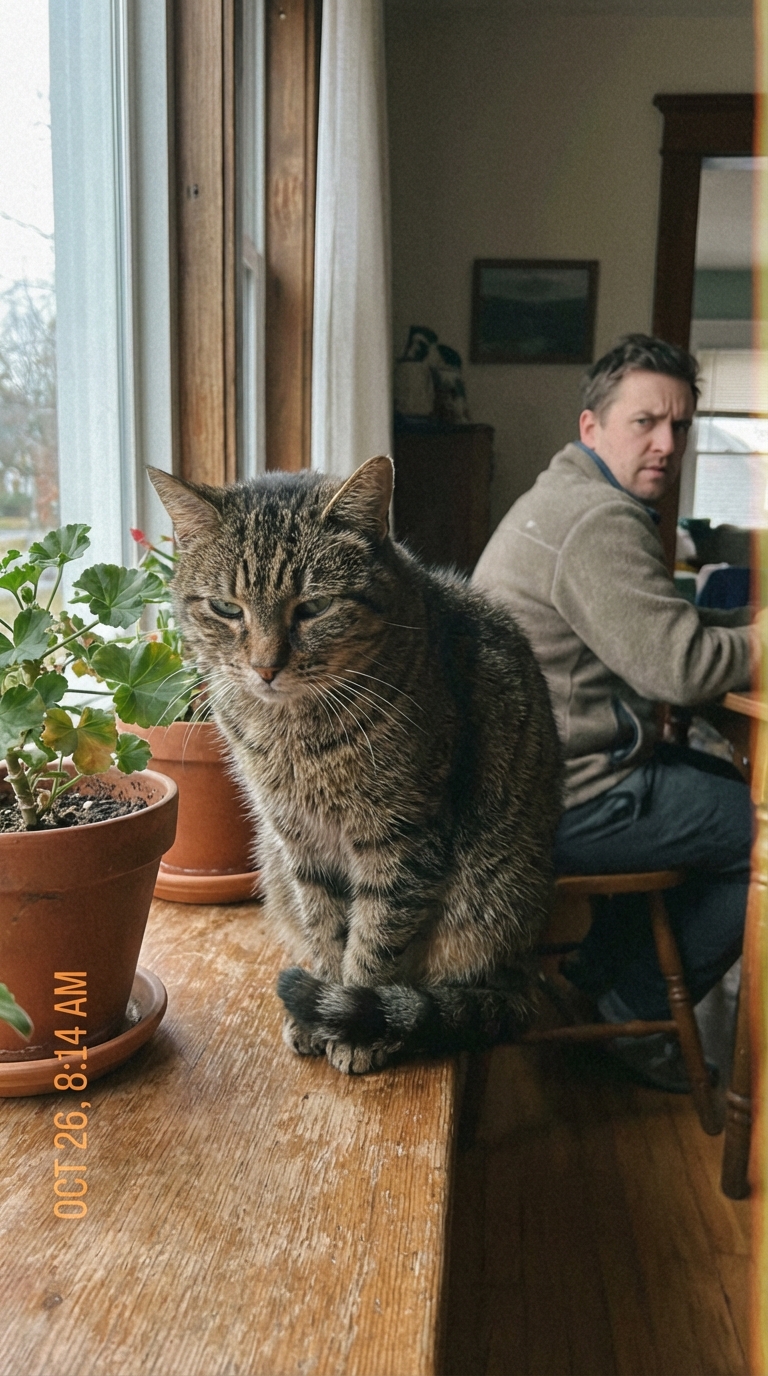
Indoor Cats Are Silently Suffering Way More Than You Thought.. After 9 years working exclusively with indoor cats, I discovered that 76% of the "healthy" cats in my clinic were slowly declining from a deficiency I'd never once tested for. Their owners were spending hundreds on premium food. And I was the one telling them everything looked fine. My name is Dr. Sarah Calloway, DVM. I've treated over 8,000 indoor cats at Westfield Feline Clinic. And what I'm about to tell you contradicts almost everything I was taught in veterinary school about feline nutrition. Until the morning James Whitfield carried Milo into my exam room. Milo was six years old. Domestic shorthair. 10.2 pounds - textbook perfect weight. No disease history. No prior surgeries. Indoor-only since kittenhood. Fed Blue Buffalo Wilderness. $72 a bag. James had done his research. Read every label. Chose the premium option because he wanted the best for his cat. But Milo wasn't the same cat he'd been a year ago. James sat across from me and said something I'd heard a thousand times before - but this time, it hit different. "Dr. Calloway, I know this sounds crazy. There's nothing specifically wrong. He eats. He drinks. He uses the litter box. But he's just... not Milo anymore. He sleeps all day. Doesn't chase anything. His coat looks rough. His eyes seem dull. I keep telling myself he's fine, but something feels off and I can't explain it." He paused. "I've already taken him to two other vets. Both said everything looks normal. I've spent $1,400 on bloodwork and ultrasounds. All normal. I switched his food twice. Nothing changed." He looked at me with that expression I've seen on hundreds of owners' faces - the one that says: I know something is wrong with my cat, but nobody will believe me. "My wife thinks I'm overreacting," he said. "She says he's just getting older." Milo was six. Six-year-old cats don't "just get older." But I almost said it anyway. I almost said the phrase I'd been saying for nine years. "Everything looks normal." Because on paper, it did. Bloodwork: normal. Weight: perfect. Heart rate: normal. Teeth: clean. Eyes: no visible lesions. Coat: a little dull, but nothing clinical. On paper, Milo was a healthy cat. But James was right. Something was off. I could see it too. Milo sat on my exam table with none of the alertness I'd expect from a six-year-old indoor cat. No curiosity about the room. No resistance to handling. Just... flat. That night, I went home and couldn't stop thinking about him. And about the dozens of other cats I'd seen that year with the exact same presentation. Low energy. Reduced playfulness. Dull coat. Owners saying "he's just slowing down." Bloodwork normal. Weight fine. Diet premium. Cats that looked healthy on paper but weren't thriving in reality. I'd been dismissing every single one of them. That's when I did something I'd never done in nine years of practice. I called James the next morning. "Bring Milo back in. I want to run one more test." I ordered a whole blood taurine panel. In nine years and over 8,000 cats, I had never once ordered this test. Not because it didn't exist. But because I'd been taught - like every vet is taught - that commercial cat food provides adequate taurine. It's required by law. It's on the label. Case closed. I was wrong. Milo's result came back two days later. Taurine level: 31 nmol/mL. Normal range starts at 50. I sat at my desk staring at that number for twenty minutes. Because if Milo - a six-year-old cat eating $72-a-bag premium food with "taurine added" right on the label - was taurine deficient... How many of the other 8,000 cats I'd treated over nine years were deficient too? How many owners had I looked in the eye and told "everything looks normal" - while their cat was silently depleting? How many of those cats that "slowed down" at 8, declined at 10, and died at 12 were never actually aging? They were starving for the one nutrient their body couldn't make. And I never checked. Here's what they don't teach you in vet school - and what I had to learn the hard way. Taurine isn't just another nutrient on a label. For cats, it's the single most critical amino acid in their body. It powers heart muscle contraction. It maintains retinal cell health. It drives bile acid production. It fuels nervous system signaling. It supports immune function. Every major organ system in a cat's body depends on taurine to function. And here's what makes cats uniquely vulnerable: Cats cannot produce taurine on their own. Dogs produce it. Humans produce it. Almost every mammal produces it. Cats cannot. They are one of the only mammals on earth that must get 100% of their taurine from external sources. And they burn through it every single day. It doesn't store. Doesn't accumulate. Gets used and flushed out constantly. So they need a fresh supply. Daily. Just to stay level. Now - commercial cat food does contain taurine. It's required by law since 1987. But here's what that law doesn't account for: Processing destroys up to 50% of taurine before the food reaches the bag. Whether it's kibble or wet food, high-heat manufacturing degrades taurine during cooking. Further degradation occurs during storage. Once the bag is opened, exposure to air accelerates the loss. By the time you reach the bottom of a 15-pound bag, the taurine content may be a fraction of what the label claims. Grain-free formulas actively block taurine absorption. When manufacturers removed grains from cat food, they replaced them with legumes - peas, lentils, chickpeas. These ingredients contain compounds called anti-nutrients that bind to taurine in the digestive system, preventing absorption. The taurine is on the label. It might even be high-quality taurine. But the legume fillers create an invisible barrier. So your cat is eating food with "adequate taurine" listed on the bag - while their body can't access it. The legal minimum was designed to prevent death, not promote health. The 1987 standard prevents cats from going blind or dropping dead from acute heart failure. That's the bar. It was never designed to support a cat thriving at 15, 18, or 20 years old. It's the difference between surviving and actually living. And when a cat lives year after year on minimum taurine - slowly losing more than it absorbs - this is what happens inside their body: Bile acid production drops. Fats stop digesting properly. The GI tract becomes chronically inflamed. The heart muscle weakens incrementally. The retinal cells degrade. Energy production at the cellular level declines. And on the outside, you see exactly what James saw in Milo. A cat that's "fine" - but not the same. A cat that sleeps more. Plays less. Coat gets rough. Eyes lose their brightness. And you tell yourself: he's just getting older. He's not getting older. He's running out. After Milo's diagnosis, I made a decision that changed my entire practice. For the next six months, I would test every cat that came through my clinic showing any sign of unexplained decline - lethargy, dull coat, reduced playfulness, chronic vomiting, or owners simply saying "something seems off." Cats between 3 and 14 years old. All on food their owners considered premium or high-quality. I tested 112 cats. 85 had taurine levels below normal range. 76%. These weren't cats eating gas station cat food. These were cats on what I considered the best diets available: Blue Buffalo Wilderness ($72/bag, grain-free, "rich in taurine"): 14 cats tested. Average taurine level: 33 nmol/mL. 11 out of 14 deficient. 8 had lethargy complaints from owners. Hill's Science Diet Indoor ($65/bag, vet-recommended): 16 cats tested. Average taurine: 36 nmol/mL. 11 out of 16 deficient. 6 had unexplained vomiting. Purina Pro Plan Sensitive Skin & Stomach ($58/bag, "sensitive stomach" formula): 12 cats tested. Average taurine: 29 nmol/mL. 10 out of 12 deficient. 7 were vomiting regularly. Royal Canin Indoor Adult ($78/bag, premium indoor formula): 11 cats tested. Average taurine: 34 nmol/mL. 8 out of 11 deficient. 5 had coat deterioration. Wellness CORE Grain-Free ($70/bag, grain-free with peas and lentils): 13 cats tested. Average taurine: 27 nmol/mL. Every single one deficient. 9 had lethargy. 4 were vomiting. The pattern was devastating. It didn't matter what brand. It didn't matter what price point. Grain-free or grain-inclusive. Prescription or over-the-counter. Wet or dry. 76% of indoor cats eating premium food were taurine deficient. And the grain-free formulas with legumes - the ones marketed as "healthier" - had the worst numbers of all. I spent that weekend re-reading the taurine research literature. Study after study confirmed what I was seeing in my clinic. A 2003 study in the Journal of the American Veterinary Medical Association showed that cats cannot synthesize taurine and are entirely dependent on dietary intake. Research in the Journal of Animal Science demonstrated that high-heat processing during food manufacturing significantly reduces bioavailable taurine. An FDA investigation in 2019 flagged the connection between grain-free diets and cardiac disease in cats - but never explicitly named taurine absorption blockage from legume ingredients as the mechanism. The science was there. It had been there for decades. But nobody connected it to the epidemic of "healthy" indoor cats slowly declining on premium food. If your cat shows ANY of these signs, they may have low taurine right now: Sleeps more than 16 hours a day. Stopped jumping onto furniture or counters. Pupils that seem constantly dilated or glassy. Coat looks dull, rough, or unkempt despite grooming. Lost interest in toys, laser pointers, or play. Vomits 2 or more times per week - food, bile, or foam. Seems "spacey," less alert, or less responsive than before. You keep telling yourself "he's just slowing down" or "she's just getting older." These aren't signs of aging. They're signs your cat's body is running on empty. And the most dangerous part? By the time you can see these symptoms, the deficiency has likely been building for months. Sometimes years. Heart muscle doesn't regenerate quickly. Retinal cells don't recover easily. Every month without adequate taurine, the damage compounds silently. Most vets won't catch it. Not because they don't care - but because taurine testing isn't part of standard bloodwork. It's not taught as a first-line diagnostic. The system doesn't prioritize it. Which means your cat's "normal" blood panel can come back perfect while their taurine tank is nearly empty. After discovering how widespread the deficiency was, I thought the solution would be simple. Just recommend taurine supplements. Problem solved. I was wrong. The problem was about to get worse. I went online and ordered every taurine supplement marketed for cats that I could find. Eight different brands. All claiming to be "pure." All claiming to be "pharmaceutical grade." All with hundreds or thousands of positive reviews. I sent every single one to an independent third-party laboratory for analysis. What came back made me furious. PurrVitality (Popular on Amazon, 14,000+ reviews): Contained only 347mg of actual taurine per scoop. Label claimed 500mg. 31% less than advertised. The missing volume was filled with maltodextrin - a sugar-based filler. FelineFirst Taurine (Sold at major pet store chains): Heavy metal contamination detected. Lead levels 3.8 times the safe limit for cats. This product was sitting on shelves next to the cat food aisle. VetSelect Pure Taurine (Marketed as "Veterinarian Recommended"): Tested positive for rice flour and maltodextrin fillers - nowhere on the label. The "pure taurine" was cut with 40% cheap filler that actually blocks absorption. TaurinePaws (Monthly subscription service): The taurine was so degraded from improper storage that it was essentially inert. Your cat would absorb almost nothing. CatAmino Pro (Budget option, Amazon bestseller): Sourced from unverified overseas facilities. Zero quality control documentation available. No Certificate of Analysis on file. No batch testing. NaturePaws Taurine (Marketed to "holistic" pet owners): Mixed with magnesium stearate and silica - additives that clinical studies show interfere with taurine uptake. The supplement actively undermined its own purpose. WholeLife Feline Taurine (Premium priced at $45/bottle): Mislabeled dosing instructions. The recommended serving was 60% below therapeutic levels. A cat would need to take nearly triple the suggested dose to reach the minimum effective amount. PureCat Taurine (Cheapest option): Contamination from the manufacturing facility. Tested positive for bacterial growth. Potentially dangerous. I stared at these results and felt physically sick. Because for weeks after Milo's diagnosis, I had been recommending some of these brands to clients. Clients who trusted me. Clients whose cats were deficient. I was sending them home with supplements that were contaminated, under-dosed, or completely ineffective. One client's cat - a 9-year-old named Poppy - actually got worse on a popular Amazon brand. When I tested that specific bottle, it contained barely 62% of the labeled taurine and tested positive for bacterial contamination. Her owner had spent two months thinking she was fixing the problem. She wasn't. The deficiency was progressing the entire time. The supplement industry for pets is largely unregulated. Companies can print almost anything on a label. "Pharmaceutical grade." "Pure." "Vet recommended." None of these claims require verification. They know desperate pet owners will buy anything that promises to help their cat. And they're making millions selling products that range from useless to dangerous. I spent two months calling manufacturers directly. Demanding Certificates of Analysis. Requesting third-party testing documentation. Asking for sourcing transparency. Most wouldn't return my calls. The ones that did sent marketing materials instead of lab reports. Or certificates that couldn't be verified. Or simply refused to provide batch-level testing data. I was about to give up and try to compound my own pharmaceutical-grade taurine at a veterinary pharmacy - which would have been prohibitively expensive for my clients. Then I found KittySupps. At first, I was skeptical. Deeply skeptical. Another supplement brand making promises on a nicely designed website. I'd seen enough of those. But when I called them, something was immediately different. A person answered. Not a voicemail. Not a chatbot. A person. I identified myself as a veterinarian and started asking questions. I asked for their Certificate of Analysis. They emailed it within 45 minutes. From an accredited, independent third-party laboratory. Testing for purity, heavy metals, microbial contamination, and potency. I asked about sourcing. They sent full documentation: pharmaceutical-grade L-taurine sourced from a GMP-certified facility in Germany. Complete chain of custody. I asked about batch testing. They test every single production batch - not annually, not quarterly, every batch. And they retain the records. I asked how they prevent degradation during storage and shipping. They use sealed containers with oxygen absorbers and moisture barriers. Every unit is sealed and date-stamped. They answered every single question I asked. Completely. Without hesitation. They were the only company - out of eight - that could do that. So I ordered a bottle. And I sent it to the same independent lab that had tested all the others. The results: 502mg of pure taurine per scoop (label claims 500mg - actually over-delivered by 0.4%) Zero heavy metal contamination - lead, mercury, arsenic, cadmium all below detection limits. No fillers, no binders, no maltodextrin, no additives of any kind. Pharmaceutical-grade purity: 99.8%. Proper therapeutic dosing calibrated for feline absorption. Included precision dosing scoop - eliminates measurement guesswork. I finally found it. The only taurine supplement I could put my name behind. And here's what makes KittySupps work for practically every cat owner: It works with ANY food you're currently feeding. Prescription diet? Add it. Grain-free formula? Mix it in. Sensitive stomach food? Sprinkle it on top. Raw, wet, dry, combination? Works perfectly. You don't need to change your cat's food. Because the issue was never the food quality. It's that cats can't extract or store enough taurine from ANY processed food source. And for cats eating grain-free formulas with legumes, the pure taurine bypasses the absorption blockade entirely - it's absorbed directly and isn't affected by anti-nutrients in peas, lentils, or chickpeas. It's tasteless and odorless. The fine powder disappears into any food. Wet food, moistened kibble, bone broth, tuna water - your cat won't know it's there. Even the pickiest eaters accept it without hesitation. It's water-soluble - which means it's impossible to give too much. Unlike fat-soluble vitamins that accumulate and can become toxic, taurine is water-soluble. Your cat's body uses what it needs and excretes the rest through urine. There is no risk of overdose. This makes it safe for multi-cat households where you can't perfectly control who eats what. I called James that same afternoon. "Don't change Milo's food. Don't add any medication. I'm going to give you something to add to his meals." I gave him a bottle of KittySupps taurine. One scoop per day, mixed into Milo's regular food. James kept a log like I asked. Week 1: No noticeable change. Milo still sleeping most of the day. James texted me: "Are you sure about this?" Week 2: Slightly more alert in the mornings. James noticed Milo watching birds through the window - something he hadn't done in months. Coat still dull. "Maybe I'm imagining it," James wrote. Week 3: Milo jumped onto the kitchen counter for the first time in over a year. James sent me a photo at 7:14 AM with the caption: "HE'S ON THE COUNTER. HE HASN'T DONE THIS SINCE LAST WINTER." Week 4: James's wife - the one who said he was overreacting - sent me a message: "I don't know what you gave Milo but he chased a hair tie across the living room for ten minutes last night. He hasn't played like that in over a year. Thank you." Week 6: Follow-up taurine test. Result: 54 nmol/mL. Normal range. Same cat. Same food. Same home. Same owner. One scoop per day. That was nine months ago. Milo's last checkup showed taurine at 58 nmol/mL. Healthy range. His coat is glossy. His eyes are bright. He plays daily. He jumps on everything. James told me last month: "I feel like I got my cat back. Like the real Milo was in there the whole time, just waiting." He was. His body just didn't have what it needed to let him out. After Milo, I started recommending KittySupps to every client whose cat showed signs of unexplained decline. I've now put over 340 cats on this protocol in nine months. 89% showed measurable improvement within 30 days. Here are some of the cases that stay with me: Rebecca's cat Luna, 8 years old (Wellness CORE Grain-Free for 4 years): "Luna was sleeping 19 hours a day. Her coat was so rough I thought she had a skin condition. We ran allergy tests - negative. Dermatology consult - nothing. Three weeks on KittySupps taurine, she was playing with her feather wand again. By week six, her coat was softer than it had been since she was a kitten. My husband keeps saying 'what did they give her?' He can't believe it's the same cat." David's cat Oliver, 11 years old (Hill's Science Diet Indoor for 6 years): "I was preparing myself. Oliver was 11. He'd stopped jumping on the bed. Stopped meeting me at the door. Spent all day in one spot on the couch. I thought this was it - the beginning of the end. Dr. Calloway suggested taurine before we did anything drastic. Within a month, Oliver was on the bed again. Within two months, he was at the door when I came home. He's not a kitten. But he's Oliver again." Sarah's cat Whiskers, 13 years old (Purina Pro Plan Sensitive for 5 years): "Whiskers was throwing up three times a week. My vet said 'sensitive stomach' and put him on prescription food. He still threw up. Switched foods twice more. Still threw up. Started KittySupps. By week three, the vomiting stopped. Completely. It's been four months. Not a single episode. Thirteen years old and he's more active than he was at ten." Maria's cat Cleo, 5 years old (Blue Buffalo Grain-Free since kittenhood): "Cleo was only five, but she acted like she was fifteen. Barely played. Slept all day. Dull coat. Glassy eyes. Three vets told me she was healthy. I was losing my mind. Dr. Calloway tested her taurine - way below normal. Started KittySupps. Two weeks later, my daughter said 'Mom, Cleo's being weird.' She was chasing her tail. She hadn't done that since she was a kitten. She wasn't being weird. She was being herself for the first time in years." Tom's cat Shadow, 9 years old (Royal Canin Indoor on a rotation with Fancy Feast wet): "Shadow's coat had gotten so bad I thought he had mange. Vet tested for everything - parasites, fungal, bacterial. All negative. 'Some cats just have dry skin,' they said. Started taurine supplementation. Within five weeks, his coat was glossy. Within two months, the dandruff was gone completely. My groomer asked what I changed. One scoop of powder. That's it." These aren't miracles. This is simply what happens when you give a cat's body the one nutrient it cannot produce - in a form it can actually absorb - and it's actually in the bottle. Here's what I want you to do. Next time you're at your vet, ask this exact question: "Can you test my cat's taurine levels?" If they say "it's not necessary" or "your food is complete and balanced," ask them: "When was the last time you actually tested a cat's taurine?" Most won't have an answer. Not because they don't care - but because the system doesn't prioritize it. I didn't either. For nine years, I didn't. Until Milo. Here's the truth: You don't need to wait for vet approval. You don't need bloodwork first. You don't need to wait for a crisis. You don't need to change your cat's food. Taurine isn't a drug. It's an essential amino acid that your cat's body requires every single day and cannot produce on its own. You can start today. One small scoop per day mixed into whatever food you're currently feeding. That's it. But please - don't buy random taurine supplements without knowing what's actually inside. I tested them. Most are contaminated, under-dosed, or filled with ingredients that block the very absorption you're trying to achieve. Some are actually dangerous. If your cat is showing any of the signs I listed above - the lethargy, the dull coat, the reduced play, the vomiting - their body is already telling you something is wrong. And each month you wait, the deficiency compounds. Heart muscle weakens a little more. Retinal cells degrade a little further. Energy production drops another notch. The GI tract stays inflamed. The damage is cumulative. It's silent. And at a certain point, it becomes permanent. But if you catch it now - if you start before the decline becomes irreversible - the results can be remarkable. I've seen it 340 times in nine months. Cats that were "slowing down" suddenly playing again. Coats that were dull becoming glossy. Vomiting that was chronic stopping completely. Owners sending me videos of their cats chasing toys for the first time in years. Not because of a new drug. Not because of an expensive procedure. Because of one scoop of the right taurine, every morning, in whatever food they were already eating. I could have stayed quiet. I could have kept saying "everything looks normal." Kept running the standard panels. Kept collecting the fees for follow-up visits that wouldn't find anything. But I became a veterinarian to help animals. Not to participate in a system that lets them decline while their owners spend thousands trying to figure out why. If you're reading this, you already sense something is off with your cat. Your instincts are right. The solution isn't another food switch. It isn't more bloodwork. It isn't "waiting to see if it gets better." It isn't a prescription diet that costs $80 a bag and still doesn't deliver enough taurine. And it's definitely not buying the first taurine supplement you find on Amazon. It's giving your cat pharmaceutical-grade, third-party tested, actually pure taurine that bypasses the processing degradation and absorption blockades - and works with whatever food you're already feeding. The only brand I trust after testing them all: KittySupps. Get the same pharmaceutical-grade taurine I recommend to my clients at Westfield Feline Clinic. Most cats show noticeable changes within 2-3 weeks. kittysupps.com/products/taurine P.S. If your indoor cat is over 3 years old and eating commercial food - any brand, any price point - they've likely been depleting taurine for years without anyone noticing. The signs start subtle: a little less energy, a little less play, coat not quite as soft. You'll barely notice week to week. But look at photos from a year ago and compare. If you can see the difference - act now. Every month matters. Heart muscle doesn't regenerate. Retinal cells don't come back. The earlier you correct the deficiency, the more reversible the damage is. Don't wait until decline becomes irreversible. P.P.S. I don't get paid by KittySupps to recommend this. I receive no commission, no sponsorship, no free product. I recommend it because after testing every major taurine supplement marketed for cats, they are the only brand that passed independent third-party testing with 99.8% purity, zero contamination, and accurate therapeutic dosing. After 9 years and over 8,000 cats at Westfield Feline Clinic, I've finally found something I can stand behind without hesitation. Your cat deserves that. kittysupps.com/products/taurine
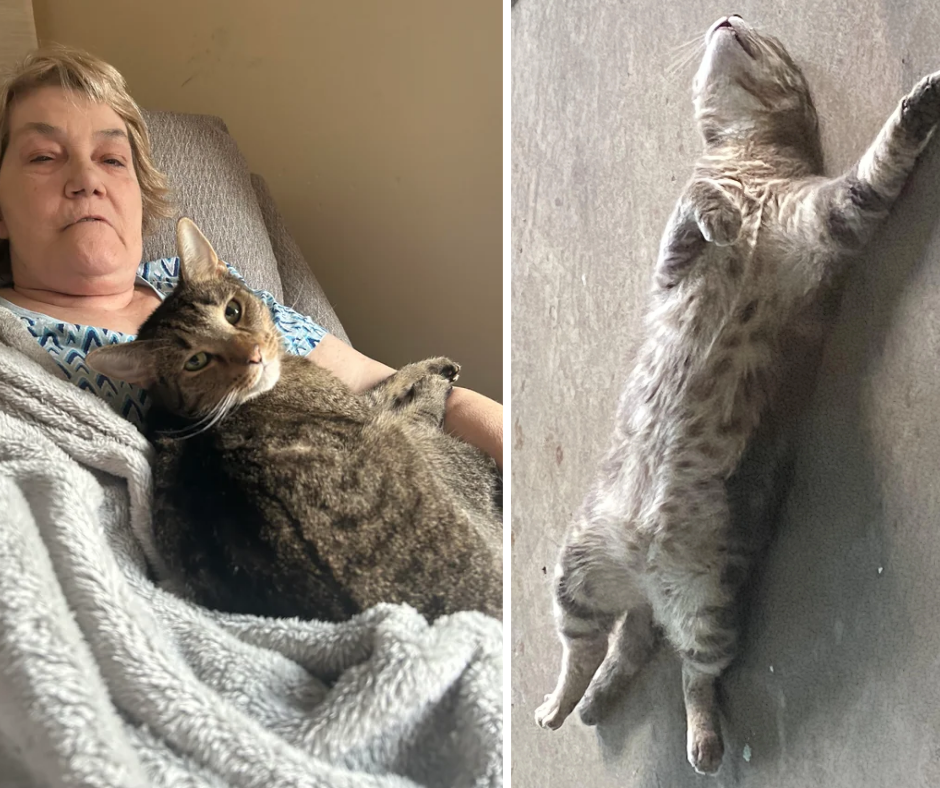
Veterinarian Speaks The Truth..
76% of indoor cats on premium food are taurine deficient — and their vets never tested for it once.
ORDER NOWLike this ad? Make it yours.
Crush rebuilds this exact creative around your product — your brand, your colors, your offer — in about a minute.