Arthritis Support Community
 Facebook ad: “Feel Like Yourself Again”
Ran for 10 days, from October 9 to October 19, 2026, the last day Crush saw it.
Run by Arthritis Support Community on Facebook. Crush is not the advertiser and does not verify its claims. See this ad in Meta's Ad Library(opens in a new tab)
Make your own version of this ad
Crush makes it, launches it in your own Meta ad account, scales the winners and pauses the losers.
About this ad
- Meta Ad Library ID
- 4646356025643294
- Platforms
- Facebook, Instagram, Audience Network and Threads
- Relaunches
- 1
Ad text
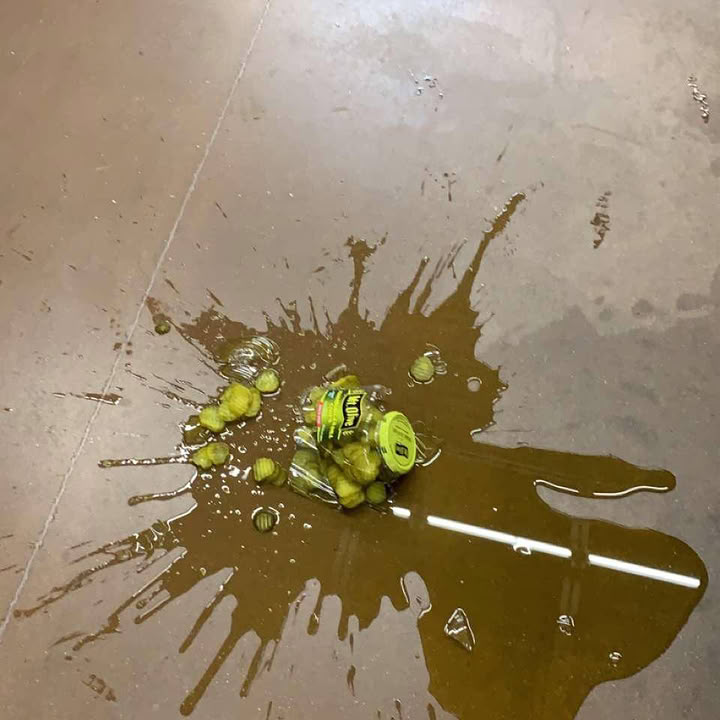
A jar of pickles exploded in aisle 7 of the Kroger on Watson Boulevard last Tuesday and the woman who dropped it just stood there. She didn't jump back. She didn't apologize. She didn't do that little laugh you're supposed to do when you drop something in a grocery store and half a dozen strangers pretend not to look. She just stood there with her hand still curled the way it had been when the jar was in it. Staring down at the mess like she was trying to figure out how it got there. I was two carts down grabbing buttermilk for a pound cake I'd promised my daughter in law for Sunday. And I could see from where I was standing that this woman was not going to be able to bend down and pick up that broken glass. Not because she didn't want to. Because her body wasn't going to let her. I know that look. I've been giving myself that look in the mirror for about four years now. That look where you're trying to decide if you can do a thing you used to do without even thinking about it. I set my buttermilk down on top of a display of hamburger buns and walked over. I'm going to tell you what happened next because it changed my life. And I don't say that the way people on Facebook say it. I mean it. I mean my knees don't crack going down the porch steps anymore. I mean I carried a laundry basket up from the basement last week without setting it down halfway. I mean my husband caught me squatting down in the yard to pull crabgrass and he stood in the kitchen window watching me for so long I finally looked up and asked him what was wrong. He said, "I haven't seen you do that in three years, Barb." I hadn't either. But I'm getting ahead of myself. Let me back up. My name is Barbara. I'm 63. I've lived in Warner Robins, Georgia for 37 years, ever since my husband Ronnie got hired on at the base as a hydraulics mechanic on the C-130s. I ran the cafeteria at Northside Elementary for 22 years before I retired. Two of my grandkids went through my line. I put extra tater tots on their trays and pretended I didn't. Ronnie's still working part time at the base, mostly because he doesn't know what to do with himself if he isn't. I've got three grown kids, six grandkids, a beagle named Ruby who thinks she's a person, and a garden in the back that I stopped taking care of about two summers ago because I couldn't stand up out of the kneeling position without holding onto the fence. That's the part I hadn't told anybody. Not even Ronnie. I would kneel down to pull a weed and then I'd have to think about how to get back up. I'd put one hand on the raised bed. Then the other hand on the fence. Then I'd sort of rock forward until my weight was on my knees, and then I'd push up in stages. Half up. Adjust. Half up more. Straighten. The first time I did it that way I laughed at myself. The second time I got quiet. By the tenth time I was making sure nobody was watching me. That's a specific kind of shame nobody talks about. The shame of your own body doing something clumsy and slow when nobody used to have to help you do anything. My knees started going about four years ago. First it was just going down stairs. That crackling feeling, like there was gravel in there. Then getting up from the couch. Then getting in and out of the car if I'd been sitting too long. Then it was in my hips. Then my hands. My thumbs, mostly, and the base of my right index finger. It got so I'd drop things. A coffee cup. A pair of scissors. A jar of applesauce that shattered on the tile in front of Ruby and she wouldn't come in the kitchen for two days after. I went to my doctor. Dr. Patel. Nice man. He pressed on my knees, moved them around, ordered an x ray. Told me it was osteoarthritis. Told me it's what happens. Told me I could take Aleve when it flared up and try to stay active and keep my weight down. That was it. That was the whole appointment. I sat in the parking lot afterward and cried a little. Not because he'd said anything cruel. Because he hadn't said anything at all. He'd looked at a woman who used to walk 4 miles a day on the Wellston Trail with her sister and told her she should keep her weight down. I already knew I should keep my weight down. What I wanted was for my body to stop feeling like it had somebody else's parts in it. I tried everything after that. Fish oil. Turmeric capsules from the CVS on Russell Parkway. That copper cream you rub on your knees that smells like a Vicks factory. A collagen powder my daughter mailed me from Colorado. Glucosamine chondroitin, both the pills and the chewables because I thought maybe absorption was the issue. Epsom salt baths so hot Ronnie had to open a window. Some of it took the edge off for a week or two. None of it did what I needed it to do, which was let me pull crabgrass without a plan. Which brings me back to aisle 7. I walked over to the woman with the broken pickle jar. She still hadn't moved. There was a puddle of brine spreading toward her sneakers and a piece of a dill just sitting there on the linoleum like it was catching its breath. I said, "Honey, don't you move. I've got it." She looked up at me. And I saw it right then. She wasn't embarrassed. She wasn't in pain, exactly. She was defeated. That was the word. Her face had that flat, tired quality of a person who has been let down by their own body one too many times and doesn't have the energy to be surprised by it anymore. I went and got one of the young men in the green Kroger vests and he came over with a roll of paper towels and a mop and told us not to worry about it. But the woman wouldn't leave. She stood there with her hand on her cart and watched him clean it up like she was making sure he did it right. Then she said, real quiet, "I used to run marathons." I said, "Ma'am?" She looked at me. Her eyes were wet. "I used to run marathons. I ran Boston in 2004. I couldn't pick up a pickle jar." And then she started crying right there in the middle of the pickle aisle. I've raised three kids and I ran a school cafeteria for two decades. I know how to handle a person coming apart in public. I put my hand on her elbow and I said, "Come on. There's a Starbucks up front. Let me buy you a coffee." She let me steer her cart up to the customer service desk. We left both of our carts there. I told the girl behind the counter we'd be back in a bit. The Starbucks in that Kroger is tucked in a little corner by the flower cooler. There's four small tables and a counter along the window. We sat at the counter. I bought her a decaf with cream and I got a hot tea for myself because I already had coffee at breakfast and Ronnie says any more than one makes me talk faster. Her name was Carla. She was 66. She'd moved to Warner Robins from Marietta about six years back to be closer to her daughter, who works in Macon. She'd retired from Delta, where she'd been a flight attendant for 31 years. She used to run marathons. She'd run Boston twice, New York once, and Chicago four times. She'd stopped running when she was 58. Her knees, first. Then her hip. Then her back. She said it was like watching a house fall in slow motion, one wall at a time. First you stop running. Then you stop walking on the treadmill. Then you stop taking the stairs. Then you stop bending down to tie your shoes and you start buying the slip on kind. Then you drop a pickle jar in a Kroger and can't clean it up. She said, "I don't recognize my own body anymore. And I miss it. I miss it like it's a person who died." I sat there and I just listened. Because I understood her all the way down. Everything she was saying was something I hadn't been able to put into words about myself. We sat there for I don't know how long. Long enough that our drinks got cold. Long enough that a woman I know from church, June Weatherington, walked by and waved and I waved back and Carla and I just kept talking. And then, sort of out of nowhere, Carla said, "You know what, though. My daughter got me on something two months ago." I said, "Yeah?" She said, "It's a fruit. From India. It's supposed to be good for. I don't know. Cell energy or something. She works over at that physical therapy clinic in Macon, off Zebulon Road, and one of the therapists there had been taking it and told her about it. My daughter's the assistant there. The, what do you call it, the PTA." She kept going. "I was skeptical. You'd have to be an idiot not to be at this point. I've spent so much money on stuff that didn't work I could have taken a cruise. But she brought me a bottle. Told me to just take it for a month. See if anything shifted." I asked her if anything had. She got quiet for a second. Then she said, "I didn't drop the jar because my hand hurt. I dropped it because I was reaching too high and I lost my balance for a second. Do you understand what I'm telling you? Two months ago I couldn't have reached that high shelf at all. That jar wasn't in my life. Today I can reach it. I just haven't learned how to reach it yet without falling over." She laughed. First time she'd laughed since I sat down with her. She said, "I'm relearning my body. It's like being 20 again except I already know what I'm doing." I asked her what it was called. She said, "Auniva. It's Amla. A M L A. Indian gooseberry. My daughter said the girl at the clinic explained it to her and she tried to explain it to me but I got lost in the middle. Something about the little energy factories in your cells. She kept using the word mitochondria." I wrote it down on the back of my Kroger receipt with a Bic pen I keep in my purse for coupons. Auniva Amla. Mitochondria. We hugged in the parking lot. I don't do that. I don't hug strangers. But I hugged her. When I got home I sat down at the computer in the office where Ronnie keeps his Sudoku books and I looked it up. I'm going to try to explain to you what I figured out because I want you to understand the way I understood it. In plain English. The way Carla's daughter tried to explain it to her. Every cell in your body needs energy to do its job. And your joints, the cartilage, the fluid, the tissue that keeps everything gliding, all of that is made of cells too. And those cells need energy to maintain themselves. To repair themselves. To keep the cartilage smooth. To keep the inflammation in check. That energy comes from little structures inside every cell called mitochondria. They're the power plants. Everything your body does depends on those little power plants working right. Here's the part that stopped me cold. As we get older, and after decades of stress and processed food and just the wear and tear of life, those little power plants start to slow down. They don't produce as much energy as they used to. And the cells all over your body start to feel it. But the cells that feel it the most are the ones that were working the hardest to begin with. Your joints. Your nerves. Your heart. The parts of you that were doing the most work every single day for 60 years. So the cartilage cells in your knees are running on half power. They can't keep up with the maintenance. The cushioning starts to go. The inflammation starts to build. The pain starts to show up. And here's what got me. Everything I'd been trying, the fish oil and the turmeric and the glucosamine, none of it was doing anything about the power plants. It was like ordering more lumber for a construction site when the real problem was that the power was out. Doesn't matter how much lumber you deliver. Nobody can build with it. Amla, according to what I read, helps support a pathway in your body called AMPK. AMPK is like a switch that tells your mitochondria to work more efficiently. When AMPK is turned on, your little power plants can start generating energy the way they used to. And when the cells in your joints have energy again, they can get back to the maintenance work they've been too tired to do. That was the piece nobody had ever told me. That was the piece Dr. Patel didn't have time for in a 12 minute appointment. That's why the Aleve wasn't doing anything real. Aleve was just numbing the alarm. Auniva was, from what I could tell, helping the power come back on. I ordered a bottle that night. I didn't tell Ronnie because I was tired of him asking me how much money I'd spent on stuff that didn't work. It came in the mail four days later. Two capsules a day. That was the whole thing. The first two weeks, if I'm being honest with you, I didn't feel much. I took them with my coffee every morning and I waited. I've been burned enough times to know not to trust the first two weeks of anything. Week 3, I noticed I got up off the couch without thinking about it. That was it. I stood up to go answer the door because the UPS man was there, and I got to the door before I realized I'd stood up without gripping the armrest. I stopped in the middle of the living room and thought about that for a minute. Then Ruby barked at me and I let the UPS man in. Week 4, I walked to the mailbox without my knees complaining. That doesn't sound like much. My mailbox is 60 feet from my front door. But those 60 feet had been a whole event for a long time. Week 5, I got down on the floor to play Legos with my grandson Cade. He's 4. He builds these tall crooked towers and he wants you on the floor with him. I hadn't been on the floor with him since he was 2. I got down there and stayed for 40 minutes and when I stood up, I stood up in one motion. Not in stages. Not with a hand on the coffee table. One motion. Cade didn't notice. Ronnie did. He was standing in the hallway with his coffee cup halfway to his mouth watching me and he had the strangest look on his face. He said, "Barb, what have you been doing?" I told him about Carla. About the pickle jar. About the mitochondria. He listened all the way through. Then he said, "Get me a bottle too." I ordered him one that afternoon. By week 6 I was in the garden again. Kneeling. Pulling crabgrass out of the tomato bed. Standing back up without a plan. I was there for probably an hour and a half. When I came inside my hands were dirty and my knees were dirty and I felt like I'd been given something back that I didn't even fully realize I'd lost. Because it isn't just the pain. It's the whole life around the pain. It's the trips to the grandkids' soccer games you started skipping because the bleachers are murder. It's the family reunion photo at Lake Sinclair where you volunteered to be the photographer because you couldn't sit on the dock. It's the pot of chili you didn't make because you didn't want to stand at the stove that long. It's every small choice you started making without noticing you were making them, until the sum of them added up to a smaller life than the one you used to have. I got the smaller life back. I'm not saying I'm 30. I'm 63 and I'm never going to run Boston. I don't want to run Boston. I want to kneel in my garden and carry a laundry basket up the basement stairs and get down on the floor with my grandson and stand back up. That's my Boston. And I've got it back. Ronnie's on his second bottle. He started for his shoulder, which he wrecked climbing off a C-130 in 1998. Says it's the loosest it's felt in 20 years. He tries to play it cool about it but I've caught him rolling his arm around like a teenager who just discovered his own body. I called Carla last week. She'd given me her number in the Kroger parking lot. I told her about the garden. She told me she'd gone on a 2 mile walk on the Wellston Trail the day before with her daughter. She cried a little on the phone and then I cried a little and we both laughed at ourselves and hung up. If you're reading this and you're where I was 4 months ago, I want to tell you a few things. You are not lazy. You are not old before your time. You are not "just aging." Your body is not broken beyond repair. The power plants inside your cells got tired, and the maintenance backed up, and everything that hurts and everything that's stiff and everything you've stopped doing is downstream of that. It isn't your fault. And it isn't final. The thing that helped me is called Auniva Amla. It's a supplement made from that Indian gooseberry Carla's daughter told her about. Two capsules a day. That's the whole routine. You can find it at the link at the bottom of this post. They've got a 90 day money back guarantee. If you take it for 90 days and nothing changes, you send back what's left and they give you your money back. That's the whole deal. I've bought a lot of things in my life that didn't come with that kind of promise. This one does. If you've been standing in your kitchen at 5 AM trying to work up the nerve to squat down and get the pan out of the bottom cabinet. If you've stopped kneeling in your garden. If you've been the photographer at the family photo for three years running because you can't get down on the dock. If you dropped a jar of pickles in a Kroger and stood there because you couldn't figure out how to bend down and get it. Try this. Give it a month. Give it two. Then tell me what your body starts doing again. I hugged a stranger in a parking lot on Watson Boulevard because she gave this to me. I'm telling you now the same way she told me. In plain English. Because somebody has to. 👉 https://auniva.co/amla/33 P.S. I want to be honest with you about the guarantee because it matters. Auniva gives you a full 90 days. Not 30. Not 60. Ninety days to actually try it, because that's about how long it takes for your body to really start doing the maintenance work again. If nothing changes in 90 days, you get your money back. Every penny. I've never once in my life gotten my money back from a pharmacy for a prescription that didn't work. Ronnie hasn't either. Think about who is willing to stand behind what they sell and who isn't. P.P.S. Order the 3 bottle option if you can. I say this because I ran out at the end of month 2 and had to wait a week for the next bottle to come in and I could feel the difference in that week. It was like the power flickering. I keep 2 bottles in the cabinet now at all times. And Ronnie's on his own supply so we don't share anymore, which is fair because he was going through mine faster than I was. P.P.P.S. If your husband is like Ronnie, don't try to explain the mitochondria thing to him. Just leave a bottle on the counter and tell him you got him a shoulder thing. He'll take it and he'll be too proud to ask questions and in 6 weeks he'll be swinging his arm around like a teenager and you can smile at yourself in the mirror. P.P.P.P.S. Carla is doing great. She sent me a picture last Sunday from the Wellston Trail. She was smiling in a way I hadn't seen her smile in the Kroger. She looked like a person again. That's what I want for you. Not a marathon. Not a miracle. Just a body that lets you do the small things that make up a good day. 👉 https://auniva.co/amla/33
Where the ad sends people
auniva.co
Feel Like Yourself Again
"This actually worked, thank you so much." - Emily T.
Learn more: auniva.co(opens in a new tab)