Dr. James Kreischer - Trichologist, MD
Dr. James Kreischer - Trichologist, MD Facebook ad: “Dermatologist Discovers Peptide Breakthrough That…”
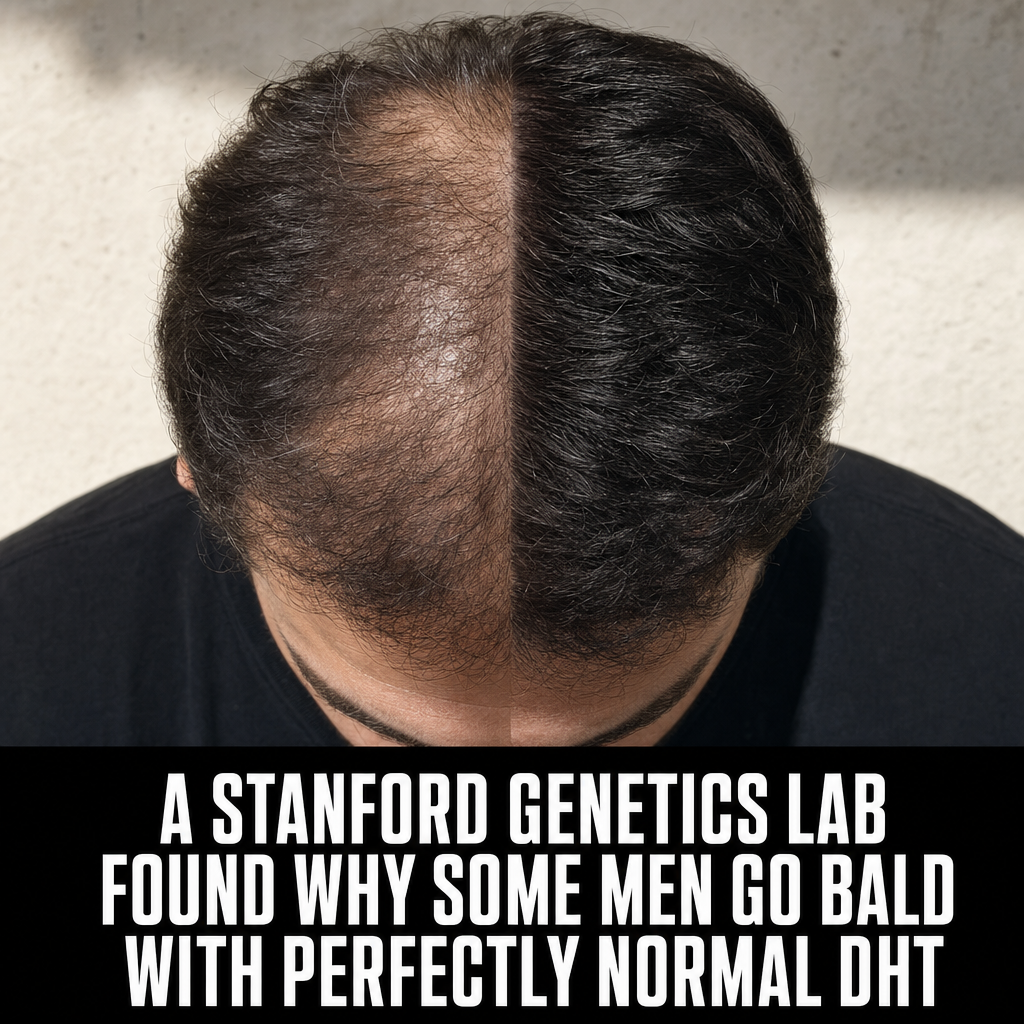
Ran for 25 days, from June 5 to June 30, 2026, the last day Crush saw it.
Run by Dr. James Kreischer - Trichologist, MD on Facebook. Crush is not the advertiser and does not verify its claims. See this ad in Meta's Ad Library(opens in a new tab)
Want an ad like this for your product?
Crush makes new ad images for your product from this ad: your logo, your product photo, your offer.
Trials from $19.95 USD, then $79.95 USD a month. Cancel anytime.
About this ad
- Meta Ad Library ID
- 830778386778290
- Platforms
- Facebook, Instagram, Audience Network, Messenger and Threads
- Relaunches
- 2
Ad text
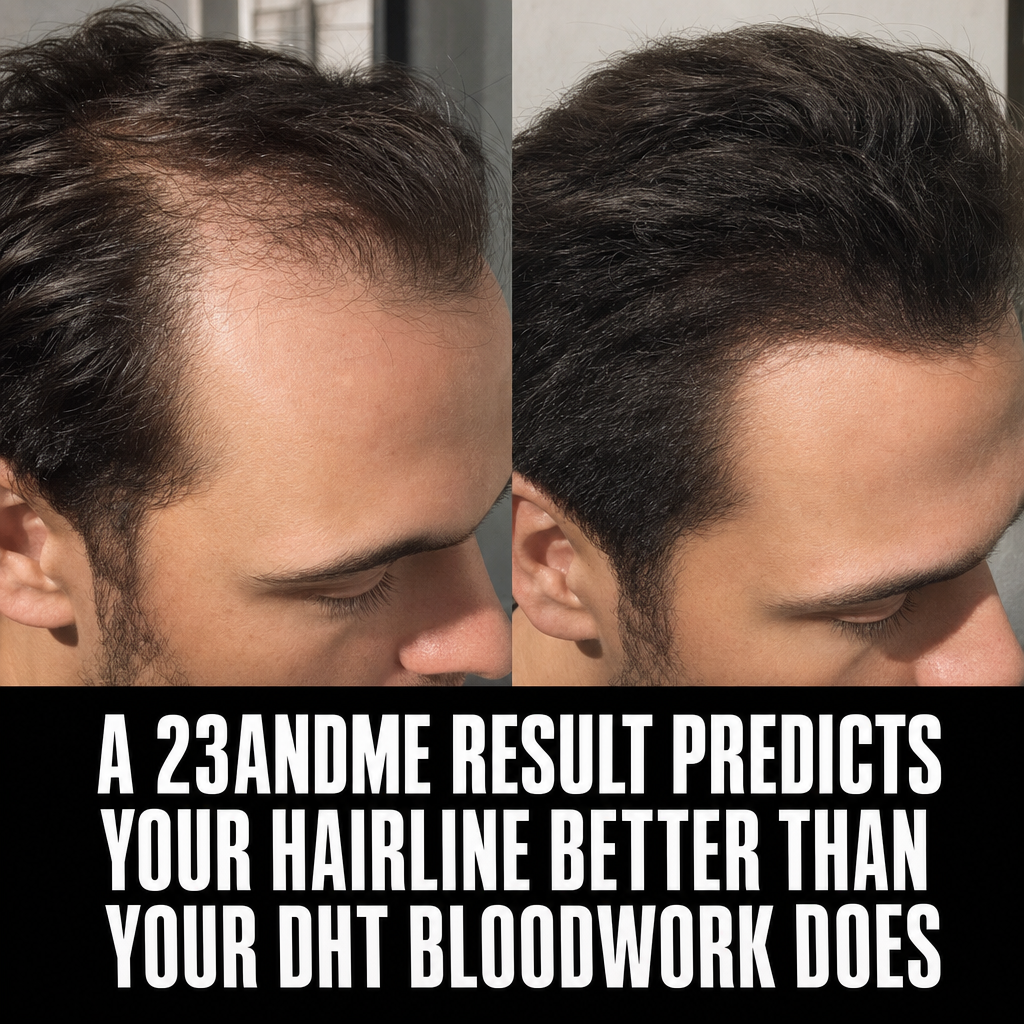
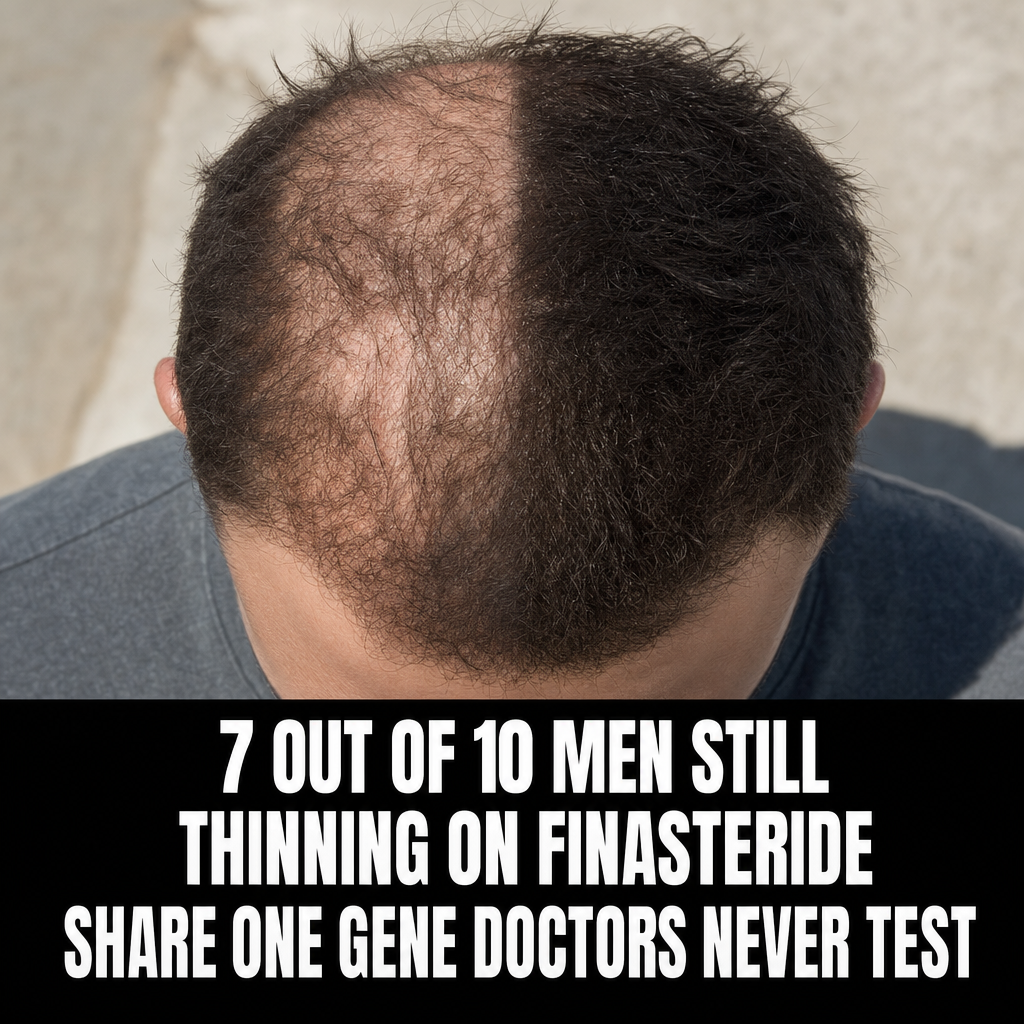
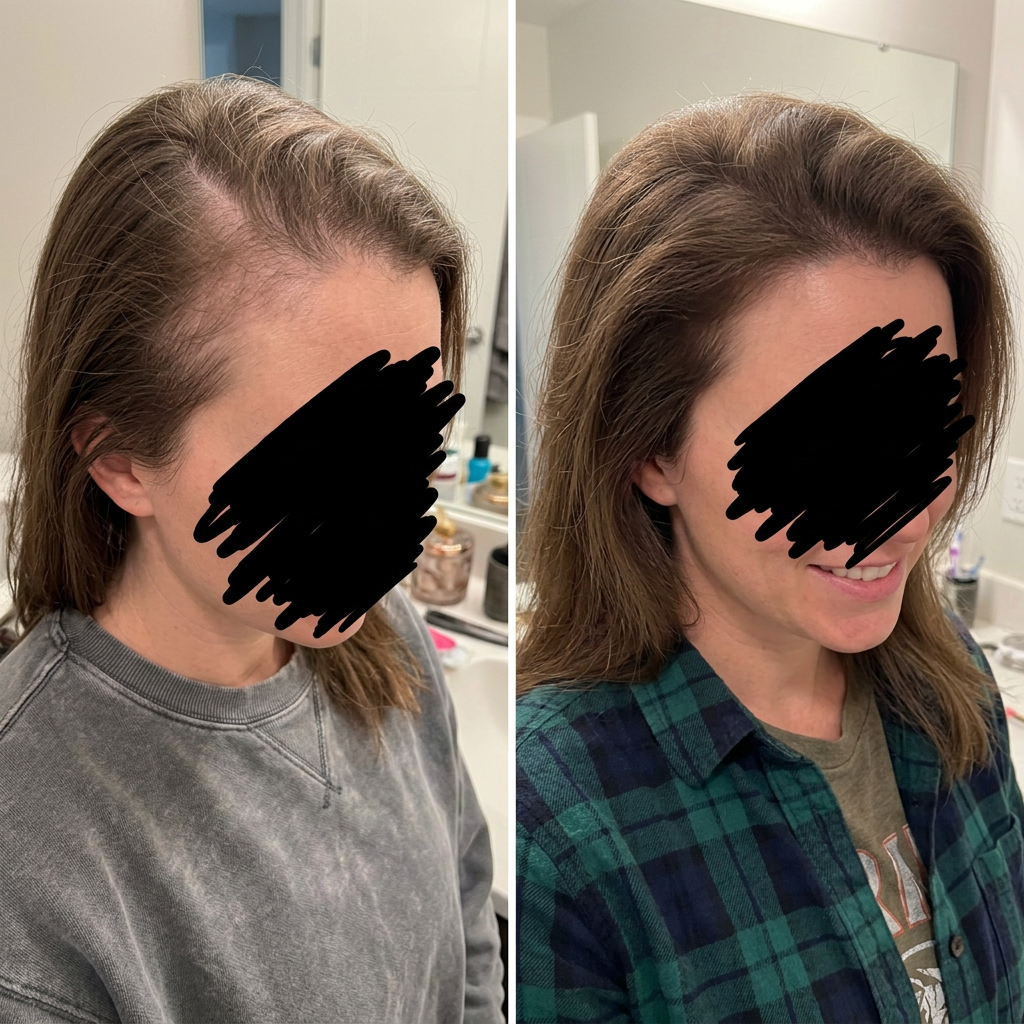
If you've been on finasteride for two years and your crown is still widening, you don't have a discipline problem. You have a targeting problem. Let me speak to you like someone who already knows the basics — because you do. You already know hair loss is androgen-driven. You already know finasteride lowers DHT. You've done the protocol, dialed in sleep and training and diet, maybe added minoxidil, maybe escalated to dutasteride. And you're still thinning. So this isn't a beginner's lecture about "the big three." This is the variable that comes after it. Let's talk about the androgen receptor itself. DHT is only half the equation. The other half is how sensitive your follicle's receptor is to it — its gain, its volume. That sensitivity is set genetically by the CAG-repeat length in your androgen-receptor gene. Short repeats, hot receptor, every microgram of DHT amplified into a strong miniaturization signal. It's why men with identical hormone panels can have wildly different hairlines, and it's a stronger predictor of your outcome than your DHT number is. Here's the implication most men miss: finasteride lowers the ligand, never the receptor's gain. If your receptor is hypersensitive, suppressing DHT by even 60 to 70 percent still leaves residual type-1 and adrenal androgen that a high-gain receptor amplifies just fine. The signal gets quieter; the amplifier compensates. Plateau. You experience it as "the shed slowed but never stopped," and no dose escalation truly resolves it, because dose escalation is still aimed at the ligand. You cannot out-suppress a receptor problem. You have to work distal to it. That's the entire design logic of FST-5 Peptide Complex. It doesn't compete for the receptor or add another blocker to your stack. It operates downstream, at the dermal papilla and the follicle matrix, where five signaling peptides reintroduce the growth instructions the over-amplified androgen signal has been overriding: ✓ Copper Tripeptide-1 (GHK-Cu) — ECM remodeling and structural rebuild of the miniaturized follicle. ✓ Decapeptide-18 — re-initiation of growth-phase signaling in dormant follicles. ✓ Oligopeptide-71 — matrix support for greater shaft caliber. ✓ Acetyl Tetrapeptide-3 — reinforcement of follicular anchoring so regrowth is retained. ✓ Biotinoyl Tripeptide-1 — shaft-strength support for terminal, not vellus, regrowth. Supported by Arginine for nitric-oxide-mediated perfusion of the papilla, and botanical anti-inflammatories to quiet the perifollicular inflammation a high-gain androgen signal recruits. This is the layer your current protocol never addressed. Not a replacement for managing the hormone — a complement that finally targets the part of the pathway suppression can't reach. If you've been treating the hormone perfectly and still losing, this is the missing half. And before you consider sourcing the peptides yourself: ratios and stability are the entire game. These five are formulated to act in sequence at working concentrations; an off concentration or an unstable batch doesn't give you a weaker result, it can neutralize the system. FST-5 stabilizes all five in a single serum, which is the only way they reliably signal. On expectations: this is biology on a follicular timeline. Reduced shedding tends to come first, around weeks four to eight; increased caliber at the crown and hairline builds over the subsequent months; the three-to-six-month mark is the honest evaluation point. Daily consistency is non-negotiable — intermittent use gives intermittent signaling, and follicles don't respond to half a message. Consider, too, the diagnostic value of your own donor rim. The back and sides of your scalp sit in the same circulating DHT as your crown, yet they never miniaturize. That isn't a hormone gradient — it's a receptor-density and receptor-sensitivity gradient. It's living proof, on your own head, that the deciding variable is the receptor's gain, not the ligand's concentration. Which is precisely why a downstream, follicle-level intervention is the rational next move once suppression has done all it can: you're no longer trying to alter a hormone level that was never the operative variable, you're restoring output in the follicles whose receptors happen to amplify it. For context, FST-5 comes from a hair-science brand acquired by a peptide-research team — the reason the formulation is this precise. Set against what you've likely already spent on visits and drugs that plateaued, one serum running the whole peptide system is a straightforward decision. It's backed by a 100-day money-back guarantee. Run it daily for 100 days; if your mirror doesn't change, you don't pay. Stop suppressing harder. Start working where the receptor can't override. 👉 https://richvell.com/pages/fst5
Where the ad sends people
richvell.com
Dermatologist Discovers Peptide Breakthrough That Reactivates Hair Growth Like You're 17 Again
Richvell FST-5 Peptide Complex helps support thicker-looking hair, reduced shedding, and a healthier scalp with advanced peptide-powered hair care.
Shop now: richvell.com(opens in a new tab)