Amazing Dog Transformations
Amazing Dog Transformations Facebook ad: “Four Separate Problems That Were Only Ever One”
Ran for 11 days, from August 22 to September 2, 2026, the last day Crush saw it.
Run by Amazing Dog Transformations on Facebook. Crush is not the advertiser and does not verify its claims. See this ad in Meta's Ad Library(opens in a new tab)
Want an ad like this for your product?
Crush makes new ad images for your product from this ad: your logo, your product photo, your offer.
Trials from $19.95 USD, then $79.95 USD a month. Cancel anytime.
About this ad
- Meta Ad Library ID
- 932500136569884
- Platforms
- Relaunches
- 1
Ad text
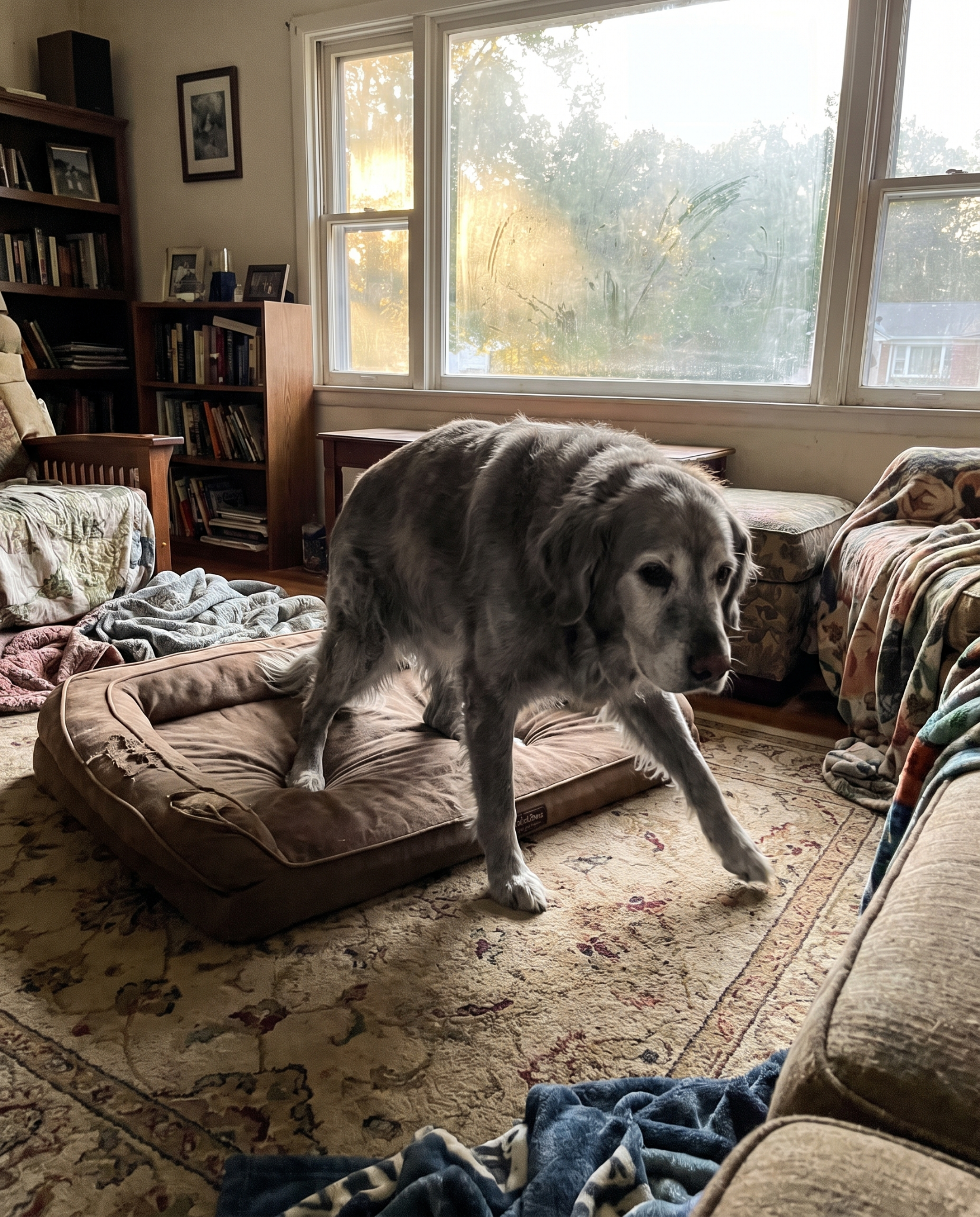
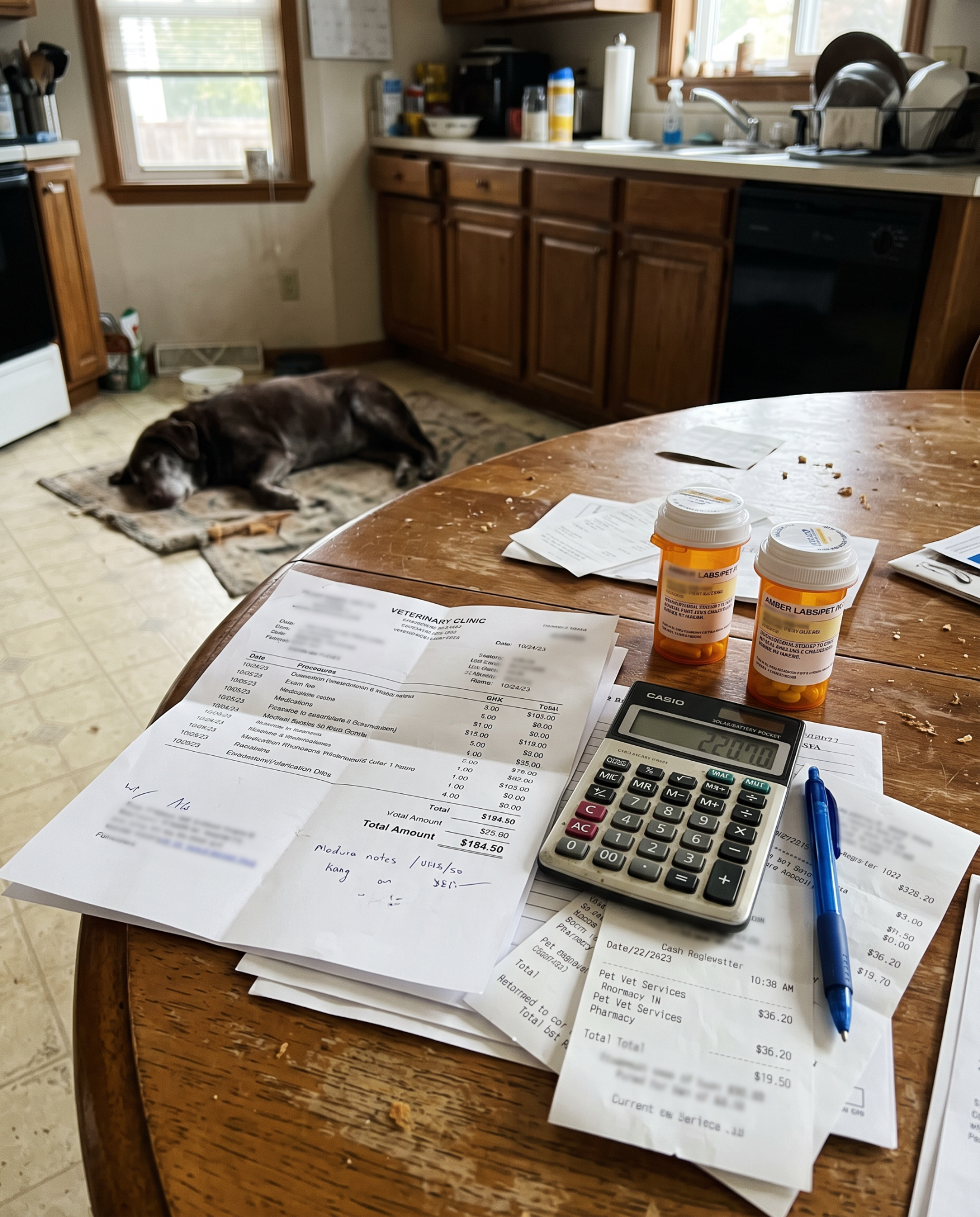
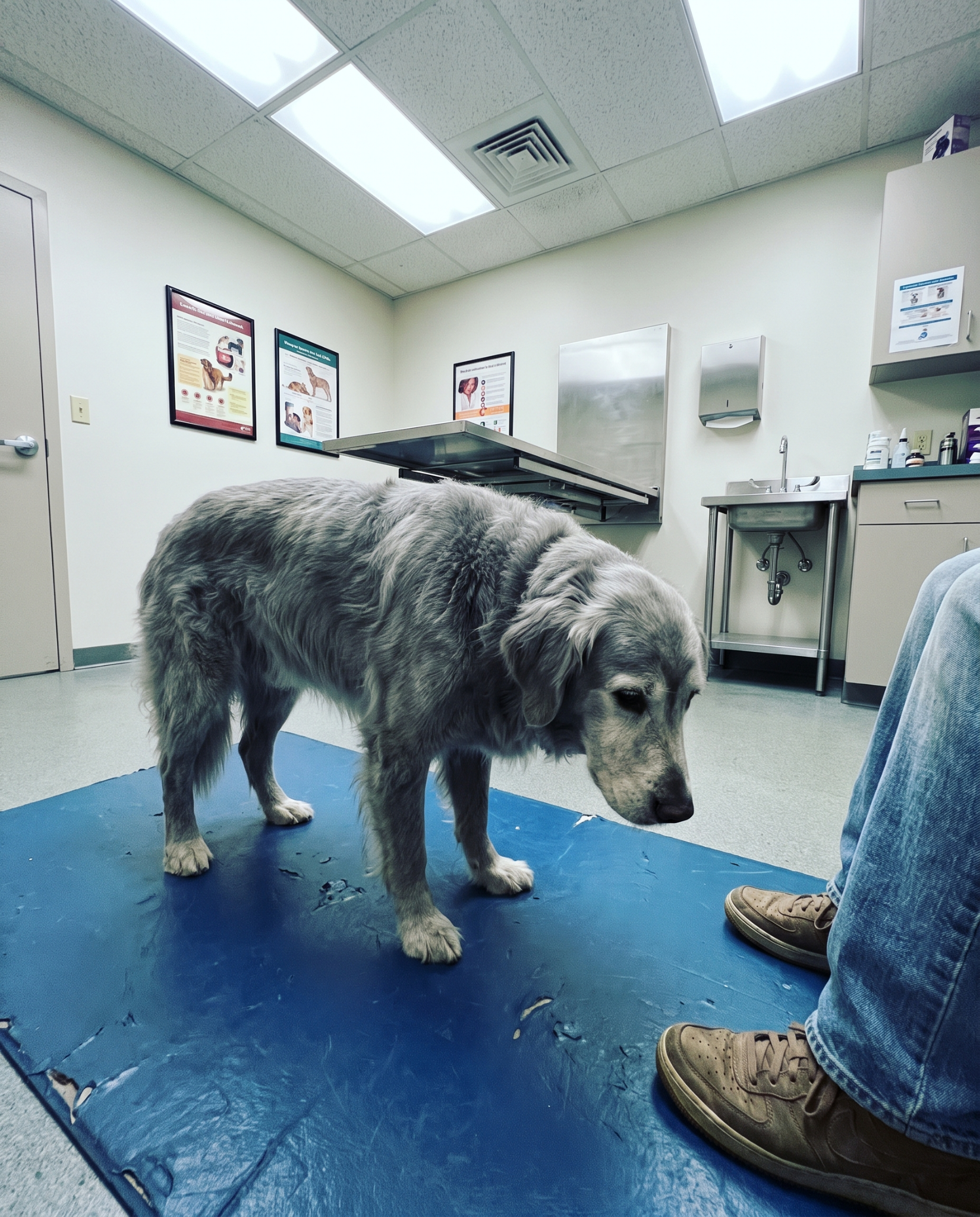
Eleven dogs in fourteen months. Every one of them either euthanized for mobility loss or living permanently confined to one room of the house. Same progression. Same failed interventions. Same outcome. And across those eleven households, more than $71,000 spent trying to stop it. Dr. Priya Raman noticed it first. She pulled Dr. Thomas Beck and me into the back office after hours and spread eleven case files across the desk in a row, oldest to newest. "Look at the timelines. Not the diagnoses. The timelines." Every single dog: stiff for the first ten or fifteen minutes after getting up, then loose again, so the owner assumed it was nothing. Every single dog: shortened the walk on their own — turned for home early, stopped pulling, started sitting down at corners. Every single dog: began avoiding the stairs. First hesitating at the bottom. Then taking them one at a time. Then not at all. Every single dog: lost muscle over the hindquarters while the front end stayed thick, so the topline started to look wrong from behind. Every single dog: was put on a glucosamine and chondroitin chew for months, sometimes years, at the owner's expense. Every single dog: bloodwork came back normal — but the dog kept getting worse anyway. Dr. Beck leaned back and stared at the row of files for a long moment. "What if we've been treating four different problems," he said, "that were only ever one problem?" That question turned into a nine-month case review that changed how all three of us practice. My name is Dr. Alan Reyes, DVM. Along with Dr. Raman and Dr. Beck, I work in a three-clinic general practice group. Between us we have thirty-one years in exam rooms and somewhere north of 24,000 patients. We are not researchers. We are the people who see the dog on the table at nine in the morning and again eighteen months later when the owner is crying in the parking lot. Here is what we found. It started with a dog named Ranger. Ranger was a seven-year-old Lab mix. Correct weight. Clean bloodwork. Premium food. His owner, Michael, was the kind of client every practice wants — he did everything we told him, on time, without complaint. It began the way it always begins. Michael mentioned, almost in passing at a routine visit, that Ranger was "slow getting off the dog bed in the morning." Fine after ten minutes. Nothing at all by lunch. We called it age. Everyone does. Six months later, Michael said Ranger had stopped going upstairs to sleep in the bedroom. Started sleeping on the landing instead. We called that a preference. A cool floor. A dog who likes his space. Four months after that, Ranger stopped jumping into the back of the SUV. Michael bought a ramp. Then Ranger stopped using the ramp, so Michael started lifting him — sixty-eight pounds, twice a day. Here is the thing I want you to see clearly, because it is the entire point of this letter. Every one of those was recorded in Ranger's chart as a separate note. Morning stiffness. Stair reluctance. Reduced jumping. Later: hind-end muscle loss. Four entries. Four different visits. Four separate problems, as far as anybody looking at that chart was concerned. It was never four problems. It was one progression, with one root, moving through predictable stages — and we were treating each stage as if it had arrived out of nowhere. Michael did what every good owner does. He spent. Exams, repeatedly — the national average runs $56 to $129 a visit. Radiographs, two views, $172. A daily anti-inflammatory at roughly $36 a month, which helped, until the day it gave Ranger black stool and we had to stop it. A joint supplement at about $33 a month, glucosamine and chondroitin, the same one on the shelf at every clinic and every big-box pet store in America, for two and a half years without a single month off. Then the knee went. TPLO surgery: $3,525. Per knee. By the time Michael sat in our consult room and asked me whether it was time, he had spent just over $7,400. He said one sentence I have not been able to put down since. "I did everything you told me. Why did none of it work?" That was the night Dr. Raman put the eleven files on the desk. We pulled every chart. We pulled every supplement label the owners had photographed for us. And we did something none of the three of us had ever done systematically in thirty-one years of combined practice: we went and read the actual evidence behind the product we had been recommending by reflex since the day we graduated. The three of us sat in the break room until almost midnight with a printout on the table between us. Dr. Beck spoke first. "How many dogs have we sold this to?" Because here is what the evidence actually says. In 2022, Barbeau-Grégoire and colleagues published a systematic review and meta-analysis in the International Journal of Molecular Sciences — volume 23, issue 18, article 10384. They pooled 57 articles covering 72 separate trials of nutraceuticals for canine joint health, and they graded what worked and what did not. Glucosamine and chondroitin — the two ingredients in nearly every joint chew sold in this country — produced what the authors describe in plain language as a "very marked non-effect." 88.9% of the trials showed no effect at all. 0% demonstrated an effect. Zero. Not a weak effect. Not a modest effect. Not "more research needed." Across the pooled literature, not one trial in that category demonstrated efficacy. The authors' conclusion is not hedged. They write that these products "should no longer be recommended." And this is not one contrarian paper. The Merck Veterinary Manual — the reference text sitting on a shelf in essentially every practice in the United States — independently states that the evidence "did not support the use of" glucosamine and chondroitin. I want to be precise about what that means, because it is worse than it sounds. It does not mean glucosamine is dangerous. It is not. It means that for two and a half years, Michael gave Ranger a chew every single morning, believing he was doing something, while the progression underneath continued completely unaddressed. The supplement was not the problem. The supplement was the reason nobody looked for the problem. That is the misread. That is the whole mechanism of the failure. Stiffness gets called age. Stair avoidance gets called stubbornness. The short walk gets called laziness. Muscle loss over the hips gets called "he's just getting bony back there." Each symptom is filed separately, treated separately, or dismissed separately — while the one thing they all share keeps moving forward on its own schedule. And the default intervention that owners reach for, the one that lets everybody feel like something is being done, has been shown across 72 trials not to change the outcome. Bloodwork will not catch this. Bloodwork was never going to catch this. There is no serum value for "this dog is quietly deciding the stairs aren't worth it anymore." The dog tells you. In stages. In order. And almost nobody reads the stages as one sentence. So we changed what we do. For the next nine months, any dog that came through our three clinics with stiffness, stair reluctance, a shortened walk, or hind-end muscle loss got the same thing: a written progression timeline, built from the owner's own memory, going back as far as they could recall. Dr. Raman built the intake form. Dr. Beck compiled the charts. I made every follow-up call myself. We ran 186 dogs through it. The pattern held in the overwhelming majority of them — and in most of those cases, the first symptom the owner could remember had appeared somewhere between eleven and twenty months before the visit that finally brought them in. Eleven to twenty months of runway. Spent, almost universally, on a chew the pooled literature says does nothing. These were not neglected dogs. These were dogs on premium food, at correct weight, with owners who bought the good supplement, took the walks, and did the vet visits. It did not matter. Doing the wrong thing conscientiously for two years is still two years. Which brought us to the second question, the harder one. If not glucosamine — then what actually has evidence behind it? We went looking specifically for ingredients with published, placebo-controlled human or canine data, and for a format an owner would actually give every day for months without quitting. Not a powder that gets refused. Not a capsule that gets spit into the couch cushions. Not a dropper. A chew the dog treats as a treat. That search is how we ended up with a three-ingredient formula, and eventually with the brand that puts all three in a single soft chew: Zoomies Extra Strength Joint Chews. Three ingredients. That is the whole label. No glucosamine. No chondroitin. And that omission is deliberate, not a cost decision. They work in sequence, which is the part that finally matched what we were seeing in the exam room: Stage 1 — Days 3 to 7. Boswellia serrata, targeting stiffness. This is the stage owners notice first, because morning stiffness is the earliest symptom on the timeline and the most visible when it eases. Stage 2 — Weeks 2 to 4. Natural Eggshell Membrane, supporting cartilage. Stage 3 — Weeks 4 to 6 and beyond. Hyaluronic acid, supporting joint fluid. The eggshell membrane is the one I want to give you the actual numbers on, because I am not going to do to you what was done to Michael. Ruff and colleagues, 2016, published in Veterinary Medicine: Research and Reports, volume 7, pages 113 to 121. Randomized. Double-blind. Placebo-controlled. Fifty-one dogs. At one week — one week — owner-assessed joint pain improved 19.4% versus placebo, with a P value of 0.010. Owner-assessed function improved 20.5%, P = 0.028. At six weeks, veterinarian-assessed pain improved 23.6%, P = 0.012, and owner-assessed quality of life improved 26.8%, P = 0.033. Now here is what that study did not show, and I am telling you this because the industry never will: the veterinarian-assessed mobility and lameness endpoints were not statistically significant. Anyone quoting you a mobility percentage for eggshell membrane is quoting something the data does not support. It is one trial in fifty-one dogs. It is not proof of anything for your individual dog. It is simply the closest thing to real evidence that exists in this category — which is more than the alternative can say, because the alternative has 72 trials and a zero. That is the honest version. Compare it to what is printed on the bag you are currently buying. I called Michael eleven weeks after Ranger. I told him what we had found, and that it was too late for his dog, and that I was sorry. He came in anyway. He sat and read the meta-analysis abstract twice. "So the chew I gave him every morning for two and a half years," he said. I did not have anything to say to that. There is nothing to say to that. Since then we have run the timeline intake on every qualifying dog, and put a large number of them on the three-stage protocol. I am going to give you specific cases rather than an aggregate number, because aggregate numbers in this industry are how people get lied to. Diane's dog, Cooper, a nine-year-old Golden. Same progression Ranger had, roughly fourteen months in — stiff mornings, stopped using the stairs, hindquarters visibly narrowing. Week 1: still slow getting up, but she noticed he was up on the first try instead of the second. Week 2: took the porch steps without stopping at the bottom. Week 4: back to full-length walks, no sitting down at corners. Week 7: she sent me a photo of Cooper asleep on the bedroom floor upstairs. First time in nine months. Her message: "Dr. Reyes, he came up on his own. Nobody carried him. I've been sleeping on the couch downstairs since November so he wouldn't be alone." Ray's dog, Tuck, a six-year-old Boxer mix, caught early — first symptom only about five months prior: "He'd started sitting down halfway through the walk. My old vet said watch his weight. He was already at weight. Three weeks in he's back to dragging me down the block. I keep waiting for it to stop working." Angela's dog, Bindi, an eleven-year-old Cattle Dog: "I was told this is just what old dogs do. Maybe some of it is. But she's playing with the younger one again in the evenings, and she hadn't done that since the spring." These are not miracles and I am not going to present them as such. This is what it looks like when a progression finally gets addressed as one progression instead of four unrelated complaints — using ingredients that have published placebo-controlled data behind them instead of ingredients that have 72 trials of nothing. Here is what we want you to do. Sit down tonight and build the timeline. Not the diagnosis. The timeline. Go back two years in your memory and write down the dates as close as you can get them: → When did the morning stiffness start? The first ten minutes after getting up. → When did the walks get shorter — and who shortened them, you or the dog? → When did the stairs change? Hesitating, then one at a time, then not at all. → When did the jumping stop? Couch, bed, car. → When did the topline change — muscle thinning over the hips while the shoulders stayed thick? → When did the shake-off after standing start, or the sitting down mid-walk? → When did the sleeping spot move to the ground floor? If three or more of those have dates, you are not looking at three or more problems. You are looking at one progression, and you can see roughly how long it has been running. Then ask your veterinarian this exact question at your next visit: "Given the 2022 meta-analysis, do you still recommend glucosamine and chondroitin?" Some will have a thoughtful answer. Many will not have read it. That is not a failure of character — it is 72 trials buried in a journal most practitioners do not have time to open. It took the three of us thirty-one years and eleven dead dogs to go look. You do not need to wait for that appointment to stop buying something with a zero behind it. A soft chew is not a drug. It is not a substitute for veterinary care, and if your dog is in acute pain, painful to touch, or non-weight-bearing on a limb, that is an appointment, not a supplement. Get seen. But the daily maintenance choice — the thing you hand your dog every morning for the next three years — that one is yours, and you can make a better one starting tomorrow. Zoomies Extra Strength Joint Chews. Three ingredients: Boswellia serrata, Natural Eggshell Membrane, hyaluronic acid. No glucosamine, no chondroitin, no seed oils, no artificial fillers, no cheap ingredients. Made and sourced in the United States. Relief in as little as 7 days is the claim that has the best evidence behind it, and it comes from the one-week data in Ruff 2016. Every order carries a 90-day money-back guarantee. Ninety days is longer than the entire six-week window of that trial, which means you can run the full three-stage sequence, judge it against your own written timeline, and still get your money back if nothing on that list moves. Worst case, you get your money back. Best case, your dog goes back up the stairs. Click LEARN MORE for up to 40% off. P.S. The eleven to twenty months is the part that keeps me up. That is the average gap we found between the first symptom an owner could remember and the visit that finally brought them in. It is not a countdown and I am not going to pretend it is one — plenty of dogs hold steady for years. But it is runway, and it is the only runway anybody gets. Michael had roughly two years of it with Ranger and spent all of it on a chew that 72 pooled trials say does nothing. He did not do anything wrong. He did exactly what he was told, by people like me. That is the part I cannot fix retroactively. I can only tell the next person before they spend theirs. P.P.S. On the alternatives, briefly and accurately, because you will be offered them. Anti-inflammatories work, and the FDA's own owner guidance lists what to watch for: vomiting, diarrhea, bloody or black stool, decreased appetite, decreased activity, and yellowing of the whites of the eyes or gums, with most liver injury occurring within the first three weeks of starting. On bedinvetmab, the FDA issued a Dear Veterinarian Letter on 16 December 2024 regarding adverse events reported in treated dogs, and received 12,234 adverse event reports between 5 May 2023 and 31 March 2025. The FDA states plainly that there is no certainty the reported drug caused those events and that the numbers should not be used to calculate incidence rates — so I am not telling you it did, and neither is the FDA. I am telling you the letter exists and the reports exist, and that both of those are things your veterinarian should be discussing with you rather than things you find out from an ad. Surgery costs $3,525 a knee. A daily chew costs less than the radiographs you will take on the way there. P.P.P.S. Nobody pays the three of us to say this. We looked at the evidence for the category we had been recommending on autopilot for three decades, found a zero, and went looking for something that was not a zero. The narrator, the practitioners, the clinic and the patients described above are composite and illustrative — assembled from a pattern we see constantly rather than from any single chart. The studies, the statistics, the regulatory filings and the costs are real, cited by name and volume, and you can go read every one of them yourself. That is the standard this category should have been held to the whole time. Your dog deserves that chance.
Where the ad sends people
nancygriffithblog.com
Four Separate Problems That Were Only Ever One
“I trusted my vet for 4 years. We did Carprofen, then Adequan injections twice a week, then prednisone for the bad days. His pain was 'managed' the whole time. Then one morning he couldn't get up. The drugs never fixed anything — they just hid it while everything else fell apart.” — Robert T...
See details: usa.zoomiespethealth.com(opens in a new tab)