
Inactive· since Jun 11, 2026
- 11
- days it ran
- 0
- relaunches
Ad copy
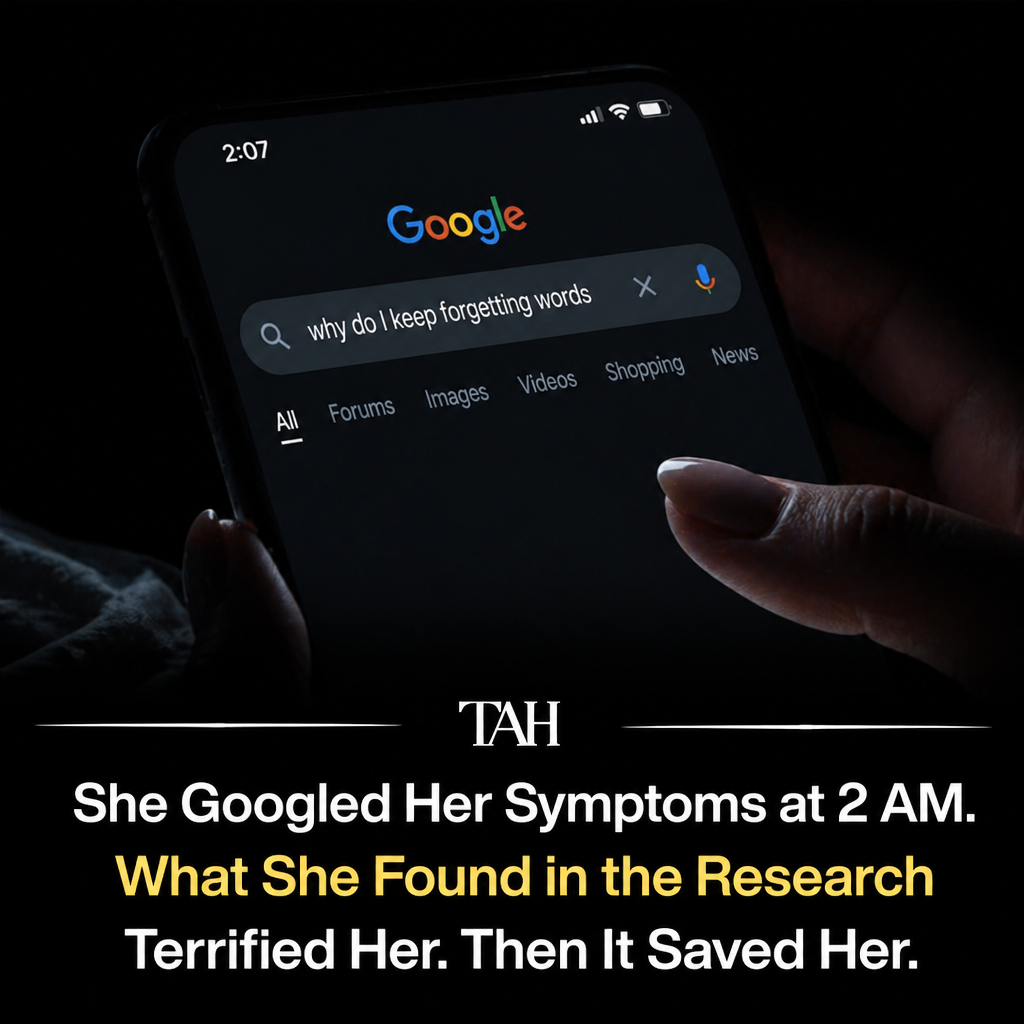
I Googled "why do I keep forgetting words" at 2.14am on a Wednesday. I'd been lying awake for an hour, replaying what had happened at dinner. We were at my sister's place. Eight of us around the table. Someone asked me about the renovation — a topic I've been living and breathing for five months. I opened my mouth to answer and the word "architrave" disappeared. Just gone. I could see the thing in my mind. I could describe it. But the word itself had vanished. I said "the… thing… the trim bit around the door" and waved my hand vaguely. Everyone laughed. I laughed too. But it wasn't funny. Because it wasn't the first time. Two weeks before that, I'd forgotten my neighbour's name. I've lived next door to her for six years. A week before that, I read an entire article about interest rate changes, then my husband asked me what it said and I couldn't summarise a single point. I'd been losing words mid-sentence at work — pausing, circling, substituting — for months. I'd become an expert at covering it up. "You know what I mean" and "what's the word" had become my most-used phrases. I told myself it was stress. Hormones. Screen time. Not enough sleep. Too much coffee. Not enough coffee. But lying in bed that night, I stopped making excuses and typed it into Google. The first few results were what I expected. "Word-finding difficulty is normal as we age." "Stress and fatigue can affect memory." "Try crosswords and brain training apps." Then I clicked on a research article. And my stomach dropped. Researchers at Johns Hopkins had tracked over 2,000 people for more than twenty years using brain imaging. They found that the people who eventually developed serious cognitive decline showed detectable brain changes fifteen to twenty years before any clinical symptoms appeared. Fifteen to twenty years. And those early changes looked exactly like what I'd been experiencing. Word-finding difficulty. Name retrieval problems. Slower processing. Trouble retaining information from reading. The study called them "subclinical indicators." I'd been calling them "senior moments" and laughing them off. I kept reading. A study in the Journal of Alzheimer's Disease found that people with early cognitive symptoms — the exact symptoms I'd been having — had 30% lower levels of acetylcholine, the neurotransmitter responsible for memory formation and word retrieval. Research from MIT showed that synaptic density — the connections between brain cells — begins declining in your thirties and accelerates after fifty. By the time you notice symptoms, you've already lost thousands of neural connections. Another study found that people with low DHA levels — the structural fat that makes up 40% of your brain's grey matter — experienced cognitive aging 2.5 years faster than those with optimal levels. I was sitting up in bed now. Wide awake. I kept reading for another hour. Study after study pointed to the same thing: What I'd been dismissing as "normal" was actually the visible surface of seven interconnected nutritional deficiencies silently degrading my brain. Not one deficiency. Seven. Each one feeding the others. My brain cells' mitochondria weren't producing enough energy — that's why the fog took hours to clear every morning. My acetylcholine was depleted — that's why words and names were disappearing mid-sentence. My brain's structural membranes were degrading from insufficient DHA — that's why processing felt slower and reading comprehension had dropped. My dopamine system was faltering — that's why focus had become a battle. Neuroinflammation was damaging healthy tissue. My GABA system was overwhelmed. And my synaptic connections were degrading faster than my brain could rebuild them. Seven systems. All failing. All making each other worse. I put my phone down at 3.20am and stared at the ceiling. I was terrified. Then I picked it back up and kept searching. Because I needed to know: was this reversible? The answer was yes. With a critical condition. A clinical trial published in the Journal of Alzheimer's Disease had followed people with early cognitive changes — people exactly like me — who addressed all seven nutritional deficiencies simultaneously. At clinically effective doses. Not the token amounts in multivitamins. Within three to six months, participants showed measurable improvements in memory, processing speed, and overall cognitive function. Brain scans showed reduced inflammation and improved neural connectivity. But it only worked during the early window. Before significant neuronal death. Before the damage became permanent. Once neurons die, they don't come back. Once synaptic connections are severed, they're nearly impossible to rebuild. I was in the window. Right now. The symptoms I'd been laughing off for the past year were my brain waving a flag. The next morning I started researching what "addressing all seven deficiencies at clinically effective doses" actually looked like in practice. Most brain supplements I found were useless. Five or six ingredients at a fraction of the researched dose. The studies used Creatine at 3000mg for brain energy — supplements contained 500mg or skipped it entirely. The studies used Alpha-GPC at 300mg for acetylcholine — supplements used generic choline at 50mg that barely crosses the blood-brain barrier. Lion's Mane at 800mg for nerve growth factor — supplements used 250mg of a low-quality extract. No wonder the magnesium and fish oil I'd been taking for two years had done nothing. I was addressing one deficiency out of seven, at a dose that was a fraction of what the research actually showed worked. I found an Australian company that had built a formula around the research. Fifteen compounds. Every single one at the clinical dose. Not close to it — the exact amounts tested in the studies. Creatine, Alpha-GPC, Lion's Mane, DHA, Rhodiola, L-Theanine, Bacopa, Phosphatidylserine, Ginkgo, Cordyceps, and five more. I ordered it before I'd finished my first coffee that morning. Week one was subtle. The morning fog lifted about thirty minutes faster. I noticed it on the Thursday — I was working by 9.15am instead of circling my desk until 10.30. Week two, the word-finding changed. Not perfect — but where I used to blank three or four times a day, it dropped to once or twice. And the words came back faster. The gap between "lost it" and "found it" shrank from ten seconds to two. Week three, I read an entire report on a Saturday afternoon and could summarise it clearly to my husband over dinner. He looked at me strangely. "That's the most detailed you've been about anything in months." Week four, I was at my sister's place again. Same table. Same people. Someone asked me about the renovation and I said "architrave" without hesitating. Without thinking about it. It was just there. I almost cried at the dinner table. It's been three months. I'm not going to pretend my brain is twenty-five again. But the decline has stopped. The trajectory has reversed. My memory is tighter than it's been in two years. The fog is mostly gone. I find words when I need them. And the terror that kept me awake at 2am? It's been replaced by something I didn't expect: agency. I'm not just watching this happen anymore. I'm doing something about it. I'm writing this because I know exactly who's reading this right now. You're the woman who Googled "why do I keep forgetting things" three days ago. Or "brain fog causes." Or "is this normal at 42." You read a few articles, felt a spike of fear, then closed the tab and told yourself it was probably fine. It might not be fine. But it is fixable. If you're in the early window — and if you're still at the stage of word-finding gaps and brain fog, you almost certainly are — the research says these deficiencies are reversible. All seven of them. At proper clinical doses. Starting now. Don't do what I almost did. Don't laugh it off for another year while the window gets smaller. 👉 Read the full breakdown of all 7 brain-destroying deficiencies — and the 15 clinically dosed compounds proven to address them — at the link below.
Forgetting Words Mid-Sentence? Read This Before You Google It
After Analysing Over 300 Clinical Studies and Working with Thousands of People Struggling with Brain Fog and Memory Loss... We discovered something that changes everything about how we think about cognitive decline. The problem isn't ONE thing. It's not "just stress." It's not "normal aging." It's n...
LEARN MORELike this ad? Make it yours.
Crush rebuilds this exact creative around your product — your brand, your colors, your offer — in about a minute.