
Inactive· since Apr 28, 2026
- 77
- days it ran
- 0
- relaunches
Ad copy
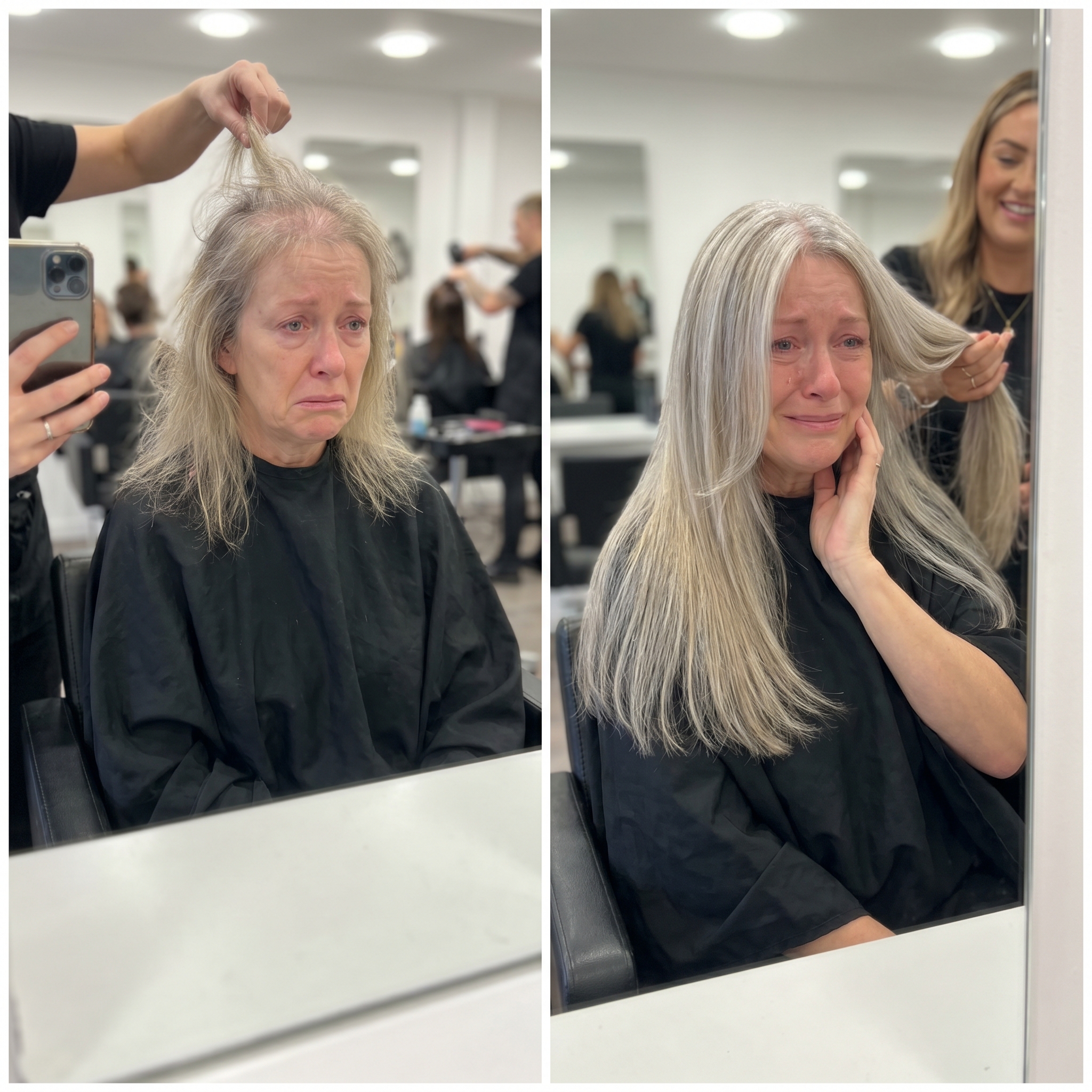
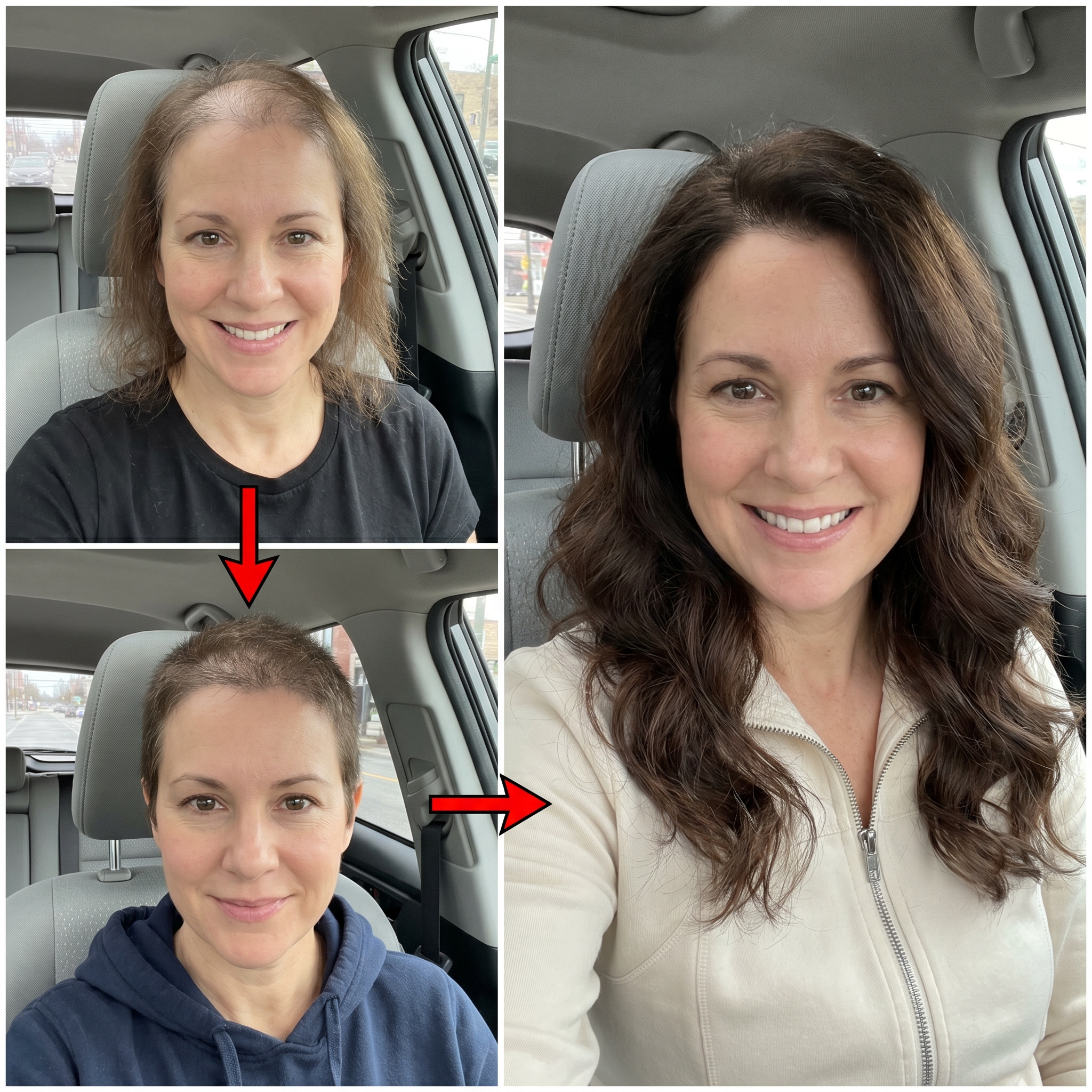
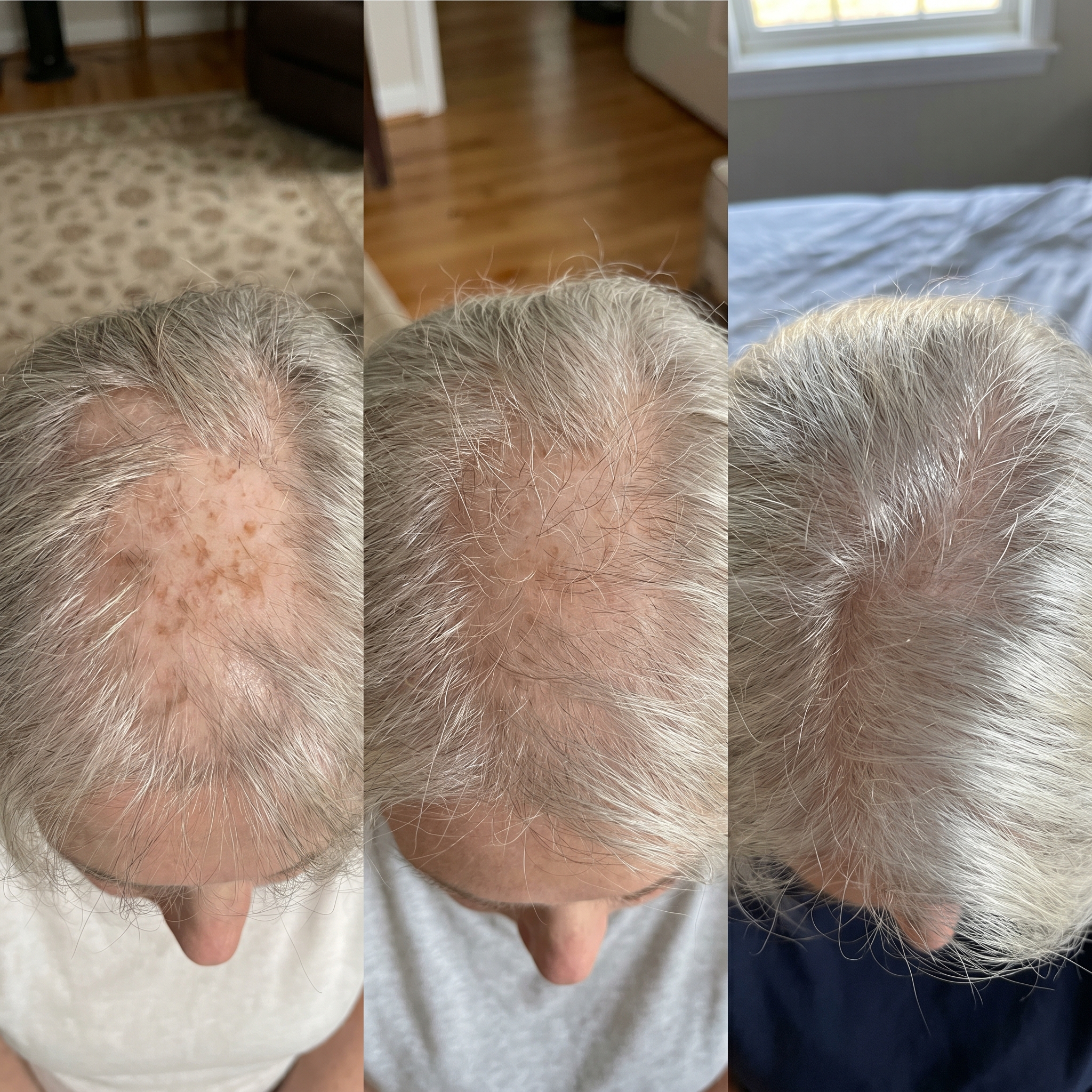
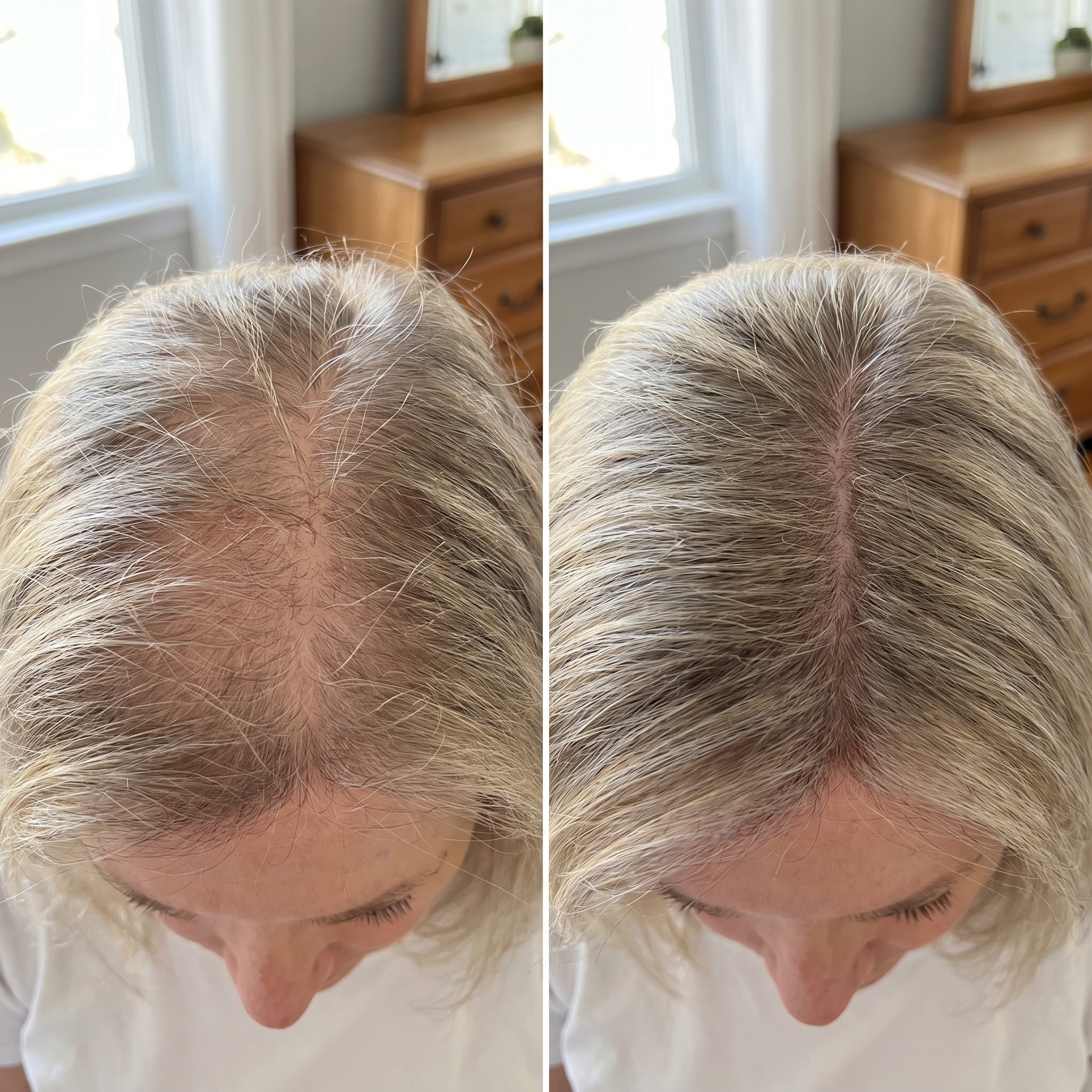
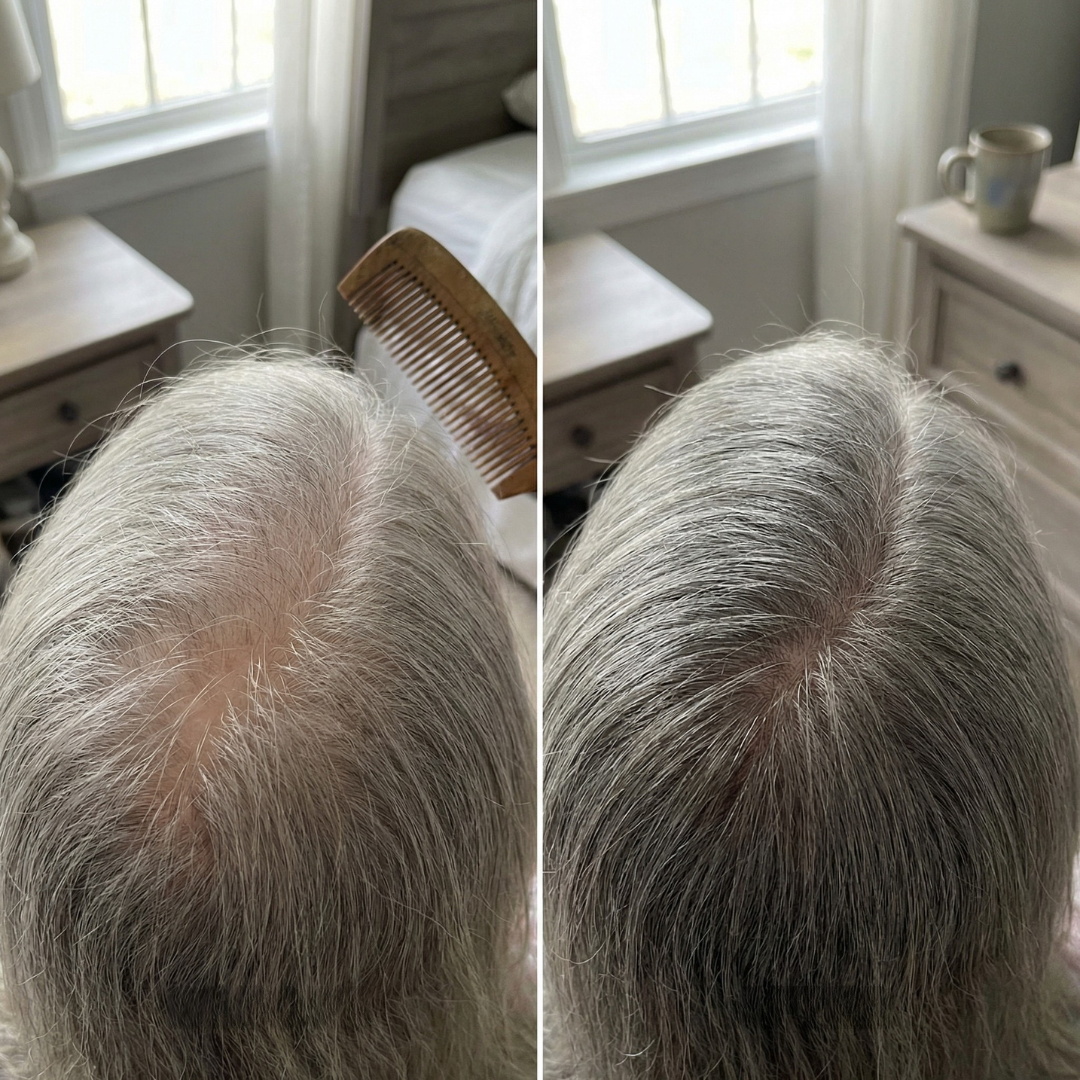
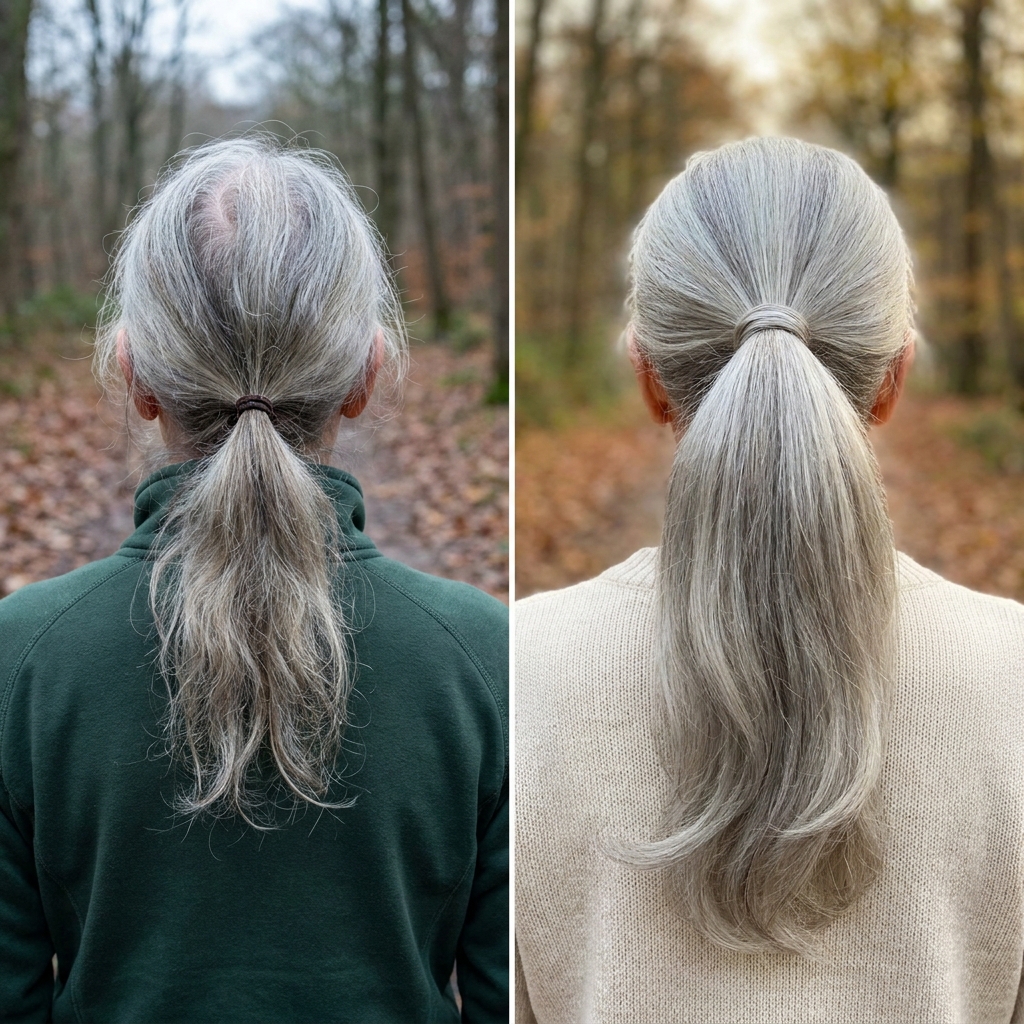
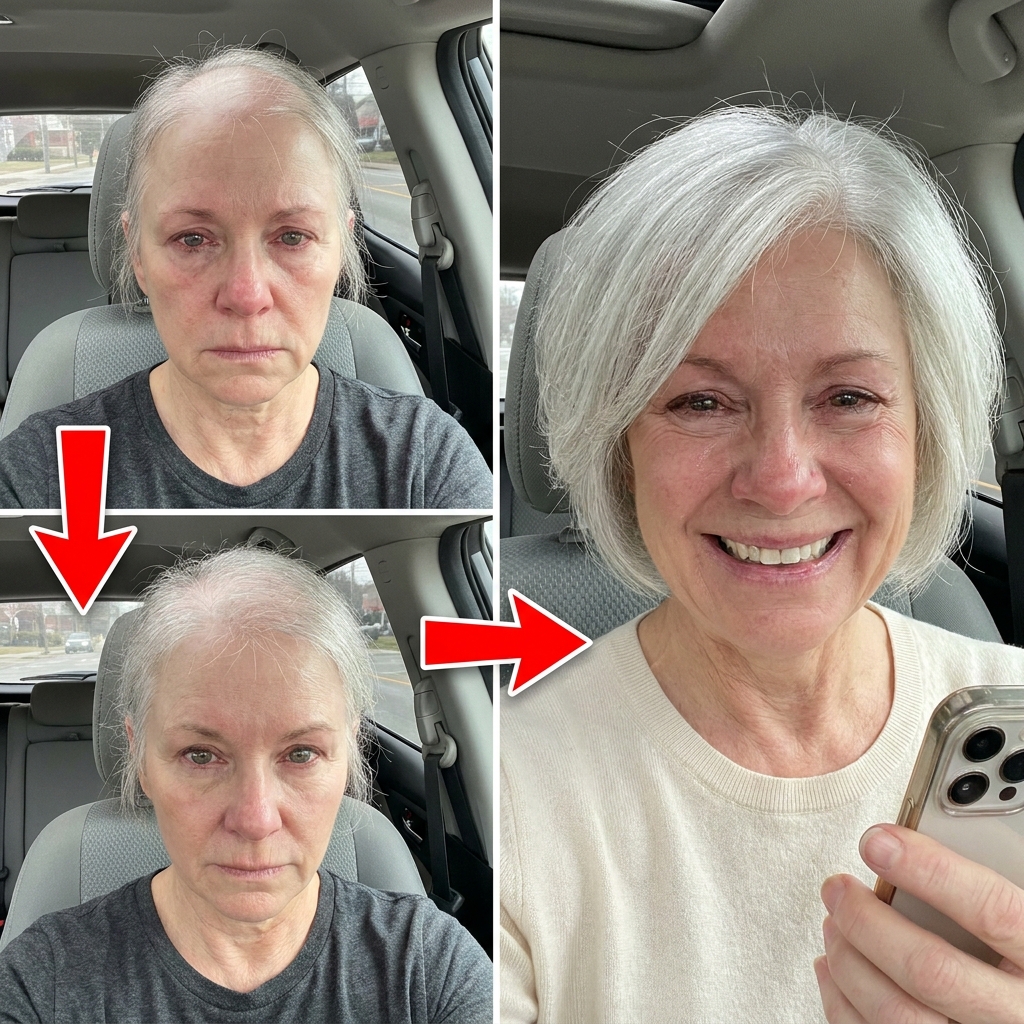
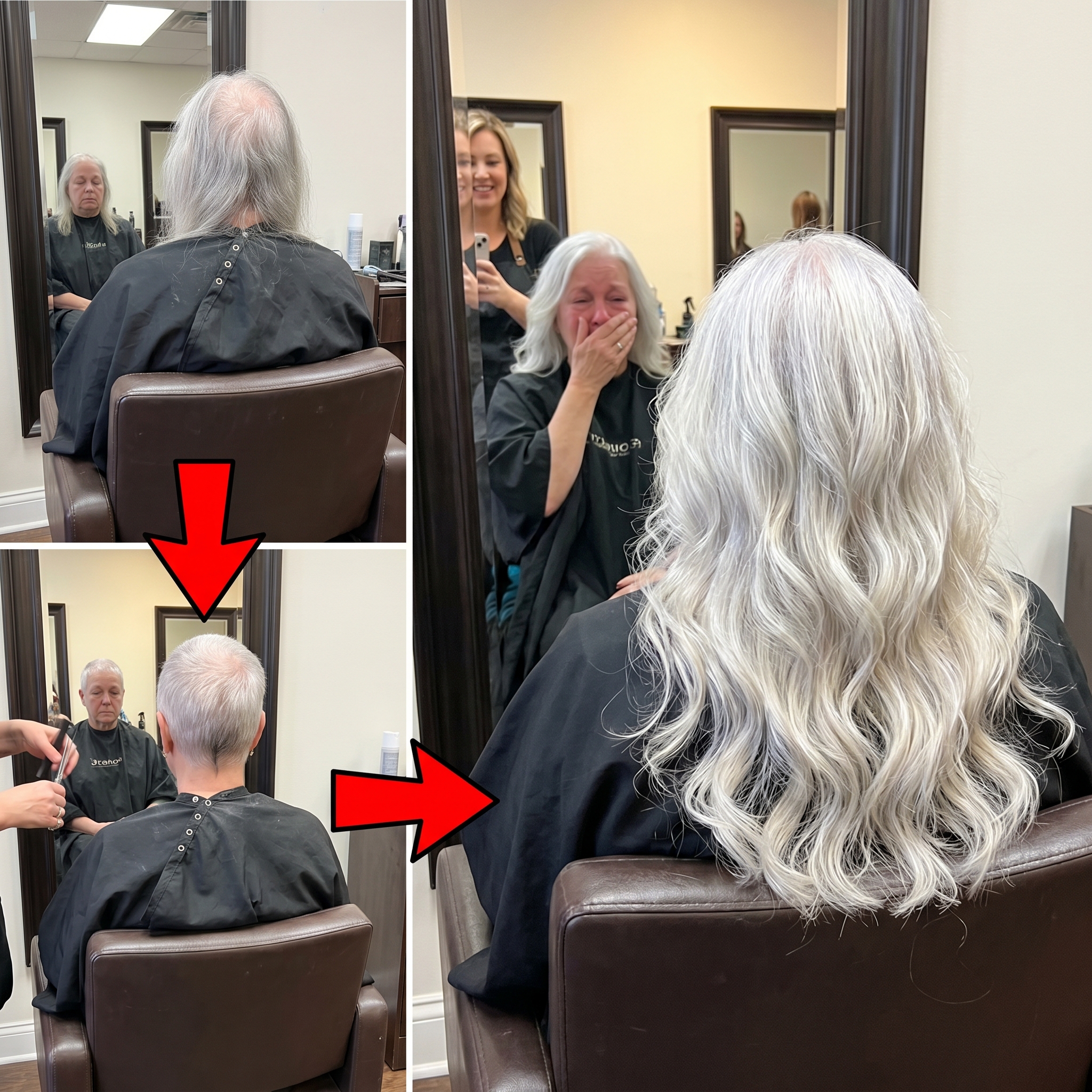
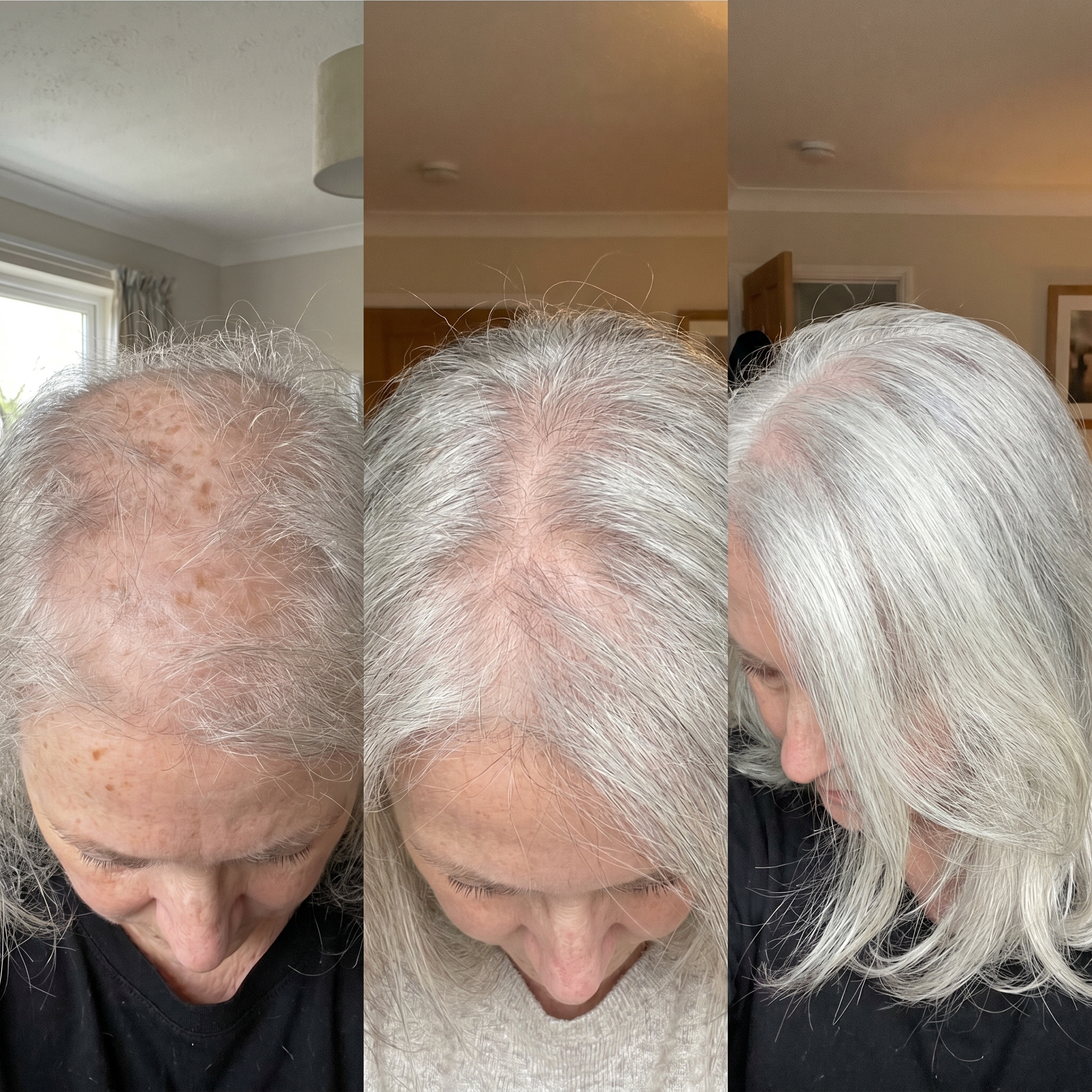
I am a librarian. I am 52. I work in a university library in Cambridge, and I am, by training and by temperament, the kind of person who wants to read the original source. I spent twenty years before this job in academic publishing. I know what a study looks like when it has been carefully done, and I know what a press release looks like when it has been spun. When I started losing hair at 49, in the slow way that does not feel like anything is happening on any individual day, I did the things most women do. I went to the GP. I had bloods done. I was told my thyroid was fine, my iron was within range, my B12 was normal. I was offered minoxidil. I was offered a referral to a private dermatologist who in turn offered me HRT. None of these conversations contained any actual mechanistic explanation of what was happening at my scalp. None of them cited a paper I could read. I asked, twice, and was told that the field was complex and that the broad consensus was what they were giving me. I tried what was offered. I tried what the internet recommended. I will spare you the full list, because by now you have probably read it on a dozen of these articles. Topical minoxidil for ten months, partial then plateau. HRT, transformative for everything except the hair. Biotin for half a year until my GP asked me to stop. Nutrafol for the recommended six. Wellbel for three. A clinic visit at £295. A laser cap I had used three nights a week for nine months. Collagen powder, rosemary oil, spearmint tea. The combined cost across two years was just under £700, and the part on my crown was wider than when I had started. What changed for me was reading the actual 2011 paper. I am going to walk through what it says, in plain English, because most of the writing about this paper online either oversimplifies it or treats it as a kind of magic bullet that the medical establishment has been hiding. It is neither. It is a specific, careful piece of dermatological work, the implications of which have been extended every year since by the international dermatology literature. Here is the substance. Hair grows in a cycle. The cycle has three phases. The first is anagen, the growth phase. In a healthy scalp, anagen lasts anywhere from two to six years. During anagen, the follicle is actively producing a strand of hair. The second phase is catagen, a brief transition that lasts a few weeks, during which the follicle stops producing and begins the process of releasing the hair shaft. The third is telogen, the resting phase, during which the follicle holds a completed hair before shedding it and beginning a new cycle. A normal scalp has the vast majority of its follicles — eighty to ninety per cent — in anagen at any given time. In androgenetic alopecia — including menopausal androgenetic alopecia — that ratio shifts. More follicles spend more time in telogen. The anagen phase, in affected follicles, becomes progressively shorter. The relative balance of the cycle, on the affected scalp, tilts away from production and toward dormancy. The mechanism is DHT — dihydrotestosterone — binding to androgen receptors at the follicle. Five-alpha-reductase, an enzyme present at the follicle, converts testosterone into DHT locally. In a follicle under sustained DHT activity, anagen shortens. Where it might have lasted four years, it now lasts eighteen months, then twelve, then six. The hair the follicle produces in those compressed cycles becomes progressively finer and shorter — what dermatology calls miniaturisation. From the outside, after enough cycles, the follicle appears to have stopped functioning. The 2011 paper, and the body of work that has extended it, makes one specific point that is, I would argue, the most important sentence in the whole field for women in our position. The follicle has not died. The stem cells are still there. The blood supply is still intact. The structure is still alive. What has happened is that the follicle has been pushed, by sustained local DHT activity, into extended dormancy. From the outside this looks like loss. Functionally, it is silencing. The implication, which the paper draws out and which subsequent work has extended, is this: if you interrupt the local DHT activity at the follicle, the anagen phase extends. The dormant follicle resumes producing hair. Over months — not weeks; the hair cycle is slow — the hair the follicle produces becomes longer, thicker, and more normal. This is the part that is not said often enough in consultation rooms. The paper goes on to discuss specific compounds that interrupt local DHT activity at the follicle when applied topically to the scalp. The most studied of these, by the time you reach the work that has extended the paper through the last decade, is caffeine. Topical caffeine, applied to the scalp, blocks 5-alpha-reductase locally. The DHT being produced at the follicle drops. The anagen phase, freed from the DHT shortening pressure, extends. The follicle that had been silenced begins, again, to produce normal hair. This is, on its own, decades-old dermatology knowledge. It is in textbooks. It is in continuing medical education for dermatologists. It is not, in my experience and the experience of every menopausal woman I have spoken to about this, what is being communicated to women in consultation rooms. I want to be honest about the limits of the paper. It does not promise universal restoration. It does not say that every follicle that has been silenced will wake. It does not say that the timeline will be the same for every woman. It does not say that other factors — ferritin, thyroid, broader hormonal context — are irrelevant. What it does is provide a specific, mechanistic account of what is happening at the follicle in menopausal androgenetic alopecia, and a specific implication for how to interrupt it. The honesty of that account is what made me trust it. It was not selling me anything. When I read this — when I had read enough of it to be sure I was not being sold something — I went looking for a product whose formulation reflected the mechanism the paper described. Mellenza was the first I found. A topical scalp serum. Caffeine to block 5-alpha-reductase at the follicle and extend anagen. Polygonum multiflorum extract, studied for its effects on follicle proliferation. Arginine to support microcirculation around the follicle. Biotin to support the integrity of the new growth. Ginger extract for anagen support. Applied nightly to the crown, the part, and the temples. Not a shampoo. Not a volumiser. Not a supplement. A topical wake-up call for follicles that have been in dormancy too long. The reason this distinction matters — topical, not oral — is that the silencing the paper describes is local. It is happening at the scalp, at the follicle, by way of an enzyme present at the follicle. To interrupt it, the intervention has to be where the silencing is. That is the architecture of the mechanism. A supplement, however well-formulated, is reaching the follicle through systemic circulation; a topical serum is reaching the follicle directly. For this specific mechanism, that distinction is not cosmetic. I started Mellenza in November. I gave it twelve weeks before forming any judgement, because the cycle described in the paper operates over months, and I wanted a result that was real, not placebo. Week 4: less hair in the drain. Week 6: the texture in my hair began to change. Week 9: a comparison photograph showed a measurably narrower part, with short, fine regrowth visible along the edge. Month 4: a colleague who had not seen me for three months said something. Month 5: I stopped hiding under hats in summer. I am writing this because if I were the person I was at 49, looking at thinning I had been told was probably permanent, what I would have wanted is for someone to walk me through what the paper actually said, calmly, without selling me anything I had not already understood. I would have wanted the version of this that does not condescend, and does not promise more than the literature supports, and does not pretend that the answer is simple. The link is below. Read it for yourself.
I read the 2011 paper. Here is what it actually says.
Women's Health · Updated April 2026 Menopause · Hair Routine 7 Mistakes That Make Menopausal Hair Loss Worse, And the 30 Second Ritual 10,000 Women Used to See Regrowth in 8 Weeks Dr. Sarah Mitchell — Women's Health Writer. If you're standing in front of the mirror doing the 3-elastic ponytail t...
LEARN MORELike this ad? Make it yours.
Crush rebuilds this exact creative around your product — your brand, your colors, your offer — in about a minute.