The Blood Pressure Journal
 Facebook ad: “Feel Like Yourself Again”
Running for 11 days since October 22, 2026. Crush last saw it on November 2, 2026.
Run by The Blood Pressure Journal on Facebook. Crush is not the advertiser and does not verify its claims. See this ad in Meta's Ad Library(opens in a new tab)
Make your own version of this ad
Crush makes it, launches it in your own Meta ad account, scales the winners and pauses the losers.
About this ad
- Meta Ad Library ID
- 960377133351174
- Platforms
- Facebook, Instagram, Audience Network and Threads
- Relaunches
- 0
Ad text
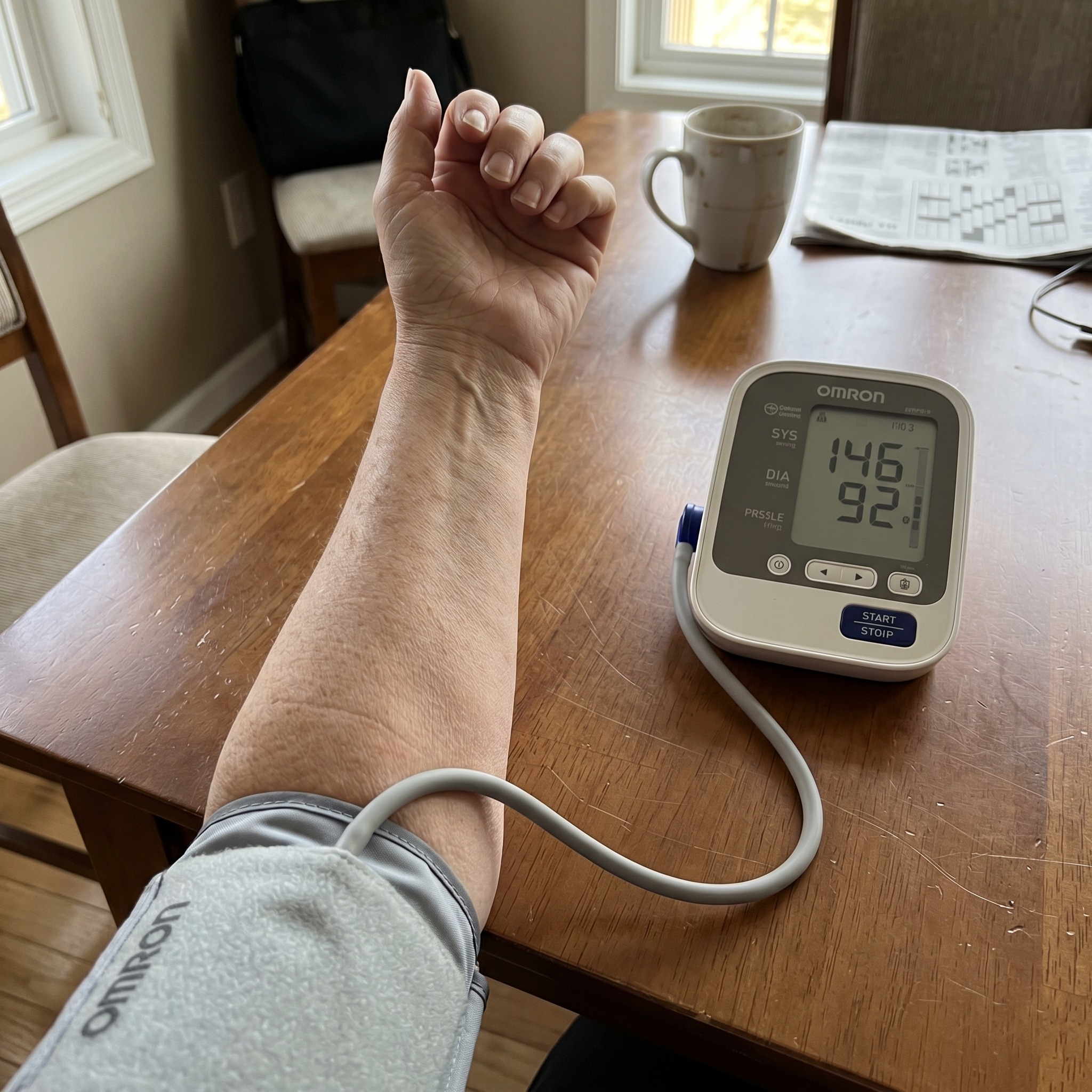
I am an interventional cardiologist. I thread a wire into a patient's artery and inflate a metal cage inside their heart when the blood vessels have narrowed past the point of keeping them alive. I have done this 1,847 times in twenty three years. The patients I put stents in keep telling me the same thing. They felt it coming for years. Nobody explained why it kept getting worse. Last October I found out why. In my own arteries. I am writing this because I owe it. Not to a company. Not to a colleague. To the 1,847 people whose blood vessels I pried open with metal without ever addressing why those vessels closed in the first place. I know what my department chief will say when he reads this. I know what the pharmaceutical representatives who walk through our cath lab every week will say. I have spent twenty three years not saying it. I am done. If your blood pressure keeps climbing no matter what you do, or someone you love is watching their numbers creep up year after year while their doctor adjusts the dose, please read all of it. I know it is long. I won't waste a sentence of your time. My name is Robert Calloway. I am 58 years old. Board certified interventional cardiologist. Twenty three years of practice at a hospital that handles over 600 cardiac catheterizations a year. I am the doctor you see after the blood pressure medication stopped being enough. After the arteries narrowed. After the chest tightness turned into a call to 911. After the damage that was building quietly for years finally showed up on a stress test or an angiogram. I am the one who threads a wire through your wrist or your groin, navigates it into the artery that feeds your heart, inflates a balloon inside the blockage, and leaves a metal cage behind to hold the vessel open. You are awake for the entire procedure. You feel the wire moving inside you. I chose this specialty because of my father. He was 61. Retired welder. High blood pressure for thirteen years. Lisinopril every day. Never missed a dose. His primary care doctor told him at every visit that they were managing it well. Numbers holding. Dose stable. The chart was perfect. On a Saturday morning in March he was carrying a bag of mulch from the truck to the garden and he dropped it. Not because it was heavy. Because his left arm went numb and a band of pressure wrapped around his chest so tight he couldn't breathe. My mother found him sitting on the driveway with his back against the tire, grey in the face, sweating through his shirt. Heart attack. The artery that feeds the front wall of the heart had narrowed to a slit. The blood pressure medication had been forcing his vessels open for thirteen years while the inside of those vessels corroded and closed. They put two stents in that afternoon. He survived. But the heart muscle that was starved of blood during those minutes on the driveway never fully recovered. Managing it well. Thirteen years of that pill. Thirteen years of "managed." The chart was perfect. The man's heart was permanently damaged. He spent the last seven years of his life unable to walk from the living room to the mailbox without stopping to catch his breath. A man who welded steel for thirty years couldn't carry a grocery bag from the car to the kitchen. I was 30 years old. First year of my interventional cardiology fellowship. I stood in the recovery bay of a cath lab I didn't work at, watching a man I couldn't undo the damage for grip the side rail of a hospital bed with a wire access site still bandaged on his wrist, and I made the decision that shaped my entire career. I would become the doctor who opens the arteries. Who threads the wire when the vessels have closed. Who places the stent when nothing else can keep the blood flowing. Because if the words on a chart couldn't protect my father, I would at least be the one who catches people when the arteries finally give out. Twenty three years later I have placed 1,847 stents. And I need to tell you what I saw. When I work inside a patient's arteries, I'm not reading a blood pressure number on a chart. I'm looking at the inside of the vessel itself. The living tissue that has been carrying blood to this person's heart for sixty years. There is something I see in there that doesn't appear on any blood pressure reading. Something your primary care doctor will never see, because your primary care doctor is reading a number on a cuff. I see what's happening inside the vessel the cuff can't reach. A healthy blood vessel is smooth, flexible, and open. Blood flows through it easily. The inner lining, called the endothelium, produces a molecule called nitric oxide. That molecule tells the vessel to relax and stay open. When it's working, blood moves through your body without friction. Your heart doesn't have to push hard. Your pressure stays steady. That's how it worked when you were younger. That's why blood pressure wasn't something you had to think about for the first 40 or 50 years of your life. The system was running on its own. A damaged blood vessel is something else entirely. The inside is rough, stiff, and narrowing. The lining is scarred. The vessel doesn't respond to signals anymore. Blood has to force its way through pipes that are closing from the inside. The heart pushes harder with every beat to compensate. That's the high number on the cuff. It doesn't look like a body that got old. It looks like something corroded from the inside. I used that word with a colleague once, during a case. Early in my career. He was assisting as I navigated the wire through the right coronary artery of a 63 year old man who had been on Lisinopril for nine years. "Look at this vessel," I said. "This artery didn't narrow from use. Something corroded it. The inside of this pipe has been under attack for years while the medication forced it open from the outside." He nodded. We placed the stent. We never talked about it again. But I saw it again. And again. And again. Over twenty three years and 1,847 stents I developed a pattern recognition that nobody trained me to develop, because nobody trained me to study why the vessels corroded. They trained me to open them after they closed. Here is the pattern. The patients on blood pressure medication, the ones whose numbers were "controlled," the ones whose charts said managed year after year, the ones who came to me when the arteries finally narrowed past the point of keeping them alive and I had to thread a wire into their heart, their vessels looked different from the patients whose blood pressure was caught early and addressed at the root. Not better. Different. The early intervention patients had damage in one area. One section of narrowing. One spot where the vessel had started to close. The rest of the vascular system still flexible, still responsive, still open. Something I could work around. The long term medication patients had something else. Damage everywhere. Not one narrowed section, the entire vascular system stiff and corroded. Arteries that should have been flexible were rigid. Vessels that should have been open were closing from multiple directions. The inside of the pipes looked like they had been rusting for years beneath a chart that said "blood pressure well controlled." And the damage always extended further than the stress test had suggested before I got the wire inside. I mentioned this to our department chief once. At a conference. Carefully. As an observation, not a conclusion. He said: "The Lisinopril is doing its job. The patients are comfortable. What you're seeing is the natural progression of the disease." I didn't bring it up again. But I kept a count. Not officially. In my head. How many of my 1,847 stent patients had been on blood pressure medication for years, with charts their doctor called managed, when the arteries finally closed and I had to thread a wire into their heart. I stopped counting at 1,000 because the number made me sick. More than half. And every time, every single time, the referring note said some version of the same sentence: "Blood pressure controlled on current regimen." Blood pressure controlled. In my cath lab. With the wire inside their artery. There was a second pattern too, and it took me longer to see. The patients who ended up with stents weren't just losing their arteries. They were losing everything. The same slow, quiet decline was happening across their whole body. Kidneys weakening. Cognition slipping. Energy draining. Erectile function disappearing. The fatigue, the brain fog, the swollen ankles, the cough that wouldn't stop, the feeling of being a medicated ghost walking through their own life. The systemic decline was never counted as part of the blood pressure problem. Why would it be? The blood pressure was in the numbers. That chapter was separate. I put both patterns in a drawer in my mind and I left them there. Because I didn't know what to do with them. I am an interventional cardiologist. I open arteries when they close. I don't question the medications the guidelines tell me to prescribe, and I don't follow my patients into somebody else's department. That's not my role. Then two years ago my own numbers changed everything. Routine checkup. The kind I tell my patients to never skip. Blood pressure 152 over 94. Sitting in my own exam room. I stared at the cuff reading the way my patients stare at it. The same reading I've used to start the conversation about medication a thousand times. I told myself it was stress. A hard week. White coat syndrome in my own office. I checked it again the next morning at home. Quiet room. No rushing. Sat for five minutes first. 148 over 91. I am an interventional cardiologist. I know exactly what those numbers mean. I have seen them a thousand times in my own patients, years before the arteries narrow and I have to thread a wire into their chest. I have sat across from families and used the words "we need to intervene" for patients whose readings started exactly where mine were sitting. I drove home that evening with the numbers in my head. My wife, Margaret, was reading in the living room. She looked up when I came through the door and the book came down from her lap. "Robert. What happened." Not a question. She could see it on my face. I sat down across from her and I told her. The blood pressure. The numbers that I spend every day telling other people to take seriously. Now sitting in my own chart. I watched her face change. I watched her hands close slowly around the arm of the chair. She didn't say anything for a long time. Then she said: "Your father was 61." I couldn't answer that. That night Margaret went to bed and I sat at the kitchen table and opened my laptop and did something I hadn't done since my fellowship. I searched for the mechanism. Not the treatment guidelines. Not the medication protocols. Not the cardiology textbook I had been teaching out of for twenty three years. The mechanism. What was actually corroding the vessels I had been prying open with metal for two decades. I read until 4 AM. What I found was not hidden. It was sitting in the research journals, published and peer reviewed, available to anyone who looked. And it reframed everything. Your body has always known how to keep your blood pressure steady. Inside your blood vessels, your body produces a molecule called nitric oxide. You don't have to think about it. It's been running in the background since the day you were born. Its only job is to tell your blood vessels to relax and stay open so blood can flow through easily. When that signal is working, blood moves through your body smoothly. Your heart doesn't have to push hard. Your pressure stays steady. That's how it worked when you were younger. That's why blood pressure wasn't something you had to worry about for the first 40 or 50 years of your life. The system was running on its own. But that system is fragile. Stress wears it down. Processed food wears it down. Environmental toxins your grandparents never had to deal with wear it down. Soil that's been farmed flat for decades produces food with a fraction of the nutrients it used to carry. That wears it down too. Add aging on top of all of it, and the system that's supposed to keep your blood pressure steady slowly stops being able to do its job. A little bit at a time. Year after year. Quietly. Without you noticing. And as the system wears down, your body produces more and more of something called oxidative stress. It's like rust forming inside your blood vessels. Tiny, invisible particles called free radicals, created by everything modern life throws at you, building up year after year, scraping against the inside of your vascular system. And what they attack is your nitric oxide. The moment your body produces it, the rust destroys it. Your body is still trying to send the signal. The nitric oxide is still being made. But it's getting wiped out before it can reach your blood vessels. So the message never arrives. Your vessels don't get the instruction to relax. They stay tight. Blood has to force its way through. Your heart pushes harder with every beat. That's high blood pressure. Not a body that got old. A signal that's being destroyed before it can do its job. And every year that goes by, the rust builds up more. More free radicals. Less nitric oxide making it through. Tighter vessels. Higher pressure. The damage compounds. That's why your reading was a little high five years ago, higher last year, and higher again at your last checkup. That's why your dose keeps going up. That's not aging. That's a system being corroded from the inside. I sat at my kitchen table at 4 AM and I was reading my own body being described back to me in the research. The 152 over 94. The headaches that had started showing up in the afternoons. The fatigue that settled on me by 3 PM every day. The same pattern I had seen in 1,847 patients, explained in language that had nothing to do with salt or stress or discipline, and everything to do with what was happening inside the vessels themselves. The rust. The nitric oxide signal was being destroyed. The vessels were corroding from the inside. And nothing I had been prescribing for twenty three years was stopping the corrosion. Then I read the part that made me sick. Blood pressure medication, the pill my father took for thirteen years, the pill more than half my stent patients had been on, doesn't stop the rust. It forces your blood vessels open chemically. It overrides the broken signal with a drug. The number on the cuff goes down. But the rust is still there. Still destroying the nitric oxide your body is trying to make. Still corroding the inside of your vessels. The drug didn't address anything. It forced the pipe open while the inside kept falling apart. That's why you need it forever. That's why the dose goes up. And that's where the cough comes from, the swollen ankles, the fatigue, the brain fog, the feeling that someone turned a dimmer switch down on your personality. Beetroot and nitric oxide supplements give you more nitric oxide. On the surface that sounds smart. If your nitric oxide is being destroyed, just add more. But the rust doesn't care where the nitric oxide came from. It destroys what your body makes naturally, and it destroys what you swallow from a bottle just as fast. You're pouring water into a bucket with a hole in the bottom. That's why the powders and the juices and the capsules don't move your numbers. Garlic, magnesium, fish oil, CoQ10. None of them touch the rust. None of them protect the nitric oxide your body is already making. They work somewhere else in the system. The actual problem keeps running. Every single one of those solutions was like painting the outside of a pipe that was rusting from the inside. The surface looked managed. The corrosion never stopped. I looked at what Margaret kept in the cabinet next to the refrigerator. The beetroot powder she'd been mixing into smoothies. The garlic capsules. The CoQ10. The magnesium. Four bottles. All aimed at the wrong target. Every one of them managing the aftermath of damage that nobody was stopping at the source. That was the pattern out of my drawer. The one I had carried for twenty three years without a name. The reason more than half my patients ended up in my cath lab with a wire in their artery despite years of medication. Nobody was stopping the rust. Everyone was managing the pressure it caused. The next morning was a Saturday. Margaret was making coffee. I hadn't slept. She took one look at me and knew I had been up all night. "Did you find anything?" she said. "I found what's doing it." She set the coffee down. Sat across from me. "The nitric oxide signal inside my blood vessels is being destroyed," I said. "Oxidative stress. Rust forming inside the vessels themselves, attacking the molecule that's supposed to keep them relaxed and open. That's why my pressure is climbing. That's why my father had a heart attack. That's why more than half my patients end up with a stent despite years of medication. The pills forced the vessels open. Nothing ever stopped the rust that was destroying the signal from the inside." She was quiet for a moment. Then she asked the question I had been up all night trying to answer. "Is there anything that stops it?" One thing does. At 3 AM I had found a body of research that had been published in the same journals I subscribe to. Not hidden. Not suppressed. Sitting in plain sight while every supplement company in America sold beetroot and garlic and magnesium and CoQ10 that couldn't reach the actual problem. There's a fruit that's been used in Central Asia for over five thousand years. The pomegranate. Healers called it the fruit of life because the people who ate it daily had steadier energy. Calmer hearts. They didn't fall into the slow decline everyone else seemed to. They lived longer. They aged stronger. The healers didn't know why it worked at the cellular level. They didn't know what nitric oxide was. They didn't have a way to measure what was happening inside the body. They just observed the results, consistently, unmistakably, for thousands of years. Modern science now understands what those healers were seeing. Pomegranate contains a compound called punicalagins. One of the most powerful antioxidants ever discovered. Your body can't make punicalagins on its own. It has to get them from food. And pomegranate is one of the only places on earth where they show up in meaningful amounts. Three times the antioxidant power of red wine. Three times the antioxidant power of green tea. Nothing in the natural world comes close. When the punicalagins are in your system, they go after the rust directly. They neutralize the free radicals before they can reach your nitric oxide. The signal your body has been trying to send for years finally makes it through. The vessels get the message. They relax. Blood flows easily. Your heart stops pushing against tight pipes. Pressure drops. Not because a drug forced it down. Because your body is finally able to do what it's always known how to do. This is what makes pomegranate fundamentally different from everything else. Drugs force your body. They override signals, block enzymes, push your vessels open with chemistry. That's where the side effects come from. The cough, the swollen ankles, the brain fog, the fatigue, the feeling that someone turned a dimmer switch down on your life. You're not being helped to recover. You're being controlled. Pomegranate doesn't force anything. It clears the rust. It protects the signal your body has always been making. Your body isn't being overridden. It's being defended. And in clinical studies on standardized pomegranate extract, researchers found measurable improvements in blood pressure and vascular function across thousands of people. Consistent, steady improvement that builds week after week. I told Margaret all of this sitting at the kitchen table with the four failed bottles between us. She looked at the bottles. Then at me. "Then why doesn't everyone know about this?" I didn't have a good answer. I still don't. Here is what I do know. There is no patent on a fruit. No pharmaceutical company will ever fund the research or the marketing for something they can't own. That is why you've never heard this from your cardiologist. Not because the science is weak. Because the business model doesn't exist. Margaret asked me, standing in the kitchen looking at the four bottles on our table, why something this simple could work when everything complex had failed. I told her the truth. "Everything complex is profitable. Lisinopril is a complex molecule that requires a prescription and a lifetime of refills and dose increases. The supplements in that cabinet are complex formulations that never arrive where the problem is. One fruit, processed correctly, reaches what none of that can. That's not a limitation. That's the whole thing." The obvious thought arrives, the same one you'd have at your own kitchen table: then just eat some pomegranate. Which is exactly where almost everyone hits the wall. Because the pomegranate at your grocery store is not what those healers were using. It's a faded copy of a faded copy. The pomegranate at your grocery store, and even the "premium" pomegranate at your health store, was grown in industrial soil that's been stripped of nutrients by decades of chemical farming. Sprayed with pesticides. Picked early so it could survive shipping. The health store version costs more and comes in nicer packaging, but it's coming from the same large commercial farms. By the time either one reaches you, the punicalagin content is a fraction of what it was meant to be. The pomegranate juices people reach for? Mostly sugar. Up to 32 grams in a single serving, which is part of what stiffened your arteries in the first place. Whatever punicalagins were in the fruit are largely destroyed during pasteurization and bottling. You're drinking sweetened water with a pomegranate label. The pomegranate powders? Most are made from the same commercially grown fruit, then heat processed at high temperatures to dry them out. Heat destroys punicalagins. By the time the powder hits the shelf, the active compounds are mostly gone. You're paying for red dust. The generic pomegranate supplements on Amazon? Same problem. Cheap commercial fruit. No organic certification. No verification of punicalagin content. Heat processed for cost. Capsules filled with what's essentially flavored filler. The label says pomegranate. What's inside isn't doing anything. I went to the pharmacy and read the pomegranate products on the shelf. "Pomegranate powder." "Pomegranate blend." Heat dried. Not one of them printed how much of the active compound was actually in there. By the time it reaches your kitchen, you are swallowing a memory of what you needed. There is only one form that arrives intact. A standardized extract, never heated, with the punicalagins preserved and verified. Not a powder. Not a blend. Not a juice. Extract. I searched for a product that met every requirement. One did. Auniva's Pomegranate. Organic. Standardized extract, not raw powder. No fillers. No heat processing, so the punicalagins stay intact instead of being destroyed before the bottle is sealed. Third party tested for purity and potency. Made in the USA. Small batch production. Margaret wrote the name on the back of a napkin. Two capsules a day. That's the whole protocol. I ordered it that night. 90 day money back guarantee. I took the first two capsules standing at my kitchen counter with a glass of water. I need to be precise about this because I am a physician and I won't overstate anything. What I noticed in the first few days was not dramatic. This isn't a stimulant. There's no jolt. Corroded vessels don't start recovering overnight. What I noticed was the headaches. End of week one. The afternoon headaches that had been showing up at 3 PM every day, the dull pressure behind my eyes that I had started to accept as part of my life, stopped showing up. Not once that week, three times. By day six, four afternoons out of seven I made it to evening without the headache. I hadn't done that in months. Week two. The fatigue started to lift. Not dramatically. But the sandbag feeling that had been settling on me by mid afternoon, the one where I felt like I was moving through wet concrete for the last three hours of every day, it was lighter. Margaret noticed before I said anything. She saw me come through the door after work and go straight to the kitchen to start dinner instead of sitting on the couch first. Week three. I checked my blood pressure. I own the same monitor I recommend to my patients. Same routine. Sat for five minutes. Quiet room. Left arm on the table. 138 over 86. I checked it again. 136 over 84. Two weeks earlier it had been 148 over 91. I stared at the numbers the way I have watched my patients stare at their own. With a kind of quiet disbelief. That was the moment I stopped doubting it. Not because I read it in a journal. Because I watched the numbers drop on my own cuff in my own kitchen. Week four. Margaret and I went for a walk after dinner. A loop around the neighborhood we used to do every evening before my numbers started climbing. I had stopped doing it because by the time dinner was over I didn't have anything left. My legs felt heavy. My chest felt tight after the first hill. The walk that used to be the best part of my day became something I avoided. We did the full loop. I made it up the hill without stopping. Without the tightness. Without the heaviness in my legs. Margaret didn't say anything until we were back in the driveway. Then she turned to me and said something I wasn't expecting. "You walked like yourself tonight." I hadn't known I'd stopped. Week six. I went with my colleague Paul to a cardiology conference in San Diego. Two full days on my feet, the kind of schedule that would have flattened me three months earlier. Long days, standing receptions, stairs between sessions, evening dinners that went late. The old me, the me from three months ago, would have been done by noon on the first day. Headache building. Fatigue dragging. Looking for a chair every chance I got. I made it to the dinner on the second night. Standing reception. I was on my feet for ten hours that day. I felt tired. My body felt fine. Paul watched me from across the table and said, "You've got your color back." I hadn't told him about any of it. Week eight. I checked my blood pressure. Same protocol. Same monitor. Same quiet room. 126 over 78. I sat in my kitchen staring at the monitor the way I had stared at the 152 over 94 two months earlier. But the feeling was the opposite. The first time, I felt the floor shift under me. This time I felt it settle. 152 over 94 to 126 over 78. In eight weeks. Without adding medication. Without going on a punishing diet. Without the cough, the swollen ankles, the brain fog, the fatigue, the feeling of being a ghost walking through my own life. The rust was clearing. The nitric oxide was getting through. My vessels were relaxing the way they're supposed to. My body was doing what it had always known how to do. A few weeks after that, I told my father's story to a friend. Another physician, an internist who manages blood pressure patients in primary care. He listened without interrupting. Then he asked me to send him the research on punicalagins and nitric oxide protection. I sent it that evening. He called me three days later. "Robert. I've been prescribing ACE inhibitors for twenty years. Not once in twenty years has anyone in my practice talked about the oxidative stress that's destroying the nitric oxide inside the vessels themselves. We're all forcing the vessels open while the rust keeps corroding them from the inside. The punicalagin mechanism makes more sense than anything I've seen at a conference in a decade." He has been recommending it alongside standard care for thirteen patients in his practice for three months. He called me seven days ago. Ten of them are reporting measurable improvement. Readings dropping. Headaches fading. Three of them are sleeping through the night for the first time in years because the restlessness and the racing heart have quieted. Two have begun the conversation with him about lowering their medication dose rather than raising it. Not one of them has had their readings increase. Last Sunday I spent three hours in the yard. I haven't done that in over a year. I got down on my knees to plant a row of tomatoes and I got back up without grabbing the fence post. My head didn't pound. My chest didn't tighten on the stairs. I didn't feel like I was dragging sandbags by noon. Margaret was on the porch when I came up the walk. She watched me climb the steps without gripping the rail, without the heaviness, without the careful calculation of whether I had enough left in me to make it to the top. "You're back," she said. Not a question. A verdict. You are at a crossroads right now. I know because I stood at the same one. One path: you refill the prescription. Or you keep doing what you're doing, the same low sodium meals, the same walking, the same beetroot powder that doesn't move your numbers, and you let the readings climb at whatever pace they're going to climb. And the rust keeps building. The nitric oxide keeps getting destroyed. The vessels keep corroding. The pressure keeps climbing. The dose goes up. Then a second medication. Then a third. The cough gets worse. The ankles swell. The brain fog thickens. Your personality fades under the weight of pills that force your pipes open while the inside keeps falling apart. And one morning, you're carrying something ordinary, a bag of groceries, a grandchild, a suitcase, and the artery that's been corroding for years finally closes. And you end up on a table I know very well, with a wire threading through your artery and a metal cage being inflated inside your heart while you're awake and feeling every second of it. Or worse. The vessel closes and you don't make it to the table at all. That's one path. I've spent twenty three years standing at the end of it. Another path: you clear the rust. You take the one thing that reaches where no pill and no supplement has ever been aimed, the compound that neutralizes the oxidative stress destroying your nitric oxide so your blood vessels can finally relax the way they're supposed to. You keep your medication. You add this alongside it. And you pay attention. You feel the headaches fade. You feel the fatigue lift. You feel the heaviness in your legs lighten. You check the cuff and the numbers are lower than they were last month. You walk the loop around the neighborhood without stopping. You feel like yourself again. Your spouse sees the person they married come back. I am not telling you to stop your medication. What you decide about your blood pressure pills is between you and your cardiologist. I am telling you that the pills were never aimed at the reason the vessels are corroding. They were aimed at the pressure. And the pressure is not the rust. Auniva's Pomegranate. Organic. Standardized extract. No fillers. No heat processing. Third party tested. Made in the USA. Small batch production. Two capsules every morning. 90 day money back guarantee. If you don't feel a meaningful difference, you get every penny back. No questions asked. Auniva is a small company. They produce in small batches to keep the punicalagins intact, which means they sell out regularly. The next batch can take 4 to 6 weeks. If you have a cardiology appointment coming up in the next 30 to 60 days and you want to give your body a real chance before that visit, check availability now. 👉 https://auniva.co/pom/56 P.S. My father took Lisinopril for thirteen years. His chart said managed at every visit. He had a heart attack in the driveway on a Saturday morning. Two stents. Seven years of barely being able to walk to the mailbox. I built my entire career on the belief that if I could catch people when the arteries closed, I could at least save what was left. I've threaded the wire 1,847 times. More than half were on the same drug, with the same managed chart, when the vessels finally gave out. The rust was corroding them the entire time. Nobody ever stopped it. Do not wait for your chart to run out of things to say. P.P.S. About your medication. Don't stop it. Start Auniva's Pomegranate alongside whatever you're currently taking. After your numbers start improving, and you will notice how you feel before your next cuff reading confirms it, bring the results to your doctor. Let the improvement make the case. That is how you do this correctly. P.P.P.S. If you've tried beetroot, garlic, magnesium, CoQ10, fish oil, DASH diet, and nothing worked, there is a specific reason, and it is not you. Every one of those was either boosting a signal that gets destroyed the moment it's made, or managing something that has nothing to do with the rust. The supplements showed up but they never reached the oxidative stress corroding your vessels from the inside. You didn't fail at supplements. The rust was still building while every bottle in your cabinet was aimed somewhere else. Worth knowing before you write off the one thing that finally reaches the actual problem. P.P.P.P.S. Vascular damage is cumulative and silent. Your blood pressure reading doesn't tell you what's happening inside the vessel walls. It tells you the pressure. The corrosion that's destroying your nitric oxide, narrowing your arteries, and stiffening your vascular system doesn't show up on a cuff. It shows up on a table in a cath lab with a wire inside your chest. That's why the 90 day guarantee matters. It's the shortest honest window for real change to take hold inside the vessels. Every day you wait is a day the rust keeps corroding the arteries that are keeping you alive. If your next appointment is in 30 to 60 days, give your body a head start. Don't walk in there wishing you'd tried something sooner. 👉 https://auniva.co/pom/56
Where the ad sends people
auniva.co
Feel Like Yourself Again
"This actually worked, thank you so much." - Emily T.
Learn more: auniva.co(opens in a new tab)