
Active· since May 25, 2026
- 115
- days running
- 0
- relaunches
Ad copy
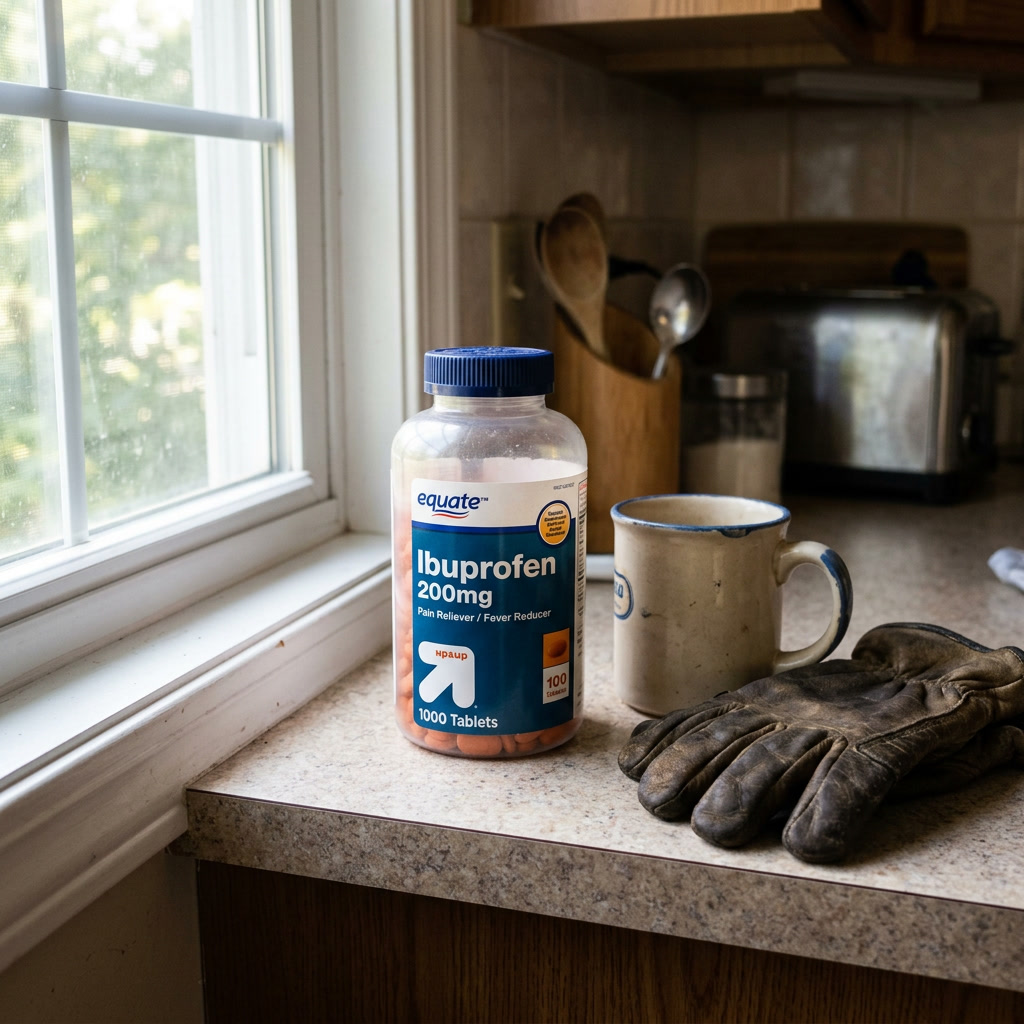
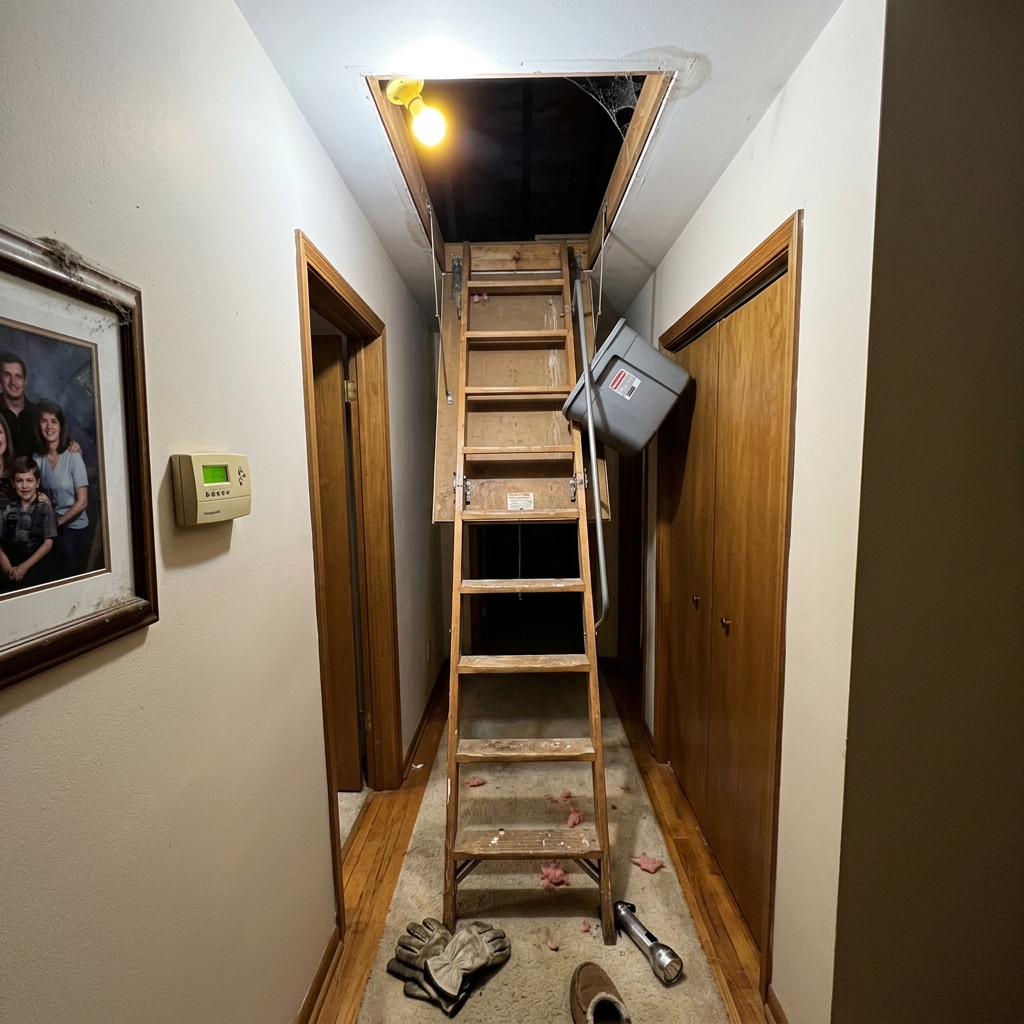
I found 11 unopened bottles of arthritis cream in a Rubbermaid bin in my dad's garage three Saturdays after his funeral. 11 I counted them twice because I didn't believe it the first time. My name is Lorraine. I'm 54. I live in Asheville, North Carolina, in a little house off Merrimon with a porch swing that needs new chains and a dog named Biscuit who's mostly deaf now. My father, Donald, passed in October. He was 81. Heart, mostly, but the truth was his body had been quietly quitting on him for years and he never told a soul. I'm telling you all this because of what I found in that garage, and what I found under what I found in that garage, and what happened to my own hands after I read it. I was the one who got stuck cleaning out the house. My brother Marcus lives in Charlotte and works in insurance and has two teenage girls in travel soccer, which apparently is the closest thing to a full time job a person can have without getting paid for it. So when our daddy died, the conversation went the way it always goes in families. Marcus said he'd help. I said I'd start. I started in October. I was still going through boxes in January. The garage was the last thing. My father lived in that little brown house on Sunset Drive for 41 years. He worked at the Champion paper mill in Canton until they shut it down in 2014, and then he did handyman stuff for cash until his knees gave out around 2019. He raised me and Marcus in that house after my mama left in 1981, and I'll tell you something. That man never once asked anybody for anything. Not a ride to the doctor. Not a hand carrying groceries. Not a hot meal when his wife walked out. Nothing. You could not get that man to admit he was tired, hungry, sad, or in pain. It was like watching a brick wall age. So when I walked into his garage on a cold Saturday in January, January 11th, I think it was, I was expecting the usual. Coffee cans full of screws. Twenty extension cords. A jigsaw he hadn't touched since the Bush administration. I wasn't expecting the bin. It was one of those big blue Rubbermaid storage bins with the snap on lid, sitting on a shelf above his workbench, with a piece of masking tape on it that said HEAT in Sharpie. Which I figured meant heaters, like little space heaters or heating pads or something. I pulled it down. My back didn't love it. I popped the lid. Tubes of cream. Just tube after tube. Aspercreme. Voltaren. Some store brand stuff from Walgreens. Capsaicin cream, the kind that's red. Biofreeze in the big size. A couple of bottles of menthol gel. 11 tubes, three roll on sticks, and what looked like an unopened TENS unit still in the box. All unopened. Every single one. I want you to picture it. I'm standing in my dead father's garage in a fleece pullover and my husband's work gloves with this bin of stuff on the workbench, and the man never once, in the 54 years I knew him, told me his joints hurt. Never once. I just stood there. I think I stood there for a good 15 minutes. You have to understand. This was the man who carried me on his shoulders at the Cherokee fair in 1976. This was the man who built the deck on the back of that house with his bare hands in 1989. This was the man who, the summer before he died, lifted a bag of mulch out of my trunk because he didn't want me to "throw my back out." He could barely walk to the mailbox. But he lifted my mulch. And every night, evidently, he was going into that garage and rubbing one of these creams into his hands and his knees and his shoulders and nobody knew. Not me. Not Marcus. Not his second wife Patty, who passed in 2016 and apparently never knew either, or at least never said anything to us. I sat down on his old red shop stool and I started to cry. I cried in a way I hadn't cried at the funeral. I'd been too busy at the funeral. Too busy hugging cousins and pulling casseroles out of the oven and explaining to people that no, we weren't doing a luncheon, we were just doing a graveside. This was different. This was the kind of crying where you don't make sound, you just leak. That's when I saw the journal. It was at the bottom of the bin. Underneath everything. A black hardcover composition notebook, the kind you buy at the back to school sales for 89 cents, marbled black and white cover, the spine cracked and the corners soft. I almost missed it. I pulled it out. The cover said DON in Sharpie. Same handwriting as the HEAT on the bin. Capital letters, my daddy's slow careful all caps that he used because his cursive had gotten too shaky to read. I opened it. It was a pain journal. I didn't even know what I was looking at at first. The pages had dates down the left side, going back to 2017, and next to each date was a number from 1 to 10 and a few words. Like a chart. Like a man tracking weather. Dec 14 2017 — 4 — both knees, mornings worst Jan 3 2018 — 5 — hands stiff, dropped coffee mug March 21 2018 — 6 — back, mowed front yard, paid for it It went on like that. Page after page. Years. The numbers got bigger over time. The notes got shorter. By 2021 he wasn't writing much next to the numbers anymore. Just the body part and the number. By 2023 it was almost every day. Aug 2 2023 — 8 — hands Aug 3 2023 — 8 — hands Aug 4 2023 — 9 — hands Aug 5 2023 — 9 — hands And then one entry, on August 11th, 2023, in handwriting that I can still close my eyes and see. "Hands hurt too bad to write today." That was the only thing on the page. I sobbed. I want to be honest with you, the woman or the man reading this, and tell you that I had no idea my father was in that much pain. None. I saw him every other Sunday. I drove up the parkway and I brought him pulled pork from 12 Bones and we sat on his porch and he asked me about Biscuit and we talked about the Panthers and he never said a word. Not one word. I think about that and I cannot breathe right. I sat in that garage until my husband Ray called me at quarter past 6 asking where I was. I drove home. I put the notebook in the front seat next to me like it was a person. I held my hand on it the whole way down the parkway like if I let go it would fly out the window. I didn't sleep that night. I kept thinking about the masking tape that said HEAT. Like he was telling himself a story, even in his own garage, that those creams were for warmth. Not for pain. Not for the truth. Around 2:30am I was sitting at our kitchen table with the notebook and a glass of water and Biscuit asleep on my feet, and I looked down at my own hands wrapped around that glass. And I realized my hands were aching. They'd been aching for, I don't know. A year? Two? I'd been blaming the cold. I'd been blaming the typing at work, I do billing for a dental office. I'd been blaming everything that wasn't actual joint pain. Because joint pain was for old people. Joint pain was for my daddy. Joint pain was not for me at 54. But they ached. The knuckles especially. The base of my thumb. My right knee did this thing where if I sat too long it locked, and I'd have to kind of fold up the leg and rock it before I stood up. I'd been doing this for months and I think I genuinely had not noticed I was doing it. I sat at that kitchen table at almost 3 in the morning and I thought about my father writing 9 in a notebook for four days straight and then writing nothing because he couldn't. And I thought, am I doing this? Am I keeping a HEAT bin? I opened my laptop. I don't even know what I typed in first. I think it was just "why do my hands hurt." Which is a stupid search and the internet gave me stupid results. Webmd. A bunch of mom blogs. Then I typed in something different. I typed in "what causes joint pain at 54." And one article, on a real medical site, said something I had never heard in my life. It said that joint pain isn't really about the joint. It said joint pain is about the cells in the joint, and what those cells are or aren't able to do. I read it twice. Here's what it said, the best I can explain it. Inside your joints there are cells. These cells have one job, and that job is to maintain the cartilage, keep the joint lubricated, and manage inflammation. To do that job, they need energy. Not the kind of energy you and I think about, not "I feel energetic today" energy. Cellular energy. The energy that's made inside every cell by these little things called mitochondria. Mitochondria are the energy factories inside your cells. Every cell in your body has them. The cells in your joints have them. And as you get older, and as you eat the things we eat and breathe the things we breathe and stress about the things we stress about, your mitochondria don't make energy as well as they used to. Which means the cells in your joints, the ones whose whole job is to keep your cartilage healthy and your joints lubricated, are running on a low battery. It's like, the article said, having a construction crew at a site with no power. The lumber's there. The blueprints are there. The crew is there. They just can't do anything because nothing's plugged in. I read that sentence and I sat back in my chair and I just stared. Because my whole life, my whole concept of joint pain, was "the joint is wearing out." That was the picture. A hinge wearing out on a door. A tire wearing down on a road. The metaphor was always about the joint itself failing. And it had never once occurred to me, in 54 years on this earth, that the joint isn't the problem. The cells maintaining the joint are the problem. It changed how I thought about my daddy. He wasn't a hinge that wore out at 81. He was a man whose cells had been quietly running on low battery for 20 years, and not one doctor had ever said a word to him about it, because joint pain in old men is just "wear and tear," and we shrug, and we send them home with Aspercreme. He had 11 tubes. I kept reading. I went down a rabbit hole that lasted from 3am to 5am and I came out the other side knowing about something I had never once in my whole life heard of, even though it turned out to have been used in India for, I don't know, four or five thousand years. Amla. That's how it's spelled. A-M-L-A. It's pronounced more like "AHM-luh." It's a fruit. They call it Indian gooseberry. It grows on these trees in India and Nepal and Southeast Asia, and the Ayurvedic tradition over there, which is their old medical tradition, calls it "the nurse" because of what it does in the body. I was skeptical. I'll admit it. A berry. From India. Sure. But I kept reading because I couldn't stop and because my hands were aching and because there was a black notebook on my kitchen table with my father's handwriting in it. What I learned about amla is this. Amla contains compounds that appear to activate something inside your cells called AMPK. AMPK is a pathway, like a switch, that helps your mitochondria do their job again. When AMPK is active, your mitochondria can start producing cellular energy more efficiently. The way they did when you were 24 and could squat down to look at something on the floor without bracing yourself on the coffee table. Cellular energy comes back. Which means the cells in your joints are no longer running on low battery. Which means they can get back to doing what they're supposed to do, which is maintaining the cartilage, managing the inflammation, keeping the joint lubricated. The reason this clicked for me, the reason I read it three times and then closed my eyes and exhaled, is that for the first time, the whole picture made sense. Aspercreme doesn't go to the cells. It sits on top of the skin. Voltaren doesn't go to the cells. It calms down the surface inflammation for a few hours. Glucosamine and chondroitin, which my mother in law swore by until the day she died, those are trying to give the cartilage building blocks. But if the cells aren't powered up enough to use those building blocks, the lumber just sits there. Same with collagen powder, which I'd tried for six months at Ray's sister's insistence. Lumber. No power. Even prescription stuff. Even the heavy duty stuff. None of it was going to where the actual problem was. The actual problem was the power. I'm not making medical claims. I want to say that clearly. I'm a dental billing person. I'm not a doctor and I don't pretend to be. But the thing I read about amla also mentioned that amla has one of the highest antioxidant profiles of any food that's ever been measured, and that part of why your mitochondria stop working well over the years is what's called oxidative stress, which is basically rust at the cellular level, and the antioxidants in amla help protect the mitochondria from that rust. So it's not just turning the power back on. It's protecting the wiring that got chewed up. I sat at the kitchen table at 5:15 in the morning and I just thought. I thought about my daddy and the bin. I thought about Marcus, who already complains his back hurts and he's only 51. I thought about my own hands. I thought about Biscuit, asleep on my feet, who I'd noticed lately had a hard time getting up the porch step. And I thought about my granddaughter Hazel, who's 7, who I take to the playground every Tuesday, and who climbs the rope ladder and looks back over her shoulder and yells "Watch me Mimi" with the assumption that her grandmother is going to be there to watch her for a long time. I ordered a bottle of Alevia Amla right there at the kitchen table at 5:23am. I bought one for me and one for Ray. The reason I picked Alevia, if I'm being honest, is that I read on their site that they're a US company, the product is manufactured in the USA, and they have a 90 day money back guarantee. That last part mattered to me because I have bought enough nonsense from enough wellness blogs over the years to be done playing around. If something doesn't work I want my money back, and most companies make that a fight. Alevia just says, send the bottle back, we refund you. Even if it's empty. The bottle came in the mail four days later. I took the first capsules on a Wednesday morning with my coffee. Two capsules. That's the daily dose. I want to be careful about what I tell you next because I don't want to overpromise. People's bodies are different. Things happen on different timelines. I'm just telling you what happened in my house. Week 1 — I didn't feel anything different. I almost emailed customer service. I was already cynical. Ray told me to give it a minute. Week 2 — Something started in my right knee. The lock thing. I sat at my desk at work and stood up and the lock thing didn't happen. I almost didn't notice. Then I sat down and stood up again on purpose to test it. Nothing. I stood there in my cubicle going up and down like an idiot. Week 3 — My hands. Specifically the morning thing, where I'd wake up and my hands would feel like I'd slept on them for an hour even though I hadn't. That eased off. Not gone. Eased. Week 5 — This is the one I keep telling Marcus about on the phone. I was at the playground with Hazel and she was on the rope ladder yelling "Watch me Mimi" and I was sitting on the bench and she said "Mimi come up here with me" and I, without thinking about it, I just stood up and walked over and started climbing it. Halfway up I realized what I was doing. I stopped. I looked down. Hazel was looking at me with her mouth open. I had not climbed a piece of playground equipment in maybe 10 years. I climbed it the rest of the way. I sat at the top with her. She held my hand. She told me a long story about a girl in her class named Brooklyn who was being mean to her at lunch. I cried in the car on the way home. Hazel asked me why. I told her sometimes grandmas cry when they're happy. She accepted that. She's 7. Week 7 — Ray got down on the floor to plug something in behind the TV and he got back up without grabbing the coffee table. He turned around and looked at me. We both kind of laughed. Week 9 — I called Marcus and told him to order it. Week 11, which is where I am now — I went up into the attic over the garage to look for my father's old slide projector because Hazel wants to see "the pictures of when mommy was little." I climbed the pull down ladder. I didn't think about my knees the whole way up. I found the projector. I came back down. I dragged a Rubbermaid bin full of slide carousels down the hall and into the living room. Halfway through, I realized something. I had not picked up a tube of any cream in weeks. Not Voltaren. Not Aspercreme. Nothing. The little tube of Voltaren I keep in my purse was still sealed. I sat down on the floor next to that bin of slide carousels and I did the leaking kind of crying again. The kind where you don't make sound. I thought about my daddy. I thought about him in his garage every night, by himself, with that masking tape that said HEAT, rubbing one of those creams into hands that were beyond the help of a cream. I thought about him writing 9 in a notebook. I thought about how nobody, not one person, in 81 years, ever told him about what was actually happening inside his cells. And I thought about how nobody is ever going to write a 9 in a notebook in this house. Not Ray. Not me. Not Marcus if he sticks with it. Not Hazel, ever. I'm not telling you that Alevia Amla is going to do for you exactly what it did for me. I don't know your body. I don't know what else is going on in your life. I don't know if you're 54 or 74 or 41 and starting to feel it for the first time. What I am telling you is that I will never spend another night thinking my father had to be in that much pain in silence. And I will never go back to a HEAT bin of my own. If your hands hurt, if your knees lock, if you've been blaming the weather or the typing or the age or any of the other lies we tell ourselves, give yourself 90 days. It's a 90 day money back guarantee. The whole point of that guarantee is that you're risking nothing. You order the bottle, you take it for 90 days, and if your body isn't responding, you send the bottle back and you get your money back. They don't even need you to send the bottle back full. They take it back empty. Compare that to anything else you've tried. Compare that to a 13 dollar tube of Aspercreme you used twice and threw in a bin in your garage with 10 others. 👉 alevia.com/amla/33 P.S. I still have the notebook. I keep it in the drawer in my bedside table. I have not been able to bring myself to throw it out and I don't think I ever will. I read a page or two of it sometimes, late at night, when I can't sleep. The handwriting on the last page, the August 11th page that just says "Hands hurt too bad to write today," still makes me cry. It probably always will. But there's a different page now too. I started one. A blank composition notebook from Target, 89 cents on sale, my name in Sharpie on the front. Mine doesn't have numbers. Mine has dates and one or two sentences about what I did that day with my body that I couldn't have done six months ago. Tuesday last week — climbed the rope ladder with Hazel. Saturday — carried two bags of mulch in from the truck by myself. I write something on it every couple days. Every entry is a sentence my daddy never got to write. P.P.S. About the guarantee. I want to say it one more time because I almost didn't order in the first place and the guarantee was what tipped me over. 90 days, money back, even if the bottle is empty. That's not a normal supplement policy. The reason most supplements don't offer that is because they know if you tried them for 90 days you'd be calling for a refund. The fact that Alevia offers it tells you something. It told me something. It's why I clicked the button. P.P.P.S. They run out. I've ordered three bottles now and on the second order it took an extra week to ship because they were waiting on stock. I keep a backup bottle in the cabinet over the microwave now because I am not running out. If you're going to try this, I'd order two while they have them. The first 30 days is when I started to notice things. Day 90 is when I realized I hadn't touched a tube of Voltaren in weeks. You want to give it that runway. You don't want to be 38 days in and waiting for a backorder. P.P.P.P.S. To whoever's reading this whose dad is still alive, whose mom is still alive, whose husband is still alive. Don't wait for the bin. Don't wait for the notebook. Don't find out after the funeral what they were carrying. There is a different way and there is still time. My daddy never got that time. You might still have it. Don't squander it the way mine got squandered by silence and Aspercreme and a piece of masking tape that said HEAT. 👉 alevia.com/amla/33
Like this ad? Make it yours.
Crush rebuilds this exact creative around your product — your brand, your colors, your offer — in about a minute.