Carol Ellison
Carol Ellison Facebook ad: “Support healthy nerves and sensation every day.”
Ran for 25 days, from July 15 to August 9, 2026, the last day Crush saw it.
Run by Carol Ellison on Facebook. Crush is not the advertiser and does not verify its claims. See this ad in Meta's Ad Library(opens in a new tab)
Want an ad like this for your product?
Crush makes new ad images for your product from this ad: your logo, your product photo, your offer.
Trials from $19.95 USD, then $79.95 USD a month. Cancel anytime.
About this ad
- Meta Ad Library ID
- 996401416342468
- Platforms
- Facebook, Instagram, Audience Network, Messenger and Threads
- Relaunches
- 0
Ad text
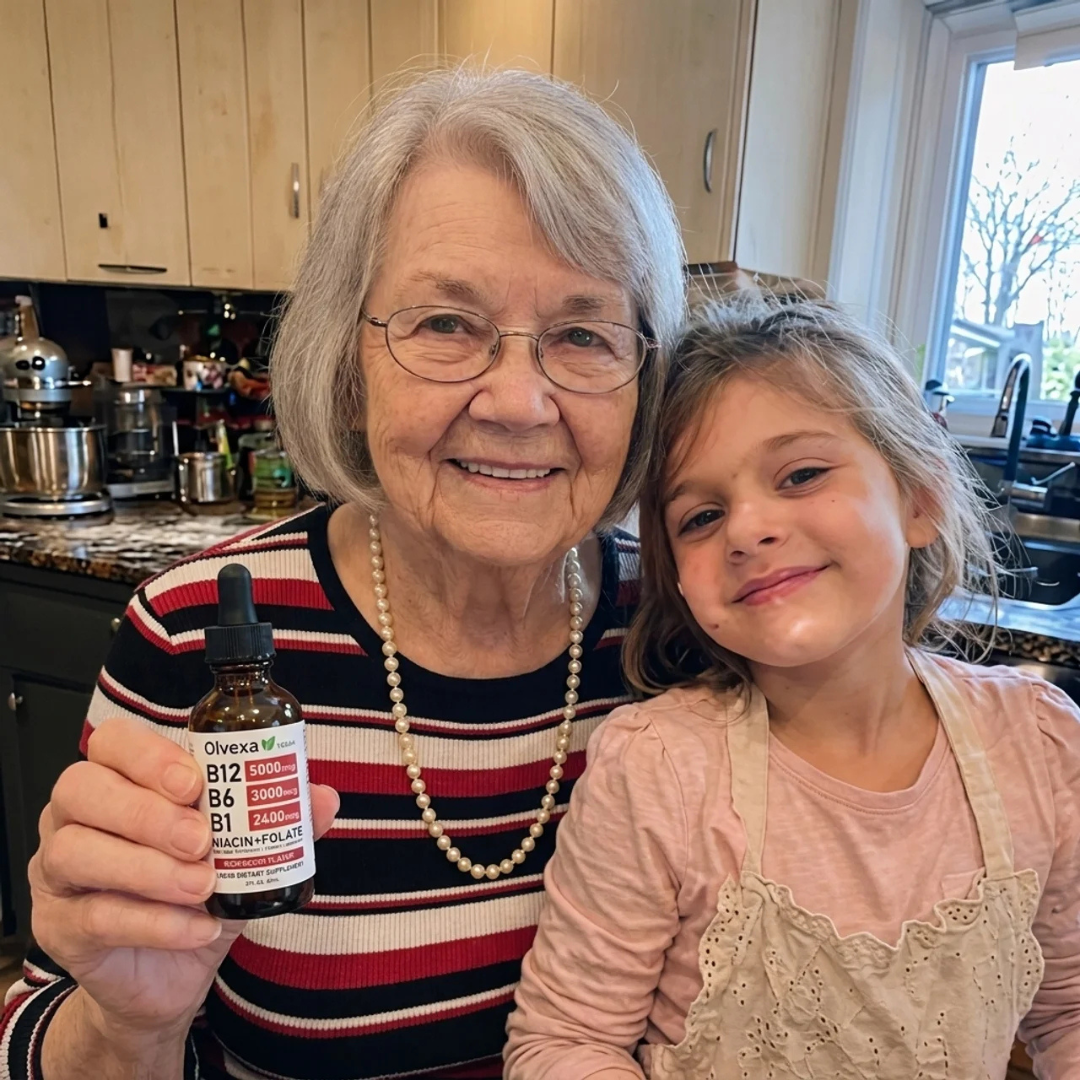
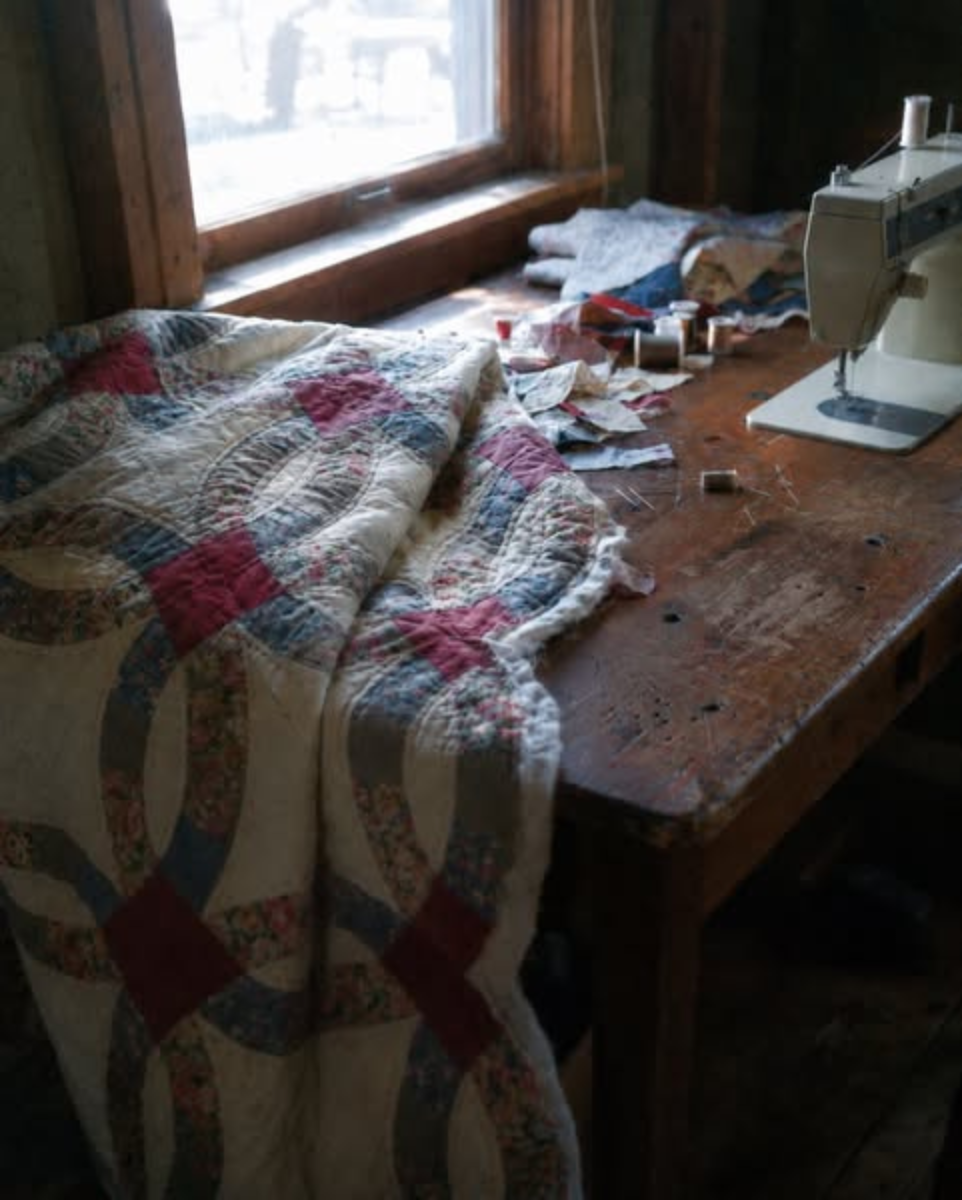
I Had Been Quietly Noticing Tingling And Burning In My Feet In The Evenings For Two Years. I Had Not Told My Husband. I Had Not Told My Doctor. An Older Woman at an Amish Auction Knew After Watching Me Walk Three Hundred Yards. My name is Carol. I am sixty-two years old. I taught home economics at the middle school in Hagerstown for thirty-two years. I retired five years ago. I have been married to Jack for thirty-nine years. Jack was a plumber for forty-one years and retired three years ago. We have two grown sons and four grandchildren. I have been quilting since I was twenty-six years old, which is when my mother died and I needed something to do with my hands in the evenings. I am on a low dose of metformin. I have been on it for seven years. My doctor — Dr. Brooks, a careful woman I have been seeing for the better part of nine years — tells me at every annual that my numbers are in the ranges Dr. Brooks wants them in. I walk our neighborhood with Jack most evenings. I went through menopause at fifty-four. It was harder than I'd been led to expect. It was also, by the time I was fifty-seven or so, mostly behind me. I am, by every measure on Dr. Brooks’ chart, a sixty-two-year-old woman in fine shape. That is the part I want you to hold while you read this. The other part I want you to hold is what I had been quietly noticing for about two years. I had been noticing tingling and burning in my feet. Not in the way a person notices their feet when something is wrong with their nerves. In the way a person notices something that is supposed to be quiet and is just a little less quiet than it used to be. There was a small awareness, in the evenings, when I was drifting off to sleep, a faint buzzing in my toes, like a phone vibrating two rooms away. A small tingling, sometimes, when I stood up from the couch. A small numbness when I climbed the stairs, like a sock had bunched up under my foot, except there was none. A coolness in my feet, even in a warm house, that no amount of socks ever fixed. A strange feeling in my feet that I kept noticing, then explaining away, then noticing again. Not pain. Not anything alarming. Just — awareness. I had told Dr. Brooks about it more than once. Dr. Brooks had done the EMG. Dr. Brooks had reviewed my numbers. Dr. Brooks had told me, gently and accurately, that what I was describing was within the range of what a body does in the years after menopause, and that my chart was the chart of a healthy sixty-two-year-old woman on a sensible dose of a well-tolerated medication. That was true. It also was not quite enough for me. I had not told Jack about the awareness. I had not told my sons about the awareness. I had not told my quilting circle about the awareness, which was the group of women in Hagerstown I had been meeting with on Tuesday afternoons for sixteen years. I had not been telling myself about the awareness, in the careful way you do not tell yourself a thing you do not want to look at. When the body is doing the small daily math of the years after menopause and you have decided to call it the years after menopause and leave it at that. Now I want to tell you about the walk back to the truck. The auction tent was about a quarter mile from where Jack had parked the truck. I had the Double Wedding Ring quilt folded in a clean white sheet and held against my chest in both arms. Jack was beside me. We were walking down the long lane back toward the parking field. I had to stop. I stopped next to a fence post about halfway down the lane. I told Jack I was fine. I told him I just needed a minute. I leaned the quilt against the post, and I put my hand on the post, and I waited. It took maybe forty seconds. I was sixty-two years old, on a Saturday afternoon in September, in a long lane in the middle of Lancaster County, and I had just stopped to catch my breath after walking three hundred yards on flat ground holding a quilt. Jack put his hand on my back. He did not say anything. He has been my husband for thirty-nine years and he has known, the way husbands know, for the better part of two years, that something I was not telling him was different. I was standing at the fence post when I noticed her. There was a small lemonade stand under a maple tree about thirty feet back up the lane. An older Amish woman was running it. She had a wooden table and a galvanized tub of ice and a stack of paper cups and a sign that read: Cold Lemonade — One Dollar — Proceeds to the School. She had been watching me. Not in a way that asked anything. Just in the way an older woman watches another older woman who has just had to stop next to a fence post. When I straightened up and started walking again, she did something I did not expect. She picked up the pitcher of lemonade. She poured a cup. She walked it down the lane to me. She handed it to me without saying anything for a moment. Then she said, quietly: "It is warm today. The lane is longer than it looks. Please sit down a minute on the bench by my stand before you walk the rest of the way to your truck." I sat down on the bench by her stand. Jack stood with the quilt. The older woman sat down on the other end of the bench. Her name was Esther. She was seventy-two years old. She had been running the lemonade stand at the Mount Hope quilt auction every September for the last twenty-six years. She remembered me from the eleven Septembers I had been attending. She told me, gently, that she had watched me win the Double Wedding Ring quilt that morning and that she had been hoping I would. She told me she had pieced one of the rings in it five years ago. She had been part of the quilting circle at her congregation that had made the quilt I was holding in my arms. She told me she had watched me look at it in the preview tent for two hours. She told me she was glad it was going home with someone who had looked at it for two hours. We sat there for a while. I drank the lemonade. I told her my name and Jack’s name. I told her about Hagerstown and about teaching home economics for thirty-two years. I told her about my own quilting circle and about my four grandchildren and about how the Double Wedding Ring would go on the bed in the upstairs guest room where my granddaughters sleep when they visit. She listened in the careful, unhurried way of a woman who has spent fifty years listening to other women on benches outside of barns at auctions. Then she said something gentle. She said: "Carol. I am going to say something now that is not my place to say. I have watched you walk three hundred yards down a lane carrying a quilt in your arms, and I have watched you have to stop at a fence post halfway, and I do not know your chart and I do not know your medication and I do not know your doctor. I am a seventy-two-year-old Amish woman with a lemonade stand under a maple tree. I have no authority to say anything to you about your body." She paused. She said: "But I have noticed, over a long life, that some people in their early sixties notice their feet in a way they did not notice their feet in their fifties. Not in any way that is dangerous. Just in a small way. In the evenings. In the nights. On the stairs. I have noticed it, on quieter years, in myself." She looked at the lemonade in my cup. She said: "I cannot tell you what helped, in my own nights, and what did not. I am not a woman who has separated her body out into careful pieces. But I have continued, like the women in our community have continued for generations, to put back what the years quietly take, and to pay attention to my feet the way my mother taught me to pay attention to my hands." I want to be careful, here, about what Esther said next, because I went home and did my own reading afterward, and what I want to share with you is what I read, not what she told me she read. But she told me, gently, that the older women in her congregation had been paying attention to their feet for as long as she could remember. The quiet kind of attention. They noticed it in the evenings. They noticed it on the stairs. They had come to believe, over generations, that the body needed certain things put back as it got older, things the years quietly took out. She told me she did not know what the research said about it. She was a woman with a kapp and a lemonade stand under a maple tree. She just knew what she had watched. She told me that her granddaughter, who worked at a small farm-market stand in their area, had told her about a small company that took the same nutrients the older women in their congregation had always leaned on and prepared them in a particular way — under the tongue, instead of in a pill, so the body could actually take them in. Because the taking-in was the thing that mattered, Esther said, and after a certain age the stomach stopped taking them in the ordinary way, and the under-the-tongue way got around that. She told me her granddaughter had told her the name of the company. The name was Olvexa. She said: "I have not taken it myself. I am not telling you anything about it from my own experience. I am giving you the name because I have watched you stop at a fence post halfway down a quarter-mile lane on a flat afternoon in September. And because I have noticed the same kind of awareness in my own feet, in my own quieter evenings, that I think you have been describing. And I would not be a careful neighbor to you if I sat next to you on this bench for ten minutes and did not tell you what I know." Jack was sitting on a folding chair a few feet away. He had heard all of it. He had not said anything. He had been holding the quilt for almost half an hour by then. I drove home with Jack and the quilt and the name of a company on a paper cocktail napkin from the lemonade stand that Esther had let me borrow her pencil to write on. Jack was quiet on the drive home. About an hour out of Mount Hope, he said: "Carol. I'd like for you to look into it. With Dr. Brooks' blessing. I'd like for you not to walk down a lane with me in September next year and have to stop." I told him I would look into it. I put my hand on his hand on the gearshift for a few miles after that. I want to be clear about something before I tell you what I did next. I am not a doctor. I am not a nurse. I do not have any medical expertise of any kind. I am a retired middle school home economics teacher from Hagerstown, Maryland. I am a wife and a mother and a grandmother. I am sixty-two. What follows is one careful woman's experience after one Saturday afternoon at a quilt auction. Nothing more. I read for two and a half weeks before I did anything. I am a careful reader. Thirty-two years of teaching middle school girls how to sew a French seam will teach you not to trust any sewing pattern that has not been tested carefully by women who have done the work themselves. The same suspicion has served me well in everything else. What I read confirmed the shape of what Esther had said on the bench. The nutrient the older women had been leaning on was vitamin B12, and the family it belongs to — the B-complex. They are part of what the body uses to maintain the nerves. The careful research community I found has been studying them for decades. In the context of supporting healthy nerve function. Supporting the body's own nerve maintenance. Supporting normal sensation in the feet and hands. In women whose numbers are already in the range their doctors want them in. Not "fixes." Not "treats." Not "reverses." Just supports. The careful structure-function language I had been waiting for, in the years on a sensible dose of a well-tolerated medication, in the body of a woman whose chart was the chart of a healthy sixty-two-year-old. And I read one more thing, which I had not known. The medication I had been taking every morning for seven years — the metformin — quietly depletes B12. It is in the prescribing information. It has been for years. The very thing the nerves needed, the medication had been slowly drawing down the whole time. Nobody had told me that, in seven years, and nobody had checked. I also read why the ordinary pill so often does nothing. After fifty, the stomach changes. It stops taking B12 in the ordinary way. So a woman can swallow a B12 tablet every morning, faithfully, and have it pass straight through her. Not because the B12 is wrong. Because the delivery is. Under the tongue gets around that. It goes in directly, the way Esther's granddaughter had said. And the form matters too. Most pills use the cheap, inactive kind the body has to convert — a conversion that weakens with age and with the very medication I was on. The active kind — the kind already in the form the nerve can use — does not have to be converted at all. Olvexa uses the active kind, under the tongue, at a real amount. It costs them more. It takes longer. They do it anyway, because more of what the body actually uses makes it in. After thirty-two years of teaching middle school girls to slow down with a needle and pay attention to what their hands were doing, I have come to believe that the way an organization handles the slow expensive parts of its work tells you everything about whether the work is real. The other thing I liked was the simplicity. A dropper under the tongue in the morning. That is the entire protocol. I am sixty-two. I am not interested in another routine. Now I want to tell you the most important part of this letter. Before I added anything to what I was already taking, I made two phone calls. I am on a low-dose medication. I have been on it for seven years. I would not add anything to that medication without checking first whether the addition was sensible. I am a retired home economics teacher. I am not qualified to determine that. I called my pharmacist on a Wednesday morning. I have been filling my prescription at the same small pharmacy four blocks from our house for fifteen years. I gave the pharmacist on duty the brand name and the dosage and my current prescription information. She pulled up my profile. She told me she had no concerns about the addition at the dosage on the label, given my specific medication and dose. In fact, she told me something I had not expected — that she sees it often, that the medication I was on is well known to draw B12 down, and that it was a sensible thing for a woman in my position to be putting back. She told me to take it in the morning with my coffee, alongside my pill, the way the bottle suggested. I called Dr. Brooks' office that afternoon. I left a message with the nurse with the same information. She called me back the next morning to tell me Dr. Brooks had no concerns and to mention it at my next appointment. Both calls together took me less than ten minutes. I want to say something now, plainly, to every woman reading this letter. If you are on metformin, or on any medication at all — please make the call before you add anything new. Those two phone calls are the most important ten minutes of your engagement with any supplement. The people who know what's on your chart will tell you in two sentences whether the addition is sensible for you. I am a retired home economics teacher. I am not the person to ask. Your pharmacist and your doctor are. I started on a Monday in early October. I set the bottle on the saucer next to my coffee. I took the dropper under my tongue with my first sip. The first two weeks I felt nothing in particular. I had read enough, by then, to know I should not expect to. A supplement is not a drug. It does not switch on the way a drug switches on. It is something the body uses, slowly, in the work the body is already doing. I kept paying attention. What I noticed, I noticed in two specific places. The first one was the farmers market. There is a small Saturday morning farmers market on the courthouse green in Hagerstown. Jack and I have been walking the loop of it every Saturday morning we have been home since he retired. The loop is about a quarter mile. For most of the last year and a half, I had been sitting down on the bench in the middle of the loop for ten minutes before walking the second half. I had told Jack I just wanted to people-watch. That had not been precisely true. On a Saturday morning in mid-November, about six weeks after I had started, I walked the entire loop with Jack without sitting on the bench. I did not sit on the bench the next Saturday either. By December I had stopped looking at the bench when we walked past it. Jack did not say anything about it. He does not say anything about most things he notices. He just sees them. The second place I noticed was my own evenings. I had been having, for almost two years, the small awareness in my feet in the late evening when I was getting ready to sleep. It had been a quiet awareness. Not painful. Not alarming. Just present. The way a furnace in the basement is present in a house, when you have lived in the house long enough that you have stopped hearing the furnace except on the nights when the furnace is just slightly noisier than usual. In the months after I started, the evenings got quieter. Not all at once. Not on a schedule. Just over time. The buzzing in my toes was less prominent. I would get into bed and notice that I was not noticing my feet. The evenings felt more like the evenings had felt when I was fifty-four, before the years that followed. I want to be careful with this. I am not telling you the supplement made my nerves do anything a supplement is not meant to do. My body has been doing the same careful work for sixty-two years. I am telling you that what I had been noticing in my feet in the evenings had gotten quieter, the way some things get quieter in your sixties when the body is being supported in the small daily work it has been doing all along. I went into Dr. Brooks' office in February for a routine visit. She did the bloodwork. She did the EMG. She reviewed everything. She looked at me. She said: "Carol, your numbers are in the same good place they've been for years. But your EMG reads a little better than last time — and you seem easier in yourself today than you have seemed at our last few appointments. I am glad." I told her about the auction. About Esther. About the farmers market. About the evenings. About the B12. Dr. Brooks nodded. She said: "B12 is what the nerves rely on, and metformin is well known to draw it down, so I understand the thinking. Keep doing what you're doing. Keep walking with Jack. Come back in a year." She wrote down the brand name on a slip of paper for her own reference and put it in her white coat pocket. I am telling you all of this because I think you might be a woman where I was at the fence post in September. A woman in her early sixties. A woman whose chart is fine. A woman whose doctor is kind. A woman whose medication is doing its work. A woman who has been quietly noticing her feet in the evenings, on the stairs, when the numbness creeps up without warning, in the careful way you notice something you have not been telling anyone about because there is nothing alarming about it and your chart is fine and your numbers are good. If that has been your year and a half, I want to say a few things plainly. I am not telling you that B12 will do for you what something has done for me. I don't know you. I don't know your body. I don't know your chart or your medication. Bodies are different. Some women notice something within the first month of adding something like this. Some women take much longer. Some women don't notice much at all. What I am telling you is that there is a careful, slow, structure-function corner of the research conversation that talks about B12 and the B-complex in the language I had been waiting for. Not fixes. Not treats. Just supports. In healthy nerve function. In normal sensation. In the body's own nerve maintenance. In women whose numbers are already in the range their doctors want them in. If that shape of language interests you, please make the call before you add anything. Call your pharmacist. Call your doctor's office. If you are on metformin, or any medication at all, those two phone calls are the most important ten minutes of your engagement with anything you put into your routine. The brand Esther's granddaughter told her about, and the brand I added to my morning, is Olvexa. 5,000 micrograms of methylcobalamin — the active form of B12 — per serving. Taken under the tongue, so the body can take it in directly. Alongside the rest of the B-complex the nerves rely on. A dropper under the tongue in the morning, alongside whatever else you are already taking. It is not a fix for anything. It is not a substitute for metformin or any other prescription. It is not a treatment for nerve damage. It is one small thing some women add to the long list of things they are already doing for themselves, alongside everything else. P.S. Olvexa has a ninety-day satisfaction guarantee. Any reason at all. If you tried it and you are not satisfied, you are not satisfied. They refund you. That is the whole policy. P.P.S. They're a small operation. The active form and the under-the-tongue preparation cost more and take longer than the ordinary pill. So they sometimes run out. I keep an extra bottle in our cupboard now. P.P.P.S. I drove back up to Mount Hope last September for the auction. The Double Wedding Ring quilt has been on the bed in our upstairs guest room for a year. It was a different lane this year and a different walk. I did not stop at a fence post. I walked the quarter mile with Jack without thinking about it. Esther was at her lemonade stand under the maple tree. I bought two cups. I sat with her on the bench for a long time. I did not tell her, the first half hour, what the year had been like. I just sat with her. When I did tell her, near the end of the afternoon, she nodded once and she said: "Carol. I am glad. Please come and find me again next September. I will save you a seat on the bench." I have been carrying that sentence with me since. I do not know how many more Septembers I have at the Mount Hope auction. But I know that for as long as Esther is at her lemonade stand under that maple tree, I will be making the drive up from Hagerstown to sit on the bench with her. Some friendships you do not earn. They are given to you, gently, by an older woman with a kapp and a galvanized tub of ice, on a Saturday afternoon in September, when you have just had to stop at a fence post halfway down a quarter-mile lane. https://tryolvexa.com/products/olvexa-vitamin-b-complex
Where the ad sends people
tryolvexa.com
Support healthy nerves and sensation every day.
Olvexa
Learn more: tryolvexa.com(opens in a new tab)