
Key Takeaways
- 12026 CPL benchmarks vary widely from $1.50 for e-commerce to $250 for B2B demos
- 2Prioritize Cost Per Qualified Lead (CPQL) over CPL to avoid low-quality volume traps
- 3Use conditional logic in Instant Forms to filter out unqualified leads automatically
- 4Broad targeting with creative filtering reduces CPMs while maintaining lead quality
- 5Video ads often generate higher intent leads than static images due to longer engagement
Stop chasing $5 leads. We reveal the real 2026 Facebook advertising cost benchmarks across industries. Plus, discover 5 strategies to optimize your campaigns for quality over quantity and improve your ROAS.
When a business owner decides to run ads, their first question is almost always:
"How much will it cost?"
They want a simple number. They want to know that a lead costs $10. But in the world of facebook sponsored ads cost, the answer is rarely simple.
A lead for a free newsletter might cost $1. A lead for a $50,000 enterprise software contract might cost $500.
In this guide, we are going to pull back the curtain on fb advertising cost in 2026. We will give you the real benchmarks for cost per lead facebook across different industries, and more importantly, explain why chasing the "lowest" CPL is often a strategic mistake.
Average CPL Benchmarks by Industry (2026)
Based on millions of dollars of ad spend managed through our platform, here are the rough averages we are seeing right now.
Disclaimer: These are averages. Your mileage may vary based on your creative and offer.
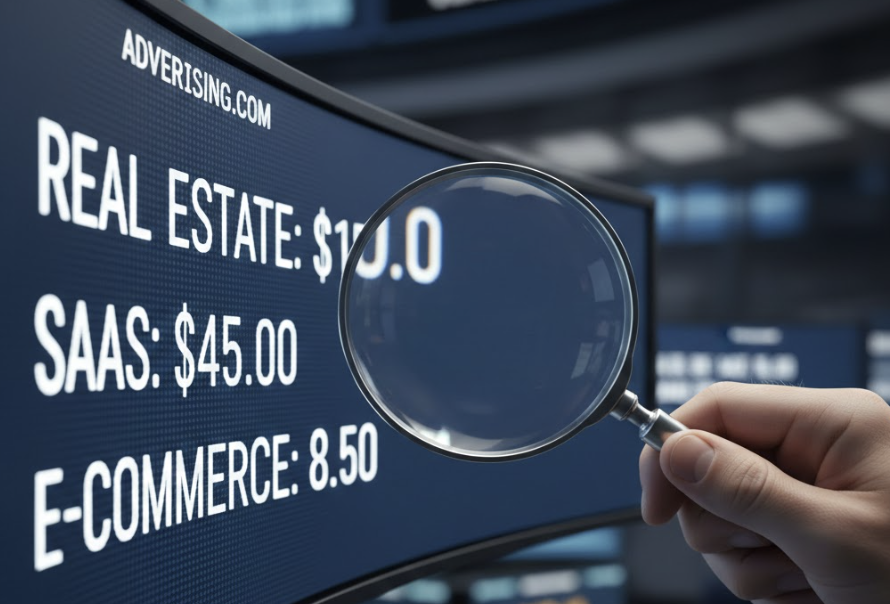
E-commerce (Email Signup): $1.50 - $4.00
Real Estate (Buyer Leads): $8.00 - $25.00
Local Service (Dentist/Plumber): $15.00 - $45.00
B2B Software (Free Trial): $30.00 - $80.00
B2B Software (Demo Request): $80.00 - $250.00
Coaching/Consulting (Webinar): $5.00 - $15.00
If you are paying $100 for an email signup for a $20 t-shirt store, you have a problem. But if you are paying $100 for a demo of a $10k/year software, you are printing money.
The "Quality vs. Quantity" Paradox: Why Cheap Leads Are Expensive
Here is the trap that catches 90% of business owners.
You tell your media buyer (or yourself): "Get me cheaper leads! I want $5 leads!"
So, you change the form. You remove the "Phone Number" field because it causes friction. You remove the "Budget" question because it feels intrusive. You make it super easy to sign up. You might even turn on "More Volume" in the Instant Form settings.
Suddenly, your CPL drops to $5. You get 100 leads a day. You feel like a genius. Then your sales team calls them.
50% of the numbers are fake or disconnected.
30% say "I did this by accident" or "I just wanted the free PDF."
20% are broke, unqualified, or thought you were offering something free.
Your sales team wastes hundreds of hours calling bad leads. Their morale tanks. They start blaming "Marketing" for sending them junk. This breakdown occurs because you aren't tracking the essential Facebook Ads KPIs that actually impact the bottom line.
The Real Math:
Scenario A: 100 Leads @ $5 = $500. Conversion Rate 1%. Revenue = 1 Sale ($1,000). ROAS: 2.0.
Scenario B: 20 Leads @ $50 = $1,000. Conversion Rate 20%. Revenue = 4 Sales ($4,000). ROAS: 4.0.
The Lesson: A $50 lead that converts is infinitely cheaper than a $5 lead that doesn't. When analyzing facebook paid ads cost, ignore CPL. Look at CPQL (Cost Per Qualified Lead) and CAC (Customer Acquisition Cost).

How Facebook Calculates Cost (The Auction)
Why does one advertiser pay $10 and another pays $50 for the same audience?
Facebook uses an auction system. Your price depends on three main factors:
Bid: How much are you willing to pay?
Estimated Action Rate: How likely is the user to click?
Ad Quality: Do people hate your ad?
If your ad is engaging (high CTR) and people love it (shares/comments), Facebook gives you a discount. You effectively win the auction with a lower bid.
If your ad is spammy and people hide it, Facebook charges you a "Tax." To consistently produce high-quality ads that win auctions, we recommend using The 48-Hour Rule to validate your creative concepts before scaling spend.
5 Ways to Lower Your CPL (Without Sacrificing Quality)
You want the best of both worlds: Affordable leads that actually buy. Here is how to achieve that balance.
1. The "Conditional Logic" Lead Form
Facebook Instant Forms now allow for "Conditional Logic." This means you can ask a qualifying question first.
Example: "What is your budget?"
If they answer "$0 - $500", you send them to a "Thank You" page with a free guide. You don't waste sales time on them.
If they answer "$5,000+", you ask for their phone number and let them book a call immediately.
This filters out the tire kickers while capturing the whales.
2. The "Reverse" Lead Magnet
Instead of giving something away for free (which attracts freebie seekers), try a "Low Ticket Offer" (Self-Liquidating Offer).
Sell a $7 mini-course or a $27 template. People who pay $7 are infinitely more valuable than people who download a free PDF. You effectively get paid to acquire a lead. This drives your "Effective CPL" to zero (or even negative).
3. Broad Targeting with Creative Filtering
As we discuss in our B2B Facebook ads strategy guide, restricting your audience with Interest Targeting often makes CPMs go up.
Instead, use Broad Targeting but write your ad copy to repel the wrong people.
Headline: "For Enterprise SaaS Founders Only (Revenue $1M+)."
This scares away the freelancers and startups. You might pay a higher CPM, but your CPL will reflect qualified buyers.
4. Video Ads vs. Static Images
Video ads typically generate higher quality leads than static images. Why? Because a user has to watch 15-30 seconds of content before clicking. They are more "sold" on the concept.
Whether you are debating Ads on Reels vs. In-Stream ads or standard feed placements, video formats generally filter for intent better than static images, which are easy to click impulsively.
5. Improve Your Offer (The "Grand Slam")
If leads are expensive ($100+), your offer might be weak.
Weak Offer: "Free Consultation." (Sounds like a sales pitch).
Strong Offer: "Free 3-Step Custom Roadmap." (Sounds like a deliverable).
Grand Slam Offer: "We will build your custom roadmap in 48 hours, or we pay you $100." (High value, high risk reversal).
Conclusion
Benchmarks are useful, but they are just guideposts. Don't obsess over getting your CPL to match the industry average. Obsess over your profitability.
If you can afford to pay $100 for a lead and still make a profit, you can outspend every competitor who is trying to stay under $50. The business that can afford to pay the most to acquire a customer always wins.
Want to know if you are overpaying? Crush benchmarks your account against thousands of others to tell you if your CPL is healthy.
Frequently Asked Questions
Common questions about this topic
1What is the average Cost Per Lead (CPL) on Facebook in 2026?
2How does Facebook calculate ad costs in the auction?
3Is a lower CPL always better for Facebook Ads?
Written by
Albertas Pocius
Co-founder, CMOAlbertas is the Co-Founder and CMO of TryCrush.ai, bringing elite-level performance marketing expertise to the platform. With over $50M+ in combined Facebook and TikTok ad spend, Albertas has launched and scaled dozens of projects from zero, driven by a deep obsession with data and experimentation. He has trained 20+ media buyers, consulted 100+ companies, and is widely recognized as one of Europe’s early TikTok pioneers, likely the first to scale campaigns beyond $100K per day. Today, he also teaches advertising strategy at two colleges, shaping the next generation of media buyers.
Stop Guessing.
Start Crushing.
AI Ad Manager trained by world-class media buyers to generate your creatives and optimize your ads 24/7.
Learn more
Related articles
Reddit Ads Pricing Guide for 2026: Costs, Bids, and True ROI
Understanding how much Reddit ads cost requires looking past micro-budget experiments. Discover the auction mechanics and long-term longevity metrics that dictate true advertising profitability in 2026.

Higgsfield AI vs TryCrush: Which Platform Delivers Better ROAS?
The arms race in generative AI is accelerating. Discover the core differences between Higgsfield AI and TryCrush, and learn why transitioning from organic content creation to profitable paid ad conversion requires a specialized performance engine.
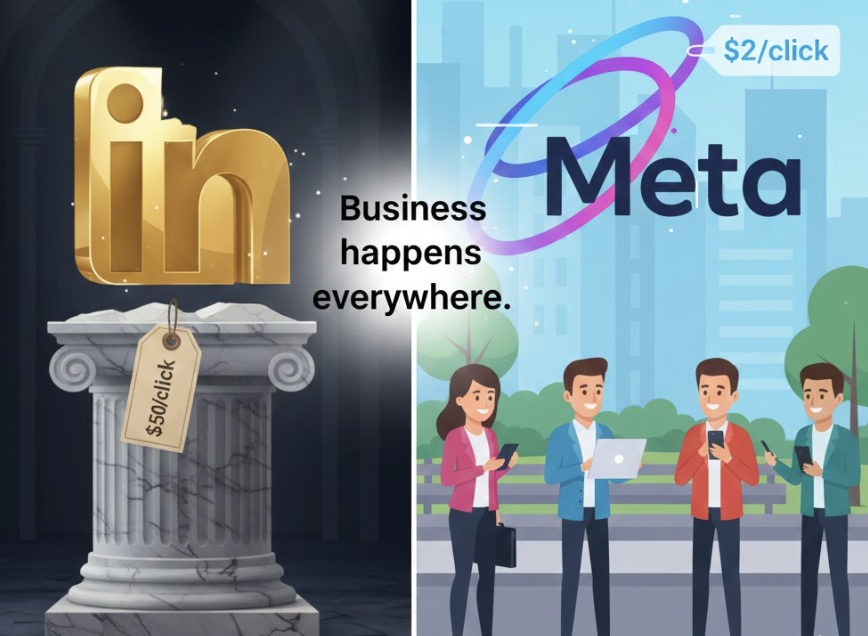
B2B Facebook Ads Strategy: How to Target Decision Makers
Stop overpaying for LinkedIn leads. Discover how to use "Creative Qualification" to target C-suite executives on Facebook using broad targeting and specific hooks. Learn why detailed targeting fails in 2026.
The "Probation" Zone: What to Do With Ads That Are "Almost" Profitable
Stop killing ads that are "almost" profitable. Discover the "Probation Zone" strategy to identify hidden winners using secondary metrics like Unique Link CTR and Initiate Checkouts. Learn when to grant a stay of execution and when to pull the plug.