
Inactive· since May 22, 2026
- 38
- days it ran
- 1
- relaunches
Ad copy
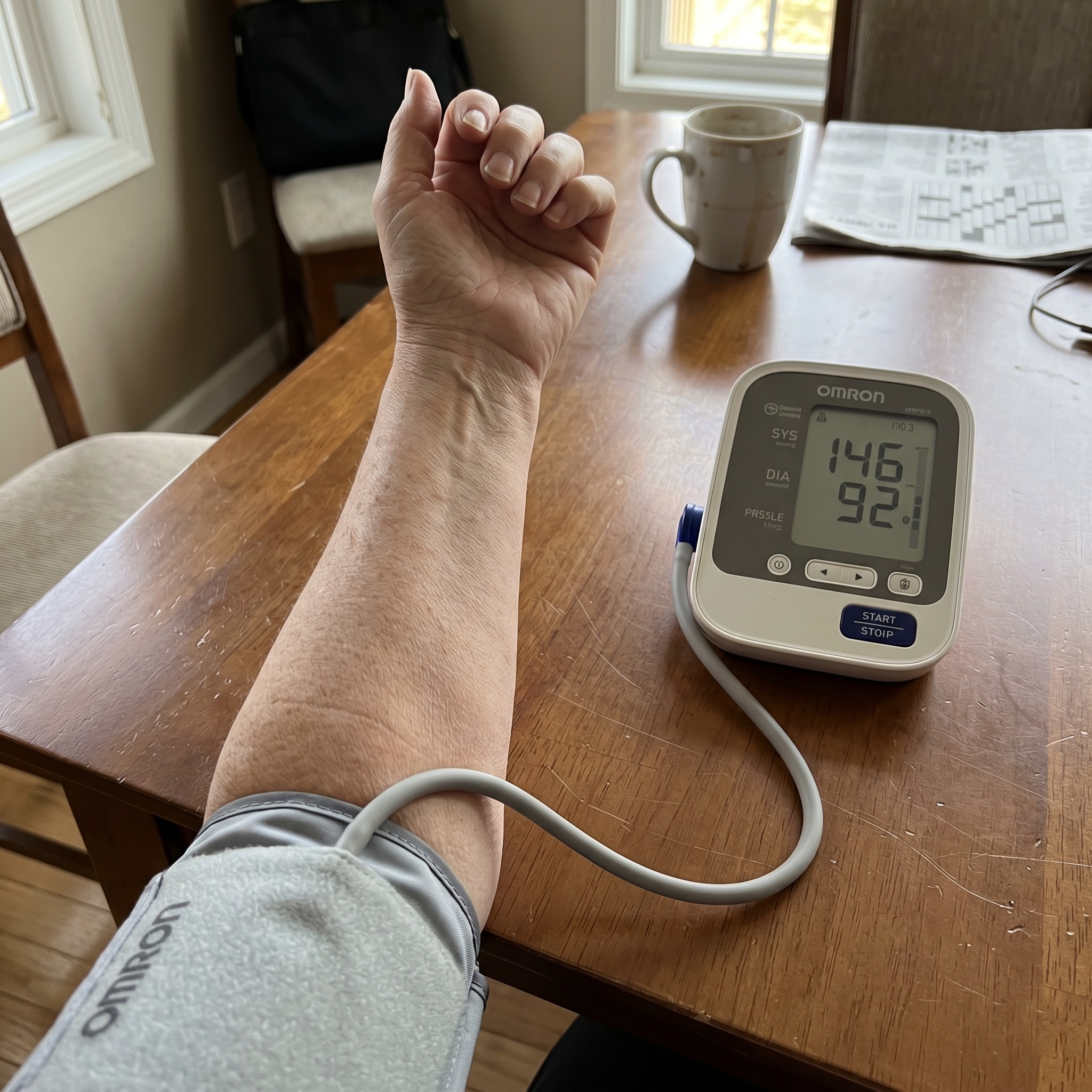
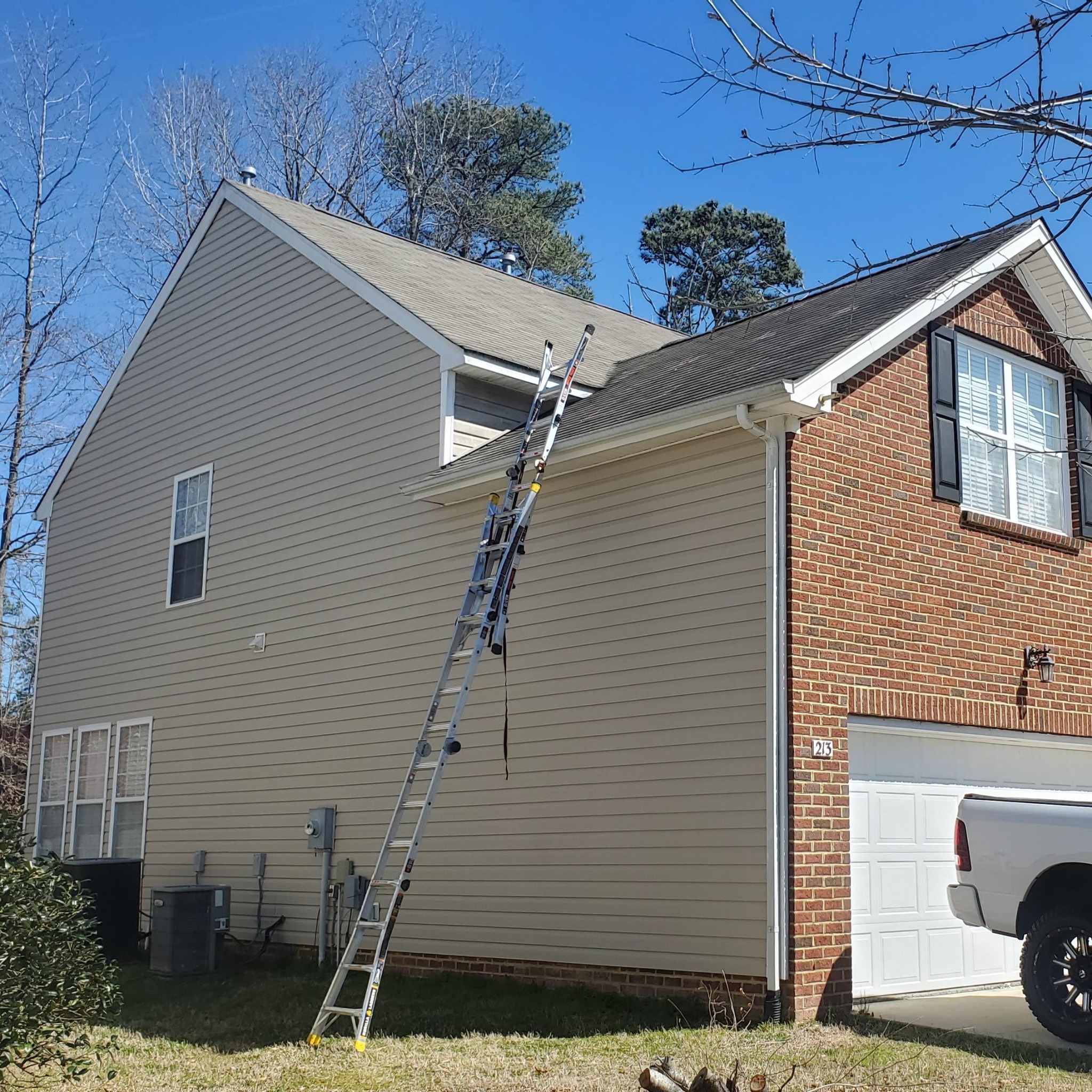
My husband sat on the bottom rung of his own ladder last Tuesday and couldn't make himself climb it. He's been a roofer in Macon for 38 years. He built that ladder a reputation. Not the other way around. I pulled into the driveway around 7:15 in the evening and there he was, still in his harness, sitting on the bottom rung with his hard hat in his lap, watching the sun go down behind the Hendersons' magnolia tree across the street. He didn't see me pull in. I sat in the car for a full minute with the engine off, just watching him. A man I've been married to for 34 years. A man who used to scramble up a 32-foot extension ladder like it was a step stool. Sitting on the first rung like a child who couldn't reach the kitchen counter. I didn't get out right away. Because I knew if I got out, he'd stand up. He'd say he was just resting his eyes. He'd haul that ladder back into the bed of the truck like nothing happened, and we'd eat dinner, and he'd pretend, and I'd pretend, and we'd keep pretending. So I sat there in the car and I cried, and I'm telling you about it now because if you've ever watched a strong man sit down and not get back up, you already know exactly what I'm talking about, and the rest of this might be the most important thing you read this month. Let me back up. My name is Janelle. I'm 57. I work part time at the front desk of a dental office on Pio Nono Avenue and I've lived in the same house in Macon, Georgia my entire adult life. My husband's name is Dale. Dale Whitfield. Whitfield Roofing & Gutters. The name is on the side of the truck. The name is on the polo shirts. The name is on the magnetic sign we stick to my Buick when I help him drive supplies out to a job in Warner Robins. Dale started roofing when he was 18 years old. He worked for a man named Henry Pelt for 12 years, learned everything he knew, and started his own company in 1998 with a used Ford F-150 and 1,200 dollars he'd saved up in a coffee can. He's never missed a day of work in his life. Not when his back went out in 2007. Not when his daddy passed in 2014. Not when our daughter Lacey had her appendix out and he climbed off a roof in Forsyth and drove 90 miles back to the hospital and was back on the same roof by sunrise the next day. That's the man I'm telling you about. That's the man who couldn't make himself climb his own ladder. It started about 18 months ago. I want to say it started before that, but 18 months is when I first noticed something I couldn't explain away. He came home from a job in Gray and sat down in his recliner without taking off his boots. Dale never sits in the chair with his boots on. Ever. He stands at the back door and unlaces them and sets them on the rubber mat and then he comes in. That's been the rule for 34 years. But that night he just walked past the back door, past the mat, past the rule, and sank into the chair and closed his eyes. I asked him if he was okay. He said, "I'm just a little wiped, sweetheart." A little wiped. That was the start of the lie. Not a big lie. A little one. The kind of lie a man tells himself first and his wife second. Three weeks later he came home and his face was the color of the inside of a dirty dishwasher. Grey. Slack. Wet around the temples even though it had been overcast all day. I asked him what happened. He said the heat got to him on the Henderson tear-off. It was March. It was 64 degrees. I went to the medicine cabinet that night and I looked at the bottle of lisinopril he'd been taking since 2018. Twenty milligrams. Once a day. His doctor had told him at his last physical that his pressure was creeping up again and they were probably going to need to add another pill to the regimen. I stood there at the bathroom sink holding that orange bottle and I thought about all the men I'd seen go this way in our neighborhood. Bill Thurman across the street. Roofer. Sat down in his recliner one Saturday afternoon at 61 and never really got back up. Just slowly faded. Stopped going to the shop. Stopped going to church. Then one morning he didn't wake up. Earl Conyers two doors down. Carpenter. Same story. Different chair. My own father, who drove a milk truck for Mayfield Dairy until he was 66 and then sat down in 1989 and died of "his heart" three years later. I knew this script. Every woman in the south knows this script. You watch a man work like a mule for 40 years and then one day his body just submits the resignation he never would, and the chair takes him. I wasn't going to sit there and watch it happen to Dale. So I started paying attention. And what I saw over the next 18 months scared me more than anything has ever scared me. He stopped climbing the bigger ladders. He'd send his ground guy Reggie up instead. He covered for it. Said he wanted Reggie to "get more experience on the steeper pitches." Reggie has 22 years of experience. He didn't need more experience. Dale didn't want to climb. He started taking naps. Dale has never napped in his life. The first time I came home and found him asleep in the chair at 3 in the afternoon I thought he was dead. I stood in the doorway and waited to see his chest move. It did. I went back outside and sat in the car for ten minutes because I didn't want him to know I'd seen him. He started getting dizzy when he stood up too fast. He'd grab the doorframe. Hold it for a second. Then keep walking like nothing happened. I'd see him do it. He'd pretend he hadn't. He started forgetting things. Not big things. Little things. The name of the kid who delivers our paper. Whether he'd already taken his blood pressure pill that morning. Where he set the keys. His doctor added another medication. Then another. Three pills, by the end of last summer. Lisinopril. Amlodipine. Hydrochlorothiazide. A water pill that had him running to the bathroom four and five times a night and never quite catching up to himself. The numbers came down a little. The man came down with them. His doctor would look at the cuff and say "looking good, Dale, looking good," and Dale would smile and shake his hand and walk out to the truck holding the door frame, and we'd drive home in silence because what was there to say. The numbers were good. The man was disappearing. This was the part that broke me, and I'm telling you this because I think it might be happening in your house too, and you might be telling yourself the same lies I was telling myself. He was always tired now. Even on Sundays. He'd watch the Falcons game with his eyes closed half the time and then ask me what the score was at the end. He stopped wanting to go to Lacey's house for Sunday supper. He'd say he was looking forward to it all week and then Sunday morning he'd come out of the bedroom and say "Janelle, I don't know if I can do it today." He stopped going to Mancini's, which is a little hardware store on Vineville where he's been buying nails and caulk and sandpaper since 1989. Mr. Mancini's son Vincent runs it now and Vincent and Dale have a 30 year relationship that lives almost entirely inside that store. Dale stopped going because the parking lot is gravel and uneven and he didn't trust his legs on it anymore. He stopped wanting to drive at night. He stopped reaching for me in bed. He stopped, basically. The man stopped. And that Tuesday in October, when I pulled into the driveway and saw him sitting on the bottom rung of his ladder watching the sun go down, I knew the next stop on this train was the chair. The Bill Thurman chair. The Earl Conyers chair. I knew it like I know my own name. So I sat in the Buick and I cried, and then I got out of the car and I walked across the lawn and I said, "Dale, come inside. Reggie can finish the Hendersons tomorrow." He looked up at me with those grey-blue eyes that I have loved for 34 years and he said, "Janelle. I'm scared." That was the first time in 34 years of marriage I had ever heard that man use the word scared about himself. I made him eggs that night. Two eggs over easy with grits and a slice of tomato. The supper he eats when he's sick. He ate half of it and went to bed at 8:30. And I sat at the kitchen table and I opened my laptop, and I started reading. This is the part of the story that changed everything, and it started because of a woman named Loretta who I'd worked with at the dental office for 11 years before she retired. Loretta Pickens. 64. Lived out in Lizella in a house her husband Reggie built her. (Different Reggie. Macon is full of Reggies.) Her husband had been on three blood pressure medications. Sound familiar. He'd had a small stroke at 61. He'd come back about 70 percent of who he was. Loretta nursed him through it. I called Loretta the next morning from the dental office parking lot before I went in. "Loretta. I need to ask you something." "Janelle, you've never called me before 9 in your life. What's wrong." I told her about Dale on the ladder. About the chair. About the three pills and the dizziness and the man slowly disappearing inside the marriage. She was quiet for a long time. Then she said, "Janelle. After Reggie's stroke, I started reading. I went down a rabbit hole I didn't think I'd come back from. And I found something." She told me about a fruit. I almost laughed. I almost said Loretta come on now, my husband is sitting on the bottom of a ladder and you're telling me about a fruit. But Loretta is not a foolish woman. Loretta took care of Reggie for three years after a stroke. Loretta does not chase miracle cures. So I shut up and I listened. She told me about amla. She pronounced it the way she'd learned to. AHM-la. Indian gooseberry. Something used in Ayurvedic medicine in India for thousands of years. She said her hairdresser, a woman named Priya, had given her the name of it after Loretta confided in her one day about Reggie. And then Loretta said the thing that made me sit up straight in the front seat of my Buick. "It doesn't work like the pills work, Janelle. It works on the wall." The wall. I asked her what she meant. She said, "The inside of your blood vessels has a wall. A living wall. And that wall is the thing that tells your vessels to relax. When the wall is worn down, the vessels stay tight, and the pressure climbs, and the pills just force the vessels open while the wall keeps deteriorating underneath. That's why Reggie kept needing another pill, and then another, and then another. The pills weren't fixing anything. They were just managing a wall that nobody was supporting." I sat in that parking lot and I listened to a 64 year old retired dental hygienist explain endothelial function to me, and the world rearranged itself in my head. I went home that night and I read for four hours. I want to tell you what I found, because I'm not a doctor and I'm not a scientist and I needed it explained the way Loretta explained it to me. In English. Here's what's going on. The inside of every blood vessel in your body is lined with a single layer of cells called the endothelium. People call it the wall. The wall is alive. It's not just a pipe. It's a working tissue, and one of its main jobs is to produce a molecule called nitric oxide. Nitric oxide is what tells your blood vessels to relax. To open up. To let blood flow through without resistance. When you're young, the wall is healthy, and it produces plenty of nitric oxide, and your vessels stay open and flexible, and your blood pressure is what it should be. But years of inflammation, oxidative stress, processed food, sleep loss, work stress, sun exposure, age, all of it, wears that wall down. The wall stops producing as much nitric oxide as it used to. The vessels stay tight. Blood has to force its way through. The pressure climbs. And here's the part nobody told us. The harder blood pushes through, the more stress it puts on the wall. Which makes the wall worse. Which makes nitric oxide production drop more. Which makes the pressure climb higher. It's a cycle that feeds itself. That's why Dale was on three pills. That's why Loretta's Reggie was on three pills. That's why almost every man in our neighborhood over 60 is on three pills. The pills don't get to the wall. The pills force the vessels open from the outside while the wall keeps deteriorating underneath. That's why doctors keep adding pills. The wall is going downhill and the pills are running a marathon to keep up with it. That's what I read on a Tuesday night with my husband asleep in the next room. And then I read about amla. Amla contains compounds called emblicanins. These compounds have been studied for their ability to support the endothelial wall. Not force the vessels open. Support the wall itself. So the wall can do what it was built to do, which is produce its own nitric oxide. Researchers have looked at amla in human trials for things like endothelial function, oxidative stress, and blood pressure markers. The work points in the same direction. When the wall is better supported, the body's own ability to relax its vessels can start coming back. The pressure can ease, not because something forced it down, but because the body remembers how to do what it used to do on its own. That sentence is the one that hit me in the chest. The body remembers how to do what it used to do on its own. Because Dale's body remembered. I knew Dale's body remembered. I'd watched it for 34 years. The man who climbed 32 foot ladders and ate ribs at midnight and could go 14 hours on a roof in August. That man was still in there. He hadn't gone anywhere. The wall had just gotten so worn down that his body couldn't do what it knew how to do. I ordered Alevia's Amla that night. I found it at alevia.com/amla/33. I bought two bottles because Loretta told me to. She said when you find something that supports the body the way it actually works, you don't want to be the woman waiting on a backorder. It came Friday. I want to tell you what happened, and I want to be honest about it because I'm not in the business of selling fairy tales. I'm a 57 year old woman with a dental office job and a husband I love. I'm not paid to lie to you. Week one, I noticed Dale slept differently. He wasn't getting up four times a night anymore. (He's still on his pills. He didn't change those. He still talks to his doctor about those.) The bathroom trips dropped. Then I noticed he wasn't grabbing the doorframe in the morning. He'd just stand up. Walk to the kitchen. Pour the coffee. Week two, he asked me on a Sunday if I wanted to drive out to Forsyth and look at the leaves changing. He hadn't asked me to do anything spontaneous in two years. Week three, I came home from work and the lawn was mowed. He'd done it himself. The man hadn't pushed a mower in 14 months. He said it just felt like a thing he could do, and so he did it. Week four, he climbed the ladder on a job in Bonaire. Not all the way to the peak. About halfway. But he climbed it. Reggie told me about it on the phone because Dale didn't tell me. He didn't tell me because he didn't want to make a big deal of it. He just wanted to climb the ladder. Week six was the morning I caught him standing at the kitchen window looking out at the backyard with a cup of coffee in his hand, and he turned to me and he said, "Janelle. Do you remember when we used to have people over for the Fourth of July? Maybe we should do that again next year." I had to turn away because I didn't want him to see me cry. That man had not talked about next year in 18 months. He'd been living in the present tense of a man who didn't think there was a next year for him. Now let me tell you what I think is happening, because I want you to understand it the way I came to understand it. The pills are doing what the pills do. They're forcing the vessels open. They're keeping the numbers manageable. They're a tool. Dale's doctor hasn't taken him off any of them and I'm not telling you to take your person off any of theirs. That's between you and your doctor. But the pills were never going to support the wall. The wall is the thing that decides whether your body can do this on its own or not. And when the wall is supported, the cycle that was feeding itself starts breaking. The vessels relax a little more on their own. The blood doesn't push as hard. The wall isn't under the same stress. It can start functioning more like it used to. You don't feel that on the first day. You feel it about week two. It shows up as energy. As the willingness to drive out to look at leaves. As mowing the lawn. As reaching for your wife in bed on a Sunday morning. As climbing the ladder. It shows up as the man coming back. Now I want to talk to you for a minute, woman to woman, because I think you might be in this story. I think you might have a Dale. Maybe your Dale is a roofer. Maybe he's a mechanic. Maybe he's an HVAC guy or a long haul driver or a high school football coach or a retired postal carrier or the guy who runs the meat counter at the Piggly Wiggly. Maybe your Dale has been on two or three pills for years. Maybe his numbers are "fine." Maybe his doctor keeps saying "looking good, looking good" while your husband holds the doorframe to keep from falling over. Maybe your Dale isn't reaching for you anymore. Maybe your Dale is sitting on the bottom rung of his own ladder. I want you to know something. The man is still in there. He hasn't gone anywhere. The wall has just gotten worn down, and his body has stopped being able to do what it knew how to do. You can support the wall. That's it. That's the whole thing. You support the wall, and the body remembers, and the man comes back. Not because anything got forced. Because his body did what bodies are designed to do when they finally get the right kind of help. Alevia's Amla is the only thing I've found that works on the wall instead of around it. It's a concentrated extract of the Indian gooseberry, made in the USA, two capsules a day. 30 day bottle. They have a 90 day money-back guarantee, which means if you give it 90 days and you don't see your person come back the way Dale came back, you send it back and you get your money. Every penny. Think about that for a minute. Dale has been on lisinopril for 8 years. Nobody offered me a refund when he started holding the doorframe. Nobody offered me a refund when he stopped climbing his own ladder. Nobody offered me a refund for the 18 months I sat in my car and cried before I figured out what was happening. The pharmaceutical system doesn't do refunds. Alevia does. That tells you something about who's confident in their product and who's just confident in their subscription. If you've been watching the man you love disappear inside a body that used to be his, and you've been told the numbers are "fine" while you watch him fade, please. Go to the website. Read it for yourself. You're risking nothing. He's already risking everything. 👉 alevia.com/amla/33 P.S. You'll know it's working before any blood pressure cuff confirms it. With Dale, it was the bathroom trips first. Then the doorframe. Then the lawn. Then the ladder. Your body tells you the wall is doing better long before any machine does. If you've been watching your husband slow down on three pills, you've gotten used to it. You've adjusted. You've lowered the bar so gradually you've forgotten where it used to be. When it starts coming back, even a little, you'll notice. Because you'll remember who he was. And you'll realize he's still in there. P.P.S. Alevia's Amla has a 90 day money-back guarantee. If you don't see your person come back, every penny back. No questions. The drugs Dale has been on for 8 years don't come with a money-back guarantee. Neither does the next one his doctor will prescribe. Think about what that tells you about confidence. P.P.P.S. Alevia is a small American company. They've sold out before. Loretta told me she had to wait 11 days the second time she reordered for Reggie. I keep two bottles in the house now. One for Dale, one as a backup. Because I'm not going back to the Buick. I'm not going back to the bottom of the ladder. If your husband's next checkup is in 30 or 60 days, and you want him walking into that office with a body that's actually coming back instead of a chart that's been quietly managed for a decade, go now. They currently have a buy 3 get 2 free deal that I used to stock up. Every day the wall keeps deteriorating is another day the cycle keeps spinning. Dale waited 18 months. Don't let your husband wait another week. P.P.P.P.S. Do not forget about the 90 day money-back guarantee. You're risking nothing. Dale was risking everything. 👉 alevia.com/amla/33
Like this ad? Make it yours.
Crush rebuilds this exact creative around your product — your brand, your colors, your offer — in about a minute.