
Inactive· since Apr 8, 2026
- 126
- days it ran
- 3
- relaunches
Ad copy
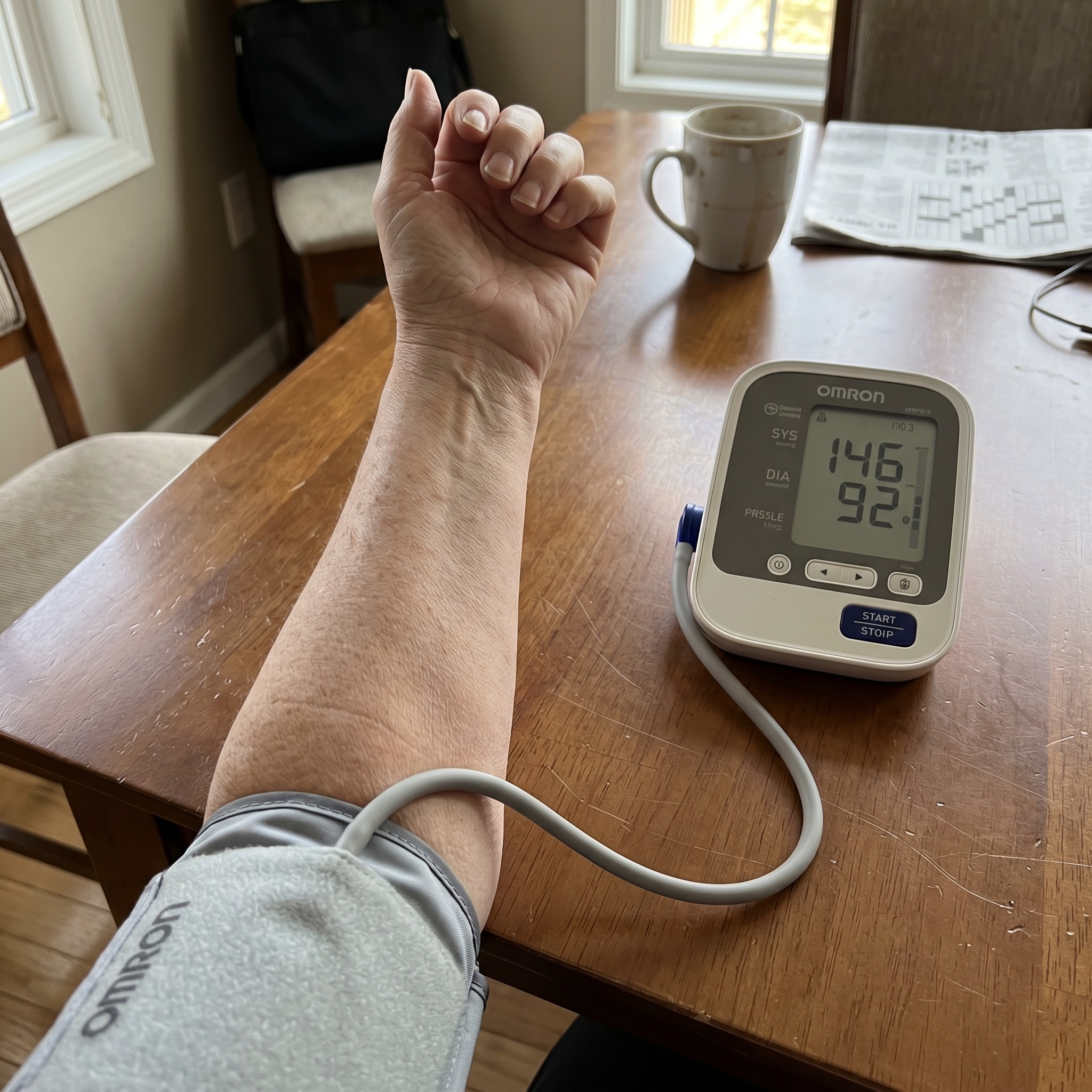
I've been on Lisinopril for 9 years. I've been a barber for 38. A husband for 31. A grandfather for 8. The drug gave me perfect blood pressure. Then it gave me a cough that nearly took everything. I need to tell you what happened, because if your blood pressure is high and you're taking an ACE inhibitor, a beta blocker, or a diuretic, or trying to bring it down on your own with beetroot, garlic, magnesium, and every other thing the internet says works, you need to read this. All of it. My name is Gene. I'm 63 years old. I opened my barbershop when I was 25, saved every dollar from 6 years of sweeping floors in somebody else's shop and put a deposit on a storefront that smelled like Pine-Sol and old carpet. Built it from nothing. Survived three recessions. Outlasted a strip mall demolition. Moved twice. Rebuilt twice. Never once closed. Not for COVID. Not for anything. I cut hair the way I was taught, straight razor fades, hot towel shaves, clean lines. My father was a barber. He gave me a leather strop when I opened my shop and said: "The day your hands can't hold the blade is the day you stop." I hung that strop on the wall and I've used it every working day for 38 years. Or I did. Until two years ago. My doctor put me on Lisinopril when I was 54. Blood pressure 168/102. He said 10 milligrams, take it in the morning, come back in 90 days. I didn't question it. Why would I? I was healthy. I was active. I was on my feet 10 hours a day cutting hair. But my numbers were high and he said the drug was the smart move. 90 days later my blood pressure was 132/84. He was thrilled. I was thrilled. The drug was doing exactly what it was supposed to do. Some dryness in my throat. A tickle that came and went. Nothing I thought twice about. I was 54. I talked all day for a living. Dry throat happens. By year three the tickle had a name. The cough. Not a cold cough. Not a clearing your throat cough. A dry, relentless hack that came from somewhere deep in my chest and wouldn't stop once it started. It hit without warning, a spasm that bent me over wherever I was standing and held on for 30, 40 seconds at a time. My ribs ached from the force of it. My throat felt like I'd swallowed broken glass. Mornings were the worst. I'd wake up at 5 AM coughing so hard my eyes watered. Spend 10 minutes in the bathroom hunched over the sink, hacking into a towel, drinking warm water, waiting for it to pass. 10 minutes. Every morning. Standing over the sink trying to get my lungs quiet enough for a day of work they used to get through without a single interruption. I told my doctor. He checked the monitor. Took my pressure. "Your blood pressure is 130 over 82. These are excellent numbers, Gene. Whatever we're doing, keep doing it." I said: "I'm not asking about my blood pressure. I'm asking about the cough." He said a dry cough is a known side effect of ACE inhibitors. Affects some patients. For most people, the cardiovascular benefits significantly outweigh the risks. He'd keep an eye on it. Keep an eye on it. Easy to say when the cough isn't interrupting your career 20 times a day. By year five the straight razor was gone. Not all at once. I didn't wake up one morning and decide to stop. It happened in pieces. First I stopped offering straight razor shaves to new customers, told myself I was just being cautious. Then I stopped doing them on days the cough was worst. Then those days became most days. Then it was clippers only, all the time, for everyone. You can control a tremor if you go slow enough. You cannot control a cough. It comes when it comes. And when it comes while you're holding a blade against a man's neck, there's nothing between that blade and a cut except the fraction of a second it takes you to pull away. That's not a risk I was willing to take with someone's throat. Men used to drive across town specifically for my straight razor fade. I could sculpt a hairline with a blade the way some people use a pencil, precise, fluid, instinctive. That wasn't a skill I learned in a year. That was 32 years of muscle memory built one stroke at a time. And I had to put it down. Not because my hands couldn't do it. Because my body couldn't be trusted not to spasm while they did. Customers started noticing. Nobody said anything. You don't tell your barber his cough scares you the same way you don't tell a lion it's limping. But I heard the room go quiet every time a fit hit. I saw the man in the chair tense up when my breathing changed. I saw the guys waiting exchange looks when a hack echoed off the tile. I started timing my cuts between fits. Waiting for a clear window, working fast, then stepping back when I felt the tickle building. A man who's cut 200,000 heads of hair doesn't suddenly step away from the chair every 5 minutes unless something is wrong. I was working around a cough the way you work around a broken tool. Except the broken tool was my own chest. And the cough was just the loudest problem. Underneath it, the exhaustion was building. The drug that controlled my blood pressure drained the energy out of the rest of me. By year five I was dragging through the last 3 hours of every day. The brain fog settled in like a second skin. I'd forget a regular's name, something I'd known for a decade, and have to check my book. A man who carried 400 customers in his head was writing names on sticky notes behind the counter. The leather strop, my father's strop, started gathering dust. I went back to my doctor. Told him the cough was worse. Let him hear it, right there in the exam room, a fit that lasted 45 seconds while he watched. Told him I couldn't do straight razor work anymore, the thing that made my shop my shop, the thing men drove across town for, the thing my father taught me, gone. Because the drug he prescribed was making my body spasm while I held a blade. He looked at my chart. "Gene, your blood pressure is 128 over 80. These are excellent numbers. I understand the cough can be frustrating, but the cardiovascular protection Lisinopril provides at your age is significant. The benefits outweigh the risks. I'd strongly recommend you stay on it." The benefits outweigh the risks. He said it the way you'd compliment a child's report card. Like the number on the cuff was the only thing that mattered. Like the man attached to the cuff, the man whose career was dying, whose customers were disappearing, whose father's strop was collecting dust, was irrelevant. I decided if the doctor wasn't going to fix the problem, I'd fix it myself. Maybe I could get my blood pressure down far enough naturally that I could get off the Lisinopril. Get rid of the cough. Get the razor back. So I tried everything. And I mean everything. I started with the diet. Cut every grain of salt I could find. Threw out everything processed. Bought a blood pressure cookbook and followed it to the letter. Every morning at 5 AM, standing over the stove making meals so bland my wife stopped eating with me. I did that for a year. A full year. 365 days of food that tasted like nothing. My blood pressure dropped maybe 4 points. 4 points. And the cough was still ripping through me every morning. Beetroot. The big one everyone recommends for blood pressure. Nitric oxide, they said. Opens your vessels naturally. I bought the juice, the powder, the capsules. Drank that earthy, dirt tasting juice every morning for 8 months. Stained my countertop. Stained my teeth. Stained everything it touched. My blood pressure? Nothing. 8 months of drinking liquid dirt and not a single point moved. Garlic. Raw garlic. I'd crush 2 cloves into a glass of water and drink it every morning before I opened the shop. Somebody at the health food store told me allicin thins the blood and lowers pressure. I did that for 3 months. My wife made me sleep in the guest room. My customers started sitting as far back in the chair as possible. I smelled like an Italian restaurant at closing time. Blood pressure came back basically unchanged. My doctor glanced at the readings and said: "Your blood pressure looks great, Gene. Keep taking the Lisinopril." I could have put my fist through the wall. But a coughing fit doubled me over before I got the chance. After that I tried everything else I could get my hands on. Magnesium. 3 different forms because the internet said the wrong type doesn't absorb. Fish oil. CoQ10 because I'd read it helps the heart. Hibiscus tea every evening. Hawthorn berry capsules. Potassium supplements. Apple cider vinegar. Celery seed extract. Deep breathing exercises for 20 minutes a day because my doctor said stress management helps. Some for months. Some for weeks. None of them moved the needle. My kitchen counter looked like a pharmacy. My wife counted the bottles one night and said: "You have more pills than the Lisinopril was supposed to replace." She was right. And the worst part? Through all of it, my blood pressure barely moved. And the cough kept getting worse. I was doing everything you're supposed to do. Everything the blogs say. Everything the health food store recommends. Everything the guy at work swears by and everything the lady at church credits for her numbers dropping. None of it worked. And I couldn't figure out why. The day I almost closed my shop was a Thursday in March. I was doing a straight razor lineup on a regular, a guy I'd been cutting for 16 years. I'd been having a good day. The cough had been quiet for over an hour. I thought maybe I could chance it. I picked up the razor. Touched it to his neckline. Started the stroke. And the cough hit. Not a tickle. Not a throat clear. A full spasm from deep in my chest that buckled my body forward. I jerked the blade away from his neck so fast I nearly cut my own hand. The razor clattered onto the counter. I doubled over coughing, one hand on the chair for balance, the other covering my mouth. When the fit passed, I straightened up. Looked in the mirror. The customer's eyes were wide. His hand was on his neck. He'd felt the blade pull away in a panic. There was no cut, I'd pulled away in time, but he knew what had almost happened. And so did I. He didn't say anything. I didn't say anything. I put the razor down. Finished with clippers. He paid and left. He didn't rebook. I sat in my own chair after he left. The shop was empty. 2 PM on a Thursday, a time when 4 guys should have been waiting. I sat there looking at my hands, palms up. Steady. Strong. There was nothing wrong with my hands. The problem was the body they were attached to. This isn't my body anymore. This is what's left of me after 9 years on a drug that was supposed to save my life. I looked at the photographs on the wall. The first dollar bill in a frame by the register. The leather strop. My father said the day your hands can't hold the blade is the day you stop. My hands could hold it. My lungs just wouldn't let them. I called my wife and told her I was thinking about closing. She was quiet for a long time. Then she said: "Don't close yet. Don't make that decision yet. Just... don't decide today." I didn't close. But I went home that night knowing something had to change. The Lisinopril was destroying me. The supplements weren't saving me. And my doctor was watching a number on a cuff while my career died. I didn't start with the right question. I started where everyone starts: "Why does Lisinopril cause a cough." 200,000 results. "ACE inhibitor cough won't stop." Millions. "Lisinopril side effects ruining my life." Forums full of people describing exactly what I was living. Teachers who couldn't get through a lesson. Singers who lost their voice. Nurses who coughed through every shift. I wasn't alone. I wasn't crazy. And I wasn't "just clearing my throat." But the search that changed everything was one I almost didn't click: "Why do people on blood pressure medication still have strokes." That's where I fell down the rabbit hole. And I didn't come back up the same person. Here's what 9 years of doctor visits never explained to me, and what every supplement I'd tried completely ignored: Your blood vessels aren't just tubes. They're living tissue. And the inside of every blood vessel in your body is lined with a thin inner wall, a layer of living cells that controls everything about how your blood flows. When that inner wall is healthy, it produces a molecule called nitric oxide. Nitric oxide is your body's natural signal that tells your blood vessels to relax and open up. When the wall is healthy and producing nitric oxide, your vessels expand and contract smoothly with every heartbeat. Blood flows through without resistance. Pressure stays balanced. You don't think about it the same way you don't think about breathing. It just works. But that inner wall is directly exposed to everything in your blood. Every bit of processed food you've eaten. Every blood sugar spike. Every stress hormone. Every chemical, every toxin, every year of inflammation. It all flows right across that wall, scraping against it, hour after hour, day after day, year after year. And over time, it wears that wall down. Roughens it. Damages it. Like the inside of an old pipe that's been corroding for decades. Once that inner wall is damaged, it stops producing nitric oxide. The molecule your body depends on to keep your vessels relaxed, the supply gets cut off at the source. Without nitric oxide, your vessels can't relax. They stay tight. Blood doesn't flow through the way it should. It has to force its way through. Your heart has to push harder with every single beat. That's high blood pressure. Not a mystery. Not genetics you can't control. A damaged inner wall that stopped producing the one molecule your body needs to keep your vessels open. But here's the part that explains why it keeps getting worse and never gets better on its own. The harder blood pushes through a damaged vessel, the more it tears up that inner wall. Every beat of your heart is pushing blood across a surface that's already raw and breaking down, and the force shreds it further. More damage means less nitric oxide. Less nitric oxide means the vessels tighten more. Tighter vessels mean blood pushes harder. Harder pushing means more damage to the wall. A cycle that feeds itself. And it's been running inside you for years. That's why your blood pressure was "a little high" 5 years ago, higher last year, and higher again at your last checkup. That's not aging. That's a cycle accelerating. For 9 years, Lisinopril had been forcing the number down. It blocks an enzyme in your body to pry your blood vessels open, regardless of what condition they're in. Less resistance, less pressure, the number on the cuff goes down. Doctor says "great." Chart looks clean. But that inner wall? Still damaged. Still corroding. Still not producing nitric oxide. Still getting shredded by every beat of your heart pushing blood across a raw, broken surface. The drug didn't fix the wall. It didn't restore nitric oxide production. It just forced the pipe open wider while the inside kept falling apart. My doctor was watching the smoke alarm. Nobody was checking for the fire. And here's where I saw my own cough in the research: Lisinopril blocks an enzyme in your body to force your blood pressure down. But that enzyme has another job your doctor never mentioned. It clears a chemical out of your lungs and throat. A chemical your body produces naturally, every day. When the drug blocks the enzyme, that chemical can't get cleared. It accumulates. Day after day, year after year. In your airways. In your throat. And your body does the only thing it can do to try to get rid of it. It coughs. That's the cough. Not a cold. Not a lung problem. Not something wrong with me. A chemical piling up in my chest because the drug shut down the system that's supposed to clear it. I read that and I heard it in my ribs. I heard 9 years of morning coughing fits in the bathroom. I heard the hacking that emptied the shop. I heard 38 years of steady breathing slowly being replaced by a spasm I couldn't control because the drug was causing it as part of how it works. That's not a side effect. That's the drug doing what it does. And nobody told me. 1 in 5 people on ACE inhibitors develop the cough. That's not a rare complication. That's millions of people coughing every day. And doctors keep charting it as "common but manageable" while their patients can't get through a lesson and can't finish a conversation and can't hold a blade near a man's neck without their body betraying them. And here's what finally explained why everything else I tried also failed: That damaged inner wall is the starting point for everything. When the wall is damaged, it can't produce nitric oxide. Without nitric oxide, vessels stay tight. Tight vessels mean high pressure. High pressure means more damage. The cycle keeps spinning. Beetroot adds more nitric oxide from the outside. Sounds smart. But your body already makes nitric oxide. It always has. The problem was never a shortage you could fix by adding more from a bottle. The problem is the wall that produces it is damaged. Adding more nitric oxide to a system with a broken wall is like pouring water into a bucket with a hole in the bottom. Doesn't matter how much you pour in. The bucket is broken. And the garlic? The magnesium? The fish oil, the hawthorn, the hibiscus, the CoQ10, every supplement I could find? Every single one of them was working AROUND the wall. Garlic thins the blood flowing through the vessels but doesn't touch the vessels themselves. Magnesium relaxes the smooth muscle wrapped around the outside but can't reach the inner wall. Fish oil calms inflammation floating in the blood but can't repair structural damage already carved into the surface. None of them can fix the inner wall that controls everything. I spent 2 years treating everything around the wall. Nobody fixed the wall. That's why I could cut every grain of salt from my diet for a year and watch my blood pressure drop 4 points. That's why I could drink beetroot juice until my teeth were stained and my countertop looked like a crime scene and still see my numbers unmoved. That's why I could fill my kitchen counter with bottles and spend $200 a month and still sit in my own barber chair on a Thursday afternoon wondering if I had to close my shop. Everything I'd tried, the drug AND the natural alternatives, was aimed at the blood flowing through. Nothing had fixed the wall the blood flows against. So I went back to the research. And I searched for the thing I should have been searching for from the beginning: "what repairs the inner wall of blood vessels." That's when I found something I'd never heard of. And by the end of that night, I understood why nothing else had worked. It's an ancient remedy. A fruit that's been used for over 5,000 years by Himalayan healers. They called it "the nurse." It was the one remedy they reserved for people whose bodies were breaking down from the inside. People whose circulation was failing. People aging faster than they should. They didn't understand why it worked back then. They just watched the results happen over thousands of years. It's called Amla. I'd never heard of it. You probably haven't either. That bothered me at first, if this worked, wouldn't I have seen it at the health food store next to the beetroot that didn't work and the hawthorn that did nothing? But you can't patent a fruit. And there's no billion dollar industry built around something that grows on a tree. Then I looked at the research. And I stopped caring that I'd never heard of it. Because modern science now knows exactly why it worked. Amla contains specific compounds called emblicanins. Antioxidants found ONLY in this fruit. When scientists tested the antioxidant strength of over 3,000 foods, Amla ranked number one. Not blueberries. Not turmeric. Not green tea. Amla. And it wasn't close. Here's what emblicanins do. They repair the damaged inner wall of your blood vessels. The free radicals that have been corroding your inner wall for years, the ones created by stress, processed food, sugar, and just getting older, emblicanins find them and neutralize them. Not in your blood like fish oil. Not around the outside like magnesium. Not adding more nitric oxide like beetroot. Directly on the inner wall itself. Where the actual damage is happening. When the assault stops, the wall starts to heal. The raw, corroded surface that hadn't been able to do its job in years begins to rebuild. And when the wall heals, something happens that no medication and no supplement has ever been able to do. It starts producing nitric oxide again. On its own. The way it did when you were younger. Your body's own natural signal that tells your blood vessels to relax. The same molecule that beetroot tried to replace from the outside. Your wall starts making it again from the inside. You didn't need more nitric oxide from a bottle. You needed to fix the wall that produces it. When nitric oxide production comes back, your vessels relax on their own. Not because a drug is forcing them. Not because a supplement is flooding the system. Your vessels open because the wall is working again and telling them to open. The way the system was designed. When vessels relax, blood flows through without forcing. Your heart doesn't have to push as hard. The pressure on the walls drops. And when the pressure drops, the wall stops getting shredded. The cycle that's been running for years finally breaks. Pressure comes down. Not because something overrode your body. Because your body is doing what it already knows how to do. You just had to fix the wall first. Then I found the clinical trial that made me sit back in my chair. 500 milligrams of standardized Amla extract went head to head with Simvastatin, one of the most widely prescribed cardiovascular drugs in the world, in 60 patients over 42 days. The Amla matched it. Blood pressure dropped. LDL cholesterol came down. Inflammation markers declined. Without blocking enzymes your lungs depend on. Without a chemical piling up in your chest. Without the cough. Without the exhaustion. A fruit. Matching a pharmaceutical drug. In a published, peer reviewed clinical trial. And I'd never heard of it because you can't patent something that grows on a tree. I'll be honest. I almost didn't try it. I'd spent 2 years trying things that didn't work. I'd been burned by beetroot that stained everything and moved nothing. By garlic that cleared the room. By magnesium that gave me stomach cramps. By hibiscus tea that tasted fine and did nothing. Bottles on my counter and nothing to show for it except lighter pockets and the same hacking cough. But this was different. I could see it was different. Not because the marketing was better but because the mechanism was different. Everything else I'd tried was working around the wall, adding more nitric oxide, thinning the blood, calming the muscles. This was working ON the wall. Repairing the damage that caused everything. Restoring the surface that produces nitric oxide on its own. And it wasn't blocking the enzyme that clears your lungs. It wasn't flooding your chest with a chemical your body can't handle. It was letting my body do what it was supposed to do. I found a company called Alevia that makes a standardized Amla extract. Not cheap fruit powder, not ground up scraps with no consistency. A clinical strength extract, verified to contain the concentration of emblicanins that actually produces results. Organic. Third party tested for purity and potency. Made in the USA. I talked to my doctor about tapering the Lisinopril with weekly blood pressure monitoring. He wasn't thrilled. But I told him my lungs couldn't wait for him to be thrilled. We agreed to reduce the dose first and monitor weekly. I ordered Alevia's Amla that night. The first thing that changed was the energy. Day 4. I made it to 5 PM. Not dragging. Not sitting in my own chair at 4 because my legs felt like concrete. Just working. The way I used to. The afternoon crash that had been flattening me for years didn't come. I stood in my shop at closing time and realized I wasn't exhausted. I'd forgotten what that felt like. By week 2, the brain fog was thinning. A regular walked in and I said his name before he sat down, his wife's name, his daughter's name, the cut he always gets. It was all just THERE the way it used to be. The sticky notes behind the counter started to feel unnecessary. And my blood pressure, which I was checking every morning, was holding steady even as my doctor started lowering the Lisinopril dose. 126/78 on a reduced dose. The wall was starting to work. Week 3, the cough began to break. Not all at once. But the fits were shorter. Less violent. I went 2 hours without coughing one afternoon, the longest stretch in years. Then 3 hours. Then I did an entire cut, start to finish, and my chest stayed quiet. A customer closed his eyes in the chair. First time in months someone had done that. He wasn't bracing for the next fit. He just leaned back and closed his eyes the way you do when the room is quiet and you trust the person holding the clippers. Week 4, my doctor took me off Lisinopril completely. My blood pressure was 122/76 with no medication. He wasn't thrilled. But the numbers were the numbers. And then it happened. I woke up on a Tuesday morning. 5 AM. Lay there in the dark, waiting. Waiting for the cough. The hacking fit that had started every morning for the past 5 years. The 10 minutes hunched over the sink. The raw throat. The watering eyes. Nothing. I took a breath. Deep. All the way in. Held it. Let it out. Silence. I took another breath. Deeper. Filled my chest until it ached. Not from coughing. From air. Just air, going in and coming out, the way it's supposed to. I lay there in my bed at 5 AM and cried. Because I'd forgotten what silence sounded like inside my own chest. Week 6, a new customer sat down and asked if I did straight razor fades. I said not right now. He said "that's too bad, I heard you were the best." I looked at my hands. Steady. Strong. There had never been anything wrong with my hands. They'd been ready the whole time. It was the rest of me that had been broken. I thought about it for the rest of the day. Last Saturday. One of my regulars, a guy I've been cutting for 13 years, sat down in the chair. Normal cut. Normal day. I finished the sides, blended the top, cleaned up the neck. Good cut. Solid. And then I stopped. I walked over to the wall. Took down the leather strop, my father's strop. The one that had been gathering dust for over a year. I ran my thumb across the leather. It was dry. Needed conditioning. I didn't care. I picked up the straight razor. Opened it. Ran it across the strop. Slowly. Deliberately. The sound of steel on leather filling the shop. The other barbers looked up. The guys waiting looked up. Nobody said a word. I turned to my customer. "Hold still." The blade touched his neck. One long, unbroken stroke. Clean. Precise. Steady. The way I used to do it. The way my father taught me. The way I'd done it 10,000 times before the drug took it away. No cough. Not a tickle. Not a tremor in my chest. Just a blade and a steady hand and silence. When I finished the lineup I held the razor up where he could see it in the mirror. He looked at it. Looked at me. He'd been listening to me cough through his haircuts for 2 years. He knew what this silence meant. "Welcome back, Gene." I didn't trust myself to speak. I just cleaned the razor, hung the strop back on the wall where it belongs, and moved on to the next customer. When my regular went to pay, I shook my head. "This one's on me, brother." He understood. I ran bloodwork at 3 months. Off Lisinopril completely by then, tapered down over the first 4 weeks, fully off for the last 8 weeks. I was terrified. 9 years on an ACE inhibitor. Stopping it felt like jumping without a parachute. Every doctor I'd ever seen had told me I needed it. My blood pressure was 168/102 when I started. What if it shot right back up? The results: Blood pressure: 118/74. On Lisinopril it had been 132/84. OFF the drug entirely, my blood pressure was LOWER than it had been ON the drug. Let me say that again. Lower without the medication than with it. Not because a drug was forcing my vessels open while the wall kept corroding. Because my vessel walls were producing nitric oxide again and my vessels were relaxing on their own. Total cholesterol: 197. Had been 234 for years. My doctor never even talked about cholesterol because we were focused on the blood pressure. It came down on its own. Because when the vessel wall heals and the inflammation drops, your body stops overproducing cholesterol as a defense response. I hadn't taken a cholesterol drug. The Amla fixed the wall, and the cholesterol followed. HDL: 58. Had been 41 for as long as I could remember. A 17 point increase in the protective cholesterol, the one that actually cleans your arteries, the one that Lisinopril never improved, the one that 9 years of blood pressure medication and 2 years of supplements never moved a single point. 17 points in 3 months. CRP, the inflammation marker that measures the fire inside your vessel walls: 0.9. Had been 3.4. The fire that had been corroding my vessels for years was going out. Let me say that again. My numbers were BETTER without the drug than they were ON it. Better without the beetroot, the garlic, the magnesium, and every bottle on my kitchen counter. Better than all of it. I brought the results to my doctor. Set them on his desk. He studied them for a long time. "You stopped the Lisinopril," he said. Not a question. "8 weeks ago." "What are you taking instead?" I told him. Amla. The emblicanins. The vessel wall research. The clinical trial. The 5,000 years of use. He listened. When I finished he said: "I'm going to be honest with you. I don't know enough about this yet. But your numbers don't lie. And you look like a different person than the man who was sitting in that chair coughing 6 months ago." He was right. I was a different person. Because for 9 years a drug had been slowly destroying my quality of life, and in 3 months, I'd come back. He didn't tell me to go back on Lisinopril. First time in 9 years he didn't say "keep taking it." I'm writing this for every man sitting in a chair somewhere, a barber chair, a desk chair, a truck seat, a workbench, who can't stop coughing. Whose energy is gone. Whose brain feels wrapped in cotton. Who feels 10 years older than he should because a pill has been draining the life out of him one day at a time. 38 years. I wasn't ready to stop. If you're on Lisinopril, or Enalapril, or Amlodipine, or any blood pressure medication, and the cough won't stop, your energy is gone by 2 PM, your brain feels foggy, you're dizzy when you stand up too fast, your sex drive disappeared and nobody will tell you why... If you've been trying to manage your blood pressure naturally, the beetroot, the garlic, the magnesium, the supplements that cost you $200 a month, and your numbers won't budge... If your doctor keeps watching a number on a cuff while your body falls apart... If you've been told "the benefits outweigh the risks" by someone who doesn't have to live with the risks... Maybe it's not aging. Maybe it's the drug. And maybe everything you've tried is working around the wall while the wall itself keeps corroding. Inside your blood vessels. Where the inner lining that controls everything is damaged. Where nothing you've taken can repair it. I spent 9 years on a drug that lowered a number while the damage underneath kept building. Then I spent 2 years and thousands of dollars on supplements that were never going to reach the real problem. Alevia's Amla addressed it. The emblicanins repair the damaged inner wall of your blood vessels, the one thing the medication never fixed and the supplements never reached. No enzyme blocking. No chemical buildup in your lungs. No cough. No exhaustion. Alevia uses a specialized extraction process that preserves the active compounds at clinical strength. Organic. Third party tested for purity and potency. Made in the USA. 2 capsules every morning. That's it. That's the difference between a supplement that sits in your system doing nothing and one that actually repairs the wall driving your blood pressure up. Right now, they're running a promotion with significant savings. But Alevia is a small company. They make everything in small batches to preserve the active compounds. When they sell out, it's usually weeks before the next batch is ready. 90 days to try it. If nothing changes, full refund. No questions asked. But if it works? If by day 4 the afternoon crash stops coming and you make it to 5 PM feeling like a person again? If by week 2 the fog lifts and the names come back and your blood pressure holds even as your doctor starts lowering the dose? If by week 3 the cough begins to break and a customer closes his eyes in the chair because the room is finally quiet? If a month from now you wake up and take a deep breath and your chest is silent for the first time in years? If 3 months from now you're sitting in your doctor's office watching him stare at numbers he can't explain, and he says "whatever you're doing, keep doing it"? If your blood pressure is lower without the drug than it ever was on it? If the straight razor comes off the wall and your father's strop goes back where it belongs? You'll wish you started 9 years ago. I know I do. 👉 https://alevia.com/amla/8 You don't have to keep forcing a number down while the wall underneath keeps corroding.
Like this ad? Make it yours.
Crush rebuilds this exact creative around your product — your brand, your colors, your offer — in about a minute.