
Active· since May 29, 2026
- 111
- days running
- 1
- relaunches
Ad copy
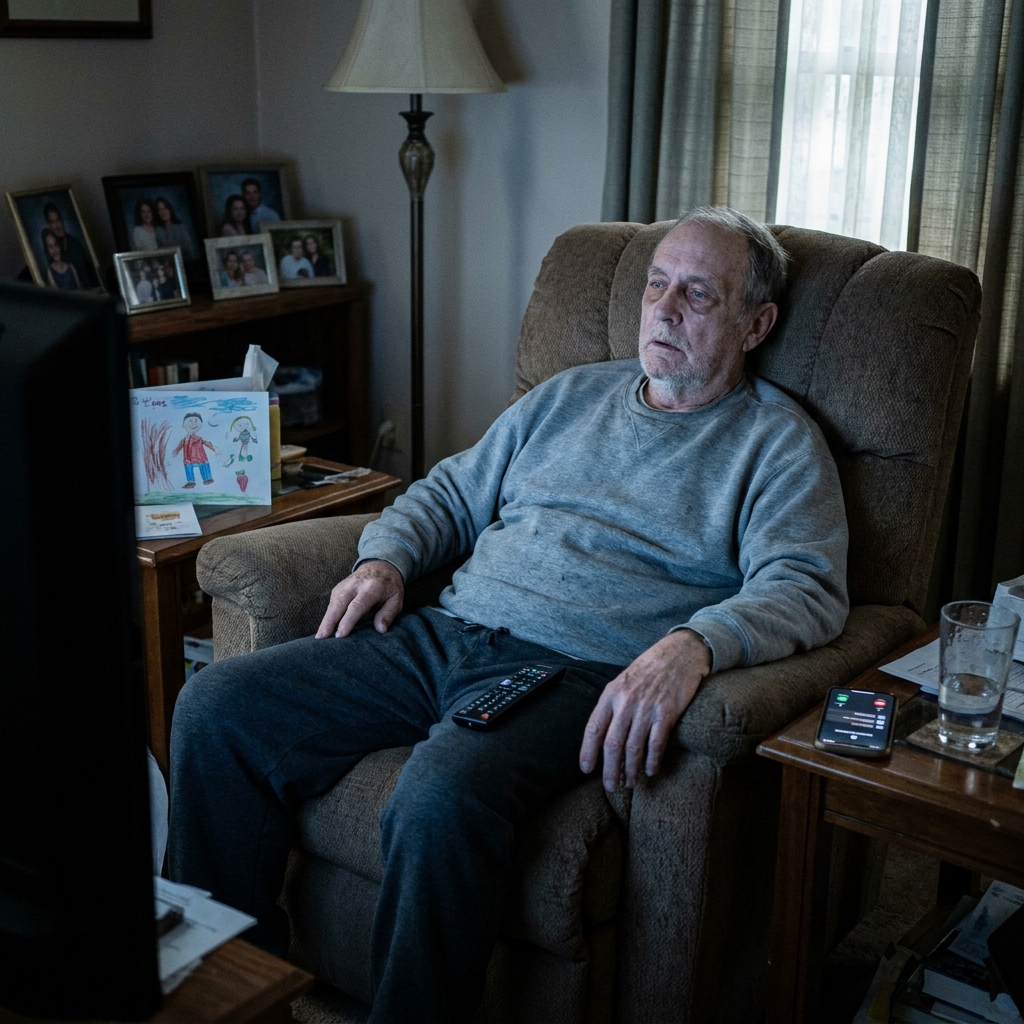
Parkinson's apathy has destroyed more marriages, more family relationships, and more caregivers' mental health than tremor and freezing combined. And almost nobody is talking about it. Forty percent of people living with Parkinson's develop apathy. Not sadness. Not depression. A total shutdown of the internal drive to want anything, do anything, or care about anything. The person you love is still sitting in the same chair, in the same room, breathing the same air. But the version of them that used to have opinions, make plans, laugh at the news, and reach for your hand in bed is gone. A woman sat in my office last March and described it better than any textbook I've read. "He's in the recliner when I leave for the grocery store. He's in the recliner when I get back. He doesn't ask about my day. He doesn't ask about the grandchildren. He doesn't want to go anywhere, do anything, see anyone. I have to beg him to shower." She stopped talking for a moment. "The man I married 42 years ago would have rebuilt the back deck by hand on a Saturday morning just because it needed doing. This person watches television for nine hours and falls asleep in the chair before dinner." Then she said the sentence I've heard from more spouses than I can count: "I miss my husband. Even though he's sitting right there." Her husband was alive. Sitting in my waiting room. His tremor was controlled. His walking had actually improved over the last year. By every clinical measure, his Parkinson's medication was doing exactly what it was supposed to do. And his wife was grieving him like he'd already died. Because the apathy had taken everything the medication couldn't protect. I'm a movement disorder specialist. I've worked with Parkinson's patients and their families for the last 19 years. And for most of that time, I focused on the things you can see. Tremor. Rigidity. Freezing. Gait. Balance. Those are the symptoms that show up on the rating scales. Those are the symptoms the medications target. Those are the symptoms that get all the research funding and all the attention. And for years, when a spouse would sit across from me describing Parkinson's apathy, I'd nod sympathetically, note it in the chart, and refer them to psychiatry. Because I assumed it was depression. Their doctors assumed it was depression. Their neurologists assumed it was depression. The textbooks I trained on barely mentioned anything else. So these patients got prescribed antidepressants. The most commonly prescribed class works by raising serotonin levels in the brain. The theory being: they've lost interest in life, they're withdrawn, they seem flat. That's depression. Raise the serotonin. Problem solved. Except the problem didn't get solved. I started tracking outcomes about eight years ago. Not a formal study. Just paying closer attention to what happened after these patients started antidepressants. And the pattern that emerged was disturbing. About a quarter of the patients whose spouses described this withdrawal, this flatness, this "he's physically here but mentally gone" syndrome, were already on an antidepressant when they came to see me. Their spouses reported no improvement. Several reported their partner seemed even more zoned out after starting the medication. Another group started antidepressants on my referral. Same thing. Weeks went by. Months went by. The withdrawal didn't lift. The couch didn't move. The hobbies didn't come back. And a small number of spouses told me something I couldn't ignore: "He was already pulling away, and ever since the antidepressant, it's like someone turned the dimmer switch all the way down." That's when I started reading the research that changed how I think about Parkinson's disease entirely. Here's what I found. Roughly 40% of people living with Parkinson's experience something called apathy. And apathy is not depression. This distinction matters more than almost anything else in this entire conversation, so I need to explain it clearly. Depression is a disorder of mood. You feel sad. You feel hopeless. You cry. You ruminate. You feel worthless. Depression lives in the brain's serotonin system, which is why antidepressants that raise serotonin levels can help. Apathy is a disorder of motivation. You don't feel sad. You don't feel hopeless. You don't feel much of anything. You simply lose the internal drive to initiate action. The part of your brain that used to say "I want to do that" or "that sounds enjoyable" or "let me get up and go" has gone quiet. More than half of Parkinson's patients who test positive for apathy do not have depression at all. They're two separate conditions, driven by two separate brain circuits. And here's the part that kept me up at night after I read it: The most commonly prescribed class of antidepressants raises serotonin. But serotonin can suppress dopamine activity. And dopamine activity in the brain's reward and motivation circuit is exactly what's already depleted in Parkinson's apathy. A major university study of 181 Parkinson's patients found that people taking this class of antidepressant had significantly higher apathy scores than people who weren't. A second study from the University of Florida, published in January 2025 with 400 patients, confirmed it. Twenty-six percent of participants were on this type of antidepressant, and they had measurably worse apathy. The Parkinson's Foundation now publishes patient education stating that medications used for depression can actually make apathy worse. Let me make sure you understand what this means. For years, the standard response when a Parkinson's patient's spouse said "he doesn't do anything anymore, he doesn't care about anything, he just sits there" was to prescribe a medication that targets serotonin. But the problem was never serotonin. The problem was dopamine. Specifically, dopamine in a very particular circuit that most Parkinson's medications don't adequately reach. Your brain has a motivation circuit. It starts in an area called the ventral tegmental area and projects to the reward center, then up to the parts of your brain responsible for deciding whether something is worth the effort. This circuit is what makes you want to call your daughter back. It's what makes you interested in the book you used to love. It's what makes Saturday morning feel like an opportunity instead of just another stretch of hours to fill. It's the reason you used to plan trips and look forward to dinner with friends and get excited about a project in the garage. When Parkinson's disease damages the dopamine neurons in this circuit, those impulses go silent. The standard Parkinson's medication replaces dopamine broadly. And it does a reasonable job restoring motor function. The tremor calms down. The rigidity softens. Walking improves. But the motivation circuit needs its own dopamine supply. And for roughly four out of every ten Parkinson's patients, the medication they're taking restores enough dopamine for their legs to work while leaving their motivation circuit starving. That's why a spouse can watch their partner's tremor improve and their walking get better and still feel like they're losing them. Because the body is getting what it needs and the person inside is disappearing. And on top of the dopamine depletion, there's a second force driving apathy that almost nobody talks about. Chronic neuroinflammation inside the brain. Your brain has its own immune cells. In Parkinson's disease, these cells become overactive. They stay locked in attack mode, releasing inflammatory signals that damage healthy neurons. And recent research from some of the most respected institutions in neuroscience has shown that these inflammatory signals directly suppress the motivation circuit. The pathway is specific and documented. Inflammatory molecules suppress dopamine neurons in exactly the brain region responsible for motivation and reward processing. The result is increased effort sensitivity and lower drive. In plain language: everything feels like more effort than it's worth, and nothing feels rewarding enough to bother. So you have a double problem. The disease is killing dopamine neurons in the motivation circuit. And neuroinflammation is suppressing the ones that are left. The standard medication doesn't address either of these problems specifically. And the antidepressant that gets prescribed when a spouse says "he's not himself anymore" is targeting the wrong brain system entirely. That's why the recliner doesn't move. That's why the hobbies don't come back. That's why begging, nagging, hiring trainers, scheduling activities, and crying in frustration doesn't change anything. The person you love isn't choosing to withdraw. Their brain's motivation circuit has lost the fuel it needs to generate the impulse to engage. No amount of external pressure can replace an internal signal that isn't firing. Here's what I started doing differently about five years ago. Instead of referring these patients straight to psychiatry, I started looking at what was happening in the emerging neuroprotection research. Specifically, I was looking for compounds that could support the brain pathways involved in motivation, reward processing, and cellular energy, without the dopamine-suppressing side effects of serotonin-based medications. Four compounds kept appearing across the literature. Not as treatments for apathy. None of them have been tested in a clinical trial for Parkinson's apathy specifically. I want to be transparent about that. But the mechanisms of action align with the exact circuits that are failing when apathy takes hold. The first is a compound from Lion's Mane mushroom. It stimulates the production of something called nerve growth factor. NGF supports the health and function of surviving dopamine neurons, including the neurons in the motivation and reward circuit. The research suggests it helps these neurons work at higher capacity, producing more of the signals the reward circuit depends on. The second is Cordyceps. This one targets cellular energy production at the mitochondrial level. Every neuron in your brain needs energy to fire. When mitochondrial function declines, neurons become sluggish. The motivation circuit doesn't just need dopamine. It needs the cellular energy to process dopamine signals and convert them into the impulse to act. Cordyceps supports that energy production. It's the difference between having fuel in the tank and having fuel plus an engine that can burn it. The third is Chaga mushroom, which directly addresses the neuroinflammation problem. Chaga crosses the blood-brain barrier and modulates the overactive immune cells that are suppressing dopamine activity in the reward circuit. Instead of staying locked in attack mode, these immune cells shift toward a protective function. The inflammatory signals that were dampening motivation start to quiet down. The fourth is Reishi extract. Poor sleep and chronic stress both accelerate the decline of the motivation circuit. Reishi supports deep, restorative sleep and reduces the stress response that compounds neuroinflammation. Parkinson's patients sleep badly. Bad sleep worsens inflammation. Worse inflammation suppresses motivation further. Reishi helps interrupt that cycle. None of these compounds is a treatment for Parkinson's apathy. I want to say that clearly. But together, they target four distinct mechanisms that are all contributing to the shutdown of the brain's motivation and reward system. Nerve growth factor for the neurons themselves. Cellular energy for the mitochondria powering those neurons. Anti-inflammatory support for the immune response suppressing those neurons. And sleep and stress recovery to stop the cycle from accelerating. What I started recommending to the caregivers in my practice was simple. Replace the morning coffee with a formulation containing all four of these compounds. Not a pill. Not another supplement bottle on a counter already lined with fifteen bottles. A cup of coffee that tastes like coffee, taken at the same time as their morning Parkinson's medication, with four neuroprotective compounds working alongside it. Here's the pattern I've observed in the families where the caregiver followed through. I'm not going to overstate this. Not every patient responds. Not every family sees the same timeline. And the improvements are not dramatic overnight transformations. They're small, specific changes that the caregiver notices before the patient does. The first thing caregivers notice, usually within the first two weeks, is a shift in sleep quality. The patient is sleeping more solidly through the night. Less restlessness. Less waking at 3am. The daytime napping that had stretched to four or five hours starts pulling back. Not disappearing. But a three-hour afternoon nap becomes ninety minutes. The patient is awake for more of the day. Then, around the second and third week, small initiations appear. The patient picks up the remote and chooses something to watch instead of staring at whatever was already on. They ask a question about dinner. They walk to the kitchen without being asked. They respond to a grandchild's phone call instead of letting it ring. These sound insignificant. They are not insignificant. For a caregiver who hasn't seen their partner initiate anything in eight months, a single unprompted question about what's for dinner can break them open. By the third to fifth week, the improvements become visible to people outside the household. An adult child who visits every other weekend notices their father is sitting upright at the table instead of slumped in the recliner. A neighbor comments that they saw them on the porch. The patient starts expressing preferences again. "I'd rather have the chicken." "Can we watch that show we used to like?" "I don't want to go to the doctor appointment, but I will." Expressing preferences. Making small decisions. Engaging with the texture of daily life instead of drifting through it passively. These are the earliest signs that the motivation circuit is receiving support it wasn't getting before. One of the wives I work with is 71 years old. Her husband was diagnosed with Parkinson's twelve years ago. His motor symptoms responded well to medication. But over the last three years, he'd gone from a man who built furniture in his workshop every weekend to someone who didn't leave the bedroom until noon and spent the rest of the day in front of the television. She told me she'd stopped inviting friends over because she was embarrassed. Not by the tremor. Not by the walking. By the fact that her husband would sit at the dinner table and not speak for the entire meal. She said their friends would look at her with pity, and she couldn't stand it. Three weeks after starting the four-compound coffee protocol, she called my office and asked to speak to me directly. She told me her husband had walked into the kitchen that morning and asked if she wanted him to make eggs. She was crying when she told me this. Not because making eggs is remarkable. Because he hadn't offered to do anything unprompted in over a year. The circuit that generates the impulse to do something for another person had been silent, and something had shifted. By week five, he was back in his workshop. Not building furniture. Organizing his tools. Standing at his workbench and looking at an unfinished project he'd abandoned eighteen months earlier. She told me: "I didn't realize how much of him I'd lost until pieces started coming back. I thought this was just what Parkinson's looked like. I thought he was gone." Another family I work with involves a 67-year-old patient and his adult daughter. She'd been driving two hours each way every weekend to check on her parents. Her father had stopped doing his physical therapy exercises. He'd stopped reading, which had been his lifelong passion. He'd stopped walking to the mailbox, which his physical therapist had set as a daily goal. His daughter told me she'd tried everything. She'd bought him books. She'd set up a Kindle with large print. She'd hired a trainer who came to the house three times a week. Her father would sit through the sessions with no resistance, but he never once did the exercises on his own between visits. "It's not that he can't," she told me. "His body works well enough. He just doesn't seem to care whether he gets better or worse. And that scares me more than the tremor ever did." Four weeks after the coffee protocol, her father asked his wife to drive him to the bookshop. He didn't buy anything. He browsed for twenty minutes and wanted to leave. But his daughter said she sat in her car in her own driveway that Saturday evening and cried for half an hour because her father had wanted to go somewhere. He'd generated the desire to leave the house and go do something. And she hadn't had to suggest it, plan it, or beg for it. A third case involves a 73-year-old woman whose husband had become her full-time caregiver. His wife had Parkinson's for nine years. For the last two, she'd been what he described as "a spectator in her own life." She'd sit in her chair and require him to interact with her constantly because she couldn't generate the initiative to read, watch television, or occupy herself independently. He told me the hardest part wasn't the physical caregiving. It was the silence. "She used to have opinions about everything. Strong ones. She'd argue with the news, critique every restaurant, tell me exactly what she thought about the neighbors. Now she just sits there." Three weeks into the protocol, he noticed she started watching the news and making comments. Small ones. A scoff at a politician. A remark about the weather. By week six, she was doing the crossword puzzle again. Not finishing it. Getting about halfway through before losing focus. But picking up the pen on her own, without being handed it. He told me: "I got pieces of her back. Not all of her. But enough to remember who she is." The pattern across these families is consistent, but I want to be honest about what it is and what it isn't. This is not a return to who they were before Parkinson's. The disease is still present. The damage to the motivation circuit doesn't reverse. What appears to be happening, based on what caregivers report and what the underlying science suggests, is that the surviving neurons in the reward and motivation pathways are receiving nutritional support they weren't getting before. Nerve growth factor for neuron health. Mitochondrial energy for signal transmission. Anti-inflammatory support to reduce the suppression of dopamine activity. Sleep and stress recovery to slow the cycle of decline. The result is not a cure. The result is that a circuit that had gone nearly silent starts producing enough signal for the person to re-engage with their own life in small but meaningful ways. And here's the part that the caregivers tell me matters more than anything else: The apathy creeps in so gradually that you stop noticing it. Your husband stops suggesting restaurants, and you assume he just doesn't have a preference. He stops calling his friends, and you figure he's tired from the medication. He stops touching you, and you tell yourself it's the disease. He sleeps until noon, and you let him because at least he's resting. And somewhere along the way, you stopped expecting anything different. You adjusted your life around his absence. You became his caregiver, his scheduler, his alarm clock, and his only source of human interaction. And you accepted that the person you married was gone, even though he's sitting right there in the recliner. That's not what 67 looks like. That's not what Parkinson's has to look like. That's what Parkinson's looks like when the brain's motivation circuit is starving for support and nobody has told you there's anything you can do about it other than prescribing an antidepressant that targets the wrong system. The four-compound protocol I recommend to my patients' families is available as a single daily coffee. Premium Blue Mountain coffee base with all four neuroprotective compounds. It tastes like coffee. It replaces their morning cup. It takes thirty seconds to prepare. No additional pills. No additional supplements. No additional willpower from someone whose brain has lost the ability to generate willpower. Just a cup of coffee that happens to deliver four compounds targeting the exact pathways behind motivation, reward processing, and cellular energy in the brain. The consumer trial results from 40 rehabilitation clinics and 520 patients showed that 89% reported sharper brain function and longer periods of sustained engagement within four to six weeks. The return rate on the last 10,000 orders was under half a percent. It costs about $1.35 per day. Less than the gas to drive to a therapist who can't make your partner care about going. Less than the trainer your spouse won't exercise for between visits. Less than the hobby supplies sitting untouched in the closet. 90-day money-back guarantee. If nothing shifts in the first five weeks, send it back. Every container. Even if they're empty. Full refund. No questions, no hoops, no hassle. But if the pattern holds, and for roughly three out of four families in my practice it has, three to five weeks from now you'll notice something small. A question they didn't have to be prompted to ask. A preference they expressed without being offered a choice. A moment where the person you've been missing looked at you and was actually present behind their eyes. Not because you found a cure for Parkinson's. Not because you did something your neurologist couldn't do. Because you supported the one brain circuit that their medication wasn't reaching and that their antidepressant was accidentally suppressing. And when that circuit got the nutritional support it needed, the person you love started showing up again.
Relieve Parkinson's Apathy - Naturally
Clinically designed 4-in-1 adaptogenic blend developed to finally free you from Parkinson's Apathy...
LEARN MORELike this ad? Make it yours.
Crush rebuilds this exact creative around your product — your brand, your colors, your offer — in about a minute.