James Whitaker
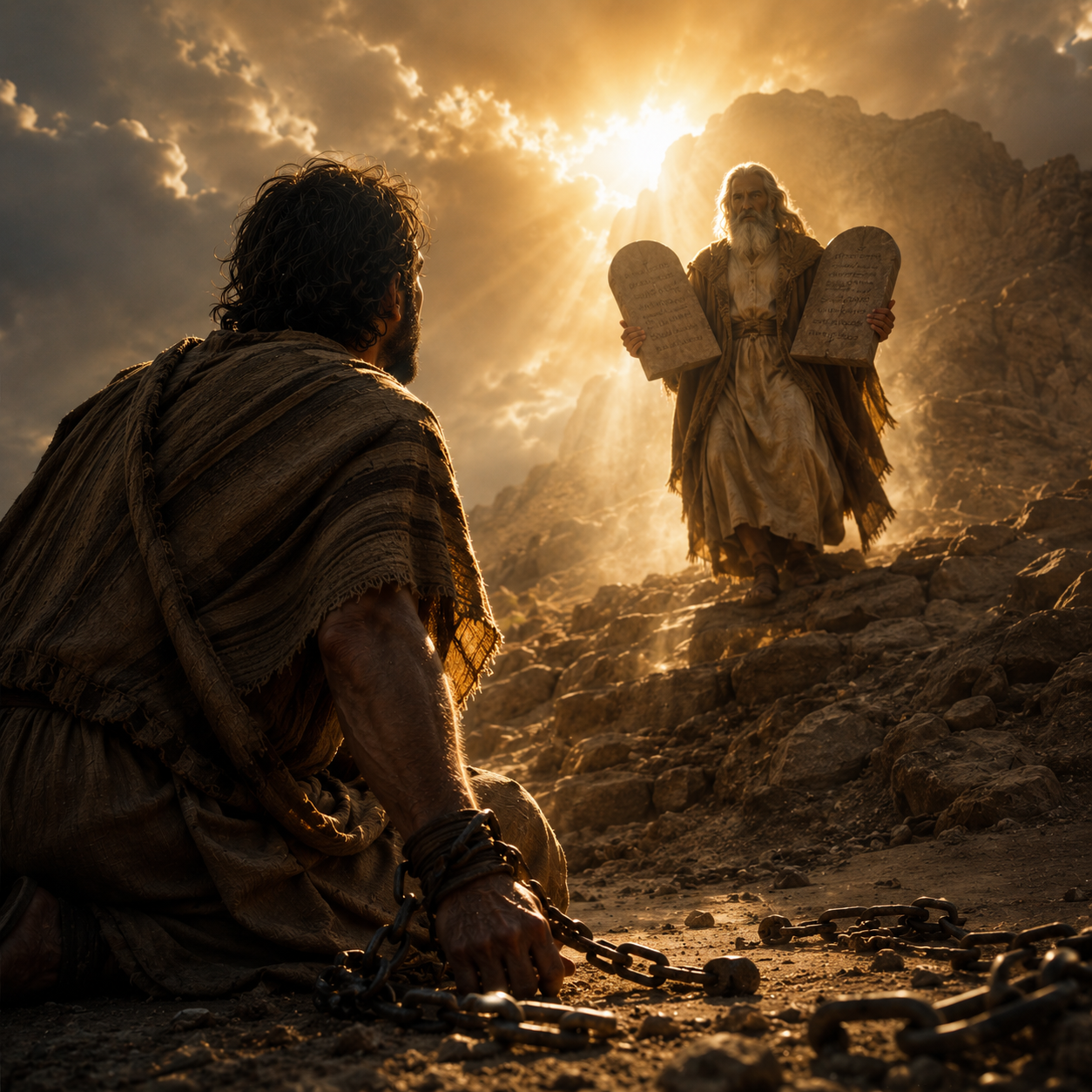
James Whitaker Facebook ad: “The Ten Commandments do not begin with a commandment.”
Ran for 29 days, from August 2 to August 31, 2026, the last day Crush saw it.
Run by James Whitaker on Facebook. Crush is not the advertiser and does not verify its claims. See this ad in Meta's Ad Library(opens in a new tab)
Want an ad like this for your product?
Crush makes new ad images for your product from this ad: your logo, your product photo, your offer.
Trials from $19.95 USD, then $79.95 USD a month. Cancel anytime.
About this ad
- Meta Ad Library ID
- 1034310645852607
- Platforms
- Facebook, Instagram, Audience Network, Messenger, WhatsApp and Threads
- Relaunches
- 0
Ad text
The Ten Commandments do not begin with a commandment. Most Christians have never noticed this. They begin with a rescue. And that one detail — sitting in plain sight on one of the most familiar pages in the entire Bible — changes everything about what the law was actually for. ________________________________________ Go back to the very beginning. Before God says you shall or you shall not — before a single command is given — He says this: "I am the LORD your God, who brought you out of the land of Egypt, out of the house of slavery." He does not begin with an expectation. He begins with a declaration of what He has already done. By the time the people of Israel are standing at the foot of Mount Sinai to receive the law, they are already free. Already His people. Already carried out of slavery on the other side of the Red Sea. God did not give them the commandments so they could earn their freedom. He gave them the commandments after they were already free. The rescue came first. The law came after. And that order is not a theological footnote. It is the entire point. ________________________________________ Most Christians have spent their lives reading the Ten Commandments as a bar to clear. A standard they are always falling short of. A list of rules designed to reveal how far they are from where God wants them to be. That is not what the Ten Commandments are. They are instructions for living given to a people who had already been rescued. Not the price of salvation. The shape of a life lived by people who had already been set free. The law was never the way in. Grace came first. With God, it always does. ________________________________________ But there is something else hiding inside the structure of the Ten Commandments that almost nobody has ever been shown. They were written on two stone tablets. And they fall into two distinct groups. The first four commandments have nothing to do with how you treat other people. Have no other gods before Him. Do not make idols. Do not misuse His name. Remember the Sabbath and keep it holy. Every one of them is about your relationship with God. The last six commandments have nothing to do with worship or ritual. Honor your father and mother. Do not murder. Do not commit adultery. Do not steal. Do not lie about your neighbor. Do not covet what belongs to someone else. Every one of them is about how you treat the people around you. Now look at the shape. The first tablet points up. Toward God. The second tablet points out. Toward people. Up. Then out. That structure was carved into the stone at Sinai and sat there — unexplained — for more than a thousand years. ________________________________________ Until a religious lawyer tried to trap Jesus with a question. Of all the commandments, he asked, which is the greatest? Jesus answered with two. "Love the Lord your God with all your heart and with all your soul and with all your mind." "And love your neighbor as yourself." Then He said something that should stop every reader cold. "On these two commandments hang all the Law and the Prophets." He had just taken the entire law of God and folded it into two commands. Love God. Love people. And those two commands are the two tablets. The first four commandments are how you love God. The last six are how you love people. Jesus did not invent a new summary out of nowhere. He revealed the structure that had been sitting in the stone the whole time. Up to God. Out to people. The shape of the Ten Commandments is the shape of the cross. ________________________________________ And then go back to the Sabbath command. In Exodus, God commands rest and points to creation — He rested on the seventh day, and so should they. But in Deuteronomy, when Moses repeats the commandments, he gives a different reason for the same command. "Remember that you were a slave in the land of Egypt, and the LORD your God brought you out from there with a mighty hand." The day of rest was not only a memorial of creation. It was a weekly memorial of freedom. A people who had once worked without end — without rest, without mercy, without dignity — were now commanded to stop one day a week and remember that they were free. Even the law to rest was a law about rescue. The rescue was not just in the opening line. It was woven into every commandment. ________________________________________ I remember the first time I understood what the opening line of the Ten Commandments actually meant. Not in a seminary. Not in a commentary. It was when someone finally gave me the context that made the order visible — rescue first, law second — and the page I had read dozens of times became something I had never actually encountered before. Before that, I read the Ten Commandments the way most Christians read them. As a list. As a standard. As the thing that showed me how far short I always fell. After that, I never read them the same way again. Because the God who gave those commandments identified Himself — before a single rule — by what He had already done for the people He was speaking to. He did not say: here are my requirements. Meet them and I will be your God. He said: I am already your God. I already rescued you. And here is how a rescued people live. ________________________________________ Because context changes everything. Every single time. Did you know that the Hebrew word for the Sabbath — shabbat — comes from the root meaning to cease or to stop? That the command was not primarily about worship or religious observance but about the radical act of stopping — in a world where slaves never got to stop — as a weekly declaration that you were no longer a slave? Did you know that the commandment against idols was not primarily about statues? In the ancient Near East, the image of a god was believed to house the divine presence. Nations carried their idols into battle because the god was in the image. God was forbidding Israel from reducing Him to something that could be carried, controlled, or contained — because He was not that kind of God. Did you know that the phrase you shall have no other gods before me can also be translated you shall have no other gods in my presence — meaning not a ranked list with God at the top, but an absolute declaration that in His presence there is simply no room for anything else? It is all there. In the Bible you already have at home. On the pages you have already read. Waiting for whoever had the roots to see what had always been there. ________________________________________ This level of understanding does not require a seminary degree. It does not require years of Greek and Hebrew. It requires context. It requires connection. It requires someone who has already done the work of connecting the threads and placed it in a format you can walk through on your own. That is why the Advanced Theology Course was created. 84 modules. From Genesis to Revelation. Not a surface-level introduction. Not a five-minute devotional. Real theology. Real depth. The kind of study that helps you understand why the Ten Commandments begin with a rescue — and why that order changes everything about the God who gave them. With an internationally recognized certificate. No subscription. You pay once and it is yours. Because transformative knowledge should not be locked behind a monthly fee you cancel when your budget gets tight. ________________________________________ Students who completed the module on the Ten Commandments said things I cannot forget. A woman who has attended church her entire life said: "I have read the Ten Commandments my whole life as a list of rules I could never fully keep. I never noticed they begin with a rescue. I never saw that God identified Himself by what He had already done before He gave a single command. The law was never the way in. Grace came first. That changes everything about how I read the Old Testament." A man who leads a small group said: "I never saw the two tablets as two directions — up toward God, out toward people. I never connected that structure to what Jesus said about the two greatest commandments. Jesus was not summarizing the law. He was revealing the architecture that had been sitting in the stone the whole time. I cannot teach the Ten Commandments the old way anymore." Another student said simply: "The shape of the Ten Commandments is the shape of the cross. Up and out. I have had those commandments memorized since I was a child. I never saw the shape." They did not need a seminary to get there. They needed the right context. The right connections. The depth that makes the Bible open itself from the inside out. ________________________________________ The Bible is not confusing because it is unclear. It is confusing because we are reading it without the foundation that made it obvious to the people who first received it. The people standing at the foot of Sinai had been slaves a few weeks earlier. They heard the opening line and felt it in their bones — because they remembered the mud bricks, the taskmasters, the work without end, the children thrown into the Nile. When God said I am the LORD your God who brought you out of Egypt — they did not hear a preamble. They heard testimony. They heard the God who had already come for them explaining who He was before He told them how to live. We read the same line and move quickly to the list. Not because our faith is lesser. But because nobody ever gave us the roots that make that opening line land with the full weight it was always meant to carry. The Advanced Theology Course gives you those roots back. 84 modules built to take you from the surface to the depth. From the text to the context. From information to transformation. Internationally recognized certificate. No subscription. One payment and it is yours. ________________________________________ You have read the Ten Commandments before. Maybe as a child memorizing them in Sunday school. Maybe in a sermon on morality. Maybe in a quiet moment wondering why obedience always felt like something you owed rather than something you wanted. And maybe you never once noticed that they do not begin with a command. They begin with this: I am the LORD your God, who brought you out of the land of Egypt, out of the house of slavery. Rescue first. Law second. The people who received those commandments were already free when they received them. The law was not the price of their freedom. It was the shape of a life lived by people who had already been carried out of slavery by a God who came for them before they could come for Him. The structure of the two tablets points up and then out. Love God. Love people. The same structure Jesus revealed when He folded the entire law into two commandments. The same structure carved into stone at Sinai a thousand years before He said it. Up and out. The shape of the Ten Commandments is the shape of the cross. And it was sitting there the whole time. God did not begin His law with a command by accident. He never does anything by accident. And what He placed in that opening line has been waiting for you to read it since the first time you moved past it to get to the rules. Click below and start today: https://christiantheologicalinstitute.online/ ________________________________________ Advanced Theology Course — 84 modules. Internationally recognized certificate. No subscription fees.
Where the ad sends people
christiantheologicalinstitute.online
The Ten Commandments do not begin with a commandment.
"I am the Lord your God, who brought you out of Egypt." The rescue came before a single rule. The order changes everything.
Learn more: christiantheologicalinstitute.online(opens in a new tab)