James Whitaker
James Whitaker Facebook ad: “The rock was not a symbol of Christ. It was Christ.”
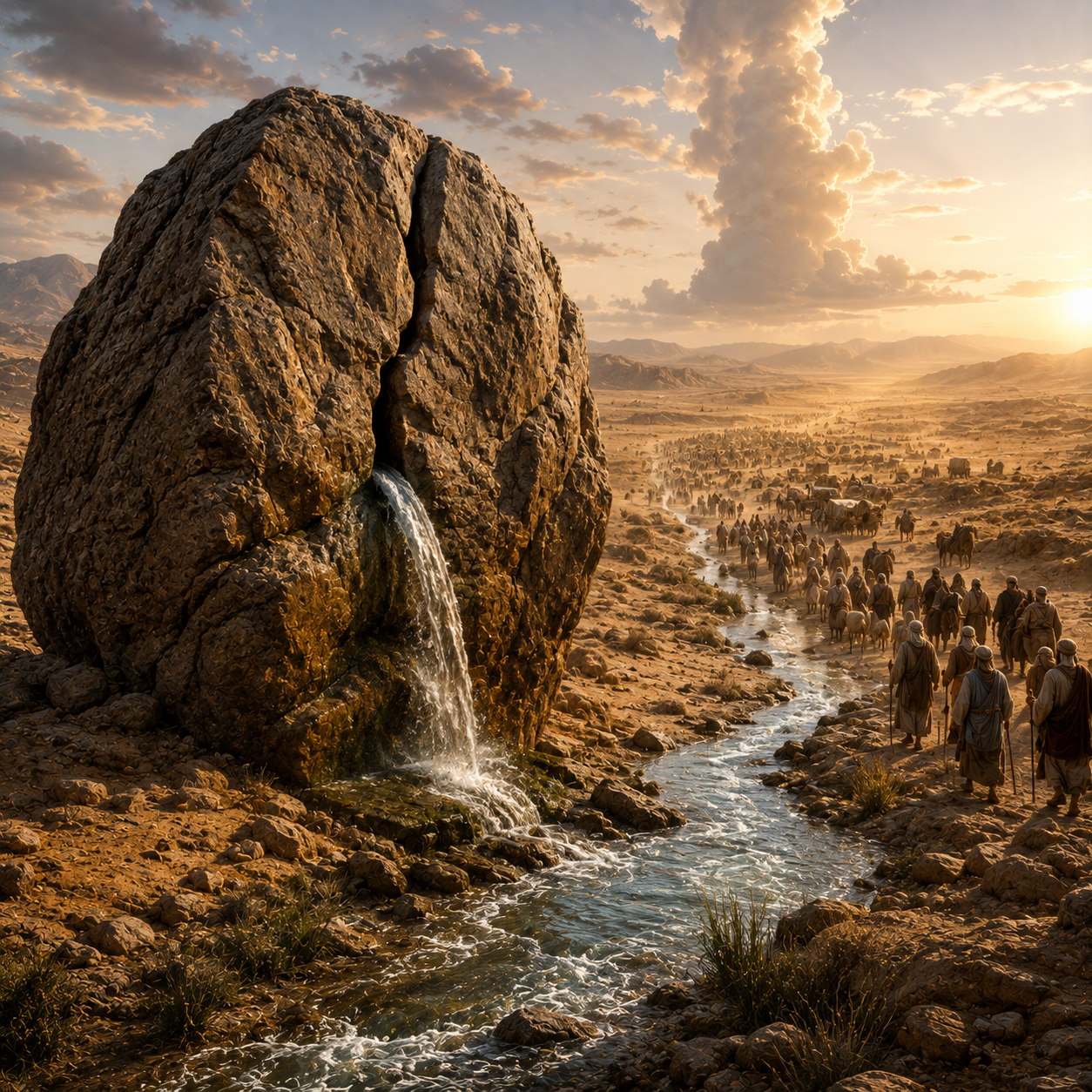
Ran for 7 days, from August 10 to August 17, 2026, the last day Crush saw it.
Run by James Whitaker on Facebook. Crush is not the advertiser and does not verify its claims. See this ad in Meta's Ad Library(opens in a new tab)
Want an ad like this for your product?
Crush makes new ad images for your product from this ad: your logo, your product photo, your offer.
Trials from $19.95 USD, then $79.95 USD a month. Cancel anytime.
About this ad
- Meta Ad Library ID
- 1062553009484489
- Platforms
- Facebook, Instagram, Audience Network, Messenger, WhatsApp and Threads
- Relaunches
- 0
Ad text
Paul made a statement in 1 Corinthians 10 that most Christians have read and moved past without stopping to feel the full weight of it. He was describing Israel in the wilderness — the cloud, the sea crossing, the manna, the water from the rock. And then he said this: "They drank from the spiritual Rock that followed them, and the Rock was Christ." The Rock was Christ. Not: the rock was a symbol of Christ. Not: the rock represented Christ. Not: the rock pointed forward to Christ as a type. The Rock was Christ. The pre-incarnate Son of God was present in the wilderness with Israel. The water that came from the rock — the water that sustained two million people in a desert for forty years — came from Christ. And Paul added one more detail that should stop every reader cold. The Rock followed them. ________________________________________ Exodus 17. Israel had been in the wilderness for weeks. They were camped at Rephidim and there was no water. The people quarreled with Moses. They tested the Lord. They asked: is the Lord among us or not? And God told Moses to take his staff — the same staff that had struck the Nile and turned it to blood, the same staff that had parted the Red Sea — and strike the rock at Horeb. Moses struck the rock. And water came out of it. For all the people to drink. Moses named the place Massah and Meribah — testing and quarreling — because the people had tested the Lord. ________________________________________ Numbers 20. Forty years later. Israel is at Kadesh, near the border of the Promised Land. Again there is no water. Again the people quarrel with Moses. Again they complain — why did you bring us out of Egypt to die here in this wilderness? And God told Moses to take his staff, gather the assembly, and speak to the rock before their eyes. Speak to the rock. Not strike it. Speak to it. Moses gathered the assembly before the rock. And he said: hear now, you rebels — shall we bring water for you out of this rock? And he lifted his hand and struck the rock twice with his staff. And water came out abundantly. And the people and their livestock drank. And God said to Moses: because you did not believe in me, to uphold me as holy in the eyes of the people of Israel, therefore you shall not bring this assembly into the land that I have given them. ________________________________________ The punishment seems disproportionate. Moses had served faithfully for forty years. He had endured the complaints of an entire generation without losing faith. He had interceded for the people when God was prepared to destroy them. He had ascended Sinai twice and spoken with God face to face. And he was forbidden from entering the Promised Land because he struck a rock instead of speaking to it. Most readers have felt the disproportionality and moved past it without resolution. But the disproportionality dissolves when you understand what the rock was. ________________________________________ The first time, God said to strike it. The rock was struck. Water flowed. The people were sustained. The second time, God said to speak to it. Because what needed to happen to the rock only needed to happen once. The rock that was struck once — that yielded water at the cost of a blow — was a picture of something that would happen once, at great cost, and only once. You do not strike it again. You speak to it. You come to it in the aftermath of what has already been done. You ask and it gives. Not because a second blow is needed. Because the first blow was sufficient. Moses struck it twice. And the punishment — as severe as it seemed — was proportionate to what the second blow implied about the sufficiency of the first. ________________________________________ And Paul said the rock followed them. This detail — the rock followed them — has puzzled readers for centuries. The rock at Rephidim in Exodus 17 was stationary. A fixed point in the desert. The people came to it and drank. And yet Paul says the rock followed them. He was not inventing a detail. He was operating within a tradition — preserved in the rabbinic literature of the Second Temple period, the tradition within which Paul himself had been trained — that a miraculous source of water had accompanied Israel through the wilderness. Some rabbinic texts described a well that traveled with Israel. Others described the rock itself as following the camp. Paul took the tradition and identified the one behind it. The rock was not a geological phenomenon. The following was not a physical miracle of a stone moving through the desert. Christ was present. The source of the water that sustained Israel was not the rock. It was the one whom the rock represented. And the one whom the rock represented was with them every step of the wilderness journey. Not waiting for them at fixed points. Following them. Present throughout. ________________________________________ Now go to John 7. The feast of Tabernacles. The last day. The great day of the feast. The feast of Tabernacles commemorated the wilderness years — the forty years when Israel lived in temporary shelters, sustained by God's provision, waiting for the entry into the land. And part of the ceremony of the feast was the water-pouring ritual. Every morning of the feast, a priest would descend from the Temple to the Pool of Siloam, fill a golden vessel with water, and return to the Temple. He would pour the water over the altar — a libation poured out in memory of the water that had come from the rock in the wilderness. Every day of the feast. Water poured over the altar. The wilderness water remembered. The rock commemorated. And on the last day — the great day of the feast — the ceremony reached its climax. And Jesus stood up. And He cried out: "If anyone thirsts, let him come to me and drink. Whoever believes in me, as the Scripture has said, 'Out of his heart will flow rivers of living water.'" Come to me and drink. On the day the priests were pouring water over the altar to commemorate the water from the rock. At the feast that was built around the memory of the wilderness provision. In the city that housed the Temple that had replaced the Tabernacle that had traveled through the wilderness with Israel. Jesus stood up and said: I am the source. Come to me. The rivers of living water — the water that flows from the one who believes — are the water that flowed from the rock in the wilderness. The same source. The same Christ. Now with skin on. Now standing in a Temple court. Now speaking in words instead of flowing through a struck stone. Come to me and drink. ________________________________________ Paul and Jesus were saying the same thing from two different directions. Paul looking back: the rock that sustained Israel in the wilderness was Christ. Jesus looking forward: come to me as they came to the rock — come with your thirst, come with your need, come and receive what the rock was always a picture of. The water from the rock in the wilderness and the rivers of living water that flow from Christ are the same water. One a shadow. One the substance. ________________________________________ And the two episodes of water from the rock — the striking in Exodus 17 and the speaking in Numbers 20 — tell the same story. The rock was struck once. And water flowed. And after that, you speak to it. You do not strike it again. You do not need to. What needed to happen to the rock happened once. At great cost. And the water that flows now — the rivers of living water that Jesus promised would flow from within those who believed — flows from a source that was struck once and will never need to be struck again. "It is finished." The rock was struck. Come and drink. ________________________________________ Most Christians have read 1 Corinthians 10 and the story of water from the rock without understanding what Paul was saying about the identity of the rock. Nobody ever showed them the two episodes — striking and speaking — and explained why the punishment for the second strike was so severe. Nobody ever connected Jesus's declaration at the feast of Tabernacles to the water-pouring ceremony — and to the rock that the ceremony was commemorating. And nobody ever traced the thread from Exodus 17 to Numbers 20 to 1 Corinthians 10 to John 7 and shown that it is the same water from the same source, revealed progressively across fifteen centuries of Scripture. Not because the connections are hidden. Because nobody ever gave them the roots to follow the water from the rock to the one who struck it once and said: now come and drink. ________________________________________ I remember the first time I understood why Moses was punished for striking the rock twice. Not in a seminary. Not in a commentary. It was when someone finally gave me the context that made the two episodes speak to each other — and the punishment that had always seemed disproportionate became the most theologically precise response in the entire Pentateuch. Before that, I felt the severity of Moses's punishment without understanding it. After that, I understood that what Moses did was say — with his staff rather than his words — that the first blow had not been sufficient. That it needed to be done again. That what had been struck once needed to be struck twice. And the one who designed the ritual of the rock knew exactly what a second blow implied. And would not let it stand uncorrected. Even at the cost of Moses's entry into the land. ________________________________________ Because context changes everything. Every single time. Did you know that the rock at Horeb in Exodus 17 — where Moses first struck the rock — was at the same mountain where God had appeared to Moses in the burning bush? That the rock from which water flowed was at the same location as the fire that burned without consuming? That the place of the first divine encounter and the place of the first water miracle were geographically connected — as if God was deliberately layering revelation at the same location? Did you know that the Hebrew word for rock used in the exodus narratives — tsur — is one of the most frequent divine titles in the Psalms? That God is called the Rock of Israel, the Rock of salvation, my Rock and my fortress? That the association between God and rock in the Psalms is drawing on the memory of the wilderness — the rock that gave water, the rock that followed them, the rock that Paul identified as Christ? That the Psalms were singing about the rock of the wilderness when they sang about God as Rock? Did you know that the last recorded miracle of Moses before his death — the water from the rock at Kadesh — was also the last miracle of his ministry? That the man who had parted the Red Sea and called down plagues on Egypt ended his miraculous ministry by striking a rock he was supposed to speak to — and that this final act became the reason he could not cross the Jordan? That the greatest human leader Israel ever had was prevented from entering the promised land by a single act of misrepresenting the sufficiency of what the rock had already provided? It is all there. In the Bible you already have at home. On the pages you have already read. Waiting for whoever had the roots to follow the water from the rock to the one who said: come to me and drink. ________________________________________ This level of understanding does not require a seminary degree. It does not require years of Greek and Hebrew. It requires context. It requires connection. It requires someone who has already done the work of connecting the threads and placed it in a format you can walk through on your own. That is why the Advanced Theology Course was created. 84 modules. From Genesis to Revelation. Not a surface-level introduction. Not a five-minute devotional. Real theology. Real depth. The kind of study that helps you understand why the rock only needed to be struck once — and what Paul meant when he said the rock that followed Israel in the wilderness was Christ. With an internationally recognized certificate. No subscription. You pay once and it is yours. Because transformative knowledge should not be locked behind a monthly fee you cancel when your budget gets tight. ________________________________________ Students who completed the module on the rock that followed Israel said things I cannot forget. A woman who has read Exodus her entire life said: "I always knew Israel drank water from a rock in the wilderness. I never understood that Paul said the rock was Christ — not a symbol of Christ, not a type of Christ, but Christ. I never traced the two episodes — striking in Exodus 17 and speaking in Numbers 20 — and understood why the second strike was such a serious offense. The rock only needed to be struck once. What needed to happen to it happened once. You speak to it after that. Moses implied it needed to happen again. And the punishment was proportionate to what that implication said about the sufficiency of the first." A man who has taught 1 Corinthians for years said: "I always read 'the Rock was Christ' as a typological statement — the rock pointed forward to Christ. I never read it as an identification — the rock was Christ, present in the wilderness, following Israel through the desert. I never connected it to Jesus standing up at the feast of Tabernacles — on the day the priests were pouring water to commemorate the wilderness rock — and saying come to me and drink. The ceremony was commemorating Him. And He was standing in the Temple court saying so." Another student said simply: "The rock was struck once. And after that, you speak to it. You do not need another blow. What needed to happen happened once. It is finished. Come and drink. I had been reading those two episodes as two separate water miracles. They are one story about the sufficiency of a single blow — and the offense of implying it wasn't enough." They did not need a seminary to get there. They needed the right context. The right connections. The depth that makes the Bible open itself from the inside out. ________________________________________ The Bible is not confusing because it is unclear. It is confusing because we are reading it without the foundation that made it obvious to the people who first received it. The first readers of 1 Corinthians who were Jewish knew the wilderness narratives. They knew the two episodes of water from the rock. They felt the weight of the tradition that the rock had followed Israel. And when Paul said the rock was Christ — they understood the identification he was making. Not a metaphor. A presence. Christ with Israel in the wilderness. The source of the water that sustained them through forty years in the desert. Following them. Not waiting for them at fixed points. Present throughout. And when they came to Jesus's declaration at the feast of Tabernacles — if anyone thirsts, come to me and drink — they connected it immediately to the rock of the wilderness. The same source. Now speaking. Now inviting. Now saying: the rock has been struck. The water is flowing. Come. We read the same passages and see two separate miracles and a metaphor. Not because our faith is lesser. But because nobody ever gave us the roots that make the rock that followed Israel land with the full weight of what Paul was identifying — and what Jesus was claiming when He stood up at the feast and said come to me. The Advanced Theology Course gives you those roots back. 84 modules built to take you from the surface to the depth. From the text to the context. From information to transformation. Internationally recognized certificate. No subscription. One payment and it is yours. ________________________________________ You have read about water from the rock before. Maybe as a miracle story from the wilderness. Maybe in passing references to Massah and Meribah. Maybe in the story of Moses's punishment that always seemed slightly unfair. And maybe you never once connected those stories to Paul's statement that the rock was Christ. Or to Jesus standing in the Temple court on the last day of the feast of Tabernacles crying out: if anyone thirsts, come to me and drink. There is a connection. A rock struck at Horeb. Water for two million people in the desert. The same source following them through forty years of wilderness. A rock at Kadesh. God said speak. Moses struck it. Twice. The punishment that seemed disproportionate — because the rock only needed to be struck once, and a second blow implied the first was insufficient. Paul looking back at the wilderness and saying: the Rock was Christ. Present with Israel. Following them. The source of the water that sustained them. Jesus standing in the Temple court on the day the priests pour water to remember the wilderness rock and crying out: if anyone thirsts — come to me. The rock has been struck. The water is flowing. You do not need another blow. You speak now. You come. You drink. God did not have Israel drink from that rock for forty years by accident. He never does anything by accident. And the source of the water that sustained Israel in the wilderness — the one Paul identified as Christ, the one Jesus declared Himself to be at the feast of Tabernacles — has been inviting thirsty people to come and drink since the first time Moses struck the rock at Horeb. The invitation has not changed. Come. And drink. Click below and start today: https://christiantheologicalinstitute.online/ ________________________________________ Advanced Theology Course — 84 modules. Internationally recognized certificate. No subscription fees.
Where the ad sends people
christiantheologicalinstitute.online
The rock was not a symbol of Christ. It was Christ.
Paul said so in 1 Corinthians 10. The rock that followed Israel for forty years. The source of the water. Christ — before Bethlehem.
Learn more: christiantheologicalinstitute.online(opens in a new tab)