James Whitaker
James Whitaker Facebook ad: “The manna could not be stored. That was the lesson.”
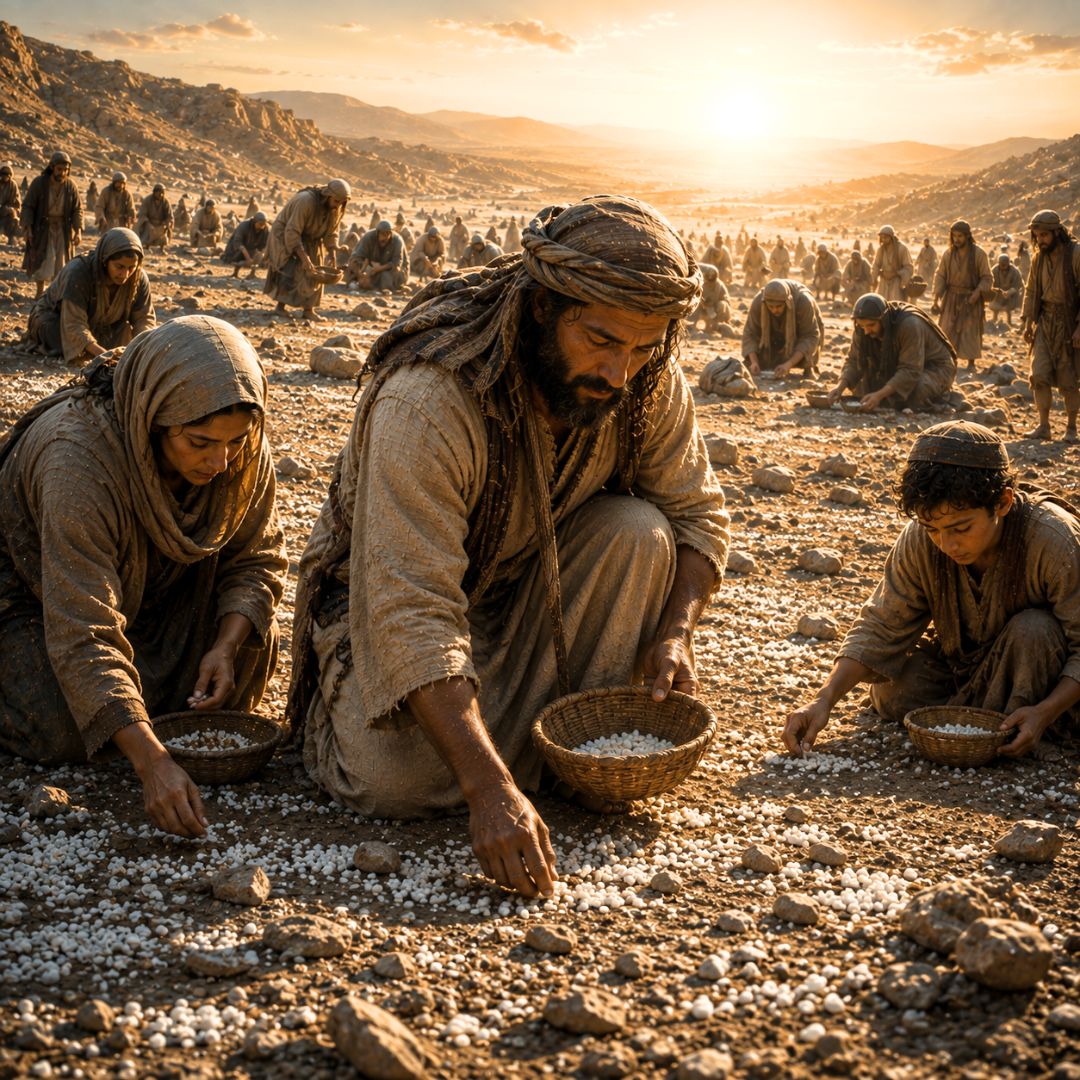
Ran for 17 days, from August 12 to August 29, 2026, the last day Crush saw it.
Run by James Whitaker on Facebook. Crush is not the advertiser and does not verify its claims. See this ad in Meta's Ad Library(opens in a new tab)
Want an ad like this for your product?
Crush makes new ad images for your product from this ad: your logo, your product photo, your offer.
Trials from $19.95 USD, then $79.95 USD a month. Cancel anytime.
About this ad
- Meta Ad Library ID
- 27836100982706042
- Platforms
- Facebook, Instagram, Audience Network, Messenger, WhatsApp and Threads
- Relaunches
- 0
Ad text
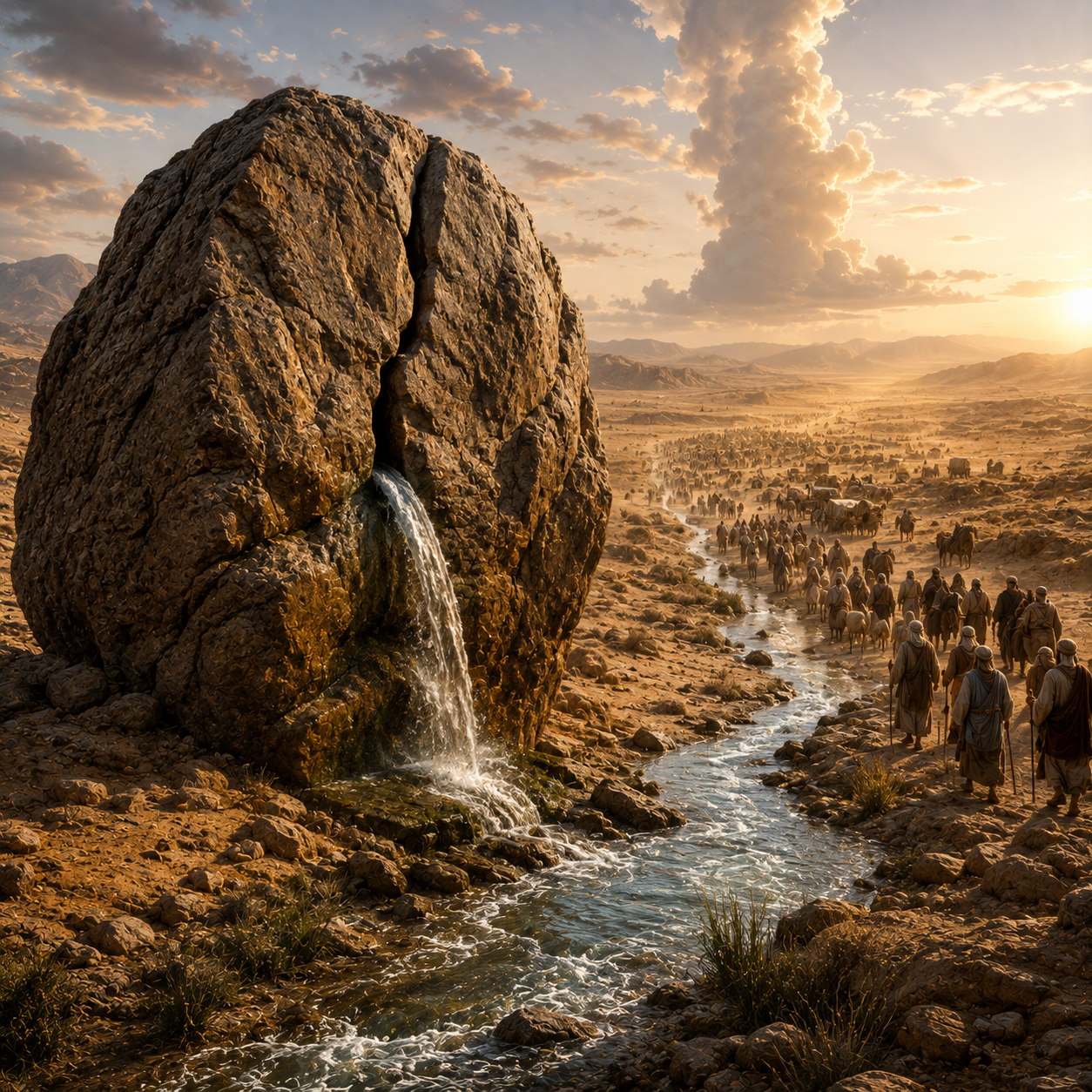
Every morning for forty years, Israel woke up and found food on the ground. Not food they had planted. Not food they had stored. Not food they had earned or negotiated for or found through their own resourcefulness. Food that was there when they woke up. Gone by midmorning when the sun grew hot. Every day. Forty years. And it came with rules. ________________________________________ Exodus 16. The wilderness of Sin. Israel had been out of Egypt for a month and a half. The food they had brought with them was gone. And they complained to Moses and Aaron — if only we had died in Egypt, where we sat by the meat pots and ate bread to the full. You have brought us out into this wilderness to kill the whole assembly with hunger. And God said to Moses: I will rain bread from heaven for you. Not: I will find them a food source. Not: I will show them where to forage. I will rain bread from heaven. And the people shall go out and gather a day's portion every day — that I may test them, whether they will walk in my law or not. A day's portion every day. The provision was designed to be gathered daily. ________________________________________ And the rules made the design explicit. Each person was to gather according to what they could eat. An omer per person per household. No more than what was needed for the day. And what happened to those who gathered more? "When they measured it with an omer, whoever gathered much had nothing left over, and whoever gathered little had no lack. Each of them gathered as much as he could eat." The excess disappeared. Whoever gathered more than a day's portion discovered that the surplus had resolved itself — that the amount measured out to exactly what was needed, regardless of how much had been collected. And if someone tried to keep the remainder overnight? "But they did not listen to Moses. Some left part of it till the morning, and it bred worms and stank." It rotted. What was given for today could not be hoarded for tomorrow. The provision was daily. The dependence was daily. The lesson was daily. You do not control the supply. You receive it. Fresh. Every morning. Sufficient for today. Not storable for tomorrow. ________________________________________ Except on the sixth day. On the sixth day Israel was to collect double. Two omers per person. And the double portion would not rot overnight. It would keep through the Sabbath — the day when no manna fell and no gathering was to be done. Even in the exception the lesson was embedded. The Sabbath provision was given because God commanded rest. The accumulation was permitted only in service of the day of rest — not in service of the accumulation itself. You cannot hoard the manna. But you can keep it overnight when God has commanded the keeping. The control belongs to the one who rains it down. Not to the one who collects it. ________________________________________ Forty years. Every morning except the Sabbath. Forty years in the wilderness. A generation raised entirely on food they did not plant, could not store, had to collect fresh every morning, and which disappeared when the sun grew hot. A generation that had never experienced any other way. For whom daily dependence on God's provision was not a spiritual discipline to be practiced. It was simply how food worked. ________________________________________ And then the wilderness ended. Israel crossed the Jordan. They camped at Gilgal. They kept the Passover. They ate the produce of the land of Canaan for the first time. And on the day after they ate the produce of the land, the manna ceased. "There was no longer manna for the people of Israel, but they ate of the fruit of the land of Canaan that year." The manna stopped the day it was no longer needed. Not the day Israel asked it to stop. Not the day Israel grew tired of it. The day the purpose was complete. ________________________________________ But something of the manna was kept. God commanded Moses to put an omer of manna in a jar and keep it before the testimony — in the Ark of the Covenant, alongside the tablets of the law and the rod of Aaron that had budded. The daily bread that could not be stored. Kept in the most sacred container in Israel. Not as food. As memory. As the reminder of the forty years of daily dependence that had formed the people who were now inheriting the land. ________________________________________ And then Jesus. John 6. He had fed five thousand people with five loaves and two fish. The crowd had followed Him around the Sea of Galilee to Capernaum. And when they found Him they asked: when did you come here? And Jesus answered in a way that moved past the question entirely. "Truly, truly, I say to you, you are seeking me, not because you saw signs, but because you ate your fill of the loaves. Do not work for the food that perishes, but for the food that endures to eternal life, which the Son of Man will give to you." The food that perishes. The food that endures. The crowd heard the distinction and immediately thought of the manna. "Then what sign do you do, that we may see and believe you? What work do you perform? Our fathers ate the manna in the wilderness; as it is written, 'He gave them bread from heaven to eat.'" They were asking: can you do what Moses did? And Jesus corrected the assumption before answering the question. "Truly, truly, I say to you, it was not Moses who gave you the bread from heaven, but my Father gives you the true bread from heaven. For the bread of God is he who comes down from heaven and gives life to the world." Moses did not give the manna. My Father gives the true bread. The manna was not the thing itself. It was the pointing to the thing. And the thing had now arrived. ________________________________________ "I am the bread of life. Whoever comes to me shall not hunger, and whoever believes in me shall never thirst." I am. Not: I provide. Not: I distribute. Not: I am the source of. I am the bread of life. The manna fell from heaven. Jesus came from heaven. The manna sustained physical life for forty years. Jesus gives eternal life. The manna had to be gathered fresh every morning — you could not accumulate it. Jesus is received by coming — not by accumulating theological knowledge or religious merit or moral performance that you bank against future need. You come. Every day. Fresh. As the manna was gathered. ________________________________________ And then Jesus pressed further. Further than the crowd wanted to follow. "I am the living bread that came down from heaven. If anyone eats of this bread, he will live forever. And the bread that I will give for the life of the world is my flesh." My flesh. The crowd began to argue. How can this man give us his flesh to eat? And Jesus did not soften it. "Truly, truly, I say to you, unless you eat the flesh of the Son of Man and drink his blood, you have no life in you. Whoever feeds on my flesh and drinks my blood has eternal life, and I will raise him up on the last day. For my flesh is true food, and my blood is true drink." True food. True drink. The manna had been bread from heaven — real bread, genuine provision, miraculous and sufficient. But it was not true food. It was the sign pointing toward true food. The true food was what Jesus was describing. The complete dependence on Him — not on religious performance, not on accumulated merit, not on the kind of spiritual provisioning that could be stored and drawn from when convenient. Daily. Fresh. Receiving Him. ________________________________________ And the crowd responded. "When many of his disciples heard it, they said, 'This is a hard saying; who can listen to it?'" Hard. The Greek word is skleros — stiff, harsh, difficult to accept. And Jesus did not clarify the difficulty away. He let it stand. "Do you take offense at this?" He watched them wrestle with it. He did not offer an easier version. He did not say: I was speaking metaphorically, let me explain what I actually meant. He asked: does this offend you? And then He watched them leave. "After this many of his disciples turned back and no longer walked with him." Many. Not opponents. Not enemies. Not the Pharisees who had been trying to trap Him. Disciples. People who had been following Him. Who had seen the signs. Who had heard the teaching. Who had eaten the bread He multiplied on the hillside. They left. Because of one teaching about manna. ________________________________________ And Jesus turned to the twelve. "Do you want to go away as well?" And Peter answered with the words that are the answer to every hard teaching Jesus ever gave. "Lord, to whom shall we go? You have the words of eternal life, and we have believed, and have come to know, that you are the Holy One of God." To whom shall we go. Not: we understand everything you said. Not: the hard teaching makes complete sense to us now. To whom shall we go. We do not have another option. You have the words of eternal life. And that is enough to stay. ________________________________________ Most Christians know that Jesus called Himself the bread of life. Nobody ever showed them the theology of the manna — the daily portion, the no storing, the daily dependence, the lesson that God's provision is designed to be received fresh and not accumulated. Nobody ever traced the connection between the omer in the Ark and the teaching in John 6 — the manna that had been kept as memory in the most sacred place in Israel pointing toward the one who had come as the true bread. And nobody ever explained why so many disciples left that day — or asked what it means that Jesus let them leave without softening the teaching. Not because the connections are hidden. Because nobody ever gave them the roots to read John 6 with forty years of manna underneath it. ________________________________________ I remember the first time I understood that the manna was designed to teach daily dependence. Not in a seminary. Not in a commentary. It was when someone finally showed me that the rules of the manna were not logistical constraints but theological curriculum — and that the daily gathering, the rotting of what was stored, the sufficiency that could not be accumulated, were all pointing toward a way of relating to God that Jesus would describe in John 6 as coming to Him and believing in Him. Before that, I read the manna as a miraculous food source. After that, I understood it as a forty-year lesson in what it means to receive — daily, fresh, without accumulation — the provision that only God can give. ________________________________________ Because context changes everything. Every single time. Did you know that the manna is described in Psalm 78 as the grain of heaven and the bread of the angels — and that this language was used in Jewish tradition to describe the manna as a heavenly substance, food from the divine realm, not merely a miraculous natural phenomenon? And that when Jesus said the bread of God is he who comes down from heaven and gives life to the world — He was using the same language that the Jewish tradition had applied to the manna, and claiming to be the reality that the manna was only the shadow of? Did you know that the feeding of the five thousand in John 6 took place near the time of the Passover — and that the Passover was the annual remembrance of the exodus, the beginning of the wilderness, the start of the forty years during which the manna had fallen? That Jesus multiplied bread for a crowd near Passover — and then taught about the true bread from heaven — at the time of year when Israel was remembering the bread from heaven that had sustained their ancestors? That the timing was not coincidental but deeply intentional? Did you know that the jar of manna preserved in the Ark of the Covenant — kept beside the tablets of the law and Aaron's rod — was eventually lost when the Ark disappeared before the Babylonian exile? That the manna that had sustained Israel for forty years, kept as a memorial in the most sacred container in the ancient world, eventually vanished from history? And that what the jar preserved — the memory, the testimony, the pointing toward — was fulfilled and superseded by the one who said I am the bread of life, who is not in a jar, who has not been lost, and who cannot be destroyed? It is all there. In the Bible you already have at home. On the pages you have already read. Waiting for whoever had the roots to gather the manna fresh every morning and understand what the gathering was teaching. ________________________________________ This level of understanding does not require a seminary degree. It does not require years of Greek and Hebrew. It requires context. It requires connection. It requires someone who has already done the work of connecting the threads and placed it in a format you can walk through on your own. That is why the Advanced Theology Course was created. 84 modules. From Genesis to Revelation. Not a surface-level introduction. Not a five-minute devotional. Real theology. Real depth. The kind of study that helps you understand that the rules of the manna were theological curriculum — and that Jesus in John 6 was claiming to be what forty years of daily bread had always been pointing toward. With an internationally recognized certificate. No subscription. You pay once and it is yours. Because transformative knowledge should not be locked behind a monthly fee you cancel when your budget gets tight. ________________________________________ Students who completed the module on the manna and the bread of life said things I cannot forget. A woman who has read Exodus and John her entire life said: "I always knew Israel ate manna in the wilderness. I never understood the rules — that the excess disappeared, that what was stored overnight rotted, that the provision was designed to be gathered fresh every day and could not be accumulated. I never understood that the rules were the lesson — that daily dependence on God's provision was not a temporary inconvenience but the permanent way of life that God was building into His people. And I never read John 6 with those forty years underneath it. When I did, everything Jesus said about being the bread of life landed differently. He was not replacing a food source. He was fulfilling a curriculum." A man who has struggled with the hard saying of John 6 said: "I always skipped past the disciples leaving. It made me uncomfortable. Jesus let them go. He did not soften the teaching. He did not offer an easier version. He watched them leave and then turned to the twelve and asked: do you want to go too? And Peter answered: to whom shall we go? That is not the answer of someone who understood everything. That is the answer of someone who had nowhere else to go. I had been reading the hard saying as a theological problem to be solved. Peter read it as a person who had run out of other options." Another student said simply: "The manna could not be stored. You had to gather it fresh every morning. Jesus said come to me. Believe in me. Not: accumulate theology about me. Not: bank religious performance for future need. Come. Fresh. Every day. The manna was teaching the posture that Jesus was describing. I had been reading both without ever seeing the connection." They did not need a seminary to get there. They needed the right context. The right connections. The depth that makes the Bible open itself from the inside out. ________________________________________ The Bible is not confusing because it is unclear. It is confusing because we are reading it without the foundation that made it obvious to the people who first received it. The first readers of John's Gospel had grown up hearing the manna story. They knew the rules. They knew the daily portion. They knew what happened to what was stored overnight. They knew the forty years of morning by morning dependence. When Jesus said do not work for the food that perishes but for the food that endures — they felt the manna underneath the words immediately. And when He said I am the bread of life — the true bread from heaven, the bread that gives life to the world — they felt the claim. The manna was not the thing. This is the thing. And the thing requires the same posture as the manna. Coming. Daily. Fresh. Receiving. Not accumulating. Not storing. Not controlling the supply. Coming. We read the same words and hear a beautiful metaphor. Not because our faith is lesser. But because nobody ever gave us the roots that make I am the bread of life land with forty years of daily manna underneath it. The Advanced Theology Course gives you those roots back. 84 modules built to take you from the surface to the depth. From the text to the context. From information to transformation. Internationally recognized certificate. No subscription. One payment and it is yours. ________________________________________ You have read about the manna before. And you have read John 6 before. And maybe you have never read them together. Every morning for forty years the bread came down from heaven. You could not store it. You could not accumulate it. You could not control it. You gathered what you needed for today. And in the morning you gathered again. For forty years Israel was taught that dependence on God was not a phase. It was the permanent posture of the people of God. And then Jesus stood in Capernaum and said: I am the bread of life. Whoever comes to me shall not hunger. Whoever believes in me shall never thirst. The true bread from heaven. The thing the manna was always pointing toward. Not a one-time transaction that you complete and then draw from indefinitely. A daily coming. Fresh. The way the manna was gathered. Morning by morning. Sufficient for today. Requiring tomorrow's gathering. And many disciples heard it and said: this is too hard. And left. And Jesus let them go. And turned to the twelve. And asked: do you want to go too? And Peter answered the only way anyone who has truly encountered Jesus can answer. To whom shall we go? You have the words of eternal life. God did not send the manna for forty years by accident. He never does anything by accident. And what the daily bread was teaching — the posture of daily dependence, the impossibility of accumulation, the freshness of morning by morning receiving — has been waiting for you to bring it to John 6 since the first time you read about the bread of life without asking what forty years of manna in the wilderness had been preparing Israel to understand. Click below and start today: https://christiantheologicalinstitute.online/ ________________________________________ Advanced Theology Course — 84 modules. Internationally recognized certificate. No subscription fees.
Where the ad sends people
christiantheologicalinstitute.online
The manna could not be stored. That was the lesson.
Whoever kept it overnight found it rotted. Jesus said: come to me. Not: accumulate theology about me. The posture the manna taught is the posture Jesus described.
Learn more: christiantheologicalinstitute.online(opens in a new tab)