James Whitaker
James Whitaker Facebook ad: “Gideon apologized before asking for the second sign.”
Ran for 7 days, from August 10 to August 17, 2026, the last day Crush saw it.
Run by James Whitaker on Facebook. Crush is not the advertiser and does not verify its claims. See this ad in Meta's Ad Library(opens in a new tab)
Want an ad like this for your product?
Crush makes new ad images for your product from this ad: your logo, your product photo, your offer.
Trials from $19.95 USD, then $79.95 USD a month. Cancel anytime.
About this ad
- Meta Ad Library ID
- 1853439992728927
- Platforms
- Facebook, Instagram, Audience Network, Messenger, WhatsApp and Threads
- Relaunches
- 1
Ad text
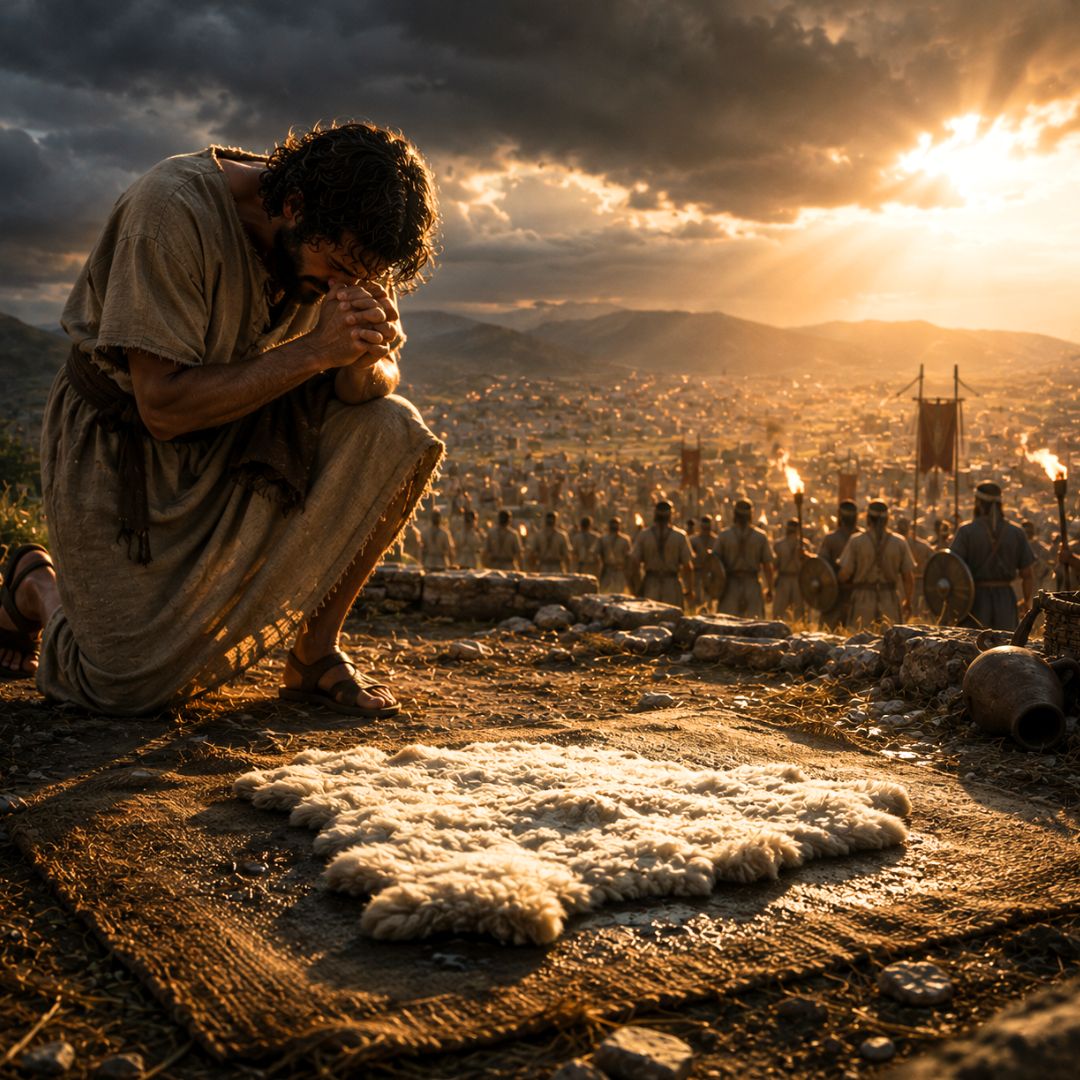
Gideon's fleece has become one of the most popular methods of decision-making in Christian culture. Put out a fleece. Ask God for a specific sign. If the sign happens, proceed. If it doesn't, wait. Pastors teach it. Books recommend it. Christians use it for everything from career decisions to relationships to whether to move across the country. And most of them have never been told what was actually happening when Gideon put out his fleece. Or what God thought about it. ________________________________________ Judges 6. Israel has been oppressed by Midian for seven years. The Midianites sweep in at harvest time and take everything — livestock, crops, provisions. Israel has been reduced to hiding in dens and caves and strongholds in the mountains. And the angel of the Lord appears to Gideon. Gideon is threshing wheat in a winepress — hiding from the Midianites, doing in secret what should have been done in the open. And the angel says: "The Lord is with you, O mighty man of valor." Gideon pushes back. If the Lord is with us, why has all this happened? Where are all the wonders our fathers told us about? The Lord has abandoned us. And the Lord — not the angel now, but the Lord — turns to him and says: "Go in this might of yours and save Israel from the hand of Midian. Do I not send you?" Gideon pushes back again. My clan is the weakest in Manasseh. I am the least in my father's house. And the Lord says: I will be with you. You shall strike the Midianites as one man. ________________________________________ Gideon asked for a sign to confirm the visitor's identity. Fire came out of the rock and consumed the offering. The angel vanished. Gideon built an altar and called it The Lord Is Peace. That night God spoke again. He told Gideon to tear down his father's altar to Baal and cut down the Asherah pole beside it and build a proper altar and offer a burnt offering. Gideon obeyed. By night. Because he was afraid of his family and the men of the town. But he obeyed. And when the men of the town discovered what had happened and demanded that Gideon's father hand him over to be killed, his father defended him. And Gideon was given the name Jerubbaal — let Baal contend against him. ________________________________________ And then the Spirit of the Lord clothed Gideon. "Then the Spirit of the Lord clothed Gideon, and he sounded the trumpet." He gathered an army. Thirty-two thousand men. Everything was in motion. God had spoken clearly. Multiple times. God had confirmed His presence with fire. God had given specific instructions that Gideon had obeyed. The Spirit of the Lord had clothed him. The army had gathered. And then Gideon said: "If you will save Israel by my hand, as you have said, behold, I am laying a fleece of wool on the threshing floor." If you will save Israel — as you have said. As you have said. Gideon was not asking God to reveal His will. God had already revealed His will. He was asking God to prove what He had already said. ________________________________________ The fleece was wet in the morning. The ground was dry. Gideon asked again. And this time — before making the second request — he said something that most people who use the fleece method have never noticed. "Please do not let your anger burn against me." Do not let your anger burn against me. He was apologizing before asking. He knew he was pushing beyond what was appropriate. He knew he was testing something that had already been confirmed. He knew — in his own conscience, in his own words — that what he was about to do was not an act of faithful discernment. It was an act of unbelief. And he said: please don't be angry. The man who became one of the judges of Israel, whose story fills four chapters of Judges, was asking forgiveness for asking the question before he asked it. ________________________________________ The ground was wet in the morning. The fleece was dry. God had answered. Not because the method was approved. Because God is patient with weak faith. Because God was going to accomplish what He had declared He would accomplish — and the weakness of the instrument He had chosen was not going to prevent it. ________________________________________ And then immediately — in the very next chapter — God addressed the thing that Gideon's fleece revealed. The army of thirty-two thousand was too large. "The people with you are too many for me to give the Midianites into their hand, lest Israel boast over me, saying, 'My own hand has saved me.'" Too many. Not militarily. Strategically. Theologically. If thirty-two thousand men defeated the Midianites, Israel would conclude that Israel had done it. That the army had been sufficient. That human strength and numbers had produced the victory. And God would not share His glory with an army that would take credit for His work. So God reduced the army. First to ten thousand. Then to three hundred. Three hundred men with torches and jars and trumpets — no swords, no military strategy, no numerical advantage — sent against an army the text describes as being like locusts in number, with camels without number, like the sand on the seashore. And the three hundred prevailed. Because it was never about the three hundred. ________________________________________ The story of Gideon's fleece is not a story about a method of discerning God's will. It is a story about a man with weak faith whom God used anyway — and then immediately reduced his resources so that the weakness of the instrument would make the power of God visible. The fleece was not the highlight of Gideon's story. It was the low point. The moment before God showed that He accomplishes His purposes not through the strength and certainty of His instruments but despite their weakness and doubt. ________________________________________ And this is the aha moment that most Christians have never been shown. The God of Gideon does not require strong faith to accomplish His purposes. He requires available instruments. Gideon was afraid. He threshed in a winepress. He obeyed by night. He asked for signs twice. He apologized before the second request. He was the least in the weakest clan. And God chose him. Not because of his faith. To demonstrate that the victory would not be credited to the instrument. The three hundred were not chosen because they were the best warriors. They were chosen because three hundred against an army like locusts made it impossible to attribute the outcome to human strength. The point was not Gideon. The point was the God who accomplished through Gideon what Gideon could not have accomplished by any standard of human reckoning. ________________________________________ Most Christians have read the fleece as a method. Nobody ever told them that Gideon asked for the fleece after God had already spoken clearly — multiple times — and confirmed His presence with fire. Nobody ever pointed to the apology Gideon offered before the second request — do not let your anger burn against me — as evidence that Gideon himself knew he was operating from unbelief, not faith. Nobody ever connected the fleece to the immediate reduction of the army — as if God was saying: you needed two signs before you would trust what I had already told you, so let me make the victory so obviously impossible that no one will credit it to your strength. And nobody ever told them that the three hundred were not the strength of the story. The weakness was the strength of the story. Because it made the source of the victory undeniable. ________________________________________ I remember the first time I read Gideon's apology before the second fleece request. Not in a seminary. Not in a commentary. It was when someone finally slowed me down enough to read the verse — please do not let your anger burn against me — and asked: what does it mean that Gideon apologized before asking? Before that, I had used the fleece method myself. I had taught it as a legitimate way to seek God's confirmation. After that, I understood it as a record of a man with weak faith whom God used despite that weakness — not a prescription for how to make decisions. And I understood that the God who reduced Gideon's army to three hundred was the same God who wanted the victory attributed to the right source. Not the instrument. The one who worked through it. ________________________________________ Because context changes everything. Every single time. Did you know that the phrase the Spirit of the Lord clothed Gideon appears before the fleece — not after? That Gideon had already been clothed with the Spirit when he asked for the first sign? That the empowering had already happened before the doubt? That the fleece was not the preparation for the Spirit's work — it was the hesitation that followed the Spirit's arrival? Did you know that the method God used to reduce the army from ten thousand to three hundred — having the men drink from the stream — has been interpreted by commentators for centuries as a test not of military alertness but of self-sufficiency? That the men who knelt down to drink were more comfortable, more settled, more at ease — while the three hundred lapped quickly and moved on? That the three hundred may have been chosen not because they were superior soldiers but because their posture revealed a kind of readiness that the comfort of kneeling did not? Did you know that after the victory — after the three hundred with their torches and jars and trumpets had routed the Midianite army — the men of Ephraim complained that they had not been called to join the battle? And that Gideon, who had needed two miraculous signs before he would move, responded to their complaint with such gracious humility that the text says their anger toward him subsided? That the man who doubted most became the leader who led with the most grace — as if the weakness that the fleece revealed was being slowly transformed by the God who had worked through it? It is all there. In the Bible you already have at home. On the pages you have already read. Waiting for whoever had the roots to notice the apology before the second request. ________________________________________ This level of understanding does not require a seminary degree. It does not require years of Greek and Hebrew. It requires context. It requires connection. It requires someone who has already done the work of reading the text carefully and placing it in a format you can walk through on your own. That is why the Advanced Theology Course was created. 84 modules. From Genesis to Revelation. Not a surface-level introduction. Not a five-minute devotional. Real theology. Real depth. The kind of study that helps you understand that the fleece was not the model — it was the moment before God showed that He accomplishes His purposes through instruments too weak to take credit for the outcome. With an internationally recognized certificate. No subscription. You pay once and it is yours. Because transformative knowledge should not be locked behind a monthly fee you cancel when your budget gets tight. ________________________________________ Students who completed the module on Gideon's fleece said things I cannot forget. A woman who has used the fleece method her entire Christian life said: "I always taught the fleece as a legitimate way to seek God's confirmation. I never noticed that Gideon asked for it after God had already spoken clearly multiple times. I never read the apology before the second request — please do not let your anger burn against me. I never understood that Gideon was confessing his own unbelief before asking. The fleece was not a model. It was a low point. And God worked through it anyway — not because of it." A man who has preached Gideon's story for years said: "I always preached the fleece as evidence of God's patience and willingness to confirm His will through signs. I never preached the three hundred as the immediate response to the fleece — God reducing the army so that no one could credit the victory to human strength. The fleece revealed Gideon's weak faith. The three hundred revealed that weak faith was never the point. The point was who won when three hundred men with jars and torches and no swords defeated an army like locusts. Nobody in that valley credited the three hundred. And that was the point." Another student said simply: "Please do not let your anger burn against me. Gideon said it before asking for the second sign. He knew he was wrong to ask. He asked anyway. And God answered anyway. That is not a model for decision-making. That is a portrait of grace extended to weak faith — and then an army reduced to three hundred so the weakness of the instrument would make the power of God undeniable." They did not need a seminary to get there. They needed the right context. The right connections. The depth that makes the Bible open itself from the inside out. ________________________________________ The Bible is not confusing because it is unclear. It is confusing because we are reading it without the foundation that made it obvious to the people who first received it. The first readers of Judges knew what it meant for the Spirit of the Lord to clothe someone. They knew that Gideon had already been commissioned, confirmed, and empowered before he asked for the first sign. They felt the weight of the apology before the second request — because they understood that asking for more confirmation after divine revelation was not faith seeking assurance but doubt seeking permission. And they understood what the three hundred meant. God does not need large armies. He needs instruments willing enough to show up — and few enough that the outcome cannot be attributed to them. We read the fleece and take notes on how to seek God's will. Not because our faith is lesser. But because nobody ever gave us the roots that make the apology before the second request land with the full weight of what Gideon was confessing. The Advanced Theology Course gives you those roots back. 84 modules built to take you from the surface to the depth. From the text to the context. From information to transformation. Internationally recognized certificate. No subscription. One payment and it is yours. ________________________________________ You have read the story of Gideon's fleece before. Maybe in a sermon on decision-making. Maybe in a Bible study on faith. Maybe in a moment when you were trying to discern God's will and someone told you to put out a fleece. And maybe you never once noticed the apology before the second request. Please do not let your anger burn against me. Gideon knew what he was doing. He was not using an approved method of spiritual discernment. He was asking forgiveness for asking the question. God had already spoken. Multiple times. Clearly. The Spirit had already clothed him. The army had already gathered. Everything was in motion. And Gideon said: if you will save Israel — as you have said. As you have said. He already knew. He asked anyway. And God answered anyway. Not because the method was right. Because God is patient with weak faith. And then immediately reduced the army to three hundred — so that when the victory came, no one would say: Gideon's fleece worked, Gideon's faith was strong, Gideon's army was decisive. They would say: what God did through three hundred men with torches and jars — that was God. That was always only God. God did not reduce the army to three hundred by accident. He never does anything by accident. And what the fleece revealed — the weak faith of the instrument God had chosen — and what the three hundred demonstrated — the sufficiency of the God who worked through it — has been waiting for you to read them together since the first time someone told you to put out a fleece without telling you what Gideon said before the second request. Click below and start today: https://christiantheologicalinstitute.online/ ________________________________________ Advanced Theology Course — 84 modules. Internationally recognized certificate. No subscription fees.
Where the ad sends people
christiantheologicalinstitute.online
Gideon apologized before asking for the second sign.
He knew he was wrong to ask. God had already spoken clearly. The fleece was not a model of faith. It was a confession of doubt that God answered anyway.
Learn more: christiantheologicalinstitute.online(opens in a new tab)