James Whitaker
James Whitaker Facebook ad: “Jesus quoted Deuteronomy in the wilderness. That was not…”
Ran for 3 days, from August 10 to August 13, 2026, the last day Crush saw it.
Run by James Whitaker on Facebook. Crush is not the advertiser and does not verify its claims. See this ad in Meta's Ad Library(opens in a new tab)
Want an ad like this for your product?
Crush makes new ad images for your product from this ad: your logo, your product photo, your offer.
Trials from $19.95 USD, then $79.95 USD a month. Cancel anytime.
About this ad
- Meta Ad Library ID
- 1749199149726721
- Platforms
- Facebook, Instagram, Audience Network, Messenger, WhatsApp and Threads
- Relaunches
- 0
Ad text
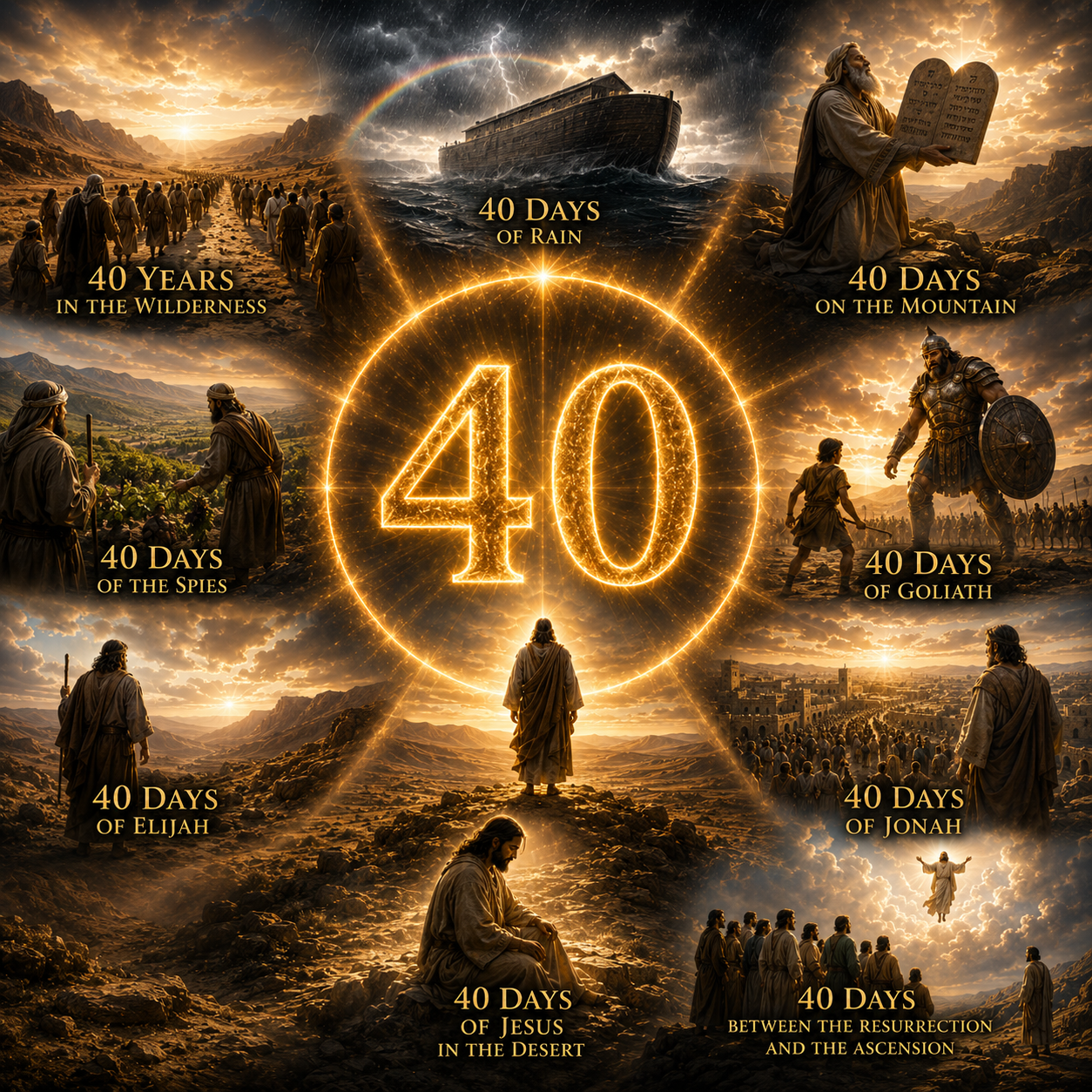
Forty days of rain. Forty years in the wilderness. Forty days on the mountain receiving the law. Forty days of the spies in the land. Forty days of Goliath taunting Israel. Forty days of Elijah walking to the mountain of God. Forty days of Jonah preaching in Nineveh. Forty days of Jesus in the desert. Forty days between the resurrection and the ascension. Most Christians have noticed that forty appears frequently in the Bible. Almost none have been told what it means. Or why Jesus's forty days recapitulated something that had taken Israel forty years. ________________________________________ Begin with the pattern. In Scripture, forty is never a round number chosen for convenience. It is the number of the period of trial — the duration of the corridor that precedes transformation. The time during which something is being formed, tested, stripped down, and prepared before it emerges into what it was always meant to become. Six is the number of human work. Seven is the number of divine completion. Forty is the number of the process that gets you from one to the other. It is not the destination. It is the corridor to the destination. ________________________________________ The flood lasted forty days and forty nights. The rain fell. The waters rose. The old world — the world of violence and corruption that had departed so far from what God intended that He grieved having made it — was submerged. And on the other side of forty days, Noah opened the window of the ark. The old world was gone. A new world was beginning. Forty days of judgment. Then a new creation. ________________________________________ Israel spent forty years in the wilderness. Not because the journey required forty years. The distance from Egypt to Canaan could be walked in weeks. Forty years because a generation had to be formed. The people who left Egypt were slaves. They had the psychology of slavery — the instinct to look back at Egypt when things got difficult, the inability to trust what they could not see, the habit of complaining, the reflexive surrender when obstacles appeared. A slave psychology cannot inherit a promised land. It will turn every gift into a complaint and every challenge into a reason to go back. Forty years in the wilderness was not punishment for a generation's failure. It was the formation of the next generation — the people who had known nothing but the wilderness, who had eaten manna and watched water come from rocks and followed a cloud and slept under stars, who had no Egypt to look back to because they had never been there. The forty years produced the people who could cross the Jordan. Forty years of formation. Then an inheritance. ________________________________________ Moses spent forty days on Sinai receiving the law. Twice. The first time, Israel built a golden calf while he was gone and he came down to find them worshipping what they had made. He shattered the tablets. He went back up. Forty more days. The second forty days produced the tablets that would be placed in the Ark of the Covenant. The law that would structure the life of Israel for fifteen centuries. The covenant that would be the foundation of everything that followed. Forty days of waiting at the foot of a mountain produced a people who could not wait. Forty days of returning to the mountain produced the covenant they had broken before it was even given. Forty days. Then the law. Then another forty days. Then the law again. The corridor had to be walked twice before the inheritance could be received. ________________________________________ Elijah ran from Jezebel into the wilderness. He had just called down fire from heaven. He had killed the prophets of Baal. He had won the most visible victory of his prophetic career. And he sat under a tree and asked to die. An angel fed him. He slept. The angel fed him again. "Arise and eat, for the journey is too great for you." And Elijah traveled forty days and forty nights to Horeb — the mountain of God. The same mountain where Moses had received the law. The same mountain where God had descended in fire and thunder. At the end of forty days, God came to him. Not in the wind. Not in the earthquake. Not in the fire. In the still small voice. And gave him his next assignment. Forty days of exhausted walking. Then a voice in the silence. Then a new beginning. ________________________________________ Jonah preached in Nineveh for forty days. "Yet forty days, and Nineveh shall be overthrown." The most reluctant prophet in the Hebrew Scriptures stood in the most hostile city and delivered the shortest recorded sermon. Forty days. Then judgment. And the city repented. On day one. Before the forty days were finished. Forty days announced. The city changed before the forty days were complete. The corridor of trial produced the transformation before the corridor ended. ________________________________________ And then Jesus. Immediately after His baptism — when the Spirit descended like a dove and the Father's voice said this is my beloved Son in whom I am well pleased — Jesus was led by the Spirit into the wilderness. For forty days. He fasted. He was tempted by the devil. Three specific temptations. Three specific answers. And every answer was a quotation from Deuteronomy. The book written for the generation that had spent forty years in the wilderness. The book that contained Moses's final address to the people who were about to cross the Jordan — the speeches Moses gave to a generation that had been formed in the wilderness and was now ready to inherit what had been promised. Jesus answered the tempter with the words Moses had spoken to Israel at the end of their forty years. Not as a coincidence. As a declaration. ________________________________________ Israel spent forty years in the wilderness and failed the tests. When they were hungry, they complained about the manna and longed for the food of Egypt. When they were given power, they used it to serve themselves. When they were offered the nations as an inheritance, they demanded a king like the other nations instead of trusting the God who had led them. Test after test. Forty years of corridor. And Israel failed. Jesus spent forty days in the wilderness and passed the tests Israel had failed. When He was hungry — after forty days of fasting, at the point of maximum physical weakness — the tempter said: if you are the Son of God, command these stones to become bread. Jesus quoted Deuteronomy 8. "Man shall not live by bread alone, but by every word that comes from the mouth of God." The same test Israel had failed when they complained about the manna. Passed. When the tempter offered Him all the kingdoms of the world if He would bow down — Jesus quoted Deuteronomy 6. "You shall worship the Lord your God and him only shall you serve." The same test Israel had failed at the foot of Sinai with the golden calf. Passed. When the tempter took Him to the pinnacle of the Temple and said: if you are the Son of God, throw yourself down, for the angels will catch you — Jesus quoted Deuteronomy 6 again. "You shall not put the Lord your God to the test." The same test Israel had failed at Massah when they demanded water and questioned whether God was among them. Passed. ________________________________________ The forty days of Jesus in the wilderness was not merely a period of personal spiritual trial before His ministry began. It was the recapitulation of forty years of Israel's history — compressed into forty days — with the tests that Israel had failed retaken and passed by the one who had come to be what Israel was always called to be. The faithful Israel. The Son who did what the son had failed to do. Who emerged from the wilderness not broken and complaining but empowered by the Spirit to begin the mission that forty years of corridor had never produced in the people He came to save. ________________________________________ And then forty days after the resurrection. Jesus appeared to His disciples. He ate with them. He explained the Scriptures to them. He breathed on them and said receive the Holy Spirit. For forty days. And on the fortieth day — He ascended. The corridor between resurrection and ascension was forty days. The period of formation before the disciples would receive the Spirit and begin the mission that would reach the ends of the earth. Forty days of being with the risen Jesus. Then the ascension. Then Pentecost. Then the mission. The corridor one more time. Then the transformation. ________________________________________ Most Christians have noticed the number forty without understanding the pattern. Nobody ever showed them that the forty days of rain and the forty years in the wilderness and the forty days on Sinai and the forty days of Jesus in the desert are not separate instances of a number the biblical writers happened to like. They are the same pattern — repeated at every major turning point in the biblical narrative to announce the same thing. Something is being formed here. Something is being tested here. Something is going to emerge from this corridor changed. And nobody ever told them that Jesus's forty days quoted Deuteronomy specifically — because His forty days were Israel's forty years retaken, the tests failed by the son answered correctly by the Son. Not because the connections are hidden. Because nobody ever gave them the roots to follow the number all the way through. ________________________________________ I remember the first time I understood what Jesus was doing when He quoted Deuteronomy in the wilderness. Not in a seminary. Not in a commentary. It was when someone finally gave me the context that made Israel's forty years speak to Jesus's forty days — and the temptation narrative I had always read as a spiritual battle became something I had never actually encountered before. Before that, I read the temptation of Jesus as a test He passed before His ministry. After that, I understood it as the faithfulness of the true Israel recapitulating and redeeming the unfaithfulness of the historical Israel. He went where they went. He fasted when they hungered. He faced what they faced. And He answered with their words. Not because He needed their wisdom. Because He was completing what they had left unfinished. ________________________________________ Because context changes everything. Every single time. Did you know that the forty days of rain in Genesis were counted not from when the rain started but from when Noah and his family entered the ark — and that the forty days ended when the rain stopped, but Noah remained in the ark for an additional period before the waters receded? That the forty days of the flood was the period of active judgment — and that what came after was the long, slow process of the new creation emerging from the receding waters? That the forty days was not the whole story of the flood but the critical corridor at the center of it — the period during which the old world ended and the new world was forming underneath? Did you know that Moses's face shone when he came down from the forty days on Sinai — that exposure to the presence of God for forty days left a visible mark on his face that frightened the Israelites and had to be covered with a veil? And that Paul in 2 Corinthians 3 contrasts that veiled glory — fading, temporary — with the unveiled glory that transforms everyone who beholds it? That forty days in the presence of God produced a transformation in Moses that the people could not look at directly — and that this is a shadow of the transformation that the new covenant produces in those who behold the glory of Christ unveiled? Did you know that David reigned for forty years, and Solomon reigned for forty years, and that the forty-year reign of each was considered a period of completeness — a full generation of flourishing that established the identity of the kingdom before the next chapter began? That the two greatest reigns in the history of Israel were both forty years — as if God was marking with the number of trial-and-formation the reigns that would define what Israel was supposed to be before it began to drift from it? It is all there. In the Bible you already have at home. On the pages you have already read. Waiting for whoever had the roots to follow the number all the way through. ________________________________________ This level of understanding does not require a seminary degree. It does not require years of Greek and Hebrew. It requires context. It requires connection. It requires someone who has already done the work of connecting the threads and placed it in a format you can walk through on your own. That is why the Advanced Theology Course was created. 84 modules. From Genesis to Revelation. Not a surface-level introduction. Not a five-minute devotional. Real theology. Real depth. The kind of study that helps you understand why Jesus quoted Deuteronomy — the book written for the generation that had spent forty years in the wilderness — when He was answering the tempter after forty days in the desert. With an internationally recognized certificate. No subscription. You pay once and it is yours. Because transformative knowledge should not be locked behind a monthly fee you cancel when your budget gets tight. ________________________________________ Students who completed the module on the number forty said things I cannot forget. A woman who has read the Bible her entire life said: "I knew forty appeared frequently. I thought it was just a number biblical writers used for long periods of time. I never understood it as the number of the corridor — the period of trial and formation that precedes transformation. I never saw that Israel's forty years and Jesus's forty days were the same test — and that Jesus answered with the words written for the generation that had failed the test the first time. That changes everything about how I read the temptation narrative." A man who has taught Old Testament survey for years said: "I always taught the forty years in the wilderness as punishment. I never taught it as formation. I never showed my students that the generation that inherited the Promised Land was the generation formed in the wilderness — that the forty years produced the people who could receive what was promised. And I never connected that formation to Jesus's forty days — the faithful Israel passing the tests the historical Israel had failed. I cannot teach either story the old way anymore." Another student said simply: "Forty is not the destination. It is the corridor. Every time forty appears in Scripture, something is being prepared for what comes next. I had been reading past the number my entire life without understanding what it was announcing." They did not need a seminary to get there. They needed the right context. The right connections. The depth that makes the Bible open itself from the inside out. ________________________________________ The Bible is not confusing because it is unclear. It is confusing because we are reading it without the foundation that made it obvious to the people who first received it. The first readers of the Gospels knew the forty years in the wilderness. They had grown up with the story. They knew Deuteronomy — the book Moses spoke to the wilderness generation at the border of the Promised Land. They knew every test Israel had failed. When they read that Jesus was in the wilderness for forty days and answered each temptation with a quotation from Deuteronomy — they felt what was happening. He was doing what Israel had failed to do. In forty days what Israel could not do in forty years. We read the same narrative and see a spiritual battle Jesus won. Not because our faith is lesser. But because nobody ever gave us the roots that make Jesus's forty days land with the full weight of Israel's forty years underneath them. The Advanced Theology Course gives you those roots back. 84 modules built to take you from the surface to the depth. From the text to the context. From information to transformation. Internationally recognized certificate. No subscription. One payment and it is yours. ________________________________________ You have read the number forty before. Many times. In many places. And maybe you noticed it without ever understanding what it was announcing. There is a pattern. Forty days of rain — then a new world emerging from the waters. Forty years in the wilderness — then an inheritance entered. Forty days on Sinai — then the law received. Forty days of the spies — then a generation's failure and a new generation's formation. Forty days of Goliath's taunting — then a shepherd boy with a stone. Forty days of Elijah walking — then a voice in the silence and a new assignment. Forty days of Jonah preaching — then a city that repented before the forty days were finished. Forty days of Jesus in the desert — then the beginning of the mission that would reach the ends of the earth. With the words of Deuteronomy answering the tests Israel had failed. With the faithful Son passing what the historical son had not. Forty days between resurrection and ascension — then the Spirit poured out and the mission launched. The same number. The same announcement. Something is being formed here. Something is being tested here. Something is going to come out of this corridor transformed. God did not put forty into the rain and the wilderness and the mountain and the desert and the resurrection appearances by accident. He never does anything by accident. And the corridor that the number announces — the period of trial and formation that precedes every transformation in the biblical narrative — has been waiting for you to recognize it since the first time you read past forty thinking it was just a round number someone happened to choose. Click below and start today: https://christiantheologicalinstitute.online/ ________________________________________ Advanced Theology Course — 84 modules. Internationally recognized certificate. No subscription fees.
Where the ad sends people
christiantheologicalinstitute.online
Jesus quoted Deuteronomy in the wilderness. That was not random.
Deuteronomy was written for the generation that spent forty years in the desert. Jesus spent forty days there — retaking the tests Israel failed. Same tests. This time passed.
Learn more: christiantheologicalinstitute.online(opens in a new tab)