James Whitaker
James Whitaker Facebook ad: “The Urim and Thummim disappeared after the exile and never…”
Ran for 35 days, from August 2 to September 6, 2026, the last day Crush saw it.
Run by James Whitaker on Facebook. Crush is not the advertiser and does not verify its claims. See this ad in Meta's Ad Library(opens in a new tab)
Want an ad like this for your product?
Crush makes new ad images for your product from this ad: your logo, your product photo, your offer.
Trials from $19.95 USD, then $79.95 USD a month. Cancel anytime.
About this ad
- Meta Ad Library ID
- 2163226864407340
- Platforms
- Facebook, Instagram, Audience Network, Messenger, WhatsApp and Threads
- Relaunches
- 1
- Niche
- Jewelry & Watches
Ad text
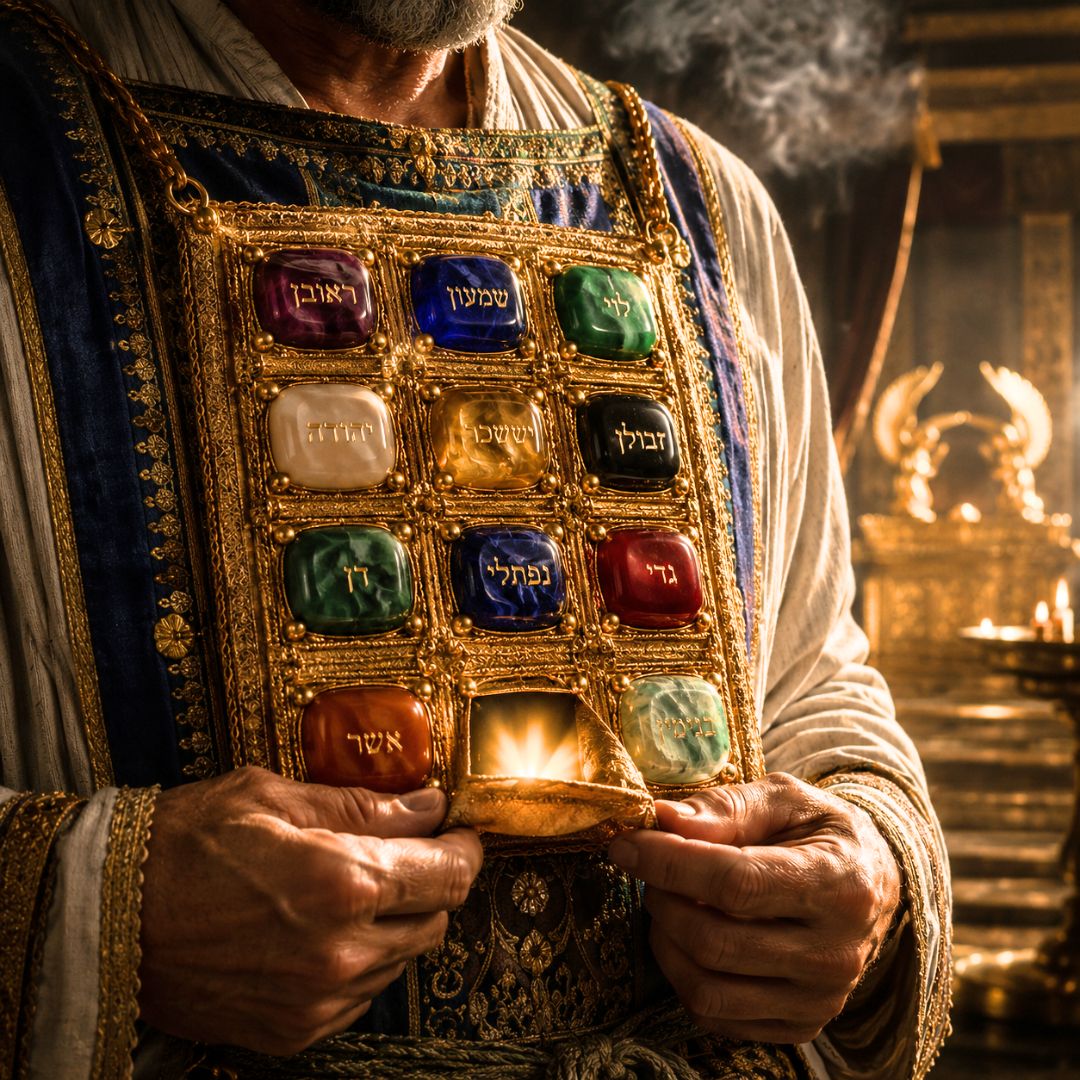
There is an object in the Bible that appears without explanation and disappears without farewell. It is mentioned in Exodus. It is carried into battle. It is consulted in moments of impossible decision. It sits on the chest of the high priest when he stands before God. And then one day it is simply gone. No announcement. No ceremony. No explanation. Just a silence where it used to be. And most Christians have never heard its name. ________________________________________ The Urim and Thummim. The words appear together throughout the Old Testament. Scholars have debated their meaning for centuries. The most common translations render them as lights and perfections — or as revelation and truth. But what they were, precisely, nobody fully knows. What we know is what they did. When Israel needed to know the will of God — when a battle was to be fought and the outcome uncertain, when a leader was to be chosen and the choice was unclear, when a case was too difficult for any human judge to resolve — the high priest consulted the Urim and Thummim. God answered through them. How, exactly, is never described. The text simply records the consultation — and the answer. ________________________________________ What we do know is where they were kept. Exodus 28 describes the breastpiece of the high priest in precise detail. A square pouch, folded double, woven from gold, blue, purple, and scarlet yarn with fine linen. Set into it were twelve stones — four rows of three, each stone engraved with the name of one of the twelve tribes of Israel. Aaron shall bear the names of the sons of Israel on the breastpiece of judgment on his heart, when he goes into the Holy Place, to bring them to regular remembrance before the Lord. On his heart. Every time the high priest entered the presence of God, he carried the names of every tribe of Israel over his heart. Not as a symbol. As a purpose. As a burden. As a deliberate, visible declaration that when the high priest stood before God, he did not stand alone. He carried a people with him. Every name. Every tribe. Every person represented in those twelve stones pressing against his chest as he walked through the veil. And inside the breastpiece — inside the pouch that rested over his heart, behind the twelve stones — was the Urim and Thummim. The means by which God spoke. Hidden inside the thing that carried the people. ________________________________________ Now trace what the high priest was doing every time he entered the Most Holy Place. He was carrying Israel over his heart into the presence of God. He was interceding — not merely offering blood, not merely performing a ritual, but standing in the place between God and the people, with the people pressed against his chest, bearing them before the one they could not approach themselves. The stones on his chest declared who he was carrying. The Urim and Thummim inside the breastpiece declared that God spoke in that place — that the presence of God was accessible, that answers could be found, that the God who dwelled behind the veil was not silent. Carried on the heart of the one who stood between. ________________________________________ And then the exile came. Babylon destroyed the Temple. The priesthood was scattered. The people were taken from the land. When the exiles returned under Ezra and Nehemiah, they began to rebuild. The priests returned. The sacrifices resumed. The Temple was reconstructed. But something was missing. Ezra 2:63. Nehemiah 7:65. Certain questions — certain decisions about which families could serve as priests, about whose lineage was legitimate — were left unresolved. The governor told them that these matters would have to wait. "Until a priest with Urim and Thummim should arise." Until. The Urim and Thummim had not returned from exile. And it never did. The Second Temple stood for five centuries. The priesthood functioned. The sacrifices continued. The Day of Atonement was observed every year. But the Urim and Thummim — the object through which God had spoken, the means of divine consultation that Israel had carried through the wilderness and into the Promised Land — was gone. The rabbis noted its absence. The Talmud records it as one of five things present in the First Temple that were not present in the Second. No explanation. No replacement. Just a silence where the voice of God used to be. ________________________________________ But the silence was not abandonment. It was preparation. Because the prophet Jeremiah — writing during the exile, in the darkness of everything that had been lost — made a promise about what was coming. "I will put my law within them, and I will write it on their hearts. And I will be their God, and they shall be my people. And no longer shall each one teach his neighbor and each his brother, saying 'Know the Lord,' for they shall all know me, from the least of them to the greatest." The law written on hearts. The knowledge of God — not consulted through an object worn on the chest of one man, but given directly to every person, from the least to the greatest. And Ezekiel added: "I will put my Spirit within you, and cause you to walk in my statutes." My Spirit within you. Not on a mountain. Not behind a veil. Not in a pouch on the breastpiece of a single man who entered once a year. Within you. The Urim and Thummim disappeared because something was coming that would make consultation through a physical object unnecessary. The means of knowing God's will was about to be internalized. The voice that had spoken through stones was about to speak through the Spirit — not to one man standing before God on behalf of the people, but to each person directly, the least and the greatest, without intermediary. ________________________________________ And then came Pentecost. The fire that fell in Acts 2 was not a new beginning disconnected from the old story. It was the fulfillment of what the silence had been announcing. The Urim and Thummim had gone silent because the thing it pointed toward was coming. The Spirit was poured out — not on the breastpiece of one high priest, but on one hundred and twenty people in an upper room, and then on three thousand in a single day, and then on every person who would ever call on the name of the Lord. The voice of God that had been consulted through an object worn over one man's heart was now given to every human heart. Jeremiah's promise arrived. Ezekiel's promise arrived. The silence of the Urim and Thummim was not the silence of absence. It was the silence before the answer. ________________________________________ But there is still the breastpiece. Still the twelve stones. Still the image of the high priest carrying the names of the people over his heart into the presence of God. That image did not disappear when the Urim and Thummim went silent. It was fulfilled in the one who replaced the entire Levitical system. ________________________________________ The book of Hebrews describes Jesus as our great High Priest. Not a high priest who enters once a year and comes back out and returns the following year. A High Priest who entered once — with His own blood, into the true Most Holy Place — and who lives forever to intercede. "He always lives to make intercession for them." Always. Not once a year. Not through a representative carrying stones over his chest. Always. Continuously. Without interruption. The high priest of Israel carried twelve stone-engraved names over his heart when he entered the presence of God. Jesus carries every name of every person who has ever come to Him — pressed against His heart, borne before the Father, remembered before God — not for a moment on one day of the year, but always. The breastpiece was a shadow. The weight of the people on the heart of the High Priest is the reality. And it is not temporary. It is permanent. ________________________________________ Most Christians have never heard of the Urim and Thummim. And most of the Christians who have heard of it have filed it away as one of the Bible's more impenetrable mysteries — something to acknowledge and move past. Nobody ever told them that its disappearance was not a tragedy but a threshold. That the silence announced an arrival. That the means of hearing God's voice was being moved from outside a single man's chest to inside every human heart. And nobody ever showed them that the image of the high priest carrying the names of the people over his heart into the presence of God is still happening — not in a Jerusalem Temple, not with a breastpiece of twelve stones, not with an object whose contents nobody can fully describe. But in the ongoing intercession of a High Priest who carries every name, always, before the Father. Not over His chest. On His heart. ________________________________________ I remember the first time I understood what the disappearance of the Urim and Thummim was actually announcing. Not in a seminary. Not in a commentary. It was when someone finally gave me the context that made Exodus 28 speak to Ezra 2, and Ezra 2 speak to Jeremiah 31, and Jeremiah 31 speak to Acts 2, and all of it speak to Hebrews 7. Before that, I read the Urim and Thummim as one of the Bible's unexplained mysteries. After that, I never read the word Pentecost the same way again. Because the fire that fell on that day was not the beginning of something new. It was the arrival of something the silence had been announcing for five centuries. The voice was not gone. It was moving. From outside. To inside. From one man's chest. To every human heart. ________________________________________ Because context changes everything. Every single time. Did you know that the high priest's breastpiece — the choshen mishpat, the breastpiece of judgment — was designed so that it could never fall away from the ephod? It was attached by golden chains and blue cord at every corner, bound to the garment so that it could not be separated. That the names of the people were fastened to the heart of the one who carried them — not loosely, not temporarily, but secured by design? And that Hebrews says Jesus is able to save to the uttermost those who draw near to God through Him — that the intercession is not tentative but complete, not temporary but permanent, not secured by cords but by the eternal nature of the one who carries them? Did you know that the two names of the mysterious objects — Urim and Thummim — have been translated throughout history as lights and perfections, but also as the guilty and the innocent, the cursed and the perfect? That some scholars read the Urim and Thummim as a means of divine judgment — the innocent declared innocent, the guilty declared guilty — and that this is precisely what the cross accomplished: the innocent declared guilty so that the guilty could be declared innocent? That the object carried over the heart of the high priest when he entered the presence of God may have been, in its very name, a picture of the exchange? Did you know that when the returned exiles were told to wait for a priest with Urim and Thummim, the word they used for wait — amad — is the same word used in Hebrews 10 when it says that Jesus sat down at the right hand of God after making His offering, while His enemies are made His footstool? That the waiting of Ezra's time and the sitting of Hebrews are the same posture — a work completed, a question answered, a silence that was never absence but arrival? It is all there. In the Bible you already have at home. On the pages you have already read. Waiting for whoever had the roots to see what had always been there. ________________________________________ This level of understanding does not require a seminary degree. It does not require years of Greek and Hebrew. It requires context. It requires connection. It requires someone who has already done the work of connecting the threads and placed it in a format you can walk through on your own. That is why the Advanced Theology Course was created. 84 modules. From Genesis to Revelation. Not a surface-level introduction. Not a five-minute devotional. Real theology. Real depth. The kind of study that helps you understand why the Urim and Thummim disappeared — and what the five centuries of silence between its disappearance and Pentecost were actually announcing. With an internationally recognized certificate. No subscription. You pay once and it is yours. Because transformative knowledge should not be locked behind a monthly fee you cancel when your budget gets tight. ________________________________________ Students who completed the module on the Urim and Thummim said things I cannot forget. A woman who has read the Old Testament her entire life said: "I had seen the words Urim and Thummim in Exodus and always moved past them because nobody ever explained them. I never knew they disappeared after the exile and never returned. I never understood that the silence of the Second Temple — the five centuries without the Urim and Thummim — was not the silence of God's absence but the silence before His arrival. The Spirit poured out at Pentecost was not a new thing. It was the answer to a five-hundred-year question." A man who has studied Hebrews for years said: "I knew Jesus was our High Priest. I never visualized what that meant in terms of what the Levitical high priest actually did — carrying twelve stones engraved with twelve names over his heart into the presence of God. Every name. Every tribe. Carried before God on the chest of the one who stood between. And then understanding that Jesus carries every name, always, before the Father — not on a breastpiece, not once a year, but on His heart, always — that changed the way I understand intercession entirely." Another student said simply: "The Urim and Thummim went silent because the voice was moving. From outside to inside. From one man's chest to every human heart. Jeremiah promised it. Ezekiel promised it. Pentecost delivered it. I had read all three without ever seeing that they were the same promise." They did not need a seminary to get there. They needed the right context. The right connections. The depth that makes the Bible open itself from the inside out. ________________________________________ The Bible is not confusing because it is unclear. It is confusing because we are reading it without the foundation that made it obvious to the people who first received it. The returned exiles who heard that certain decisions would have to wait for a priest with Urim and Thummim understood the weight of that waiting. They knew what had been lost. They felt the silence. And the people who were in Jerusalem on the day of Pentecost — who saw the fire fall and heard the languages and felt the presence of God in a way that filled the room rather than hiding behind a veil — understood what had arrived. The voice that had spoken through an object on one man's chest was now speaking from within. The wait was over. We read the Urim and Thummim as a mystery and Pentecost as a celebration without ever seeing that the mystery and the celebration are the same story — one ending and one beginning, with five centuries of silence announcing the arrival between them. Not because our faith is lesser. But because nobody ever gave us the roots that make the disappearance of the Urim and Thummim land with the full weight of what it was announcing. The Advanced Theology Course gives you those roots back. 84 modules built to take you from the surface to the depth. From the text to the context. From information to transformation. Internationally recognized certificate. No subscription. One payment and it is yours. ________________________________________ You have probably read past the words Urim and Thummim more than once. Most people do. They appear without explanation. They disappear without farewell. And nobody in the text stops to tell you what they were, how they worked, or why they mattered. But here is what was happening every time they appeared. A man was standing before God. Carrying the names of the people over his heart — every tribe, every name, pressed against his chest in twelve engraved stones — so that when he stood in the presence of God, the people stood with him. And inside the pouch that held those names, against his heart, was the means by which God spoke. The voice of God. Carried on the heart of the one who stood between. And then it went silent. Not because God had stopped speaking. Because He was about to speak differently. Not through an object on one man's chest. Through the Spirit in every human heart. Not to one tribe at a time through twelve engraved stones. To every person who would ever call on His name. And the High Priest who carries every name before the Father is not limited to one day a year, one man, one breastpiece. He carries you always. On His heart. Before the Father. Without interruption. God did not let the Urim and Thummim disappear by accident. He never does anything by accident. And what the silence was announcing has been waiting for you to hear it since the first time you read past those words without knowing what was hidden inside them. Click below and start today: https://christiantheologicalinstitute.online/ ________________________________________ Advanced Theology Course — 84 modules. Internationally recognized certificate. No subscription fees.
Where the ad sends people
christiantheologicalinstitute.online
The Urim and Thummim disappeared after the exile and never returned. That silence was not absence.
It was the announcement that the voice of God was moving. From outside one man's chest. To inside every human heart.
Learn more: christiantheologicalinstitute.online(opens in a new tab)