Michael Anderson, PhD.
Michael Anderson, PhD. Facebook ad: “What A Japanese Hospital Saw In Her Scan That I Didn't”
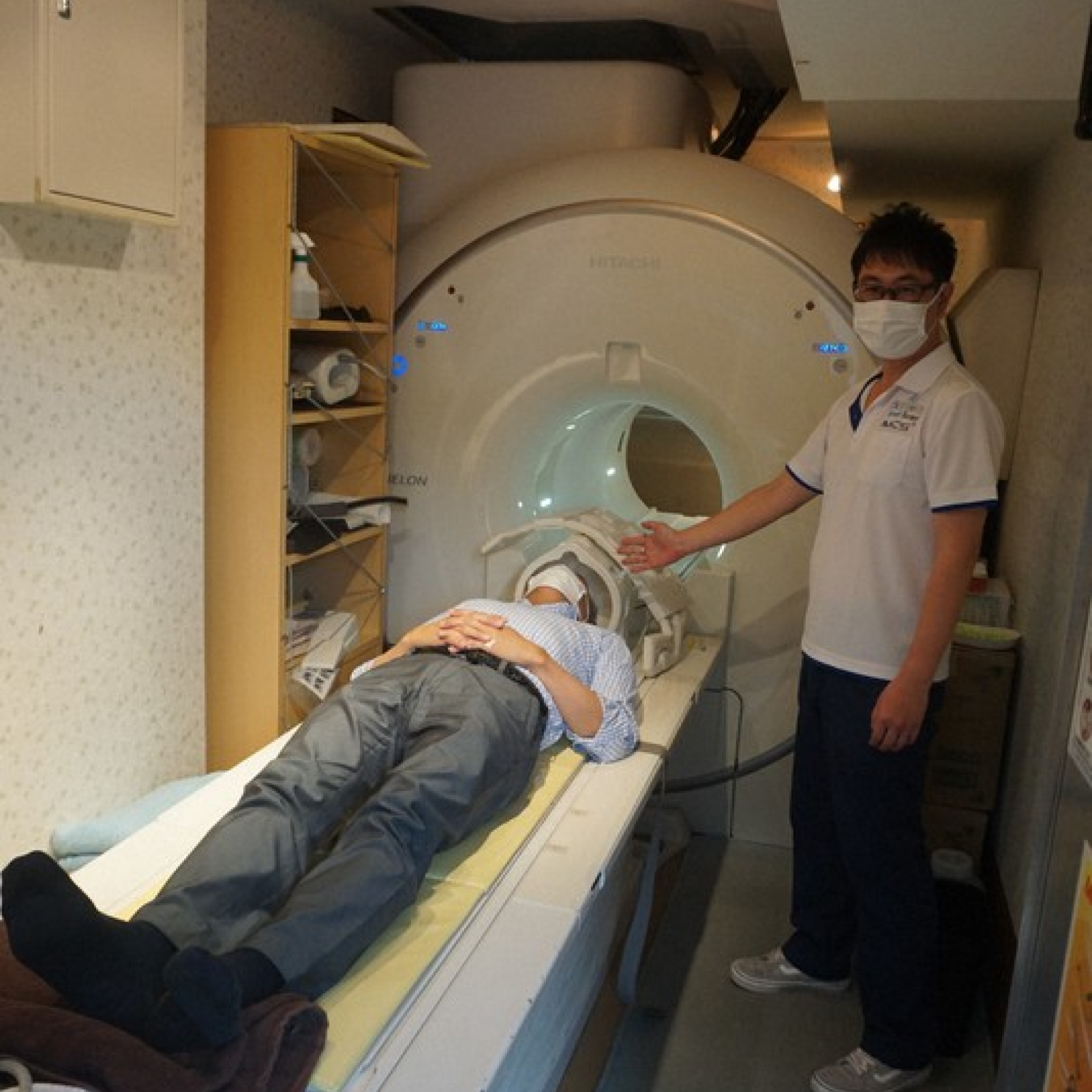
Ran for 3 days, from August 18 to August 21, 2026, the last day Crush saw it.
Run by Michael Anderson, PhD. on Facebook. Crush is not the advertiser and does not verify its claims. See this ad in Meta's Ad Library(opens in a new tab)
Want an ad like this for your product?
Crush makes new ad images for your product from this ad: your logo, your product photo, your offer.
Trials from $19.95 USD, then $79.95 USD a month. Cancel anytime.
About this ad
- Meta Ad Library ID
- 1048185498134207
- Platforms
- Facebook, Instagram and Messenger
- Relaunches
- 1
Ad text
I don't give a f*ck what the pharmaceutical industry does to me for writing this. I am going to say something that no doctor who makes his living treating MS is allowed to say in public. I have run an MS clinic for 19 years. I have administered infusions and steroids to more people with MS than any doctor I know personally. On April 7th of this year, at 9:40 in the morning, my wife Ellen fell on a staircase above a train platform in Kyoto, Japan. She spent two nights in a Japanese hospital. On the second morning, a Japanese neurologist eleven years younger than me pulled a chair up to her bed and told me something about my wife's MS that no American doctor had said out loud in the nine years since her diagnosis. I am an American doctor. I am her husband. I run an MS clinic. He was talking about me too. My name is Michael Anderson. I am not going to name my hospital. What I am going to do is tell you exactly what that neurologist said, what I found when I got home and checked it against the research, and what has happened to my wife in the sixteen weeks since. If you have MS, or your wife, your mother, or your daughter does, please read the entire thing. I know it is long. I know you are scrolling. I know you have things to do. Four months ago I would not have believed a word of it either. That is exactly why it needs to be read. Ellen was diagnosed with relapsing MS nine years ago, at 38. It started with numbness from her left knee down to her foot. She waited two weeks to tell me. She is an OR nurse. She already knew the list of things it could be. Since then, on paper, she has been one of the success stories. She has not had a relapse in six years. She has not had a new lesion on any scan in five. Every report for five years has said the same word. Stable. Now let me show you the numbers in that same chart, next to that word, at every visit. Her timed 25-foot walk was 5.9 seconds three years ago. Then 6.8. Then 7.6. At her appointment this March, 8.4. Her fatigue score climbed from 38 to 61 across the same three years. No relapses. No new lesions. And a walk time that got worse at every single visit for three years. And she did everything right. I made sure of it, because handing that checklist to patients is my job. She took 5,000 IU of vitamin D every day for nine years and kept her level between 60 and 80. I drew the blood myself twice a year. She did physical therapy twice a week for four years. She swam on Tuesdays and Fridays. She bought the cooling vest. She did the Wahls diet for two years. Nine cups of vegetables a day, no grains, no legumes. She lost 19 pounds and kept it off. Every box checked. Every scan stable. Every year worse. I am a neurologist with an MS subspecialty. I read her chart every year. Her walk time climbed for three years while every report said stable. And I said nothing. I want to tell you why, because the why is the part my profession never says in public. I keep a number in my head. The number of women I have watched decline in my own clinic while every scan said stable. I am not going to share it, because it would sound like I am making it up. Just trust me that it is a lot of women. A lot of mothers. A lot of daughters. All of them stable on paper. All of them worse every year. Every single one of them surprised. There is one of them I think about most. Diagnosed the same year as Ellen. Almost the same age, four months apart. Stable at every visit for nine years, logged in my own notes. In February she came to her appointment in a wheelchair her daughter pushed. She is 48. Ellen is 47. And for 19 years I said the scan looks good. I explained the infusion schedule. I wrote the prescription for whichever symptom they mentioned first, and I went home. Because I took an oath. Because I have a license to protect and a mortgage to pay. Because I have been told my entire career that the standard of care is the standard of care, and that a doctor who questions it in public loses all three. That was the deal I made. I kept it for 19 years. It ended on a staircase in Kyoto. The trip was for our 25th anniversary. Ellen planned it for two years. Ten days, Tokyo and Kyoto, in cherry blossom season. She built a spreadsheet of train times with eleven tabs. One entry had a star on it. The 9:52 morning train to Nara, because she wanted to see the deer that walk up to you in the park there. Before I tell you about the fall, I have to confess some things about the year before it. For the last year, Ellen has taken stairs one step at a time with her hand on the railing. I blamed her knee. She has been getting up twice a night to use the bathroom for two years. We blamed coffee. Since Christmas, she has pushed off the arms of a chair with both hands to stand up. I blamed the chairs. In January she stopped wearing her clogs at the hospital and bought flat sneakers with laces. I thought nothing of it at all. The night before the fall, she asked for a taxi to go four blocks back to the hotel. I blamed jet lag. I am a fellowship-trained MS specialist. I have described every one of those signs to patients in follow-up appointments for 19 years. When they happened in my own house, I explained every one of them away. Exactly like the husbands of my patients do. April 7th was our ninth day. The morning of the starred tab. We had breakfast at the hotel at 8:30 and walked to Kyoto Station. It was crowded. The staircase down to the platform was wide, maybe forty steps, and Ellen was on my left with her hand on the railing, taking them one at a time, the way she has for a year. Four steps from the bottom, her right leg stopped working. Hip flexor first. Then the foot. It is the exact weakness I have typed into charts more times than any other sentence in my career. She went down onto the tile. She could not get up. I could not get her up, because she could not put any weight on the leg at all. She kept saying "I'm fine, I'm fine," and she could not stand. She had landed on her right wrist. It was already swelling. A man in a delivery uniform helped me move her back against the wall. A station attendant knelt next to us and spoke into a radio. Announcements kept playing overhead in Japanese. Our train to Nara came and left while we were sitting on the floor. The ambulance took eleven minutes. I know that because I stood on a train platform in Japan, holding my wife's arm, watching the clock the entire time. She was admitted to a university hospital in Kyoto with a fractured radius and a right leg she could not stand on. 5,600 miles from her neurologist. They ran an MRI that night. I sat in a hallway outside imaging on a plastic chair, filling out forms I could not read, listening to the same knocking sound I have described to patients for 19 years as nothing to be frightened of. I already knew what the scan would say. I have read 9,187 of them. They were looking for the relapse that would explain the leg. There wasn't one. No new lesions. No enhancement. Stable. My wife was in a hospital bed in a foreign country with a broken wrist and a leg that had stopped working on a public staircase. And her scan said the same thing it has said for five years. The next morning, a neurologist came to her room on rounds. Dr. Sato. Eleven years younger than me. Careful English. I'd had her records emailed overnight, and he had read all of them before he walked in. He went through her medication list twice, out loud. The infusion. The vitamin D. Then he looked up. And he asked me a question I have never been asked in an American hospital. "Where are her neurotropic vitamins?" I waited for the rest of the question. That was the whole question. I want you to understand what that moment was like for me. Four years of medical school. Four years of residency. A fellowship in multiple sclerosis. Nineteen years of practice. Thousands of hours of continuing education. I had never heard the term neurotropic vitamins in my life. I asked him what he meant. He explained it the way I explain things to first-year residents. There are three vitamins that act directly on nerve tissue. B1. B6. B12. That is what neurotropic means. Acts on nerve tissue. He said: in Japan, nobody groups these three with the other B vitamins. They are their own category. A category of nerve medicine. He said: in your country, that category does not exist. I told him her B vitamin levels are normal. All of them. I ordered the panel myself after her March appointment. Her B12 came back at 612. I started explaining the reference ranges to a man who obviously knew them. He let me finish. Then he said, "Those numbers are her blood. They are not her nerve cells. Your tests measure what is in the blood. They cannot tell you what got inside the cell." I argued for a second. Then I stopped, because he was right. He pulled a chair over and sat down. And for the next twenty minutes, he told my wife the things I am about to tell you. He asked her: "How long have you been getting worse?" Ellen said three years. He asked: "And how many of those years were your scans stable?" She looked at me before she answered. All of them. He nodded. She had not surprised him. He said her drugs are good drugs. He said the infusion prevents the immune system from attacking her myelin, and that she should keep taking it without missing a dose. And then he said that nothing on her list, not one thing in nine years, gives her body any of what it needs to rebuild the myelin she has already lost. He said: in America, you stop the attack, and then you wait. In Japan, we stop the attack, and we also treat the nerve. We have treated the nerve for decades. He said: her scans are stable because the MRI measures lesions. It does not measure myelin. He said: medical journals have a name for what is happening to her. Progression independent of relapse activity. More than half of the damage people end up with from MS does not come from a relapse at all. I run an MS clinic. And I sat in a chair by the window and listened to a man eleven years younger than me explain my wife's last three years in four sentences. Then he took her discharge instructions and wrote three lines on them. B1. It provides the energy the repair uses. B12. It supplies the material myelin is rebuilt from. B6. It allows the signal to travel cleanly down the nerve once the myelin is there. He said: one of them alone does very little. They are used together. Always all three. He said: in Japan, the neurotropic vitamins are standard medicine for nerve damage, and they have been since before I went to medical school. Every pharmacy in this country dispenses them. We give them by injection, because most of what you swallow is destroyed in the stomach and never reaches the nerve. Then he stood up. And before he moved on to the next room, he said the sentence I have thought about every day since. "If your wife lived here, she would have started these nine years ago. The month she was diagnosed." Twenty minutes. A neurologist in Japan had just told me something about my wife's MS that no American doctor had ever said out loud. Including the one she is married to. Including the one who runs an MS clinic. I did not argue. There was nothing to argue with. Every sentence he said is in journals I have subscribed to for 19 years. I had just never read them for this. They discharged her on the morning of April 9th. A cast to her elbow, a wheelchair to the taxi, and three lines of handwriting on her discharge instructions. We flew home on April 12th, Ellen in a cast in the window seat. Eleven hours over the Pacific. She slept. I did not. That week, I did what I had never let myself do as a practicing neurologist. I stopped reading about how to manage MS and started reading about what actually causes the damage. Not the trial summaries. Not the guidelines. The original research. Three nights at my kitchen table with a laptop and a legal pad. Kappos and colleagues, JAMA Neurology, 2020. Most confirmed disability accumulation in relapsing MS happens with no relapse attached to it at all. Lublin and colleagues, Brain, 2022. Confirmed across more than 27,000 patients. There it was, in print, for years. The lesions and the relapses are the two things every neurologist watches. And more than half of the disability accumulates through neither one. Dr. Sato had not told me anything Japanese. He had told me something American, published in my own field's journals, that my field does not say to patients. Then the vitamins. I typed the term into the search bar exactly the way Dr. Sato had said it. Neurotropic vitamins. The term I had never heard in 19 years of neurology. It has its own review literature. Baltrusch, BioMed Research International, 2021. A full review of the neurotropic vitamins in nerve regeneration. B12 maintains myelin and supports remyelination. B1 is the coenzyme nerve cells produce energy with. B6 is required for clean nerve signaling. Exactly what Dr. Sato wrote on a discharge paper. Published years ago, in journals my whole field reads. And then the part that stopped me. In 2025, a team tested the three against each other in a lab model of nerve tissue. B12, given alongside B1 and B6, proved to be 26 times more effective than it alone. Not one vitamin. All three, together. I put the pen down at 1 AM on the third night and asked myself the only question left. If this has been in the journals for years, why had I never once heard it? Not at a conference. Not from a colleague. Not from a rep. I have been to 19 annual neurology meetings. I have sat through hundreds of sponsored talks and eaten hundreds of sponsored dinners. I could not remember one presentation on any of this. Not one slide. Not one use of the term I had to fly to Japan to hear by chance. Then I connected the dots. Think about how a doctor learns about a new treatment. A company pays for the trial. The company presents the results at conferences. The company sends reps to explain it to doctors like me. I have watched that system work for 19 years. It works well. Now ask who does any of that for a vitamin. You cannot patent a vitamin like B1, B6, or B12. Bringing a new drug to market costs over a billion dollars, and a company only spends that on a drug it owns. Nobody spends a billion dollars on molecules anyone can make. No patent means no trial money. No trial money means no conference talk. No conference talk means no rep at my clinic. In 19 years, pharmaceutical reps have bought lunch for my staff more times than I could count. Not one person has ever walked into my clinic to present the neurotropic vitamin research. Nobody was hiding it from me. There was just never anyone whose job it was to tell me. Ellen's infusion bills insurance $68,000 a year, and there is a rep for it. All three neurotropic vitamins together cost less than her parking at the hospital, and there is no rep for them. That is the entire explanation, and none of it is science. I want to be careful here, because I administer these drugs for a living. The infusion is not a scam. It prevents new attacks, it does that job well, and Ellen will stay on hers. I will keep administering them. I am saying that doctors get taught what companies pay to present. And nobody pays to present the other half of her disease. Two nights in that Japanese hospital, the imaging, the cast, and the neurology consult cost us $1,842 out of pocket. I keep the receipt in my desk now, next to her scan reports. Dr. Sato told her to start the vitamins when we got home. So I went looking at what is sold here. I stood in a pharmacy aisle with my reading glasses on and read labels for an hour. This is the part to read slowly before you buy anything. Most B vitamin products on American shelves use the cheap synthetic forms. Cyanocobalamin instead of methylcobalamin. Pyridoxine hydrochloride instead of P-5-P. They are far less bioavailable than the active forms. The B6 problem is worse than that. The nerve formulas on pharmacy shelves use pyridoxine hydrochloride at 100 milligrams. At those doses, pyridoxine hydrochloride causes peripheral nerve damage. The requirement is 1 to 3 milligrams. I have diagnosed that damage twice in my own clinic. Both times in patients who bought the product to help their nerves. And almost none of them are liposomal. Remember why Japan uses injections. Most of what you swallow is destroyed in the stomach and never reaches the nerve. A liposome does the injection's job without the needle. It is a microscopic sphere built from phospholipids, the same material your own cell membranes are made of. Because the shell and the membrane are the same material, the two fuse, and the vitamins are released inside the cell. Where myelin is rebuilt. A B vitamin that is not liposomal raises the numbers on your blood tests and does not reach the nerve cell. Which is exactly what Dr. Sato said about her blood tests in the first place. So this was the checklist. All three neurotropic vitamins. Active forms. Clinical doses. B6 held where it is safe. Liposomal. So I went digging. MS forums. Facebook groups. Supplement review sites. Hours of reading what patients had already figured out for themselves, in threads no doctor ever answers. That is where I found a small American company that does all of this. Nuvel Liposomal Neurotropic Vitamins. 5,000 micrograms of active methylcobalamin. B1 at a clinical dose. B6 as P-5-P, held at the level where it is safe. Liposomal drops. Third-party tested for what is actually in the bottle, not just label claims. I ordered it on April 16th. It arrived on the 19th. Ellen took the first dose on the morning of April 20th. One drop under the tongue with breakfast. That is the whole protocol. She did not feel anything on day one. Neither of us expected her to. End of week one, she came down for breakfast and said, "I slept through the night. My legs stayed still. First time in months." Week two. "I have more energy in the afternoons, Michael." Week three, she timed her own 25-foot walk in our hallway without telling me first. 7.2 seconds. Down from 8.4 at her March appointment. Week five, her cast came off. That same week, she walked down our stairs without her hand on the railing. I stood at the bottom and watched her do it. Week six, she had her fatigue score rerun ahead of her scheduled recheck. 34. It was 61 in March. Week eight, she carried the laundry basket down those same stairs. Nobody timed anything that day. I watched it happen and went back to pretending to read. Week eleven. Timed walk, 5.7 seconds. Fatigue score, 22. Her neurologist saw her on July 21st. He ran the timed walk himself. Then he ran it again, because 8.4 to 5.7 between appointments does not happen in his clinic. It does not happen in mine either. He read the fatigue score. Then he sat back and asked us what changed since March. I told him everything you have just read. Kyoto. Dr. Sato. Kappos. Lublin. The three vitamins and the liposome. He was quiet for a moment. Same profession. Same journals. Same silence. He told Ellen to keep doing what she is doing, and he moved her next follow-up from three months out to six. I held it together through the appointment. Then I sat in the car in the parking garage with my wife and cried. Because every woman in that number I keep in my head should have been told this too. The one in the wheelchair her daughter pushes should have been told nine years ago. And nobody told them. Including me. That is why I am writing this, and why I do not care what it costs me. I cannot keep telling women their scans look good while they keep getting worse, and handing them a prescription for whichever symptom they mentioned first. I did that for 19 years. I am done. If your wife, your mother, or your daughter has MS, and she is getting worse while every scan comes back stable, nobody is lying to you. The MRI is not wrong. It measures lesions. It does not measure myelin. Stable means no new lesions. It does not mean the damage is being repaired, because nothing she has been given repairs it. Her DMT prevents new attacks. It was never built to rebuild the myelin that is already gone. Steroids end a flare faster. They do nothing about what the flare left behind. Physical therapy strengthens muscle, and she should keep going. It does not rebuild myelin. Vitamin D supports the immune system. It does not rebuild myelin. Ellen took 5,000 IU a day for nine years and fell on a staircase anyway. The Wahls diet did not rebuild Ellen's myelin in two years. No food carries these three in the amounts a damaged nerve needs. And while nothing rebuilds it, the repair keeps falling behind. Until the next thing goes. Another fall, somewhere without a railing to grab. Pressing the brake fast enough. Getting to the bathroom in time. Finding the word she wants in the middle of a sentence. Rebuilding myelin takes B1 for the energy, B12 for the material, and B6 for the signal. In their active forms. At clinical doses. Delivered inside the nerve cell instead of only into the blood. That is what Nuvel Liposomal Neurotropic Vitamins is. All three neurotropic vitamins in one formula, in the active forms, at the doses used in the research, with the B6 held where it is safe. Liposomal. One drop under the tongue every morning. Third-party tested. And there is a 90-day money-back guarantee. If her walking, her fatigue, or her sleep have not improved in three months, you get every dollar back. If she has a follow-up appointment in the next 30 to 60 days, look into this before that appointment happens. Ellen's timed walk went from 8.4 seconds to 5.7. Her fatigue score went from 61 to 22. Last week she booked the same trip again for next April. Same hotel. Same spreadsheet, with one new tab. The 9:52 to Nara. She still wants to see the deer. Dr. Michael Anderson, MD, Neurology, MS clinic, 19 years P.S. I want to be very clear about one thing. Ellen never stopped her DMT and she never will. Dr. Sato told her to keep taking it without missing a dose, and he was right. It is doing a job nothing else does, which is preventing the immune system from attacking her myelin. If you take one thing from a Japanese hospital room, take the whole sentence. They stop the attack, and they treat the nerve. Not one or the other. Nobody here is treating the second half. That is the entire point of this post. P.P.S. The sentence I keep coming back to is the last thing Dr. Sato said before he moved on to the next room. "If your wife lived here, she would have started these nine years ago." The molecules are the same on both sides of the Pacific. The nerves are the same. The difference is that nobody makes $68,000 a year when one of my patients takes three vitamins. Whatever you decide, that is worth knowing before her next appointment. Edit: Several people have asked for the link so here it is - https://trynuvel.com/products/vitamin-b-complex-limposal
Where the ad sends people
trynuvel.com
What A Japanese Hospital Saw In Her Scan That I Didn't
Clinical-grade dosed formula proven in studies
Learn more: trynuvel.com(opens in a new tab)