Michael Anderson, PhD.
Michael Anderson, PhD. Facebook ad: “The Japanese MS Research No American Doctor Is Taught”
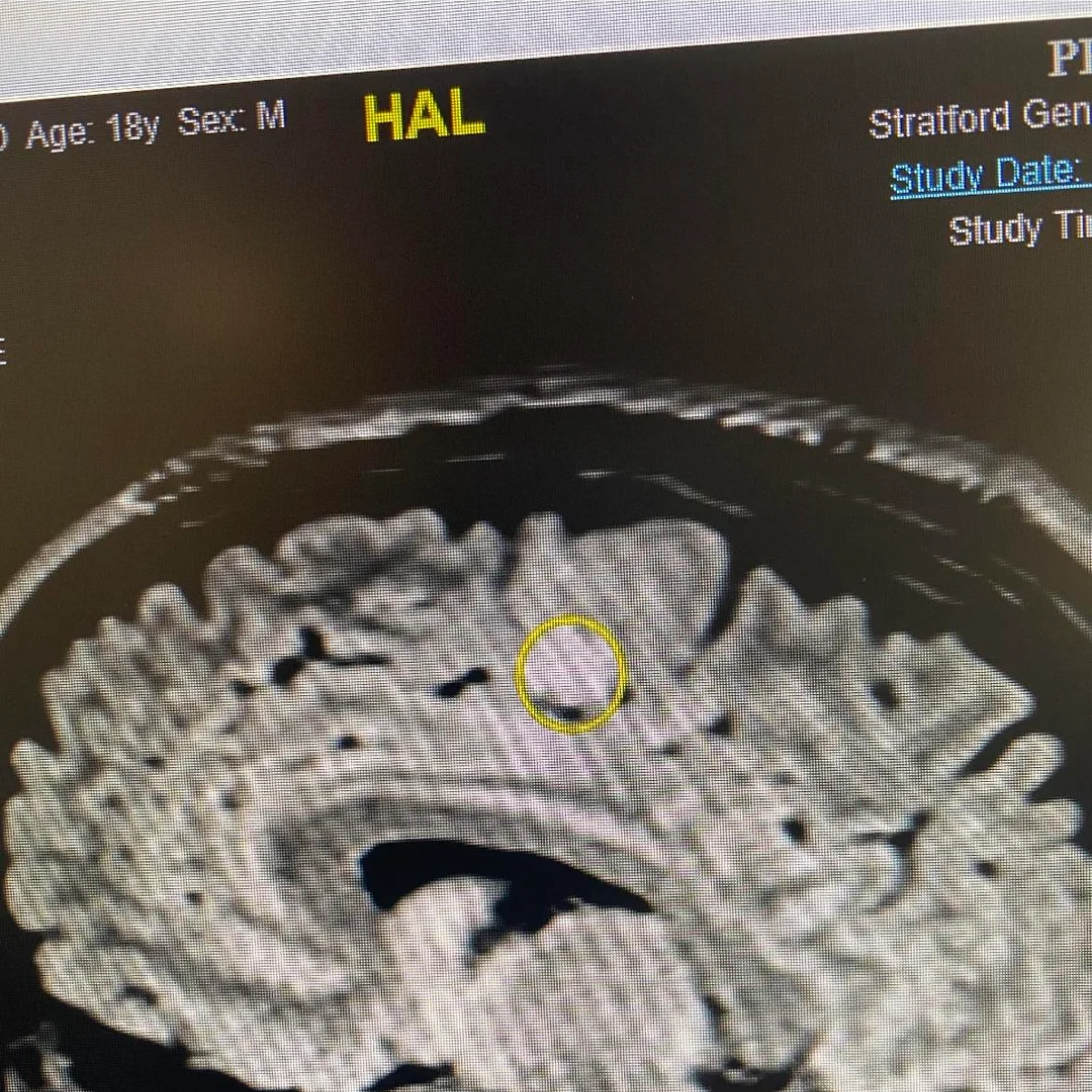
Ran for 1 day, from August 18 to August 19, 2026, the last day Crush saw it.
Run by Michael Anderson, PhD. on Facebook. Crush is not the advertiser and does not verify its claims. See this ad in Meta's Ad Library(opens in a new tab)
Want an ad like this for your product?
Crush makes new ad images for your product from this ad: your logo, your product photo, your offer.
Trials from $19.95 USD, then $79.95 USD a month. Cancel anytime.
About this ad
- Meta Ad Library ID
- 1089840470057537
- Platforms
- Facebook, Instagram and Messenger
- Relaunches
- 1
- EU reach
- 74
Ad text
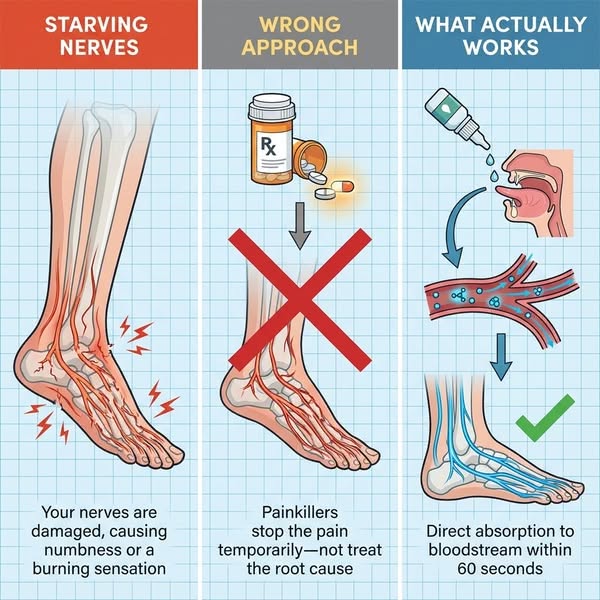
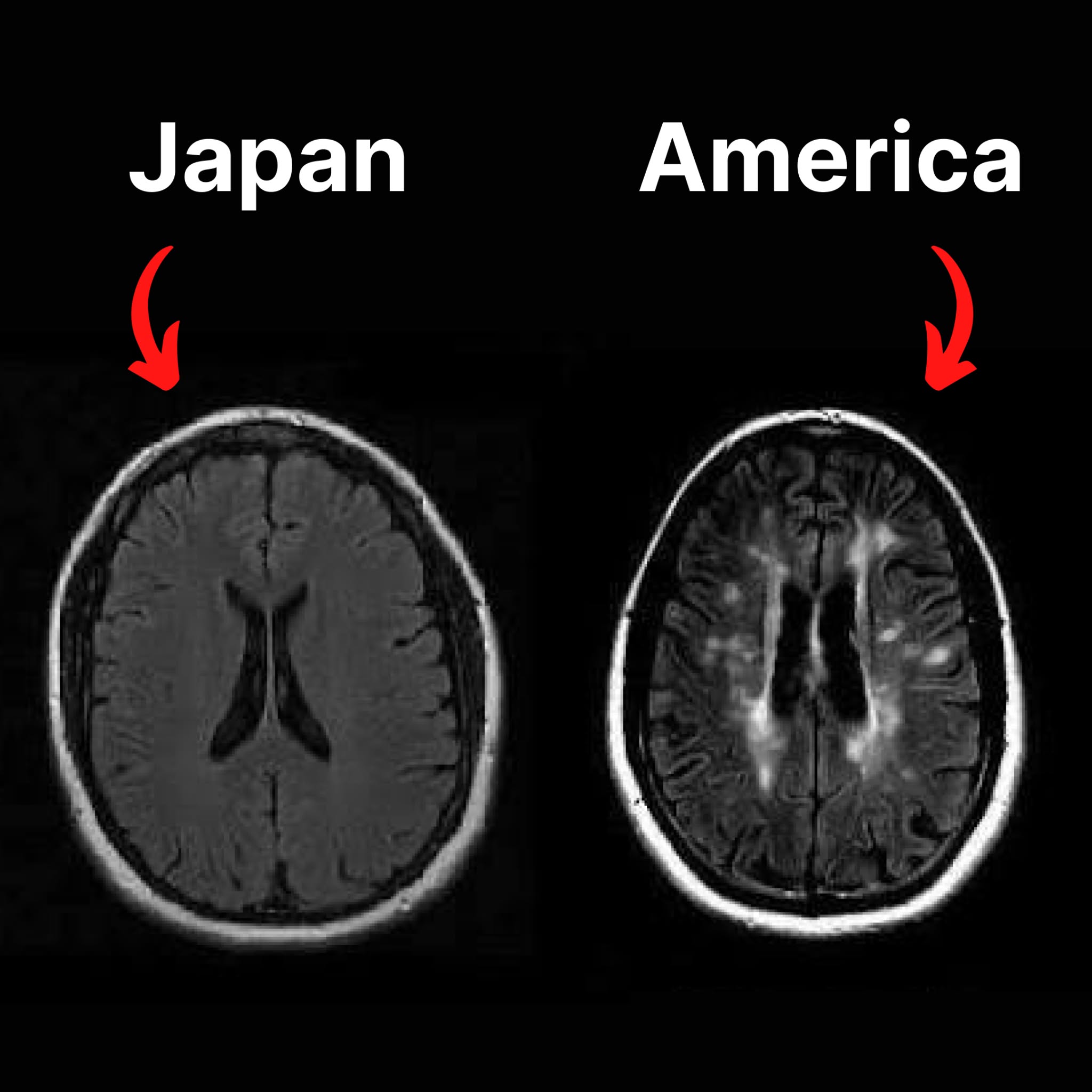
My MRI has been stable for six years. Not one new lesion since 2020. But last month I bought my first cane, and two weeks ago I dropped a full glass I was handing to my daughter. That is when I realized a stable MRI and a stable body are not the same thing. My name is Michael Anderson. I'm 55. I am a board-certified neurologist, and I have run an MS clinic for 19 years. And I was diagnosed with relapsing MS myself in 2013, at 41. I have been on an infusion since 2019. Every six months, fourteen infusions, without missing one. My last relapse was seven years ago. I want to tell you exactly what happened after my last stable appointment, because if your scans keep coming back clean while your body keeps getting worse, you need to read this carefully. The first time my neurologist said no new lesions, I cried in the car before I could even call my wife. By the third stable scan, I had stopped preparing myself for bad news on the drive over. I stopped checking my legs every morning for the start of the next relapse. I went back to walking the loop around our neighborhood. Two miles, most mornings. I planned a vacation more than three months out, which I had not dared to do since my diagnosis. I kept every after-visit summary in a folder in the kitchen. Six of them say the same thing. "No new or enhancing lesions. Stable." If you have MS, you have that sentence memorized. I have typed that sentence into other people's charts for 19 years. I believed that sentence meant I was safe. Then, over the last three years, my symptoms started getting worse while my reports stayed exactly the same. There was no relapse. There was no single bad week I could give a date to. Each month was just a little worse than the month before. My morning walk went from two miles, to one mile, to the corner of our street and back. My legs got weak enough on the stairs that I started holding the railing. Going up and coming down. And last summer I stopped going outside in July and August, because in the heat I get too weak to walk back home. Then, on an ordinary Tuesday in June, I fell twice on the same walk. The first time was at the curb. My right hip flexor did not lift the leg high enough, and my toe caught the concrete. I told myself I had misjudged the step. The second time was on flat sidewalk, four blocks later. I thought I had caught my foot on a crack. I looked back. There was no crack. It was the exact weakness I have described to my own patients for 19 years. The hip flexor first. Then the foot dragging. The calf so stiff by the end of a walk that the foot stops clearing the ground. I sat on the grass at the edge of a stranger's yard until I was sure I could stand. Then I walked the last two blocks home slower than I have ever walked anywhere. I ordered a cane that night with the bedroom door closed, so my wife would not see the checkout screen. I sat looking at that page for probably fifteen minutes. Not crying. Just trying to understand how six stable MRIs and two falls on one walk could belong to the same person. My neurologist appointment was already on the calendar for the next month. My neurologist is a colleague. I trained him. I wrote everything down beforehand, because I know what patients do in that room. I have watched it for 19 years. The doctor asks how often you fall, and you say "once or twice," when it was four times. He asks about the fatigue, and you say "it's manageable." I was not going to do that. So I read from the paper. The two falls on one walk in June. The railing I hold on the stairs now, going up and coming down. July and August I spent indoors because heat makes me too weak to walk home. The glass I dropped handing it to my daughter, and how often I drop things now. He listened. Then he pulled up my MRI from January. "No new lesions. No enhancement. Your MS is stable." Then he said the sentence I have not been able to stop thinking about: "The disease is well controlled. Some of this may just be deconditioning. Or age." I remember staring at him. I have said gentler versions of that same sentence to my own patients. I am 55, and I am a doctor. I know exactly what deconditioning looks like. I check for it in my own patients. And I have taken care of my body. Until two years ago, I walked two miles before breakfast. I lifted weights twice a week. My weight is the same as it was at 40. A 55-year-old in that condition does not go from two miles to the corner of his street in three years because of age. He still suggested more physical therapy. He told me to stay active. He said if the fatigue got worse, there are medications for that too. That was it. Exercise. A referral. Or another pill. He congratulated me on six years of stable scans and walked me out. I sat in my car in the parking garage for a long time. The cane was on the passenger seat. I am going to fast-forward through the next year and a half, because I think a lot of people reading this have already lived it. I did the physical therapy. Twice a week, $40 a visit, for over a year. My legs got stronger. My walking did not get steadier. I took vitamin D every morning and kept my level exactly where my neurologist wanted it. I made the green smoothies with the probiotics, because a woman in my Facebook group swore the gut was the answer. A full year of them. I bought CBD oil for the leg spasms at night. $64 a bottle. It helped me fall asleep. But the spasms did not stop. My calves still stiffened at night, and my legs still jerked hard enough to wake me. I bought a $189 cooling vest so I could sit through my daughter's softball games in the summer. Altogether it was a little over $5,800, once I counted the copays. But the money was not the worst part. The worst part was doing every single thing right and still planning my whole life around walking. Before I agreed to go anywhere, I checked how far the parking was from the entrance. I checked whether there would be a place to sit down. I checked how hot it was going to be. Last October, my family went camping for the weekend. The second morning, everyone got ready for the hike out to the falls. I said I would stay back at camp and watch the fire. The truth is my legs could not walk that trail, and I knew it before we ever left home. There is a photo from that morning of everyone standing at the falls, arms around each other. I am not in it. I was the one they texted it to. After that trip, I stopped talking about it. My neurologist had already given me his answer. Deconditioning. Age. There was nothing more to ask him. The person who finally explained what was happening to me was not another doctor. She was the woman I sit next to at my infusions. My infusion center seats us in the same chairs every visit. For three years, the woman in the chair next to mine has been Keiko. Before she moved here, she was a hospital pharmacist in Osaka for twenty-eight years. She asks direct questions before you are ready for them. In December, she watched me hang my cane on the armrest and said: "In March you walked in here without that. What did your neurologist say?" I said what I always say. "Stable." She nodded. Then she said: "So your scans are clean, and you are getting worse. Has anyone ever said the word PIRA to you?" Here is the embarrassing part. I am a neurologist. I have run an MS clinic for 19 years. And I had never heard that word. Not from my own neurologist. Not once. So I let her talk. Keiko's sister was diagnosed with MS in Osaka thirty-one years ago. Her sister's neurologist put her on three vitamins the same month he started her MS medication. For twenty-eight years, Keiko filled those same three vitamins for nerve-damage patients in her own hospital. Keiko flies back to Osaka every year to visit her. Her sister is 72 now. She still walks fifteen thousand steps a day. I told Keiko about the falls. The appointment. The word deconditioning. She took a small notebook out of her bag and wrote while she talked. Not everything that makes MS worse is a relapse. A relapse is your immune system stripping the myelin coating off one spot on a nerve, fast. That is what makes a lesion, and a lesion is what an MRI can see. But myelin is also being stripped slowly, in small amounts, all over your nervous system. Spread too thin for any one spot to become a lesion. An MRI counts lesions. It does not measure myelin. So the slow damage never appears on your report. Researchers have a name for it. PIRA. Progression independent of relapse activity. More than half of the disability people end up with from MS does not come from relapses at all. Then she wrote the word stable at the top of the page and drew a circle around it. "Your infusion did what it was supposed to do," she said. "Seven years without an attack is the infusion working." Then she tapped the circle. "But stable means no new attacks. It has never meant the damage is being repaired." That does not mean the MRI is wrong. It does not mean the infusion failed. And it does not mean anyone should stop it. Her sister never stopped her medication. But it did mean my scans and my symptoms were never measuring the same thing. Then she said: "In Japan, we treat the nerve. Here, they treat the immune system and they wait. Both are necessary. Your doctors gave you one." "You have spent three years asking why you are getting worse while you are stable," she said. "Stable was only ever half the report." That sentence stayed with me. I run an MS clinic. I sat in an infusion chair and let the patient in the next chair explain my own disease to me. She was right. Then she reached into her bag and set three small bottles on the table between our chairs, side by side. She takes them every day. Her sister has taken them for thirty-one years. She tapped the first one. "B12. The material your body rebuilds myelin out of." She tapped the second. "B1. Rebuilding myelin takes an enormous amount of energy, and B1 is what your nerve cells use to make that energy." She tapped the third. "B6. What your nerve cells need to send clean signals once the myelin is back." Then she pushed the three bottles together until they were touching. "Together, these are called the neurotropic vitamins. Not general health vitamins. Neurotropic means they act on nerve tissue. In Japan, clinics have used them for nerve damage for decades. Your doctors gave you none of them." I told her I understood the biochemistry. I told her I had read papers on all three. She said: "Then you understand it on paper. You do not understand it in your own body yet." Then she told me the part that made more sense than anything I had tried. Do not judge it by how you feel. Time your walk first. Twenty-five feet, kitchen to hallway, with a stopwatch. Write the number down. Take it every morning. Then time the walk again in twelve weeks. Every product I had tried before asked me to believe harder. This gave me something to measure. I went home and read for most of the night. I read that the PIRA research sits in the biggest journals in neurology. JAMA Neurology, 2020. Brain, 2022, across more than 27,000 patients. The number was right there in the research. More than half of the disability MS patients end up with does not come from relapses at all. Keiko had not exaggerated a single thing. I read a 2021 review on the neurotropic vitamins and nerve regeneration. Its conclusion: B1, B6, and B12 each support a different part of nerve repair, and damaged nerves regenerate better when all three are given together. I read about a 2025 study where the three vitamins taken together, in a lab model of nerve tissue, were 26 times more effective than any one of them taken alone. And I read why a drugstore B complex was never the same thing. A B vitamin that is not liposomal gets into your bloodstream and does not get into your nerve cells. It raises the number on your lab report, and it changes nothing about the tissue. It is a maintenance product. It will not rebuild myelin. A liposome is a microscopic sphere built from the same material as your own cell membranes, with the vitamins sealed inside. Because the shell and the membrane are the same material, the two fuse, and the vitamins are released inside the cell. Where myelin is rebuilt. In Japan, doctors give these vitamins by injection, because they know the swallowed form does not arrive. The liposome does the same job without the needle. Then I opened the MS Facebook group I joined the year I was diagnosed, the one I have never once posted in, and searched. "MRI stable but getting worse." "Stable scans still progressing." There were more posts than I expected. People stable for five years. Nine years. Fifteen. A whole thread titled "MRI stable for years but now wheelchair user." People who had been told to exercise. People who had been told it was age. People who had stopped bringing it up at their appointments at all. And in the conversations about repair, the same name kept appearing. Nuvel. I pulled up the label. Methylcobalamin, the active form of B12, at 5,000 micrograms. B6 as P-5-P. B1 at a clinical dose. All three together. And liposomal. The same delivery I had just read about. Released inside the cell, where myelin is rebuilt. It was not positioned as an energy vitamin. It was built for the repair. I ordered it that night. The cane stayed by the front door. The bottle came four days later. No complicated protocol. One drop under the tongue every morning. But I am a doctor. I am skeptical by training, and I am methodical when I am skeptical. I did not want to reach week twelve holding a feeling. I wanted numbers. In the fall, I had run a full workup on myself. Because of what I do, I can order every one of these tests for myself. I am grateful for that. A timed 25-foot walk: 9.1 seconds. A nine-hole peg test, the standard timed test of hand function: slow in both hands. A post-void residual, the scan that measures how much urine the bladder leaves behind: 180 milliliters. A fatigue scale score: 58. And an OCT, the scan that measures the nerve layer at the back of the eye: 71 microns, after five years of losing four to five microns a year. The night before the first dose, I timed the walk one more time. Still 9.1 seconds. I wrote every number inside the folder, under the six stable reports. The plan was simple. Take it every morning. Change nothing else. Repeat the entire workup at twelve weeks. I did not stop the infusion. The first two weeks, nothing I could see. That was almost reassuring. I had spent too much money on things that promised everything in seven days. Week three, I slept through the night twice in one week. No leg spasms. Week five, I walked to the corner and back without stumbling. Week eight, my daughter handed me a full glass at dinner, the way kids do without thinking. I carried it to the table. Nothing spilled. She did not notice. I did. Week twelve, I repeated the entire workup. Timed 25-foot walk: 5.9 seconds. Down from 9.1. Nine-hole peg test: normal in both hands. Post-void residual: 40 milliliters. Down from 180. Fatigue scale: 24. It was 58 the week I started. OCT: 71 microns. Unchanged. After five years of losing four to five microns a year, that is the number I care about most on this entire list. And my MRI said exactly what it has always said. No new lesions. Stable. I wrote every number in the folder, under all six stable reports. For the first time, the numbers in my handwriting told me more than the sentence in theirs. If your MRI is stable and your body keeps getting worse, the scan is not wrong. It also does not mean you failed. An MRI counts lesions. Lesions come from relapses. Your medication stops relapses, and if your scans are clean, it is doing its job. Stay on it. But more than half of MS disability comes from the slow damage the scan cannot see. That is PIRA. And nothing in the standard protocol repairs that damage. That does not mean Nuvel is a cure. It is not. It does not replace your DMT, and it is not a reason to change anything your neurologist prescribed. What it is built to do is supply the repair: ✓ B1, the energy nerve cells use to rebuild myelin ✓ B12, the raw material myelin is rebuilt from ✓ B6, for a clean signal through the rebuilt nerve ✓ Liposomal delivery, so all three are released inside the nerve tissue instead of staying in the blood Three vitamins. One drop, once a day. Not another pill for one more symptom. Not another reminder to stay active. Nuvel comes with a 90-day money-back guarantee. Time your 25-foot walk before your first dose. Take it every morning. Time the walk again at twelve weeks. If your number does not move, you get every dollar back. Because stopping the attacks and repairing the damage are not the same job. P.S. I am still grateful for my infusion. Seven years without a relapse is not nothing. I know what a relapse is like, and I have not had one since 2019. But I wish somebody had told me earlier that stable was only ever half of my report. The attacks were handled. The damage that was already in my body needed a different conversation. That conversation started when I stopped asking: "How can I be stable and getting worse?" And started asking: "What is repairing the damage I already have?" P.P.S. Two weekends ago, we went camping again. When everyone started up the trail to the falls, I went with them. Slowly. But with them. My daughter took the photo at the top. I am in this one. My scans did not change. They were stable before, and they are stable now. What changed is that I finally understood why a stable scan and a stable body were never guaranteed to happen together. Edit: Several people have messaged me directly asking for the specific one I used so here it is - https://trynuvel.com/products/vitamin-b-complex-limposal ~ Dr. Michael Anderson, MD, board-certified neurologist, MS subspecialty, diagnosed with MS in 2013
Where the ad sends people
trynuvel.com
The Japanese MS Research No American Doctor Is Taught
Clinical-grade dosed formula proven in studies
Learn more: trynuvel.com(opens in a new tab)