
Inactive· since Aug 11, 2026
- 22
- days it ran
- 1
- relaunches
Ad copy
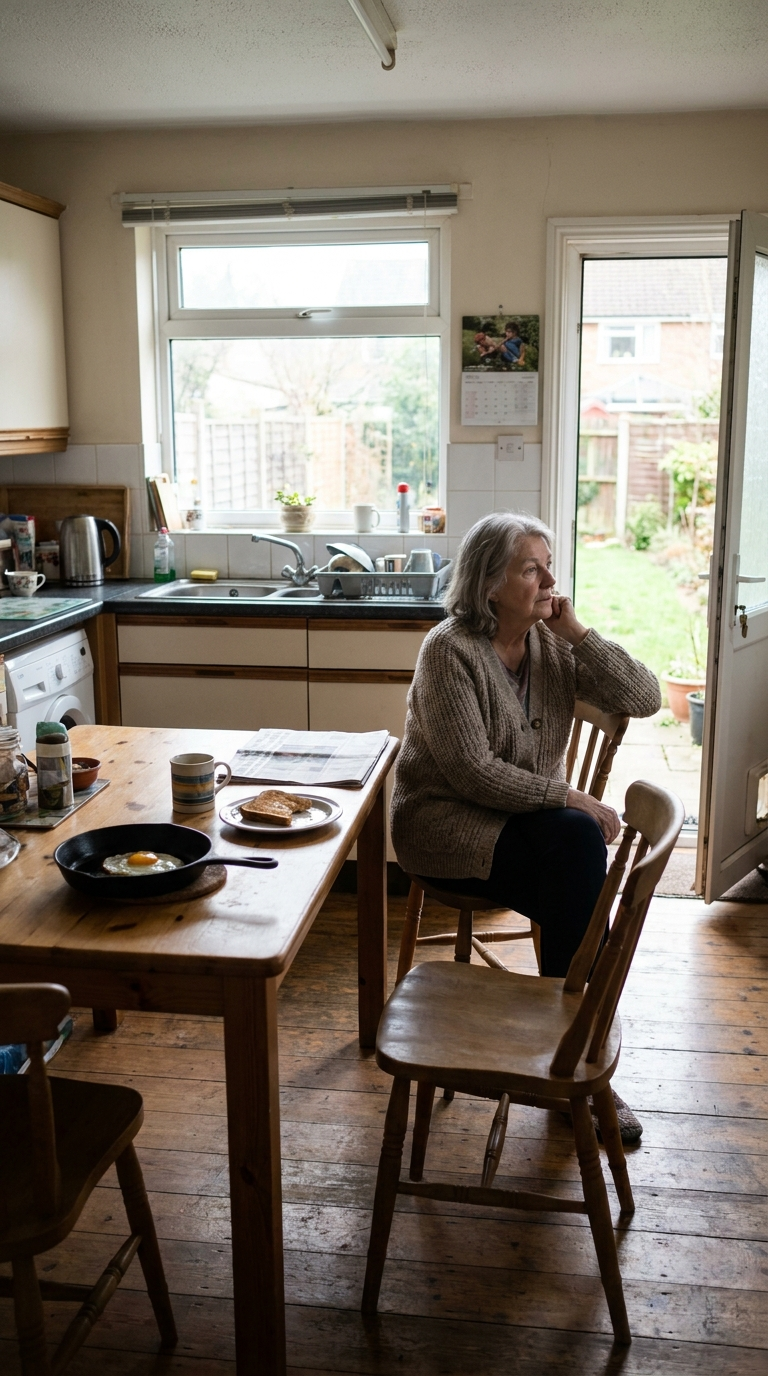
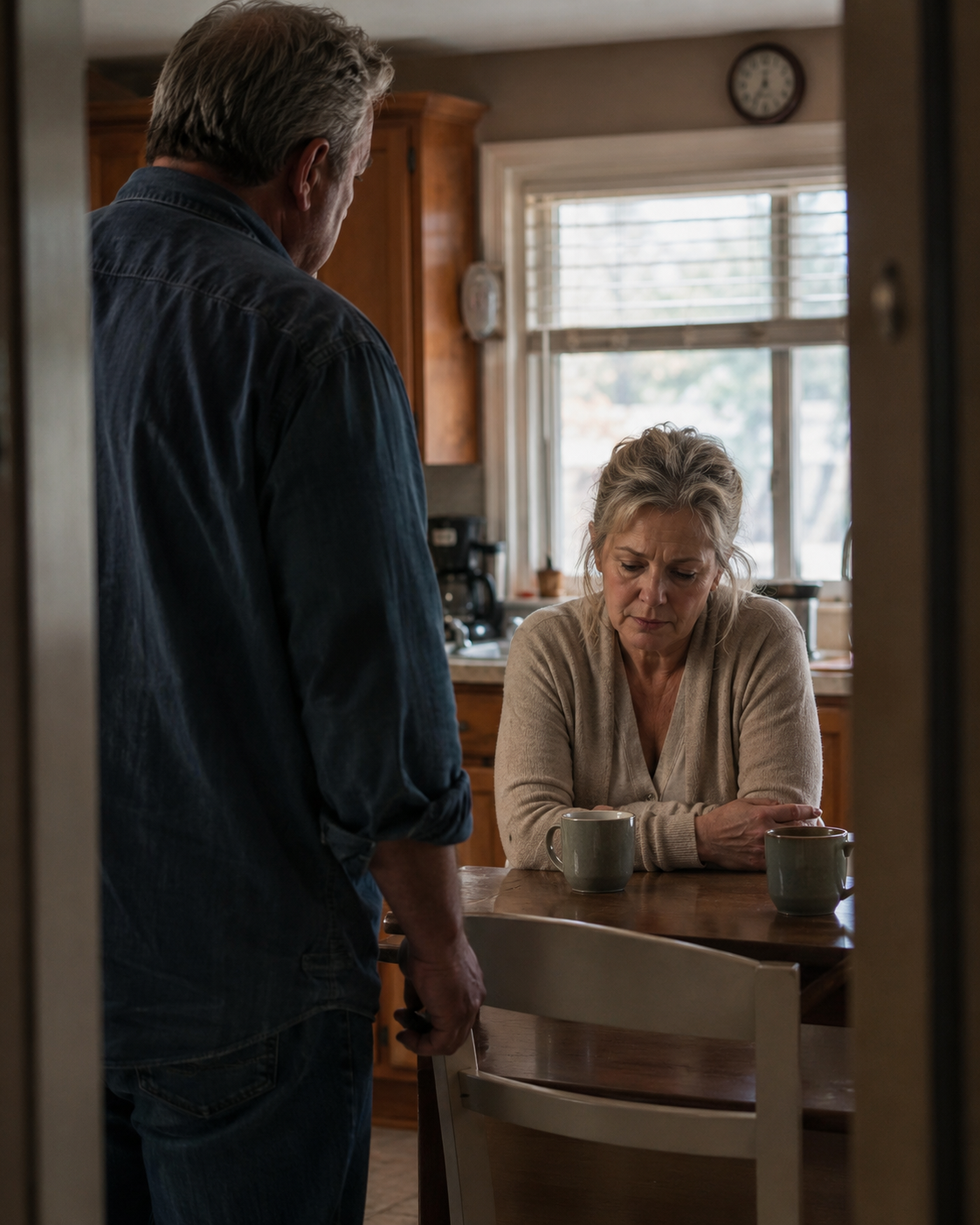
Surgeons have a nickname for the classic dad bod. I heard it by accident in a hallway, about my husband. It was two days after his hernia surgery. Routine, they kept saying. The kind of thing men like him get fixed on a Tuesday and complain about through Christmas. I'd gone down the hall to the vending machine because the coffee on his floor was undrinkable, and I was standing around the corner from the nurses' station, counting out change, when I heard two of the surgical residents talking. Shop talk. Quiet, tired, the way people talk at the end of a twelve-hour shift when they think nobody's listening. Then one of them said my husband's room number. And then he said the nickname. Two words. The other one laughed — not mean, that's the part I need you to understand. It wasn't cruel. It was the laugh of people who see something so often they've given it a name. The way roofers have a name for a certain kind of shingle job, or mechanics have a name for a certain kind of engine. Shop talk. Two words, about my husband, and one small tired laugh. I stood there with my quarters in my hand and I didn't breathe. I'm not going to tell you the nickname yet. I need to explain some things first, or it'll just sound like dark humor — and when you finally hear it, I don't want you to laugh. I want you to feel what I felt in that hallway, because I'd bet everything I own that the same two words apply to somebody you love. My name is Carol, I've been married to Dave for thirty-one years, and until that day at the vending machine, I would have told you my husband was healthy. Everybody would have. Dave's just a big guy. Dave's always been a big guy. That's what we all thought, anyway. Let me tell you about Dave, because you know Dave. Every street in America has a Dave. He ran the parts counter at the John Deere dealership for twenty-eight years. If your baler broke down on a Saturday in July, Dave opened the counter for you, because that's who he is. He coached both our boys' Little League teams badly and enthusiastically. He is the king of our cul-de-sac's barbecues — his rub, his tongs, nobody else touches the grill, it's in the Constitution. And Dave has a belly. Has for twenty years. It's part of him, the way his laugh is part of him. It comes around the corner slightly before he does. Our grandkids bounce on it. At the barbecues he pats it like a prize pumpkin and says the same joke every time — "this cost me a fortune, this is a keg, not a six-pack" — and everybody laughs every time, mostly because Dave laughs first and Dave's laugh is like that. Here's the thing. Here's the thing I need every wife reading this to hear, because you could be sitting next to a Dave right now. My husband barely drinks. Two beers at a barbecue, nursed all afternoon. A whiskey at Christmas. That's it, and it has always been it. For twenty years I have watched men drink Dave under the table — men with flat stomachs — while my nearly-teetotal husband carried around what every single person in our lives, including his own doctor, cheerfully called a beer belly. Nobody ever once asked the obvious question. Where's the beer? And there were other things. I'm going to list them the way I saw them, which is to say, one at a time, over years, each with its own perfectly good explanation, because that's how this thing arrives. It never knocks. It moves in one box at a time. His belly got hard. This is going to sound strange, but wives will know exactly what I mean. When we were forty, when I hugged him, there was a give to him. A softness. Somewhere in his early fifties that changed. The belly got round and tight, like a drum, like something under pressure. When the grandkids bounced on it, it didn't give. I noticed it the way you notice these things — with my arms, not my head — and I filed it away as Dave getting bigger. His arms went the other way. This is the part that never made sense to me, and I actually said it out loud once, at the lake, watching him carry a cooler: "Your arms are thinner than our wedding day." And they were. His watch went loose on his wrist. His chest, which used to be a barrel, got soft. Big belly, thin arms, soft chest — I was looking at a pattern for ten years, and I saw it, and I never once thought to ask why those three things always come together. You've seen the pattern too. It's at every cookout in this country. Nobody asks. He moved to the recliner. About six years ago, Dave started falling asleep in the recliner and staying there. He told everybody it was his back. He told me it was his back. It wasn't until this year that I learned the truth — lying flat had gotten uncomfortable, a pressure, a reflux, a something he couldn't name and didn't want to talk about, so my husband quietly stopped sleeping next to me and blamed the mattress. Men do this. They handle a symptom by rearranging the furniture. And he tried, is the thing. That's the part that breaks my heart in hindsight. Dave was not lazy about it. Over the last ten years my husband lost the same fifteen pounds four different times. Low carb. The fasting thing our son-in-law does. Walking the fairgrounds loop every night one whole summer. And every time, the same result: the scale would move, his face would slim, his wedding ring would spin — and the belly would still be sitting there, hard and round as ever, like it wasn't invited to the diet. He'd get discouraged, and who wouldn't? You do everything right and the one thing everybody can see doesn't budge. His doctor's advice, every single year, at every single physical, was the same five words: "Try to lose some weight." Blood pressure a little high. Cholesterol borderline. Nothing dramatic, nothing flagged. A shrug, a pamphlet, see you next year, Dave. So that's who was lying in Room 214 with a repaired hernia. A sixty-one-year-old man who barely drinks, carrying a hard round belly that four diets couldn't touch, with thin arms and a soft chest, sleeping in a recliner, waved through nineteen straight annual physicals. And down the hall, two exhausted young surgeons who had just seen the inside of him gave him a nickname, and laughed the small tired laugh, and went home. I didn't tell Dave what I heard. I want to be honest about everything in this story, including the parts where I did it wrong, and this is one. I sat on it. He came home Thursday, sore and cheerful, and I cooked and fussed and said nothing, because saying it out loud would make it real, and because I didn't even know what "it" was. All I had was two words and a laugh and a feeling in my stomach like a stone going down a well. What I did instead was read his discharge paperwork. Every couple has a person who reads the paperwork, and in our house it's me. Dave's filing system is a shoebox. So I sat at the kitchen table two nights later with the folder they send you home with — the instructions, the follow-up dates, the operative report that nobody expects you to actually read. I read it. All of it. And on the second page, in the middle of a paragraph of surgical language I mostly couldn't follow, I hit a sentence that I could. "Incidental finding: moderate to severe hepatic steatosis, consistent with appearance on pre-operative imaging. Liver enlarged. Recommend outpatient follow-up." I didn't know what hepatic steatosis meant. I knew what "liver enlarged" meant. And I knew what "incidental" meant — it meant they'd seen something while they were in there for something else, written it down, and moved on. Then I went and found his pre-op bloodwork in the same folder, the panel they run before they'll operate on anybody. And there, with little flags next to them like the world's quietest alarm: liver enzymes. ALT 112, where the sheet said normal tops out around 40. AST 89. Numbers I'd never heard of, measuring an organ I'd never once thought about, flagged high — and in nineteen years of physicals, in all those "try to lose some weight" conversations, no one had ever said the word liver to my husband. Not once. I'd have known. I'm the one who reads the paperwork. Somebody had seen the inside of my husband, found an organ swollen and struggling, written it in a report in language we couldn't read, filed it, and sent him home with lifting restrictions. The only people who'd told the truth about Dave were two tired young men in a hallway who didn't know I was there. Ten days later was the follow-up appointment, at the surgical clinic, to check the incision. I drove. Dave complained about daytime television the whole way, happy as a clam, healing fine. And in the hallway, walking us to the exam room, saying "incision looks great, any fever, any drainage" — was one of the voices. I knew it the second he spoke. You don't forget a voice you heard say two words about your husband while you stood around a corner holding quarters. Young. Kind eyes, actually. Dr. Okafor, said the coat. He checked Dave over, said everything looked textbook, shook Dave's hand. And as Dave headed down the hall ahead of me, jingling the truck keys, I stopped in the doorway, and I said, quietly, "Doctor. Could I ask you something alone?" I am not a confrontational woman. I do payroll for the school district. In thirty-one years of marriage I have sent back one steak. But I stood in that doorway and I looked at this young man and I said: "Twelve days ago I was at the vending machine around the corner from the nurses' station. I heard two residents talking about the patient in 214. My husband was the patient in 214." He didn't say anything, but his face did. "I'm not here to get anybody in trouble," I said. "I need to know what it means. Because I read the report. I know the words 'hepatic steatosis' and I know his numbers were flagged and I know nobody has said one word about any of it to my husband. In that hallway is the only time I've ever heard anybody in this building be honest about him. So I'd like the hallway version, please. Not the chart version." To his enormous credit — and I want to say this plainly, because this young man could have hidden behind a hundred procedures and he didn't — he looked at me for a long moment, and then he looked down the hall at my husband's back, and he said: "Can you come back at four? I'll buy you a coffee in the cafeteria." I told Dave I'd left my sunglasses. God will forgive me. What follows is what Dr. Okafor told me over two coffees at a corner table, and it is why this letter exists. I've checked all of it since — months of reading, and Dave's own results, which you'll see. But I'm going to give it to you the way he gave it to me, because a tired honest man at the end of the worst part of his training explains things better than any brochure ever will. "First," he said, "I'm sorry. It's a bad habit and we all have it, and it comes from seeing the same thing over and over and over until you have to name it or it names you. I'll tell you what we call it, but I'd rather earn it first, because on its own it just sounds like a joke, and I promise you nobody who's been inside one is joking." I told him that was fair. It's the same deal I made with you at the top of this letter. "Here's what I see," he said, "three, four times a week. A man your husband's age comes in for something routine — hernia, gallbladder, appendix. We open him up or we put a camera in, and there it is. The liver. It's supposed to be tucked up under the ribs, dark red, sharp edges, about three pounds. Instead it's huge. Pale. Yellowish. Greasy. Swollen sometimes to nearly twice the size, pushing everything else out of its way." "From drinking," I said, because I had to say it, because it's what everyone would say. "That's the thing," he said. "No. The drinkers, we know about. This is the other one — the one nobody warned anybody about. It comes from the liver filling up with fat. And Mrs. —" he stopped himself. "Carol. It is everywhere. It is the most common thing I see that nobody's ever told the patient about. Your husband's version is moderate to severe, and I promise you his chart before surgery said things like 'borderline' and 'unremarkable.'" And then I asked the question that had been sitting on me for ten years without my knowing it. I asked why the belly is hard. He put down his coffee. "That's the question," he said. "That's the exact question, and nobody asks it. Everybody thinks a big belly is fat — pinchable, soft, under the skin. Some of it is. But a hard, round, tight belly, the drum kind, the kind you can't grab a handful of? That's not under the skin. That's underneath the muscle. That's the organs and the space around them — an oversized liver, fat packed around the organs where your hands can't reach it, and pressure. The wall of the belly is being pushed out from inside. Sit-ups can't touch it. Dieting barely touches it, because it doesn't obey the same rules as the fat under your skin. Your husband could do crunches for a year and that belly would sit there exactly the same." Four diets. The same hard belly at the end of every one. Ten years of watching my husband fail and blame himself, and this young man explained it in ninety seconds in a cafeteria. "And the arms," I said. "His arms got thin. His chest went soft. While the belly grew. Why does that — " "— always go together?" He nodded like a man watching someone finally see the picture. "Because it's not three things. It's one thing. The liver is the middle of everything — every bite he eats gets processed there. When it's clogged with fat, the whole metabolism goes sideways. It stops handling fat properly, so fat piles up in and around the middle. And it stops handling protein properly, so the body starts running down its own muscle for parts. The belly grows while the arms shrink. Same engine, two directions. That shape — big belly, thin arms, soft chest — we can read it from across a room. It's not a body type, Carol. It's a progression." I sat there thinking about every barbecue for the last fifteen years. Every man at those tables built exactly like that. The jokes. The pumpkin pat. The keg-not-a-six-pack. "Why does nobody say anything?" I asked. "He's been going to physicals every year of his life." He was quiet for a second. This is the part I've thought about the most. "Because it hides," he said. "The standard bloodwork can look almost normal for years — your husband's enzymes were flagged, but 'mildly elevated' gets watched, not chased. It doesn't hurt — the liver doesn't have pain nerves in the part that's failing; the most a man feels is tired, and full quicker than he used to, and pressure when he lies flat, and who goes to the doctor for that? And honestly — because it's everywhere. When half the men in the waiting room look the same way, it stops registering as a disease and starts registering as America. We only ever see the truth by accident. A hernia. A gallbladder. A camera meant for something else. Or — " and he didn't finish that sentence, and I didn't make him. He told me the stages instead, on a napkin, in a cafeteria, and I'm going to give them to you straight, because I watched thirty years of my own marriage snap into focus line by line. Stage one, the liver starts filling with fat. Quietly. It swells. The belly begins to firm and round. Energy dips. Everyone says he's getting older. Stage two, the processing starts to fail. Protein handling goes; the arms and shoulders begin to thin while the middle grows. He's tired in a way sleep doesn't fix. Everyone says dad bod. Stage three, pressure and fluid. The belly goes drum-tight and pushes outward. Lying flat gets uncomfortable — the recliner years. Diets stop working on the middle entirely, because the middle was never ordinary fat. Stage four, the organ starts to scar. And the cruelty of stage four is that it looks exactly like stage three from the outside. You cannot see the deadline from the lawn chair. "Your husband," he said, "is somewhere late in three. And I need you to hear the other half, because it's the reason I'm having this coffee instead of hiding from you. This reverses. The liver is the one organ in the body that genuinely regenerates — it wants to come back. Catch it before deep scarring and feed it what it's missing, and it can clean itself out to a degree that surprises people. I've seen follow-up scans I had to double-check the name on." "Feed it what it's missing," I said. "It's missing something?" And here is where the young man taught me a word I have since said to every woman I know. "The liver doesn't just store fat," he said. "It ships fat out. That's half its job — package the fat and export it. But the shipping system runs on specific raw materials, and the main family of them are called methyl donors. The one the research keeps circling back to for the liver is called betaine." He wrote it on the napkin. B-E-T-A-I-N-E. "No shipping materials, no exports. The fat comes in, and it just — stays. Forever. The liver becomes a warehouse where the trucks stopped running." He turned the napkin toward me. "And here's the piece of trivia I think about at strange hours. Betaine is named after the beet. Beta vulgaris — it's where science first found the stuff, a hundred and fifty years ago. The humble beet, the thing every one of our great-grandparents had in the cellar, is the classic source. The old country people who swore beets 'cleaned the blood' and poured beet soup and beet pickles into their families all winter — they had no idea what a methyl donor was. They just knew what their grandmothers knew. Then the whole food changed, and everybody stopped, all at once, in about one generation." "Changed how?" "Ask your capsule company," he said, with the first real smile of the conversation. "Or ask a farmer. The beet your great-grandmother grew and the beet at the supermarket are barely the same plant. A century of breeding for sugar — sweeter, bigger, milder. The compounds are what got bred away. It's not just beets, it's the whole pattern — but the beet is the one with its name on the molecule." He looked at his watch, and stood, and said one more thing, and it's the thing I want on a billboard. "Carol, the system is going to tell your husband to lose some weight. It's been telling him that for twenty years, and he's a good patient, and he's tried, and it hasn't worked, because nobody ever told him the middle of him isn't ordinary fat. It's a starving organ, swelling. You can't starve it out. You have to feed it the thing it's missing. Get his enzymes rechecked in three months, whatever you do. Numbers don't lie, and his have been trying to get somebody's attention for years." I told Dave everything that night. Everything — the vending machine, the paperwork, the coffee. Everything except the nickname, which I was saving, the way I'm still saving it now, because there was one right moment for it and that wasn't it. And my husband — my cheerful, unbothered, king-of-the-grill husband — sat at our kitchen table with his own operative report finally translated into English, and was quiet longer than I've ever seen him quiet. And then he said the thing that tells you everything about men like Dave. "So it was never the diets." Not fear, first. Relief. Ten years of failing at something, and the first feeling was: it was never me. Then we got to work, and I'll give you the short version of the long middle, because the middle is where we made the mistakes you don't have to. First we tried to do it with the grocery store. Beets every week — roasted, boiled, that vacuum-packed kind. Salads. Eggs, which have their own version of the shipping materials. Six weeks of purple cutting boards. And I'm not saying it did nothing — but Dave's belt didn't move, and when we paid out of pocket to recheck his enzymes, ALT had drifted from 112 to 108. Four points. The young doctor's voice in my head: the beet at the supermarket is barely the same plant. We were shoveling with a candy spoon. So then — and I can hear some of you already, because I'd have said it too — we went to the internet, and I bought the first beetroot capsules with four and a half stars and fast shipping. Dave took them faithfully. He even said he felt a little livelier, and I believe him — and mark this, because it's the trap: feeling livelier is not the liver unloading. Eight more weeks, another lab fee. ALT: 104. A hundred and four. Three and a half months of beets, and my husband's liver had barely noticed. I did what I do. I sat down at the kitchen table with my reading glasses and I treated it like a payroll discrepancy, which is to say: no mercy until the numbers explain themselves. And what I found was the whole shabby truth of the beet business. The supermarket beet, bred sweet and mild for a hundred years, the compounds bred down along the way. The powders, nearly all of them dried fast at high heat because slow costs money — and the delicate compounds die in the heat, and what's left is a brown dust wearing a beet costume. The labels with their "proprietary blends," which is where the truth goes to hide. I opened one of the four-and-a-half-star capsules onto a saucer, months too late. Brown as an old cork. I should have been furious, and I was, but mostly at myself, because the color was checkable the whole time and I'd never checked. So here is the checklist I built at that table, the one I now recite to other wives at barbecues like a woman handing out umbrellas. The strain — an old one, from before the century of sugar breeding. There's an heirloom line called Blutwurzel, kept going by hand for a hundred and fifty years by Plain-community growers in Lancaster County, never crossed with the modern sugar beet, carrying multiples of what the supermarket beet carries. The drying — shade-dried, slow, never cooked. If it was heat-dried, it's dead, and the saucer will tell you: brown is dead, crimson is alive. The dose — 1,300 milligrams per capsule, printed plainly, no blends. The paper — a certificate of analysis from an independent lab, on the actual batch, published where you can read it. Stars can be bought. The lab paper can't. One company checked all four boxes. Rosabella. The heirloom Blutwurzel line from those Lancaster County growers, harvested after first frost, shade-dried on the slow schedule, 1,300 milligrams, and the lab certificate posted right on the site, where I read it with my payroll glasses on, line by line, twice. The bottle came on a Friday. I opened a capsule over a white saucer before Dave was allowed to swallow anything, because I am not the same woman who bought the brown dust. It fell out deep crimson — wine-dark, staining — and one drop of water spread it across the saucer like dye. Dave looked at the saucer, and looked at the old brown one I'd kept for spite, and said, "Well. Even I can see that." Two capsules every morning. And now I'm going to tell you what happened in the order it happened, carefully, because the order matters and I don't exaggerate — I do payroll. The first thing came fast, inside the first week, and I want to be straight about what it was and wasn't. Dave felt better. Warmer, more awake, said the afternoon didn't hit him the same. That quick part is the beet's circulation trick — real, and welcome, and NOT the liver unloading. We'd been fooled once by "livelier." The liver writes its answers on lab paper, on its own schedule, and nowhere else. What the first week proved was only this: the crimson was alive. The second thing came around week three, and it was the one that made me cry in a parking lot. The pressure eased. Dave described it exactly the way he'd never described anything in thirty years of stoicism: "It feels like somebody let some air out." The drum-tightness of that belly — the hardness I'd been feeling with my arms for ten years — began, very slowly, to soften toward something more ordinary. Week five, the belt. One notch. Now, Dave had made notches before on diets — but I told you his pattern: the scale would drop, the face would thin, the belly would hold. This was the opposite. The scale had barely moved — and the middle was where it was coming from. The shape was changing before the weight was. That's how you know you're finally emptying the right warehouse. Week eight, two things. He moved back into our bed — just appeared one night with his pillow, no announcement, because announcements aren't Dave — and slept flat, and stayed. And I hugged him at the stove one morning and my hands met behind his back, properly, with give under my arms, for the first time in I will not write how long. Week thirteen, the lab. The one the young doctor told us to get. I have the two sheets side by side in a folder, the before and the after, and I look at them more than I look at photographs. ALT: 43. From 112. Sitting one point over the top of normal, down from nearly three times it. AST: 38. Normal. And at the follow-up ultrasound his regular doctor ordered when he saw the bloodwork — the words I'd needed for a year: "marked reduction in hepatic steatosis. Liver size decreased. Continue current management." His doctor — the try-to-lose-some-weight doctor, nineteen years running — read the file, looked at Dave's middle, looked at the numbers, and asked what he'd changed. Dave, who cannot help himself, said, "I fired the beer that was never there and hired a beet." I translated. The doctor wrote it in the chart. "Continue current management." Six-month recheck. On the way out he shook Dave's hand and held it a second longer than usual, and didn't say anything, and that not-saying said plenty. The scale, if you're wondering, showed fourteen pounds. Fourteen. But the tape measure showed six inches off his middle, and his arms — his arms are coming back, because a liver that can process protein again gives a man his arms back. He looks recomposed, is the only word. Less like a balloon on sticks. More like the man in our wedding album, thickened by thirty happy years, the way a man is supposed to thicken. Last month, Memorial Day, the cul-de-sac barbecue. Dave at the grill, in charge, holding court. And Ray from two doors down — built exactly, and I mean exactly, the way Dave was built a year ago — patted his own belly and made his version of the joke. The keg joke. And everybody laughed. Except Dave didn't laugh first this time. And because Dave didn't laugh first, it got quiet a beat early. And my husband flipped a burger and said, not heavy, just level: "Ray, you drink less than I do. You ever wonder where the keg came from?" I watched Ray's wife look at Ray. I watched the question land on her like it landed on me at a vending machine. The two of them came inside for a while before dessert, and I got out my folder, and my saucers. So. You've stayed with me this whole way, and I keep my deals. You've earned the two words now, and you know enough not to laugh. That day in the hallway, two days after they'd had my husband open on a table — after they'd seen with their own eyes the pale, greasy, swollen organ that twenty years of barbecue jokes were built on top of — one tired young surgeon said my husband's room number, and then he said: "Another foie gras." Foie gras. You've seen it at fancy restaurants. It's a delicacy. It's made by taking a goose and force-feeding it, weeks on end, far past anything it would ever choose to eat, until its liver swells to many times its natural size — pale, yellow, fatty, engorged. Then the goose is opened, and the swollen liver is served on toast points, and everyone says how rich it is. That's the nickname. That is what the men who see the inside of America's dads call the classic dad bod, because that is what they find inside it, several times a week, every week — men force-fed for decades by a food system that stripped out the one family of compounds that would have let their livers ship the fat back out. Geese who did it to no one, with no idea it was being done to them, patting the evidence like a prize pumpkin while everybody laughed. I told Dave the nickname the night his ALT came back at 43 — not before, because I wanted him to hear it as a thing he'd escaped, not a thing he was. My husband, who laughs at everything, did not laugh. He sat with it a while. Then he said, "Well. Nobody's serving me on toast," and went out to water the tomatoes, and stood out there a little longer than the tomatoes needed. If you're a wife reading this: go hug your husband, from the front, tonight, and pay attention to what your arms tell you. Hard and round is not "big." Hard and round, plus the thinning arms, plus the soft chest, plus the recliner, plus the diets that move the scale but never the middle — that's not a body type, and you are not imagining the pattern. The men can't feel it happening. The organ doesn't hurt. You are the only alarm he has. Don't ask him if he's maybe thought about his health lately — I know these men, I've been married to the king of them for thirty-one years, and asking gives them a joke-shaped exit and they will always take it. Put it in front of him, the way a young doctor put it in front of me. And if you're the man — if you patted the pumpkin and did the joke and everyone laughed while something in the back of your head didn't: it was never the beer, it was never your willpower, and it was never ordinary fat, which is why nothing you tried ever emptied it. The warehouse needs its trucks back. Feed it the thing with the beet's name on it, from the beet that still carries it. Rosabella. Two capsules, one glass of water, every morning. The old Blutwurzel beet from the Lancaster County growers, first-frost harvest, shade-dried slow so it arrives crimson and alive, 1,300 milligrams, lab paper published. Check the saucer. Then check the lab paper in ninety days, like we did, because paper is the only proof that matters and you deserve proof. The keg was never a keg. And it was never yours to keep. https://tryrosabella.com/products/rosabella-organic-beetroot-capsules-bogo-a?variant=48358828802303 — Carol P.S. — The young doctor said one sentence at that cafeteria table that I've repeated to every woman on this street: "You can't starve out a starving organ." Twenty years of try-to-lose-some-weight, four diets, and the belly sat there through all of it, because a swollen liver isn't a savings account of fat, it's a warehouse with no trucks. Feed the trucks. And do it with the 90-day money-back guarantee behind you, which is longer than it took Dave's numbers to come all the way down — so the only thing at risk is another season of the joke. P.P.S. — About the first week, so nobody gets fooled in either direction the way we did. The quick lift — warmth, energy, better afternoons — is the beet's circulation effect. Real, lovely, and not the liver unloading; the brown-dust capsules gave Dave a shadow of that same lift while his ALT sat at 104, and that's exactly how the cheap ones keep you swallowing. The liver answers in its own handwriting: the softening pressure around week three, the belt around week five, and the lab paper at ninety days. Open a capsule over a white saucer the day the bottle arrives. Crimson is alive. Brown is a costume. P.P.P.S. — Do this with your doctor, not around him. Dave's bloodwork and both ultrasounds ran through his regular doctor the whole way, and the recheck appointments are the spine of this entire story — the numbers are how we knew the grocery beets weren't enough, how we caught the brown dust doing nothing, and how we knew the crimson was working. If your husband hasn't had liver enzymes checked, that's a twenty-dollar blood draw and one sentence at his next physical: "Run the liver panel too." And if there's real damage under there, you want it found and staged properly. This letter is the reason to go get the numbers. It is not a substitute for them. P.P.P.P.S. — And if you're reading this thinking it's a men's story — the hard middle happens to women too, especially after menopause, and it hides even better on us because everyone, doctors included, files a woman's thickening middle under age and hormones and moves on. My own middle had been creeping for a decade. I take my two capsules every morning next to Dave's, and at my physical in April I asked for the liver panel by name, first time in my life, and I suggest you do the same. The trucks don't check whose name is on the warehouse. Order for the house. P.P.P.P.P.S. — The supply situation, plainly, because I nearly learned it the hard way. This is one heirloom seed line, grown by a handful of Plain families in one county, harvested once a year after first frost, shade-dried on a schedule that cannot be hurried without killing the crimson. When a season's harvest sells through, it's gone until the frost comes again — I reordered in month two and watched the stock notice with my heart in my throat, and I now keep two bottles in the pantry the way I keep the hurricane candles. There's a buy-3-get-3-free running now — three months for your Dave, three for the Ray you thought of at the barbecue paragraph, and you know exactly which Ray is yours. His wife is going to hug him from the front some night this year. Let her arms find something ordinary there. The 90-day guarantee holds either way. https://tryrosabella.com/products/rosabella-organic-beetroot-capsules-bogo-a?variant=48358828802303
Support stamina and heart health every day
Rosabella Beetroot Capsules provide 1,300 mg of organic beetroot powder per serving. Beetroot is a traditional whole food that naturally contains dietary nitrates and offers a convenient way to add plant-based nutrition to your daily routine. This supplement is designed to: • Add beetroot nutritio...
LEARN MORELike this ad? Make it yours.
Crush rebuilds this exact creative around your product — your brand, your colors, your offer — in about a minute.