
Inactive· since May 22, 2026
- 24
- days it ran
- 7
- relaunches
Ad copy
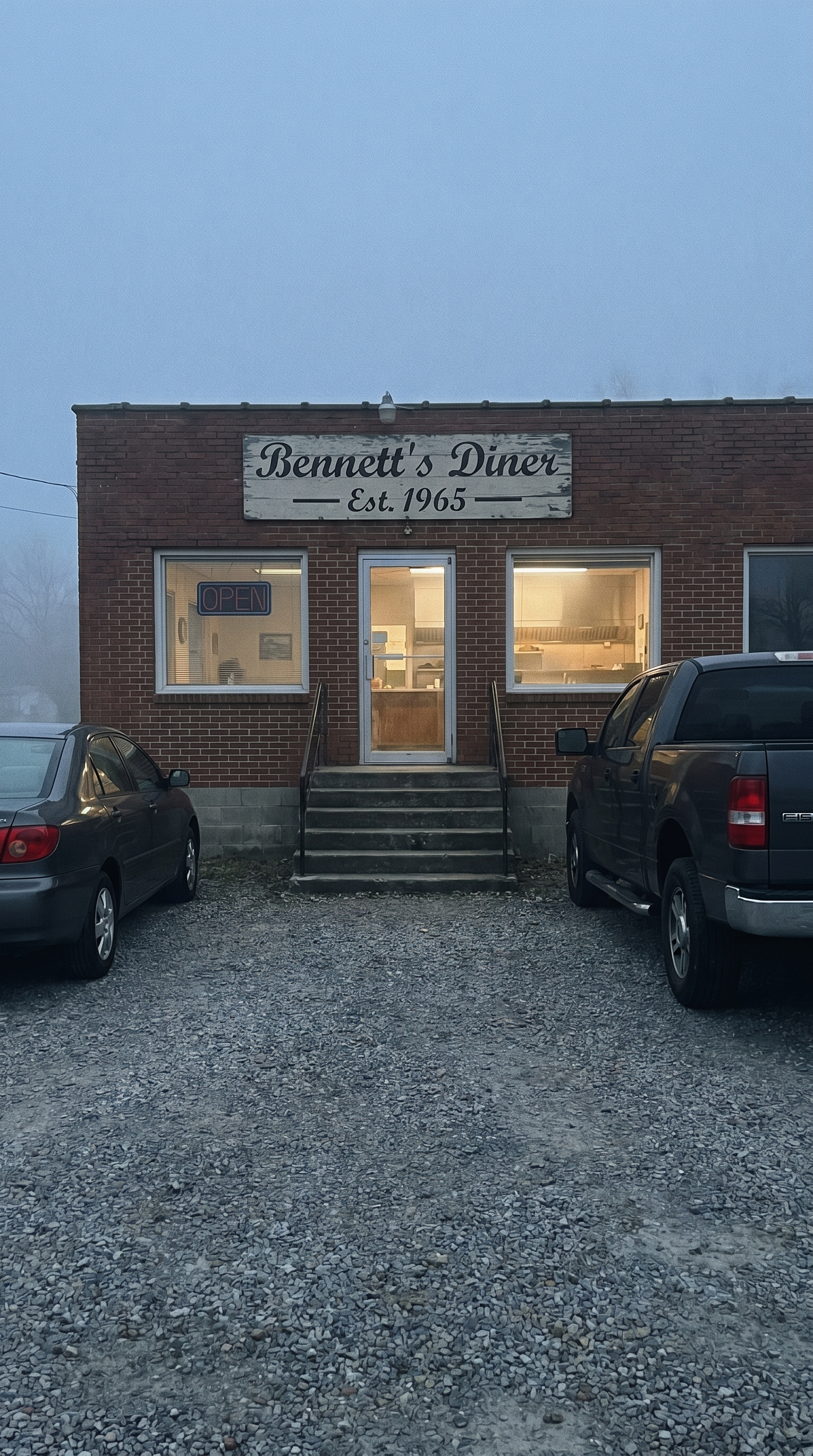
My longest employee stole from me last Tuesday. She's worked for me for 14 years. When she told me why, I forgave her before she finished the sentence. In fact, I was the one who ended up apologizing — for not giving her the answer months ago. Let me start from the beginning because this story isn't what you think. My name is Diane. I've owned a small family diner for 22 years. Twelve tables, six booths, a counter with eight stools, a pie case my father built in 1968 that I refuse to replace. My father opened this place in 1965. He left it to me in 1995. My husband Tom and I have been running it together ever since — though Tom mostly stays out of the dining room now, for reasons I'll get to. It's the kind of place where nobody calls to ask if we're open because everyone knows the hours. Tuesdays through Saturdays, 5:30 AM to 2 PM. Closed Sundays and Mondays. The same regulars come in for the same orders. Walter has eggs over easy and rye toast every Tuesday at 6:15. Patty does cinnamon roll and decaf every Wednesday at 8:30 since 2009. The Friday morning farmer crowd takes the long booth from 7 to 8 AM and orders three pots of coffee that we don't charge them for because nobody charges farmers for coffee in this town. I've been running this diner long enough to know that the dining room is only half the job. The other half is the kitchen. And the kitchen is the women who've been working with me for ten, twelve, fourteen years. Women who work together in a small kitchen tell each other things they don't tell their husbands. They don't tell their sisters. They don't tell their doctors. But they'll stand at a prep station chopping onions next to another woman who's been chopping onions next to them for a decade and the truth just comes out. I know who's thinking about leaving her husband. I know who got a diagnosis she hasn't told her kids about. I know whose son hasn't called in eight months. I know whose daughter is drinking again. I know these things because four or five mornings a week, before the doors open at 5:30, four women stand in my kitchen prepping for the day and there's nobody listening but the hash brown grill and each other and me. I've held more secrets than a priest. And just like a priest, I never repeat them. But about eight months ago, something started happening in my kitchen that changed the conversations completely. And it started with a small bottle on my back office desk. I keep an office in the back. It's not really an office — it's a closet with a desk in it. The walk-in is on one side, the dry storage shelves are on the other, and there's just enough room for me to do payroll and pretend I'm doing taxes. My morning ritual for twenty-two years has been: walk in at 5:00 AM, start the coffee, count the register, take whatever I'm taking that day with my first cup at my desk before the staff arrives at 5:15. For most of those years, what I was taking was nothing. Just coffee. Eight months ago I added a single capsule to my morning. Deep red. About the size of a fish oil pill. I'd swallow it with my coffee, refill my cup, get to work. The first employee who noticed was Carol. Carol is 62. She's worked for me for nine years. She came to me after she retired from teaching fourth grade — said she needed something to do that wasn't a classroom but still let her be around people. She works the breakfast shift four days a week. Comes in at 5:15. Sets up the front. Refills the salt and pepper. Wipes down the counter. Cuts pies if we ran low the day before. She is, without exaggeration, the most reliable human being I have ever known. She walked into my office at 5:18 AM on a Tuesday last March with a question about the week's specials. Saw me washing down a red capsule with my coffee. "What's that?" "Iron supplement. Energy." "Can I try one?" I shook one out into her palm. She swallowed it with the coffee I poured her, said "tastes like nothing," and we walked back into the kitchen to talk about whether the meatloaf should run Tuesday or Wednesday. That was it. Normal morning. Normal conversation. A week later, Carol pulled me aside before the breakfast rush. "Diane. I need to tell you something about that capsule." She was looking at me the way employees do when they want to say something but they're not sure how to start. "My energy," she said. She shook her head like she still didn't believe it. "I've been crashing by 10:30 every morning for three years. You know this. I work the breakfast shift because afternoons kill me. Mornings I can handle. But by the end of breakfast I'm running on coffee and willpower. Some days I sit on the back stairs for five minutes before the lunch turn because I can't keep going." I knew about the exhaustion. She'd mentioned it before — always casually, always wrapped in a joke about getting old. That's what women do. They mention the thing that's destroying them like it's a weather report. "After I took that capsule last Tuesday, I felt different on Wednesday morning. Sharper. I figured I'd slept well. Thursday I felt the same. Friday I came in here and asked you for another one. Remember?" I remembered. I'd shaken three more into a napkin and handed them to her without thinking about it. "I took one every morning this week. Diane, I haven't sat on the back stairs once. I worked breakfast Tuesday, Wednesday, Thursday, Friday, and Saturday. Five days. Yesterday I went home, took my grandkids to the park for two hours, came back, made dinner, and watched a movie with my husband. I haven't done a full day like that in three years." She laughed. But her eyes were wet. "What IS that stuff?" I told her it was an iron supplement that also had some plant antioxidants in it. She asked if she could buy a bottle. I told her I'd order her one. I stood there after she left thinking about a retired teacher who got her afternoons back. Then Wendy happened. Wendy is 58. She's been my line cook for eight years. Came up through three other restaurants before mine. She's the kind of woman who shows up at 5:15 AM in clean whites and works the grill like she's conducting an orchestra. Quiet. Organized. Doesn't gossip. Brings her own thermos of tea because she doesn't trust the diner coffee. Fair enough — the diner coffee is for the customers and the customers like it strong. She'd taken a capsule home after watching Carol try one. Didn't say much at the time. Two weeks later she pulled me into the walk-in. It was 6:40 AM. Breakfast rush in full swing. She closed the door behind us and the cold hit and her breath was coming out in clouds. "I've been giving those capsules to my husband." I waited. "Jeff's been on Crestor for three years. He doesn't sleep. Gets up two, three times a night. Paces the kitchen. Comes back to bed and lies there. He's been like this since year two on the medication. Doctor says it's stress." She paused. The walk-in fan kicked on. I could hear lemons rolling on the bottom shelf. "I put one of those capsules in his evening pill organizer. Told him it was iron for his anemia. He took it." She was looking at the bag of carrots on the bottom shelf. Not at me. "He slept through the night, Diane. Seven hours. I woke up at 4 AM because the silence woke me. I reached over and he was still there. Still breathing. Still sleeping." Her shoulders were shaking in the cold. She was crying but she was trying not to. I put my hand on her shoulder and waited. "He's slept through every night for nine nights. He thinks the iron is just fixing his anemia. He calls them 'the red ones Wendy gets from the diner.' " She laughed through the tears. I laughed too. "The red ones." That's apparently what my husband's life-changing supplement was being called in another household. After Wendy, I started keeping a few extra bottles on the shelf in my office. Right next to the order forms and the broken adding machine I should have thrown out in 2002. I wasn't advertising it. I just had them there — and if one of the women in the kitchen mentioned energy, or sleep, or hands, or her husband, I'd quietly hand her three or four capsules in a napkin and tell her they were iron supplements that were helping me. Nobody questioned it. Women in a kitchen take vitamins. Half my staff had a bottle of something on their locker shelf already. The difference was — these were working. And every couple of weeks, the same women would pull me into the walk-in or the back stairs or the back office, and I'd hear the next chapter. Carol, week three: "Diane, I asked my daughter if I could babysit the grandkids overnight on Saturday. I haven't offered overnight in two years. They stayed from Saturday morning until Sunday afternoon and I made pancakes Sunday and we walked to the park and I wasn't even tired." Wendy, week three: "Jeff's doctor asked him what changed. His cholesterol numbers came back lower than they've been since he started Crestor. Jeff told the doctor he didn't know — he was just taking the iron Wendy got from the diner. The doctor wrote down 'iron supplement' in the chart." I was tracking these stories in my head. Every morning prep, every break, every walk-in confession. Like chapters in the same book written by different women who didn't know they were all telling the same story. Then Barbara happened. Barbara is 67. She's been my head waitress for 14 years. She runs the dining room the way a sergeant runs a barracks. Customers love her because she remembers their orders and their grandkids' names and exactly how Walter likes his rye toast. Staff respect her because she takes no nonsense and gives no nonsense and has, in 14 years, never once called out sick. She's the toughest woman I know. I've watched her wait tables the week she got a biopsy result. I've watched her take orders the day her mother died — she came in for the breakfast shift two days after the funeral and worked through the lunch rush without shedding a tear. When her son went through a brutal divorce, she mentioned it once at staff meeting and never brought it up again. In 14 years I have never seen Barbara cry in my diner. Until last October. She came in at 5:15 like always. Hung up her coat. Tied on her apron. And then she just stood in the kitchen doorway, looking at the prep station, not moving. "Barb. You okay?" "Something happened last night." Her voice sounded different. Thinner than usual. "Dennis and I were watching the news after dinner. Normal night. And he turned to me and said, 'Happy anniversary, Barb.' " She stopped. "Our anniversary was last night. October 14th. Forty-three years." "He remembered?" "He hasn't remembered our anniversary in three years. Not the date. Not the month. Not even when I remind him on October 1st — by the 14th it's gone. Last year I set the table with candles and he sat down and asked why we were being fancy. He didn't know what day it was. He didn't know what the candles were for." She was gripping the door frame. "Dennis has been on Lipitor for eight years. His mind has been going for the last four. Slow. So slow that his doctor keeps calling it aging. But I know what aging looks like, Diane. My mother was sharp until the day she died at 86. This isn't aging. Something is taking him." "Last night — October 14th — he turned to me on the couch. No prompting. No reminding. No candles. He just looked at me and said, 'Happy anniversary, Barb. Forty-three years. I'd do it all again.' " Barbara put her hands over her face and her shoulders started shaking. In 14 years. Through cancer scares, through her mother's funeral, through everything. This is what broke her open. Her husband remembering what day it was. I walked over and put my arms around her right there in the kitchen doorway. Carol was at the front. Wendy was at the grill. They both looked up and then looked away because they knew this wasn't a moment for an audience. "I started giving Dennis those capsules two months ago," Barbara said into my shoulder. "The ones you gave me for energy. I figured — what's the worst that can happen? Iron supplement. It's a mineral. It can't hurt." "His energy came back first. Then the mental clarity. He started finishing sentences again. Started remembering where he put his keys. Small things. But last night — Diane, he remembered October 14th. On October 14th. Without being told. I haven't had that in three years." "Whatever is in those capsules, it's not just iron." She was right. And I should have told them all the truth months ago. But I need to tell you about Gayle first. Because Gayle is the reason I'm writing this. Gayle is 64. She's worked for me for 14 years — same as Barbara, hired the same week. She runs the dishwasher and prep station. Comes in at 5:30. Heads home at 1:00. Quiet, polite, never late, never sick, never gossips, never asks for anything. In 14 years I've learned almost nothing about her personal life. I know she has a husband named Frank. I know they have one daughter who lives in Tucson. I know she used to work at a glass factory before it closed in 2009. That's it. That's 14 years. But I also know this: Gayle listens. She doesn't talk much but she hears everything. When Carol pulled me aside about the energy, Gayle was at the dishwasher with her back to us. When Wendy and I came out of the walk-in, Gayle was wiping down the prep table near the door. When Barbara cried in the kitchen doorway, Gayle was at her station two feet away rinsing dishes. She never commented. Never asked about the capsules. Never tried one. She just listened. For months. Last Tuesday, I came in at 5:00 AM like always. Started the coffee. Counted the register. Walked into my office to take my morning capsule. The bottle on my desk was gone. Not light. Not low. Gone. The whole thing — almost a full bottle, sixty capsules I'd refilled the night before. The desk was empty where it had been. I stood there for a few seconds trying to figure out if I'd moved it. Checked the drawer. Checked the shelf where I kept the extras. The extras were still there. But the bottle on my desk — the one I drank from every morning at 5:00 AM, the one anyone walking into my office would see first — that one was gone. Then I heard the back door. The staff door, off the alley. Someone had come in early. Before the 5:15 start time. I walked out of my office. Down the hall past the walk-in. Into the back kitchen. Gayle was at her station tying on her apron. She didn't see me. Her back was to the doorway. I watched her for maybe three seconds. The careful way she tied the strings. The way she straightened her name tag. Then she turned around and saw me standing there and her face changed. She didn't say anything. I didn't say anything. I walked back to my office and sat at my desk for ten minutes before the rest of the staff arrived. In 14 years, Gayle has never taken anything from my diner. Not a roll. Not a leftover slice of pie at the end of the night. Not a single sugar packet. She's the most contained, most private, most rule-following employee I have ever had. And she'd come in twenty minutes early to take the whole bottle from my desk. I didn't say anything that day. Not to Gayle. Not to anyone. I refilled my office bottle from the supply in the back at lunch and sat with it. I wasn't angry — the capsules weren't expensive. I was thinking about the months of silence. Carol's energy, Wendy's husband sleeping, Barbara's tears. Gayle at her dishwasher with her back to us. Gayle wiping down the prep table. Gayle two feet away while another woman sobbed about her husband remembering an anniversary. She'd been hearing these stories for six months. Standing three feet away from women whose lives were changing. And she never said a single word about her own. I figured she'd come talk to me eventually. I could wait. She didn't make me wait long. Three days later — Friday night — I was reconciling the register at 8:30 PM. Everyone was gone. Tom was at home. The dining room was dark except for the light over the counter and the EXIT sign by the front door. I had the chairs flipped up on all the tables except one back booth where I'd left the salt and pepper because I hadn't gotten around to it. The back door opened. I looked up. Gayle was standing in the doorway. Coat on. Purse clutched with both hands. "Do you have a minute?" "Of course. Come in." She didn't walk to my office. She walked to the back booth — the one I hadn't put away yet. Sat down on the inside bench, the one facing the kitchen. She'd been sitting in that booth on her breaks for 14 years. I came around the counter, slid into the bench across from her. The dining room was completely silent. The dishwasher in the kitchen had finished its last cycle hours ago. The only sound was the refrigerator hum from behind the counter. "I took the bottle, Diane." "I know." "I'm sorry. I'll pay for —" "Gayle. I don't care about the bottle. Tell me why." She looked down at her hands on the table. Then back up at me. And she broke. Not the way Barbara broke — in a single overwhelming sob. Gayle broke the way a dam breaks. Slow crack. Then everything at once. "My husband Frank has been on Crestor for seven years. Rosuvastatin. They doubled his dose last year because 20 wasn't keeping the number down. Now he's on 40." She was speaking to the table. Not to me. Hands flat in front of her like she was holding herself in place. "He used to play guitar. That was our thing — our only thing, Diane. We don't travel. We don't go out to restaurants. But every evening for 30 years, Frank would sit on the back porch with his guitar and play. Old country. Some blues. Songs he'd been playing since before I knew him. I'd sit on the porch swing with my tea and just listen. That was our marriage. That was the whole thing. Two people on a porch. One playing. One listening." Her voice was shaking. I could see it across the table — her chin trembling, her eyes filling. "Three years ago his fingers started going. The fretting hand first — the left one. He couldn't press the strings down hard enough to make a clean chord. He'd try and the note would buzz and he'd shake his hand out and try again. Then the other hand — the picking hand. His fingers would cramp around the pick. He'd drop it. Pick it up. Drop it again." "He put the guitar in its case two years ago. Set it in the corner of the bedroom. I watched him close the latches and I knew — I knew — he was saying goodbye to it. He didn't say that. He said 'I'll get back to it when my hands feel better.' But we both knew." "The porch swing is still there. I still sit on it. But there's no music. There hasn't been music on our porch in two years." I reached across and put my hand over hers. She didn't move it. Just left it under mine on the booth table. "His doctor says the stiffness is a known side effect. 'Common with statins, Frank. Take CoQ10. Stretch your fingers.' The brain fog — and yes, he has the fog too, Diane, the same fog every woman in your kitchen has been describing — the fog his doctor calls 'normal aging.' " "He's 66 years old. He's not old enough to lose his mind. He's not old enough to lose his hands. He's not old enough to stop playing the guitar he's played since he was 17." "But his doctor looks at a chart and says the numbers are perfect and writes the refill and sends him home. And I sit on the porch swing alone." She took a breath. Looked up at me for the first time since she sat down. "I've been listening to your kitchen for six months, Diane. I stand at that dishwasher and I hear Carol talk about her energy coming back. I hear Wendy talk about Jeff sleeping. I heard Barbara cry in the doorway about Dennis remembering their anniversary. And every single time, I'm standing there thinking: that's Frank. That's my life. These women are describing my life and they have no idea." "But I didn't say anything. Because I've been to this movie before. I've tried supplements. Turmeric. Fish oil. Glucosamine. CoQ10 — the one his doctor recommended. Nothing works. Nothing has ever worked. So when Carol started talking about her energy I thought — good for her. Doesn't mean it'll work for Frank. When Wendy mentioned the sleep I thought — coincidence. When Barbara cried about the anniversary I thought —" She stopped. "That's when I stopped thinking. Because Barbara is the toughest woman I've ever worked with. Fourteen years. And she was crying because her husband remembered a date. And I realized that what these women are describing isn't a coincidence. It isn't placebo. Something in those capsules is doing something real. And I've been standing at that dishwasher for six months telling myself it's nothing because I'm too afraid to hope again." "Last Tuesday I came in twenty minutes early. I knew you were at the register counting. I walked past your office and the bottle was right there on the desk and I took it. All of it. I didn't plan it. I didn't think about it. I just took it because I've been standing in this kitchen for six months listening to other women get their husbands back and I couldn't listen anymore without trying." She was crying hard now. Across the table from me. Booth four, the one with the wobbly leg I keep meaning to fix. "I went home Tuesday night and put a capsule in Frank's pill organizer. He takes seven pills a day. He didn't notice an extra one. He swallowed them with his water at 7 PM the way he does every night." "An hour later he looked at me across the kitchen table and said, 'Gayle, my head feels different tonight.' " " 'Different how?' " " 'Quiet. Like someone turned the static off.' " "I went to the bathroom and sat on the edge of the tub and cried." "That was three days ago. He's slept through every night since. Tuesday, Wednesday, Thursday. Three nights. He hasn't slept through the night in years, Diane. And his fingers — this morning he was stretching them. Opening and closing his fists at the kitchen table. Not because they hurt. Because they could." "I need more capsules. I don't know what's in them and right now I don't care. I need more of whatever is giving me my husband back." I was sitting across from a woman I'd known for 14 years and never really known at all. The diner was empty. The light over the counter was making the chrome on the napkin holder glow. And this woman — quiet, private, polite Gayle — had just described my life. Different instruments. Different names. Same shape. Exactly the same shape. My husband Tom went on Lipitor — atorvastatin — at 56. His doctor said his cholesterol was too high and this was the standard treatment. Non-negotiable. Six months later, the numbers were perfect. The doctor was thrilled. And I started losing the man I'd married. Tom wasn't a cook. He was the home guy. The fix-it guy. The man who could rebuild a carburetor in our garage on a Sunday afternoon. He used to come home from his day job — he ran the maintenance department at the high school for 32 years — and after dinner he'd go out to the garage and tinker. Cars. Lawn mowers. The neighbor's tractor. He fixed a chainsaw for my brother that my brother had given up for dead. He rebuilt the transmission on our daughter's first car when she was 19 and couldn't afford the shop. His hands were his whole life. Big, scarred, capable hands. The kind of hands that knew the difference between a 3/8" and a 7/16" without looking. The kind of hands that came to bed at night still smelling faintly of motor oil no matter how hard he scrubbed. Three years into the Lipitor, the hands went. It started with the grip strength. He'd be holding a wrench and it would just open. The wrench would clatter onto the engine block and he'd shake his hand out and pick it up and three minutes later it would happen again. He started using locking pliers for jobs that didn't need them because his hand wouldn't hold a regular wrench. Then the fine motor stuff. He couldn't get a small screw started anymore. His fingers would fumble it and drop it. He'd spend ten minutes looking for a Phillips-head screw on the garage floor that he'd dropped while trying to start it. The same job he used to do in two minutes was now a forty-minute ordeal. Then the memory. Tom had every car he'd ever worked on cataloged in his head — model year, engine type, what was wrong with it, what he did to fix it. By year four on the statin he was forgetting which car was up on the jack stands. Once he came in for dinner and asked me whose car was in the garage and I had to remind him it was our daughter's, that he'd been working on her brakes for two weekends. By year five he stopped going out to the garage after dinner. He'd sit in his recliner and watch the news instead. He told the neighbor — when the neighbor came over with a problem — that he wasn't really doing that kind of work anymore. The neighbor took his lawn mower somewhere else. Then the next neighbor. Then my brother stopped bringing things by. The phone stopped ringing. The smell of motor oil left our house. His doctor said all the things every doctor in this story says. The grip stuff: "known side effect." The fatigue: "common with age." The memory: "we'll keep an eye on it." The same script, the same dismissal, the same wife sitting across a desk knowing the chart was lying. I started researching the same way every woman in this story starts researching. Late at night. Alone. Angry. The diner was closed. I was sitting at the booth I'm sitting in right now — booth four, the wobbly one. It was midnight. My laptop balanced on the formica. The overhead lights were off and the only light was coming from the EXIT sign by the front door and the screen of my computer. I'd already tried the supplement route. Fish oil. Six months. Nothing. Red yeast rice. Nothing. Turmeric capsules someone at the church had sworn by. Nothing. CoQ10 exactly as Tom's doctor had recommended. Forty dollars a bottle, six bottles, zero change. I had a drawer in our bathroom full of bottles that had promised things they didn't deliver. I'd stopped buying supplements the way you stop buying lottery tickets — not because you know the odds, but because hope has a cost and you've spent enough. I wasn't looking for another supplement that night. I was looking for WHY. Why was the statin doing this to him? I found a post on a medical forum. Written by a retired cardiologist — 29 years of practice. He'd walked away because he couldn't keep prescribing medications he now understood were causing the very damage they were supposed to prevent. His tone stopped me. He wasn't angry. He wasn't selling anything. He was exhausted. Like a man who'd carried something heavy for three decades and was finally setting it down. He explained what statins actually do inside the body. "Statins block an enzyme called HMG-CoA reductase. That's how they reduce cholesterol production. But that same enzyme is responsible for producing CoQ10 — the molecule your mitochondria use to generate energy in every cell. Your heart. Your muscles. Your brain. Your hands." I thought about Tom's grip opening on the wrench. "When you suppress that enzyme, you don't just lower cholesterol. You cut off your body's ability to produce cellular energy. The muscle weakness, the cognitive decline, the crushing fatigue — these aren't side effects. They are the primary effect of depleting CoQ10 at the cellular level." I thought about Tom asleep in his recliner at 7:00 PM. The dark garage. The neighbor walking away with his lawn mower. "Most doctors prescribe CoQ10 supplements. But the oral CoQ10 molecules are too large to cross cell membranes effectively. They circulate in the bloodstream and accomplish very little where the damage is actually occurring — inside the mitochondria." That's exactly what Tom's doctor had done. Prescribed CoQ10. Told him to do hand exercises. Checked the box. Then the cardiologist wrote something that changed everything. "The CoQ10 depletion — as devastating as it is — is not the most dangerous thing statins leave unaddressed." "The most dangerous thing is what happens to the cholesterol that remains." LDL cholesterol isn't poison, he wrote. Your body produces it on purpose. It builds cell membranes, transports nutrients, repairs tissue. The problem isn't that LDL exists. The problem is what happens to it when it's attacked by hydroxyl radicals — the most destructive free radicals your body generates. "When hydroxyl radicals oxidize LDL, it changes structure. Becomes adhesive. Penetrates arterial walls. Triggers an inflammatory cascade. Forms plaque. That plaque can rupture at any moment — causing the heart attack or stroke the statin was prescribed to prevent." Not cholesterol. Oxidized cholesterol. "Statins reduce the amount of LDL in the blood. They do nothing to prevent the remaining LDL from oxidizing. The total number looks managed. The chart looks excellent. But the cholesterol that remains is quietly being converted into the substance that causes cardiac events." I read it again. My hands were trembling against the formica. "This is why the majority of patients who experience cardiac events while on statin therapy have elevated oxidized LDL — despite 'controlled' total cholesterol. The measurement being monitored is not the measurement that determines risk." He shared a story I haven't been able to forget. "I had a patient. 62 years old. On atorvastatin for ten years. LDL of 93. Perfect by every guideline. His wife told me he'd stopped going to his workshop — he'd been a woodworker for decades. Said his hands couldn't hold the tools anymore. I told her muscle stiffness was 'common but manageable.' He died of a myocardial infarction on a Saturday morning. In the driveway. Walking to the workshop he no longer had the strength to use. His oxidized LDL — which I had never once tested in ten years — was dangerously high. I watched the wrong number for a decade." My skin went cold. A man whose hands stopped working. A wife who told the doctor something was wrong. A doctor who said "common but manageable." Tom was 59. This man's patient was 62. Different garage, different workshop. Same medication. Same chart that said everything was fine. Same ending that proved it wasn't. Tom's doctor had never tested his oxidized LDL. Not once. Not in five years. Every appointment — draw blood, check the total number, say "looks great, Tom," write the refill. I kept reading. The diner was dark around me but the anger was keeping me awake. "The question is: if oxidation drives arterial plaque, what stops it?" That's where I learned about betalains. The pigment that gives beetroot its deep crimson color. Researchers in Germany and Italy have been publishing on it for thirty years. Betalains are selective antioxidants — they target hydroxyl radicals specifically. The exact molecules responsible for oxidizing LDL. The exact molecules destroying mitochondrial function. They neutralize them and convert them to water. And here's the part the cardiologist wrote that I haven't been able to forget. "The betalain pigment is itself the antioxidant. It crosses the gut wall. Penetrates cell walls. Gets inside arterial tissue where the oxidation is actively occurring. Places that fish oil can't reach. That bergamot can't reach. That CoQ10 supplements certainly cannot reach." Everything I'd tried for Tom — the fish oil, the CoQ10, the turmeric — all of it was either too large to reach the cells where the damage was happening, or it was trying to lower the number. The same strategy as the statin. Nobody was addressing the oxidation. Nobody was protecting the cholesterol Tom still had from becoming the thing that actually kills. The cardiologist mentioned one specific brand at the end of his post. He said most beetroot supplements were useless — modern beets have been bred for sugar content for over a century, until the betalain content of a grocery store beet is a fraction of what the original heirloom strains carried. Companies take that already-depleted beet, spray-dry it at high heat — and heat destroys betalains. By the time it's sealed in a capsule, the active compound is gone. The brand he recommended was grown by an Amish community in Lancaster County, Pennsylvania. Heirloom seed line. Hand-harvested after the first frost. Shade-dried at low temperature so the betalains stayed intact all the way into the capsule. Rosabella. I ordered a bottle at 1:47 AM from the wobbly booth in my own diner. It arrived on a Wednesday. That evening, Tom was in his recliner. TV on. Eyes half-closed. It was 6:45 PM. The garage door was closed. There was nothing happening out there. Just another night of him watching the news while I cleaned up after dinner. I dropped a capsule into his vitamin organizer. The next morning I handed him his pills with his coffee like always. He swallowed them. Twenty-three minutes later he set down his coffee cup and looked at his hands. "Diane. My grip feels different." I didn't say anything. He stood up. Walked to the kitchen sink. Picked up the coffee mug. Set it down. Picked it up again. Opened and closed his hand around the handle three times. "It's not back. But it's different." I went to the bedroom and shut the door and sat on the edge of the bed and cried into a pillow. Day five, Tom went out to the garage after dinner. First time in two years. He didn't do any work. He just stood out there for forty-five minutes, looking at his tools. I watched him through the kitchen window. He picked up a wrench. Set it down. Picked up a different one. Tested the weight. Day eight he asked me if I knew where his service manuals were. He'd packed them up two years ago. I told him they were in the bedroom closet. He went and got them and sat in the recliner that night reading the one for a 1998 Ford F-150 — a truck he hasn't owned in fifteen years. He read it like a novel. Week two the neighbor came over with a problem on his snowblower. Asked if Tom was up to looking at it. Tom said yes. It took him three days. Used to be a job he could do in an afternoon. But he did it. Got the carburetor cleaned. Replaced a fuel line. Got it running again. The neighbor brought over a case of beer and they sat in the garage drinking one and talking about engines for an hour and a half. Week three the smell of motor oil was back in our kitchen. Week six. Bloodwork. I went with Tom. Sat in the exam room. His doctor pulled up the results on the laptop. Scrolled. Stopped. Scrolled back. Looked at Tom over the screen. "When's the last time you took the Lipitor?" "About two months ago." She didn't react the way I expected. She just looked at the numbers again. "Your LDL is down 27 points from your last panel. Off the statin entirely." She closed the laptop halfway. "Tom, I'm not going to pretend I understand what happened here. But your numbers are better than they were on medication and you clearly feel better. Whatever you changed — don't stop." She didn't ask what it was. Didn't endorse it. But she didn't argue. And she didn't write a refill. That was seven months ago. Tom has been off Lipitor for six months. His numbers hold. His hands work. The smell of motor oil is permanent in the kitchen again. The neighbor's lawn mower is in our garage right now. My brother brought over a chainsaw last weekend. He's not the man on the statin. He's the man who fixes things. The man I married. After Tom's bloodwork came back, I was standing behind the counter at the diner. Watching Carol set up the front. Watching Wendy fire up the grill. Watching Barbara unlock the front door and flip the OPEN sign. Watching Gayle tie on her apron at the dishwasher. These women had been telling me about their husbands for months. Standing in my kitchen, in my walk-in, on the back stairs, sharing things they don't share anywhere else. And every one of them was describing a version of what happened to Tom. The hands. The fog. The fatigue. The doctor who watches the chart. The wife who watches the man. I went to my office. Took the Rosabella bottle off my desk. Put it on the shelf with the order forms. Decided that any employee who mentioned anything — hands, energy, sleep, her husband's stiffness, his fog, his exhaustion — would get a few capsules in a napkin and a quiet word that they were iron supplements that were helping me. I called them iron capsules. Which was sort of true — beetroot is high in iron. But I called them iron because iron doesn't scare people. "Beetroot betalain antioxidant" sounds like something from a health food store. "Iron" sounds like something the lady who owns the diner takes for energy. And that's exactly what I needed it to sound like. That was eight months ago. And now you know why Carol has energy at 11 AM for the first time in three years. Why Wendy's husband sleeps through the night. Why Barbara's husband remembered their anniversary. Why the conversations in my kitchen changed. And why Gayle — quiet, polite, private Gayle — came in twenty minutes early on a Tuesday to take the bottle from my desk. I sat across from her in booth four for a long moment after she finished telling me about Frank. Then I said: "Gayle. Keep every capsule. Every single one. I'm going to give you something better than a stolen bottle." I wrote down the link on the back of one of our paper menus. Slid it across the formica. "Order your own supply. Because those capsules will run out. And when they do, I don't want Frank's hands to stop working again." She ordered two bottles that night. The updates came over the following weeks — not in long conversations. Gayle still doesn't talk much. But she'd catch my eye in the kitchen and nod. Or she'd pull me aside on a break and give me a short report. Week one: "He slept through every night this week. His fingers are getting stronger. He's stretching them in the morning like he's testing them." Week two: "He opened the guitar case. Didn't play. Just sat on the bed and held it. Ran his thumb across the strings. Closed it and put it back. But he opened it, Diane. He hasn't opened that case in two years." Week three: "He's playing. Short sessions. Five minutes. Ten. His fingers can't do what they used to yet but he's playing." Then a month after that Friday in booth four, she did something she hasn't done in 14 years. She showed me a photo on her phone during her break. Frank on their back porch. Guitar across his lap. His left hand — the fretting hand, the one that couldn't press a string two months ago — wrapped around the neck. His right hand holding the pick. She'd taken the photo from the porch swing. "He played for an hour," she said. "I sat on the swing and cried." I asked if I could print it. She said yes. It's taped to the wall behind the cash register now, between a photo of the Friday morning farmer crowd and a Christmas card from a regular who moved to Florida. Every customer who pays sees it. Nobody asks what it is. It just looks like another picture pinned to a diner wall. But I know what it is. It's the sound of music coming back to a porch that's been quiet for two years. If you're reading this, I know exactly where you are. You've been watching someone you love disappear. The hands that used to play, or build, or cook, or fix. The mind that used to be sharp. The energy that used to carry him through a full day. The man who used to be present — really present — at dinner, in the garage, on the porch, in the life you built together. And his doctor keeps saying the numbers look great. The chart looks great. Keep taking the medication. But the chart isn't married to him. You are. You've been watching the wrong number. The whole time. One path: keep filling the prescription. Keep watching the slow fade. Keep hearing "that's just aging" while you know in your bones it isn't. Keep hoping the medication that's draining his CoQ10 and leaving his LDL exposed to oxidation will somehow protect him — even though the mechanism says it can't. Another path: give his body what it's actually missing. Address the oxidation the statin doesn't touch. The crimson pigment that crosses the gut wall and reaches places no statin and no CoQ10 supplement can reach. Track the numbers. Watch them improve. Watch HIM improve. Verify the results yourself. I chose the second path. Gayle chose the second path. Tom is back in the garage. Frank is back on the porch. https://track.tryrosabella.com/bfcb877b-9f52-4175-9be6-9bc1a89ce3a8 — Diane P.S. — Gayle came in for her shift last Tuesday. Same prep station, same apron, same quiet. But on her break she sat across from me at booth four — the wobbly one — and for the first time in 14 years she talked. She told me Frank's daughter from Tucson is flying out next month to visit. She told me Frank wants to play a song for her — the one he used to play when she was little, before she could walk. He's been practicing. Three weeks ago he couldn't make a clean chord. Now he's practicing. She had to leave to clock back in so I wouldn't see her cry. If your husband is on a statin and you've been watching him fade — the fog, the fatigue, the hands, the half-finished sentences — the capsules in my office are Rosabella. That's what Gayle ordered. That's what Tom takes every morning. That's what's on the shelf next to the order forms for every woman in my kitchen who tells me things she doesn't tell anyone else. P.P.S. — Swallow one capsule with a tall glass of water in the morning. Set a timer for 20 minutes. If you don't feel something shift — a clarity, a quiet, like someone turned off static you didn't know was playing — then maybe this isn't for you. But if you feel it — and almost every woman who's taken one home from my diner has felt it — that's not placebo. That's the betalain pigment crossing your gut wall and reaching your bloodstream for the first time as a concentrated dose. The deep crimson reaching places no statin and no CoQ10 has ever reached. The cholesterol improvement takes weeks to show up on bloodwork. But that first-day clarity? That's his body telling you: finally — something that actually gets where it needs to go. P.P.P.S. — Rosabella has a 90-day money-back guarantee. If his numbers don't improve, every penny back. No questions asked. Compare that to the statin on his nightstand — which comes with a lifetime commitment, CoQ10 depletion, potential muscle destruction, and a doctor who watches the chart instead of the man. Tom was on Lipitor for 5 years. Nobody offered a refund when it took his hands and his garage and the smell of motor oil from our kitchen. The system doesn't do refunds. Rosabella does. P.P.P.P.S. — Rosabella is a small company. They sell out. I know because I tried to reorder after Gayle took the bottle from my desk and had to wait 9 days. I keep three bottles now — one for Tom, one for me (the oxidation doesn't care about gender — it works the same way), and one in my office for the kitchen. If his next blood draw is in 30 to 60 days and you want him to walk into that appointment with real numbers instead of the same managed decline — check if they have stock today. Not next week. Now. Every day on the statin is another day of CoQ10 depletion. Every day without addressing the oxidation is another day the cycle keeps spinning. Don't sit on the porch swing waiting for the music to come back on its own. It won't. P.P.P.P.P.S. — Do not forget about their 90-day money-back guarantee. https://track.tryrosabella.com/bfcb877b-9f52-4175-9be6-9bc1a89ce3a8
Support stamina and heart health every day
LEARN MORELike this ad? Make it yours.
Crush rebuilds this exact creative around your product — your brand, your colors, your offer — in about a minute.