Michael Anderson, PhD.
Michael Anderson, PhD. Facebook ad: “The Japanese MS Research No American Doctor Is Taught”
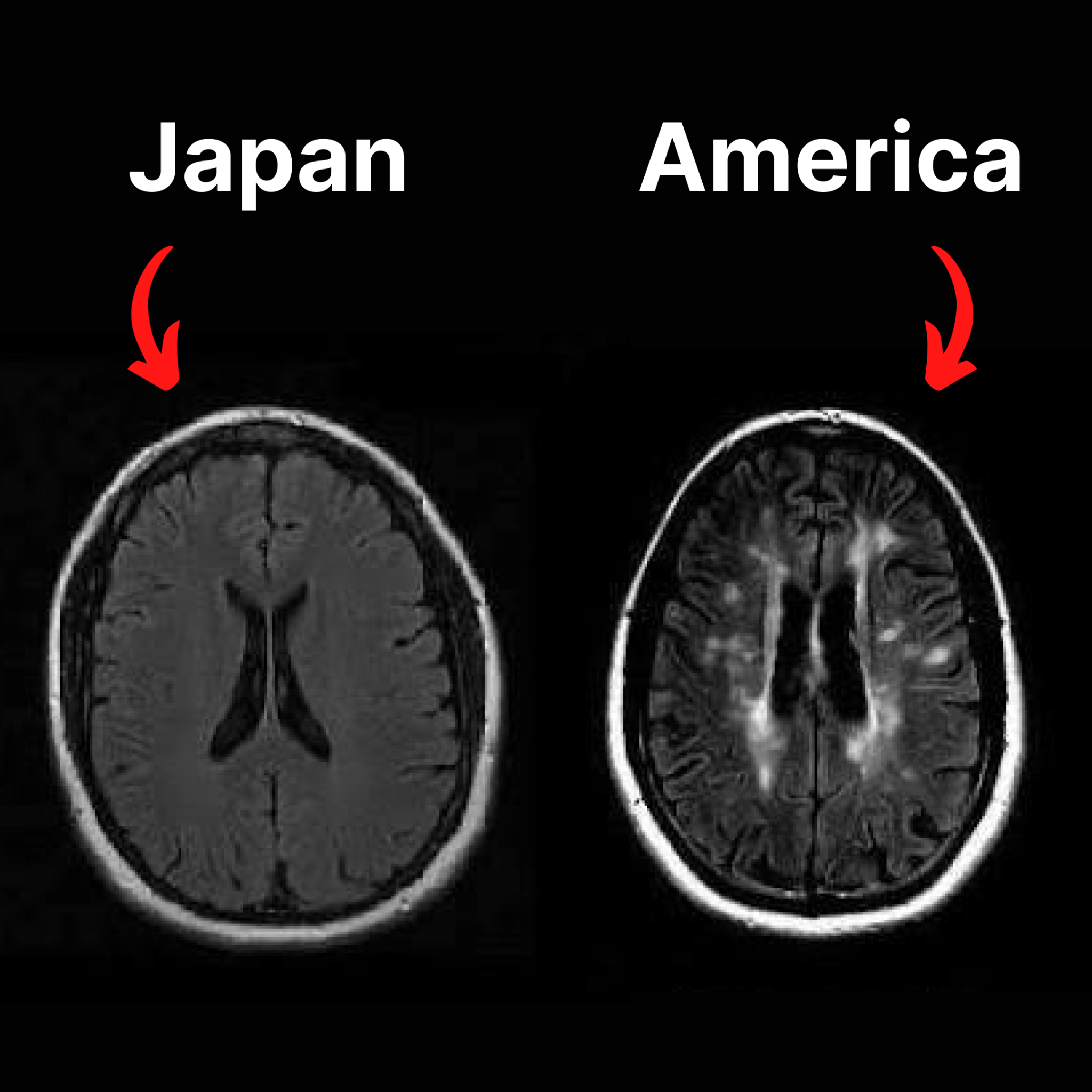
Ran for 7 days, from August 18 to August 25, 2026, the last day Crush saw it.
Run by Michael Anderson, PhD. on Facebook. Crush is not the advertiser and does not verify its claims. See this ad in Meta's Ad Library(opens in a new tab)
Want an ad like this for your product?
Crush makes new ad images for your product from this ad: your logo, your product photo, your offer.
Trials from $19.95 USD, then $79.95 USD a month. Cancel anytime.
About this ad
- Meta Ad Library ID
- 1092751093316387
- Platforms
- Facebook, Instagram and Messenger
- Relaunches
- 1
- EU reach
- 4,190
Ad text
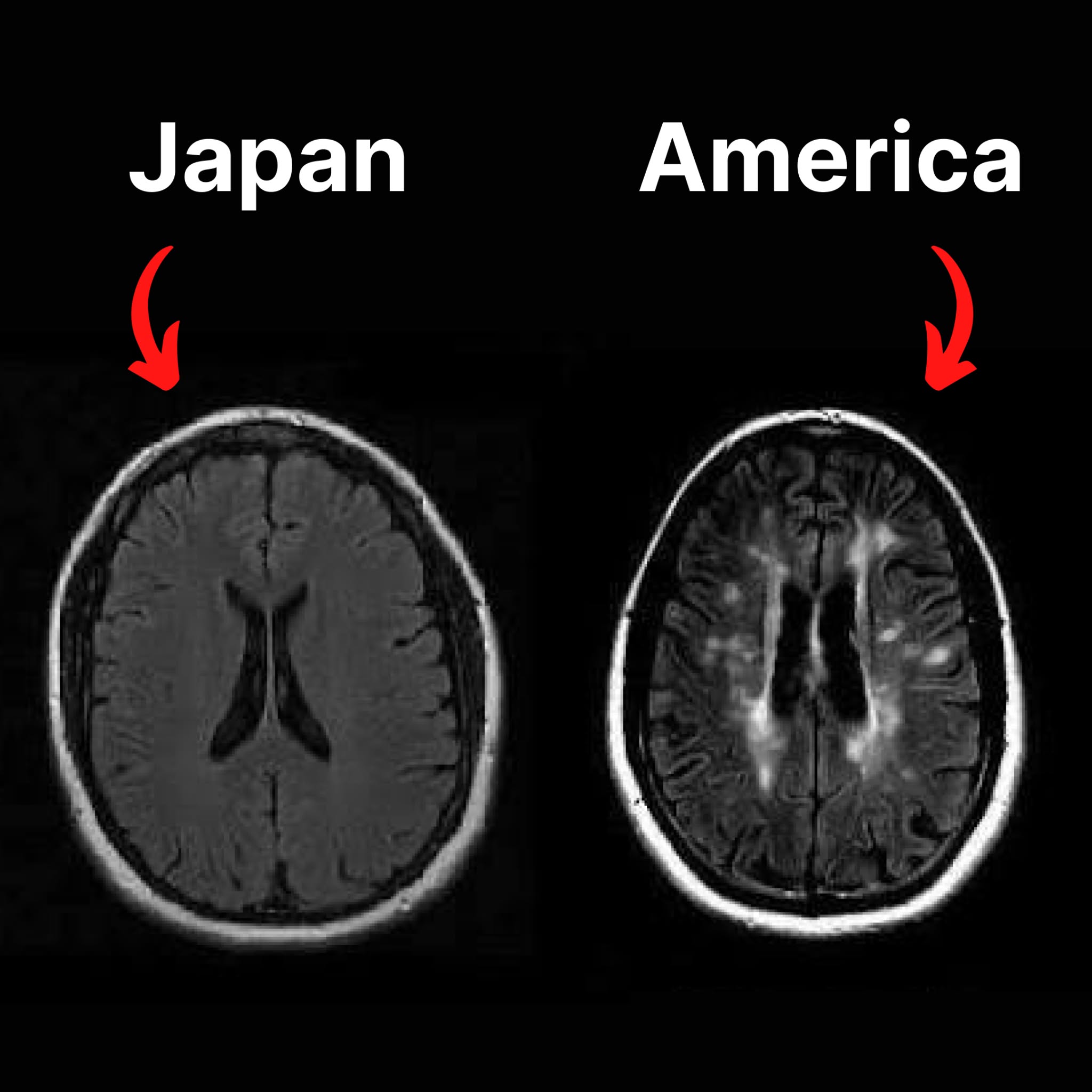
What does Japan know about multiple sclerosis that American medicine does not? More than you think, and Japanese neurologists have known this for decades. In Japan, roughly 14 out of every 100,000 people have MS. In the United States, that number is 309 per 100,000. More than 20 times higher. This sounds like the kind of statistic that belongs in a wellness blog, not a medical journal. So it is worth actually looking into before dismissing it. It turns out this one is real, documented, and has a straightforward explanation once you understand where it comes from. My name is Dr. Michael Anderson. I am a board-certified neurologist with an MS subspecialty, and I have run an MS clinic for 19 years. What follows is research I was never taught at any point in my training. To understand it, you have to start with what people in Japan have eaten every day for centuries. The traditional Japanese diet happens to be built around some of the richest natural sources of three specific vitamins in the entire food supply. Mackerel and clams are among the most concentrated food sources of vitamin B12 that exist. Pork and freshwater eel are two of the strongest food sources of vitamin B1. And bonito, the fish behind the dashi broth underneath most Japanese meals, is among the best sources of vitamin B6. In Japan, these three vitamins are not grouped with the general health vitamins. They are called the neurotropic vitamins, because they act directly on nerve tissue. A Japanese person grows up with a high intake of all three, and that intake continues for life. And the connection is not genetic. As the diet in Japan has westernized, the country's MS rate has been climbing, and it nearly doubled over fourteen years. Numbers like these are part of the reason Japanese medicine treats the neurotropic vitamins as nerve medicine rather than as supplements. Pharmacies there dispense them. Doctors prescribe them for nerve damage. American medicine treats MS from the opposite direction. The drugs an American MS patient receives are aimed at the immune system, and they are good at that job. They reduce the new attacks, the steroids shorten the flare you are already having, and the rest of the prescription list manages individual symptoms. All of that is worth having. But nothing in the standard American protocol treats the nerve itself, and nothing in it gives the repair what it needs to rebuild the myelin that has already been stripped. In Japan, they stop the attack and they also treat the nerve. In America, we stop the attack, and then we wait. Here is the part that does not get talked about. These three vitamins matter just as much for an American with MS as they do in Japan. Because the process they support is the exact process that is failing in your body right now. Here is why. In MS, your immune system strips myelin, the coating around your nerves, and your body rebuilds it every single day. To rebuild it, your nerves need three things, and each one comes from one of these three vitamins. The energy for the repair, which B1 provides. The raw material myelin is rebuilt from, which B12 supplies. And clean signaling through the rebuilt nerve, which requires B6. All three have to be inside the nerve tissue itself, because that is where the rebuilding happens. An American with MS has two problems here. The ordinary American diet does not supply these three vitamins at anywhere near the levels the traditional Japanese diet does. And of the amount that does come in, only a small fraction of what reaches the blood ever crosses into the nerve tissue. For a healthy person eating the traditional Japanese way, that small fraction is not a problem, because the intake is so high, for so many years, that enough still crosses to maintain healthy nerves. That is what prevention looks like, and it is the most likely reason those two national numbers are so far apart. An MS patient is in a different situation entirely. The immune system is actively stripping myelin, so the repair needs far more material and energy than maintenance ever did, at the exact moment the supply arriving in the nerve tissue is at its smallest. And there is a measurement problem that explains why no doctor catches this. When a doctor tests B vitamin levels, they are testing blood, not nerve tissue. The repair does not happen in the blood. It happens in the nerve tissue, and no routine test measures what the nerve tissue actually received. So a person with MS can have normal B vitamin results on paper while the nerves doing the repair have far less than they need. In practice, that means your balance can get worse every year, you can feel more exhausted every year, and you can drop things more often every year, with normal blood work and a stable MRI, and nobody can explain why. This is not just theory. It has been tested in MS patients, and measured. The testing happened at the neurology department of Kyushu University in Fukuoka, in a series of MS human trials published in the journal Internal Medicine in 1994, known in the literature as the Kira studies. The team behind them, led by Professor Jun-ichi Kira, was investigating exactly this. Their MS patients kept losing myelin even when their blood levels of the B vitamins were completely normal. The vitamins were circulating in the blood, but they were not reaching the nerves. So the team forced the delivery. They gave MS patients ultra-high doses of methylcobalamin, the active form of B12, at levels far beyond anything a normal diet or an ordinary supplement provides, high enough that meaningful amounts actually reached the nervous system. Then they measured what happened, and the choice of measurement matters as much as the result. They did not use an MRI. They used a test called evoked potentials. An MRI shows structure. It finds lesions, the spots where enough myelin has come off one place for the machine to see it. That is what an MRI is built to do, and it does that job well. Evoked potentials measure something an MRI cannot, which is function, the actual speed of the signal moving through the nerve. The test itself is simple. A signal is triggered at one end of a nerve pathway, a flash in the eye, a click in the ear, a small pulse at the wrist or the ankle, and electrodes measure how many milliseconds that signal takes to arrive at the brain. Myelin is what is responsible for sending signals through your body quickly, so when myelin is damaged, the signal slows down. A slowed evoked potential is one of the only direct ways to confirm that a nerve's myelin coating is damaged, by physically measuring the delay. Evoked potentials also detect subclinical damage, meaning damage that has never produced a lesion an MRI can see. Your scan can be read as stable, year after year, while your evoked potentials show signals arriving late on pathway after pathway. If you have ever been told your MRI looks great in the same year your balance got worse, you felt more exhausted, and you dropped things more often, this is the test that can measure the difference. It is also why modern clinical trials use evoked potentials to evaluate remyelination treatments. If a treatment is actually rebuilding myelin, the signal gets measurably faster over time, and that number does not depend on anyone's interpretation. The signal is either arriving sooner or it is not. In the Kyushu patients, the signals started arriving sooner. Their evoked potentials significantly improved, and it was the first clinical evidence that an ultra-high dose of a neurotropic vitamin could improve function in demyelinated pathways. Almost no American patient has ever heard of these studies. I went through medical school, residency, and a fellowship in this exact disease without hearing of them. The obvious next question is dose. If delivery was the first problem, how much do the nerves actually need once the vitamins get there? A second Japanese study answered that directly. Researchers induced severe demyelination and nerve degeneration in the lab, then tested standard vitamin doses against ultra-high doses, with saline as the control. The standard doses, the amounts you would find in an ordinary B complex, showed no difference in nerve recovery compared to the saline placebo. The ultra-high doses significantly accelerated nerve regeneration. Same vitamins, same damage, and the only variable was the amount. Below the therapeutic level, nothing changed. At the therapeutic level, the nerves regenerated faster. And one recent groundbreaking study answered the last remaining question, which is whether the three vitamins should be taken together. In 2025, researchers tested them against each other in a lab model of nerve tissue, and found that taken together, they were 26 times more effective than any one of them taken alone. Put those findings side by side and you have a checklist with four requirements on it. The active forms the research used. Therapeutic doses. All three vitamins together. And a delivery that reaches the nerve tissue. The regular B complex on an American drugstore shelf does contain all three vitamins, and that is the only requirement on the list it meets. It was built as a general health product, not a nerve product, and it misses the other three. It uses the synthetic forms, cyanocobalamin instead of methylcobalamin and pyridoxine hydrochloride instead of P-5-P, which are far less bioavailable than the active forms. It is dosed for general maintenance, for a healthy adult supplementing for everyday energy and overall health. In the Japanese studies, those dose levels were outperformed by the therapeutic doses by a wide margin. They are maintenance doses, not therapeutic doses. And it does not reach the nerve tissue, which is the only place that matters. Most of a swallowed pill is destroyed in the stomach, and what survives stays in the blood. The Kyushu team already proved that vitamins in the blood are not the same thing as vitamins in the nerve tissue. Nuvel's Liposomal Neurotropic Vitamins is formulated at therapeutic doses, matching the levels used in the Japanese research rather than the maintenance amounts typical of most store shelf products. There is no proprietary blend padding out the label with other ingredients at token doses. It is the three neurotropic vitamins and nothing else, in the active forms, methylcobalamin and P-5-P, with the B6 held in the range where it is safe, and third-party tested. The liposomal delivery is what addresses the transport problem the Kira studies identified. The Kyushu team could only solve that problem one way, with doses so high that even the small fraction that crossed became meaningful. A liposome accomplishes the arrival directly. The vitamins are sealed inside microscopic spheres built from phospholipids, the same material your own cell membranes are made of, and when the sphere fuses with the membrane, the vitamins are released inside the cell, in the nerve tissue rather than just in the blood. One drop under the tongue every morning. Coming back to those two numbers. 14 MS cases per 100,000 people in Japan, and 309 per 100,000 in the United States. The lesson in them was never that Japan has better genes. It is that a lifetime of the three neurotropic vitamins, delivered every day from childhood, is what prevention looks like. And when Japanese researchers needed those same vitamins to repair nerves that were already damaged, they treated it as a delivery problem and a dose problem and solved both, while American medicine has treated a normal blood test as the end of the conversation. The same logic applies to your own nerves. Your blood level was never the question. What reaches the nerve tissue is the question. The Kyushu team proved it, the evoked potentials measured it, and the dose study confirmed it. Nuvel is currently offering a 90-day money-back guarantee on the Liposomal Neurotropic Vitamins for anyone who wants to try them. If nothing improves in three months, you get every dollar back. Anyone considering B vitamins for their nerves should check four things on the label before buying. The active forms, methylcobalamin and P-5-P. Therapeutic doses. All three neurotropic vitamins together. And liposomal delivery. Products missing any one of those are unlikely to reflect the research described here, regardless of what the marketing on the front of the bottle claims. 👉 https://trynuvel.com/products/vitamin-b-complex-limposal Dr. Michael Anderson, MD, board-certified neurologist, MS subspecialty, 19 years
Where the ad sends people
trynuvel.com
The Japanese MS Research No American Doctor Is Taught
Clinical-grade dosed formula proven in studies
Learn more: trynuvel.com(opens in a new tab)