 rizvimdpsychoeducation
rizvimdpsychoeducation Facebook ad: “Did you know?”
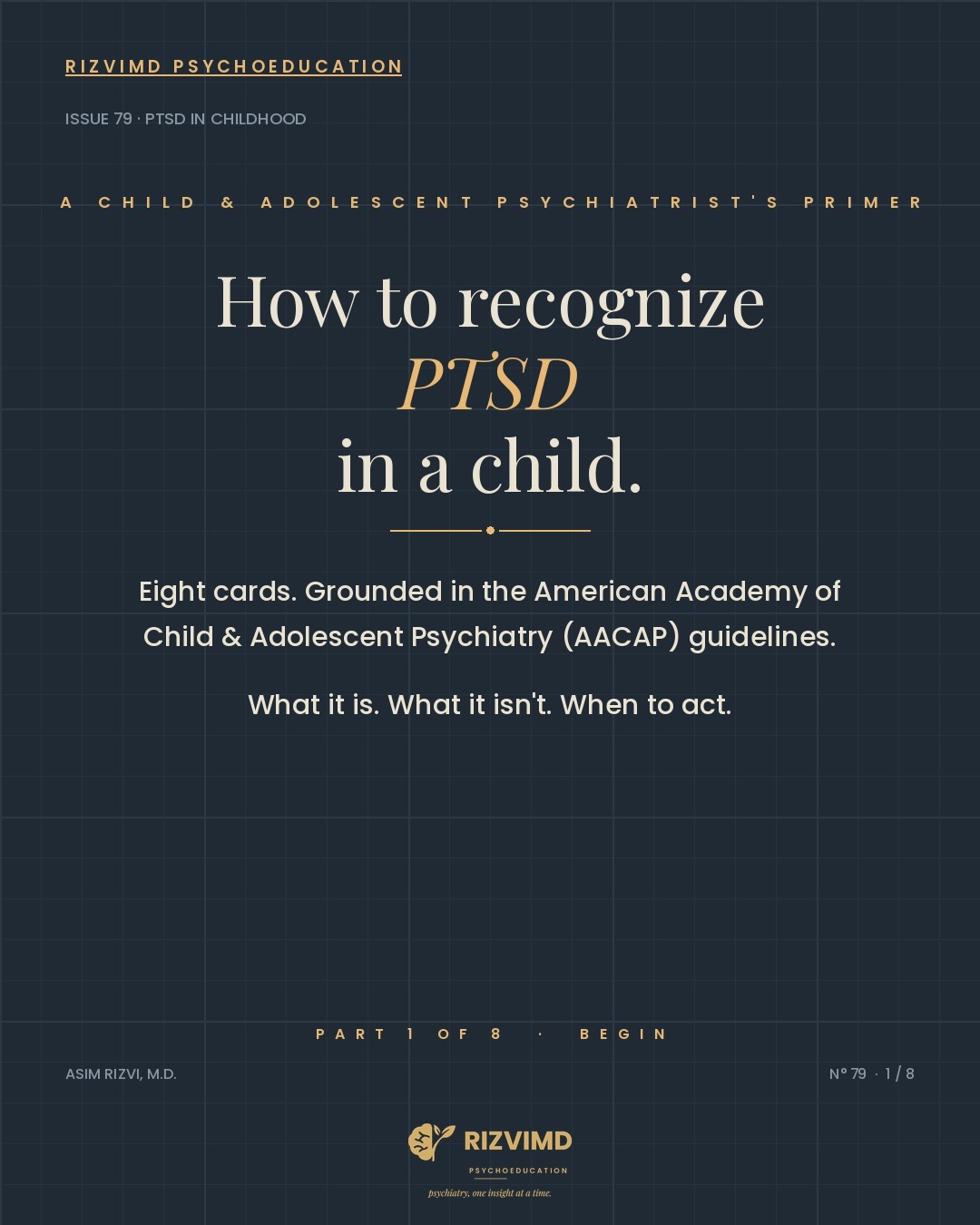
Ran for 7 days, from July 8 to July 14, 2026, the last day Crush saw it.
Run by rizvimdpsychoeducation on Instagram. Crush is not the advertiser and does not verify its claims. See this ad in Meta's Ad Library(opens in a new tab)
Want an ad like this for your product?
Crush makes new ad images for your product from this ad: your logo, your product photo, your offer.
Trials from $19.95 USD, then $79.95 USD a month. Cancel anytime.
About this ad
- Meta Ad Library ID
- 1211224185412585
- Platforms
- Relaunches
- 0
- Niche
- Parenting & Kids
Ad text
Did you know? Two-thirds of children experience at least one potentially traumatic event before age 16, but only 5 to 8% of adolescents will ever be diagnosed with PTSD? Did you know the diagnosis is not decided by the event alone? It is decided by the timeline and the symptoms that follow. Did you know childhood PTSD is not the same as adult PTSD? A 4-year-old repeats the event in play. An 8-year-old goes silent and gets stomachaches. A 15-year-old goes numb, angry, or high. Three things I want every parent and pediatrician to hold: 1. Trauma exposure is common. PTSD is not. Diagnosis requires one symptom from each of four DSM-5-TR clusters, lasting more than a month, causing functional impairment. 2. The first 48 hours after a child discloses trauma matter more than any therapy that comes later. Believe them. Do not interrogate. Restore safety. Call your pediatrician or a psychiatric emergency room if there is any risk to their safety. 3. Trauma-focused therapy is the treatment. Not benzodiazepines. Not antipsychotics. TF-CBT and EMDR have the strongest pediatric evidence. Medication is targeted, not first-line. If your child is angry, avoidant, and startles at small sounds after something happened, they are not being difficult. They are being changed by what happened to them. The right question is not “what is wrong with this child?” It is “what happened to this child?” That single reframe changes the treatment plan. Sources: American Academy of Child & Adolescent Psychiatry (AACAP) Practice Parameter for PTSD in Children and Adolescents; DSM-5-TR; JAACAP; National Child Traumatic Stress Network. Follow @rizvimdpsychoeducation for one evidence-based psychiatric insight every day. #childhoodPTSD #childpsychiatry #trauma TFCBT parenting mentalhealth adolescentpsychiatry AACAP pediatrics traumainformed psychoeducation DSM5 psychiatry childtherapy teenmentalheal