 rizvimdpsychoeducation
rizvimdpsychoeducation Facebook ad: “Did you know?”
Ran for 1 day, from June 13 to June 14, 2026, the last day Crush saw it.
Run by rizvimdpsychoeducation on Instagram. Crush is not the advertiser and does not verify its claims. See this ad in Meta's Ad Library(opens in a new tab)
Want an ad like this for your product?
Crush makes new ad images for your product from this ad: your logo, your product photo, your offer.
Trials from $19.95 USD, then $79.95 USD a month. Cancel anytime.
About this ad
- Meta Ad Library ID
- 1670975120776897
- Platforms
- Relaunches
- 0
Ad text
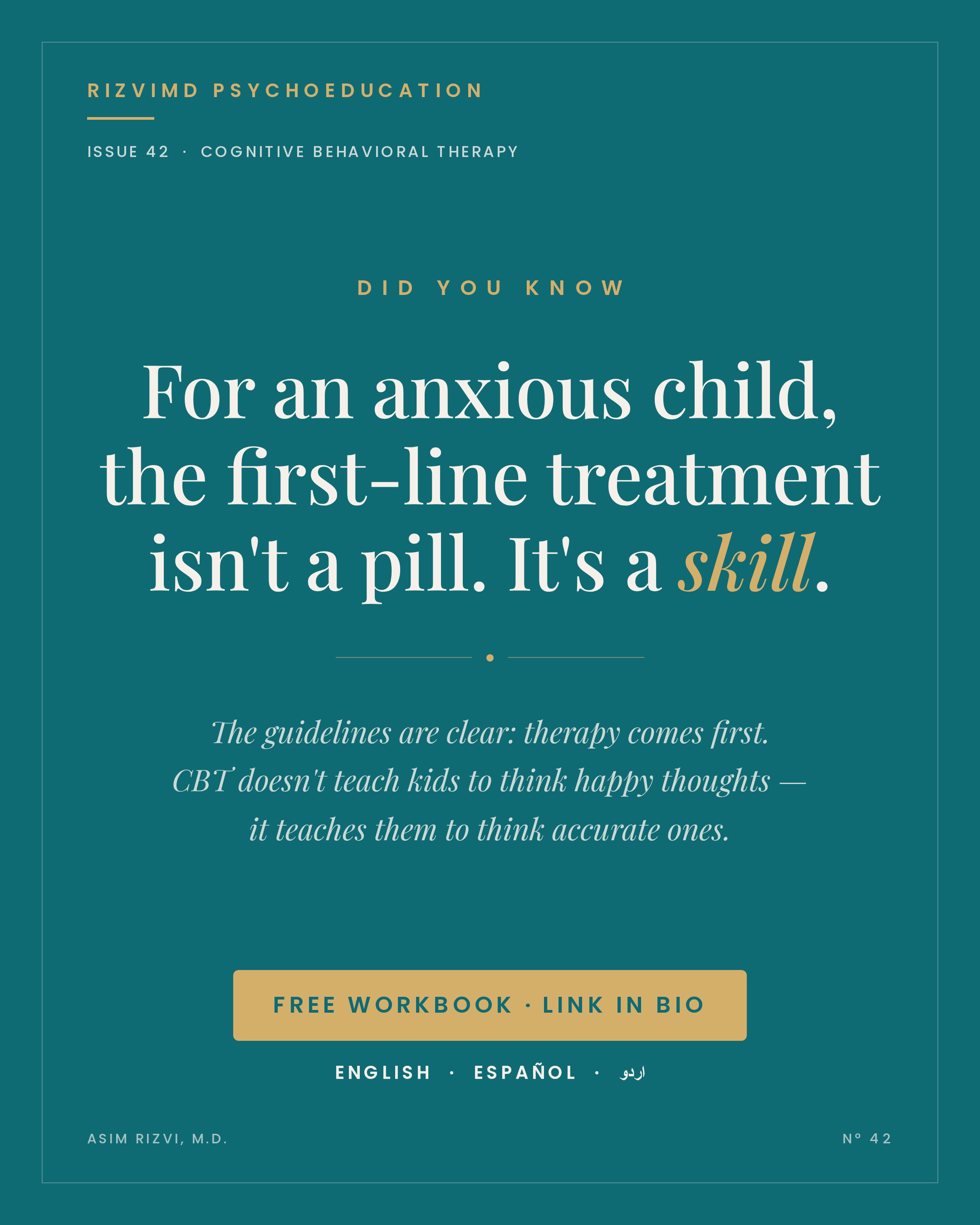
Did you know? For a child with anxiety or depression, the recommended first move isn’t a prescription — it’s a skill. National guidelines are explicit: psychotherapy, specifically CBT, is the first-line treatment for childhood anxiety, with medication added only when symptoms are severe. In adolescent depression, CBT plus medication helped about 71% of teens in the landmark TADS trial. The engine underneath it is simple: it’s not the event that wrecks us, it’s the story we tell about it. Anxiety inflates the threat. Depression flattens the self. CBT teaches a child to catch that story and ask a braver question — is this actually true? Three core tenets, in plain language: 1. Thoughts are not facts. A child learns to put an anxious or hopeless thought “on the stand” and weigh the evidence, instead of believing it on sight. 2. Avoidance feeds fear. CBT turns avoidance into small, planned steps toward the hard thing, so anxiety shrinks instead of running the house. 3. Action moves mood. In depression, waiting to “feel motivated” keeps the lights off. Small scheduled activities turn them back on — behavior leads, feeling follows. A pill can quiet the alarm. A skill teaches your child to read the alarm — and that’s the part they keep for life. So I built the workbook I wish every family had, and I’m giving it away free — in English, Spanish, and Urdu. Link in my bio. First edition of an ongoing series; subscribe on Substack for every future one. Sources: AACAP, 2021; March et al., JAMA (TADS), 2004; Walkup et al., NEJM (CAMS), 2008; Walter et al., JAACAP, 2020. Follow @rizvimdpsychoeducation for one evidence-based psychiatric insight every day. #CBT #CognitiveBehavioralTherapy #ChildPsychiatry #ChildhoodAnxiety #TeenDepression AdolescentMentalHealth ParentingTips Psychoeducation AnxietyInKids EvidenceBasedTherapy KidsMentalHealth FreeWorkbook ParentSupport BehavioralActivation RizviMD