Luke Harris
Luke Harris Facebook ad: “This tool would have saved my harvest”
Ran for 8 days, from February 16 to February 24, 2026, the last day Crush saw it.
Run by Luke Harris on Facebook. Crush is not the advertiser and does not verify its claims. See this ad in Meta's Ad Library(opens in a new tab)
Want an ad like this for your product?
Crush makes new ad images for your product from this ad: your logo, your product photo, your offer.
Trials from $19.95 USD, then $79.95 USD a month. Cancel anytime.
About this ad
- Meta Ad Library ID
- 1234676811973238
- Platforms
- Facebook, Instagram, Audience Network, Messenger and Threads
- Relaunches
- 0
Ad text
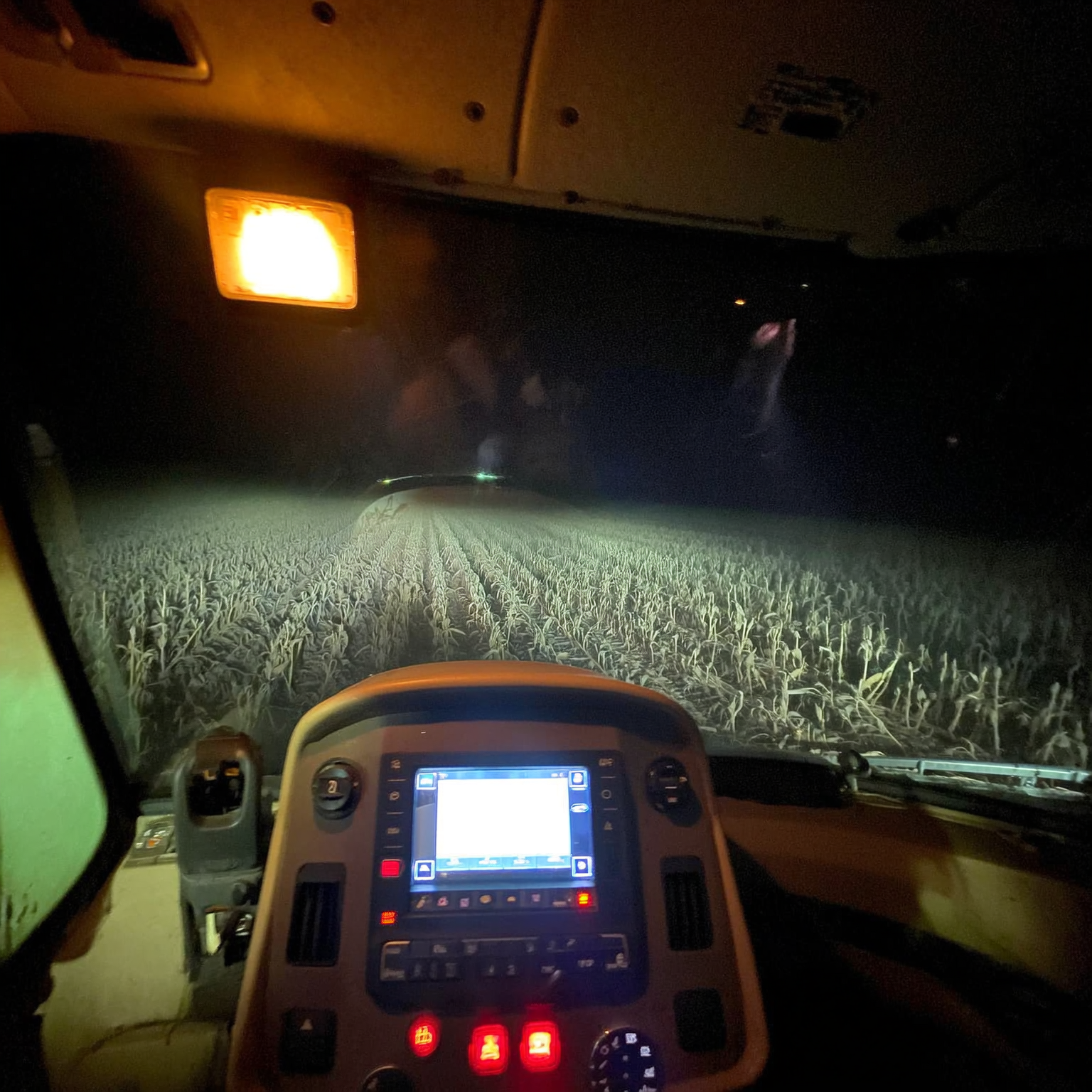
When your daughter turns down a surgical residency at Mayo Clinic to come home and farm, and you watch her lying under a dead combine at 4 AM with a killing frost eight hours away and a bolt she can touch but can't turn, the last thing you want is silence from her side of the cab on the drive back to the shop. Let me tell you what happened. We farm about 3,400 acres of soybeans and spring wheat in the eastern North Dakota flat country. West of Fargo where the Red River Valley stretches out so wide and level you can see a grain elevator twenty miles away and still not reach it for another half hour. Fourth generation. My great grandfather broke the first sod here in 1934, worst year of the Dust Bowl, because the land was cheap enough that a Norsk immigrant with calloused hands and no English could sign a deed. My grandfather held it through the '80s farm crisis when the banks took everyone around him. My dad expanded into soybeans when the market shifted. I've been running it since I was twenty five. My daughter Anna went to the University of Minnesota. Biochemistry undergrad, then straight into medical school. Top ten percent of her class. Had a surgical residency lined up at Mayo Clinic in Rochester, the kind of position that five hundred applicants compete for and twelve receive. Starting salary and trajectory that would have put her in a different economic universe than anyone in our family has ever occupied. She took it. Completed her intern year. Called me on a Tuesday night in November, snow already on the ground in Rochester, and said, "Dad, I spent fourteen hours today in an operating room assisting on a procedure I'll be allowed to lead in four years. I want to build something now. I want to come home." She was in the machine shed the following weekend. Didn't even wait for her lease to expire, paid the penalty and drove the six hours north with her car packed to the ceiling. Walked straight past the house and into the shop, pulled the service panel off the air seeder, and started diagnosing the metering system calibration issue we'd been compensating for by hand for two planting seasons. Found a worn drive sprocket that was throwing the seed rate off by 7% on every pass. Replaced it and recalibrated the entire system in one afternoon. That's Anna. Sees the diagnosis, delivers the fix. Last October, the soybeans were ready. Moisture had dropped to 12.8%. Pods were full and heavy, tan and dry, rattling when you walked through the rows. Test weight running strong. Yield monitors on the first fields we'd cut were showing 52 bushels an acre, which was twelve above the county average and the best this farm had produced in seven years. Then the forecast shifted Wednesday morning. An arctic air mass had dropped out of central Canada faster and further south than the models had been showing all week. The National Weather Service issued a hard freeze warning for the entire Red River Valley. Temperatures forecast to plummet from forty four degrees to sixteen degrees in less than twelve hours. First killing frost of the season, arriving a full two weeks earlier than the ten year average. If you've never grown soybeans, let me tell you what a hard freeze does to a standing crop. Soybeans are a warm season plant. When the temperature drops below twenty eight degrees, the stems freeze solid. The pods become brittle as glass. The beans inside the pod contract and crack. When a frozen bean thaws, the seed coat splits. Split beans get docked at the elevator, sometimes rejected entirely. And a hard freeze doesn't just damage the beans in the pod. It kills the stems so completely that they shatter when the combine header touches them. Pods fall to the ground before the machine can gather them. You drive through the field and watch beans scatter in front of you like you're harvesting with a lawnmower. A crop worth $530 an acre turns into a crop worth $280. Maybe less, depending on how much falls on the ground and how badly the splits run. And unlike corn, which stands rigid after a freeze and can still be combined reasonably well, soybeans that freeze and then thaw in the afternoon sun become so fragile that every hour of delay after that first thaw cycle increases shatter loss exponentially. You have a window measured in hours, not days. The freeze was forecast for Thursday night. We had 680 acres of beans still standing. Our best ground. The deep black river bottom fields along the Sheyenne River that consistently out yield the upland clay by fifteen bushels because the organic matter content in that bottomland is over 6%. Best soil on the farm. Also the last to mature every year because the canopy is so thick the pods take longer to dry down. One day. Maybe thirty six hours if the freeze arrived on the late end of the forecast window. We needed every machine running. Thursday morning, 3:30 AM, Anna was already combining. Running our Fendt IDEAL 9T on autosteer with the header floods cutting through the October dark and the yield monitor logging every pass. At 4:15 AM, the header stopped feeding. The header's lateral tilt actuator had a pivot pin retaining bolt that had sheared from metal fatigue. The bolt failure allowed the pivot pin to walk, the tilt cylinder lost its anchor point, and the header dropped on the left side, digging into the dirt at a fifteen degree angle. Combine shut itself down on the header height alarm. Couldn't run. Couldn't pick up beans. Couldn't do anything except sit in 680 acres of soybeans with a killing frost sixteen hours away. Not a hydraulic failure. Not a cracked frame or a blown cylinder. A single retaining bolt. If we could seat the replacement pin and torque the new bolt, the actuator would re engage, the header would level, and the machine would run. Anna had the bolt. She'd built a parts inventory the second week she was home. Every critical fastener for the combine, the grain cart, the air seeder, the sprayer, and all four tractors, organized in a system that would have made her old chief resident jealous. Cross referenced by machine, assembly, bolt specification, torque value, and failure probability based on hours and vibration exposure. She'd color coded the high risk components in red. The header tilt pin bolt was red. She'd flagged it six weeks before it failed. Had the replacement sitting in a labeled bin on the parts shelf. Surgeon's discipline applied to a soybean farm. She organized fasteners the way she organized a surgical tray, everything in its place, every contingency accounted for, every failure anticipated before the first incision. The bolt sat in a pocket between the header tilt cylinder mount and the combine's feederhouse transition frame. Three quarters of an inch of clearance. Cylinder mount casting on one side. Feederhouse frame wall on the other. Header drive belt shield bolted across the top. A bundle of hydraulic hoses for the header tilt and reel drive routed along the bottom. Anna could see the bolt hole. Could start the bolt one full turn with her fingertip. She spent four and a half hours on it alone before she came to find me. That's Anna's threshold. At Minnesota, she once spent thirty six consecutive hours in the anatomy lab reconstructing a cadaveric dissection that her lab partner had compromised. Her professor told her to move on to the next station. Anna didn't move on. Redid the dissection from the superficial fascia down. Got the only perfect score in her cohort. Same refusal to leave a problem unfinished that makes a great surgeon makes a daughter who will lie under a combine in the freezing dark until her hands stop working before she'll ask for help. She drove to my field at 8 AM. Got out of the truck slowly. Hands raw and stiff, not just from the grease but from the cold, thirty one degrees that morning and her gloves were soaked through with hydraulic fluid. A deep scrape across four knuckles on her left hand. Oil and dirt ground into the creases of her fingers the way it used to be Betadine and surgical soap. Face completely still. The expression she wears when the emotion has been triaged and set aside because there's still a patient on the table. "Header tilt actuator pin bolt. I can thread it. I can't torque it." I shut down my machine and was at her combine in fifteen minutes. Full socket set, flex heads, every extension and adapter I owned. Tried everything Anna had tried. Tried things from thirty two years of combining beans in the Red River Valley that medical school doesn't cover. Standard ratchet. Handle hit the feederhouse frame wall before the socket could engage the bolt head. Not close. Stubby ratchet. Got into the pocket but couldn't bridge the depth to the bolt. Short by nearly two inches. Could see the bolt sitting in its recess like a diagnosis I could name but couldn't treat. Flex head ratchet. Flexed into the header drive belt shield the instant I put any downward force on it. No control. No purchase. Just the sound of chrome sliding off steel. Deep socket on a long extension. Extension diameter was wider than the gap between the cylinder mount and the frame wall. Would not physically enter the space. Like trying to push a thermos through a keyhole. Wobble socket on a shorter extension. The wobble gave enough angle to get into the pocket, but the bolt head sat in a counterbore and the wobble adapter couldn't hold the socket centered. Walked off the hex three times. Fourth try jammed the bolt crooked and I had to re start it by hand in the dark with a flashlight in my teeth. Universal joint adapter. Torque went nowhere useful. Could feel the adapter flexing and articulating and absorbing every ounce of effort I put in. Working completely blind behind the frame. Like trying to write your name in a language you don't speak. Crow foot wrench. Wrong profile entirely. Jammed against the cylinder mount casting before the jaws could reach the bolt. Dead on arrival. Cut the back of my hand on the belt shield bracket. Scraped both wrists raw on the feederhouse frame edges. Pinched my ring finger between the cylinder mount and the hydraulic hose bundle hard enough that it went numb for an hour and swelled to twice its normal size by noon. Anna stood next to me through every attempt. Handed tools in order. Precise. Already tested. Already eliminated. The way she would hand instruments during a procedure, anticipating, sequencing, confirming the failure before moving to the next option. Ratchet. Extension. Stubby. Flex. Wobble. Universal. Crow foot. None effective. All contraindicated. No remaining options in the current toolkit. None of them worked. By 1 PM Thursday, we had nine combined hours on one bolt. That's when Anna stepped back. Pulled off her gloves. Set them on the combine platform. Sat down on the header frame. Slowly. Put her hands in her lap. Palms up. And looked out across the field. And that's when I saw it. Not on her face. Anna doesn't give things away on her face. She learned that in the OR, where panic is a contagion and stillness is a professional requirement. I saw it in her hands. The way she held them open. Still. Like instruments that had failed her. The kind of thing only a father sees. She'd turned down Mayo. Walked away from a surgical residency that people spend their entire careers trying to reach. Left Rochester. Left the salary trajectory that would have had her student loans retired in four years and a six figure income by thirty two. Left the attending who'd told her she had the best hands in the intern class. Left the man she'd been seeing, an orthopedic resident who understood eighty hour weeks and never complained about canceled dinners. Because she believed this ground was worth it. Because she believed her mind and her hands and her willingness to outlast any problem could carry this farm into a generation that most people in the Valley have already given up on. And here she was. Nine hours into a bolt she couldn't turn. Watching her father bleed on the same one. Six hundred and eighty acres of soybeans standing perfect and full and ready. And an arctic air mass sliding south out of Manitoba like a blade, sixteen degrees by midnight, every pod on every plant in every row about to become as fragile as glass. Called the AGCO dealer in Fargo. "Everyone's trying to finish ahead of the freeze. We don't have a tech available until at least Monday, maybe Tuesday." The freeze was coming tonight. Called two independent mechanics. First one was on a job at a sunflower operation near Lisbon, said he might be free Saturday. Second one's phone went straight to voicemail. His outgoing message said he was booked through harvest and to call the dealer. That's when the silver Dodge with the co op sticker on the tailgate turned off the section road onto our field approach. Gunnar Erickson. Eighty years old. Farmed soybeans and wheat in Richland County for fifty one years before his hip replacement and his wife's declining health made him sell the equipment. Still drove to the elevator every day during harvest to drink coffee at the scale house and watch the trucks weigh in. Someone pulling a grain cart from the field east of ours mentioned we were sitting dead. He walked down the field road the way old Valley farmers walk, slow and deliberate, reading the stubble height and the bean canopy without thinking about it, judging the maturity and the moisture with his eyes the way his generation learned before monitors existed. Looked at the header. Looked at the pocket. Looked at the tools laid out on the combine platform like a tray of instruments after a failed procedure. Looked at Anna. "Minnesota?" he asked, squinting at the maroon M on her jacket. "Med school. Surgical residency at Mayo. Came home last year." Gunnar nodded. Slow. The way men nod up here when they understand something they're not going to say out loud. "Surgeons always know where the problem is. Just don't always have the instrument that reaches it." Walked back to his truck. Came back with a flat steel tool. About 15 inches long. Thin as a ruler. Socket fitting on one end. Square drive on the other. Housing worn smooth from years of use. A piece of silver duct tape wound around the middle where the original finish had worn through from a decade of North Dakota dust and cold. "Offset extension wrench," he said. "My brother in law who custom combines down in central Kansas told me about these maybe 2016. I've used it on every machine I've touched since. Changed everything about the way I work on equipment." He angled the socket end into the pocket between the cylinder mount and the feederhouse frame wall. Past the belt shield. Under the hydraulic hose bundle. Into the counterbore where the bolt sat like it had been waiting for the one tool in the world that could actually reach it. Smooth and certain, the way a man does something he's done so many times his hands have memorized the motion. Socket seated on the bolt head. Clean. He looked at Anna. "Your combine. Your bolt." Anna took the drive end. Applied rotation. Slow, measured force. No sudden movement. The same steady, deliberate pressure she used tying a surgical knot deep in a wound, incremental tension, absolute control, trusting the instrument to do what the instrument was designed to do. Bolt seated. Pin locked. Actuator engaged. Header leveled. Forty seconds. Forty seconds for a bolt we'd fought for nine hours. Anna held the tool for a long moment. Turned it over in her hands the way she examines a new instrument, understanding the mechanism through touch before asking the name. Ran her fingertip along the housing. Felt the internal chain transfer the rotation from one end to the other. "Chain driven parallel transfer. One to one torque ratio. Zero arc requirement at the output." Gunnar let out a quiet laugh. "I've been calling it my 'miracle wrench' for eight years and that's the first time anybody's made it make sense. You sound like my brother in law, except he uses about forty more words to say the same thing." Both combines were running by 1:45 PM. We ran the rest of Thursday. Into Thursday night. Anna combined soybeans until 3 AM under a sky that was already turning sharp and crystalline, the kind of deep black October sky that means the cold is coming, no clouds, no insulation, nothing between the ground and the arctic air except twelve hours and a prayer. I brought her food at midnight. She'd already cut four more passes before I got back to my machine. Brought her coffee at 4 AM. She drank it in the cab without stopping, watching the temperature gauge on her phone drop through the thirties. She combined those beans like a surgeon closing a patient. Every row precise. Every turn exact. Every pass another suture in the wound between what she'd left behind and what she'd chosen instead. I think she was proving something that night. I think she proved it. But we didn't finish. The freeze arrived Thursday night. Right on schedule. Temperature dropped through twenty eight degrees at 11:47 PM according to the weather station on our grain bin. Hit sixteen degrees by 4 AM Friday. Hard killing frost. Ice on every surface. Steam rising off the river bottoms at dawn like the ground itself was exhaling for the last time. We still had 220 acres standing. The river bottom fields along the Sheyenne. Deepest topsoil on the farm. Highest organic matter. Consistently our best yielding ground. Also the thickest canopy, the last to dry down, and the most vulnerable to shatter loss after a freeze because the pods were still slightly higher in moisture than the upland fields. By Friday afternoon, when the October sun warmed the frozen pods back above thirty two degrees, the shatter started. Pods cracking open on the stalk. Beans falling to the ground. By Saturday, walking through those 220 acres sounded like walking on cornflakes. Every step crushed pods underfoot. We combined what we could. The losses were devastating. Shatter took an estimated 40% of the yield on those acres. What we did get into the bin was full of splits and cracked seed coats. Elevator docked us on everything, damage, foreign material, splits, test weight. What would have been premium beans sold as feed grade. Final damage on those 220 acres: roughly $29,000 in lost yield value, grade penalties, and the price difference between number one yellow soybeans and the feed grade product we actually delivered. From one bolt we couldn't turn for nine hours on a Thursday morning. That weekend, Anna ordered the same tool Gunnar had brought. Ordered eight. One for each combine. One for each tractor. One for the grain cart. One for the air seeder. One for the sprayer. One for the shop wall, mounted on a bracket she welded from stainless flat stock with the part number etched below it in an engraving pen, because North Dakota winters will destroy a paint label before Christmas. Eighty nine dollars each. Adapters not included, runs a standard half inch square drive, use your own sockets. Since then, we've used them more times than either of us can count. Three times on the combines. That same header tilt bolt again the following season, same failure mode, same fatigue point. A return elevator chain tensioner bolt buried behind the clean grain elevator housing in a space that AGCO apparently designed assuming mechanics have forearms the diameter of broomsticks. And a concave clearance adjustment bolt recessed behind the rotor housing where the service manual says to remove the rotor end cap assembly, a five hour teardown that Anna did in twenty five minutes without pulling a single panel. Twice on the air seeder. Metering shaft drive bolt wedged between the frame rail and the seed boot assembly. Hydraulic fan motor mounting bolt crammed behind the distribution tower in a gap that looks like it was engineered by someone who has never seen a human hand. Once on the sprayer. Boom breakaway valve fitting recessed behind the center section frame on our Rogator. Would have required removing the entire boom pivot assembly. Took fourteen minutes. Once on the grain cart. Auger gearbox drain bolt tucked behind the frame cross member in a gap that collects grain dust and mud until the bolt is practically entombed. Would have been a two hour disassembly to access conventionally. Anna did it in ten minutes. Once on my truck. Starter bolt on the Cummins that sits between the engine block and the bellhousing in a space that Ram apparently designed as a final exam in human patience. And three weeks ago, a young man who'd just taken over his family's soybean ground west of us near Lisbon called the shop. First harvest running the operation alone. His combine's feederhouse drive chain had jumped because the tensioner bolt had backed out mid harvest. Beans standing ready. Hard freeze in the four day forecast. Twenty three years old and trying to hold his voice steady, but I could hear the crack. Anna didn't hesitate. Pulled the wrench off the shop wall. Said "Send me your location" and was in her truck before the kid finished texting the pin. Drove forty five minutes. Bolt seated in under a minute. The kid looked at the tool. Then at Anna. Then back at the tool. "How did I not know this existed?" Anna texted him the link from the field approach before she turned her truck around. Clean. No speech necessary. Surgeon's efficiency. Transfer the critical information. Move on. He ordered five that night. Here's what nobody prepares you for when your child gives up their career to come home. This equipment isn't designed for the field. It's designed for climate controlled dealer service bays with diagnostic computers, hydraulic lifts, and technicians who charge $215 an hour and are booked solid for the exact seven day window when your entire annual income is standing in a field that will be destroyed the first night the temperature drops below twenty eight degrees. Every bolt that matters is recessed behind a gearbox, a frame member, or a guard. Every harvest breakdown is a race between your toolbox and the thermometer. And every hour you can't fix it is another hour your daughter sits on the header frame, hands open in her lap, staring at beans she can't cut, silently measuring the distance between the career she left and the one that just stopped her cold with a bolt she can see but cannot turn. But when you've got something that reaches into those impossible gaps. Something thin enough to slide past the casting and the shield and the frame and the hydraulic lines. Something with a chain drive inside that transfers real torque without needing swing room or an arc. Those "pull the header, call the dealer, wait a week" disasters become twenty minute field fixes. And field fixes mean your kid sees the problem solved. Sees the machine running. Sees the beans flowing into the tank. Sees that the decision to come home, the residency she walked away from, the career she traded for black dirt and north wind and the chance to keep this ground in the family for one more generation, all of it was right. It's called the PRO Offset Extension Wrench. About 15 inches long. Half an inch thick. Chain drive inside transfers rotation where ratchets can't swing. Adapters not included, runs a standard half inch square drive, you use your own sockets. Eighty nine dollars. Less than the fuel to fill one combine. Less than fifteen minutes of dealer labor. Less than one third of one percent of what that freeze cost us on the river bottom ground. I'm not going to tell you this tool will save your harvest. But there's going to come a morning. Probably the worst morning of the tightest window of the season. When your daughter walks in before dawn with raw hands and a photo of a bolt she can't reach. Or your son calls from the cab at midnight with his voice cracking. Or you're lying under a combine alone in the freezing dark, bleeding from your knuckles, reaching into some gap that defeats every tool in your box, while the temperature falls and everything, the crop, the weather, the money, the ground, the kid who chose this life over the one that was handed to them, all of it comes down to one bolt in one impossible space. When that morning comes, you either have the tool or you don't. We didn't. Now we do. Every machine. Every truck. Every tractor. Mounted, labeled, and exactly where you can find it at 4 AM when the frost is eight hours out and one bolt is all that's standing between you and getting the crop in. Link's below. I hope you never need it the way we did.
Where the ad sends people
thesavary.com
This tool would have saved my harvest 👆
Savary
Shop now: thesavary.com(opens in a new tab)