
Active· since Apr 29, 2026
- 140
- days running
- 1
- relaunches
Ad copy
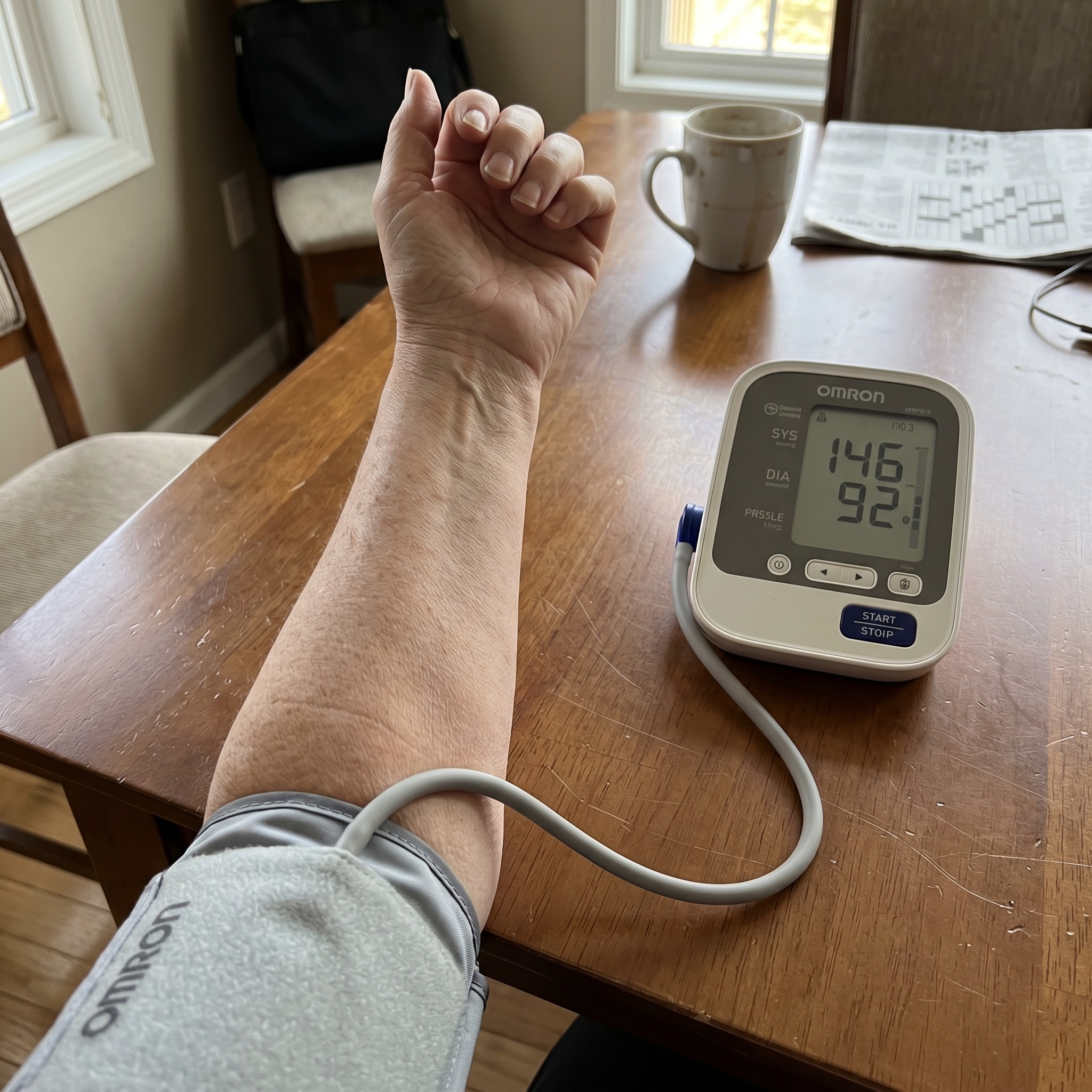
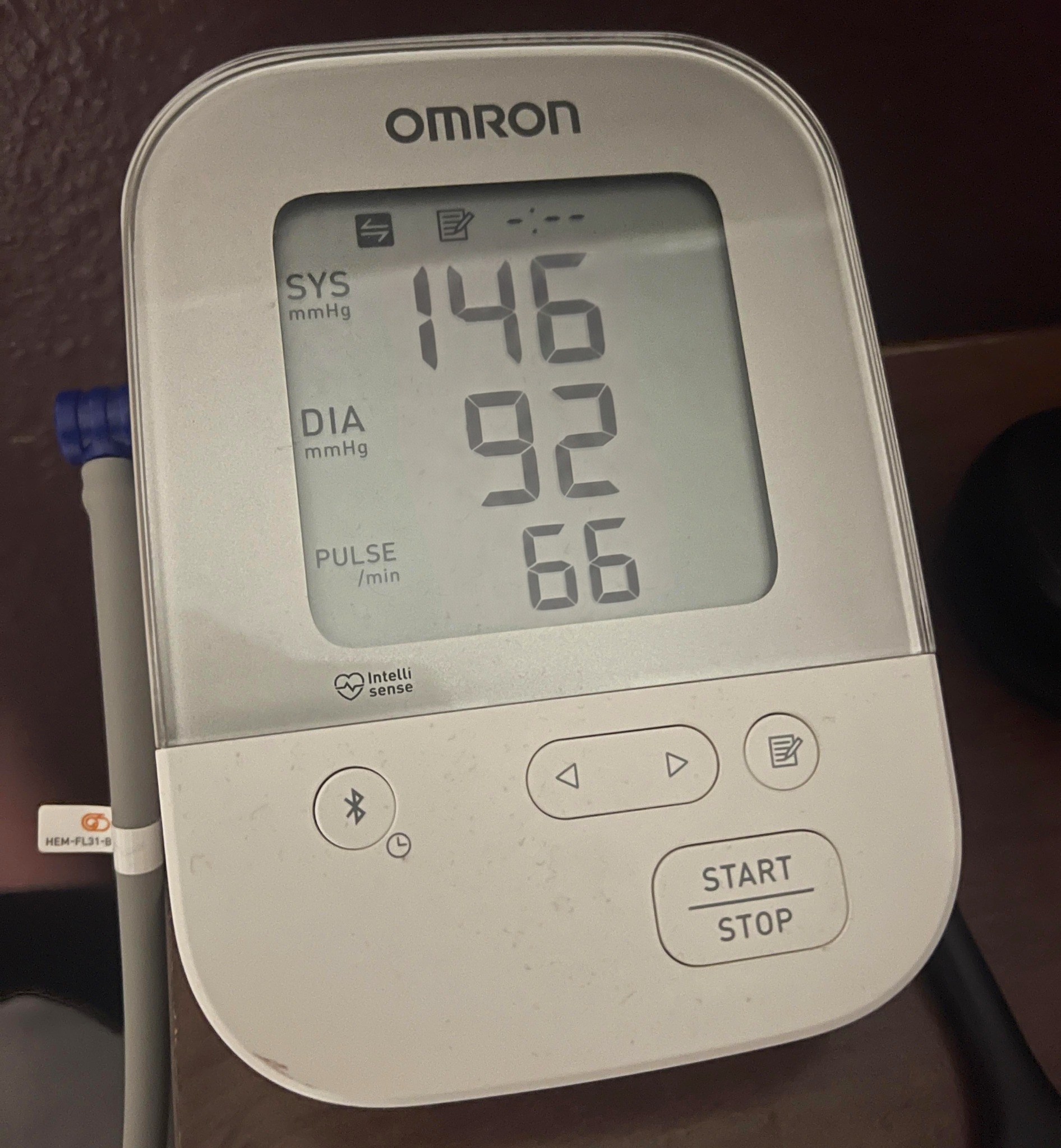
My blood pressure was 146/92 after two years of beetroot, garlic, diet changes, and fish oil. My new doctor told me something which explained everything. And by the end of this, you're gonna be pissed. Let me back up. Because you need to understand how confident I was that I was doing the right thing. Two years ago, my doctor told me my blood pressure was 148/94 and she wanted to put me on Lisinopril. I witnessed what that did to my mother. The dry, hacking cough that never went away. Her ribs ached. The dizziness every time she stood up. She stopped doing her shopping because her legs felt like sandbags and she couldn't trust her own balance for an hour after taking it. I told my doctor I wanted to try something natural first. I didn't want to go down the same path as my mother did. She did warn me. But she gave me three months. Said I needed to hop on the DASH diet as a start. She also recommended beetroot. Nitric oxide. Said it opens your blood vessels and improves circulation. The Amazon reviews were full of women my age saying their numbers dropped in weeks. I ordered the one with the most five star reviews. I started taking it every morning with my low salt breakfast. Three months later my reading came back at 138/88. My doctor raised her eyebrows. "Whatever you're doing, keep doing it". So I did exactly that. I felt the relief of someone who'd just dodged a bullet. I told my mother, my sister, my walking partner and the women in my church group. I was the one who'd found the natural way. Then the numbers stopped moving. Six months in. Still around 138/88. I figured I needed to be more consistent. Set alarms on my phone. Never missed a dose. Nine months. 140/90. Going the wrong direction. I switched brands. Found one with "clinical strength" on the label. 1300mg organic beetroot. Cost twice as much. Took it religiously. Twelve months. 142/90. Creeping back up. I added garlic capsules. Then magnesium. Then fish oil. Tried taking everything at different times. Morning. Night. With food. Without food. Checked every forum I could find for the "right" combination. Completely cut out salt. I went even more strict on my diet. I couldn't even enjoy my food any longer. Eighteen months. 146/92. Still climbing. Two full years. Over $900 in beetroot, garlic, magnesium, and fish oil. Premium brands. Perfect compliance. And my blood pressure was nearly back to where it started. I stopped telling people about it. Stopped recommending the beetroot. Just quietly kept taking everything because I didn't know what else to do and I was terrified of going on Lisinopril. Later that year, I got a notice that Dr. Gene has retired and my care will be transferred to Dr. Edward. I was due for a checkup on that Tuesday. I was worried. New doctor. New numbers. The anxiety was eating me alive. I knew my numbers would be high. They've been climbing ever since. Tuesday comes and I am seated inside Dr. Edward's room. He introduces himself. We exchanged some chatter. He then pulls up my chart. He scrolls for a moment. Then he looks up at me over his glasses. "You've been taking beetroot supplements for two years." "Yes," I said. "And garlic, magnesium, fish oil." "My numbers were going down then they went back up. I tried it all." "I see. Did Dr. Gene tell you what high blood pressure actually is?" I had to think. I was really testing my memory. "Just the blood moving through me at high pressure right?" "Not quite. But you're on the right track." he said. He pulled out a piece of paper and a pen. Started drawing a circle on the paper. "Here, look at this." "Your blood vessels aren't just tubes. They're living tissue. And the inside of every blood vessel in your body is lined with a thin inner wall, a layer of living cells that controls everything about how your blood flows." He tapped the circle he'd drawn on the paper. "When that inner wall is healthy, it does something your body depends on every second of every day. It produces a molecule called nitric oxide." He wrote the words on the paper and underlined them. "Nitric oxide is your body's natural signal that tells your blood vessels to relax and open up. When this wall is healthy and producing it, your vessels expand and contract smoothly with every heartbeat. Blood flows through without resistance. Pressure stays balanced. You don't think about it the same way you don't think about breathing. It just works." He looked up at me. "Your body has been doing this on its own your entire life. You don't need a pill for it. You don't need a supplement for it. The system works perfectly." He paused. "As long as that inner wall is intact." He drew a second circle next to the first one. This one had jagged, uneven lines on the inside. "But that inner wall is directly exposed to everything in your blood. Every bit of processed food you've eaten. Every blood sugar spike. Every stress hormone. Every chemical, every toxin, every year of inflammation. It all flows right across that wall, hour after hour, day after day, year after year." He dragged his pen slowly across the jagged lines. "And over time, it wears that wall down. Roughens it. Damages it." He held up the paper. "Think of the inside of an old pipe that's been corroding for decades. The surface that was once smooth is now raw, pitted, and breaking apart. That's what's happening inside your blood vessels." I stared at the two circles. The difference between them was obvious even in a quick sketch. "Once that inner wall is damaged," he continued, "it stops producing nitric oxide. The molecule your body depends on to keep your vessels relaxed. The supply gets cut off at the source." He set the pen down. "Without nitric oxide, your vessels can't relax. They stay tight. Blood doesn't flow through the way it should. It has to force its way through. Your heart has to push harder with every single beat." He looked at me directly. "That's high blood pressure. Not a mystery. Not genetics you can't control. A damaged inner wall that stopped producing the one molecule your body needs to keep your vessels open." I started to say something. He held up a hand gently. "There's more. And this is the part that explains why it keeps getting worse and never gets better on its own." He drew an arrow looping back on itself. "The harder blood pushes through a damaged vessel, the more it tears up that inner wall. Every beat of your heart is pushing blood across a surface that's already raw and breaking down, and the force shreds it further. More damage means less nitric oxide. Less nitric oxide means the vessels tighten more. Tighter vessels mean blood pushes harder. Harder pushing means more damage to the wall. Even less nitric oxide. Even tighter. Even more pressure." He circled the arrow. "It's a cycle that feeds itself. And it's been running inside you for years." Something landed in my chest. A cold, sinking weight. "That's why your blood pressure was a little high five years ago, higher last year, and higher again at every checkup since." He shook his head slowly. "That's not aging. That's a cycle accelerating. Every year the wall gets worse, produces less nitric oxide, the vessels get tighter, and the pressure climbs another notch." He folded his hands on the desk. "And if that cycle keeps running, if that inner wall keeps getting destroyed and nothing repairs it, the damage doesn't stay contained inside your blood vessels." He paused, and his voice dropped just slightly. "It reaches your kidneys. Your heart. Your brain. That damaged wall is the starting point for the stroke. The heart attack. The kidney failure." I thought of my mother. I thought of her ribs aching from the cough. Her sandbag legs. I thought of all the women I'd confidently told to try the beetroot. He picked up the pen again. "Now. Do you want to know why nothing you've tried has stopped it?" I nodded. I wasn't sure I wanted to hear it. But I nodded. "Every single thing you've tried has either forced the vessel open, added more nitric oxide from the outside, or worked on the blood itself. Nothing has repaired the inner wall, the surface that produces nitric oxide, the surface that controls whether your vessels open or stay tight, the surface that decides everything." He leaned back slightly and looked at my chart again. "Beetroot." He said it almost gently. "Beetroot gives you a burst of nitric oxide from the outside. And it works for a few hours. Your vessels relax a little. The number dips. You feel like it's doing something." I remembered the morning I got 138/88. How relieved I was. How certain. "But by the next morning, it's right back where it was. Because the wall that's supposed to be producing nitric oxide on its own, around the clock, is still damaged. Still not functioning." He picked up the pen and drew a tank with a hole in the bottom of it. "You gave your body a few hours of what it needed. But you didn't fix the thing that's supposed to make it permanent. You're topping off a tank with a hole in the bottom. You can keep pouring, but you'll never fill it." $900. Two years. Alarms on my phone so I never missed a dose. "The garlic," he continued. "Garlic thins the blood so it flows with slightly less resistance. That's not nothing. But it doesn't touch the wall. Doesn't repair it. Doesn't restore nitric oxide production. The wall stays exactly as damaged as it was." I thought about the forums. The stacks I'd tried. Morning doses, night doses, with food, without food. "Magnesium relaxes the smooth muscle around your blood vessels. It can ease a little tension, yes. But it doesn't reach the inner wall. The wall stays damaged. Nitric oxide stays depleted. You might feel slightly better. The number might soften a little. But the cycle is still running underneath all of it." He set the pen down. "And fish oil. Fish oil reduces inflammation floating in your blood. That's genuinely useful for a lot of things." He tapped the drawing of the jagged pipe. "But it can't repair the structural damage that's already been done to the wall itself. It's cleaning the water while the pipe keeps corroding from the inside." The room was very quiet for a moment. I looked at the drawing on the paper. The two circles. The jagged inside of the second one. The tank with the hole in the bottom. Two years of my life sitting in that sketch on a piece of paper torn from a notepad. "So everything I was doing," I said slowly. "It was all working around the wall." He nodded. "Around it. Not on it. As you can see. The number on the cuff isn't the only number that matters." I looked at him. I needed to ask it even though part of me was afraid the answer was just going to be Lisinopril after all. "Is there anything that's actually better than everything I've tried? Because I don't want Lisinopril." I paused. "I saw what it did to my mother. The cough. The dizziness. The way she stopped living her life around it. I don't want to go down that path." He didn't dismiss it. Didn't give me the look I'd gotten from Dr. Gene when I'd said the same thing two years ago. "There is one thing I could recommend," he said, "if you want to stick to something natural." He wrote two words on the paper beneath the drawing. Amla. Gooseberry. "Have you heard of it?" I shook my head. "It's a superfruit. It's been used for thousands of years by healers in the Himalayas. They called it the nurse. The one remedy they reached for when someone's body was breaking down from the inside. When circulation was failing. When the body was corroding from within. When nothing else was working." He tapped the pen on the paper. "And now we have clinical research to explain why." He pulled up something on his computer and turned the screen slightly toward me. "There's a study I want to tell you about. They were actually comparing amla to the worlds most prescribed cardiovascular drug. And what they found was that the amla performed comparably. Without the medication side effects." He let that land for a moment. "A superfruit. Performing comparably to a pharmaceutical drug in a clinical trial. That's not a supplement company's marketing. That's a published study." I leaned forward slightly. "What's in it that makes it work?" "Specific compounds called emblicanins." He spelled it out as he wrote it. "Powerful antioxidants found only in this fruit. When scientists tested the antioxidant strength of over thousands of foods, amla ranked number very high." He looked up. "Not blueberries. Not turmeric. Not green tea. Amla. And it wasn't close." He sat back. "Those Himalayan healers who called it the nurse didn't know about emblicanins. They didn't have clinical trials. They just watched what happened when people took it and what happened when they didn't. And they kept reaching for it for thousands of years." He glanced at the drawing on the paper. "Now we know why." "So what does it actually do?" I asked. "What's in it that the other things don't have?" He turned back to the paper and wrote beneath Amla. Emblicanins. "You remember what I said about the wall being corroded? The thing that's been corroding it for years is something called free radicals. Created by stress. Processed food. Blood sugar spikes. Just getting older. They've been attacking that inner wall continuously, and your body hasn't been able to keep up with the damage." He pointed to each thing I'd been taking. "Garlic works on the blood. Magnesium works on the muscle around the vessel. Fish oil works on inflammation floating in your bloodstream." He underlined the jagged circle. "Emblicanins work directly on the wall itself. They find the free radicals that have been corroding that surface and they neutralize them. Not in your gut. Not in your blood. Right there on the inner wall. Where the actual damage is happening." I stared at the drawing. "When the assault stops," he continued, "the wall starts to function the way it was meant to. Like how a cut on your skin heals once you stop picking at it. The inner wall starts working again once the thing wearing it down is neutralized." He set the pen down. "And when that wall is supported the way it's meant to be, something starts happening that most supplements don't even touch." He paused. "It starts making nitric oxide again. On its own. The way it's designed to. Like when you were younger. The way it always could when the wall was working properly." I felt something shift in my chest. "Your body's own signal that tells your vessels to relax. The same molecule that the beetroot was trying to replace from the outside. Your wall can get back to making it from the inside. Because the wall is being supported the way it needs to be." He leaned forward slightly. "You didn't need more nitric oxide from a bottle. You needed to fix the wall that produces it." He picked the pen back up and drew an arrow breaking the loop he'd sketched earlier. "When vessels relax, blood flows without forcing. Your heart doesn't have to push as hard. The pressure on the walls drops. And when the pressure drops, the wall stops getting shredded." He circled the broken arrow. "The cycle that's been running for years. Damage, less nitric oxide, tighter vessels, more pressure, more damage. It finally breaks." He looked up at me. "Pressure can start moving in the right direction. Not because something overrode your body. Because your body is doing what it already knows how to do." A small pause. "It always knew. You just had to fix the wall first." I looked at the paper. The two circles. The broken cycle. The word emblicanins underlined twice. "Why didn't Dr. Gene tell me any of this?" He was quiet for a moment. "Most doctors reach for what works fastest. Medication gets the number down. Patient feels reassured. Visit ends." He folded his hands. "Very few people ask what's actually causing the number to climb. And even fewer get a doctor with enough time to draw them a picture." I thought about the women in my church group. My sister. My walking partner. All the people I'd told to try the beetroot with the same confidence I'd had standing at my mailbox waiting for the Amazon package. "So this whole time," I said. "Two years. Nine hundred dollars. The alarms on my phone." I stopped. "I was just pouring into the tank." "You were doing what you were told," he said. "With what you were given." He slid the piece of paper across the desk toward me. "Take that with you." I picked it up. Looked at the word emblicanins. The broken cycle. "So I just find an amla supplement and start taking it?" He shook his head slightly. "That's where most people get it wrong. Most products on the shelf are cheap fruit powders. Ground up amla, dried and pressed into a capsule. No standardization. No guarantee that what's on the label is in the bottle at any concentration that does anything." He wrote on the corner of the paper before sliding it back. Standardized amla extract. "The studies where amla performed comparably to cardiovascular medication, they didn't use fruit powder. They used a standardized extract. Verified to contain the exact concentration of emblicanins that produced those results. Same potency every time. That's the difference between something that actually works on the wall and something that sits next to your beetroot." "How do I know which one I'm looking at?" "The label will say standardized extract and list the emblicanin concentration. If it doesn't say that, it's fruit powder." He paused. "If you can't verify the concentration, you can't verify it works." He pulled up something on his computer, typed briefly, then turned the screen toward me. "This is the one I recommend. Alevia's Amla. It's what I was pointing patients toward at my last practice a couple months ago. Standardized extract, emblicanin concentration is verified, and it's the form that lines up with the research." I looked at the screen. Then back at the paper in my hands. I thought about every bottle I'd ordered. Five stars. Clinical strength. Organic. Premium. Not one of them had listed a concentration. Not one of them had told me what was actually in it. "You've been buying what's marketed," he said. "Not what's studied." I folded the piece of paper and put it in my purse. That night I sat at my kitchen table with my laptop and typed in Alevia Amla. Found it quickly. Read through the page slowly. Standardized extract. Emblicanin concentration listed right there on the label. I thought about the two circles he'd drawn. The broken cycle. The tank with the hole in the bottom. I ordered it before I closed the laptop. Three days later it arrived at my door. I stood in my hallway and opened it. Held the bottle for a moment. It didn't look like much. It never does. But I thought about what he'd said. That the healers in the Himalayas called it the nurse. That they'd been reaching for it for five thousand years before anyone had the language to explain why. That somewhere in this bottle were compounds found in no other fruit on earth, ranked number one out of three thousand foods, studied head to head against cardiovascular medication. And that none of the bottles I'd ordered in the last two years had contained any of it. Not really. Not in the form that mattered. I set it on the kitchen counter and went to bed. The next morning I took two capsules with breakfast. I want to be honest about what happened next. Because I know how these things go. I'd been down the road of hoping something would work. I wasn't going to let myself get swept up in it again. I knew this wasn't going to be instant. It never is. Not with anything real. The wall hadn't corroded overnight and it wasn't going to heal overnight. What Dr. Edward had described was a cycle that had been running for years. Breaking a cycle like that takes time. Consistent, daily time. So I didn't hover over my blood pressure cuff every morning. I just took my two capsules, put the bottle back on the counter, and got on with my day. It became part of the routine the same way brushing my teeth was part of the routine. Every morning. No alarms needed. Just two capsules with breakfast and move on. The first week and into the second, I didn't notice anything dramatic. But somewhere in there I noticed I was sleeping a little more solidly. That the heaviness I usually felt by mid-morning wasn't quite as heavy. I didn't make too much of it. Told myself to just keep going. By the third and fourth week something was shifting. I almost didn't want to take my blood pressure. That familiar dread I'd carried for two years, the one that sat in my chest every time I reached for the cuff, was still there. I wrapped it around my arm the way I always had. Braced myself the way I always had. And looked at the number for a long moment. It was lower than it had been in over a year. I took it again the next morning, heart in my throat the same as always. Lower again. I set the cuff down and stood in my kitchen and didn't say anything to anyone. I just kept at my 2 capsule routine. The fog I hadn't even fully realized I was living in started to lift somewhere around that time too. I'd gotten so used to it I'd stopped noticing it was there. Until it wasn't. By weeks five through eight I was checking my numbers regularly. They were moving in a direction they hadn't moved in two years. Not because something was forcing my vessels open. Because something was actually changing underneath. The pressure that had been climbing notch by notch every year was coming down the same way. By the third month I understood what Dr. Edward meant when he said the cycle breaks. My energy had kept improving. My readings had kept dropping. And for the first time in two years I wasn't white-knuckling my way through every checkup hoping the number wouldn't be worse than last time. My body was doing what it always knew how to do. It just needed the wall fixed first. A few weeks later I was back in Dr. Edward's office for a scheduled checkup. He pulled up my chart, then looked up at me over his glasses the same way he had the first time. "Did you go down that amla route I mentioned?" "I did," I said. "Every morning. Two capsules." He nodded. Reached for the cuff. And I realized something as he wrapped it around my arm. The dread wasn't there. The familiar tightening in my chest that had shown up every single time someone reached for that cuff for the past two years. The bracing. The breath-holding. The silent bargaining. It just wasn't there. I sat still and waited. He looked at the reading. Then he looked at me. A small nod, the kind doctors give when the numbers confirm what they were hoping to see. "That's a good number." He made a note in my chart. "At this rate," he said, setting the cuff down, "we won't need to put you on Lisinopril." I thought about my mother. Her ribs aching. Her sandbag legs. The shopping she stopped doing because she couldn't trust her own balance. I thought about the piece of paper still folded in my purse. The two circles. The broken cycle. "Keep doing what you're doing," he said. I intended to. I wish I could have passed this knowledge onto my mother before she had her stroke. Before the medication. Before the cough that never went away and the legs that never felt like hers again. Before all of it. I think about that more than I'd like to admit. But I can't go back. What I can do is pass it on to you. If your numbers have been climbing. If you've spent months or years doing everything right and watching the cuff tell you it isn't enough. If you're terrified of going on medication and equally terrified of what happens if you don't. If you've been pouring into the tank without anyone telling you there's a hole in the bottom. Now you know what I know. The wall. The nitric oxide. The cycle that feeds itself. And the one thing that actually works on the wall itself instead of everything around it. Alevia's Amla. 2 capsules every morning. Supports the inner wall most approaches work around, and helps the system your body depends on to keep pressure balanced on its own. That's what I wish someone had put in my mother's hands twenty years ago. It's what I'm putting in yours now. I hope this helps someone. I really do. Because nobody should spend two years and $900 feeling proud of a solution that was never designed to work where the problem actually starts. 👉 https://alevia.com/amla/8 ~ Laura Peterson
Like this ad? Make it yours.
Crush rebuilds this exact creative around your product — your brand, your colors, your offer — in about a minute.