Michael Anderson, PhD.
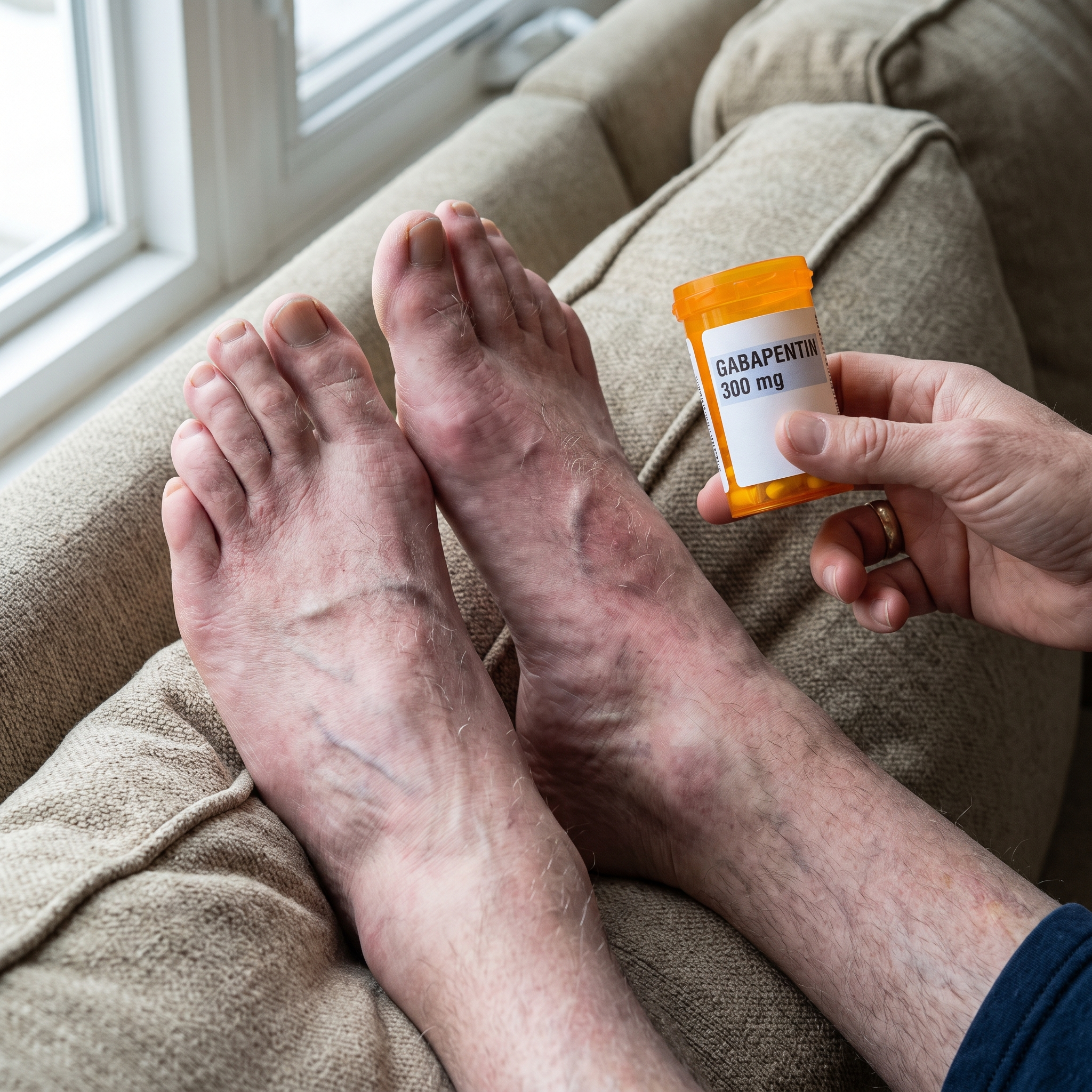
Michael Anderson, PhD. Facebook ad: “I prescribed gabapentin for 15 years. I was quieting the…”
Ran for 14 days, from August 11 to August 25, 2026, the last day Crush saw it.
Run by Michael Anderson, PhD. on Facebook. Crush is not the advertiser and does not verify its claims. See this ad in Meta's Ad Library(opens in a new tab)
Want an ad like this for your product?
Crush makes new ad images for your product from this ad: your logo, your product photo, your offer.
Trials from $19.95 USD, then $79.95 USD a month. Cancel anytime.
About this ad
- Meta Ad Library ID
- 1352596816539598
- Platforms
- Facebook, Instagram, Audience Network, Messenger and Threads
- Relaunches
- 1
- EU reach
- 956
Ad text
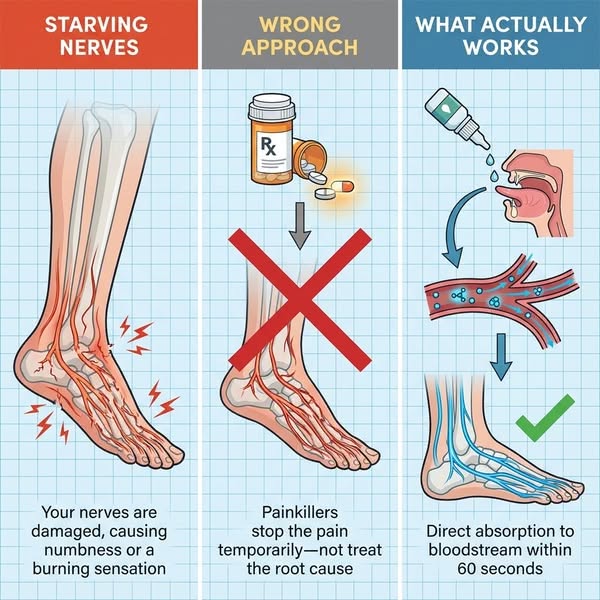
I've been a functional neurologist for 22 years. In that time I've seen thousands of patients with peripheral neuropathy. The burning in the feet that starts mild and becomes the only thing they think about by evening. The tingling in the hands that wakes them up at 2am. The numbness that spreads slowly upward over months and years until they stop trusting their own body to tell them what they're touching. I've watched these patients do everything right. They take their gabapentin. They get their bloodwork done every three months. Their B12 comes back normal. Their doctors nod and say the numbers look good and adjust the dose if the burning gets louder. And they keep getting worse. Not all of them. But enough that I started keeping track. Patients who came in year after year, prescription list growing, sensation declining, telling me they'd tried everything and they just wanted to know why nothing was working. I was one of the doctors who handed them those prescriptions. I'm going to tell you what I eventually understood — and why it took me fifteen years longer than it should have to understand it. Here is what the standard treatment for peripheral neuropathy is designed to do. Gabapentin reduces the perception of nerve pain. It quiets the signal. It does not touch the nerve generating the signal. The nerve keeps misfiring. The patient feels it less. The prescription gets refilled. Pregabalin does the same thing by a slightly different mechanism. Same result. Signal quieted. Nerve unchanged. Refill. The average neuropathy patient I see has been on one or both of these medications for two to four years by the time they walk into my office. Some have been on them for a decade. Their nerve function, measured objectively on nerve conduction studies, has continued to decline the entire time. This is not a failure of the medication. Gabapentin does exactly what it was designed to do. The problem is that quieting a signal and repairing the source of the signal are two completely different things. And the standard of care in neurology — the care I was trained to deliver and delivered for the first fifteen years of my career — addresses the first and completely ignores the second. Why? I'm not going to tell you it's a conspiracy. It isn't. It's something more ordinary than that. A medication that quiets nerve pain generates a prescription that gets refilled every month for years. A nutritional intervention that addresses the underlying cause of the misfiring generates a one-time recommendation and no further revenue. Medical education is funded substantially by pharmaceutical companies. The four hours devoted to nutrition in the average American neurology residency are not funded by supplement companies. The system isn't designed to suppress the answer. It's designed to generate revenue. Those two things produce the same result. Now let me tell you about everything patients try on their own — because most of them have tried it by the time they reach me — and why none of it works. Alpha lipoic acid. There's real evidence it reduces oxidative stress in nerve tissue. I don't dismiss it. But oxidative stress is a downstream consequence of the actual problem. Reducing oxidative stress while the root cause continues is like mopping the floor while the pipe is still leaking. You can mop forever. Magnesium. Genuinely important for nerve function. Also genuinely available in adequate amounts from diet in most patients I see. Magnesium deficiency is not what's driving the misfiring in the majority of neuropathy cases. Supplementing it produces marginal improvement at best and no improvement at worst. B complex vitamins. This is the one that frustrates me most to discuss, because the answer is so close to correct and so consistently wrong in practice. Every B complex on the market contains cyanocobalamin — the synthetic form of B12. Your body has to convert cyanocobalamin into methylcobalamin before any nerve cell can use it. In healthy people under 40, that conversion works reasonably well. In the patients I treat — most of them in their 50s, 60s, and 70s, many on long-term medications, many with gut inflammation from years of processed food — that conversion is unreliable, incomplete, or effectively nonexistent. They're taking B vitamins. Their bloodwork shows normal B12. Their nerve cells are not getting what they need. All three of those things are true simultaneously. And they stop taking the supplement after three months because nothing changed, which is the correct conclusion from the wrong understanding of why nothing changed. Capsaicin cream. Topical magnesium. Any cream, lotion, or patch applied to the surface of the foot or hand. I've seen patients spend hundreds of dollars on these. None of them can reach the mitochondria inside the nerve cell. They address the skin above the problem. The problem is microns away and metabolically inaccessible from the outside. The reason all of these fail — and this is the thing I wish I had understood fifteen years earlier — is that none of them address what's actually happening inside the nerve cell. Here's what's actually happening. Nerve cells — specifically the long ones that run from your spine out to your hands and feet — are the most energy-hungry cells in your body. They fire electrical signals thousands of times per minute, every time you touch something, feel temperature, grip, step. To sustain that for decades, they need a constant, massive supply of cellular energy. That energy is produced inside the nerve cell in structures called mitochondria. The mitochondria run a specific energy cycle that requires two raw materials to function. Not vitamins in the general sense. Two specific compounds that nerve cells use directly — the moment they arrive, without any conversion. You may know them as B12 and B9. But not the forms on store shelves. The active forms: methylcobalamin and methylfolate. When both are present, the mitochondria produce energy at full capacity. That energy maintains the myelin sheath — the protective coating wrapped around every nerve fiber, the insulation that keeps electrical signals traveling clean and fast from your brain to your fingertips. When the mitochondria are starved of methylcobalamin and methylfolate, the energy to maintain that sheath disappears. The myelin begins to thin. The nerve underneath starts misfiring — generating signals when there's nothing to feel, failing to generate them when there is. That's the burning. The tingling. The numbness. Not damage arriving from outside the cell. The insulation failing from inside it, because the energy to maintain it ran out. That's why the cream on the bottom of the foot does nothing. That's why the magnesium tablet does nothing. That's why the B complex that shows up normal on a bloodwork panel does nothing. All of them are aimed at the surface or the bloodwork number, while the actual failure is happening inside the mitochondria of the nerve cell itself. Now here's the part that took me the longest to understand. And it's the part that explains why patients who are taking B12 and seeing normal bloodwork are still losing ground. B12 — in any form you swallow — requires a protein called intrinsic factor to be absorbed. Intrinsic factor is produced by cells in the stomach lining. Its only job is to bind to B12 the moment it arrives and escort it through the intestinal wall into the bloodstream. Without intrinsic factor, B12 cannot cross the gut wall. It passes through. Intrinsic factor production declines with age. It declines faster with long-term medication use, with chronic gut inflammation, with decades of processed food. By the time most of my patients reach their 60s and 70s, their intrinsic factor production is a fraction of what it was at 30. Some produce almost none. So they swallow B12 every morning. Some of it makes it through — enough to register on a blood panel as a normal number. But the amount reaching the nerve cells at the ends of their fingers and toes, where the damage is happening? I have reviewed hundreds of cases where the B12 number was normal and the nerve function was declining. Both simultaneously. Because the number measures what made it into the blood. It doesn't measure what made it to the nerve cell. Those are not the same question, and the standard panel only asks one of them. This is not new knowledge. It's why physicians treated B12 deficiency with injections for over a hundred years before any alternative existed. Not because they preferred needles. Because they understood that the oral route — relying on intrinsic factor — failed too many patients. The only reliable solution was to bypass the gut entirely. Sublingual delivery does the same thing without the needle. The mucosal tissue under the tongue sits directly over a dense network of capillaries. When methylcobalamin and methylfolate dissolve there, they cross that membrane and enter the bloodstream in minutes. No stomach. No intrinsic factor. No gut wall. The active forms — straight into the blood, straight to the nerve cells that need them. This is the same principle behind nitroglycerin for cardiac patients. When a compound needs to reach the blood fast and intact, the sublingual membrane is the most reliable door medicine has ever found. I started recommending sublingual methylcobalamin and methylfolate to neuropathy patients four years ago. Not as a replacement for their neurologist. As the thing their neurologist wasn't addressing. What I observe consistently: the first sign of change is not the symptoms reducing. It's the symptoms shifting. The burning changes character before it reduces. The tingling changes quality. The numbness develops edges — patches where sensation begins returning, adjacent to patches where it hasn't yet. This is what nerve regeneration feels like from the inside. Peripheral nerves regenerate at approximately one millimeter per day under the right conditions. At that rate, damage extending several centimeters takes months to fully address. The patients who understand this stay the course. The patients who expect relief in two weeks stop too early and conclude it didn't work. By six to eight weeks, the majority of patients I've started on this protocol report meaningful changes. Reduced nighttime waking. Improved grip. Sensation returning in patches. The ability to feel the floor properly when they take a step. Several have been able to reduce their gabapentin dose with their prescribing doctor's oversight — not because I told them to, but because the pain the medication was managing started reducing on its own. Not cured. Not overnight. But moving in the right direction, at the rate the biology actually allows. If your nerve symptoms have been progressing despite normal B12 levels — if you've tried the supplements and the topicals and the prescription medications and you're still losing ground — the question worth asking is not whether you have enough B12 in your blood. The question is whether the B12 in your blood is reaching the mitochondria in your nerve cells. In the active form. Through a route that intrinsic factor isn't blocking. Those are not the same question. And for most of my patients, the answer to the first was yes and the answer to the second was no. The product I recommend is Nuvel. Sublingual methylcobalamin and methylfolate — both active forms, dissolved under the tongue, into the bloodstream directly. Edit: I've had a significant number of messages asking for the specific product. https://trynuvel.com/products/b-essence-complex Morning. Empty stomach. Thirty seconds under the tongue before swallowing. No coffee for an hour. Give it six weeks. The first signal is a change in the character of your symptoms — not elimination. Watch for the shift. That's the repair beginning. I prescribed gabapentin for fifteen years. I'm not prescribing it anymore without asking the question the standard of care never taught me to ask.
Where the ad sends people
trynuvel.com
I prescribed gabapentin for 15 years. I was quieting the alarm while the fire kept burning.
The question I never asked my patients — until it was too late for too many of them.
Learn more: trynuvel.com(opens in a new tab)