
Active· since May 22, 2026
- 112
- days running
- 0
- relaunches
- 357
- EU reach
Ad copy
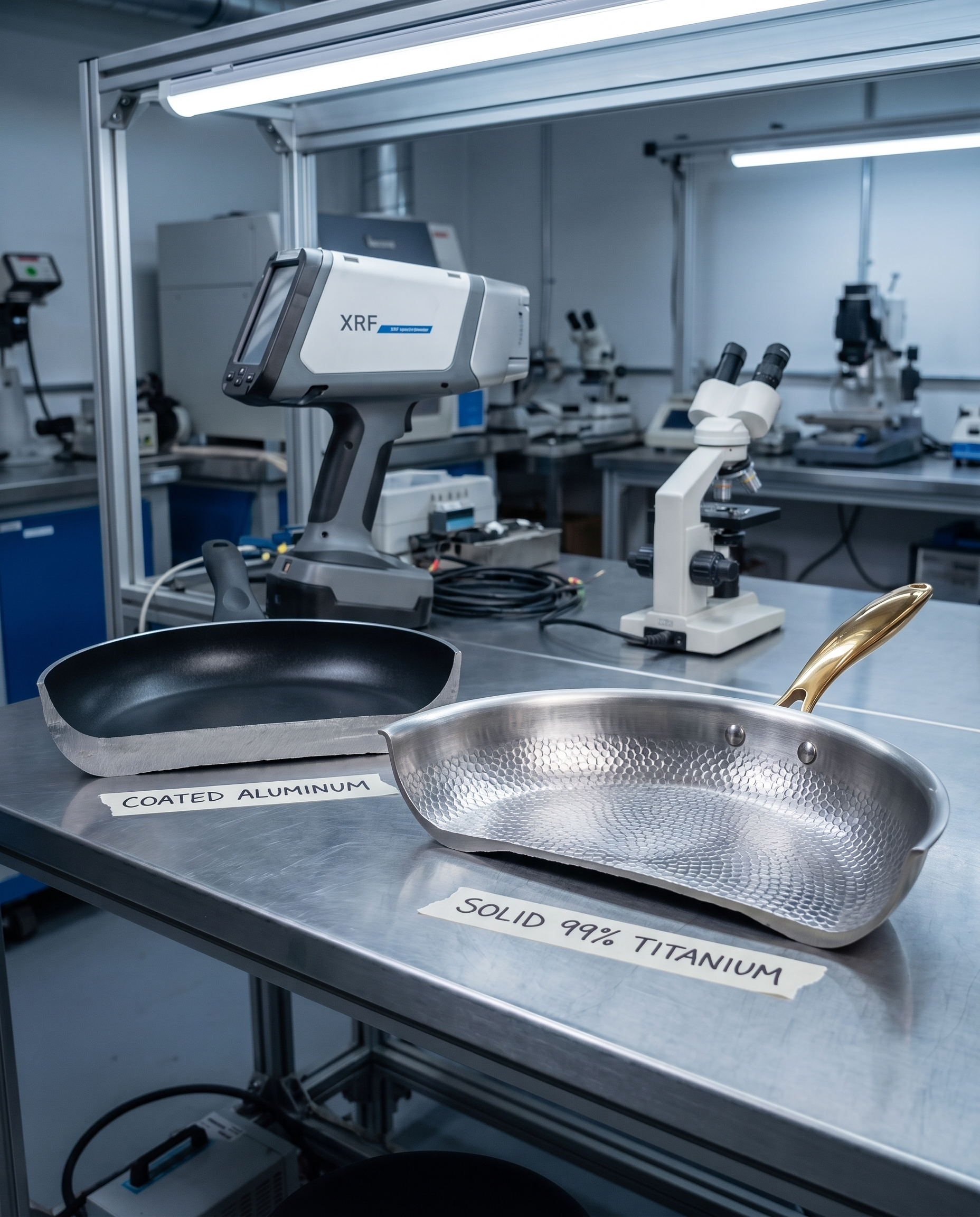
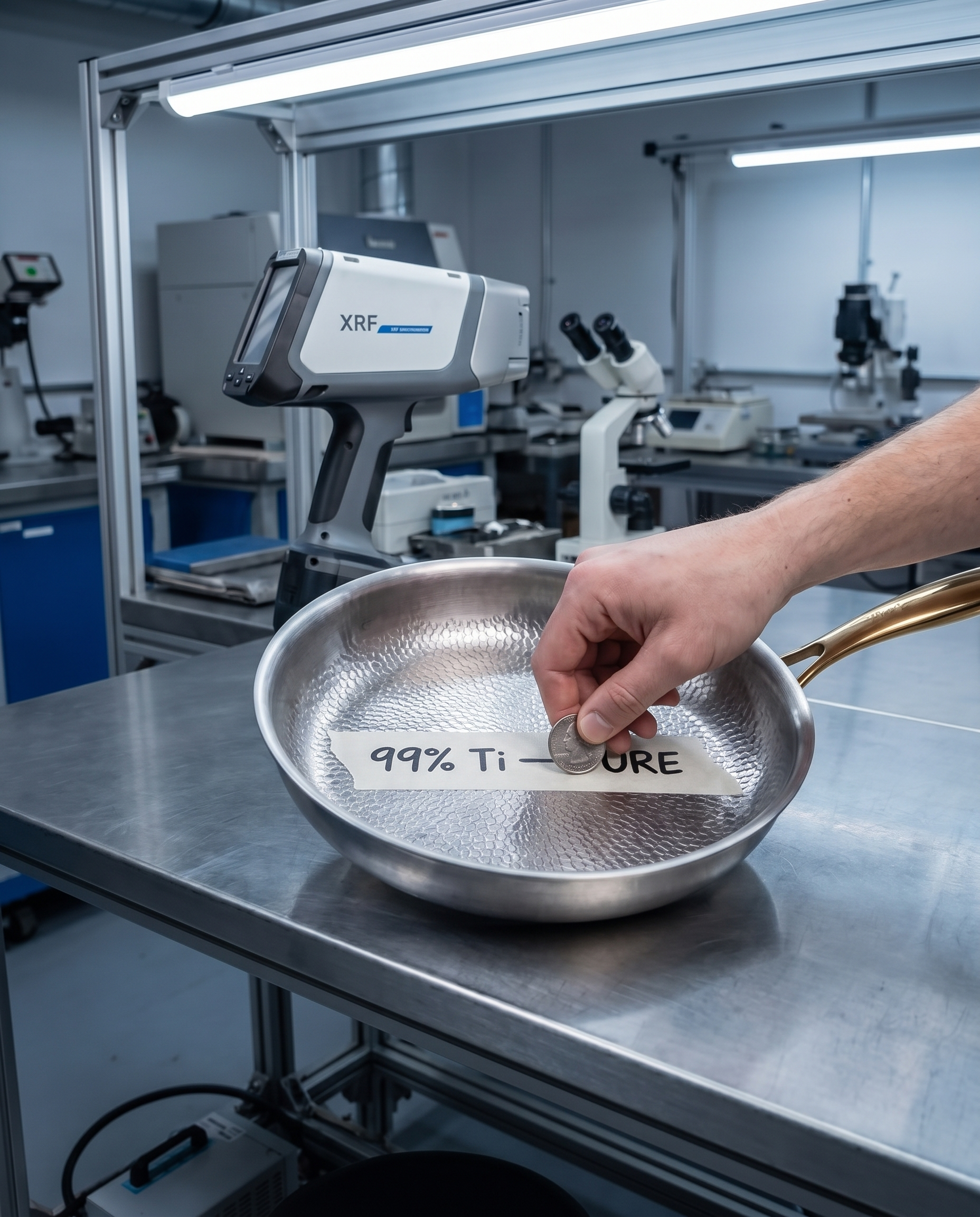
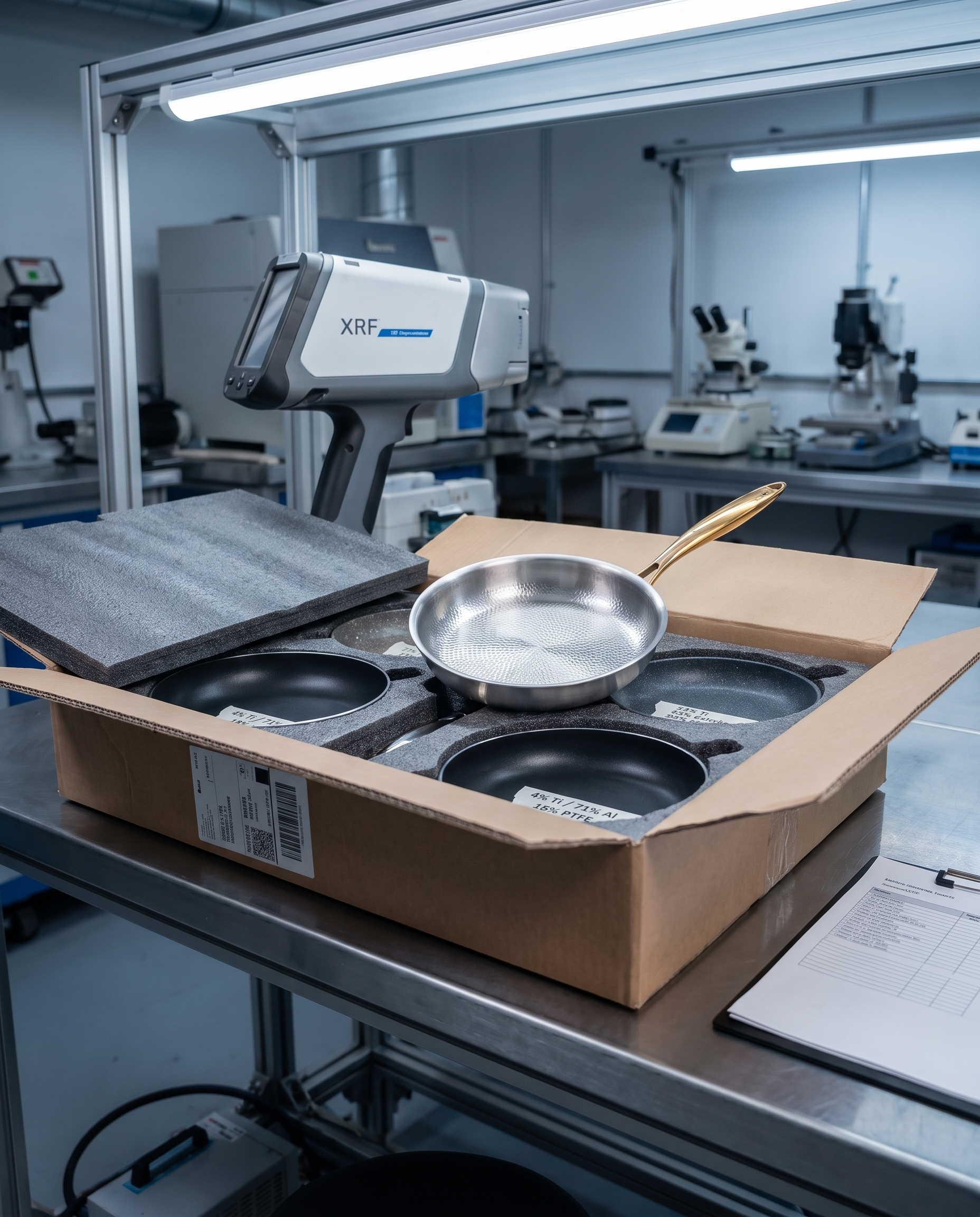
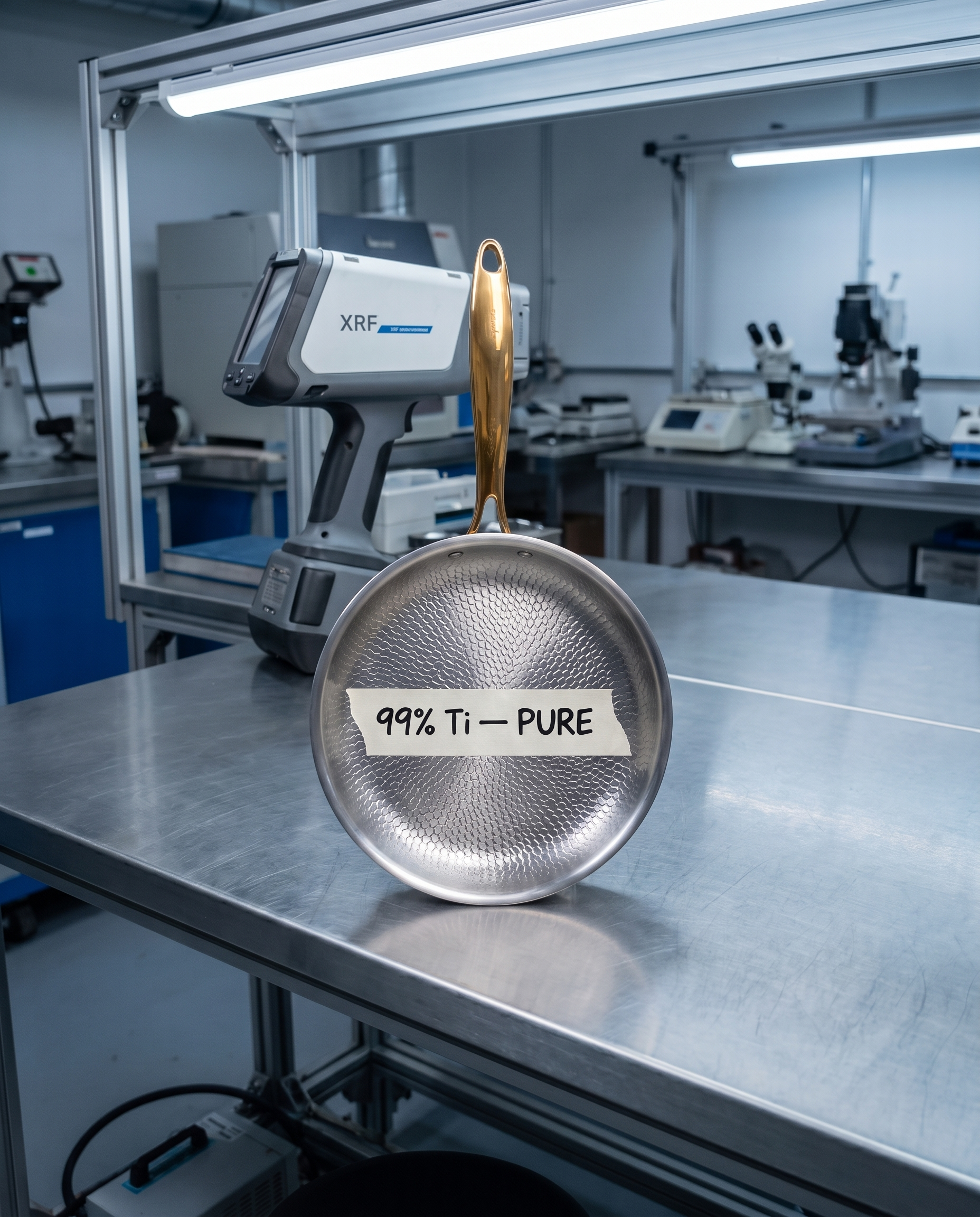
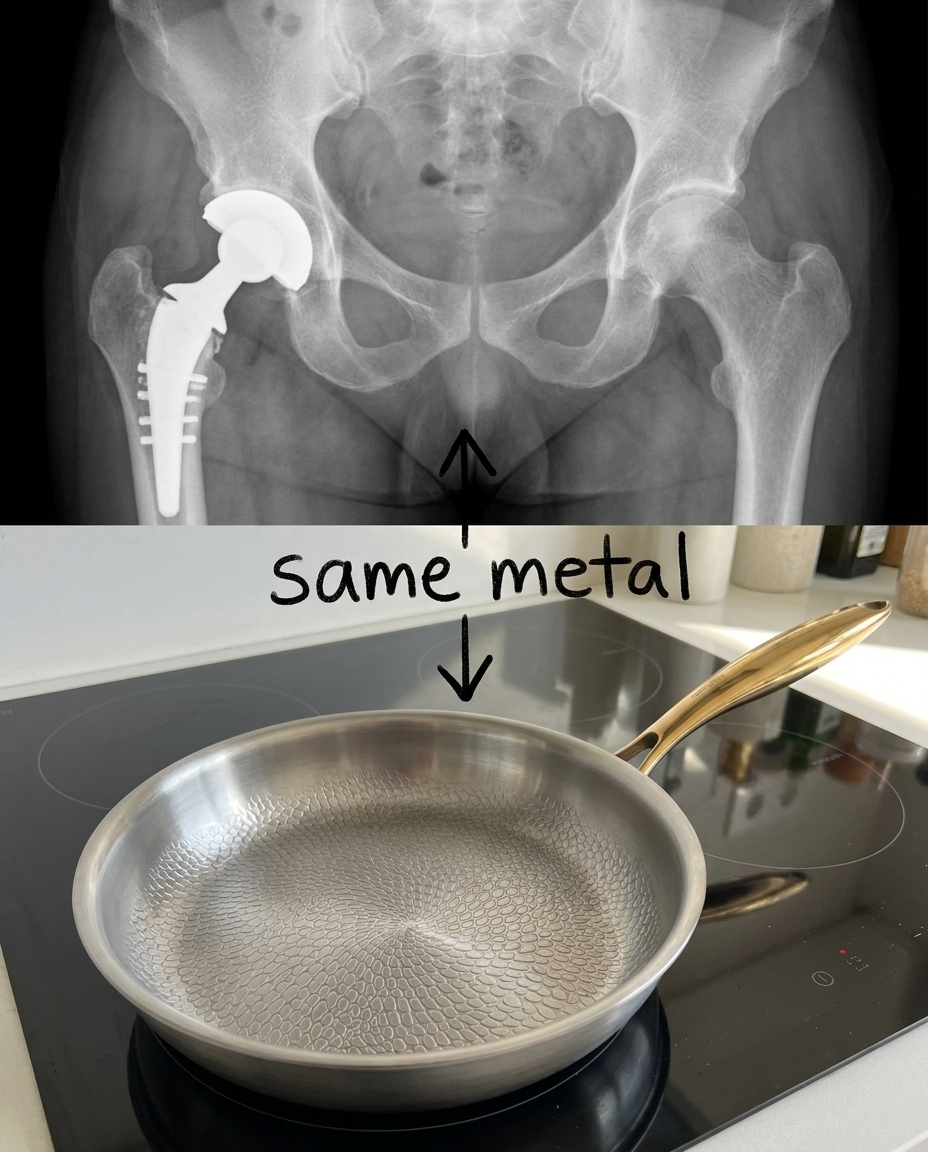
The image at the top of this post is my father's pelvis X-ray, taken in March of this year at the Erasmus Medical Centre in Rotterdam. The bright white object on the left side of the image is the titanium hip joint replacement he received in 1986. He was 49 then. He is 89 now. The pan at the bottom of the image is the frying pan that has been on my hob for the last six weeks. It is also made of titanium. I am writing this because the parallel between those two images explains, more clearly than any consumer article I have read, why I will not cook on non-stick again. My father had his hip replaced before I was born. I grew up knowing the word "titanium" the way other children grew up knowing the word "stainless steel". His implant was the thing that made him able to walk to school with me, lift me onto his shoulders at football matches, and dance at my wedding three years ago at the age of 86. He has had two minor revisions over the four decades, both for the polyethylene liner around the joint. The titanium itself has never been touched. The reason titanium is the material of choice for joint replacement, dental implants, surgical pins, pacemaker cases, and a long list of other inside-the-body applications is one specific property called biocompatibility. The human body has effectively no reaction to titanium. The immune system does not recognise it as foreign. No corrosion occurs at the metal-tissue boundary. No measurable migration of titanium ions has been detected into surrounding tissue or into blood serum, even after decades of contact with bone, blood, and soft tissue. My father's hip has been demonstrating this in real time for forty years. There is no special version of titanium used for hip joints. It is the same metal you can buy as bar stock from any specialist supplier. The reason it works for surgery is the reason it works full stop. It does not interact. I had never linked that fact to my kitchen until two months ago. What changed was that I had spent a week reading about something called PFAS, "per- and polyfluoroalkyl substances". A family of more than 10,000 chemicals that the European Chemicals Agency had just proposed restricting across the entire EU under a phased transition. The proposal explicitly named non-stick cookware coatings as a priority category for phase-out. PTFE, the technical name for the Teflon-style coating on the vast majority of frying pans sold in Europe, is a PFAS. The non-stick coating works because PFAS molecules have an unusually low surface energy. Nothing sticks to them, including water, oil, and food. The same chemical property that makes them non-stick also makes them effectively eternal. The carbon-fluorine bond at the centre of every PFAS molecule does not break down. Not in water systems. Not in soil. Not in the human body. Once you have ingested PFAS, your body cannot reliably clear them. Above approximately 260 degrees Celsius, PTFE coatings begin to release microscopic particles and gases. That temperature is medium-high cooking heat. As coatings age and develop scratches, the release threshold drops. The European Chemicals Agency proposal cites peer-reviewed serum studies in which more than 95 percent of people tested across Europe and North America had measurable PFAS in their blood. The cited contributors are drinking water, food packaging, and degraded non-stick cookware. I sat with that data for a few days. The drinking water and food packaging contributors are very hard to control as an individual. The cookware contributor is the one source I had direct authority over in my own kitchen. I started looking for a frying pan with no coating to fail. I tried stainless steel, which is genuinely inert but requires technique I do not have at 7am. I tried cast iron, which is wonderful but heavy and high-maintenance. I tried "ceramic" non-stick, which turned out to be PTFE wearing a different label. Then I came across pure titanium cookware. Not "titanium series" with a PTFE interior. Not "titanium-reinforced" non-stick. A pan made entirely of titanium, the metal itself, with no coating layer of any kind on the cooking surface. The penny dropped slowly. If my father's hip can sit inside his body for forty years without releasing any titanium into his bloodstream, then a titanium pan is not going to release any titanium into my eggs. The biocompatibility argument is exact. The same molecular indifference that lets surgical titanium coexist with bone for decades lets a titanium pan coexist with food without contamination. I bought one in April. It cost less than the Le Creuset I had thrown away the month before. It arrived four days later. The first thing I did was take it out of its packaging and weigh it. About 800 grams. Significantly lighter than my old cast iron, similar to a mid-weight stainless. The cooking surface had a fine textured pattern in the centre, with a smoother brushed-silver ring around the edge. It is the metal itself, all the way through. There is no coating to scratch, wear, or fail. I cooked eggs that evening. Two drops of olive oil. The eggs moved across the surface the way eggs are supposed to move. I cleaned the pan with a sponge under running water in about twenty seconds. There was no special treatment, no seasoning ritual, no rules about utensils. That was six weeks ago. The surface looks exactly the same as the day it arrived. I took my father out for lunch a few weekends back, in part because of this. He is sharp at 89 and curious about most things. I told him I had bought a frying pan made of the same metal as his hip. He laughed. Then he said something I have thought about since. He said, "the doctors back in 1986 chose titanium because it does not interact with the body. That is the entire point. If a metal does not interact with the body when it is inside the body, then logically it does not interact with food when it is touching food. You should not need an engineer to tell you that." He is right. The biocompatibility logic is exact in both directions. The reason a hip replacement made of titanium works is the same reason a titanium pan works. I do not think I will own a non-stick frying pan again. A chef called James Mercer wrote a long article on this topic last year, after his own daughter was born. He spent two years researching cookware materials and could not find an answer he trusted from consumer publications. His article is the clearest write-up of the chemistry, the regulatory background, and the buyer's checklist that I have read. It is linked below. About five minutes to read. If you have a parent or relative with a titanium medical implant who has been quietly proving the biocompatibility argument inside their body for decades, those five minutes will likely click into place for you the same way they did for me. Link below.
Same metal as my father's hip replacement. Forty years inside him. No reaction.
The X-ray above is my dad's. He got the implant in 1986. He is 89 now. The metal in his hip is the metal in the pan in my kitchen.
LEARN MORELike this ad? Make it yours.
Crush rebuilds this exact creative around your product — your brand, your colors, your offer — in about a minute.