Dr. James Kreischer - Trichologist, MD
Dr. James Kreischer - Trichologist, MD Facebook ad: “Dermatologist Discovers Peptide Breakthrough That…”
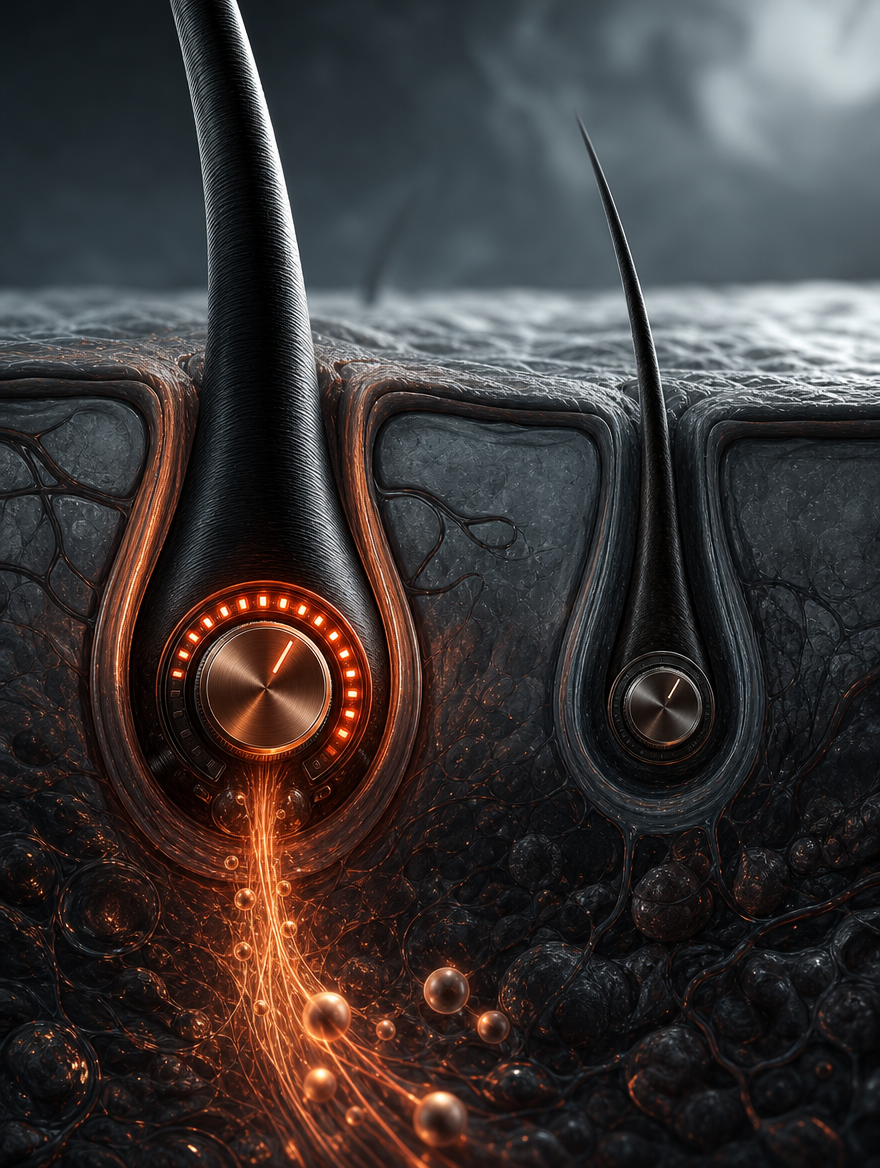
Ran for 22 days, from June 2 to June 24, 2026, the last day Crush saw it.
Run by Dr. James Kreischer - Trichologist, MD on Facebook. Crush is not the advertiser and does not verify its claims. See this ad in Meta's Ad Library(opens in a new tab)
Want an ad like this for your product?
Crush makes new ad images for your product from this ad: your logo, your product photo, your offer.
Trials from $19.95 USD, then $79.95 USD a month. Cancel anytime.
About this ad
- Meta Ad Library ID
- 1537975504343675
- Platforms
- Facebook, Instagram, Audience Network, Messenger and Threads
- Relaunches
- 0
Ad text
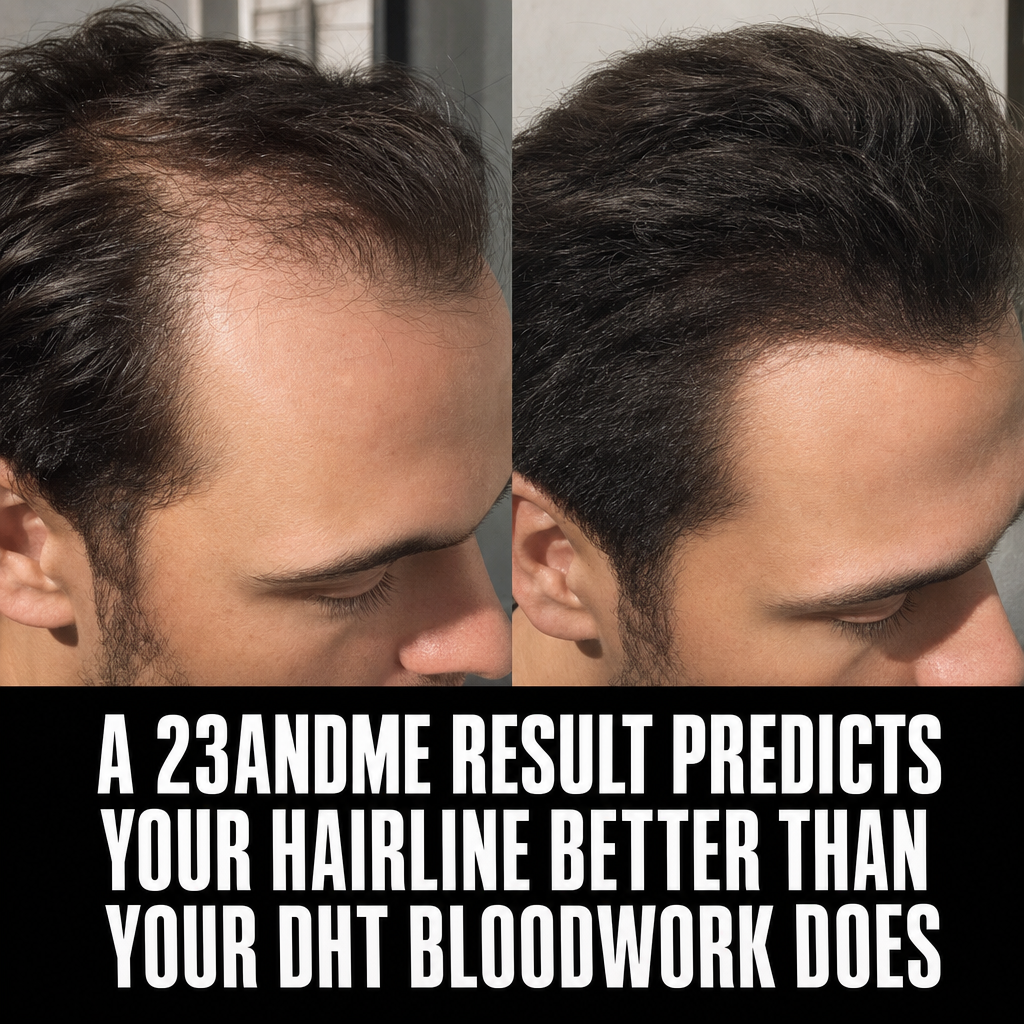
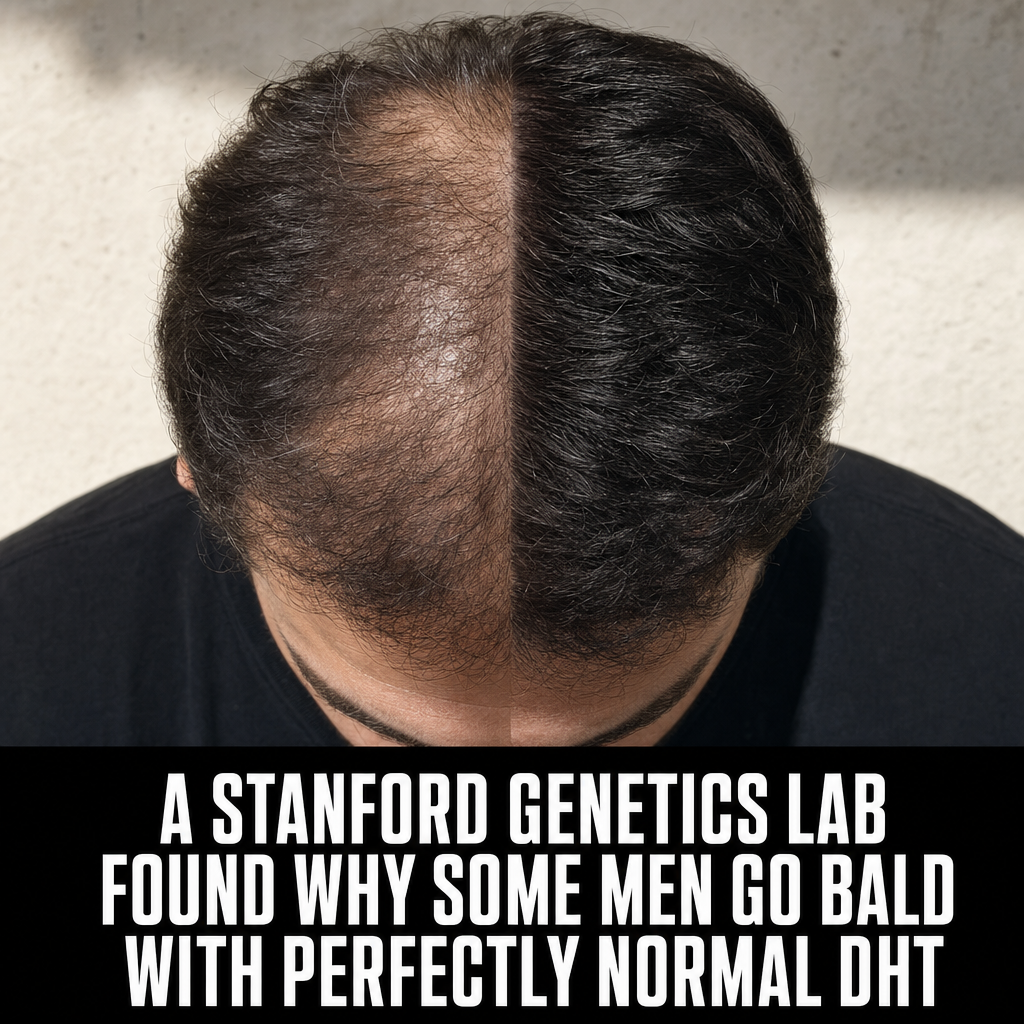
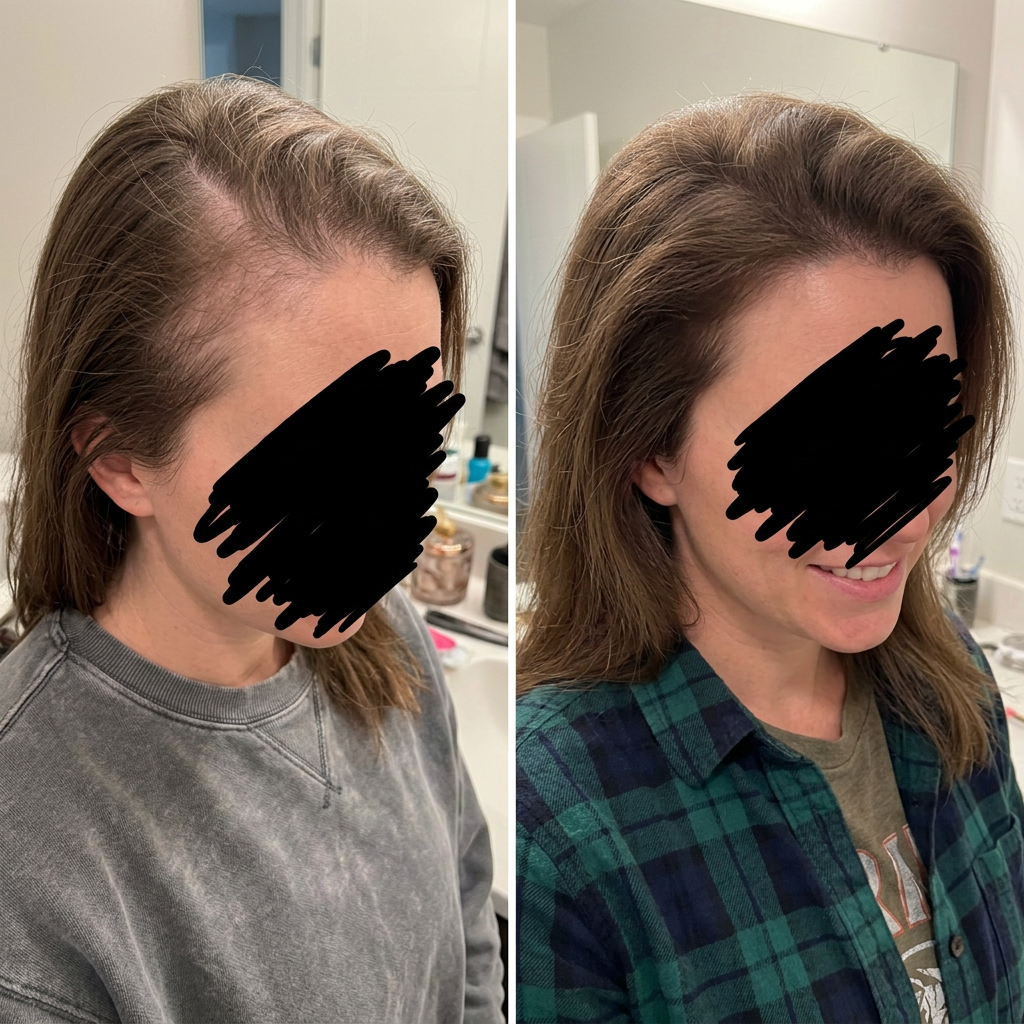
Read these and be honest about how many are you: → Your DHT came back normal on bloodwork — but you're still thinning. → You've been on finasteride a year or two, and the shed slowed but never really stopped. → Your crown is widening even though "the hormone is handled." → The hair in your shower is fine and short, not thick and finished. → Your dad and his dad went the same way, on the same timeline, like clockwork. → You catch your scalp in overhead light or a flash photo and your stomach drops. → Your dermatologist's explanation for all of it was one word: "genetics." If you nodded at three or more, stop blaming yourself for not blocking hard enough. Your problem was never how much DHT you make. It's how loudly your follicles hear it. Let me connect those symptoms to one cause, because they all trace back to the same place. Every follicle reads DHT through a receptor, and that receptor has a sensitivity setting — a volume knob set by your genes. Specifically, by the length of a repeating sequence in your androgen-receptor gene. Short sequence, hot receptor, and even a small, "normal" amount of DHT gets amplified into a loud signal that shrinks the follicle and switches growth off. Now walk back through the list. "Normal DHT but still thinning"? That's a quiet hormone landing on a loud receptor. The level looks fine; the amplification isn't. Your bloodwork measured the broadcast, not the volume knob. "On finasteride and it slowed but never stopped"? Finasteride turns down the broadcast. It never touches the volume knob. The leftover DHT from your type-1 conversion and your adrenal glands keeps arriving, and a hot receptor keeps amplifying it. That's the plateau — not a dosing failure, a targeting one. "Crown widening with the hormone handled"? The crown and temples carry the hottest, densest receptors. They're the first to register the signal and the first to thin. The donor rim barely responds — its knob is turned low — which is exactly why it keeps its hair no matter how bald the top gets. "Fine, short hairs in the shower"? That's miniaturization — a follicle producing a thinner shaft each cycle because the amplified signal keeps cutting growth short before the hair finishes. The follicle isn't gone; it's being interrupted. "Same as my dad, like clockwork"? That's the gene. You inherited the receptor setting, not a sentence. "Stomach drops in a flash photo"? That's the part of this that isn't biology — the quiet dread of watching it happen and being told there's nothing left to do but block harder and wait. "Genetics," the dermatologist said — and then said nothing useful about what to do with that, because the drug he had to offer was aimed at the hormone, not the receptor. So here's what actually changes the picture. You stop trying to win at the receptor — you can't realistically turn the knob down — and you go restart growth downstream of it, at the follicle. Because a switched-off follicle is not a finished one. It's been told "stop" so many times it shrank and went dormant. The structure remains. The blueprint remains. The missing piece is the growth signal the over-amplified androgen keeps overriding. Hand that signal back to the root, and the follicle can come back. That's the job FST-5 Peptide Complex was built for. Five signaling peptides — the molecular language your follicle cells actually use — each addressing one of the symptoms above: ✓ Copper Tripeptide-1 rebuilds the structure those miniaturized, short-hair follicles have lost. ✓ Decapeptide-18 restarts the growth phase in the ones parked in sleep mode. ✓ Oligopeptide-71 thickens the matrix so new hair stops coming in fine and see-through. ✓ Acetyl Tetrapeptide-3 reinforces anchoring so regrowth holds. ✓ Biotinoyl Tripeptide-1 supports shaft strength for thicker hair. Plus Arginine to drive nitric oxide and blood flow into the dermal papilla, and botanicals to calm the perifollicular inflammation a loud androgen signal sets off. Not another blocker. A growth signal, delivered where suppression can't reach. And before you think about sourcing peptides yourself — I looked into it, and it's a trap. Concentrations, ratios, and stability are the entire game; get one wrong and the whole stack underperforms, because these five are built to work in sequence. FST-5 already has the five balanced and stabilized in a single serum, so you're not gambling on a chemistry experiment. Realistic timeline: shedding usually eases first, around weeks four to eight; the crown and hairline gain body over the following months; three to six months in is where the mirror shifts. Daily use, every day, is what separates the men who regrow from the men who keep guessing — follicles don't respond to a half-finished message. One man I spoke with summed up the whole experience: "Three years on the protocol, hormone fully handled, still going. Two months on the serum and the shedding stopped. Four months and the front looked like a photo from a few years ago. Nobody told me there was a second half to the problem." There almost always is. And if you want the simplest proof that the receptor — not the hormone — is the deciding factor, look at your own donor rim. The back and sides of your head sit in the same DHT as your crown, every single day, and they never go. The only difference is that those follicles have their receptors set quiet. Same hormone, opposite outcome, decided entirely by volume. That tells you the follicles up top were never weaker — they were just wired to hear the signal louder. And it tells you the move that actually matters isn't lowering a hormone that the back of your head proves was never the real variable. It's waking the follicles whose receptors happen to amplify it. That's also why chasing a stronger blocker tends to disappoint. Dutasteride drops DHT further but leaves the volume knob exactly where it was, and a hot receptor amplifies whatever's left over — including the adrenal androgen no blocker touches. More suppression, same plateau. The half of the problem that's left is the dormant follicle, and that half only responds to a growth signal delivered at the root. It helps to know why this isn't just minoxidil by another name, since that's the usual next reach. Minoxidil widens vessels and nudges follicles awake, but it's a rental — stop using it and the gains slide back within months, because it never rebuilt the follicle, it only held the door open. Peptides are a different tool entirely: they carry the follicle's own construction orders — rebuild this structure, restart this growth phase, reinforce this anchor — so you're restoring the follicle's ability to produce instead of paying rent on a borrowed effect. For a plateau that's really a receptor problem, that's the difference between propping something open and actually turning it back on. And if any part of you still suspects the top of your head is just "too far gone," let your own donor rim talk you out of it. The back and sides sit in the exact same DHT as your crown and never thin — not because there's no hormone there, but because those receptors are set quiet. Same hormone, opposite result, decided entirely by volume. The follicles up top were never weaker. They were wired to hear the signal louder, and they've been switched off, not finished. Switched off is reversible. That's the whole reason this is worth doing instead of resigning yourself to the clippers. FST-5 comes from a hair-science brand acquired by a peptide-research team — which is why the formula is this dialed-in. Better R&D, same mission. And set against what you've likely already spent on visits and drugs that plateaued, one serum running the whole peptide system is the easiest call you'll make. One note: batches are limited to keep the peptides active, and they sell out. If it's in stock, that's your window. Backed by a 100-day money-back guarantee — use it daily for 100 days, and if nothing changes in the mirror, you don't pay. Your genes set the volume. They don't get to decide whether your follicles stay switched off. 👉 https://richvell.com/pages/fst5
Where the ad sends people
richvell.com
Dermatologist Discovers Peptide Breakthrough That Reactivates Hair Growth Like You're 17 Again
Richvell FST-5 Peptide Complex helps support thicker-looking hair, reduced shedding, and a healthier scalp with advanced peptide-powered hair care.
Shop now: richvell.com(opens in a new tab)