Dr. James Kreischer - Trichologist, MD
Dr. James Kreischer - Trichologist, MD Facebook ad: “Dermatologist Discovers Peptide Breakthrough That…”
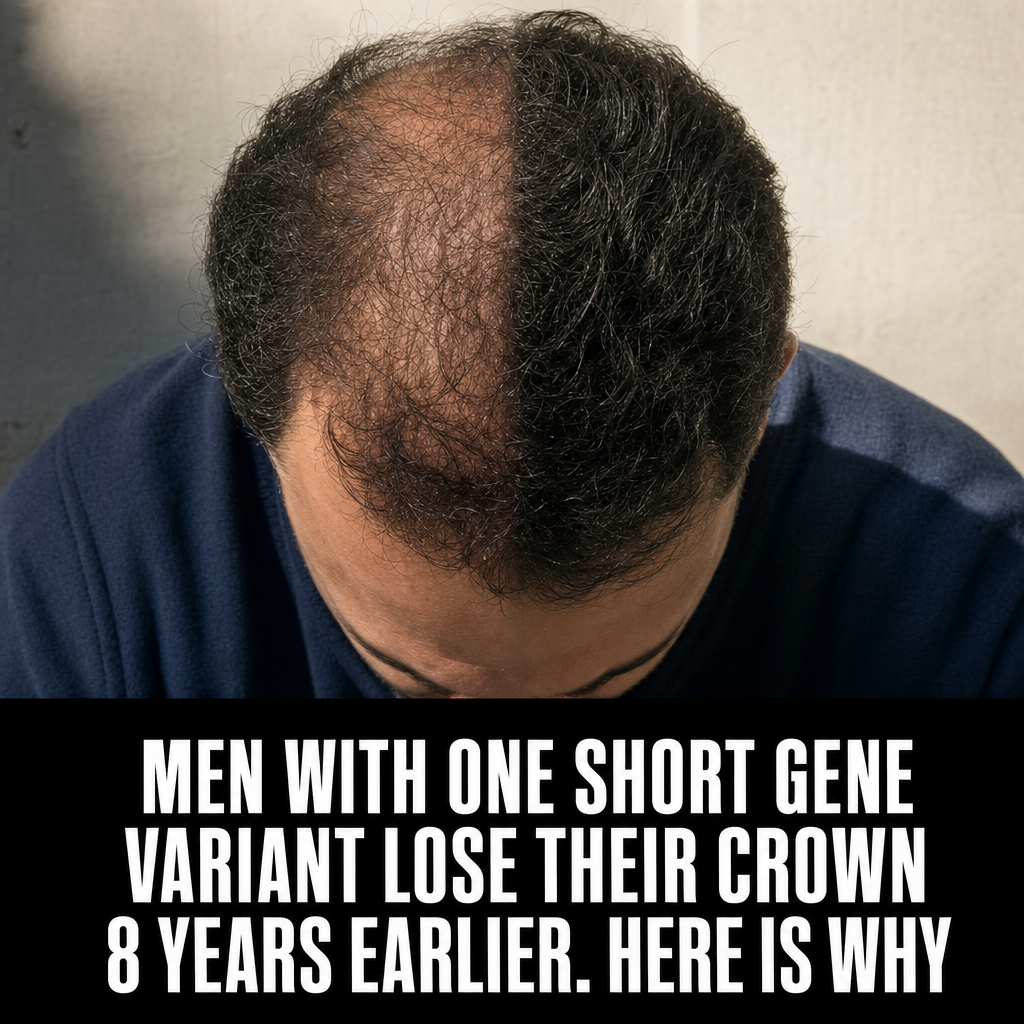
Ran for 17 days, from June 7 to June 24, 2026, the last day Crush saw it.
Run by Dr. James Kreischer - Trichologist, MD on Facebook. Crush is not the advertiser and does not verify its claims. See this ad in Meta's Ad Library(opens in a new tab)
Want an ad like this for your product?
Crush makes new ad images for your product from this ad: your logo, your product photo, your offer.
Trials from $19.95 USD, then $79.95 USD a month. Cancel anytime.
About this ad
- Meta Ad Library ID
- 1541193384346892
- Platforms
- Facebook, Instagram, Audience Network, Messenger and Threads
- Relaunches
- 0
Ad text
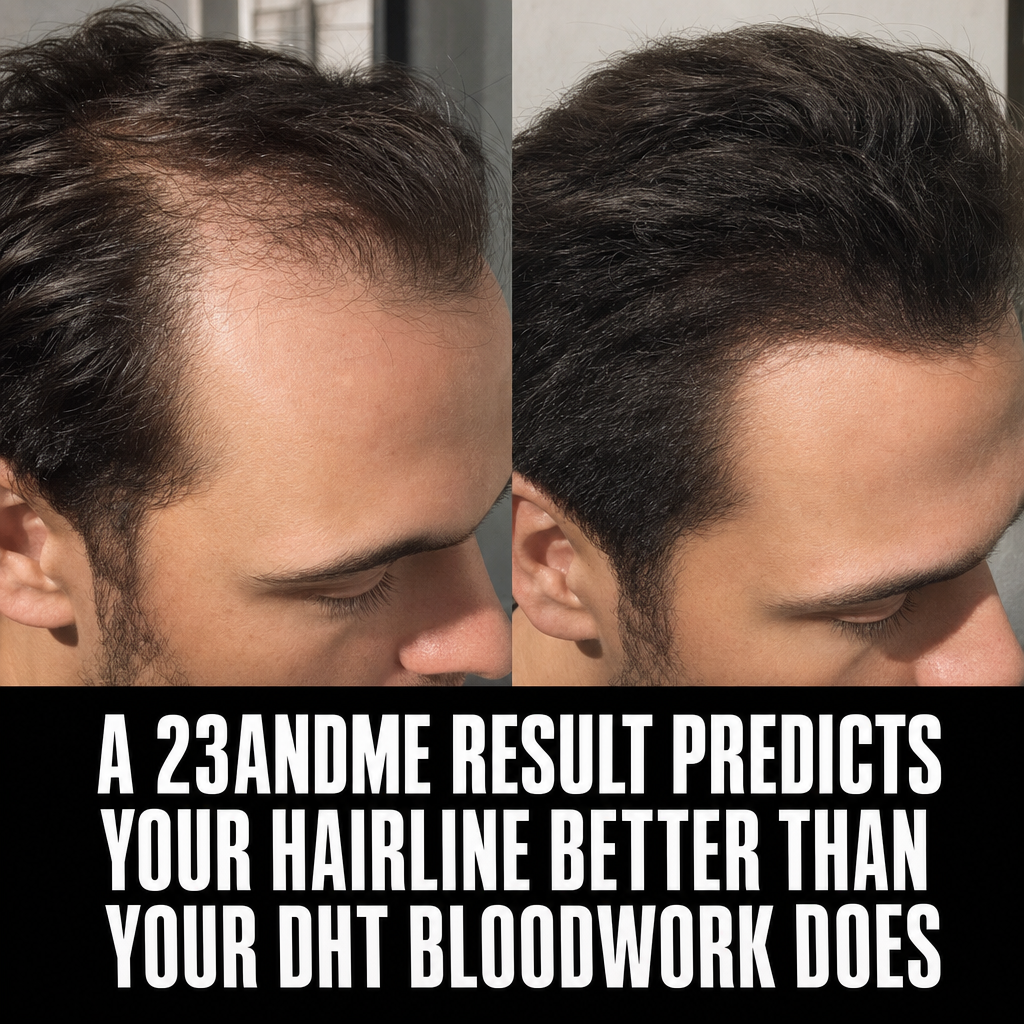
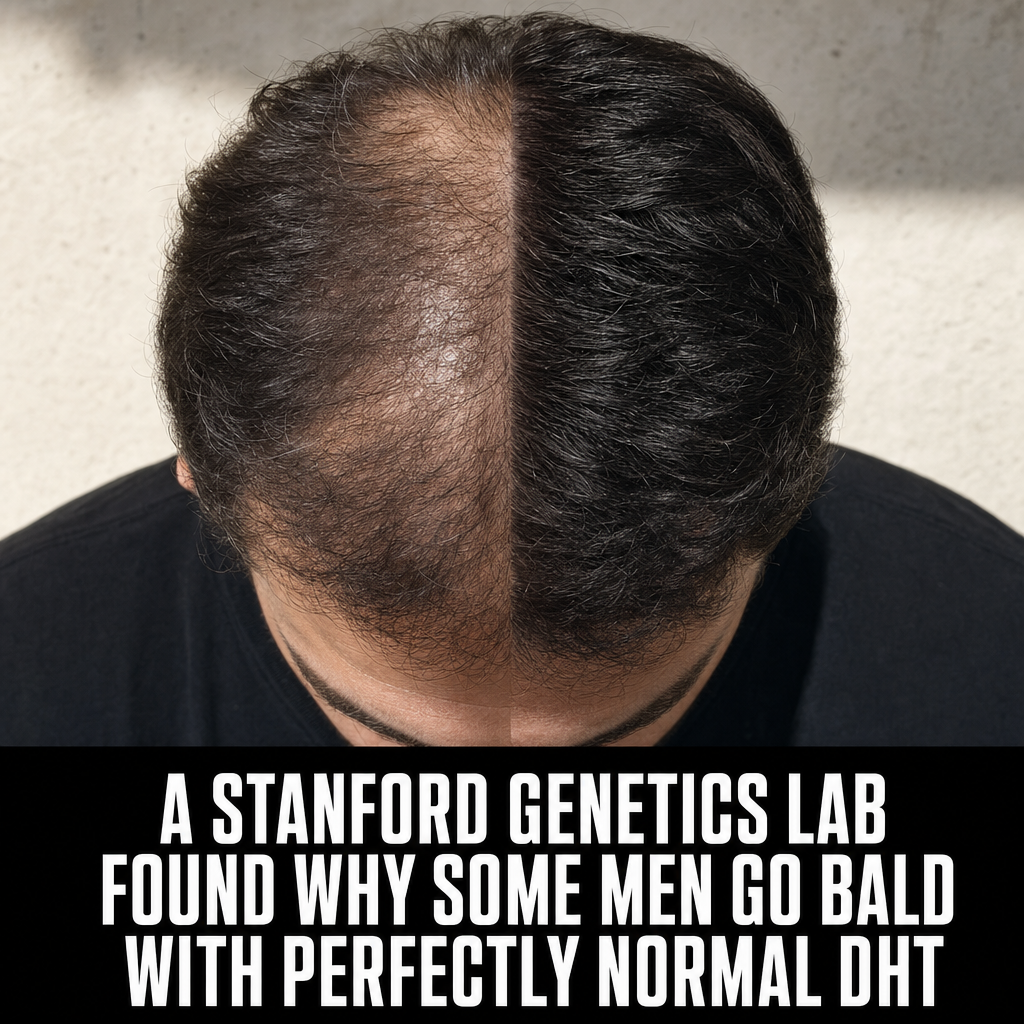
My brother and I have the same parents, the same hairline at 20, and the same DHT on paper. He still has his hair. For years, I watched mine slip away in the mirror — and I could not understand why. We started losing it around the same time, late twenties. We both panicked. We both did the "responsible" thing — saw a doctor, got on finasteride, told ourselves we'd caught it early. Two years later he looked exactly the same. I looked five years older. Same drug. Same dose. Same hormone levels on the bloodwork. Completely different result. I asked my dermatologist how that was possible. He shrugged and said, "Genetics. Some guys just respond better." That was the whole answer. Genetics. As if that explained anything — as if it wasn't his job to tell me what about the genetics was actually different. So I stopped accepting the shrug. And I went down a rabbit hole that completely changed how I understand hair loss. Here's what I found. Everyone — every doctor, every ad, every forum — talks about hair loss like it's a volume problem. Too much DHT. Lower the DHT, save the hair. That's the entire model finasteride is built on. But there's a second variable nobody talks about, and it turns out it matters more than the first. It's the receptor. DHT doesn't do anything on its own. It has to dock into a receptor on the follicle to send its signal — and that receptor has a sensitivity setting. A gain. A volume knob. In men whose receptor is set low, even a lot of DHT barely moves the needle. Their follicles practically can't hear it. Those are the guys with thick hair at 60 who "never did anything" and never had to. In men whose receptor is set high, even a little DHT gets amplified into a roaring shut-this-follicle-down command. A "normal" hormone level lands like a shout in a quiet room. That setting is determined by the length of a repeating sequence in the androgen-receptor gene. Shorter sequence, hotter receptor, louder signal, earlier loss. It's one of the most reliable genetic predictors of male pattern baldness there is — more predictive of your hairline than your DHT bloodwork will ever be. My brother and I have the same DHT. We do not have the same receptor. His knob is turned down. Mine is turned up. That one difference is the whole story. And the moment I understood it, finasteride's failure finally made sense. Finasteride lowers the broadcast. It does not touch the volume knob. If your receptor is amplifying everything, then lowering the signal a bit still leaves plenty for a hot receptor to amplify — because the leftover DHT from your type-1 conversion, plus the androgens your adrenal glands make every single day, never stop arriving. You can block and block and the receptor keeps doing its job: taking whatever's left and turning it up to maximum. That's the plateau. That's why I stalled and my brother didn't. He never needed the receptor handled. I did — and finasteride was never going to handle it. I want you to sit with that for a second, because it lifts an enormous amount of guilt off your shoulders. If you've been quietly blaming yourself — not consistent enough, not early enough, should've added dutasteride sooner — none of that was the real problem. You were aiming a hormone tool at a receptor problem. No amount of discipline fixes a targeting error. So the real question became: if you can't realistically turn the receptor down, what can you actually do? And the answer was the thing nobody selling me drugs wanted to discuss: you work downstream of the receptor. At the follicle itself. The receptor's job is to switch growth off. A follicle that's been switched off isn't a follicle that's gone — it's one that's been told to stop, over and over, until it shrank and went dormant. The structure is still there. The blueprint is still there. The signal to grow is just missing, because the receptor keeps overriding it. So you stop trying to win the standoff at the receptor — and you go restart the growth signal directly at the root. That's where peptides come in. Peptides are short chains of amino acids — the exact language your follicle cells use to talk to each other. The right ones don't block a hormone or work against your biology. They walk up to a dormant follicle and hand it the instructions to start growing again. That's the entire idea behind FST-5 Peptide Complex. Five signaling peptides, each doing one specific job the receptor has been getting in the way of: ✓ Copper Tripeptide-1 (GHK-Cu) — the rebuilder. It remodels the environment around the follicle and rebuilds the structure that years of an over-amplified signal have whittled down. ✓ Decapeptide-18 — restarts the growth-phase conversation in follicles that have been parked in extended rest. ✓ Oligopeptide-71 — supports the follicle's matrix so the hair it produces comes back fuller instead of fine and see-through. ✓ Acetyl Tetrapeptide-3 — reinforces the anchoring structure so the new growth holds instead of shedding right back out. ✓ Biotinoyl Tripeptide-1 — feeds shaft strength so regrowth is thicker, not wispy. And around those five, the formula adds Arginine to drive nitric oxide and blood flow into the dermal papilla, plus botanical extracts to calm the perifollicular inflammation a loud androgen signal always drags along with it. Here's why this matters and why I didn't just go buy the peptides separately. I tried. I priced out sourcing these individually — different suppliers, different concentrations, no idea if they were stable together, no idea on the ratios, and a bathroom counter that looked like a chemistry shelf. It would have cost me more, taken hours, and almost certainly delivered worse results, because peptides have to be formulated at the right concentrations and kept stable to actually signal. Get one ratio wrong and you don't get a weaker result — you can waste the entire stack, because they're designed to work in sequence. One unstable ingredient and the whole serum underperforms. FST-5 already solved that — the five are balanced and stabilized in one serum, in the ratios that let them work together instead of canceling each other out. Somebody already did the hard part. Now, the honest part about time. This is not an overnight thing, and anyone who tells you otherwise is lying to you. Follicles cycle on their own clock, and you cannot rush a biological cycle. For the first few weeks you mostly feel like you're just doing your routine. Around weeks four to eight, most men notice the shedding settle down first — the slow daily loss in the sink and on the pillow easing off. That's the earliest sign the follicles are being told something new. Then, over the following months, the finer hairs at the crown and hairline start coming in with more body — the see-through patches filling in a shade at a time. By the three-to-six-month mark is where the mirror starts telling a different story, and other people start to notice before you fully trust it yourself. Consistency is everything — the men who win are the ones who use it every day and let the follicle cycles turn, instead of quitting at week six because they wanted week sixteen's result. It's worth being clear about how this differs from minoxidil, since that's the other thing men reach for. Minoxidil mainly widens blood vessels and nudges follicles awake, and it works only as long as you keep using it — stop, and you lose the gains within months, because it never rebuilt anything, it just propped the door open. Peptides are a different category of tool. They don't prop a door; they hand the follicle the actual construction instructions — rebuild this structure, restart this growth phase, reinforce this anchor. You're not renting a temporary effect, you're restoring the follicle's own ability to produce. That's why the approach made sense to me in a way another "use-it-or-lose-it" topical never did. I found FST-5 through this exact rabbit hole. The brand started as a smaller hair-science company and was acquired by a peptide-research team — which is the reason this formula exists at all. The science came in with the new team. Better R&D, same mission: actually restart growth instead of just lowering a hormone and hoping the receptor gets bored. A guy I talked to early on put it better than I can. He'd been on the full protocol for three years, DHT fully suppressed, still watching his crown go. He told me: "Eight weeks in, the shedding just stopped. I kept waiting for it to come back and it didn't. Four months in my barber asked what I'd changed. I hadn't changed my drugs — I'd finally started treating the part the drugs never touched." That's the pattern, over and over. When I looked at what I'd already spent — the derm visits, the drugs that plateaued, the year I lost telling myself to "be patient" — the price of FST-5 was almost insulting by comparison. One serum, the whole peptide system, less than what I'd burned on appointments that ended in a shrug. A quick word of caution: because each batch is made to keep the peptides stable and active, they sell out, and restocks aren't instant. If it's in stock when you read this, that's the window. I'll leave you with the thing my brother said when I finally explained all this to him. He looked at me and went, "So it was never that you were doing less than me. Your follicles were just hearing it louder." Yeah. That's exactly it. And once you know that, you stop trying to block your way out — and you start working where it actually counts. Let me also save you from the trap I almost fell into next: escalation. When finasteride stalled, my first instinct was to climb the ladder — add oral minoxidil, then push to dutasteride, then start pricing transplants. I get the logic. If a little blocking isn't enough, more blocking must be the answer. But walk it through with what you now know about the receptor. Dutasteride suppresses DHT harder than finasteride does. It still doesn't touch the volume knob. So you crush the hormone further, and a hypersensitive receptor simply amplifies the smaller amount that's left — plus the adrenal androgens that no 5-alpha-reductase inhibitor reaches at all. You can spend years and a small fortune climbing a ladder that's leaning against the wrong wall. I climbed two rungs before I realized the wall was the problem. And here's the detail that finally made me trust the downstream approach: the donor rim. Think about why the back and sides of your head never go, even on the baldest men. It's not because there's no DHT back there — there is. It's because the receptors back there are set quiet. Same hormone, different volume, completely different outcome. That's the entire thesis of your hairline in one observation. The follicles on top aren't weaker or more "doomed" — they're just wired to hear the same signal louder. Which means the goal was never to eliminate the hormone. It was to get the loud follicles producing again despite it. And that happens at the root, with the right instructions, not at the bloodstream with a bigger blocker. That reframe is the whole reason I stopped chasing suppression and started feeding the follicle. The hormone was never going to zero. The receptor was never going to change. But the follicle — the actual thing growing the hair — was still sitting there, dormant, waiting for a message nobody had been sending it. Every order is backed by a 100-day money-back guarantee. Use FST-5 every day for 100 days. If your mirror doesn't change, you get your money back — no argument. Stop trying to turn down a knob your genes already set. Go wake the follicles it's been quieting. 👉 https://richvell.com/pages/fst5
Where the ad sends people
richvell.com
Dermatologist Discovers Peptide Breakthrough That Reactivates Hair Growth Like You're 17 Again
Richvell FST-5 Peptide Complex helps support thicker-looking hair, reduced shedding, and a healthier scalp with advanced peptide-powered hair care.
Shop now: richvell.com(opens in a new tab)