Ashley Mccullough
 Facebook ad: “Support stamina and heart health every day”
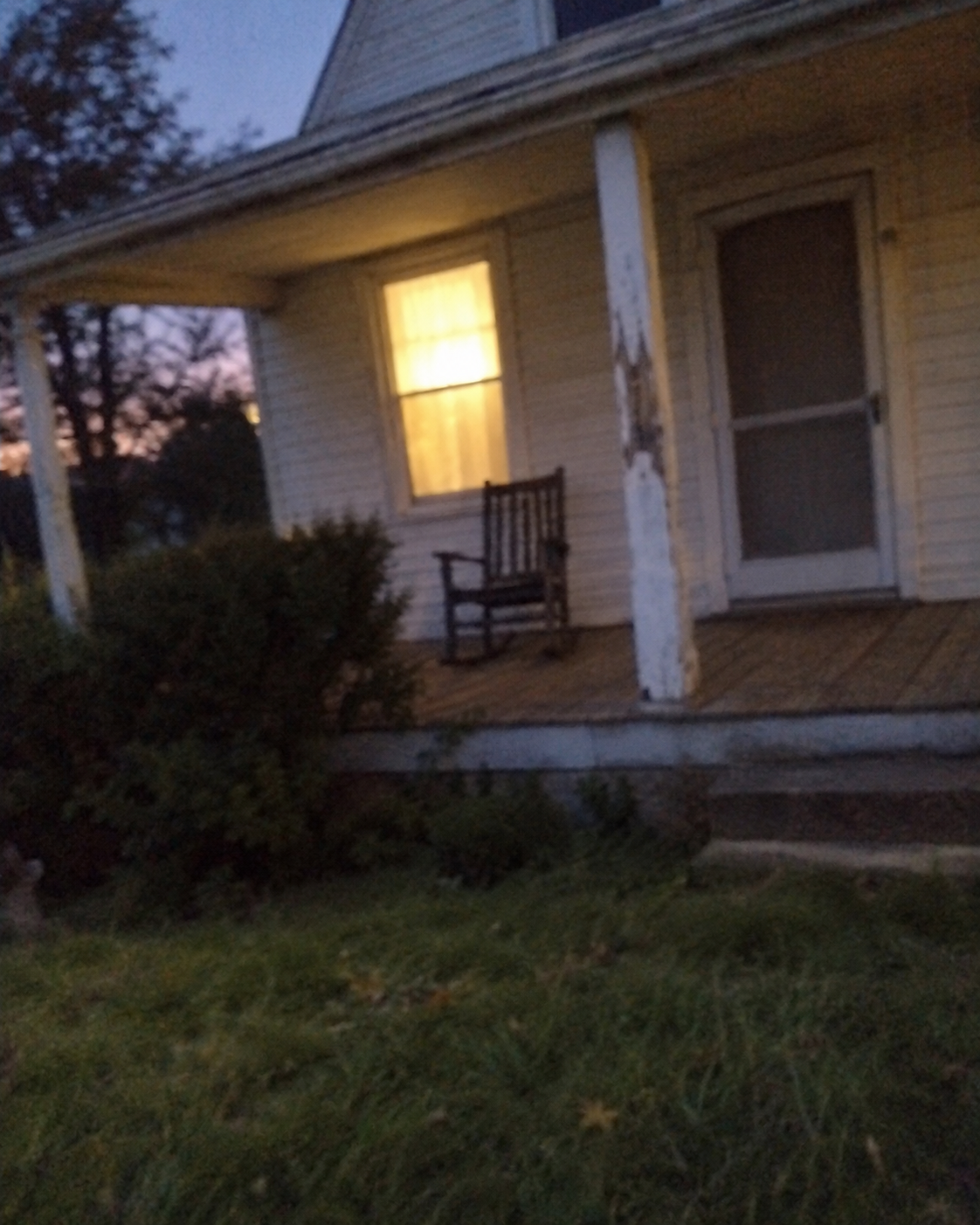
Ran for 44 days, from September 21 to November 4, 2026, the last day Crush saw it.
Run by Ashley Mccullough on Facebook. Crush is not the advertiser and does not verify its claims. See this ad in Meta's Ad Library(opens in a new tab)
Make your own version of this ad
Crush makes it, launches it in your own Meta ad account, scales the winners and pauses the losers.
About this ad
- Meta Ad Library ID
- 1600567498223791
- Platforms
- Facebook, Instagram, Audience Network, WhatsApp and Threads
- Relaunches
- 0
- EU reach
- 7,007
Ad text
Picture a Man Who Left the Family Farm at Nineteen — and Sat at the End of Its Lane for Twenty Minutes at Fifty-Eight Before He Could Drive Up It. Picture a gravel lane, with willows, and a truck parked at the mouth of it with the engine ticking. The man in the truck and the family up the lane aren't real. Call him Cal; they're sketches, and the lane is the whole story. Cal is fifty-eight. He runs a drywall crew three hours away. He left this lane on a June night thirty-nine years ago, down the stairs with his boots in his hand, and he has not driven up it since. His father is on the porch. He was on the porch the night Cal left, too. That's the story. Let me back up, because it won't make sense otherwise. Picture the farm the way it was: eighty acres, a dairy herd, a garden that fed ten people from its own dirt, a cellar with four hundred jars in it every October that looked, in lamplight, like a jewelry store. And picture the thing about that farm that a nineteen-year-old can't stand and a fifty-eight-year-old can't stop thinking about: Nobody on it was ever, for one day of their life, unwatched. Not in a cruel way. In a family way. Ten people in one house, everyone in everyone's kitchen, a father who could hear a latch lift from two fields off. If you skipped a chore, somebody knew by supper. If you slept in, the whole table knew by breakfast. Cal, at seventeen, felt that like a hand on his chest. So he left. Cousin's car at the end of the lane, headlights off, engine running. His father was on the porch in the dark. He didn't yell, and he didn't beg. He said a few words — Cal has carried them thirty-nine years without understanding them, and you'll have them before this is done, at the point where they can be heard right — and he went inside, and the screen door didn't even bang. Now the thirty-nine years, because this is the part you need to watch closely. Nothing in it feels like anything while it's happening. That's what makes it what it is. The first years were good. Money in his own pocket. A truck, then a better truck. Two marriages, a son, a mortgage, a satellite dish. And the thing he'd wanted most: nobody watching. Nobody at the kitchen table when he didn't come home for supper. Nobody with an opinion about Sunday. Nobody who'd hear a latch. Here's what thirty-nine years of nobody watching looked like in Cal's story, and it happened without a single scene to show you. He quit the softball league at forty-nine. Shoulder, he said. Nobody was watching, so nobody asked. He stopped writing to his sister around fifty. Not a decision — the letters just got further apart, and then there weren't any, and nobody was watching, so nobody said. The garden he'd meant to put in behind the Dayton house, every spring for twenty years, never went in. Nobody was watching. Nobody was going to walk past it and ask. The evenings went to the television, and then to the chair in front of it, and nobody was there with an opinion about that either, except a second wife too kind to push. It isn't a crisis. It's a hum: a standing puzzlement about how a man who'd wanted, more than anything, to be left alone had gotten exactly that — and found, at fifty-eight, that most of what he'd meant to keep had been left alone too. He has concluded that's just what the years do. Keep that. The lane is about to overturn it. So: the truck, the willows, the twenty minutes. And then up the lane, because his sister's Christmas letter had said the old man was eighty-nine and still walking the rows. The farm came around the willows exactly the same, which he wasn't prepared for. The world had turned over four times since 1986. The farm had painted the barn. An old man came out of it. Slower. A beard gone fully white. He looked at the strange truck a long moment, and then at the man beside it, across the yard he'd taught him to walk in. And the first thing he said, after thirty-nine years, was: "Come inside. There's pie." Not angry. Not soft. Level — the way that man said everything, like reading a gauge and telling you what it says. The kitchen. Same table. Cal's mother gone some years; his brother runs the farm now; the old man lives in the little house attached to the side, the way it's done in families like that. And late in the afternoon, Cal laid it out — not the numbers, there were no numbers; the loosening. The league, the letters, the garden that never went in, the chair. Thirty-nine years of it, on the table, like a man emptying his pockets. His father listened the whole way through without a word. Then he stood up and said, "Come down cellar." Same stairs. Same cool dirt-and-vinegar smell. Same shelves — the brother's wife's canning now, but the same order, the same jewelry-store shine in the lamplight. The old man put his hand on a shelf and gave the seminar in about four sentences, because that's all he ever used. "You think this cellar's full because we're disciplined. It isn't. It's full because your mother would have noticed if it wasn't, and then your grandmother, and then the whole table. "Nobody down here is stronger than you, Cal. Nobody down here has ever once been alone with a thing they meant to keep. "That's all watching ever was. Not judging. Just — somebody would have said something. You went to where nobody would say anything. And nobody did." Cal stood in the cellar a long time. Because he had spent thirty-nine years reading the loosening as his own — a weakness he'd carried out of the lane in a duffel bag. And here was the true thing, said by a man who'd never once softened a true thing. He began to see that some of the routines he'd kept as a boy had been supported by the house — by a kitchen where somebody would have said something. He'd walked out of the house and taken the routines with him, and in his story some lasted for years while others quietly loosened. That's the discovery, and it's worth saying plainly — as his, learned in a cellar: Ways of living may hold more easily under witness — not because anyone is judging, but because somebody would say something. The freedom of being unwatched is real, and worth wanting. It can also mean that the things you meant to keep are unwatched too, and things left alone can loosen without anyone, including you, noticing. In Cal's eyes, nobody up that lane was stronger. They just weren't alone with what they were keeping. And Cal's story ends small, on the porch, after the lamps. He asked his father about the words. The ones said in the dark, thirty-nine years ago, gentle as the screen door he refused to slam. "Did you know I'd keep them?" "I knew you couldn't put them down," his father said. "That's why I picked them." So here they are — heard, finally, the way they were meant: "The table stays set." Cal took them as a curse at nineteen — crawl back when you're hungry. They weren't. They were the plainest thing a plain man ever said to him: that a place with somebody watching would keep a chair for him, and keep it, and keep it, against the day he came up the lane. He drove home Sunday night. He wrote to his sister on Monday — on paper, because that's what she'd notice. He hasn't put the garden in. He's told his brother he will, which is a different thing from telling himself, and that's the whole point. Now step out of the story, because the rest of this is between us and you. Everything Cal changes, he changes because of his father and a cellar. No supplement had anything to do with it, and nothing in this ad should be read that way — keep that straight, because the next part is about a supplement. And one thing more, stated plainly because the story had a cellar full of jars in it: the beets in that cellar are the family's own, in a family that isn't real. Nobody in this story grows anything for us, sells anything to us, or has anything to do with what's in our bottle. Our ingredients are described on the label — made in the USA from globally sourced ingredients — and that's the only origin we'll claim. Separately, then: here are the beetroot product and format facts. Beetroot naturally contains dietary nitrates, and the body converts those into nitric oxide, a molecule that helps support healthy blood flow.* That's the whole science we'll state, and it belongs to the vegetable. Rosabella Beetroot is organic beetroot powder in capsules — two capsules, once a day. What's in it reads in one breath: 1,300mg of organic beetroot powder per serving — a serving being those two capsules. One active ingredient, with the dose printed plainly on the label, nothing to decode. Non-GMO, third-party lab tested, produced under GMP, made in the USA from globally sourced ingredients. It contains no caffeine. Sixty capsules in a bottle; thirty days. Follow the directions on the label. The serving is two capsules, taken once daily. One thing before anything goes in a cart: talk to your doctor or pharmacist before adding any supplement, especially if you take any medication. This goes alongside the rest of a routine — the meals, the walks, the sleep — not in place of any of it. On Amazon, Rosabella Beetroot is rated 4.4 out of 5 across 14,557 ratings as of September 13, 2026. And now the last part, plainly — because a story like that one usually ends with an ad telling you that something was kept for you, and it was the product all along. We're not going to do that. Nobody here is going to promise you a transformation. We're not going to tell you what you'll feel or when. Bodies are different, and yours doesn't owe an advertisement anything. We're not going to present the story as proof of what the product does — Cal and his father are sketches, and we said so in the first lines so the distinction stays clear. We're not the thing that was kept for you. Nothing in a bottle was kept for anyone. The table that stayed set was a family's, and it was set by people, and a capsule doesn't watch anyone, keep anyone's chair, or say something when a thing you meant to keep goes quiet. What we sell is organic beetroot powder, in two capsules, with the serving and ingredient facts on the label, where you can check them for yourself. Whoever watches over what you keep — that was never for sale. It was only ever people. P.S. If your own life has a loosening in it — the league, the letters, the garden that never went in — the finding of this story, plainly: it may not be weakness. It may be that nobody was there to say something, and things left entirely alone can go quiet. The remedy in the story wasn't discipline. It was telling his brother about the garden. Somebody who'll notice is a very old technology, and it's still free. P.P.S. What it is, plainly: organic beetroot powder in capsules — 1,300mg per two-capsule serving, one active ingredient, dose on the label, no caffeine, non-GMO, third-party lab tested. Thirty days a bottle. Those are the basics. P.P.P.S. If you're not satisfied for any reason, return the product within 90 days of delivery for a full refund. Individual experiences vary. These statements have not been evaluated by the Food and Drug Administration. This product is not intended to diagnose, treat, cure, or prevent any disease.
Where the ad sends people
get.tryrosabella.com
Support stamina and heart health every day
Learn more: track.tryrosabella.com(opens in a new tab)