
Inactive· since May 19, 2026
- 41
- days it ran
- 1
- relaunches
Ad copy
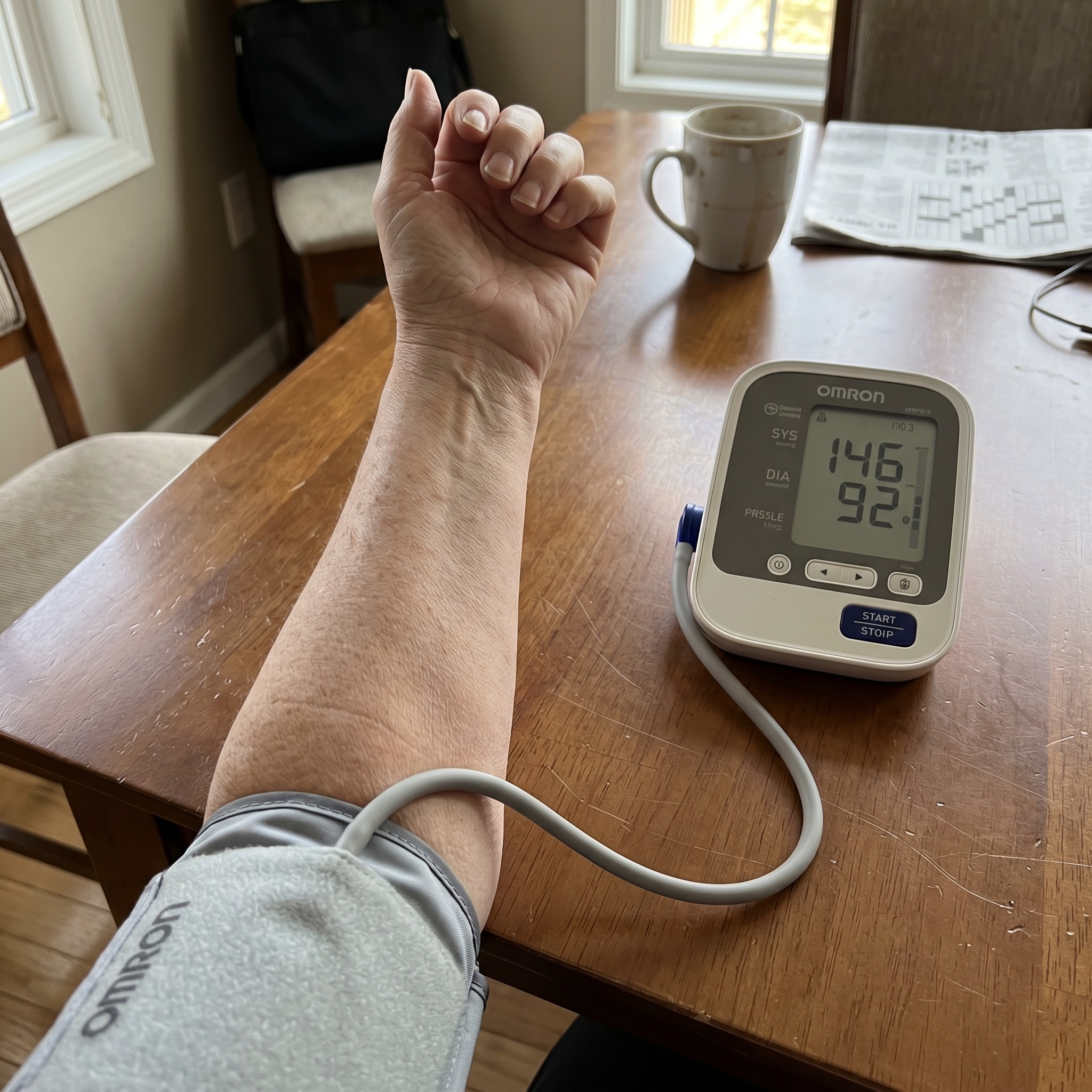
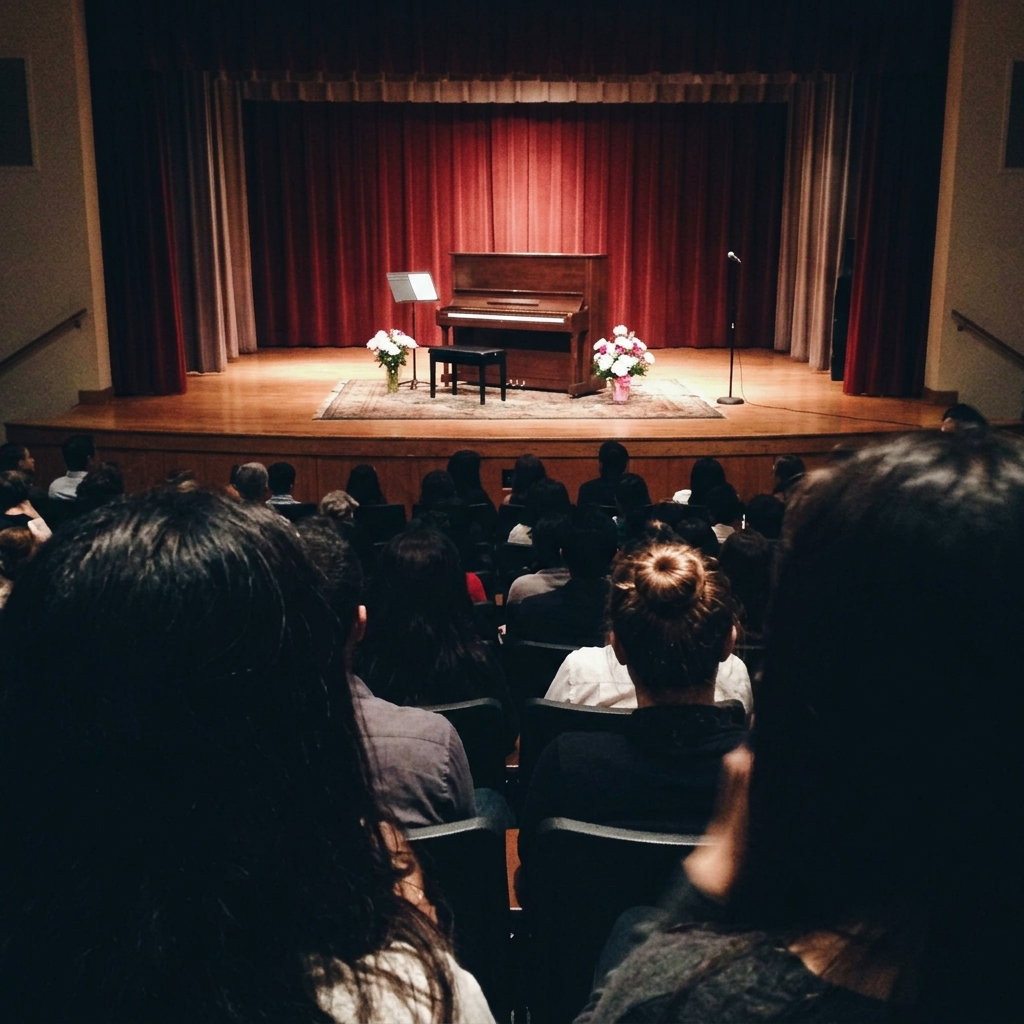
I almost didn't go to my granddaughter's piano recital. She's 7 years old. Her name is Amaya. She has been practicing the same Beethoven piece for 4 months on the upright in her mother's living room, the one with the sticky middle C, and she was going to play it in front of 60 people in the auditorium at Springhill Elementary on a Thursday night in March, and her grandmother almost stayed home. I sat in my bedroom in my best blue dress with my purse on my lap and I told my husband Cornell to go on without me. He turned around in the doorway with his tie half knotted and he said, "Loretta. What are you doing." I said, "My pressure is up. I can feel it. I don't want to make a scene." He looked at me for a long time. Then he said, "Loretta. She's going to look for you in that crowd." And I sat on the edge of the bed and I cried. Because I was 63 years old and I was scared to sit in an auditorium full of people for 90 minutes because I was afraid my body was going to embarrass me in front of my own grandbaby. My name is Loretta. I live in Mobile, Alabama, off Spring Hill Avenue, in the same little brick house Cornell and I bought in 1991 when our oldest was 4. I worked 31 years as a kindergarten teacher in the Mobile County school system. I retired in 2022. I have three children and 6 grandchildren and the youngest of them, Amaya, is the one who calls me on FaceTime every Sunday after church to show me her piano hands. And on a Thursday night in March 2024, I almost missed her first recital because my blood pressure had been climbing for two years and the pills my doctor gave me weren't holding it down anymore. Let me back up. I was diagnosed with high blood pressure when I was 54. Doctor Whitfield at the clinic on Airport Boulevard, the one with the parking lot you can never find a spot in, he took my pressure twice on a Tuesday morning and he said, "Mrs. Loretta, your top number is 162. We need to put you on something." I didn't argue. My mama died of a stroke at 71. My daddy had two heart attacks before he was 65. I knew what runs in our family. I took the lisinopril and I started walking three mornings a week and I cut back on the salt and I thought I was doing what I was supposed to do. For a few years, it held. Numbers came down. Not great, but better. The doctor was happy. Then about two years ago, somewhere around 61, it started creeping back. He upped the lisinopril. Added a water pill. The numbers came down for a minute and then crept back. He added a third medication, a calcium channel blocker, and the side effects started. My ankles swelled up like sausages by 4 in the afternoon. My head felt thick. I started getting dizzy when I stood up from the couch. I'd go for my checkups and the cuff would beep and Cornell would be sitting in the chair across from me and I'd watch his face change when the numbers came up on the little screen. 156 over 94. 162 over 98. 168 over 101. Doctor Whitfield would shake his head and adjust the prescription and say, "Loretta, sometimes the body just doesn't want to cooperate. We'll keep working on it." Keep working on it. Like my pressure was a stubborn child in his classroom. But the thing nobody talks about with blood pressure is what it does to you between the appointments. Not the numbers. The fear. I started feeling it in my chest at random times. A heaviness. A pressure behind my eyes when I bent down to tie my shoes. I'd be at the grocery store reaching for a can of crushed tomatoes on the top shelf and a wave of something would come over me and I'd have to grab the cart handle and wait for it to pass. I stopped going to the Thursday night Bible study at Mount Olive because the church is on the third floor of the family life center and the elevator is slow and I started worrying about getting stuck in it. I stopped going to my sister Vernita's apartment because it's two flights up and by the time I got to her door I was breathing like I'd run a mile. I started saying no to things. Not big things, at first. Just little things. The Saturday cookout at my brother in law's. The hair appointment with Miss Yvonne who I'd been seeing since 1998. My friend Patrice's birthday dinner at Wintzell's downtown. I told everyone I was just tired. Cornell knew. He knew because he'd come home and find me sitting in the recliner in the dark with the TV off, just sitting there, listening to my own heart. And then Amaya's recital came up. My daughter Tanya called me three weeks ahead to remind me. She'd already called me two times before that. She knew, the way daughters know, that I'd been pulling back. She said, "Mama. Amaya is asking when you're coming. She wants to know what color dress you're wearing so she can match her ribbon." I told her I'd be there. I bought the blue dress at Dillard's that weekend. I had my hair done on the Wednesday before. I planned it out the way you plan out a trip to a foreign country, every step, every parking lot, every bathroom, every chair. And the morning of the recital my pressure cuff at home read 171 over 103 and I sat down on the edge of the tub in my bathroom and I thought, "I cannot do this. I cannot sit in that crowd for 90 minutes with my pressure like this. What if something happens? In front of all those people? In front of Amaya?" That's why I was sitting on the edge of the bed with my purse on my lap. Cornell stood in the doorway with his tie half knotted and he didn't say anything for a minute. Then he came over and he sat down next to me and he put his hand on my back and he said, "Loretta. We're going. I'll drive slow. You sit in the back row by the door. If you need to step out, you step out. But she's looking for you. We're going." I went. I sat in the back row. I held Cornell's hand so hard I left half moons in his palm with my fingernails. Amaya played her Beethoven and she missed two notes and she kept going and at the end she stood up and bowed and she looked into that crowd and she found me. She found me in the back row. And she waved. A little wave. Just for her grandmama. I cried in the parking lot. I cried in the car. I cried in the driveway when we got home. Because I had spent 90 minutes scared. I had spent 90 minutes with my hand on my chest. I had spent 90 minutes calculating how fast I could get to the exit. And my granddaughter, my baby, had stood on that stage and looked for me and I should have been the proudest woman in that room and instead I was the most afraid. That night, after Cornell went to bed, I sat at the kitchen table in my robe and I opened up the laptop and I started looking. I had spent two years doing what my doctor told me to do. Three medications. Low salt. Walking. Weight down 12 pounds. And my numbers were worse than the day I started. And I had just sat through my grandbaby's recital with my hand on my chest. I wasn't looking to replace the medication. I wasn't trying to be one of those people who throws away her pills and trusts the universe. I was a kindergarten teacher. I believe in science. But I was looking for what my doctor wasn't telling me. I typed in things like "why isn't my blood pressure medication working" and "what doctors don't explain about hypertension." I went down a rabbit hole that started on a regular health website and ended somewhere I didn't expect. I found an article about the inside of your blood vessels. I didn't know your blood vessels had an inside. I mean, I knew they were tubes, but I didn't know there was a living layer on the inside of those tubes that does work. It's called the endothelium, and it's not just a wall. It's a living membrane that controls whether your blood vessels stay tight or whether they relax. It does this by producing a molecule called nitric oxide. When the endothelium is healthy and functioning properly, it produces plenty of nitric oxide, your vessels relax, blood flows freely, and your pressure stays where it ought to be. But years of inflammation, stress, processed food, and just plain getting older wear that inner wall down. When the wall isn't functioning properly, it can't produce as much nitric oxide. So your vessels stay tight. Blood forces its way through. That's high blood pressure. And the harder the blood pushes through tight vessels, the more it stresses the wall, which makes it worse, which raises the pressure more. A cycle that feeds itself. I sat at the kitchen table reading that and I felt something I hadn't felt in two years. I felt like somebody was finally telling me what was wrong with me. Because every pill I'd been taking, the lisinopril, the water pill, the calcium channel blocker, they all force your vessels open from the outside or pull fluid out of you. None of them touch the wall. The wall keeps deteriorating underneath. Which is why the medications stopped working over time. Which is why my doctor kept "adjusting" them. Which is why I was sitting in the back row at my granddaughter's recital scared. The article mentioned a few things that had been studied for supporting the function of that inner wall. Most of them were ingredients I'd never heard of. But one of them I had heard of. Amla. A little green fruit from India. Indian gooseberry. They've been using it for thousands of years in Ayurvedic medicine. The article said it contains compounds called emblicanins that have been studied for their role in supporting endothelial function, the function of that inner wall. When the wall is supported and functioning better, it can start producing more of its own nitric oxide, the way it did when you were younger. Vessels can relax more naturally. Pressure on the walls can ease. It wasn't a drug. It wasn't forcing anything. It was supporting the part of your body that's supposed to regulate your pressure in the first place. I want to be careful here. I'm not telling you I read one article and ran out and changed my whole life. I read articles for three weeks. I read about the research. I read about the studies. I read about what amla was and what it wasn't. I called my niece Brittany, who is a nurse practitioner in Atlanta, and I asked her what she thought. She said she'd been recommending amla to some of her patients for over a year as part of a broader plan. She said the research on the vascular side was real, even if it wasn't going to make the evening news. She said something I'll never forget. She said, "Aunt Loretta, the medications you're taking force your vessels open. They don't fix the reason your vessels are tight in the first place. Amla works further upstream. It supports the wall itself. That's a different conversation." A different conversation. That's what I'd been wanting for two years. A different conversation. I ordered a bottle from Alevia that night. It was 4 days before it arrived. Brown box on the porch when I came back from the mailbox. I told Cornell I was going to try something. I didn't make a big speech about it. I just told him. He looked at the bottle. He read the label. He said, "Loretta, you're a grown woman. You do what you think is right." I started taking two capsules every morning with my coffee. I did not stop my medications. I did not change anything else. I just added the amla and I kept doing what I was doing. I told my niece and she told me to track my numbers every morning so I'd have something to look at. The first week, nothing changed. I expected nothing. I'd been on lisinopril for 9 years. I knew bodies don't turn on a dime. The second week, my morning numbers came down a few points. Could've been anything. I wrote it down. The third week, my ankles weren't as swollen at the end of the day. I noticed it when I was putting on my house slippers. The little dent the elastic leaves in my ankle was lighter. The fourth week, I walked from my car to the grocery store entrance at Winn Dixie and I didn't have to stop to catch my breath halfway. I stood in the produce section and I picked up a cantaloupe and I realized, in that moment, that I had stopped doing this calculation in my head. The calculation of how far I could walk before I had to rest. The calculation of where the nearest place to sit was. I had been doing that calculation, all day, every day, for almost two years, and that afternoon at Winn Dixie I had walked all the way to the produce section without doing it. I bought the cantaloupe. I bought some greens. I walked back to my car. And I sat in the driver's seat in the parking lot and I called Cornell. He said, "Loretta. You okay?" I said, "Cornell. I'm good. I'm good." By the sixth week, my morning numbers were sitting in the 140s over the 80s on a consistent basis. Not the 160s. The 140s. That's the lowest they'd been in 18 months. I went to my appointment with Doctor Whitfield in the eighth week and the cuff beeped and the screen read 142 over 86 and he looked at the screen and then he looked at me. "Loretta," he said. "What are you doing?" I told him. He listened. He didn't dismiss me, to his credit, but he didn't get excited either. He said, "Well, whatever you're doing, keep doing it, and let's see what your numbers look like in another two months." In another two months they were better. He took me off the water pill. He cut the calcium channel blocker in half. I went from three medications to one and a half, and my pressure stayed in the 130s and 140s. My ankles deflated. My head cleared up. The thickness behind my eyes went away. The pressure in my chest that I'd been carrying around like a sandbag, it stopped showing up. But I'm going to tell you about the moment that mattered most. It was Amaya's birthday party at the Pizza Hut on Government Boulevard in July. She turned 8. Tanya had rented the back room. There were 14 kids running around screaming. Pizza grease everywhere. The party hat elastic was cutting into my chin. The kids were doing the limbo. They put on that little plastic stick across two chairs. Amaya looked at me and she said, "Grandmama, you go." A year before, I would have said no. A year before, I would have been sitting in the corner with my hand on my chest counting the minutes until the cake came out so I could leave. I got up. I walked over to the limbo stick. The kids were laughing. Cornell was filming on his phone. I bent backwards. I went under that stick. I did not feel my chest. I did not feel my pressure. I felt my back complaining a little and my knees telling me I was 64, but I did not feel scared. I went under and I came up the other side and Amaya hollered like she'd just won the lottery and she ran over and hugged my legs and I picked her up. I picked her up. I had not picked up a grandchild in 2 years. She put her face into my neck and I just held her there. And I thought about a woman who almost didn't go to a piano recital because she was scared of her own body in a crowded room. And I thought about how that woman was gone now. How somewhere between the night I sat at the kitchen table reading about endothelial function and the afternoon at Pizza Hut, that woman had walked back into her life. Let me say plainly what I think happened. The medication my doctor gave me was doing one job. It was forcing my vessels to relax from the outside. It was not addressing why my vessels weren't relaxing on their own anymore. The inner wall had been deteriorating for years and nothing in any of the pills I was taking was supporting that wall. So the underlying problem kept getting worse, even as the medication held the numbers down for a while. Adding amla supported the wall. The wall could start producing more of its own nitric oxide. My vessels could start relaxing more naturally. The cycle that had been feeding itself for years could start to ease. Pressure could come down, not because something was forcing it, but because the part of my body that was supposed to regulate it had finally been given some support. I'm not throwing my medication away. I'm still on a small dose of the lisinopril and I'm still walking three mornings a week and I'm still watching what I eat. But the difference between where I was a year ago and where I am now is the difference between sitting in the back row of an auditorium with my hand on my chest, and bending backwards under a limbo stick at my grandbaby's birthday party. That difference has a name. The name is Alevia Amla. I order it directly from their website. The bottle is honest. The dosing is clean. They back it with a 90 day money back guarantee, which means if you try it for three months and your body responds the way it did before you started, you send the empty bottle back and they refund every dollar. No questions. No phone tree. No fight. That guarantee is the reason I tried it in the first place. I was a kindergarten teacher who lived on a budget. I wasn't going to throw away money on something that might not do anything. The 90 days meant I could find out for myself, with no risk. If you've been watching your numbers creep, and you've been adding medications, and you've been told by a kind doctor that "sometimes the body just doesn't cooperate," I want to tell you that there is another conversation happening. It's not the medication conversation. It's the wall conversation. And it might be the conversation that matters most. Amaya is going to have another recital in May. She's playing a Chopin piece this time. I am going to be in the third row, center aisle, with a clear view of her hands. I am not going to be afraid. P.S. The 90 day guarantee is the part I want you to really hear. I almost didn't try amla because I thought I was just going to waste 40 dollars. Alevia stands behind the bottle. If it doesn't do anything for you in three months, you get every penny back. There is no risk in finding out. P.P.S. I'm not telling you to stop your medications. I didn't stop mine. I added something that supported what my medications couldn't reach. Talk to your doctor. Track your numbers. Pay attention to your own body. But please don't keep sitting in the back row. P.P.P.S. Amaya asked me last Sunday on FaceTime what color dress I was wearing to the May recital. I told her I hadn't decided. She said, "Grandmama, wear the blue one. I like that one." I'm wearing the blue one. 👉 https://alevia.com/amla/33
Like this ad? Make it yours.
Crush rebuilds this exact creative around your product — your brand, your colors, your offer — in about a minute.