Carol Goldberg
Carol Goldberg Facebook ad: “The 6 Questions Almost Every Nerve Supplement Fails”
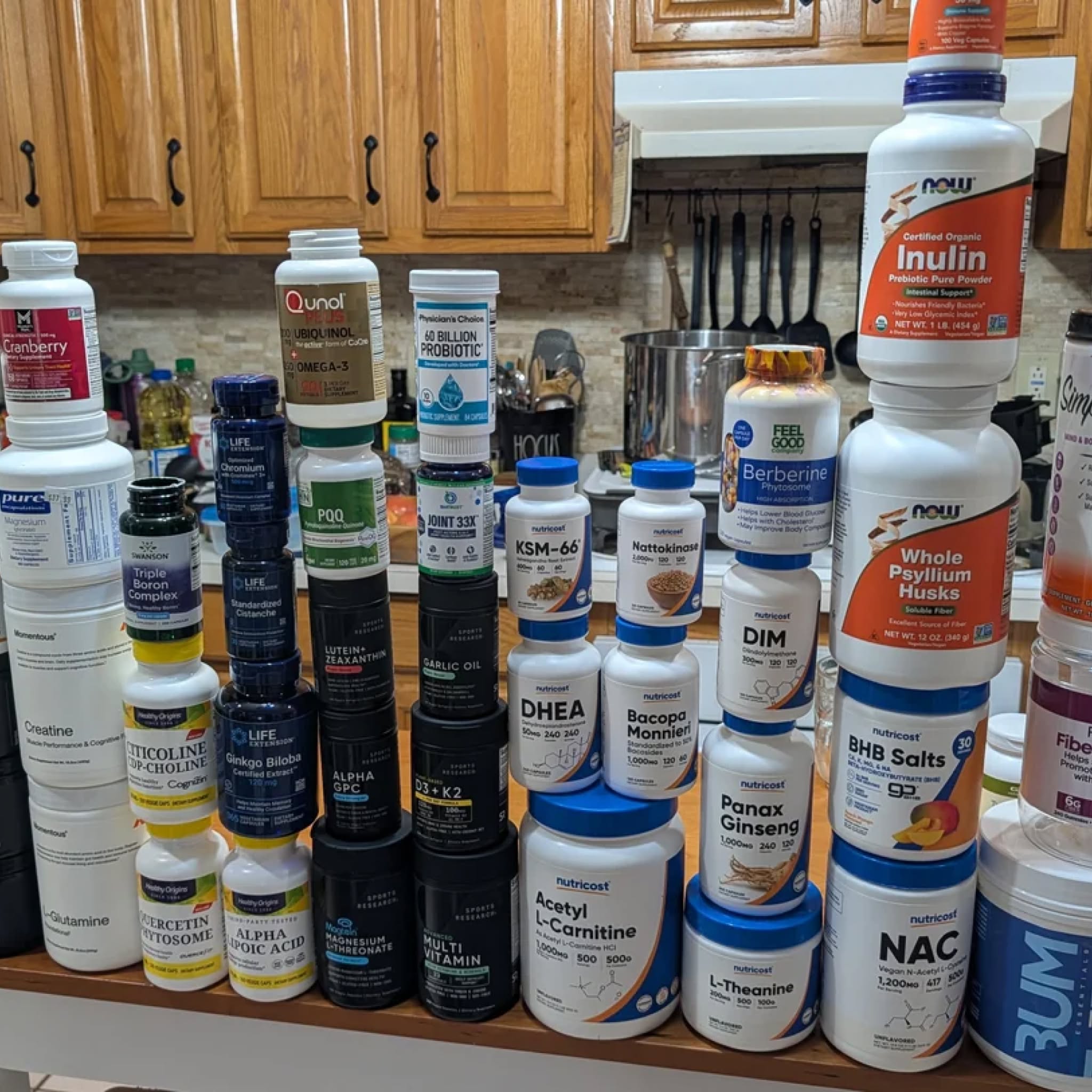
Ran for 9 days, from September 9 to September 18, 2026, the last day Crush saw it.
Run by Carol Goldberg on Facebook. Crush is not the advertiser and does not verify its claims. See this ad in Meta's Ad Library(opens in a new tab)
Want an ad like this for your product?
Crush makes new ad images for your product from this ad: your logo, your product photo, your offer.
Trials from $19.95 USD, then $79.95 USD a month. Cancel anytime.
About this ad
- Meta Ad Library ID
- 1680864177379026
- Platforms
- Facebook, Instagram, Audience Network, WhatsApp and Threads
- Relaunches
- 1
- EU reach
- 72
Ad text
I have thrown away four bottles of nerve support supplements. I am the exact person every one of those bottles was aimed at, and I am the exact person who leaves the one-star review. So if you are reading this with an MRI that still comes back stable, and you are still dropping things, still losing your balance, still running out of energy by two in the afternoon, three prescriptions holding you there, and a fourth one your neurologist mentioned at your last appointment, pull up a chair. That was me 7 months ago. Let me tell you how I got here, because I want you to trust that I do not buy things off social media. I am a 63-year-old woman. I have had MS for 13 years. Not a medical person, but a person who has been reading her own visit summaries longer than some of the nurses filing them, and who knows what it means when a number keeps going one direction and nobody in the room says a word. I take Ocrevus. An infusion, every 6 months, for the disease itself. I take gabapentin for the burning in my hands and feet. I take dalfampridine because my walking speed tested slow enough to qualify. Three prescriptions. Three separate problems, according to my neurologist. Three drugs that are supposed to be handling this. And in February my neurologist, Dr. Adler, looked at a visit summary that had not improved in 3 years and said he wanted to add a fourth. Baclofen. A muscle relaxant on top of everything else, because the spasms in my legs had gotten bad enough that dalfampridine alone was not keeping up and my walk time still read the way it read. I said I would think about it. He said that was fine, and that we would look again in the fall. I went out to the car and sat there with the engine off for a while, which is not something I do. It was not fear, exactly. It was the arithmetic. One drug had become two. Two had become three. Three was about to become four, and nobody in that room had said a single word about why. I looked it up that night. Of course I looked it up. And I went down the rabbit hole anybody reading this has already been down. Ocrevus plus baclofen. Tysabri. Mavenclad. HSCT. The injection every 2 weeks. The infusion center with the recliner and the blanket and the 4 hours of your life gone. The whole cliff edge nobody prepares you for when they hand you a diagnosis and say we will keep an eye on it. I know my numbers. I keep them in the notes app on my phone now, in the same place I used to keep the grandkids' swim times. I know the difference between a bad week and a real trend. I know that every nerve support ad I have ever scrolled past was written by somebody who has never sat in a parking lot doing that arithmetic. And I know, because the review sections taught me this one personally, that most people who buy a nerve supplement quit around week 5 and leave a review that says the same three words in a hundred different arrangements. Nothing happened. Almost none of them ever ran a test. I was that reviewer. Four times. Three of them I quit before week six and never asked my doctor to measure a single thing. So why am I writing this now. Because of one thing I understood in February, and it is not the thing you think. Everybody talks about the scan. My scan is fine. My scan has been fine for 3 years. I am going to talk about what sits behind it, because that is what had me awake at 2 in the morning with a printout on the kitchen table, and it is what made me pick up a fifth bottle after I had sworn off every one of them. Here is what my chart looks like when you stop reading it one prescription at a time. Year one. Diagnosed at 50. They put me on a disease modifying therapy, and 6 months later my MRI was clean, and my neurologist was pleased, and I was pleased, and I told everybody at book club. Year three. Burning in my hands and feet. They added gabapentin. The burning got quieter. Not gone. Quieter. Year seven. Walking had slowed enough to measure. They added dalfampridine. It helped. I could feel the difference in the first week. Year thirteen. Everything managed. Every scan stable. And a fourth drug on the table. At every one of those appointments, the same sentence. Your scans are stable. Let us keep an eye on your walk time. Stable. That word. I heard it for 13 years. My scans were stable. My burning was managed. My walking was managed. Three drugs. Three managed symptoms. And the reason I was on any of them had never once been discussed in that room. Here is what I understood in the parking lot, and it is the only genuinely useful thing I know. Every one of those three drugs manages a symptom. One slows the immune system's attack on my nerves. One quiets the burning the stripped nerves produce. One helps a stripped nerve carry a signal so I can walk a little better. Not one of them rebuilds the coating that was stripped off. And the coating being stripped off is the entire disease. Your immune system attacks the coating on your nerves. That coating is called myelin. It is what lets a signal travel fast and clean down the nerve, the way plastic insulation on a wire lets electricity travel without losing it along the way. Your body rebuilds that coating every single day. On every nerve you have. It is doing it right now. But the rebuilding needs two things, and both have to be inside the nerve cell. Raw material to build the coating out of. And energy to do the work. Your repair cells do not get enough material. Your nerve cells do not have enough energy, because a nerve that has lost its coating uses far more energy just to carry a signal than one that still has it. So the repair falls behind. Every year there is a little less coating on your nerves than the year before. The signal takes longer to arrive. Your legs get heavier. Your hands get clumsier. Your energy runs out earlier. And almost none of it is ever big enough to show up as a new lesion on a scan. Nothing on my scan measures that. Nothing in my medicine cabinet touches it. The infusion slows how much coating gets stripped off. It does not follow the coating already gone and rebuild it. The gabapentin quiets the burning a stripped nerve produces. The dalfampridine helps a stripped nerve carry a signal a little faster. Three drugs. Three downstream symptoms. One upstream process that none of them touches. And once I connected it, the way you connect it when you stop filing each prescription in its own folder, the rest of the chart lined up. The walk time that crept up a second or two a year on dalfampridine and got a dose adjustment instead of a question. The burning that spread from my right hand into both feet over 4 years on gabapentin and got a stronger dose instead of an explanation. The 13 years of doing every single thing I was told. Individually, every symptom managed. Together, in a woman whose drug list gets one line longer every few years, a coherent picture I had been reading one prescription at a time because I was afraid of the whole chart. I will be honest about the exact fear. The real one. The one I had not said out loud until I typed it into a search bar at 1 in the morning and closed the tab before the results loaded. The wheelchair. The walker in the hallway. The grab bars in the bathroom. The 12 weeks of physical therapy after every flare that takes a little more than the last one gave back. I know a wheelchair is not a death sentence and that people go on to have perfectly full lives in one. But wanting to keep walking on my own legs, for as long as I honestly can, is not denial. That is a goal. And it is mine. So let me tell you what changed my mind about one bottle, and let me do it the way I would want it done to me, with every objection up front and the honesty turned all the way up. Objection one. Are not most nerve supplements garbage. Yes. Most of them. And I want to give that its full weight instead of waving at it, because it is true and it is the reason I threw away four bottles. I bought the turmeric first, the big drugstore bottle, 750 milligrams on the front in enormous type, and you have to turn it over to find that the curcuminoid content, the part any study actually tested, is not listed anywhere. I bought vitamin D because half my support group swore by it. I bought biotin because somebody in a forum said high-dose biotin could help repair myelin, and I wanted to believe it badly enough to spend 40 dollars a month on it. And I bought alpha lipoic acid, which I took for 5 months because a functional medicine doctor at three hundred a visit told me it was neuroprotective, and which I could not tell apart from a sugar pill on any day of those 5 months. So my bar is not does it say nerve support on the front. My bar is 5 questions, and it eliminates almost everything on that shelf. Let me actually hand it to you, because it is the most useful thing on this page and it works on any bottle, not just this one. One. Does the label state the amount of the active compound, or does it print the weight of the powder and let you assume. A supplement can put 750 milligrams on the front in large type and tell you nothing about how much of that is the fraction any study actually tested. Total weight and active ingredient amount are not the same number. The second one matters. The first one is the one almost every bottle prints. Two. Is each ingredient listed individually at a stated amount, or is it a blend. The moment you see a complex, a support formula, a matrix, or a nerve blend, the individual amounts are legally allowed to disappear behind one combined number. That is how you put 10 milligrams of the expensive ingredient behind 500 milligrams of filler and print a big total on the front. Three. Does the label name the chemical form of each ingredient, not just the vitamin name. I did not know to ask this until 7 months ago. The same vitamin exists in more than one chemical form. Some of those forms are what the research actually tested. Some cost a fraction of a cent to manufacture and are not the same compound. They share a name on the front of the bottle. The form is on the back, in small type, if it is there at all. The silence is the answer. Four. Is it tested by an outside laboratory, and not by the company selling it. If a company will not let a stranger check what is in the bottle, the bottle is lying to you. Five. Are the specifications published where you can read them before you buy, and could you set that bottle on your neurologist's desk without wanting to explain yourself. If you would be embarrassed to put it in front of her, that is your own gut telling you something. Listen to it. Now let me run my own four bottles through that. The turmeric failed one and five. The number on the front was the weight of the powder, and the label was built to keep you from finding out how much of the active compound I was actually swallowing. The biotin failed three and five, and worse than that, and I will come back to it. The alpha lipoic acid failed three, four and five. No chemical form listed, no outside testing I could find, and 5 months of a functional medicine doctor's bills with nothing I could point to. And the vitamin D passed. One ingredient, stated amount, chemical form on the back, reputable manufacturer. I could have handed it to my neurologist without a second thought. It did exactly what the label promised, too. My D level came up, and I was relieved. Nothing about my walking, my burning, or my energy changed. Not one thing I could feel. So the one bottle that cleared my bar failed the only test that counts, because my 5 questions ask whether the bottle is real. They do not ask whether the thing inside it is aimed at the right target. That is the sixth question, and it is the one nobody sells you an answer to. And the biotin is the bottle that proves that question hardest, which is the debt I owe you from a minute ago. Biotin is vitamin B7. It is a real vitamin that does real things, and not one of them is rebuilding the coating on a nerve. The studies people quote for high-dose biotin and MS were looking at whether it could help nerves produce more energy. The largest trial did not show a benefit. And the one mechanism it was supposed to help is already the job of a different vitamin in the nerve regeneration research, at a fraction of the dose, without the thyroid interference that high-dose biotin can cause. So for a stretch of months I was paying 40 dollars a month for a vitamin aimed at a job already covered by something I had not heard of yet, which failed at the job anyway. That is question six. Aimed at the right target or not. And every one of my four bottles would have failed it. The turmeric was aimed at inflammation, not nerve repair. The vitamin D was aimed at a deficiency, not the coating. The biotin was aimed at the wrong mechanism. The alpha lipoic acid was labeled neuroprotective, which is not the same word as neurorepair, and the distinction matters when your nerves have been losing their coating for 13 years. Objection two, and it is the big one for somebody like me. Do a few specific vitamins actually do anything for nerve tissue, or is that internet folklore. Here is where I will give you what no other ad gave me. The straight version, including the part that cuts against the pitch. The steelman first. The three vitamins are B12, B1, and B6. In the nerve regeneration research they are called the neurotropic vitamins, because they act on nerve tissue specifically. Japanese doctors have been using them for nerve health for decades. Methylcobalamin has been a prescription drug in Japan for peripheral neuropathy since the early 1980s. That is not folklore. That is a treatment protocol in a country with one of the longest life expectancies on earth. Now watch what I do with that sentence, because it was printed on two of the four bottles in my bin. That sentence went straight into the column I keep for things that are true and do not matter, right underneath my biotin's thyroid warning. A treatment used in Japan is a fact about Japan. It is not a result about me, and you already know what happened the last time I got excited about a claim that sounded right and changed nothing. So Japan is not why I take it. It is the reason I kept reading, and if a bottle hands you that sentence and then stops talking, put the bottle down. I am going to walk the actual chain instead, the same way I walked the disease. One step at a time. B12 is the raw material myelin gets rebuilt out of. Without enough of it inside the cell, the repair cannot start. It does not matter how much is in your blood. What matters is how much reaches the repair site. B1 is what the nerve cell makes its energy with. Without enough energy inside the cell, the repair cannot run even if the material is there. A nerve that has already lost its coating uses far more energy just to carry a signal, which leaves less for the rebuilding. B6 is what allows the signal to travel cleanly down the nerve once the coating is back. Without it, the other two can do their work and the signal still misfires. Material. Energy. Signal. Three jobs, three vitamins, and none of them does its job without the other two. And when all three were tested together on nerve tissue, in a 2025 study published in Cells, the combination was 26 times more effective in nerve support than any one of them taken alone. Not 26 percent. 26 times. Now the honest knock, the part they never print. That study was on nerve cells in a lab, not in a person. Rodent-derived cell lines, not human. I read it twice, and anybody who hands you that number as proof that a vitamin rebuilds myelin in a living person should be taken seriously about the science and cautiously about the leap. And the 26 times is about cell viability. Not about myelination. The cells survived and matured at that rate. That is not the same sentence as they rebuilt their coating at that rate, and I would rather say that flat than dress it up as proof. There were conditions in that study where one vitamin alone did almost nothing. B12 on its own increased cell viability by less than 4 percent and did not even reach statistical significance. Only the three together produced the result. So I am not going to tell you a paper proved this rebuilds myelin in a person. No paper measured that in a person. What I am telling you is that the three vitamins together produced a result on nerve tissue that none of them produced alone, and that the two jobs the rebuilding needs, material and energy, are the exact two jobs B12 and B1 perform inside the nerve cell. Those are two separate facts, and I am handing you both instead of welding them into one. So I do not take this because it is guaranteed to do anything for me. Nothing is guaranteed to do anything for me except the interventions my neurologist has ready, and I have not refused those. I told him not yet to the fourth drug, which is a different sentence. I take it because it is the one honest, well-made, well-documented way I have found to address the part of this that three prescriptions work around without ever touching. It sits beside the Ocrevus, beside the gabapentin, beside the dalfampridine, and it does not replace one milligram of any of them. Anybody selling you a vitamin as a substitute for a disease modifying therapy should not be allowed to sell you anything, and I mean that. Now let me explain the thing nobody explained to me, because it is what made the whole three-drug stack make sense for the first time, and not in a good way. Go back to the coating being stripped off the nerve. A nerve that has lost its coating does not send signals the way it used to. The signal leaks. It slows down. Sometimes it misfires entirely, and that is the burning, the tingling, the heaviness in the legs, the hand that drops the coffee mug. Your body sends repair cells to rebuild the coating. But the repair cells need B12 to build with, and the nerve cells need B1 to power the work, and both run short. The repair falls further behind every year, and the symptoms get a little worse every year, and your scan stays stable because thinning myelin does not make a lesion. That is the gap. That is the entire disease underneath the scan. The immune attack is what strips the coating off. The repair deficit is what keeps it off. Your infusion slows the stripping. Nothing in your medicine cabinet has ever addressed the repair. Here is the part that made the stack click. Three prescriptions, each one aimed at a different symptom, and the process underneath all three of them running unchecked. The symptoms stay inside the range the system calls managed, and every few years somebody adds a line to my list. That is not my neurologist failing. Medicine measures what it can act on. A scan is readable, there is a drug for it, there is a protocol for reading it, and there is a standard my doctor's practice follows for responding to it. The repair deficit inside a nerve cell has none of those things. No scan that shows it. No prescription that fixes it. So it does not get measured, and what does not get measured does not get discussed in a 14-minute appointment. Every instruction followed. Every scan stable. The repair underneath still falling behind, and the list still growing behind scans that look fine on paper. So I did to that fifth bottle what I did to the other four. Question one. The amount of the active compound. Nuvel Neurotropic Vitamins. B12, B1, and B6, each one listed by name with its own stated dose. Not a combined total. Not a powder weight. Passed. Question two. Each ingredient individually, not a blend. Three ingredients, three amounts. No complex, no matrix, no nerve blend with twelve other things standing in front of them. Passed. Question three. The chemical form of each ingredient, on the label. Methylcobalamin, not cyanocobalamin. The active forms of B1 and B6, not the synthetic ones that cost a fraction of a cent. Passed, and that one surprised me. I had never seen those forms on a shelf product before. Question four. Tested by an outside laboratory, not by the people selling it. Passed. Question five. Printed where I can read it before I spend anything, which is more than three of my four could say. Passed on the first half. As for the second half, whether I could set it on my neurologist's desk without wanting to explain myself, I will tell you shortly exactly what happened when I did. One drop under the tongue every morning. Count to sixty. That is the entire protocol. It is the second of the five bottles to clear my bar. The vitamin D was the first, and you know how that went. So this time I asked the sixth question before I asked the other five. And then I read the refund policy, and that is the part that actually made me click. 90 days. Full refund. From the day it lands on your porch. One email. No bottles sent back, no doctor's note, no restocking fee, nothing to prove to anybody. Not for the reason a salesman would give you, either. It is not that I had nothing to lose. I have thrown away four bottles. I know exactly what I have to lose. It is that 90 days is longer than the test takes. The timed 25-foot walk is recorded at every MS visit. Week 8 is when a change first shows up enough to be worth measuring, and 90 days is when you have a trend instead of a reading, which is a different and much harder thing to argue with. I binned three of my four inside five weeks. The window is longer than my own worst habit. I have been handed a great many prescriptions in 13 years. Not one pharmacy has ever offered me my money back if the drug did not work. That asymmetry is the only claim about a seller I can actually test, because I test it by asking for the refund. Now let me address the reviews, because I have read all of them and I know what you are about to type. Took it for 6 weeks, nothing. I hear you. I was you. Four times. Here is what I wish somebody had told me on day one. There is nothing to feel in the first few weeks. Not because it is not working. Because the repair is not something your body announces. Coating does not grow back on a nerve and send you a notification. Which means there is no answer to how will I know except a measured walk, and a walk time taken before week 8 is measuring the week you started. You quit at 5. You did not fail. You were never told the real timeline by anybody, including the people who sold it to you. I already take an infusion, can I take this too. Yes. This sits beside your medications and addresses the part of the process they work around. Tell your neurologist and bring the bottle. But it is complementary by design, and any version of it that is not should go in the bin. If the drugs are working, why do I need it. Because your drug list is longer than it was. Because your walk time has not improved in 3 years and nobody found that interesting. Because stable and improving are two different words, and you already know the difference or you would not have read this far. One thing for the record before I hand you the weeks. I understood all of this in February. I did not order anything until April, which tells you how badly I wanted to be wrong about it. My honest timeline, from my own notes. No hype, no miracle. Weeks one and two. Nothing. I did not expect anything and I got exactly that. Week three. Still nothing. I nearly threw it away on a Wednesday, reaching past the bottle on the counter for something else, which is 2 weeks earlier than I have ever quit on anything, and tells you exactly how much faith I had left by then. Week six. Nothing. Marty asked whether I was still doing the new one, I said yes, and that was the whole conversation. He noticed the routine, not a change, because there was no change to notice. I want you to sit with how much I hate writing that in an advertisement, because every ad you have ever read puts something here. Week eight. I could not wait until the fall, so I asked my neurologist for an early visit. Told him I wanted to see where the walk time was. He had me walk 25 feet down the corridor while he timed it, the same test he has timed at every visit for 13 years. 9.4 seconds. It had been 11.1 for 3 years. He looked at the number on his screen, then back at me. And I know exactly what that number is and is not. It measures how fast I walk 25 feet. It does not measure whether coating is growing back on any nerve. Nobody sells a test for that, so the walk is the cheapest shadow of it I can buy for a 14-minute appointment, and I would rather say that flat than dress it up as proof. I typed the number into the notes app in the parking lot before I started the car, underneath 13 years of the other ones. Same column, same phone. And for the first time, the column went the other way. Week twelve. The appointment he had booked back in February. Dr. Adler pulled up the visit summary. Read it. Looked at me. Read it again. Walk time 9.1 seconds. Nine-hole peg test, the one where you pick up small pegs and place them one at a time, 27 seconds. Down from 33, which is where it had sat for 2 years. He did not say improving. He said something more careful. He said let us not add anything yet. For 13 years that list had gone one direction. One line longer every few years, every time we looked. And for the first time, nothing was added to it. He asked what I had changed. I told him. He wrote it down. He did not roll his eyes and he did not endorse it either. He said bring me the next numbers in 3 months. I wrote in my notes that night. Walk time 9.1. Peg test 27. No fourth prescription. Still scared. But the list stopped growing. That last line is the one. And I want to be exact about how it happened, because nothing mystical occurred in that room. The walk is the only instrument that exists. The walk changed, he read the walk, and the walk changing is what kept the fourth line off my list. Not fixed nerves. Not a promise about the wheelchair. I would throw away any bottle that made me one. Just a stretch of weeks where a number bolted to the floor for 3 years moved almost 2 seconds, and a list that had only ever grown did not. And because somebody is going to ask: he wanted the next visit in three months, and I went last week. Walk time 8.8 seconds. Nine-hole peg 26. Three tenths of a second on the walk in a quarter is not a story, and I will not call it one. What it is, is a fourth dot on a line that was flat for 3 years, and a column in my notes app that has now gone the same direction three times running. I sit down with him again in two weeks. I am taking the page. So here is the deal, skeptic to skeptic. I am not going to tell you this will rebuild all the coating your nerves have lost, because nobody can and nobody should. I am not going to tell you it will get you off your infusion, because your infusion is doing a job and it should keep doing it. I am going to tell you it cleared my bar, and then cleared the sixth question my bar does not ask, which is the one thing none of the other four bottles managed. That the study is honest about the limits of what it tested. And that the company carries the risk of the window the test needs. That is a returner's audit, and it is the most honest thing I can hand you. If your scans keep coming back stable while your prescription list keeps getting longer, I hear you. If you are sitting on a prescription you have not filled because something about it did not sit right and you cannot say what, I hear you. That was me in a parking lot in February. And if you have tried turmeric, vitamin D, biotin, alpha lipoic acid, a diet that made you give up everything you loved for a year, and none of it did anything you could feel or measure, that was not you being gullible. Not one of those reaches the nerve cell. Nuvel Neurotropic Vitamins. One drop under your tongue every morning, aimed at the repair itself instead of at the symptoms the failed repair produces. B12, B1 and B6. The three the research calls neurotropic. In the natural forms. At the doses used in the studies. Sealed in a liposome so they reach the inside of the nerve cell instead of stopping in your blood. Third-party tested. No fillers, no blends, no powder with a big number on the front and nothing behind it. I do not work for these people and nobody paid me. I am a 63-year-old woman with a longer drug list than she wants and four bottles in a bin. My own numbers, and they are ordinary. Walk time 11.1 to 9.1, then 8.8. Peg test 33 to 27, then 26. No fourth prescription. Then do what I did, properly, with one correction. I had 3 years of walk times to measure against. You may not. So buy yourself a starting line. Ask your neurologist for a timed 25-foot walk at your next visit. He already runs that test. It is already in your chart. Take one drop under your tongue every morning. Count to sixty. Ask for the walk again at week 8, and once more at 90 days. Then walk into your next appointment with all three numbers in your hand. A number on a page is the only argument that has ever worked in that room. 90 days from the day it arrives, which is the length of that test. Full refund, one email, nothing to return and nothing to prove. Small batches, and they run out. That is a fact about a company that will not cut corners on quality, and I checked. 3 bottles is the 90 days, which is the guarantee, which is the test. If you have an appointment about 60 days out, that is the one to walk into with data. Order today, ask for your walk time this week, take the drop every morning, ask for the walk again at week 8, and you arrive with two points and a direction instead of an empty hand. Check stock now, because every month this runs unaddressed is another month of coating stripped off while nothing rebuilds it. Slow the stripping with the infusion. Start the repair with the vitamins. Both together is the whole answer, and most patients have only ever been handed half of it. The fourth prescription is not a catastrophe, and that is the whole problem with it. It is a Tuesday, and a co-pay, and a sentence you nod along to, which is exactly why it is so easy to accept one more, and one more after that. I would rather find out at 63 whether there is another half to this than find out at 72 that there was. One drop. Under the tongue. Every morning. That is all I did. ~ Carol G., 63 P.S. Do not stop your infusion over this, and do not let anybody talk you into it, including me. I did not stop mine. Take this alongside what you are already on, tell your neurologist at the next visit, and ask him to run the walk time at 8 weeks. If he wants to add the next drug anyway, have that conversation with a fresh walk time in your hand instead of empty-handed. P.S. 2. The walk time is the only readout, and it means very little before week 8. Anybody who tells you they felt a difference in the first week is selling you a feeling instead of a result. The test takes 90 days, which is precisely why the refund window is 90 days and not 30. The only thing you actually risk is writing one email. P.S. 3. They do sell out, and I learned that the annoying way. I went to reorder the same week my sister asked what I was taking, and there was a wait. What is in stock is what exists. P.S. 4. I went back last month and wrote the four reviews I owed. Three of them one star, with the reason, which is more than I gave them the first time, when I typed nothing happened and closed the tab. The biotin got two stars, because it was aimed at a real question and it turned out to be the wrong answer. Then I opened the page for this one, sat there with the cursor in the box, and did not write anything, because a five-star review from me is worth almost nothing. I am the woman who leaves one stars. So I wrote this instead. It would not fit in a star.
Where the ad sends people
trynuvel.com
The 6 Questions Almost Every Nerve Supplement Fails
Clinical-grade dosed formula proven in studies
Learn more: trynuvel.com(opens in a new tab)